












Malgorzata TOMCZAK
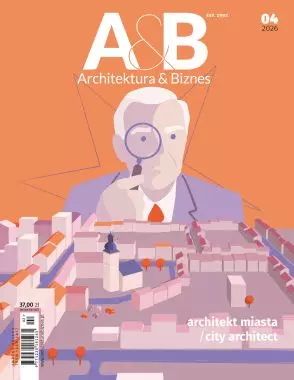
City architect
What should be the role of the city architect in today’s system of spatial governance? Should this position—much like that of a heritage conservation officer—be formally established by law? As an increasing number of Polish cities and municipalities recognize the need for more deliberate and conscious development, these questions are becoming ever more pressing.
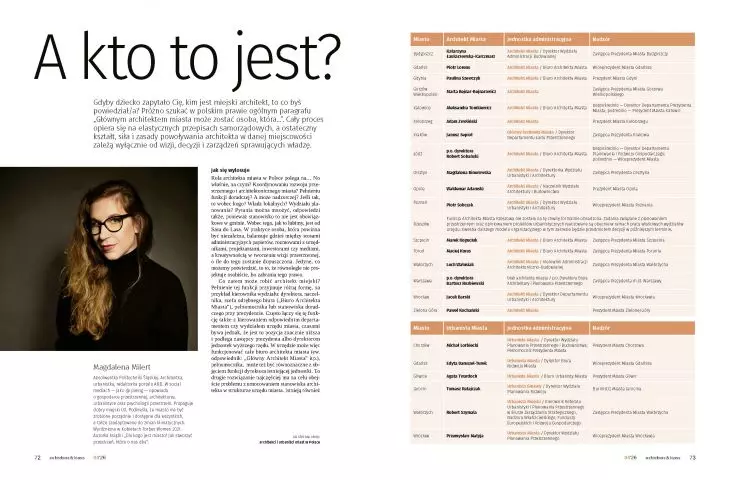
Although more local governments are choosing to appoint a city architect or urban planner, the scope of their responsibilities remains inconsistent—shaped both by local political decisions and by the individual qualities of those in the role. As a result, vastly different models coexist: from positions with real executive power to purely advisory roles with little actual influence.
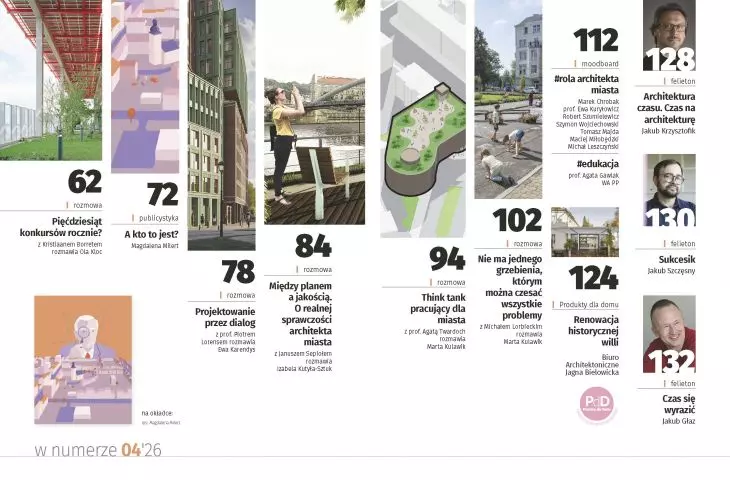
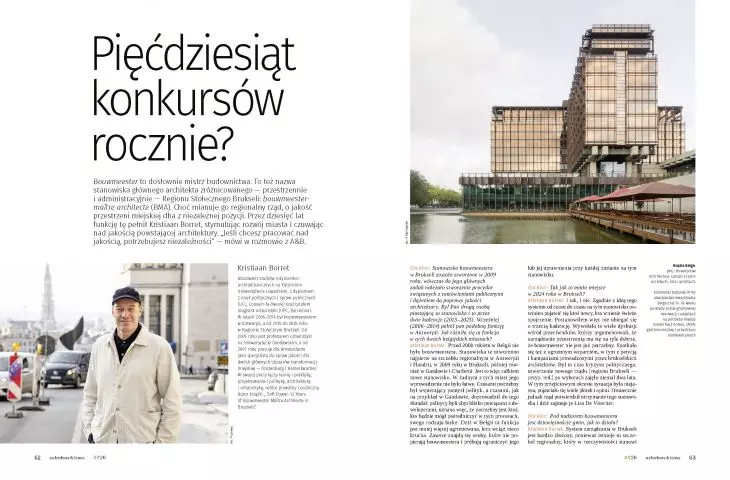
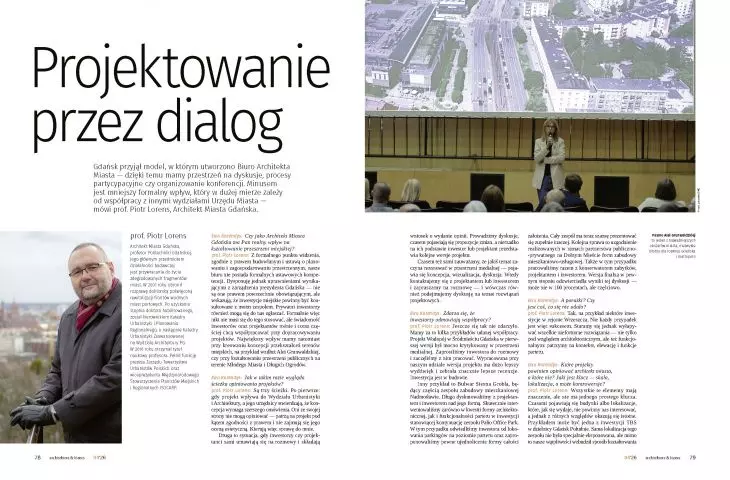
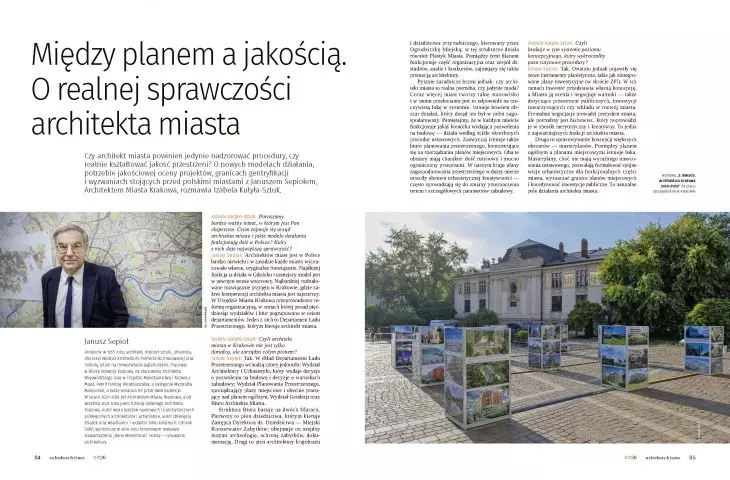
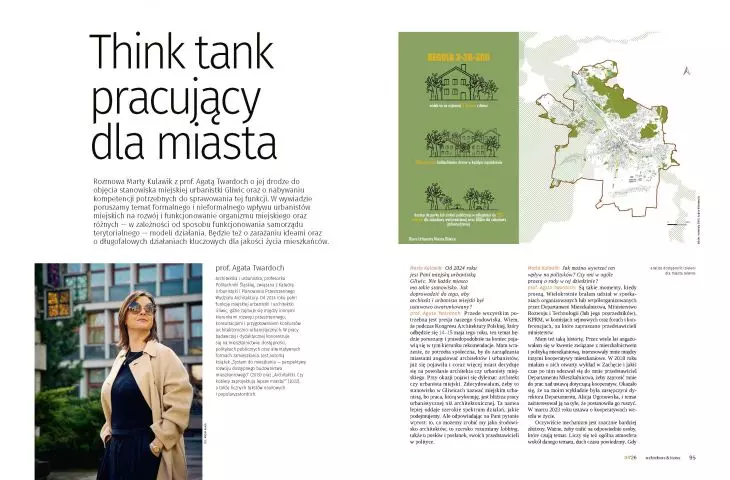
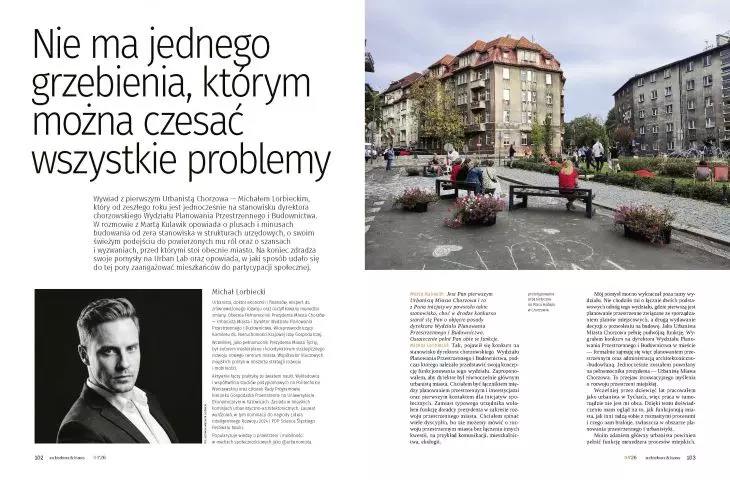
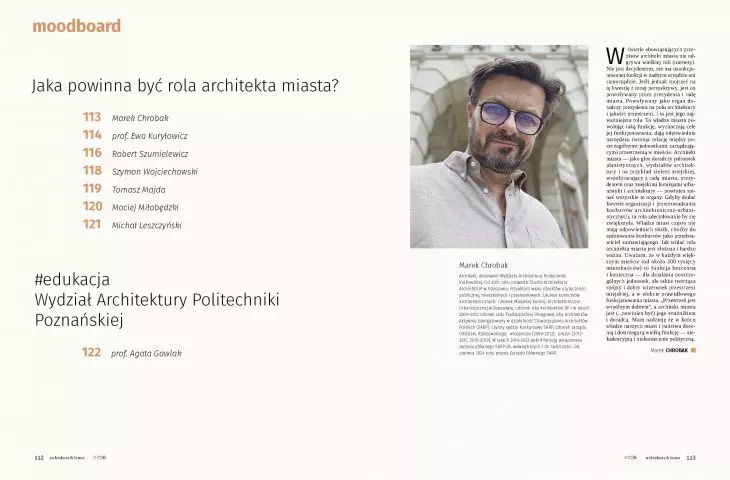
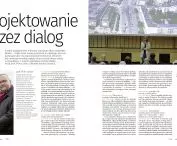
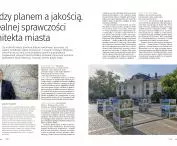
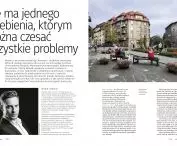
In this issue, we examine these differences across selected cities, asking about the scope of responsibility, the ability to shape urban space, and the position of this role within administrative structures. Sharing their perspectives are Kristiaan Borret, Piotr Lorens, Janusz Sepioł, Agata Twardoch, and Michał Lorbiecki. We have also invited representatives of the professional community to join the discussion.
In view of the scale of the challenges facing cities today, it is difficult to treat this function as optional. So the question is no longer "whether", but "how" to fix it so that it can realistically affect the quality of space.