




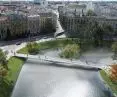

The "city of a hundred bridges" may lack... footbridge. In Wroclaw, the fate of the construction of a pedestrian and bicycle bridge leading across the city moat between Podwale Street and Partisans' Hill is at stake. The city announced a tender in 2023, the project was created - but today the Lower Silesian Regional Monument Conservator raises his objection. Why?
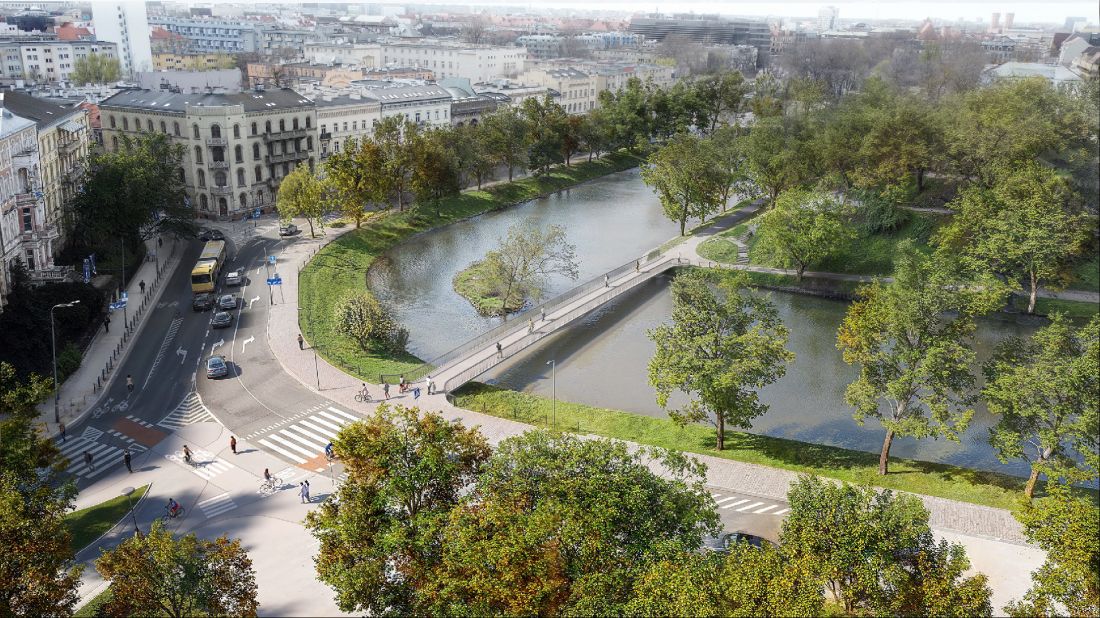
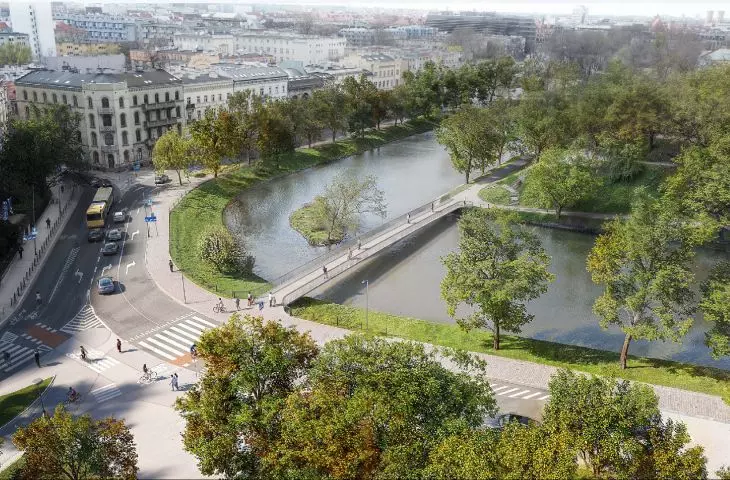
An aerial view of the footbridge between Podwale Street and Partyzantów Hill
© Wrocławskie Inwestycje
The Wroclaw City Moat, a remnant of the former city fortifications, is crossed by the St. Anthony Bridge, the Radio Three footbridge (the footbridge, built in 2010, was designed by Tomasz Boniecki) and the Court Bridge - the section from Piotra Skargi Street to Oławska Street is the longest section by the moat without a crossing, which makes pedestrian communication with the Old Town Promenade, Partisans' Hill and the newly renovated Saddlebag Bastion difficult.
© Google Maps
Carrying out a footbridge at this location - on the extension of Komuny Paryskiej Street, connecting the Oławskie Przedmieście and Partisans' Hill - seems a reasonable solution. Its construction was suggested as early as 2018 by Akcja Miasto (proposing the creation of the Independence Footbridge), and in November 2023 the company Wrocławskie Inwestycje, acting on behalf of the Municipality of Wrocław, announced a tender for the development of a pedestrian and bicycle crossing at this location. The year 2023 was a time of significant changes in the structure of care for Wroclaw's monuments - in January, the provincial conservator (Daniel Gibski) took over some of the tasks that had previously been the responsibility of the municipal conservator.
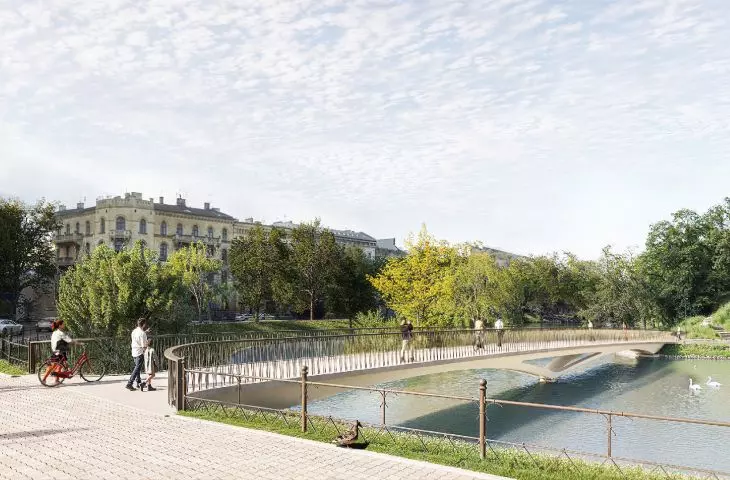
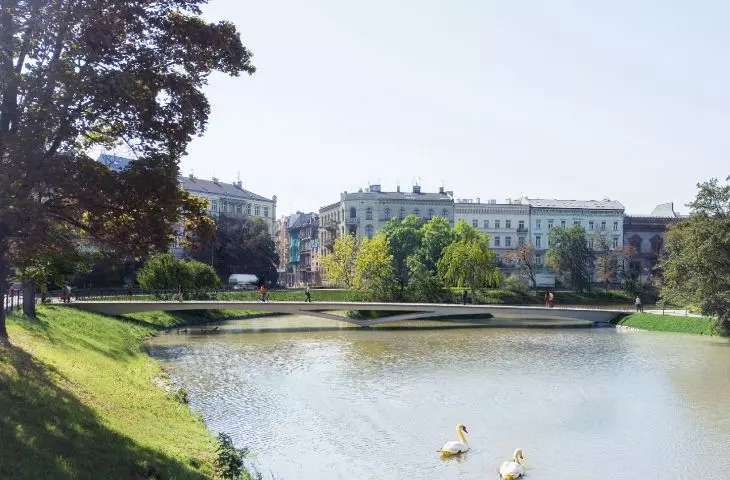
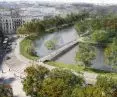
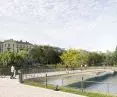
The most favorable bid in the tender was submitted by ASECon, which invited a team from the STOPROCENT Architekci studio. The designers opted for a structure with an economical form and a self-supporting layout - a platform with a light concrete surface based on two arches, which is supported by a centrally placed openwork support. The bridge itself is also guided along a gentle curve, as well as the steel balustrades that extend to the sides and seamlessly connect to the city fence.
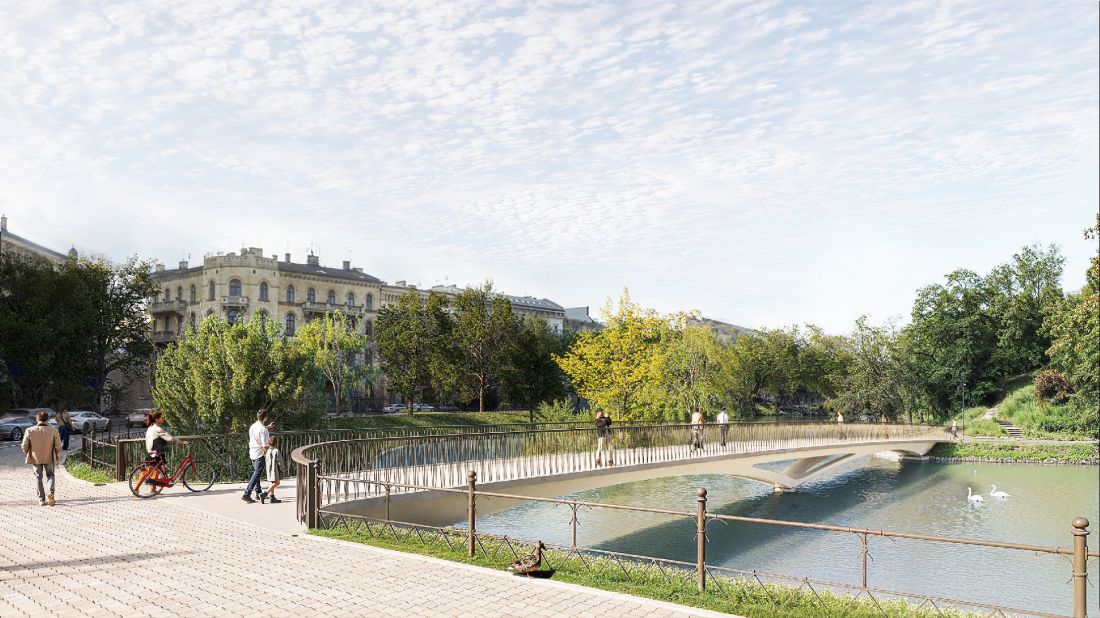
The steel railings seamlessly merge with the city fence
© Wroclaw Investments
The balustrade posts have been arranged in a pattern resembling the spatial letter "W" - referring to the city's name. Their small spacing ensures safety also for the youngest users. The solution used should further limit the possibility of mass hanging of so-called "love padlocks", which have become an undesirable phenomenon on many pedestrian crossings in Wroclaw
- explain designers from STOPROCENT Architects.
Of course, from the point where the footbridge is to begin, one can reach the Saddlebag Bastion - however, the section of about 350 meters in length runs through a busy six-lane (four car lanes and two streetcar lanes) section of Piotra Skargi Street. So this is not a "first-need" project, but a step towards creating a pedestrian-friendly city. So where does the problem lie?
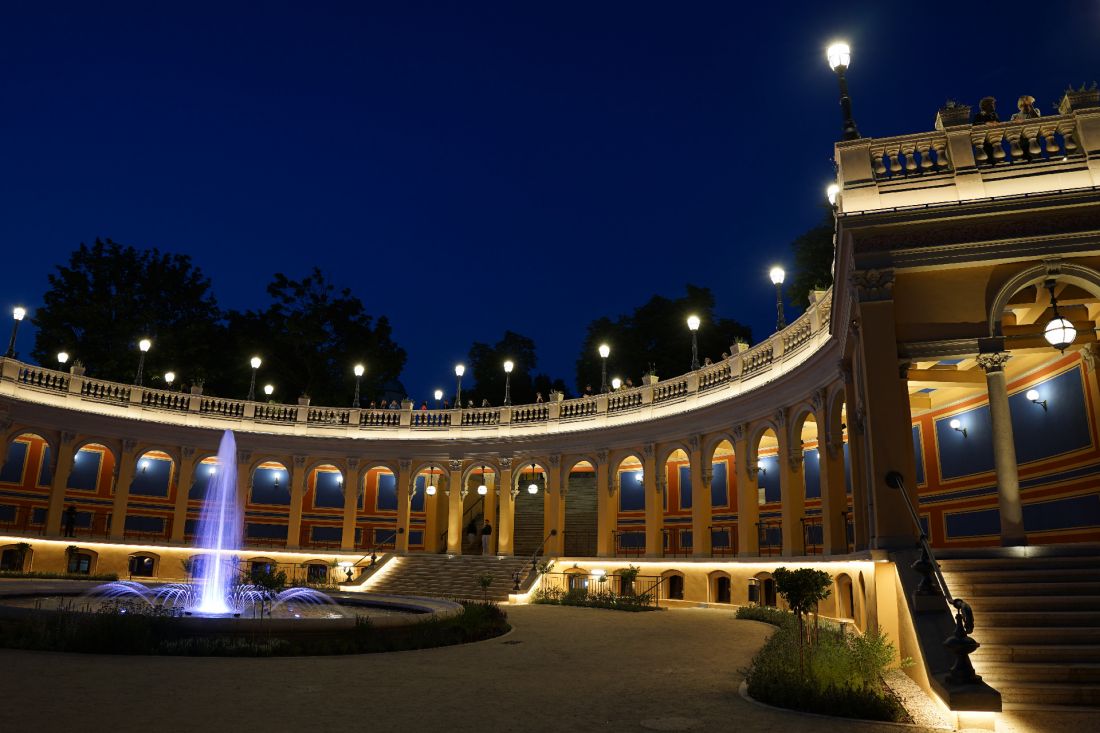
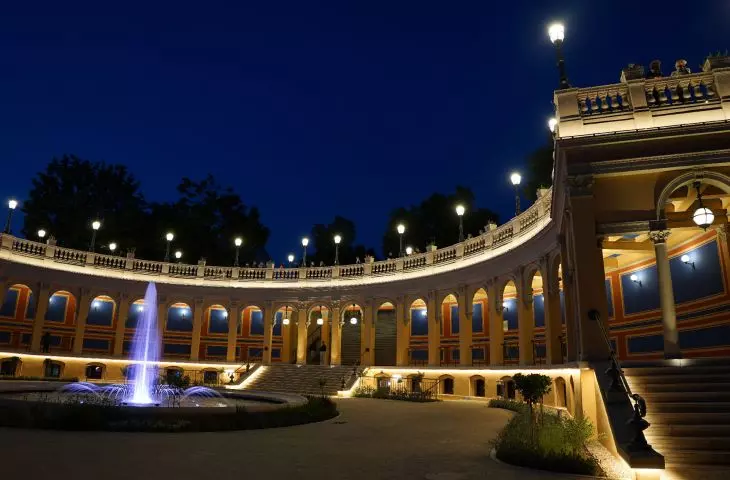
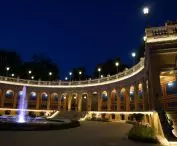
Saddlebag Bastion after renovation
Photo: By Strumyczek | Wikimedia Commons © CC BY-SA 4.0
According to Gazeta Wrocławska, according to Daniel Gibski, the Lower Silesian Provincial Conservator of Monuments, a footbridge in the proposed location and shape would disrupt the urban layout around the historic bastion.
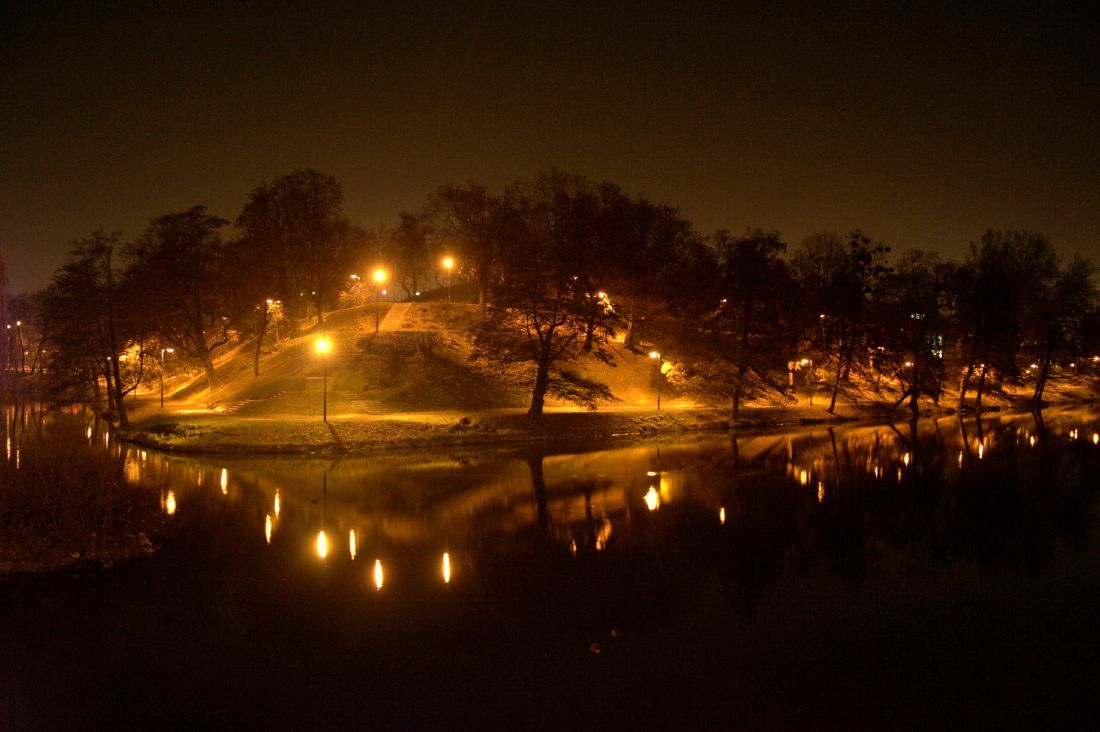
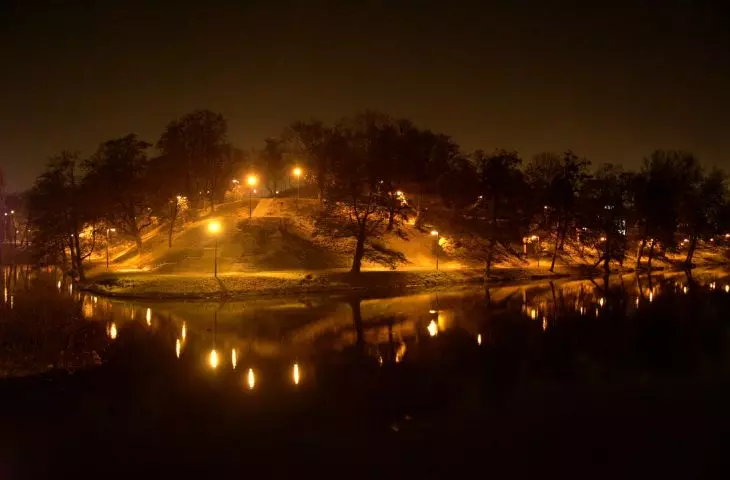
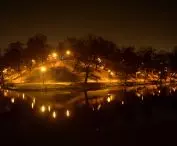
View of Partisans' Hill at night
photo: Siliesiac | Wikimedia Commons © CC BY-SA 3.0
The conservator argued that new elements in this space must fit into the spatial relationships and not distort the surroundings. The priority here is to preserve the heritage, even at the expense of new transportation solutions. The narrative is that he supports the idea of building a footbridge, but one that fits in with the appearance of the area
- explains Konrad Balajewicz in the pages of Gazeta Wroclawska.
Indeed, the footbridge - despite its sparing form - would affect the organization of the space in this part of the city and the viewing axis to the imposing corner of the bastion. However, the architects' goal was to give the crossing as neutral a form as possible that would fit harmoniously into this particular context.
To minimize interference with the historic fabric of the site, the classic abutment was replaced by an additional support located outside its outline. As a result, the final section of the bridge was only overhung over the fascine and connected to the park alleys in a way that does not damage the historic substance
- describe the architects.
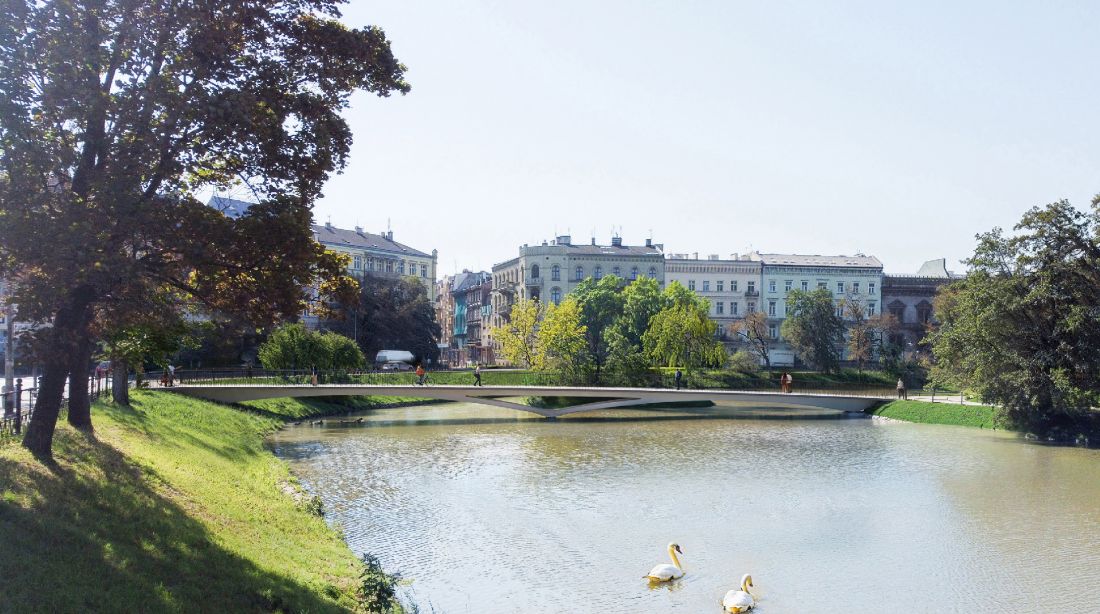
The footbridge platform is based on two arches, which are supported by a centrally placed support
© Wroclaw Investments
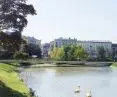
The swans inhabiting the moat are also a challenge and an object of concern, to which the architects alluded, among other things, through the proposed name - Swan Foot bridge (the first species to inhabit the Old Town Promenade running by the moat was to be donated to the city in 1824 by Prussian King Friedrich Wilhelm III). The small island on the moat by the Partisans' Hill is a sanctuary for waterfowl, and for this reason the proposal to build a footbridge leading to it in the 2017 civic budget was rejected.
The arches in the design by ASECon and STOPROCENT Architects are designed to allow swans to move freely, but the location of the crossing right next to the islet, where traffic could potentially frighten the birds, is questionable.
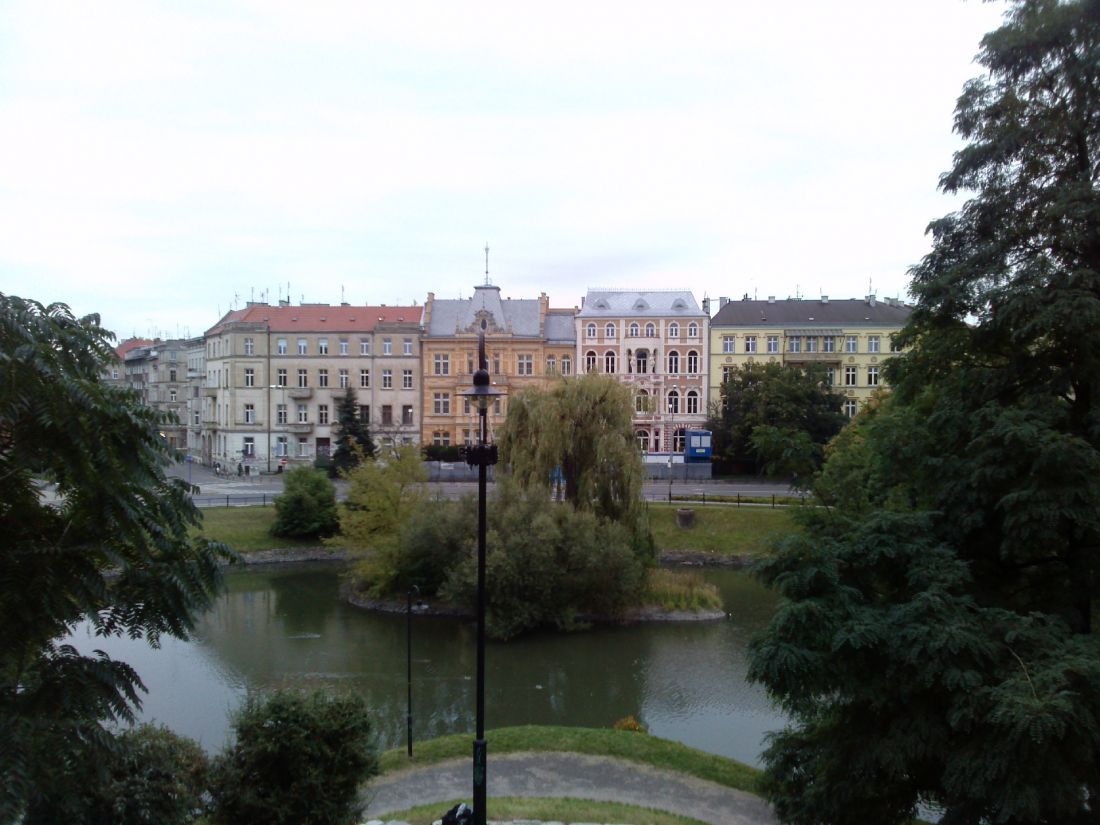
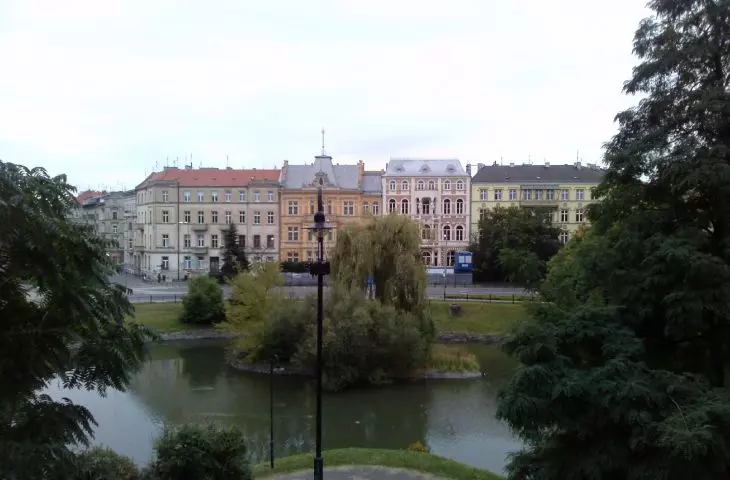
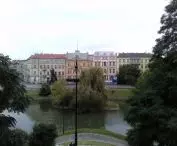
View from the Hill to the islet inhabited by swans
Photo: TeraGood | Wikimedia Commons © CC BY 3.0
How to break out of this impasse? The preservationist was to propose an alternative location (but this was not satisfactory to the City, whose opinion was that a footbridge elsewhere would not fulfill its main, communicative function (it would be only 100 meters away from the nearest passage) or the construction of a mossy foot bridge - an "invisible" crossing submerged in water (which, in the City's opinion, would be an exclusionary solution - due to differences in terrain, the descent to the crossing would have to be by steps). Will the City and the preservationist come to an agreement? Things are not made easier by the fact that residents' voices are also divided.