




It's not a pleasant read. But very informative. The authors show how Jewish architects were excluded from the SARP just before the war. They also try to determine how "from collaborators and brilliant interlocutors" these architects suddenly "became Aliens." Finally, they show us these "strangers" faces, names and works.
Praise for digital archives. It is much easier today to look at the numerous pre-war newspapers and see in a short time that the word "revival" and its derivatives were a constant refrain in them. That the researchers who provide us with accounts of anti-Semitic events and publications of the interwar period do not condense the abomination under an assumed thesis, but simply reflect the character of that era. Agnieszka Tomaszewicz and Joanna Majczyk also did so in their book, exceptionally factually and accurately, following in the footsteps of numerous architects who restricted the practice of their profession to colleagues with Jewish backgrounds. For this was what the expulsion of Jews from the pre-war SARP, modeled on German solutions, amounted to in practice (and in plans to exclude them from the profession almost entirely). An expulsion about which many learned for the first time, because - as Prof. Malgorzata Omilanowska comments on the book's cover - even those interested in interwar architecture knew only "something little" about this case.
This "something not something" acquires in the pages of "Architects and the "Aryan Paragraph"" precise shapes, names and chronology. the book of 350 pages is a precise and very carefully documented case study, which was created on the basis of partially preserved archival materials and residual accounts. First, in a comprehensive calendar, the authors take us through the 1930s: from the political and social background and scattered associations of architects, through the founding of SARP in 1934, which consolidated the community, quickly becoming a professional monopoly, to the "Aryan paragraph" of 1938 sanctioning the expulsion ofJews from the architectural organization. They were supposedly a threat to "truly Polish" and - in general - "decent" architecture and, perhaps most resoundingly, to the financial interests of architects not so much Polish as simply non-Jewish. Other nations with Polish citizenship still had access to SARP. Unlike the Jews, their representatives could, had it not been for the war, have access to public commissions and participate in competitions monopolized by the association. If they were Catholics, they could also design Catholic temples (SARP also placed restrictions in this area).
After the calendar, we get a valuable chapter in the book about the division of the architectural community into "left" and "right." We learn in more detail who of the now highly regarded artists of that era and the first decades of the postwar era were firmly against the "paragraph", and who pushed it like a battering ram (no shortage of surprises!). "Right-wing" took over the leadership in the authorities of the SARP General Board and the most important, the Warsaw branch, in 1937. At the end of the following year, with one-third of the voters opposed, the "Aryan paragraph" was approved. The updated statute took effect two months before the war. It is worth noting that it was one of many such provisions introduced at the time. This was also done by associations of doctors, lawyers, veterinarians, merchants, cinema owners or engineers, among others.
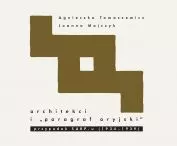
The latter case is addressed more extensively by the authors. They cite voices from the era pointing out the futility of "cutting" engineers needed by the country in the face of the coming war. At the same time, they stress that the background against which architects operated does not justify the pre-war SARP. They do not accept the explanation that "such were the times" - crisis-ridden, steeped in anti-Semitism, with Hitler across the border. Every now and then, moreover, the book bombards us with quotes that sound like German Nazi propaganda. We read not only about the generally shoddy "Jewishness," but also about the everyday danger, for example, what a decent Pole was threatened by the steps of a staircase designed by a Jewish architect. Or what kind of design a Jew Syrkus Shimon used to scare the pine trees in Skolimow. We also read the words of Szyszko-Bohusz, who wanted to make the Republic a "total state," dreamed of a "total citizen," and claimed that only "full citizens" could decide the fate of Poland. Those who swear that "at the first demand of the fatherland" they will sacrifice their lives, property, strength and intellect. And here - note - surprise, one would swear regardless of nationality. The now elderly author of this inclusive disclaimer, however, passed over the "Aryan paragraph" imposed mainly by the young. Those in their twenties, on the other hand, did not hesitate to authoritatively assert that "Jews do not respond normally to three dimensions." Therefore, they cannot provide architecture that is beautiful and proportional. We get evidence of this, of course, in the form of press photos with venomous comments. These and other illustrations from newspapers of the time (opting for and against the "paragraph") perfectly complement the text of the book. The angular paragraph on its cover, composed of two parts of a swastika, was, incidentally, taken from a cartoon commentary of the era.
Finally, the illustrations are an extremely important part of the last, extensive section of the work, entitled "Architect - Jew - Alien." This is a list of biographies of selected architects of Jewish origin and their realizations. Many biographies break off, as it is not difficult to guess, during the war, often without a fixed date of death. There are on this list both well-known artists and those extracted from collective oblivion by the authors. Looking at their works, it is impossible to attribute low quality, shoddiness or lack of proportion to Gelbard, Goldberg, Paradystal or one of the Sigalins. Nor is it possible today to discuss whether their realizations defiled the "Polish spirit" or prevented the "native" architecture of a reborn Poland from materializing. One would have to ask the pre-war adversaries and critics of "Jewishness" about these ideological and rhetorical tricks used to foment "economic anti-Semitism." Besides, they would have to define these vague terms more precisely. After the war, they remained silent or, for a while, clumsily explained themselves. One of the few such statements is quoted by the authors in extensive excerpts.
It's good, by the way, to trace the PRL fate of the representatives of the SARP "left" and "right". With the "leftists" it is easier: they powered the state apparatus, influenced the course of events on a larger scale, and were often too close to power and politics. So it's more interesting to look at the "right-wingers" with their ideological and professional volte-face, the important positions they held, up to the decorations and honors they were awarded. The authors report that on the "paragraph" issue they have not yet written the last word. They will dig further, inquire, restore forgotten names to our memory.But still they have done a huge amount of work. It's just a pity that its contents disturbingly resonate with the rhetoric of the Polish party, which is growing in strength today, microscopic until recently. So one can read "Architects and the "Aryan Paragraph"" also as a warning. But even without this added value , it is one of the most important books of the "Architecture Is Most Important" series.
{tag:AuthorA&B}
more: A&B 1/2026 - Estates,
download free e-publications of A&B