





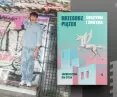

"What surrounds us is not really architecture at all, but only construction." - These telling words of Marta Lesniakowska are recalled by Grzegorz Piątek in the introduction to his latest book "Temple and Dumpster. Architecture for Life," arguing that this is an outdated and false image. The architecture of the future is more profane than sacred. Or perhaps put another way - it is sacredness enchanted in the everyday. The metaphysical dimension of the titular dumpster or public toilet.
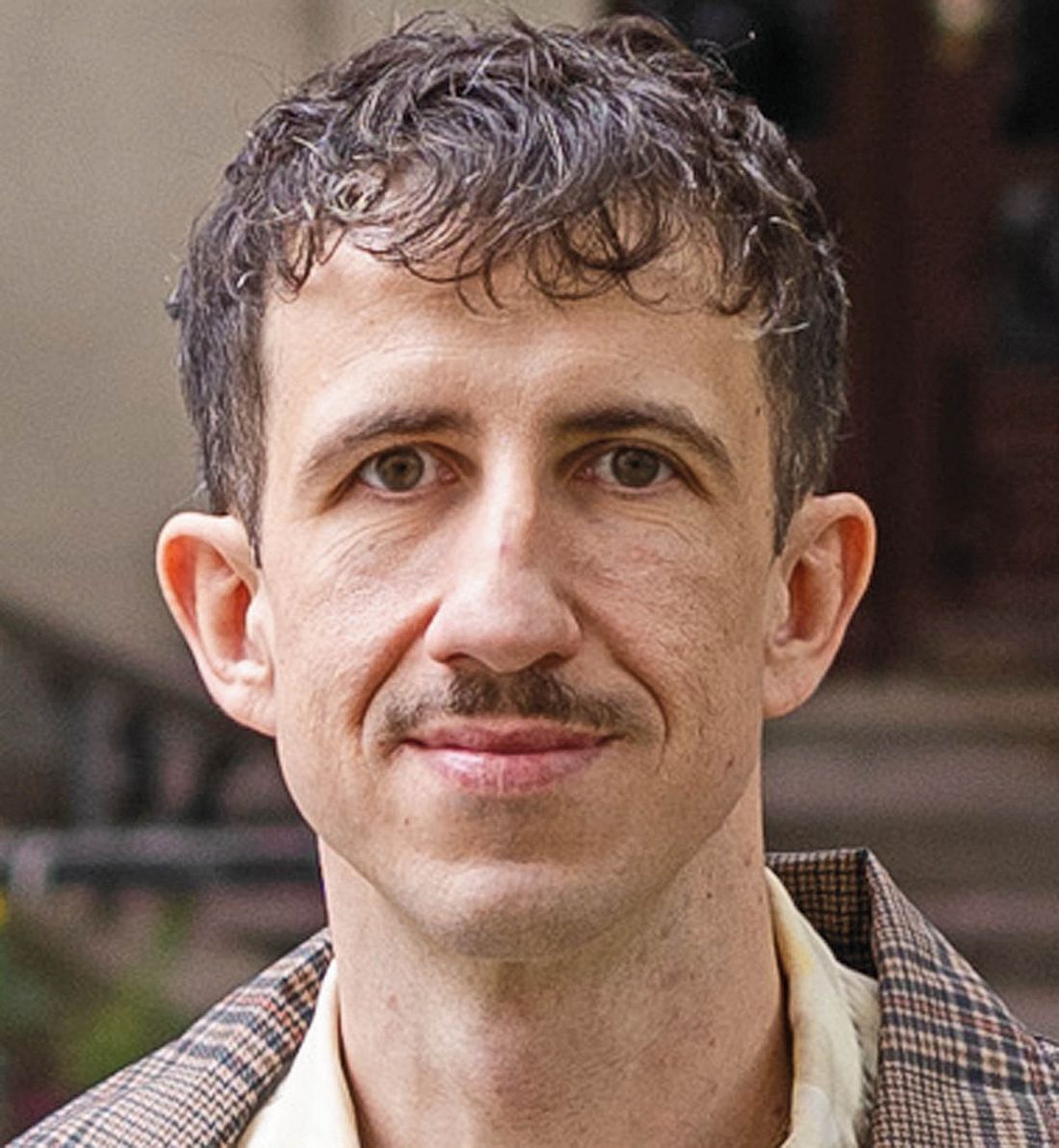
Grzegorz PIĄTEK - Born in 1980 in Warsaw, Poland. In 2006 he graduated from the Faculty of Architecture at the Warsaw University of Technology. Just two years later, in 2008, together with Jaroslaw Trybus, he curated the Golden Lion-winning exhibition "Hotel Polonia. The Afterlife of Buildings" in the Polish Pavilion at the 11th Venice Architecture Biennale. Piątek is the author of a number of award-winning books related to architecture, the city and the creators of the changes taking place in these fields - his book "Sanator. The Career of Stefan Starzyński" (2016) won the Literary Award of the City of Warsaw, "The Best City in the World. Warsaw in reconstruction 1944-1949" (2020) became the inspiration for "Opera about Warsaw," and "Promised Gdynia. City, Modernism, Modernization 1920-1939" (2022) was honored with the "Nike" Readers' Choice Award. Winner of the Prize of the Minister of Culture and National Heritage 2025 in the category of Architecture and Space.
I have been following the works of Gregory Friday since the very beginning. From "Icing and meat", through "Sanator", "The best city in the world" and "Unbreakable", to "Promised Gdynia". I cheer him on, anxiously looking out for his next titles. This anxiety is the result of growing expectations for new books and the fear that they may not live up to them. What if it turns out that the author has gone for the easy way, started to shamelessly cut coupons from his otherwise well-deserved popularity? Or maybe he decided to go in a new direction, which will not appeal to me at all? Fortunately for me, the winner of the 2023 Readers' Choice "Nike" is a searching author, and the result of this search is a bravura hybrid of essay, reportage and manifesto. One can feel the looseness of the book, the writer's sprezzatura. It is as if the personal tone of the book and the lack of a rigid framework of "great architecture" or "great history" gave him wings.
Thus, Friday leads us to his apartment in a modernist tenement from the 1930s, leads us through blocks of apartments made of large plates, looks inside kindergartens. He shows the reader the trail of the capital's urban toilets and the "stable of unicorns," i.e. a huge streetcar shelter in the center of Lodz. Sometimes he throws a biting remark aimed at architects or politicians. At other times he surprises with an almost exhibitionist honesty, as when he admits that he "often has to pee." In doing so, he does not cross the boundaries of genre or good taste, while subsequent sentences give the impression of delicacy and balance. Personal interjections in someone else's case would perhaps be annoying, but in Fiver's case they charm with subtlety. "The Temple and the Dumpster" is a book written in defense of the weaker (a similar intention was guided, for example, by Magdalena Milert in "For Whom is the City? How to create a space that cares about us"), and the author, by revealing his own imperfections, seems to be saying "I have that too." Thus, he prompts the reader to look at everyday life and the problems it carries. Who among us has never searched for a public restroom in a foreign city in a hurry? Who, in his pre-school or early elementary school days, has not had the urge to disengage, if only for a moment, from the hustle and bustle of his peers and hide in a quiet and safe place? Who, looking at an apartment that he wanted to buy or rent, never thought "who designed it (comma) like this"?
While reading "Temple and Dumpster" the reader may catch his head many times. The list of absurdities described in the following chapters, resulting from ignorance, greed or lack of empathy, is long. Friday stigmatizes them with his usual grace, and instead of throwing a radical, provocative slogan like a Molotov cocktail he prefers to resort to irony, allusions. This is one of the great strengths of the book and also evidence of the author's literary evolution. Previously, a characteristic element of Friday's style was the otherwise neat and catchy bon mots and metaphors (for example, the Gdynia market hall became a "cathedral of parsley"), which, however, sometimes seemed a bit forced. Now, instead of simple, albeit impressive eristic tricks, we have reflections no less brilliant, but expressed in a completely different way. Using architectural references: "parsley cathedral" was a project by Bjarke Ingels, while the poetics of "Temple and Dumpster" is closer to the architecture of Romuald Gutt. Even if this transformation was the involuntary result of some natural process, it perfectly harmonizes with the content of the book, which in purely literary terms is Fiver's greatest achievement to date.
One of the most memorable passages is the paragraph in which Friday exposes the hypocrisy of the modern world:
Our culture, despite the theoretical sexual revolution or acquiescence to skimpy dress, has an ambiguous attitude toward the body. At first glance, it seems obsessed with youth and fitness [...]. This same culture, however, also forgets that the body does not exist solely as a form or image, only that it smells, breathes and runs....
This is not the only passage when the author decided to deconstruct a popular myth or deconstruct a monument. I am extremely curious about the reaction of lovers of "great architecture" created by "great creators" to the suggestion that Le Corbusier's talent for aphorisms and storytelling may in fact have been behind his success. Will they be outraged to read that Juliusz Żórawski designed buildings that may have been beautiful, but were not very functional? What will they answer to Halina Skibniewskaya, who claimed that in housing the most important thing is the comfortable, ergonomic layout of the apartment and the view from the window, while the form of the building itself is a secondary thing?
Grzegorz Piatek's new book is not short of historical considerations (the aforementioned history of Skibniewska's and Żórawski's buildings), reporter's threads (the chapter devoted to Lodz's "stable of unicorns"), brilliant essayism - everything we've become somewhat accustomed to from his earlier texts. However, the last chapter reveals a new, unknown face of the author - the face of a revolutionary. In the manifesto "Architecture for Life," Friday openly criticizes contemporary architecture, calling it zombie modernism, accusing it of being ideologyless and lacking empathy. It is this empathy, as well as the public toilet, which recurs in the last part of the book, that make "Temple and Dumpster" evoke associations with the work of Michal Witkowski. He, too, like Piątek, is able to find beauty in the everyday, in simple and often flawed things.
Either architecture or revolution," wrote Le Corbusier. Architecture is a revolution," seems to say Grzegorz Piątek, for whom revolution is not a guillotine and beheadings rolling towards the gutters, but a radical change in the view of the world. This one, in turn, does not have to be implemented by violence. On the contrary, its greatest weapons can be empathy and tenderness.
Błażej Ciarkowski
Read more: A&B 12/2025 - MBA Kraków 2025: RE-THINK,
download free e-issues of A&B