




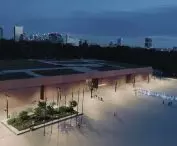
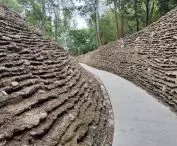
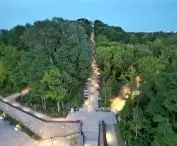
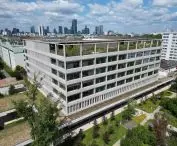
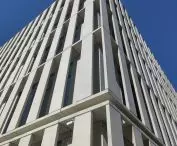


Concrete has been functioning in urban space since its inception. Initially hidden under layers of other materials, it gradually evolved with the directions of architectural development - from a purely structural material to an irreplaceable element shaping the urban landscape. Paraphrasing the words of Professor Dariusz Kozlowski from the introduction to the publication Concrete Architecture - concrete, which is something common in construction, in architecture can become a pretext for creating exceptional things.
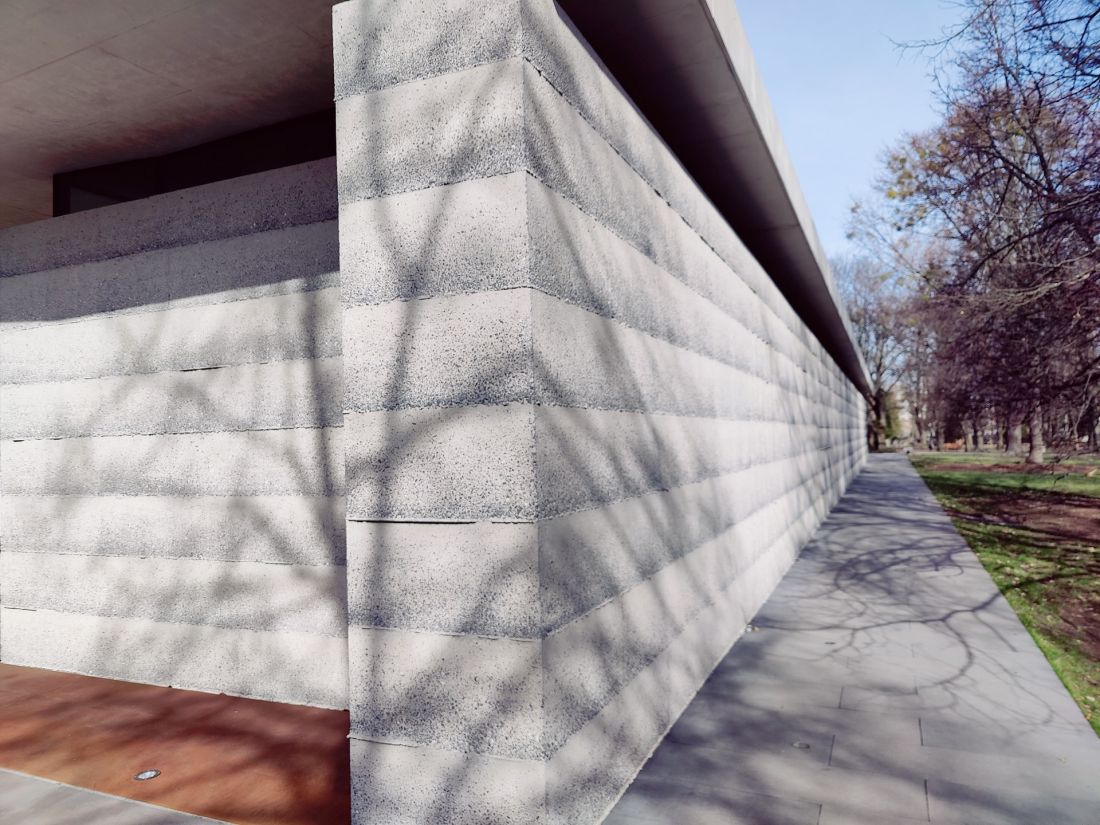
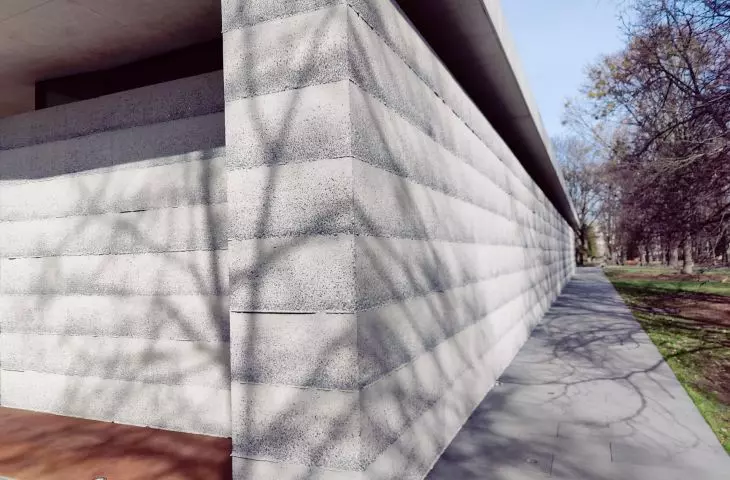
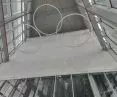
Chamber of Remembrance at the Wola Cemetery
Photo: Krzysztof Kuniczuk
The approach to concrete has changed over the decades: from the "classic" material present in the works of Le Corbusier, Kenzo Tange or Clorindo Testa, to the "expressionist extreme" characteristic of Zaha Hadid's work. Given the enormous potential and range of applications of concrete, it is impossible to view it solely through the prism of large-scale realizations such as the La Tourette Convent, the Michigan Cultural Center, the Bank of London in Buenos Aires, the 21st Century Art Museum in Rome, the Museum of Modern Art in Warsaw or the Polish Army Museum in Warsaw. To do so would be to overlook the extremely wide spectrum of concrete's presence in everyday urban space.
In Poland, in particular, concrete as a surface layer - influencing the visual perception of space - for a long time appeared mainly in sidewalk and road surfaces, small architectural forms, and increasingly also as a material for art installations, works of art or monuments. It is this everyday presence of concrete - often unnoticed - that shows how versatile and durable this material has become in shaping the space around us.
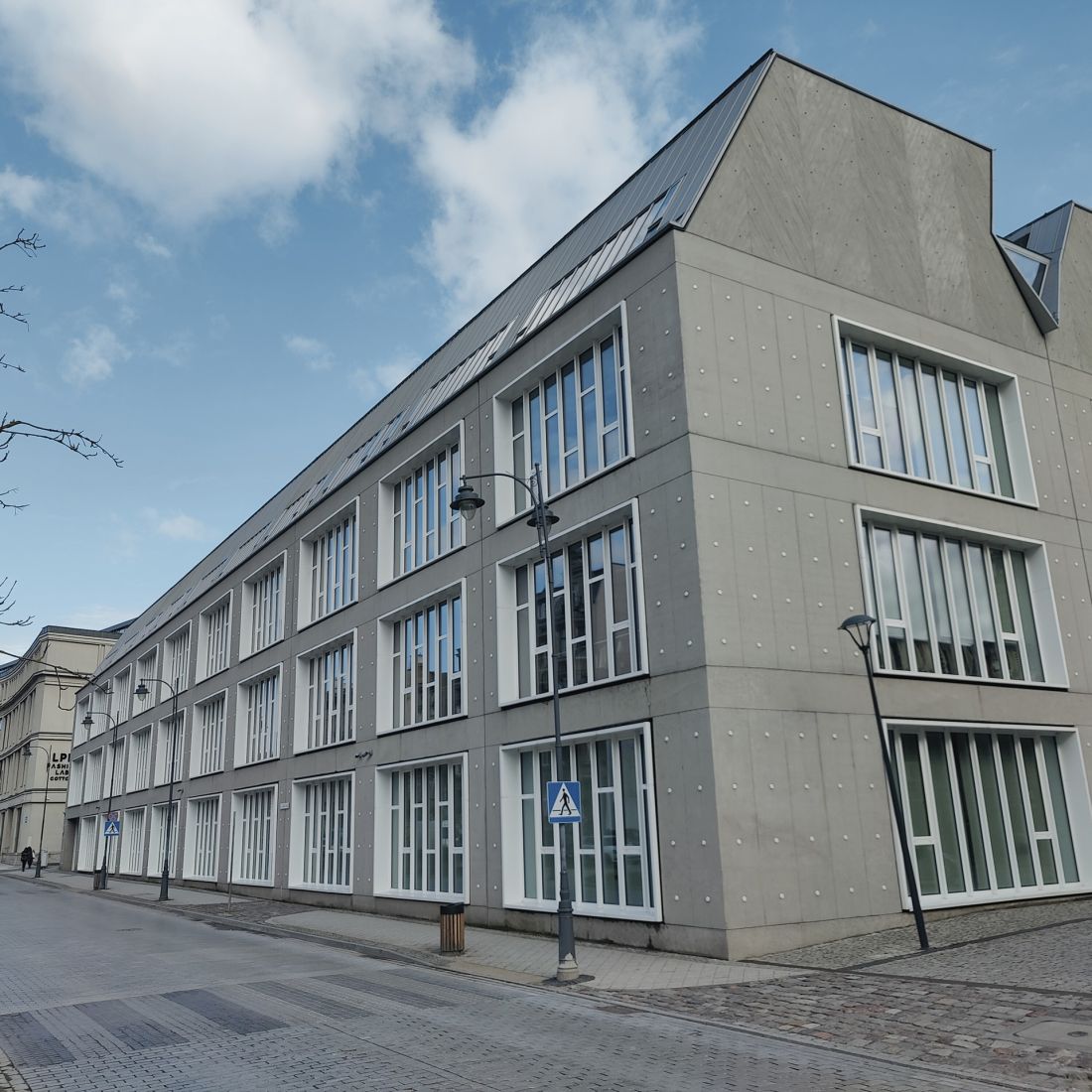
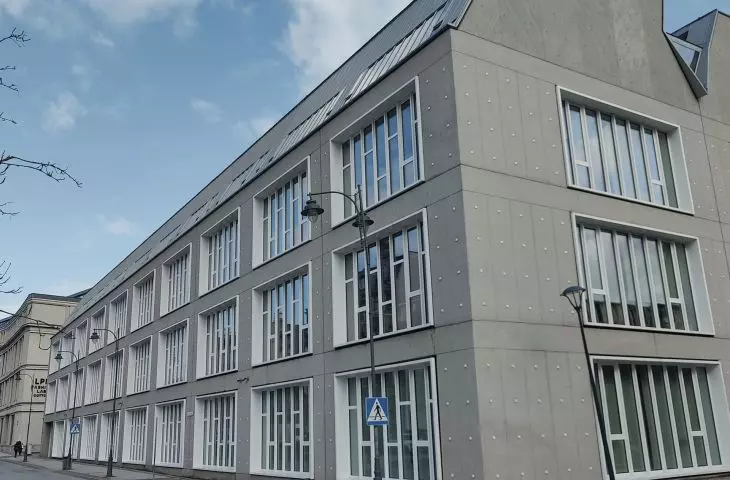
LPP Fasion Lab
Photo: Krzysztof Kuniczuk
In Poland, as in all of Eastern Europe, concrete - after years of being associated with "concrete estates" and the so-called "great slab," that is, with a material prone to degradation, crumbling, cracking and loss of aesthetics - has gained a completely new image. It is now perceived as a modern, durable and aesthetically pleasing material, used for simple, orderly pedestrian pavements, representative squares, minimalist facades and sophisticated interior finishes.
Technological advances have made it possible to return to concrete with exposed aggregate, but this time in the form of durable, weather-resistant solutions, suitable for both small-scale architecture and large-scale paving or facades. At the same time, there is a renaissance of terrazzo - currently functioning under the names "polished concrete" or the more prestigious form "terazzo." In turn, the name "terrazzo" itself is beginning to take on a historical character, especially for younger generations of architects.
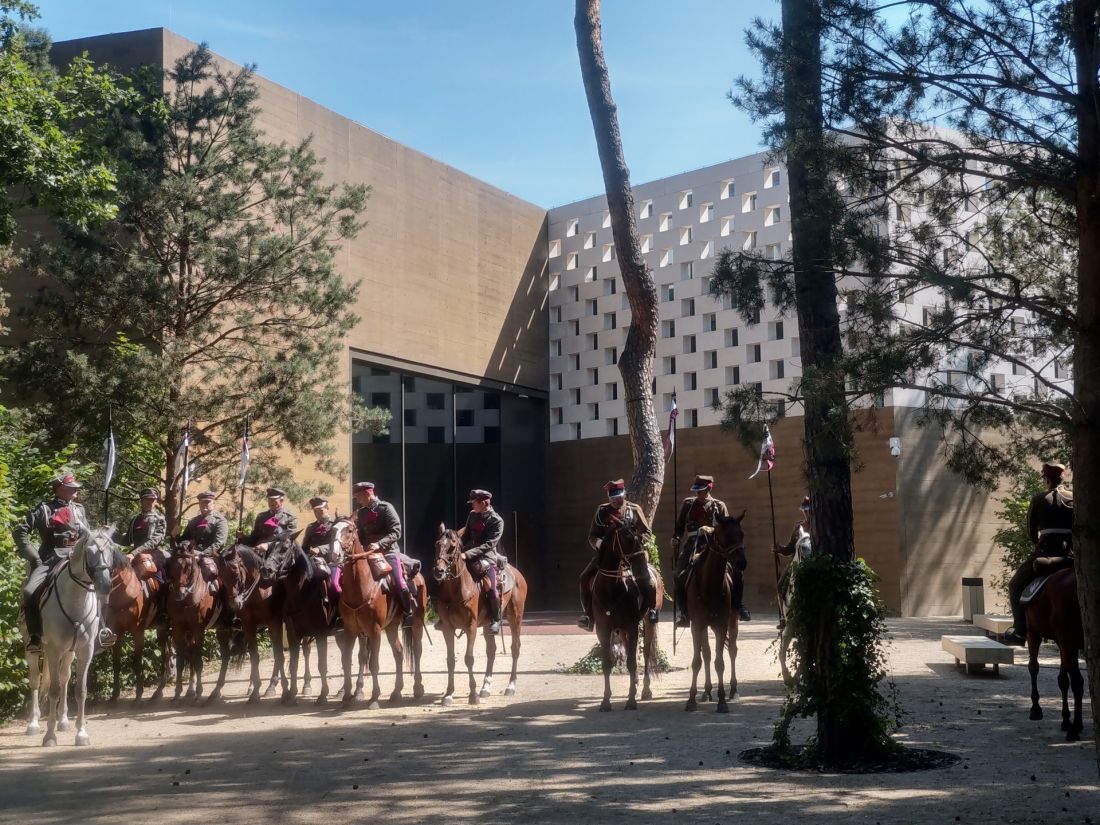
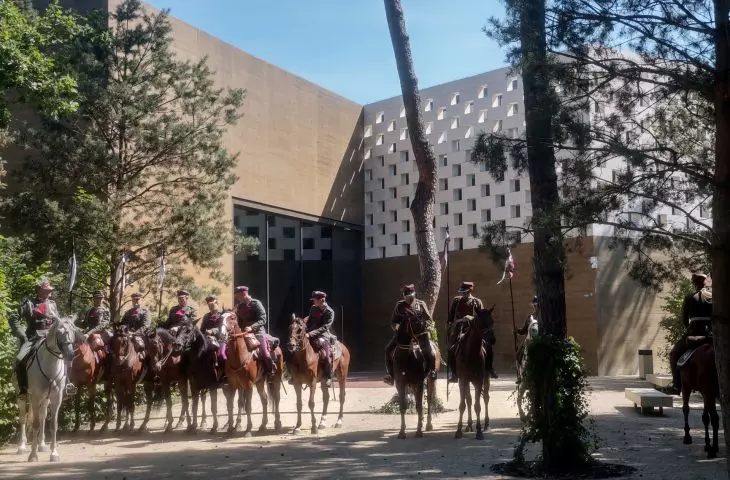
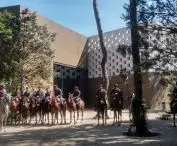
Museum of Józef Piłsudski in Sulejówek
Photo: Krzysztof Kuniczuk
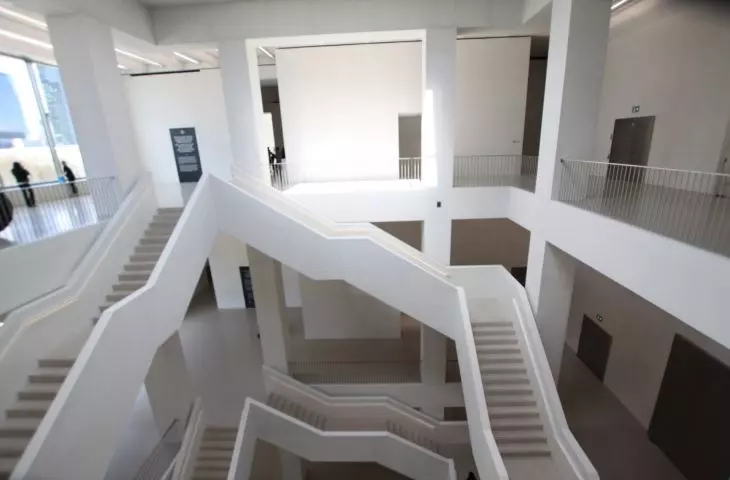
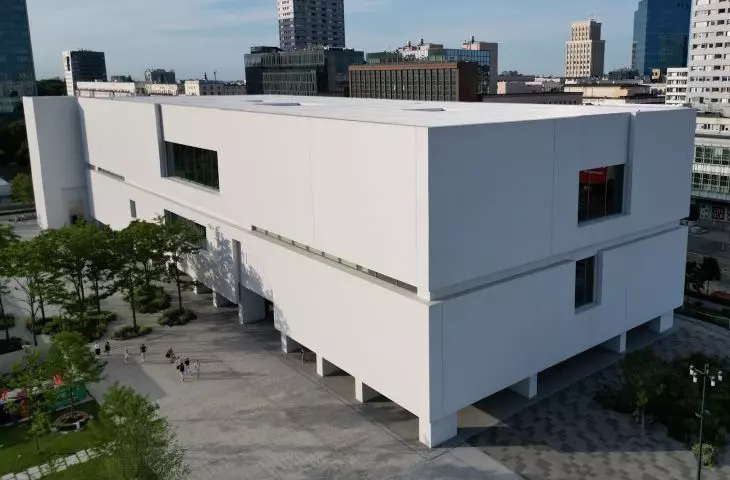
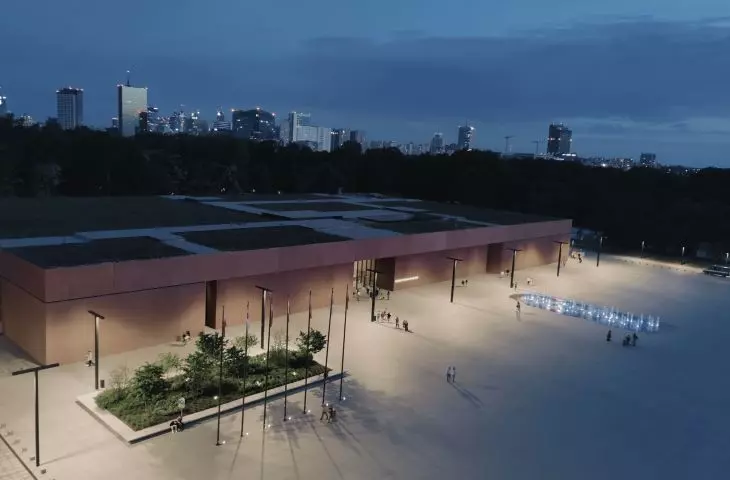
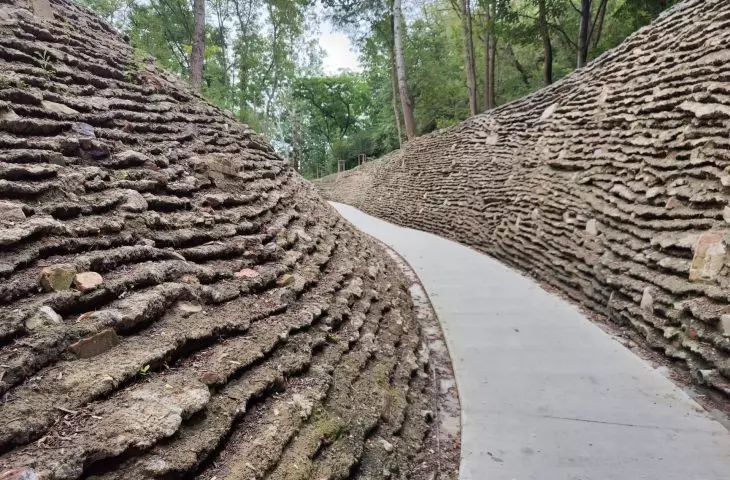
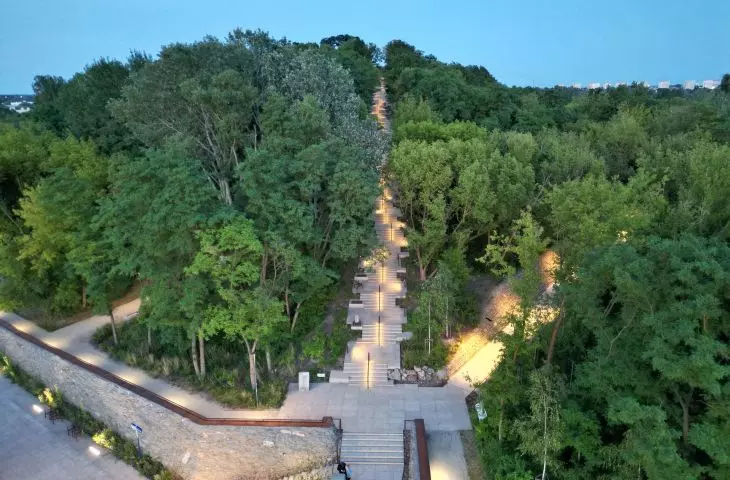
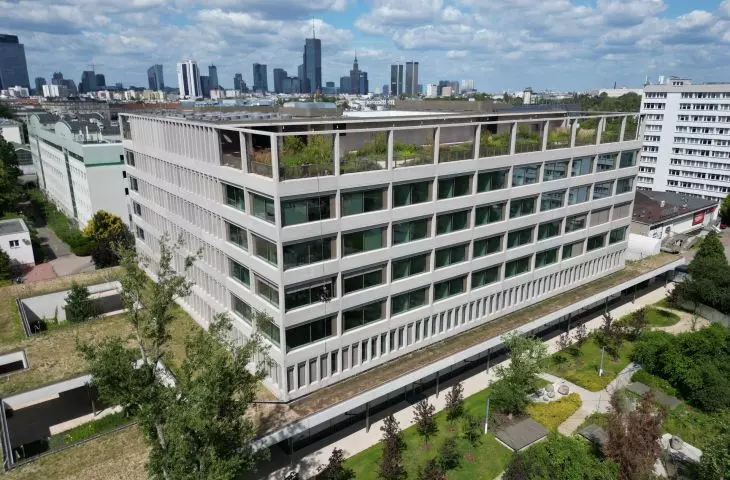
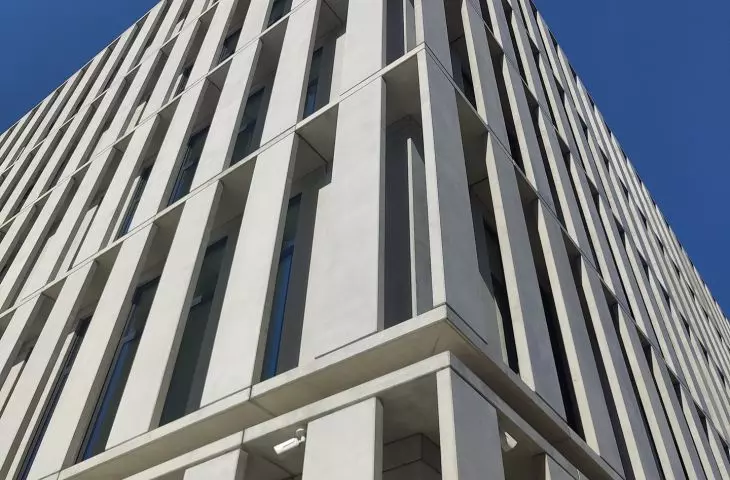
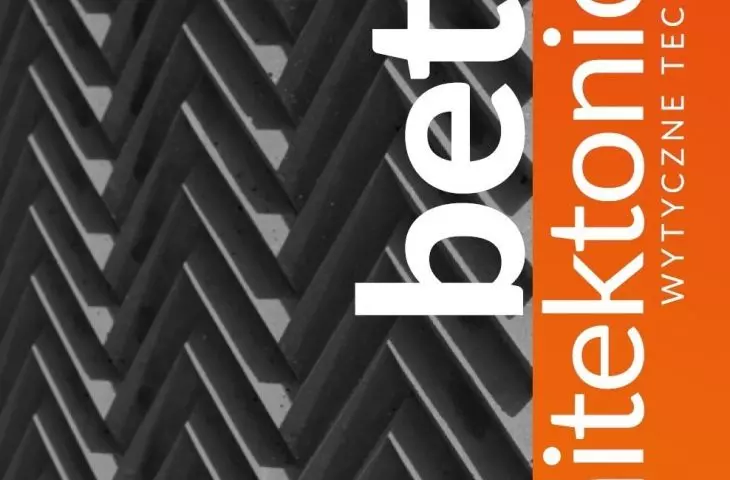
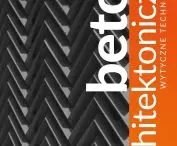
The development of concrete - both technologically and aesthetically - which has been observed for decades in Europe and around the world, has clearly accelerated in the last decade, especially in Poland. The use of white concrete on such a large scale, as in the case of the Museum of Modern Art in Warsaw, is rare internationally. Innovative approaches in concrete technology are also evident at the Polish Army Museum, where the use of large-format matrices as long as 7.5 meters to replicate the chevron pattern on the facade was the first application of its kind in Eastern Europe. Examples of the development of concrete technology in public space also include the layered concrete used in the "Storm" Action Park under the Warsaw Uprising Mound and the polished facade of the Ochota Campus of Warsaw University.
All these realizations testify not only to the dynamic progress of concrete technology, but also to the growing design awareness and courage of architects, who are increasingly willing to reach for this demanding but extremely versatile material.
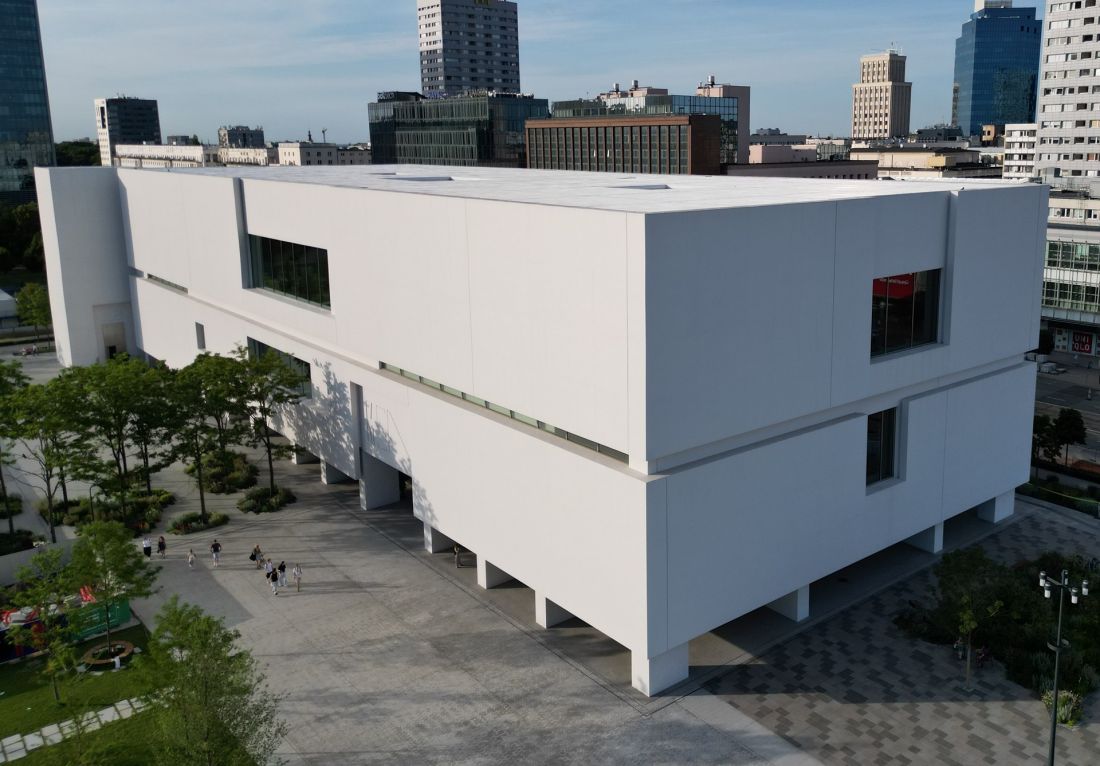
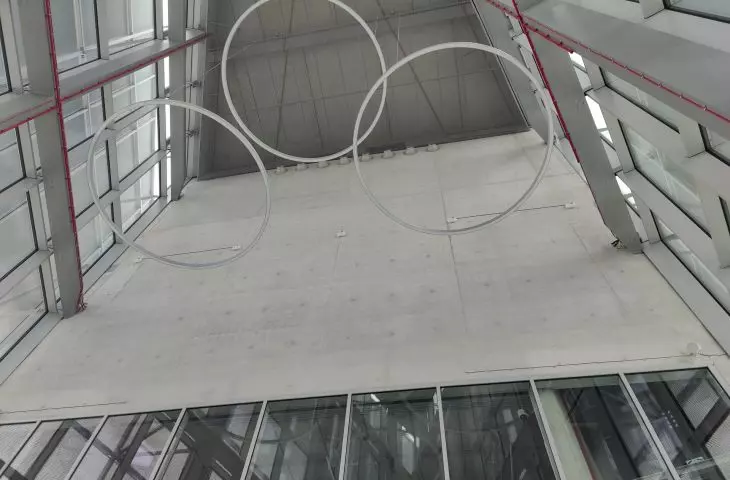
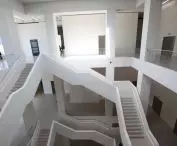
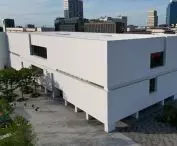
Museum of Modern Art in Warsaw
Photo by Krzysztof Kuniczuk
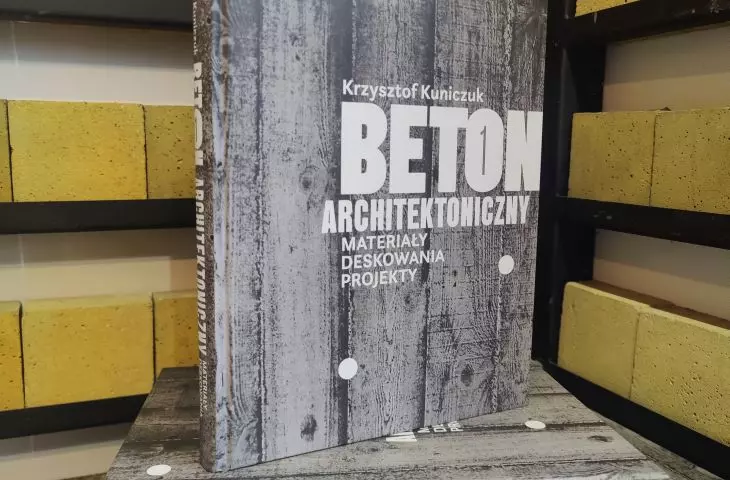
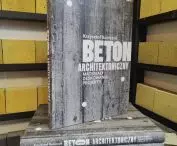
Published in December 2025, the book Architectural Concrete. Materials. Formwork. Projects was originally intended to be part of the second, expanded edition of the book Architectural Concrete . Technical Guidelines (Krakow 2025), but due to the volume of the text and the abundance of photographic material, the author decided to split it and publish it in two separate items. In the current publication, much attention is paid to the materials used in the production of concrete, with particular attention to their influence on its appearance - especially on the color and texture of the surface. An extended section discussing sheathing and formwork systems is designed to enable architects and engineers to make a more informed choice of them in terms of shaping the texture of architectural concrete.Completely new element of the book is its third part, in which - in addition to describing the author's experience with the design and implementation of architectural concrete on the example of selected projects (from conception, through testing and development of specifications, to author's supervision) - architects and investors also speak, sharing their thoughts on the use of this material in design and construction practice. The selection of individual projects was guided by the desire to review possible realizations with architectural concrete. Among them are large and complex museum buildings, such as the Museum of Modern Art in Warsaw, the Museum of Józef Piłsudski in Sulejówek and the Museum of the Polish Army in Warsaw, as well as public buildings, such as the Ochota Campus of Warsaw University, the Cogiteon Science Center in Krakow, the District Court in Częstochowa and the Memorial Chamber at the Wola Cemetery in Warsaw. The realization of the LPP Fashion Lab in Gdansk was presented as an example of a commercial building. Meanwhile, the use of architectural concrete in open spaces was illustrated on the example of the Park of Action "Storm" under the Warsaw Uprising Mound. The compilation could not miss single-family buildings, where investors are increasingly bold in using concrete as a leading material in the implementation of the project, hence two objects were approximated: Eutymia near Warsaw and a house realized in Warsaw's Wawer district.
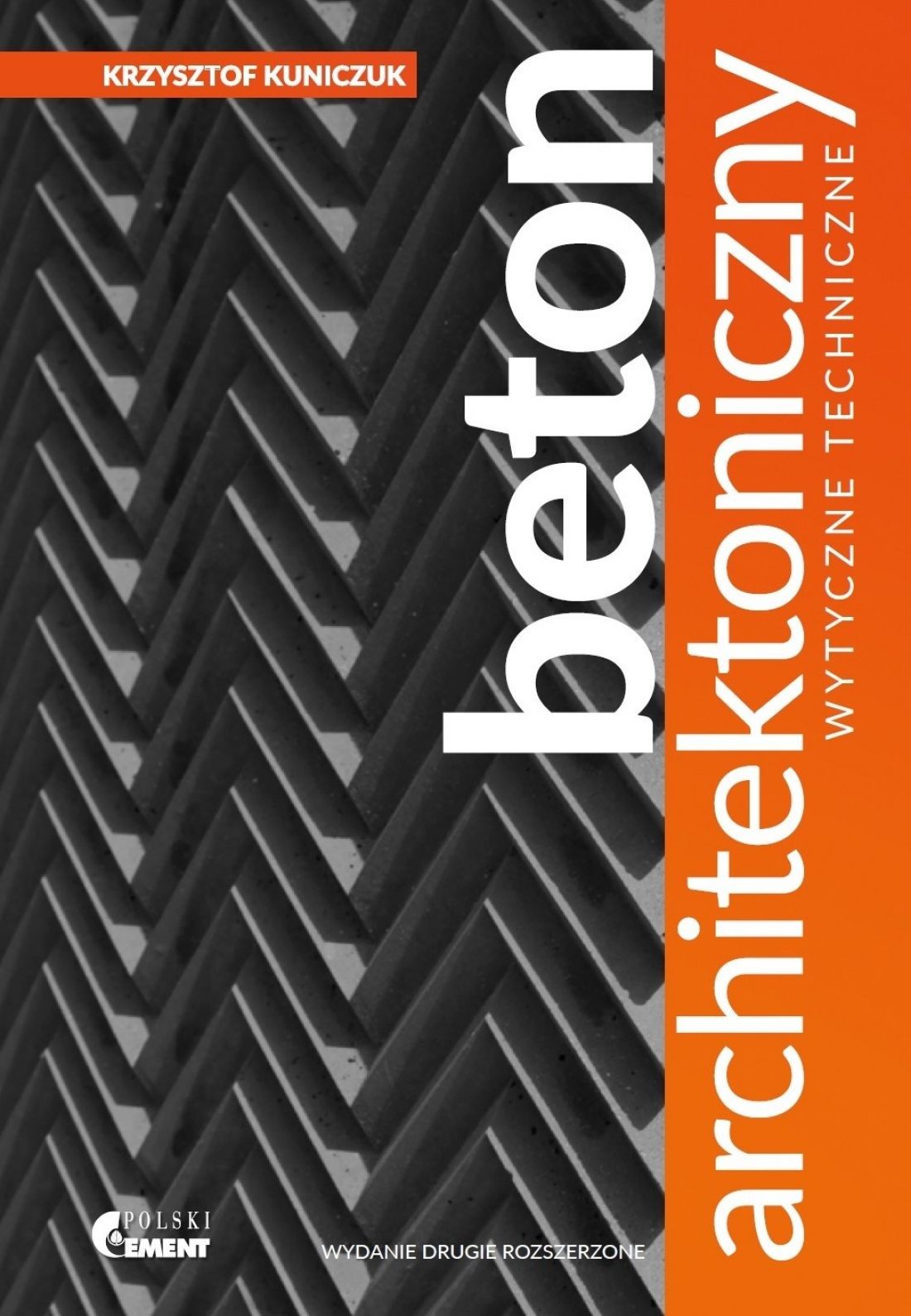
Photo: Krzysztof Kuniczuk
Publisher: Krzysztof Kuniczuk - Architectural and Specialty Concrete Technology
Distribution: https://zamowienia.tbais.pl/