




A decent train station won’t be ready for more than 8 years — officials announced on Tuesday, and they’re launching a bidding process. There will be no design competition. Public consultations? Not right now. There will also be no specific repairs to the facilities currently serving passengers. These are the latest decisions regarding Poznań Główny. Activists and community leaders are appealing: hold consultations immediately; let’s not repeat old mistakes.
Second in the country in terms of passenger volume, yet the first to be both so large and so poorly managed. For 13 years, Poznań’s main station has been a functional, aesthetic, and logistical failure, experienced by nearly 30 million passengers annually (only Kraków has more). On Tuesday, September 29, a call for bids was announced to develop a functional concept for the station and the entire facility. The announced completion date is 2035. The estimated cost is 6 billion zlotys. Construction work is scheduled to begin in 2030. When announcing the tender, the authorities of Poznań and Polskie Linie Kolejowe SA also presented the main guidelines, which, however, leave much to be desired. Concerns arise from the lack of a competitive bidding process and a flawed approach to public consultation.
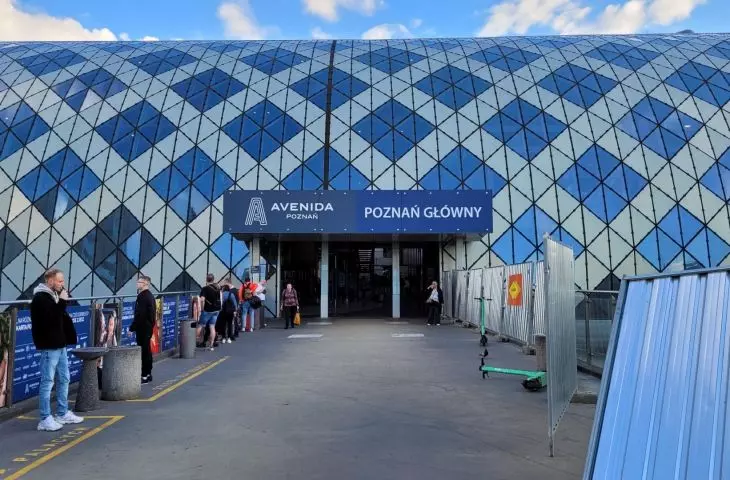
That’s the gist of it; now it’s time for the details. Let’s recall that the current state of Poznań’s train station is the result of a rushed and highly opaque project carried out at breakneck speed ahead of the EURO 2012 soccer championship. At that time, railway officials partnered with the Hungarian company Trigranit, which first built a new, small station building over three platforms and then added a shopping center many times its size. Locating the new “station” on one side of the platform and track layout was significantly worse than the central location of the old building (dating from 1879, after numerous renovations). Why was this decision made? “Chlebak”—as the new terminal was nicknamed due to its shape—was simply meant to direct passengers to the shopping center (then Poznań City Center, now Avenida).
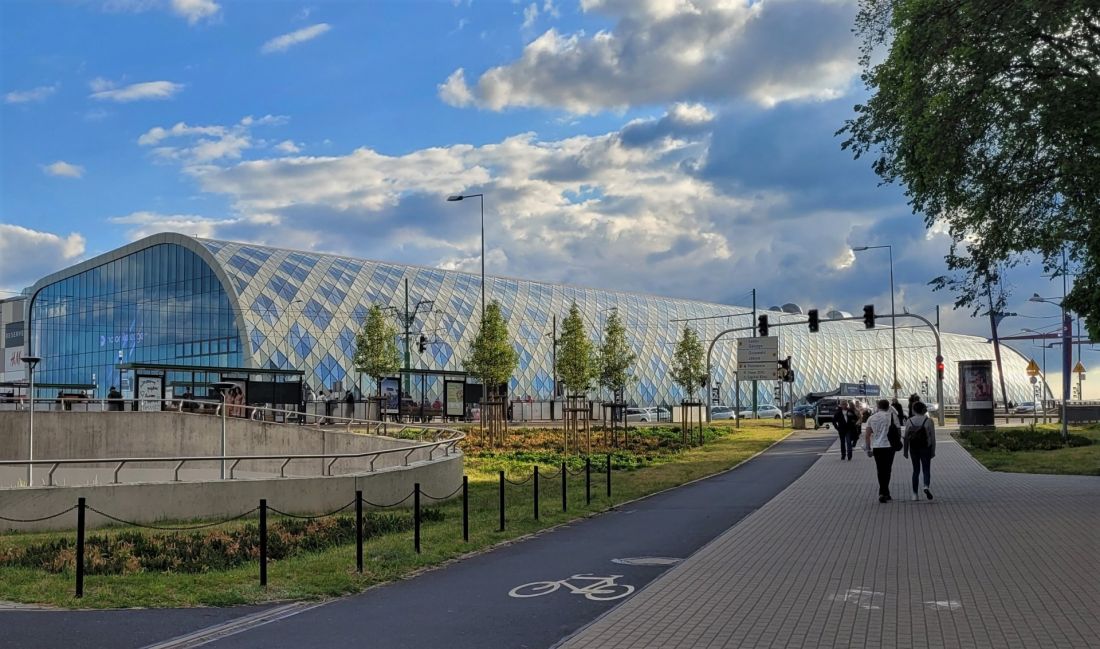
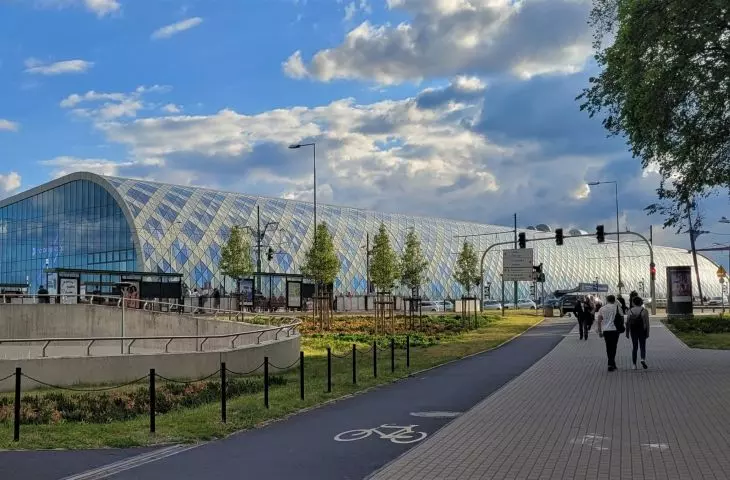
Poznań Główny Station — the station building connected to the station-side section of the Avenida shopping mall (the station occupies about 2/5 of the volume of the “Chlebak” visible in the photo)
Photo: Jakub Głaz
The station labyrinth
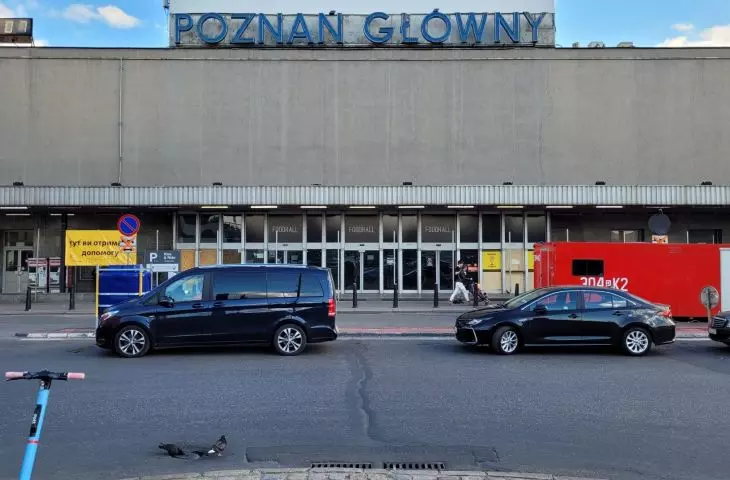
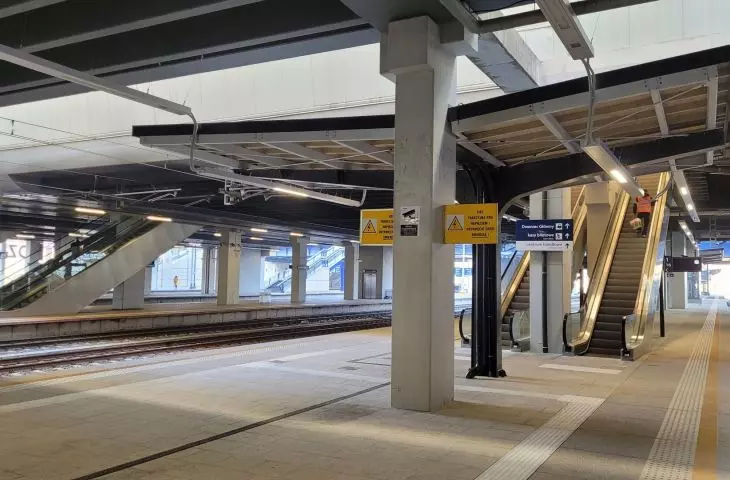
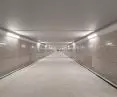
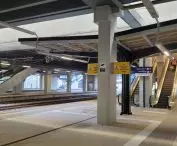
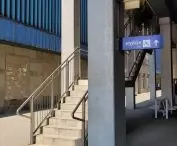
When railway officials closed the old station in 2013, the entire station’s layout became highly dysfunctional, and it remains so to this day. Passengers must navigate as many as three levels to reach the platforms; sometimes, the walk from the ticket office to the train takes over 5 minutes. Furthermore, the building and its access points are cramped; the facility is already severely run-down, with a chaotically arranged interior, and the escalators to the platforms are frequently out of order (originally, there were only escalators going up; passengers had to walk down). The platforms themselves are also uncomfortable and unattractive, especially those located beneath the dingy multi-level parking garage adjacent to the “breadbox.” The old building stands closed and is falling into disrepair. The whole place is unintuitive, chaotic, and neglected. Travelers constantly get lost within the station, even after the platform numbering was revised three years ago and other minor improvements were made in response to public pressure.
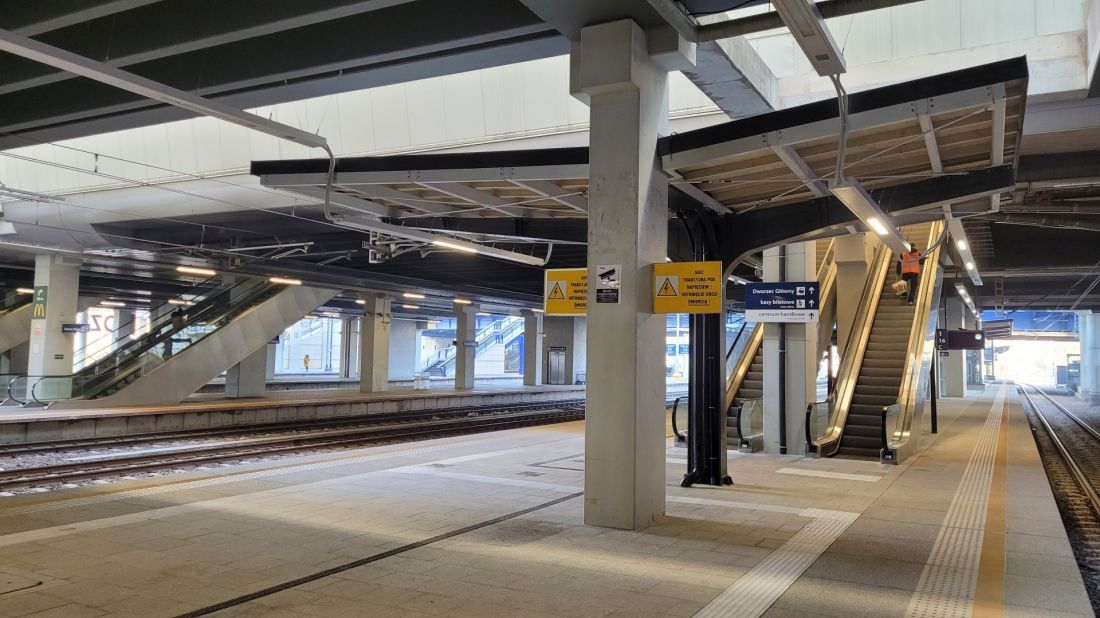
Poznań Główny Station — Aesthetics and Functionality of the Platform Under the Multi-Level Parking Garage
Photo: Jakub Głaz
Despite this dire situation , work on a thorough renovation of the station has been dragging on for a decade. We have reported on it numerous times, citing the repeated announcements of new deadlines for the completion of a proper station and track layout. If decision-makers had kept their word, Poznań would have had a better station three years ago. Meanwhile, work is only now beginning on the functional design, which is to be selected through a tender that has just been announced (the opening of bids is scheduled for November of this year).
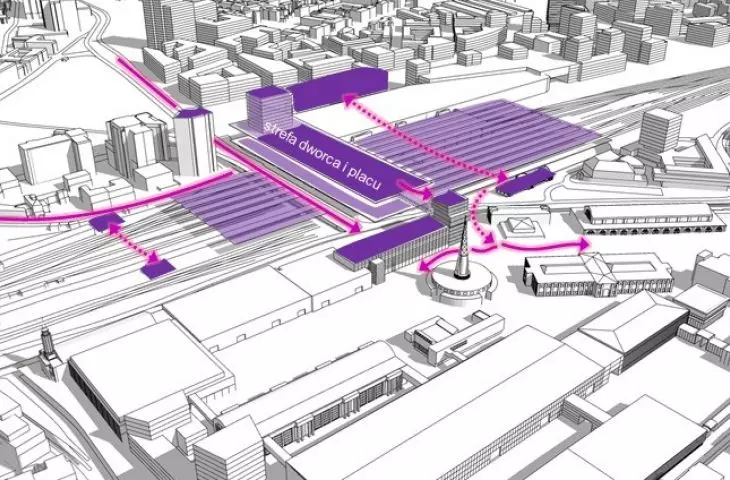
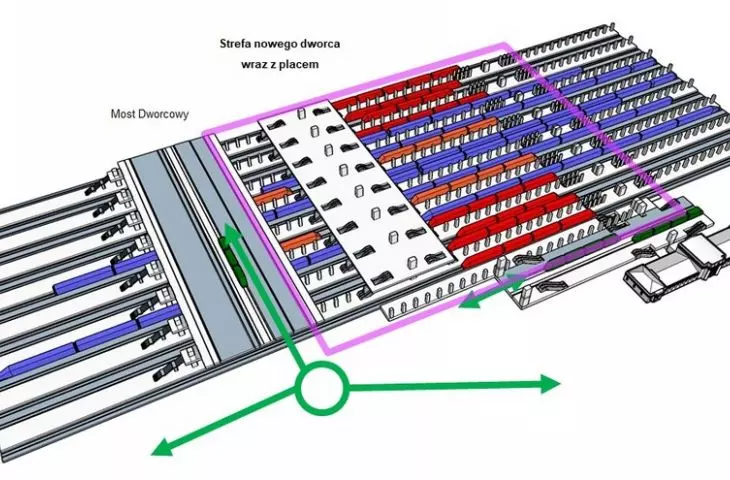
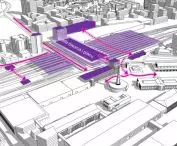
Earlier, in January, Poznań authorities and railway officials signed an agreement on joint actions (the square in front of the old station belongs to the City). Nearly three years ago, the Municipal Urban Planning Office presented a preliminary functional concept for the station (we covered it in more detail at the time). It calls for the demolition of the old station and its replacement—along with the station square—with new tracks and platforms. This would create a track layout with eight platforms covered by a slab integrated with the Station Bridge. The station building would be constructed on top of this slab. These general assumptions remain in effect. On Tuesday, we heard that the old station and the “breadbox” building will be demolished. However, there was no statement regarding the Avenida shopping center, which is owned by a private fund. For now, it is assumed that it will be preserved.
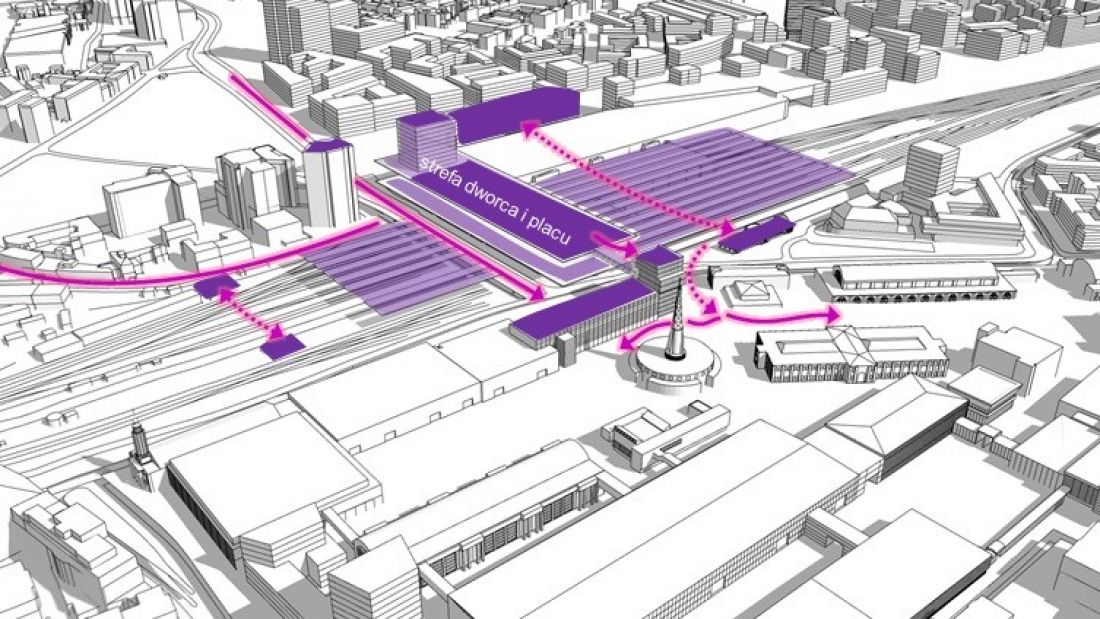
Poznań Główny Station — functional concept from December 2023 by the Municipal Urban Planning Studio
source: Municipal Urban Planning Studio in Poznań; www.mpu.pl
Consultations After the Fact
Why a tender rather than the competition that was once tentatively announced? Decision-makers are repeating what we’ve already heard many times in similar cases: lack of time. A competition procedure would have further delayed the project. Apparently, the past few years were not enough to prepare a more reliable method for selecting a design. There was likely also not enough time to consult with residents, experts, and commuters regarding the plans of the City and the railways. Natalia Weremczuk, Poznań’s deputy mayor, as quoted by *Gazeta Wyborcza* , announced that such consultations would take place after… the concept has been developed— which , if the announcements are to be believed, will be toward the end of 2028!
The association Inwestycje dla Poznania (IdP), which has been fighting for a sensible design for Poznań Główny since the “breadbox” was built, has therefore spoken out on the issue of public participation. On Tuesday, community activists published an appeal online. It reads, among other things:
We do not want a repeat of the botched projects and non-functional solutions that PKP subjected Poznań residents to between 2001 and 2012. Nothing about us without us! […] The current appearance of the station and the Main Station is the result of ill-considered decisions and mistakes made behind closed doors […]. At that time, the residents of Poznań had no opportunity to influence or exercise control over the investment process. […] We have therefore appealed to the Minister to establish a Dialogue Forum under the auspices of the Wielkopolska Province Governor, which will guarantee residents a say in the final shape of this strategic investment and the opportunity to discuss the most important problems with the existing infrastructure. […] The lack of open discussion at the early design stage risks repeating past mistakes and wasting public funds on solutions that will not meet the actual needs of users.
The ministry has not disclosed
The Association also notes that in early September it sent a letter to the Ministry of Infrastructure (Department of Railways) regarding the consultations and several other aspects of the station’s operations . In it, they first called for the launch of properly prepared and broad consultations already at this stage. Second, they appealed for improvements to the functional and aesthetic condition of the station’s existing infrastructure: the station building and the platforms. Third, they demanded disclosure of the financial and procedural issues related to the construction of the “breadbox, ” including information on what happened to the funds Trigranit was supposed to use to build the never-completed footbridges over the tracks. The presence of these pedestrian walkways, planned over a decade ago, would have at least somewhat improved navigation within the station area.
The Ministry responded to these demands briefly and very incompletely (the issue of the “breadbox” construction was completely omitted from the response). The letter published by IdP states, among other things:
As part of the project’s preparation, […] meetings with neighborhood councils have begun, during which the currently developed solutions are presented, and informational campaigns aimed at residents are being planned. With regard to the future station building, expert and public consultations are planned.
It should be noted that the aforementioned neighborhood councils cover areas adjacent to the station, whereas Poznań Główny Station is significant for the entire city of Poznań and its metropolitan area. The ministry is also very cautious in announcing repair work on the “breadbox” and its surroundings, without addressing most of the examples cited by IdP in the nine points.
As part of PKP S.A.’s in-house program titled “Passenger-Friendly Stations,” measures have been included to improve the quality of service for travelers at the Poznań Główny railway station. These include the replacement of the escalators leading to platforms 2, 3, and 5, scheduled for completion by the end of 2026, as well as, by the end of 2028, the replacement of the Public Address System control unit along with the modernization of the Building Management System (BMS) and the addition of passenger signage. Apart from the above, ongoing renovation work is being carried out at the station, including the replacement of worn-out components.
the president’s imaginary adversary
The association makes no secret of the fact that the Ministry’s response is disappointing. On the other hand, Poznań Mayor Jacek Jaśkowiak expressed optimism on Tuesday, saying that Poznań will have a station “better” than the Warszawa Zachodnia station, which was completed a year ago. He added that the city will listen to the opinions of experts, but “not necessarily those on Facebook who are the loudest.” In this way, as has become traditional, he referred to an unspecified collective adversary and paid homage to equally undefined specialists. The statement sounds reasonable. However, it runs counter to past practice. For instance, that very Tuesday afternoon, the mayor and the City Council could have participated in a substantive debate with high-caliber scientists on another contentious topic we’ve covered: the development of the Golęcin area. The city plans to build a large sports facility there within the green belt. However, not a single official accepted the invitation.