



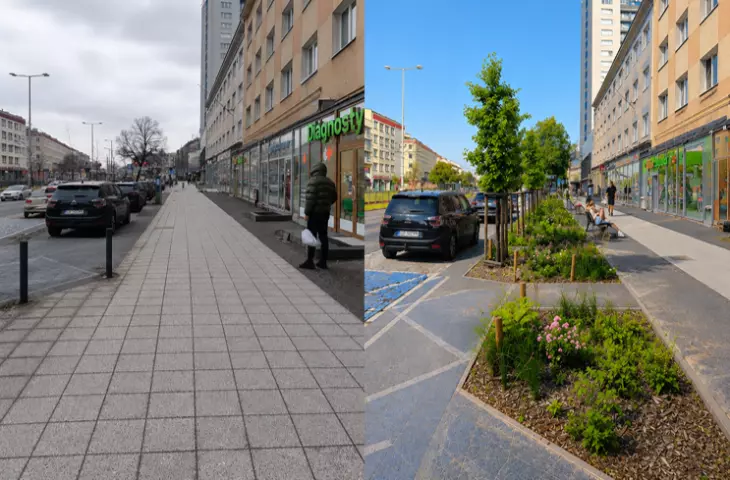
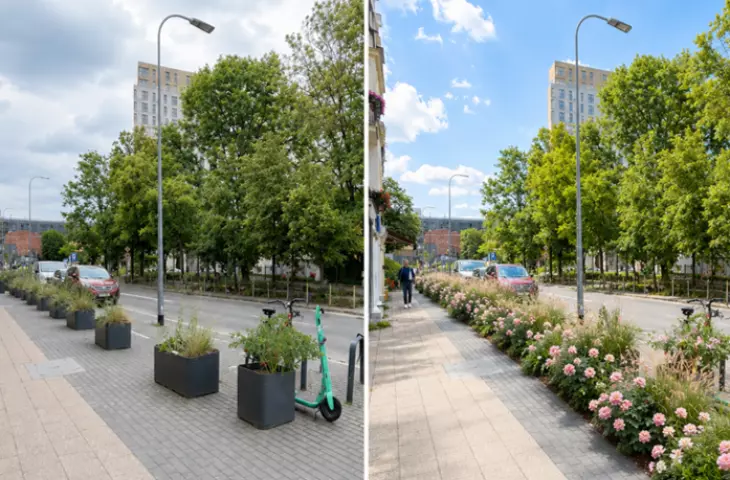
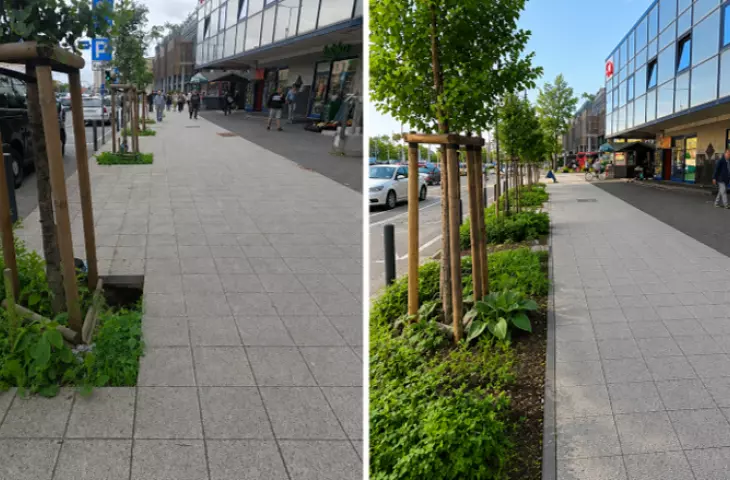
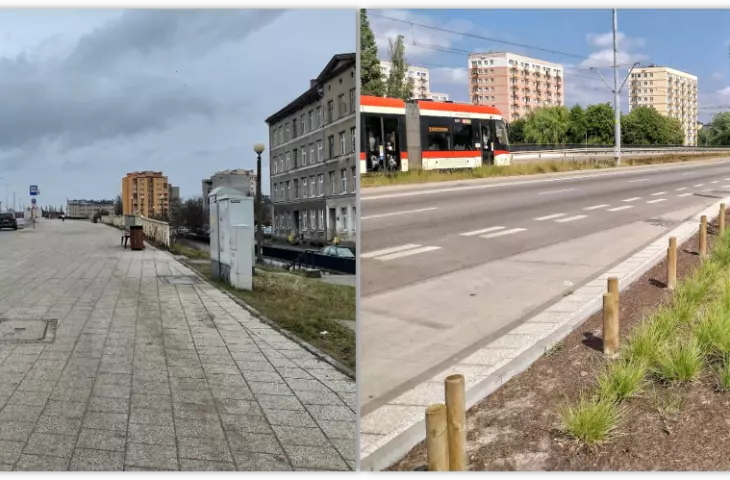
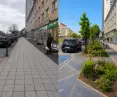
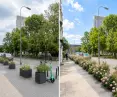
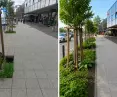
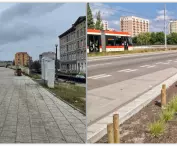

A section of sidewalk, a patch of a square, a strip along the street… Gdańsk is removing more and more sections of unnecessary paved surfaces. This seemingly small change has a big impact: where there used to be concrete slabs or pavers, trees and low-growing greenery are now appearing, and the space becomes more attractive, more inviting, and stays cooler.
For years, concrete has been piling up in Polish cities. Today, attitudes are changing—albeit slowly—as evidenced by the removal of unnecessary paved surfaces and the planting of vegetation in their place. The Gdańsk Charter for Trees sets a goal of at least 500 square meters of so-called “pavement removal” per year. This is not much on a city-wide scale, but change begins precisely in such places —a strip along a sidewalk or a section of a square. Where changes have taken place, the difference is evident: it’s more pleasant, greener, and the ground covered with vegetation doesn’t heat up as much as concrete.
From a residents’ idea to 1,000 square meters of concrete removal per year
In Gdańsk, the first concrete removal projects were carried out in 2023 at the residents’ request. The project “Green Avenue on Granary Island” won the participatory budgeting contest. On Podwale Przedmiejskie, between Chmielna Street and Pszenna Street, 250 square meters of concrete were removed at that time. In its place, three green spaces were created, featuring nearly 1,800 plants: including junipers, sea buckthorns, roses, physocarpus, sage, lamb’s ears, and speedwells, as well as clumps of ornamental grasses and 12 small-leaved linden trees.
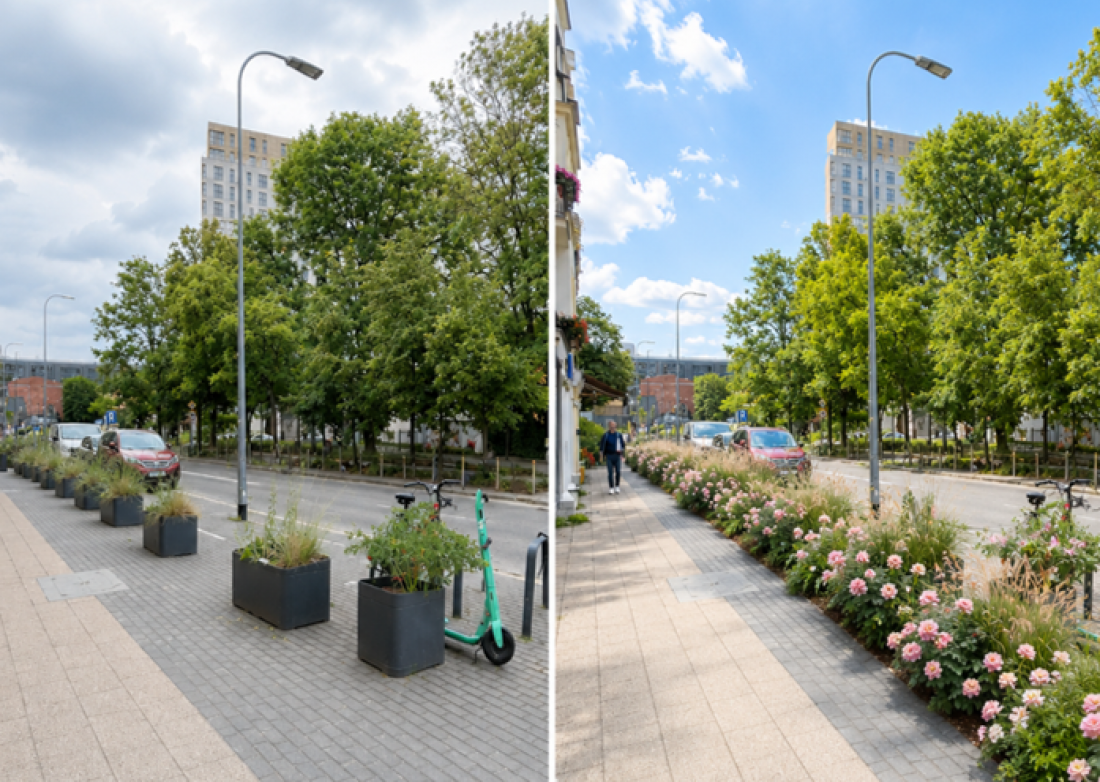
Changes on Partyzantów Street in Wrzeszcz
© Gdańsk Greenery Authority
In the following years, the initiative gained momentum — artificial surfaces were removed in sections of Grunwaldzka Avenue, Stary Chełm, near Dolarowiec in Wrzeszcz, on Osowa Street, and in the Rudniki district.
In 2026, Gdańsk will double the target set out in the Gdańsk Tree Charter: plans call for the removal of paved surfaces covering a total area of over 1,000 square meters. Several locations are on the list: the area around the Lech Bądkowski monument in Śródmieście, the vicinity of Dmowskiego Street, and Galeria Bałtycka in Wrzeszcz. Sections of the pavement along Gdańsk’s roads will also be changed — on St. Adalbert’s Route and Jaśkowa Dolina Street.
“ This is another step toward a city with less concrete and more green spaces, ” note officials from the Gdańsk Greenery Authority. “ Such changes don’t happen overnight. Consistent and planned actions are key.” Unpaved areas increase the biologically active surface area, which is particularly important in the city: it helps retain water, lowers temperatures on hot days, and supports adaptation to a changing climate. Where concrete slabs were located just a short time ago, vegetation is now taking root.
Removing concrete is one thing. It’s equally important to limit paved surfaces in new development projects. And that’s still a mixed bag.
Green spaces in cities are few and far between
Katarzyna Rozmarynowska, an architect and urban planner specializing in landscape architecture and the history of garden art, points out in an interview with A&B that in places where there is too much paving, such measures are sorely needed.
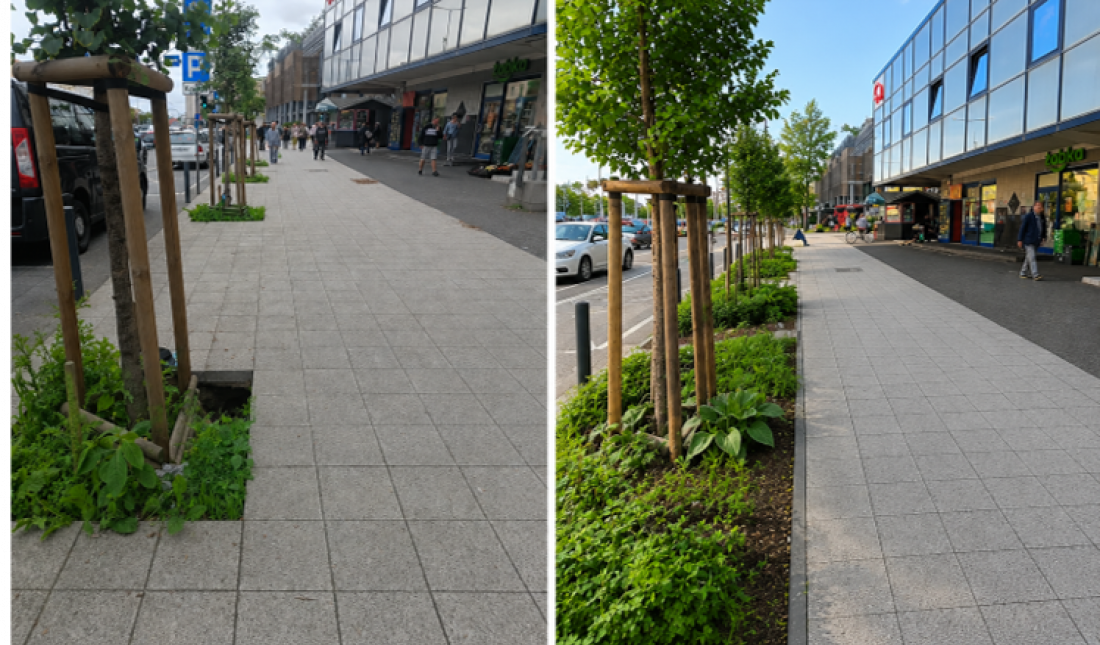
Greenery has also been introduced along Grunwaldzka Street
Gdańsk Greenery Authority
For years, we’ve been paving over spaces even where it wasn’t necessary. Meanwhile, there isn’t enough greenery in our cities. In increasingly densely built-up cities, it is difficult to find space for it: plantings often conflict with buildings or underground infrastructure. However, I believe that wherever greenery can be introduced, it should be done. It’s worth choosing plants that don’t need much water and don’t require watering. We also need to think about the future maintenance of such areas. In many cities, the responsibility for caring for the unpaved strip between the sidewalk and the building falls on the residents
,” says Katarzyna Rozmarynowska.
The architect and urban planner also points out other benefits of such measures.
In cities, we have a problem with heat islands. Greenery limits excessive surface heating, which is particularly important during heat waves, which not everyone can tolerate well. So any greenery that can even slightly mitigate the effects of high temperatures is needed
— adds Rozmarynowska.
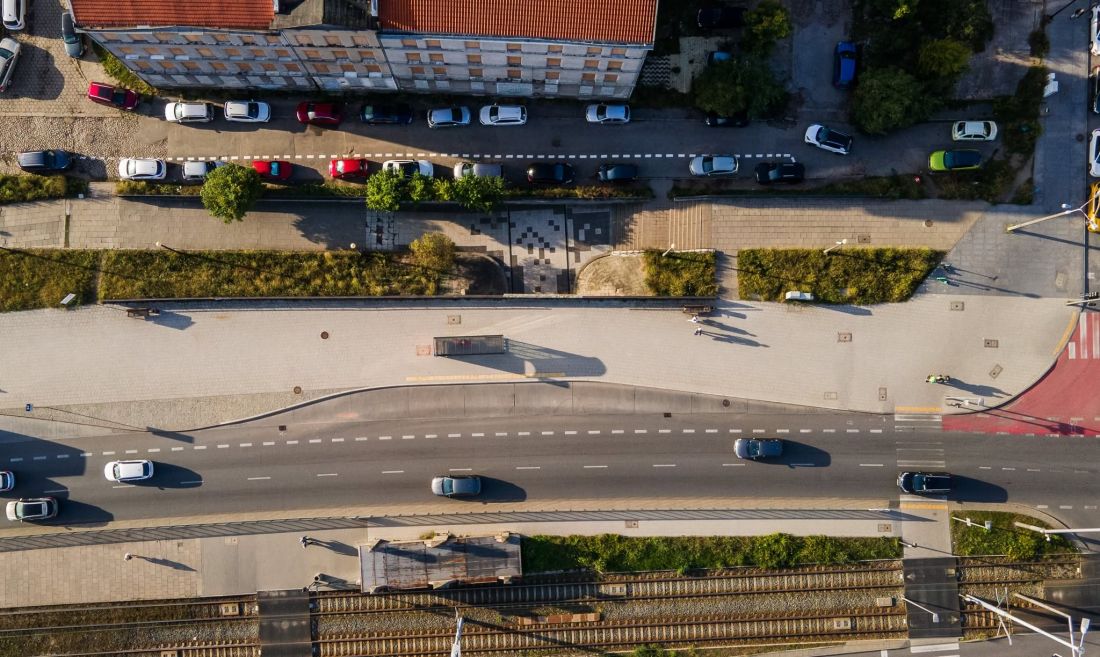
Green spaces on the southern tip of Wyspa Spichrzów
© Gdańsk Greenery Authority
A Second Life for Old Slabs
Experts also point out how important it is to reuse materials from demolition sites.
After years of “revitalizing” public squares—where greenery and unpaved areas were replaced with granite or concrete pavers—we’re now seeing the opposite process: we’re restoring trees, shrubs, and water retention
— said architect and urban planner Edyta Skiba in an interview with Ola Kloc in A&B.
She added that when restoring such a space, it’s worth analyzing what to do with the removed material.
If the removed paving stones are still in good condition, perhaps it’s worth using them to redesign another street, following the example of one of the towns near Łódź? We cannot limit ourselves to simply balancing building materials. It is equally important to analyze biological resources: the origin of trees and shrubs, the diversity of their genetic material, the functions they are meant to serve, and the ecosystem they are meant to create. Simply claiming that we’re circular because we planted fifteen trees or uncovered part of a plaza and restored greenery there is no longer enough
— explained Edyta Skiba.
In Gdańsk, demolition materials in good condition are sent to a warehouse and reused. The city also resells recovered materials suitable for reuse to residents. They can be given a second life on a recreational plot or in a home garden.
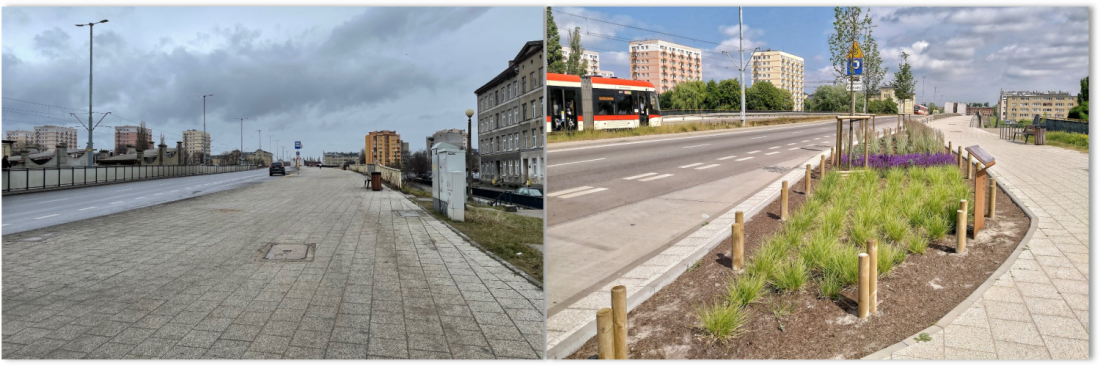
Changes on the southern tip of Granary Island
© Gdańsk Parks and Recreation Authority