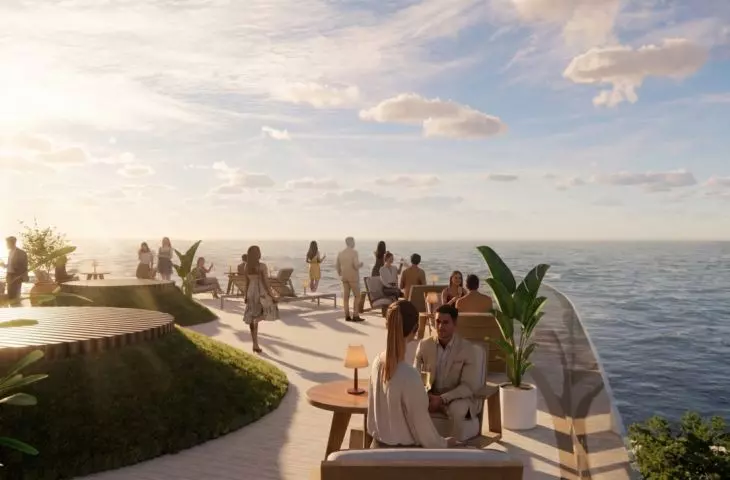
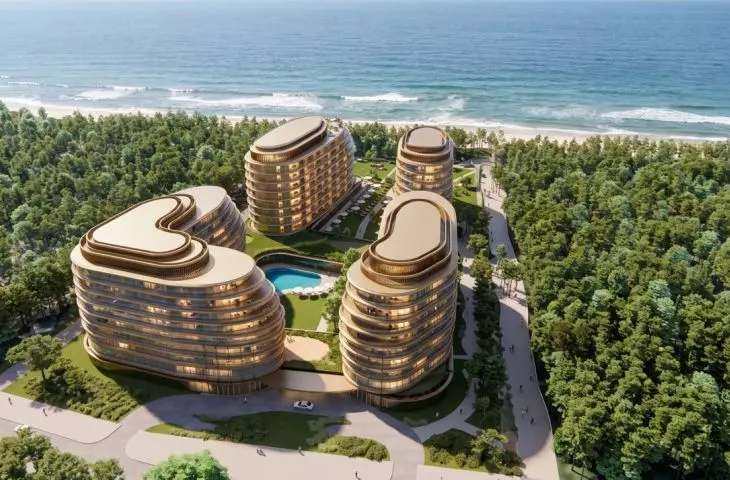
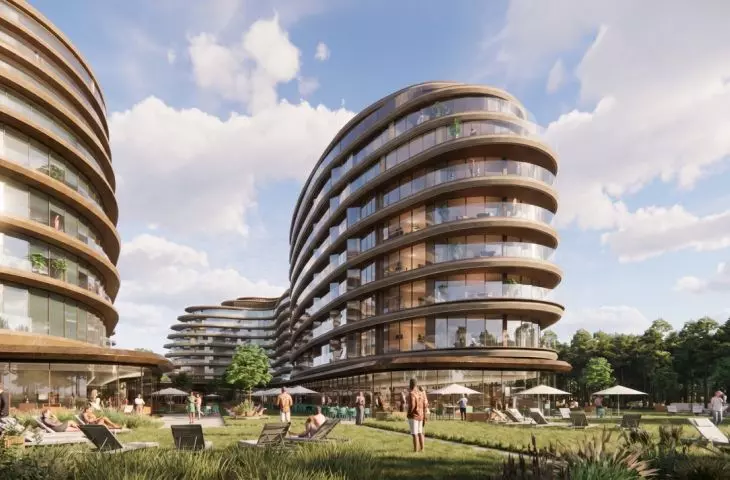

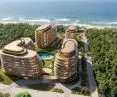
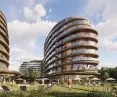

A large hotel and apartment complex featuring a pool area, a spa, and various amenities is set to be built just 30 meters from the beach in Ustka. Although the four interconnected buildings are expected to be as many as ten stories tall, the developer assures that Wave Ustka Thermal & Spa will “blend harmoniously into the seaside surroundings.” However, the scale of the project raises questions about its impact on the landscape and the existing character of the spa town’s architecture.
Controversy surrounding the construction of a massive hotel in Pobierowo shows no signs of abating, and another major development is already in the works on the Baltic coast—this time in Ustka. Just 30 meters from the beach, on Wczasowa Street, Green House Development is planning a hotel and apartment complex that can hardly be called intimate. The plans call for four interconnected buildings, each 9–10 stories tall, containing approximately 618 apartments, a year-round pool area, a spa, dining facilities, and 6,700 square meters of commercial space.
Over 600 apartments on the Baltic Sea. The first phase has been given the green light
The developer already has a building permit for the first phase. It involves the construction of 150 units, which will be sold as private apartments. Owners who decide to rent them out will be able to use the services of the complex’s management operator. Construction of the first building is set to begin in the first quarter of 2027. Completion is scheduled for the first quarter of 2029.
Ustka has a population of approximately 13,500. Although the town is packed with tourists during the season, the resort has managed to maintain the intimate, spa-like character of its architecture for quite some time. Currently, the largest hotel in the city, the Grand Lubicz, has 311 rooms. Although hotel rooms and apartments cannot be directly compared, this comparison illustrates the scale of the investment—the Wave complex is set to feature nearly twice as many units.
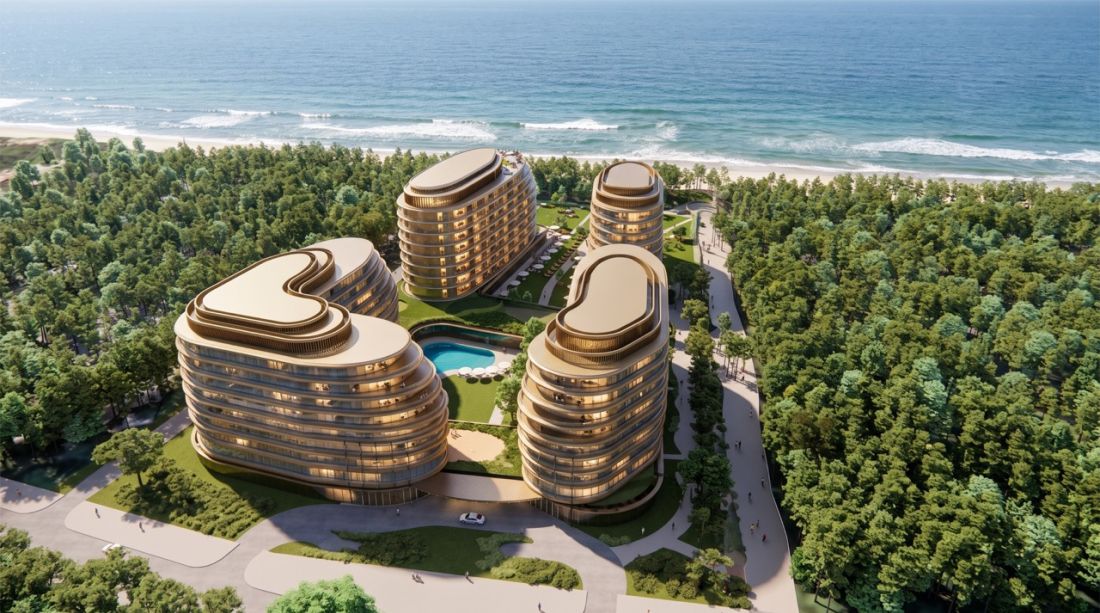
The entire complex will feature over 600 apartments
Green House Development
The complex was designed by MODO Architektura, the firm also responsible for the Wave Międzyzdroje Resort & Spa. Representatives of the developer claim that the facility they built in Międzyzdroje—also located on the beach—“blends well into the seaside landscape.”
The developer promises green spaces, while internet users speak of landscape destruction
“We’re taking the same approach in Ustka,” notes Kamil Gaszyński of Green House Development. “The four buildings have been designed in a loose layout, and vehicular traffic will be routed to an underground garage, allowing the space between the buildings to be used for green spaces and recreational facilities. We want to create a high-quality project that will harmonize with the seaside character of this part of Ustka.
As the developer emphasizes, 40 percent of the development site is planned to be biologically active space. There are currently no trees on the lot.
The project calls for comprehensive landscaping and the creation of high-quality spaces between the buildings. Numerous trees, shrubs, and other plants are also planned to be planted, which will be an integral part of the development of the entire complex,” notes Gaszyński.
However, this will not compensate for the impact on the landscape and the environment. It’s hardly surprising that many people online are critical of the project. “Ustka will be an eyesore,” “The city will lose its charm,” “Ten stories can’t be integrated into a pine forest,” “It’s a shame for such beautiful nature,” “Unfortunately, the destruction of the Baltic coast continues”—these are just some of the voices of opposition.
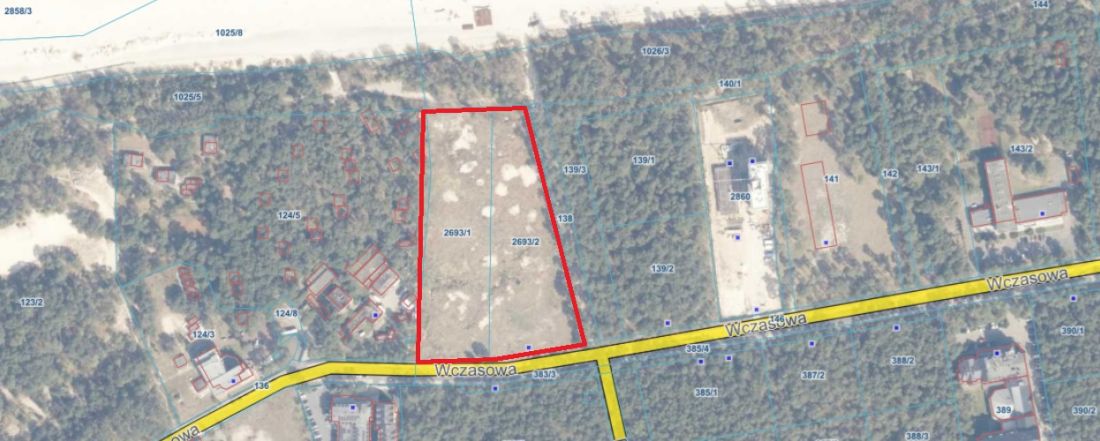
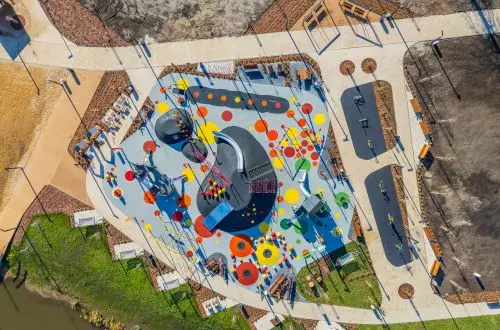
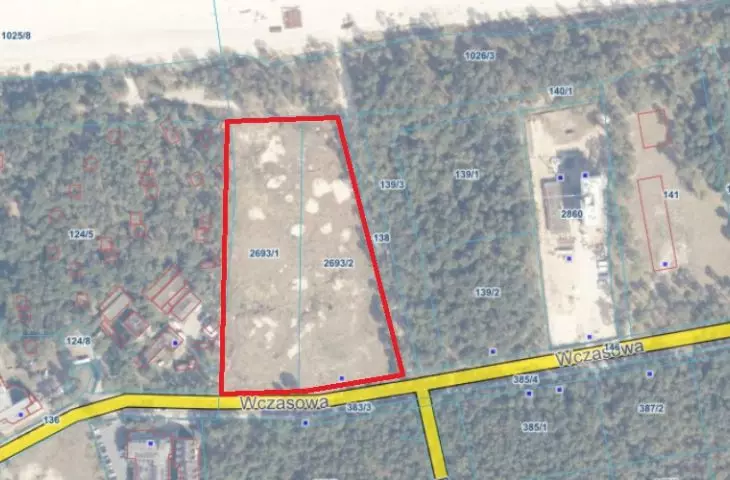
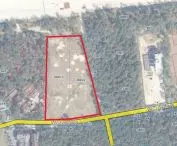
The plot on Wczasowa Street that will be developed
Google Maps
How does the city respond to residents’ concerns that the development will dominate the landscape and spoil the seaside character of this part of Ustka?
“Wczasowa Street is located a considerable distance from the historic, heritage-protected part of the old fishing village,” comments Kinga Siwiec from the Ustka City Hall. - The City of Ustka takes care to ensure that the urban space does not become a chaotic jumble of construction; therefore, local zoning plans have been adopted for most areas of the city, and a revitalization program has been implemented for the old part of town, thanks to which more than 40 old half-timbered fishermen’s cottages have been restored or reconstructed.
A city hall representative adds that this is Ustka’s hallmark, and the city is committed to ensuring that this architecture is not marred by tall, modern buildings. She adds, however:
“At the same time, Ustka must continue to develop, and there is also room in the city for new investments—of course, with respect for and at a considerable distance from the historic buildings, and above all, outside the old town in an area that has long been designated for this type of development,” says Kinga Siwiec.
The first phase of the project has held a valid building permit for nearly three years, issued by the Słupsk County Office based on the “Wczasowa and Surroundings” Local Zoning Plan in effect at the time. This plan was adopted by the City Council in December 2013.
Urban planner: This project is out of place in the landscape
Although facilities like the Wave Międzyzdroje Resort & Spa attract tourists even during the off-season, it’s worth looking at this project from a broader perspective than just a new tourist offering or potential economic benefits.
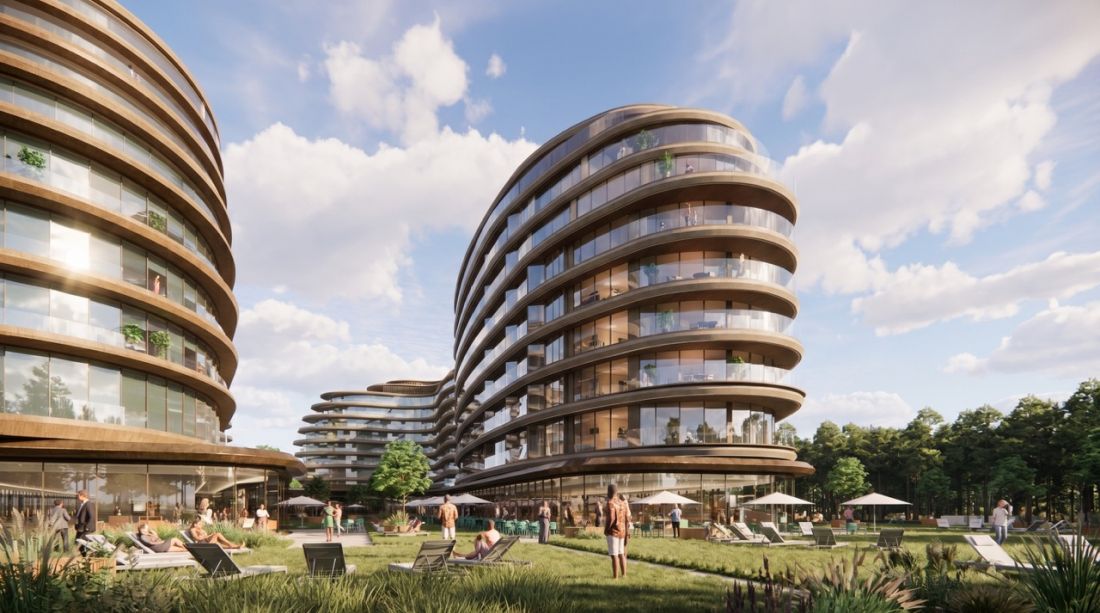
The design is the work of the MODO Architektura studio
Green House Development
“This is, above all, a question of how we want to develop Ustka and what value we assign to its landscape, scale, and spa character,” comments Hanna Obracht-Prondzyńska, an urban planner, a researcher of small towns and a specialist in spatial data analysis. “This is all the more puzzling given that in recent years, the local government has undertaken many commendable initiatives in the center of Ustka: addressing parking issues, consistently shaping public spaces, and efforts to connect with local heritage and preserve the town’s intimate character.
According to the expert, against this backdrop, a project of such a large scale seems “spatially out of place.”
“It’s hard to reconcile it with the character of a small spa town and with the landscape, which is one of Ustka’s most important assets,” adds Hanna Obracht-Prondzyńska. “I am not opposed to development or the emergence of new tourism or wellness services. On the contrary—I’m a big supporter of Ustka and believe that such offerings can and should develop here. The question, however, is: where, on what scale, and at what cost?”
The urban planner adds that large-scale development may momentarily give the impression of modernity and serve as proof that “it’s possible even in a small town.”
But the advantage of places like Ustka isn’t the ability to compete in scale with large resorts. Their advantage lies precisely in what’s becoming increasingly hard to find elsewhere: authenticity, intimacy, closeness to nature, and a distinct character. If we lose these qualities, we may drive away the very people who come to Ustka specifically for that experience. Small towns don’t need to copy the development models of large resorts. They need the courage to develop on their own terms—by capitalizing on what makes them unique, rather than building over that uniqueness,” the expert points out.
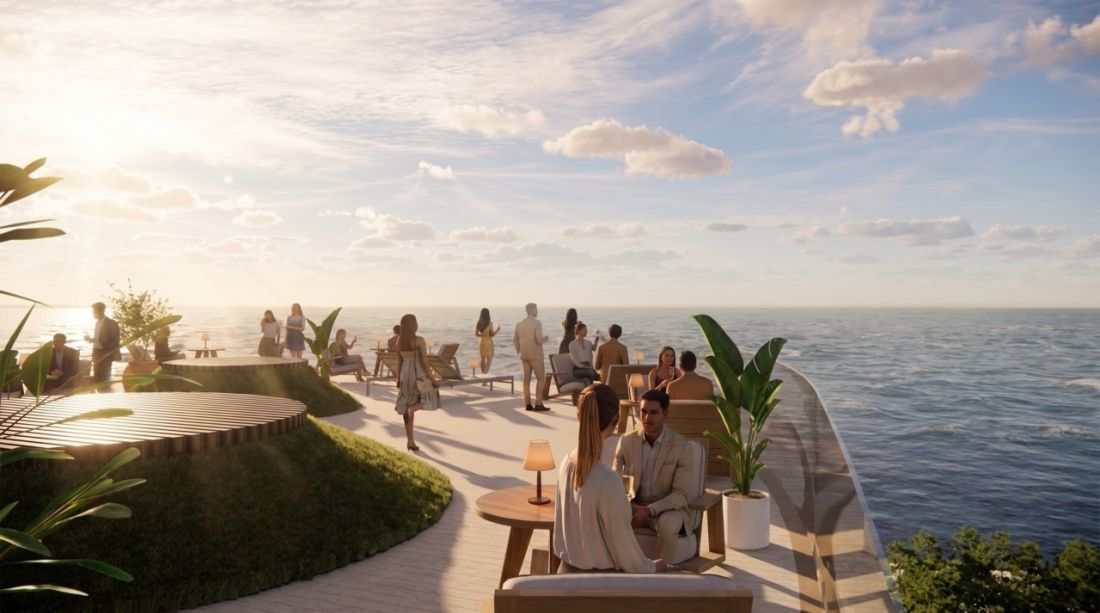
The development will be located just 20–30 meters from the beach
Green House Development