





Recognize the city’s strengths and take them to the next level. It may not seem like much, but it requires knowledge, thorough analysis, and determination in shaping a vision. Pleszew has been succeeding in this for nearly a decade. Here, the trendy concept of the “15-minute city” was embraced and transformed into a solid development strategy. The results of “Compact Pleszew” continue to grow.
Pleszew, with a population of 17,000, is located in southern Greater Poland, close to larger centers—Kalisz (about 100,000 residents), which was once the provincial capital, and Ostrów Wielkopolski (68,000). The town’s documented history dates back to the 13th century; during the Partitions, it belonged to Prussia, and has been part of Poland again since 1919. It is the seat of the county (approximately 60,000 residents) and the municipality (approximately 27,000). Largest employers: three large facilities (two manufacturing plants) and a hospital (the Pleszew Medical Center). Unemployment rate: 4.4 percent. There are three high schools, including one newer, non-public school. There is also a first-level music school that was expanded a few years ago.
Access by car falls far short of modern standards, as Pleszew is a victim of the repeatedly delayed comprehensive construction of the S11 highway. Traveling from Poznań via the current “Route 11” is therefore not a comfortable experience. Trains, on the other hand, stop frequently at the Pleszew station on weekdays: sixty-three times, including many long-distance trains. A unique commuter railway runs from the outlying station to the city center. Since 1875, the station named Pleszew has been located in the neighboring village of Kowalew, 4 kilometers from the city center. In 1903, the situation improved with the construction of the Krotoszyn–Pleszew Miasto narrow-gauge line, the final section of which connected the standard-gauge railway station to the terminal station located 500 meters from the Market Square.
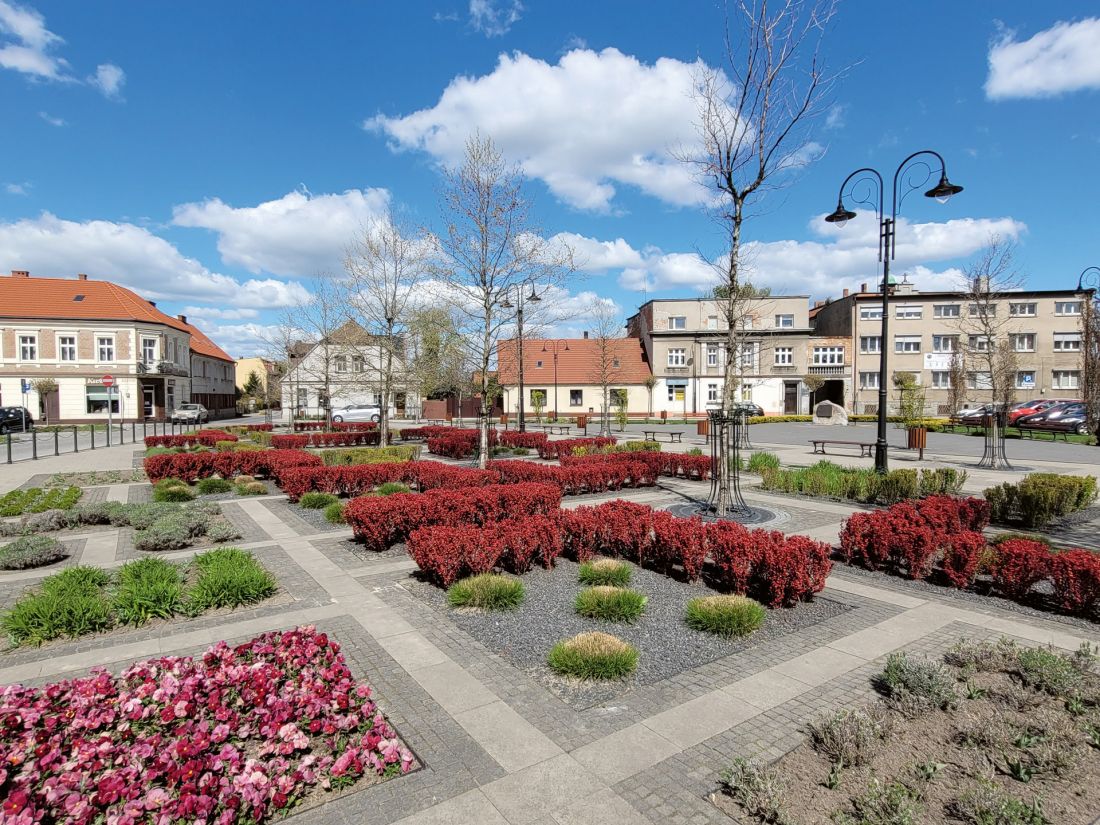
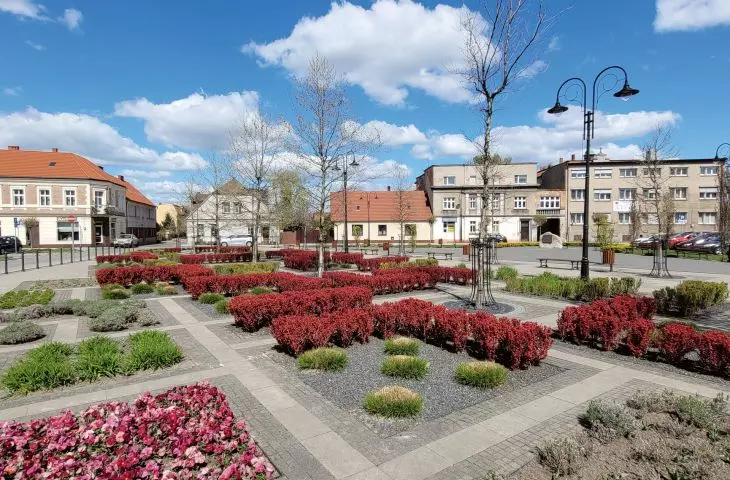
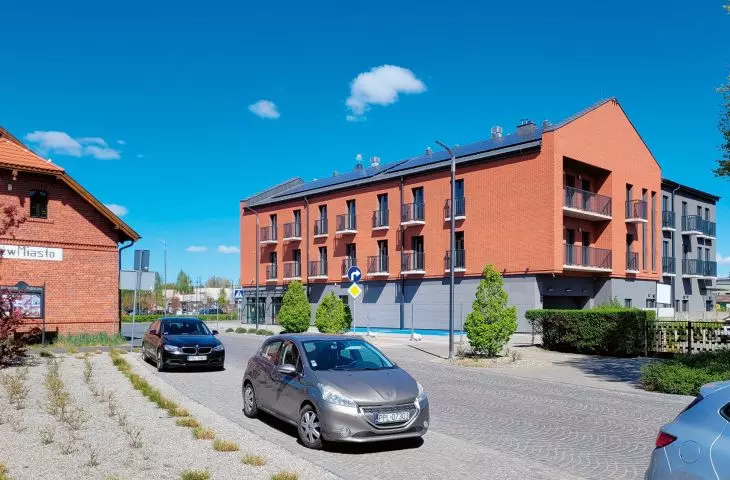
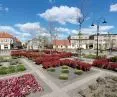
Powstańców Wielkopolskich Square—a spacious square completed in 2017 on the site of the former bus station
Photo: Jakub Głaz
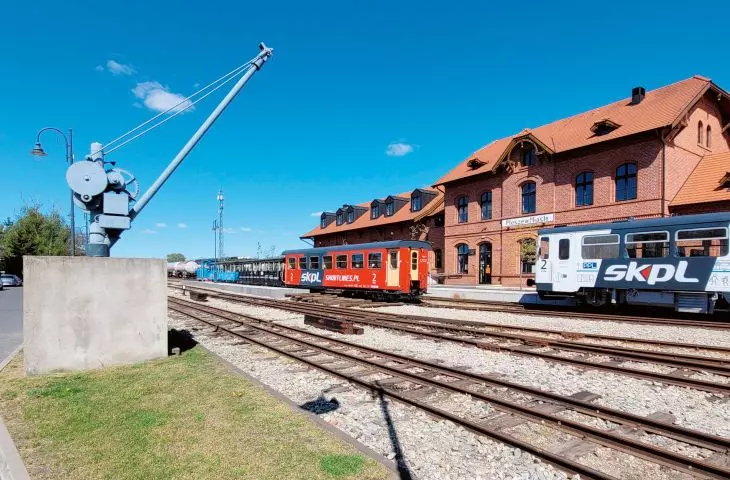
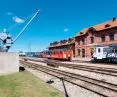
Today, this section—featuring both narrow- and standard-gauge tracks—serves industrial facilities and, following interruptions in the period after 1990, has provided nearly continuous access via the SKPL standard-gauge railcar from the station for the past twenty years. The service is coordinated with the arrivals of certain long-distance trains. It is the only railway of its kind in the entire country—featuring a double track with both narrow- and broad-gauge sections.
A Clear Concept
Pleszew is comparable in size to the nearby town of Jarocin (though slightly less populous), which is famous nationwide for hosting a rock festival in the 1980s and 1990s. It’s true that since 2013, Pleszew has hosted the highly successful Red Smoke Festival every summer, and many fans of heavier sounds and alternative music appreciate it and associate Pleszew positively with it, but stiff competition from other, larger, and more mainstream festivals across the country has prevented Red Smoke from becoming a widely recognized hallmark of the city.
On a slightly larger scale and in different circles, Pleszew has made a name for itself for another reason—in this decade. This was all thanks to the catchy concept of the “15-minute city,” which was adapted in 2021 under the slogan “Compact Pleszew.” On the one hand, it highlighted the city’s existing strengths; on the other, it pointed to the direction of change and development that had been adopted. Among local government officials, experts, and urban activists, Pleszew has become a well-known point of reference. The media have also taken notice.
Where did this new strategy come from? The city authorities, led by Mayor Arkadiusz Ptak —elected in 2018—simply recognized Pleszew’s strengths: an intimate, compact, and attractive urban environment that provides residents with most services and attractions within a 15-minute commute by bike, public transportation, or on foot. It was decided to build on this strength, while focusing on environmental sustainability, smart city solutions, municipal and TBS-affiliated housing, and high-quality public services. Previously, Pleszew’s motto was “Open City”—a generic slogan (also used in many other Polish towns) with no direct connection to the city’s specific characteristics. It is also worth noting that Ptak (who served as deputy mayor from 2006 to 2018 — served as deputy mayor) is also a researcher (who earned his habilitation in 2017) specializing in the development of rural areas and smaller towns, affiliated, among others, with the Institute of Rural Development and Agriculture of the Polish Academy of Sciences.
We first reported on the dynamic changes in Pleszew in the online edition of A&B in 2021. At that time, Mayor Ptak, who heads the City and Municipality Office and is currently serving his second and final term (under current law), spoke to us about these changes in an interview. When asked who was behind the changes, he explained:
“It’s the team I work with at the Office, the organizational units, the municipal companies, but also the academic community, with whom we maintain ongoing cooperation and exchange experiences.” Over the past year, I have presented the concept of Pleszew as a compact city at several academic seminars. This also involves collaboration with nongovernmental organizations and informal groups. We receive support from city council members, village leaders, and neighborhood association chairs. We’ve been able to hold very substantive discussions about Pleszew’s problems in the city council. This makes decision-making much easier.
Culture on the Right Track
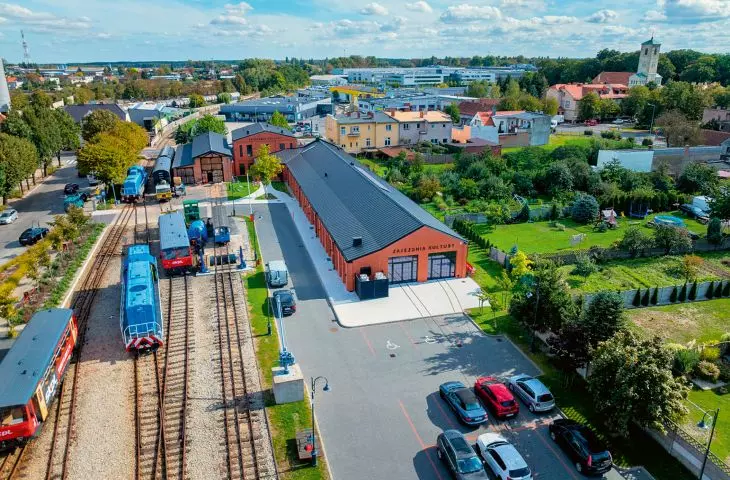
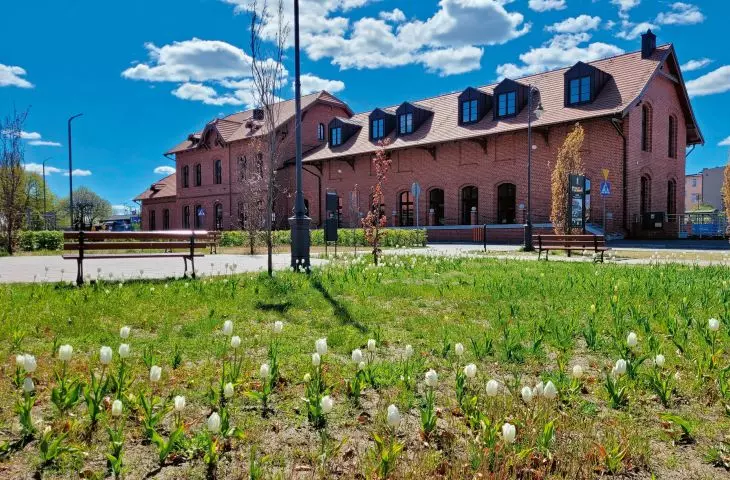
The data-driven decision to transition toward “compactness” was preceded by successful events and investments that were part of Pleszew’s gradual revitalization in the 2010s. The first sign of this was the opening of the “Planty” Water Park public sports complex in 2012. It was built next to the forest park of the same name, near the local stadium and amphitheater. A year later, also in the Planty area, the first Red Smoke Festival—mentioned earlier—took place, an event launched by two local enthusiasts (this is not a pre-packaged, touring format!). Subsequently, following a long-negotiated acquisition of PKP-owned land, the revitalization of the railway grounds near the narrow-gauge station in the city center began. The first step was to transform the station into the new headquarters of the Municipal Library. The carefully executed renovation was completed in November 2018, and since then the library has been thriving within its new-yet-old walls. The adjacent platform continues to serve its original purpose, welcoming travelers. A year later , the Zajezdnia Kultury— a cultural center housed in a successfully expanded former locomotive depot—opened its doors next door. The renovated buildings were connected on Sienkiewicza Street by a new structure with a similar, though more contemporary, character. The former station has thus become the city’s cultural hub, attracting residents and visitors alike with a rich array of events. Many artists and authors well-known in Poland have passed through the Zajezdnia. It hosts both professional performances and amateur activities for all age groups.
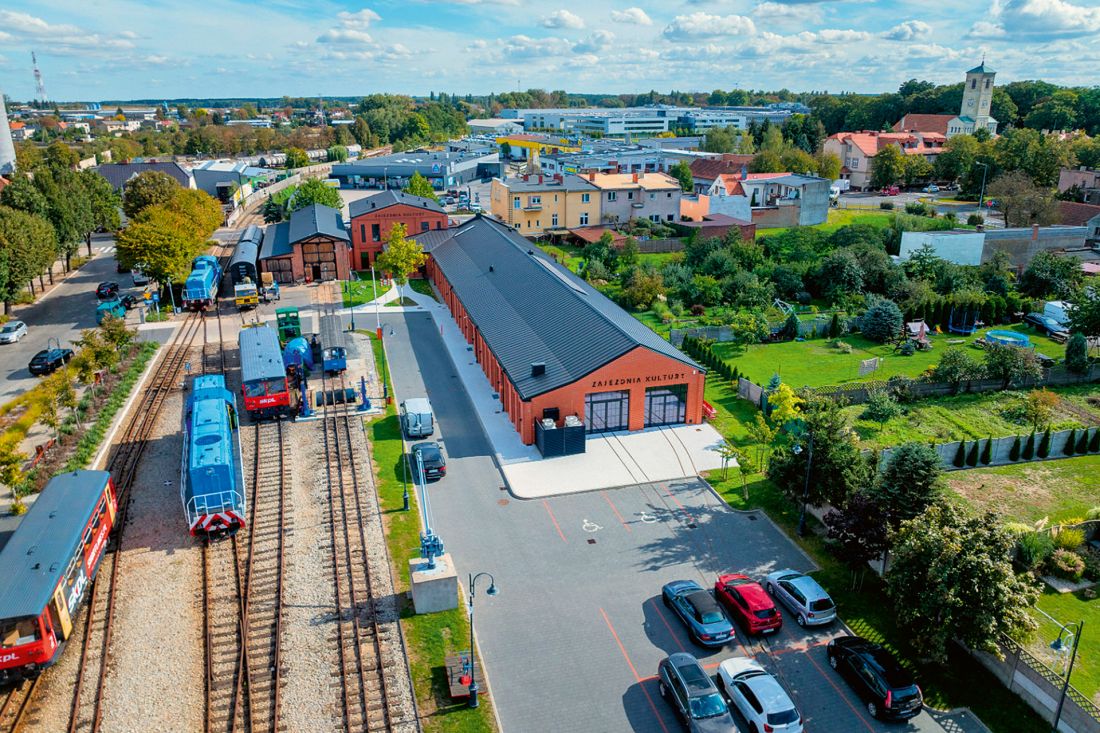
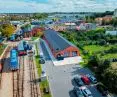
Zajezdnia Kultury — a drone view from above the tracks leading from the PKP train station, with the industrial zone visible in the background
Photo: Pleszew Town Hall
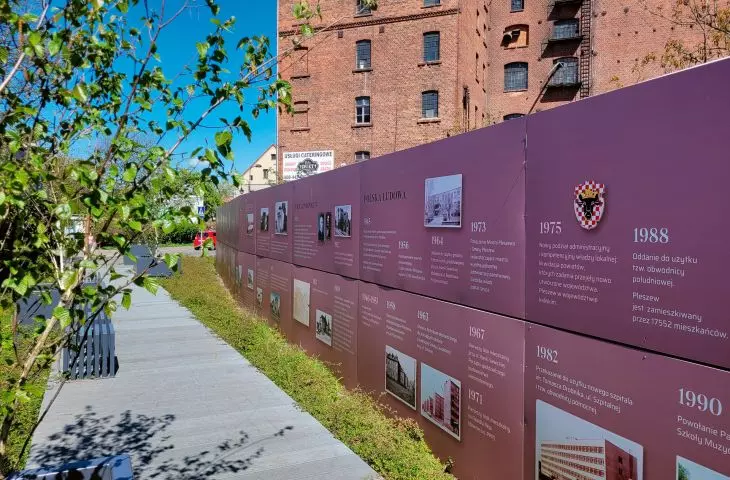
However, the revitalization of the railway grounds did not end there. Next to the library, on the vacant lots typical of railway areas, a transit hub was first built, followed in 2023 by a free P&R parking lot for 200 vehicles. Adjacent to it are new, green-filled rest areas and small parks (though several stately trees near the station building were cut down in the process). A pedestrian- and bicycle-friendly green corridor was built along the railroad line—a sort of linear park frequented by, among others, customers of the popular supermarket and the covered market located nearby. A retention basin connected to the Ner River, which flows through Pleszew, was also built beneath the parking lot to irrigate the surrounding green spaces. Unfortunately, the stream flows through an underground channel at this point, and the city’s attempts to uncover the riverbed have not been supported by the Polish Water Authority. Near the station, at the former end of the pedestrian and bicycle path on Sienkiewicza Street, a small plaza was built with informational plaques detailing the city’s history.
Next to the station-library, there were also plans to build a building with municipal apartments, but those plans changed five years ago. A decision was made to build a convention center with a business incubator and a hotel, currently known as Compact Lab Pleszew. Construction of the facility—which tastefully and sensitively references the adapted brick railway architecture next door—is now nearing completion. The conference center, featuring 34 hotel rooms, is scheduled to be completed next year. The architectural firm Archi-Graf—Janusz Kiciński and Roman Szumny—is responsible for the building’s design. This new venue for cultural events and conferences has not, however, become a monoculture. Freight cars still roll through here, and local rolling stock is serviced in the workshop. The place thrives in both new and old ways.
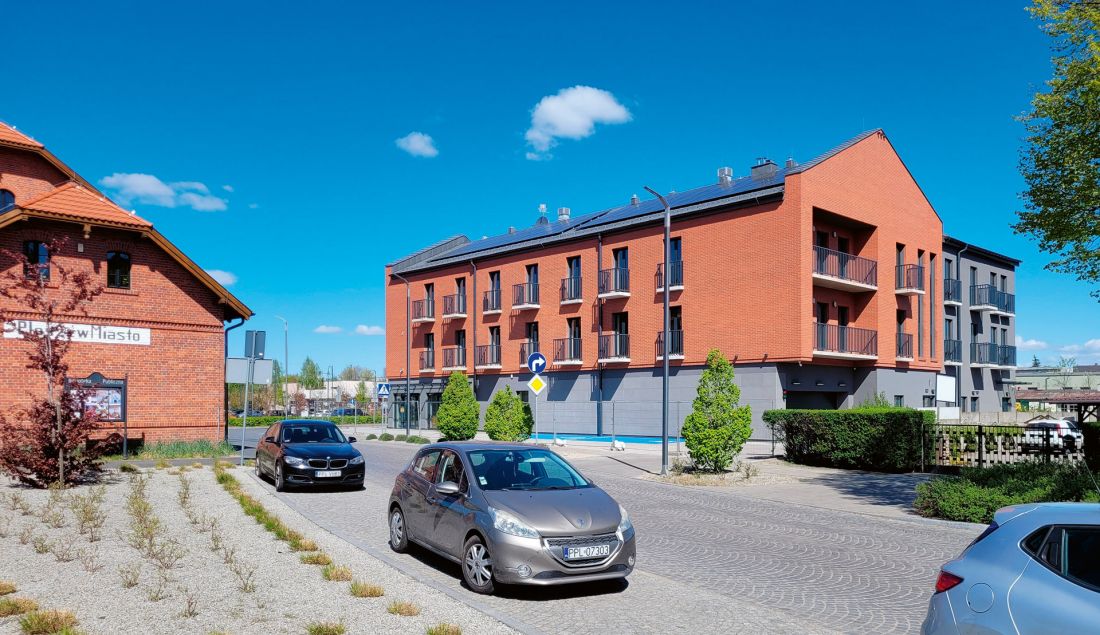
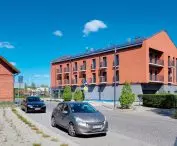
The Compact Lab Pleszew business incubator and hotel on Kolejowa Street, next to the station-library—as of April 2026 (opening planned for 2027)
Photo: Jakub Głaz
A catalyst and what followed
The Library and the Culture Depot became a catalyst for further changes and a sort of showcase that demonstrated to residents what can be achieved through the thoughtful adaptation of existing buildings for public purposes with the support of external funding. Previously, private businesses had invested in the city center in an equally visible way. In 2011, a shopping mall opened in Pleszew; however, it was not built on the outskirts but right next to the Market Square, tastefully complementing the historic buildings. The corner building, clad in brick and approved by the historic preservation authorities, blends into the neighborhood in both scale and character, echoing the brick buildings from before World War I. It remains a popular destination, partly due to the well-liked café on the ground floor. The upper floors house offices and rental apartments. It is not all that common for a building of this kind to play such a significant role in shaping the city’s character.
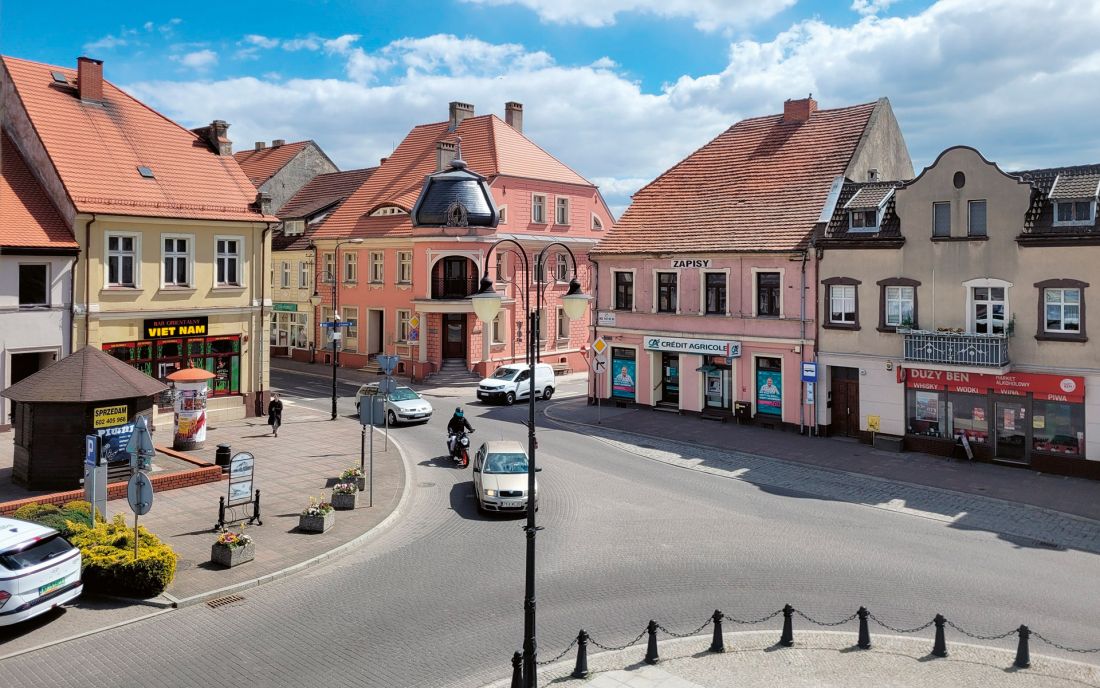
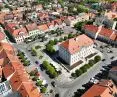
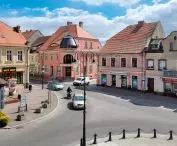
The southeastern part of the Market Square with a corner tenement house currently converted into a museum of contemporary art (Muzeum Kamienica)—view from the first floor of City Hall
photo: Jakub Głaz
At the same time, the gallery has not driven commerce and services out of the Market Square, where the vast majority of ground-floor spaces are leased. New businesses are opening to replace those that have closed. However, the fact that the Market Square is vibrant has prevented officials from taking more decisive action to calm traffic within the city’s most important square—a pedestrian-friendly, green space with a town hall renovated last year — but still surrounded on all four sides by wide roadways. There is concern that making the square less accessible to cars would hurt sales at the shops and service establishments around the Market Square.
Traffic calming (but not its elimination) around City Hall was considered several years ago, following a specialized transportation analysis commissioned by the city in 2022 (it was calculated that 1,200 cars passed through the Market Square every hour!). In 2023, workshops and a student competition dedicated to the transformation of the Market Square and the adjacent Poznańska Street were also held in collaboration with the Faculty of Architecture at the Poznań University of Technology, its faculty, and students.
Several years have passed, yet the residents of the city and municipality remain very attached to traveling by car, despite the educational campaign, the expansion of the road network and bike lanes, and the revolutionary change five years ago — the introduction of urban public transportation, which builds upon the previously existing public transit system organized by the county.
The entire municipality connected
The first two minibus routes connecting the outlying cemetery and hospital to the city center were launched in 2021. The system, which has been gradually expanded since early 2026, now serves the entire municipality, with 500,000 passengers annually. The main lines run hourly. Schedules for other routes are adjusted based on reported needs. Electronic dynamic information displays showing real-time departure times are set to appear at bus stops soon. However, Pleszew has not followed the example of those cities that offer free public transportation to their residents.
Despite initial feasibility studies, the commuter rail route will not be extended, even though this is technically possible, as the tracks extend all the way to the industrial zone on the eastern outskirts. The obstacle is the challenge of efficiently organizing traffic. It is also unclear whether this section would be popular. However, the area surrounding the route will undergo a positive transformation. Parallel to the remaining section of the track, used by freight trains, an extension of the previously described pedestrian and bicycle path is being built. It will run along the section of the Nera River that has been uncovered in this area. Here, there will be a sidewalk and a bike path separated by a green strip, along with trees, shrubs, and street furniture.
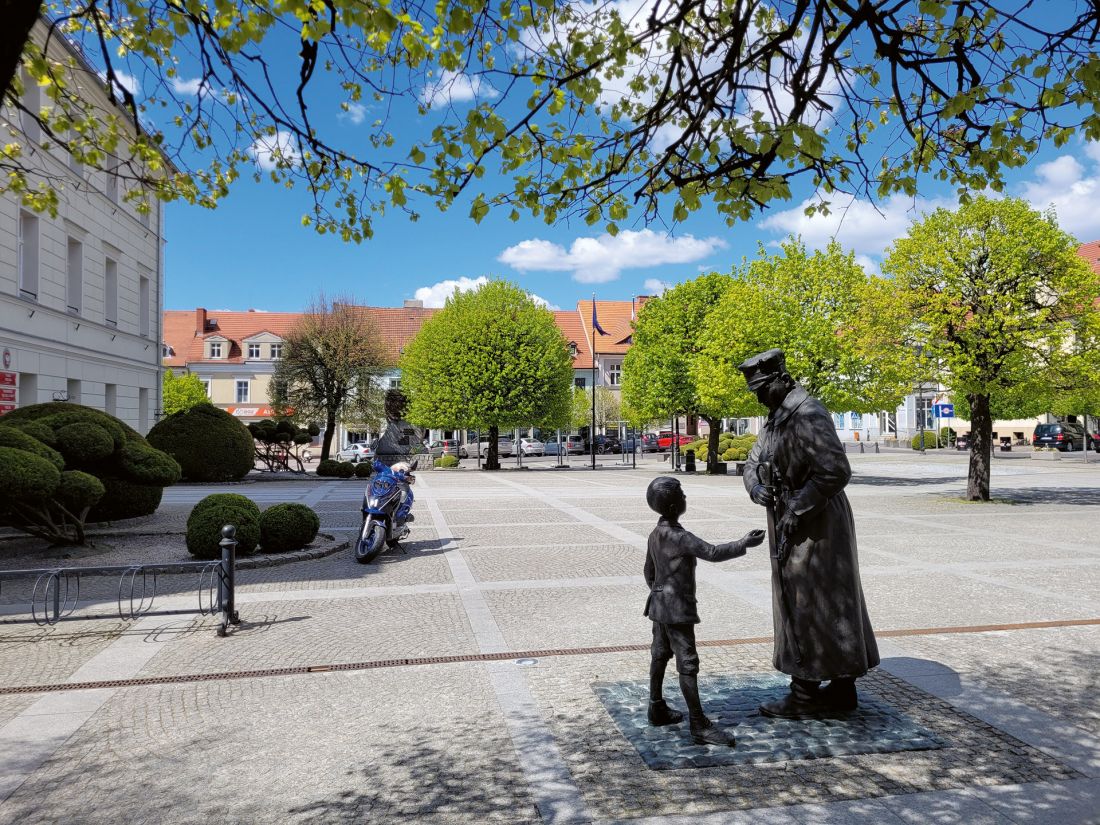
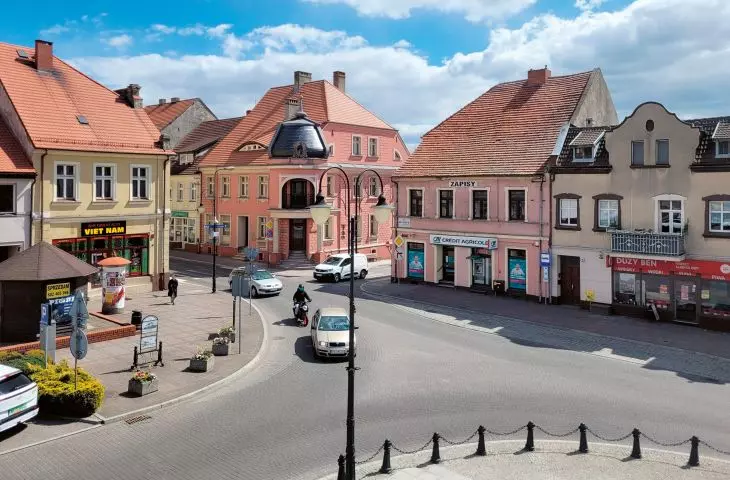
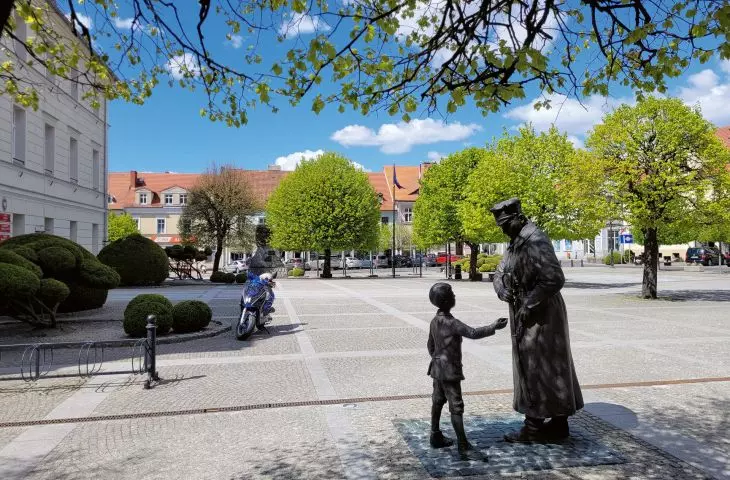
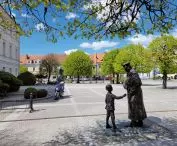
The Market Square, the Monument to the Greater Poland Insurgent unveiled in 2018, and the town hall on the left
Photo: Jakub Głaz
In recent years, there has also been no shortage of small-scale green additions within the city center’s streets. Five years ago, trees were planted at regular intervals on streets that had previously been entirely paved, and traffic calming measures were partially implemented. New trees also appeared in the Market Square, joining those that had been growing there previously. Earlier, in 2017, an irregularly shaped parking lot on the site of the former bus station at Powstańców Wielkopolskich Square—100 meters from the Market Square—was transformed into a spacious, green, flower-filled square. A parking lot surrounded by greenery was built on part of the square.
A New Life for Poznańska Street
Over the past decade, part of the “Planty” Forest Park in the southern part of the city has also undergone restoration, and work is currently underway—though temporarily halted due to issues with the contractor—on the renovation of the centrally located City Park. The lush and very picturesque old-growth forest—now closed to the public—which contains remnants of a former Evangelical cemetery, is also awaiting a plan and funding. In addition to green spaces, the city is also investing in air pollution monitoring (thirty air quality monitoring stations have been launched); Pleszew was once famous for its production of heating boilers and—as a result—until recently, it was often shrouded in thick smog during the winter. The situation is slowly improving. Photovoltaic panels are installed on public buildings such as schools and kindergartens, as well as on the roof of the market hall. A small “farm” of these panels is also located near the Planty Park.
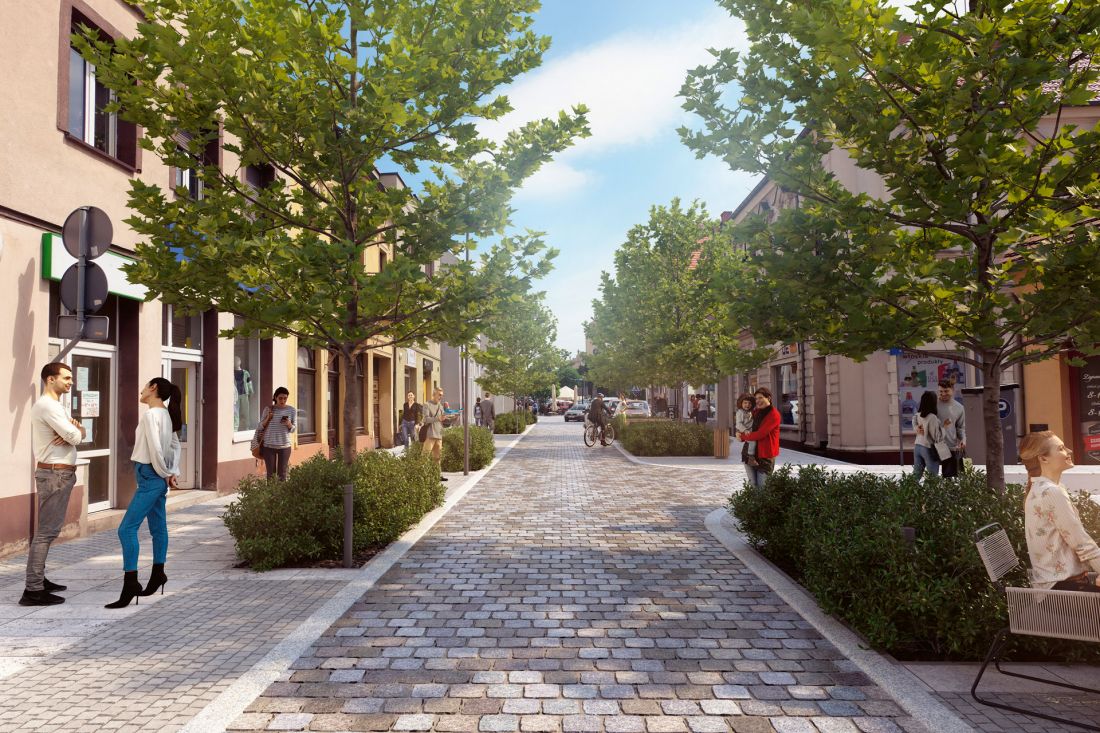
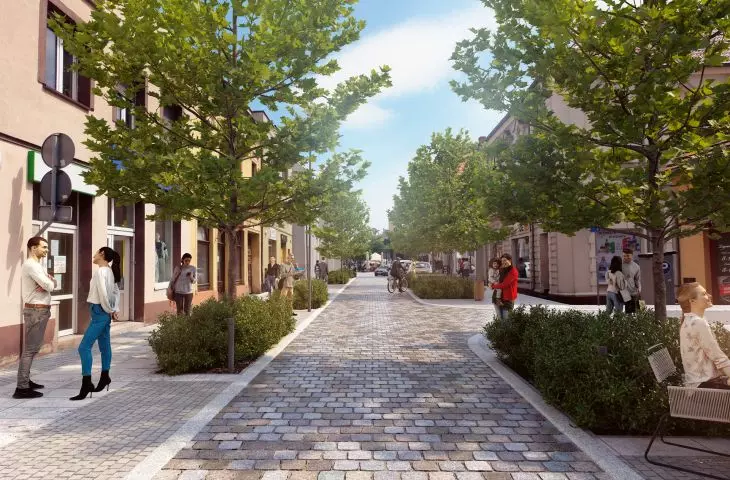
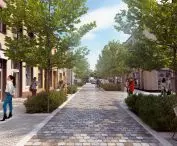
Poznańska Street after reconstruction (narrowed, stone pavement, new trees)—rendering, view toward the Market Square; on the right—the entrance to Kowalska Street; design: Koja Piotr Kociński
Photo: Pleszew Town Hall
Currently, Poznańska Street, which runs west of the Market Square, is awaiting redevelopment and greening. Since the 1990s, its Old Town section has no longer served as an access road from Poznań or as a transit route through the Market Square (this traffic now flows along Hallera Street on the outskirts of the historic district). A comprehensive design by the Koja Piotr Kociński studio is already complete; it calls for widening the sidewalks, narrowing the roadway, and planting a large number of trees and low-growing greenery. In the section adjacent to the Market Square, the street will also be paved with even cobblestones. There is a chance that this initiative will help revitalize several interesting, though currently neglected, buildings and will complement the activities of educational institutions located on Poznańska Street (including the Staszic High School) and cultural institutions: the “Hel” Cinema and the Regional Museum.
A museum draw?
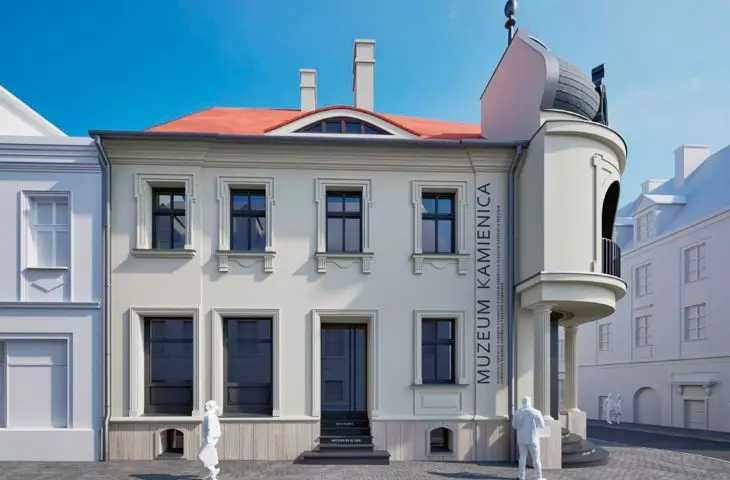
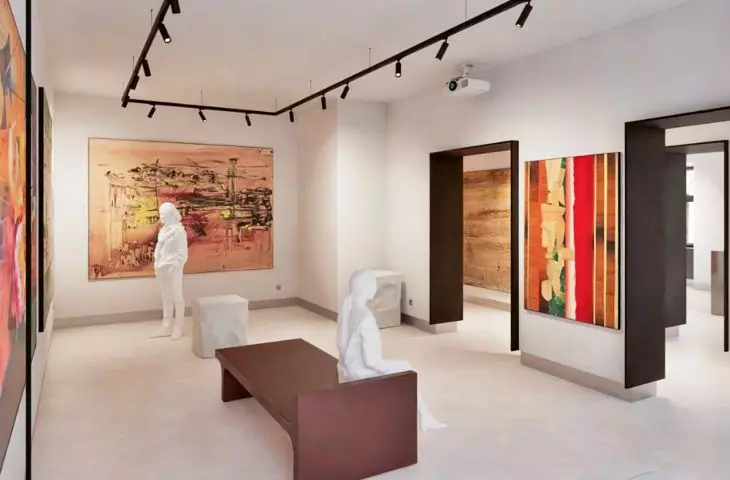
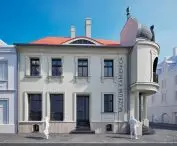
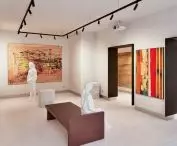
The cinema, following modernizations carried out in recent years (including a newly established café and a thorough renovation of the screening room), managed by Zajezdnia Kultury, is enjoying popularity. The museum is looking forward to better days following a planned future refresh of its currently unattractive exhibition. Meanwhile, work is currently underway to establish a completely new museum of contemporary art, which will showcase, among other things, the body of work by Marian Bogusz (1920–1980) from Pleszew — a highly regarded painter and cultural activist who was active primarily in the capital.An interesting corner tenement house on the Market Square is being converted into a museum ; the opening is scheduled for next year. There are also increasingly realistic, though not yet fully concrete, plans to establish a narrow-gauge railway museum in the standard-gauge PKP Pleszew station building in Kowalewo. Train services on the commuter line are intended to complement the permanent exhibition. For years, rides on the narrow-gauge train have been a tourist attraction, and in the future, perhaps, a more diverse fleet will add variety to the experience.
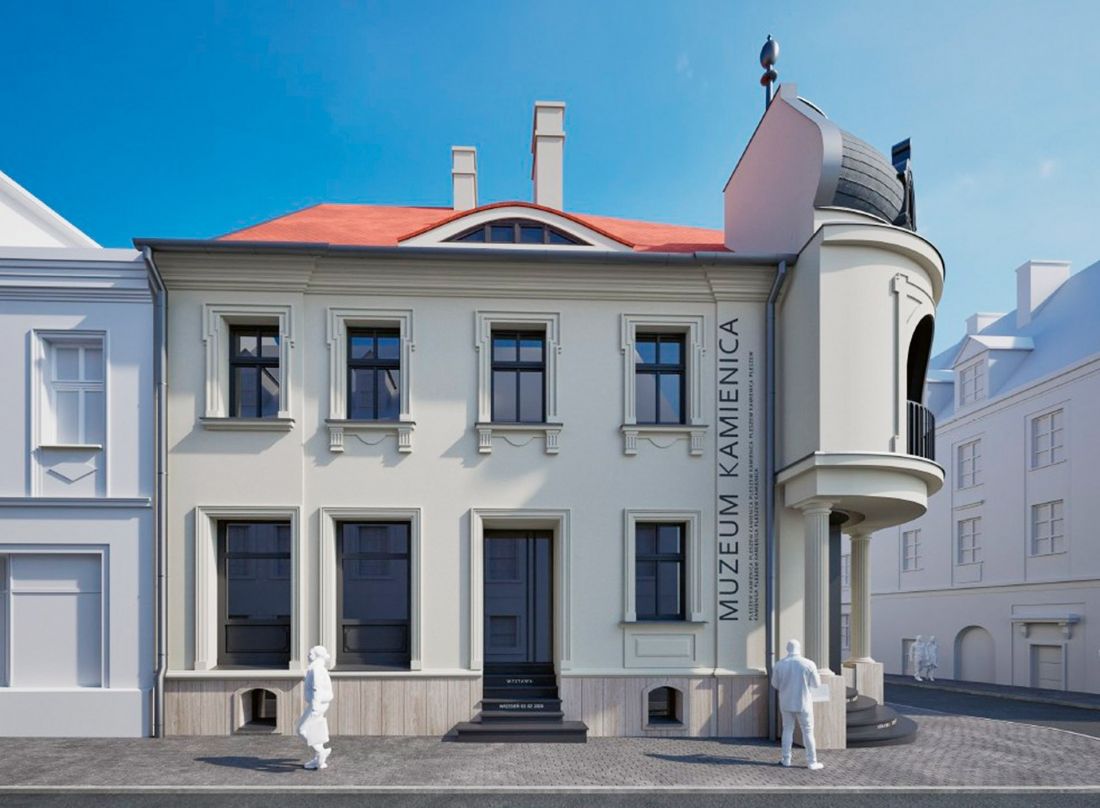
A tenement house at the corner of the Market Square and Krzyżowa and Kaliska Streets, converted into a museum of contemporary art (Muzeum Kamienica), rendering
Photo: Pleszew Town Hall
The station itself underwent a thorough renovation in 2025 and continues to serve its original purpose. In consultation with railway officials, the interior was designed in a unique way that highlights the local character (designed by Agata Długiewicz and Michalina Majcherkiewicz Chmielowska). Three years earlier, the municipality created an aesthetically pleasing, tree-lined park-and-ride lot between the station and the historic water tower standing next to it, complete with a bike shelter, benches, and low-growing greenery. Every day, nearly all the spaces here are occupied by cars and bicycles. Consistent visual wayfinding has also been implemented, directing people, among other things, to the starting stop of the commuter rail line (100 m). A thorough renovation of the currently very neglected square in front of the train station—where municipal buses stop—is planned for the coming year.
Once the new museums are built and the old one undergoes renovation, Pleszew will have a total of six such institutions (there are also private museums: the Bakery Museum, the Crafts Museum, and the Religious Museum of the Servants of Mary). Mayor Ptak notes that, combined with the attractive and popular museums in nearby Gołuchów and Dobrzyca, Pleszew’s exhibitions will be able to achieve sufficient critical mass so that Pleszew and its surroundings—which are not typically associated with such attractions—can begin to entice visitors with a multifaceted museum offering that keeps tourists staying longer.
Municipal and Beyond
However, tourism is not the main goal of Pleszew’s transformations. The compact city of Pleszew is intended—according to the authorities—to serve its current residents first and foremost, to halt the negative demographic trend , and—perhaps—to attract new residents to the city. Mayor Ptak reported four years ago in our publication:
A survey conducted by the City and Municipality of Pleszew among residents and at Pleszew’s largest companies (where a large percentage of employees are from outside Pleszew) showed that the availability of housing determines the choice of Pleszew as a place of residence.
In addition to investing in public spaces and municipal services, Pleszew is therefore also focusing on municipal housing construction and rental housing (including rent-to-own options) under the PTBS and SIM programs (supported in part by BGK grants, among other sources). Although no residential building was constructed near the train station–library, units of the types mentioned above were created in several other locations—both in new buildings and in renovated tenement houses. A total of 135 apartments (including 34 municipal units) were created across four locations. Work is currently underway to adapt another tenement building on Ogrodowa Street (next to the former synagogue that was closed during the war). The design for the infill building, which will border the planned museum of modern art (Krzyżowa Street), is already complete. Designs for new buildings are selected through competitive bidding rather than design competitions. However, their forms and standards are appropriate and blend decently into the surroundings.
No military, just Moreno
Pleszew also serves as a kind of living exhibit during the annual conferences held in the city under the slogan “Beyond the Metropolis.” Launched in 2022, this series of highly substantive meetings is dedicated to the development of smaller towns and takes place at the Zajezdnia Kultury. For several years now, participation in the conference has been marked on the calendars of an ever-growing number of local government officials, scholars, and experts. According to the mayor, attendance and interest in the event are on the rise, and the conferences have gained a reputation nationwide.
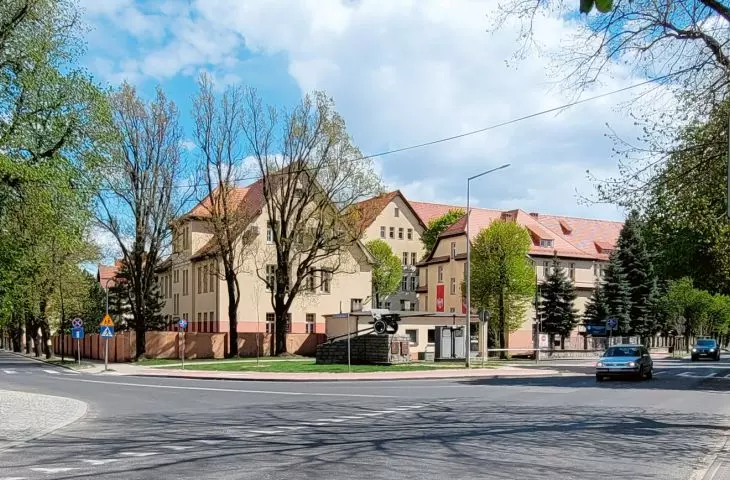
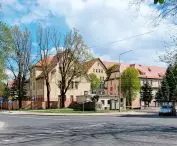
During the conference, Pleszew showcases its achievements but also addresses the problems that—as is the case everywhere—are no exception here. These include, among others, the aforementioned reduction in car traffic, which is not proceeding as quickly as expected, demographic challenges (following a brief uptick, the population is declining again), and the inability to fully restore the Nera River along the section where it has been channelized. Another significant problem is the imposing, former German barracks complex that was in use until the early 1990s. (Ironically, the military unit in Pleszew was disbanded by the government of Hanna Suchocka, who hailed from this very city.)
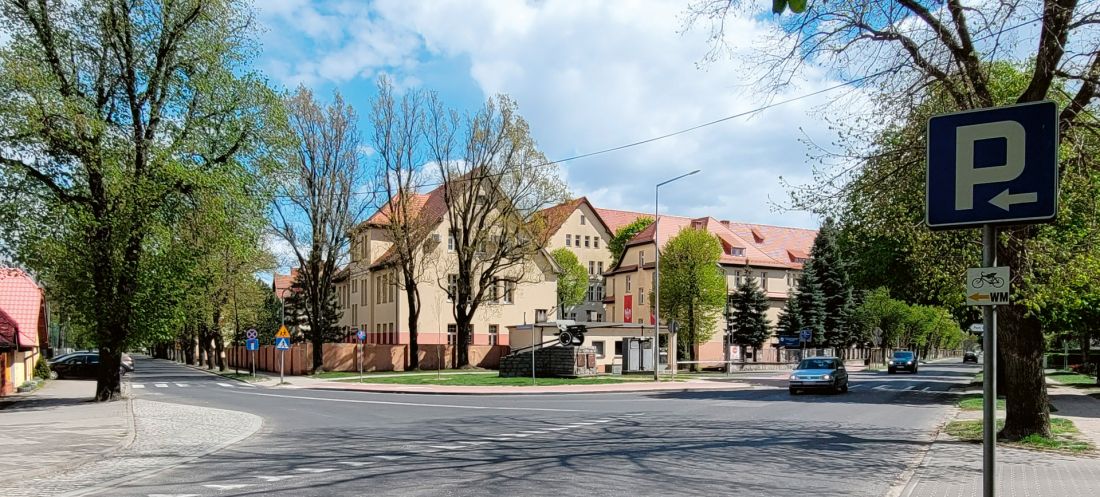
former barracks, now the headquarters of the OHP Education and Training Center at the intersection of Aleje Wojska Polskiego and Sportowa Street
Photo: Jakub Głaz
Currently, some of the buildings are used by the Volunteer Labor Corps (OHP). However, some are falling into disrepair, and the Pleszew authorities have sought to bring the military back (approximately 400 soldiers). Unfortunately, the OHP does not want to give up the unused buildings. Another challenge is posed by the tall, historic brick granaries and the buildings of the old mill, which stand next to the operational modern grain elevators that stand out in the city’s skyline near the Zajezdnia Kultury. The private owner of the entire grain complex takes care of them but has no idea how to develop them. The mayor
openly admits that in Pleszew, the chances of transforming these old structures into lofts, for example, are slim.
Regardless of these challenges, Pleszew is showing steady progress, which demonstrates just how much a well-thought-out development strategy —and years of consistent effort in implementing it—can achieve . The icing on the cake of these changes is—as the mayor is eager to point out today—the mention of “Compact Pleszew” in the book by the famous Carlos Moreno, *The 15-Minute City: A Solution for Saving Our Time and Our Planet*.
Jakub Głaz
more: A&B 6/2026 – Small and Medium-Sized Cities / Architects’ Fees,
download free e-editions of A&B