




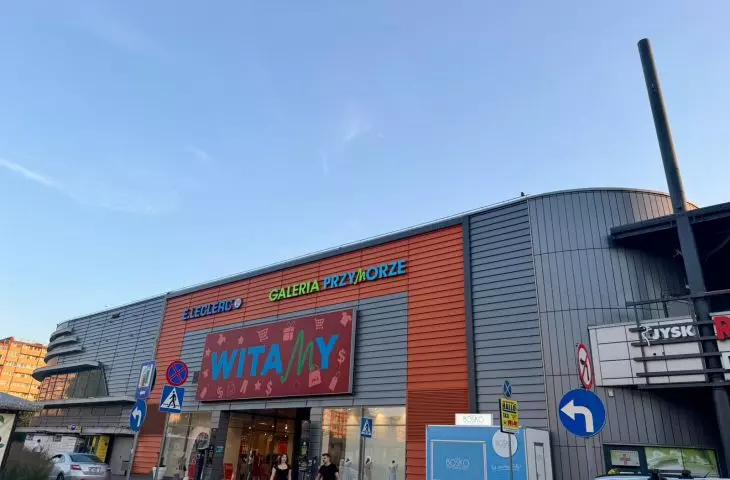



Galeria Przymorze will not be demolished, but plans to build three 16-story dormitories next to the shopping center are sparking heated debate in Gdańsk. However, the dispute is not limited to the height of the buildings or the loss of green space. While student dormitories and PRS apartments are formally classified as commercial facilities, in practice they function as residential units, being built on land originally zoned for entirely different purposes. “Zoning plans are no longer a reliable source of information for residents about what the future of their neighborhood will look like,” comments Karol Spieglanin of FRAG.
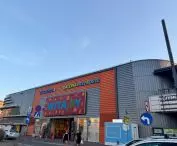
Following Poznań, Wrocław, and Warsaw, the trend of demolishing shopping malls has reached the Tri-City. Among the centers slated for demolition are the Alfa shopping mall in Przymorze, Manhattan in Wrzeszcz, and Pasaż Królewski in Śródmieście. It’s no wonder that the news that the owner of Galeria Przymorze is seeking approval to build 16-story student dormitories has electrified residents. Despite their concerns, however, it quickly became clear that the project would not be built on the mall’s site, but right next to it.
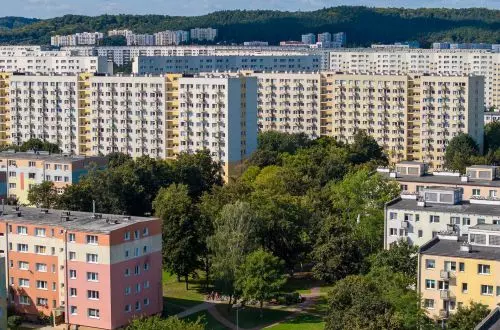
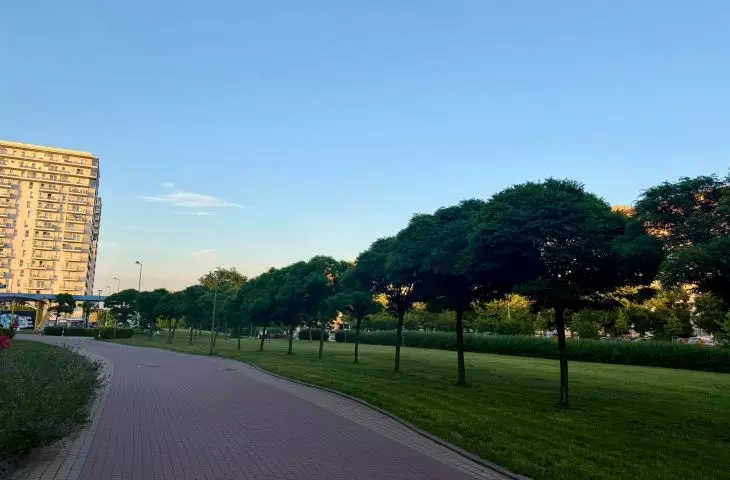
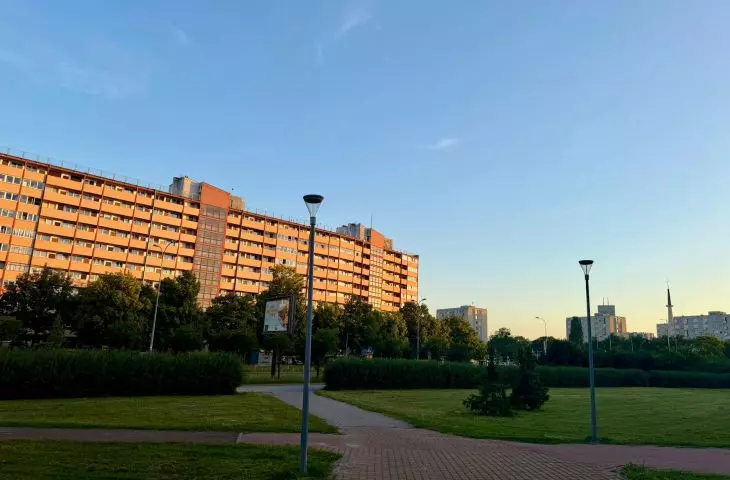
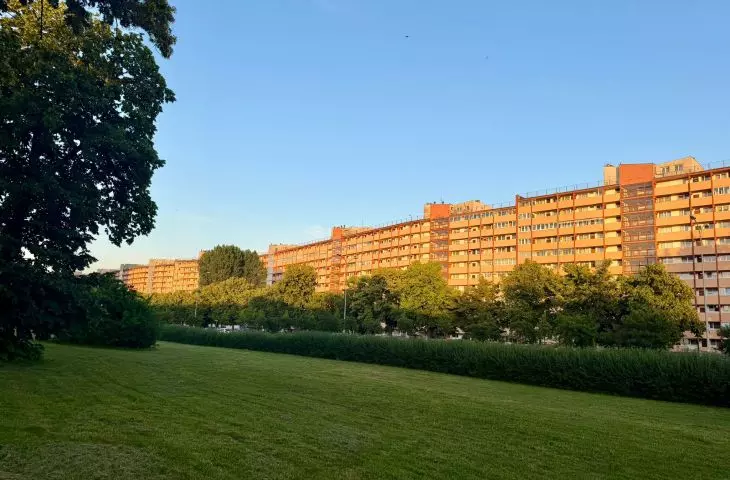
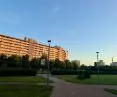
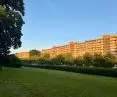
The buildings are to be erected on a wide green belt between the shopping center and the street and the wave-shaped building on Obrońców Wybrzeża Street. The application for a building permit was submitted to City Hall in May of this year. It calls for the construction of three 16-story towers connected by three-story walkways. A total of 444 rooms are planned.
And what about the shopping center itself?
The developer has no plans to demolish Galeria Przymorze or change the use of the site. On the contrary: the site is undergoing re-leasing, and new tenants are moving in—emphasizes Anna Skrocka of Immogdańsk, the company that owns the property.
Application to amend the zoning plan
Adam Rozenberg, chairman of the Przymorze Wielkie District Council, says that the district council has not yet passed a resolution on the project, but he is hearing mixed opinions.
There are residents who say that this is a matter of property rights and that the project complies with the approved plan. “—says Rozenberg.—However, the opinions of those who do not want more high-rises in the district, who fear increased density, traffic jams, and the loss of green space, are more prominent.” Some of these people would like to see the zoning plan changed, but we know that the costs of such a decision would be horrendous,” emphasizes Adam Rozenberg.
In June, a group of residents protested outside the shopping center against development of the site. The City Hall also received a petition to amend the local plan, initiated by activists from the Razem Party and the Społeczny Gdańsk association , which was supported by nearly 500 people.
The petitioners would like to see a ban on the construction of multi-unit residential buildings, a reduction in development density, and a height limit of 12 meters.
"Apartments" in commercial zones
Karol Spieglanin, president of the Gdańsk Agglomeration Development Forum, feels that public discourse on new development projects in Gdańsk has reached a dead end.
“On the one hand, we have city authorities and urban planners who, for years, have failed to learn from past mistakes and continue to allow developers to build substandard structures without imposing any quality requirements on them,” Karol Spieglanin says in an interview with AiB. “On the other hand, we have residents who, wanting to protect themselves from such development, protest against practically every major investment.” And it’s no wonder. If neither dialogue nor standards exist, then the current state of affairs is better than new subpar developments that could make things worse.
The president of FRAG speaks of a “new, trendy pathology in Polish urban planning.”
Where we planned for services, apartments are being built that arenot officially classified as such. And just as PRSs or dormitories are theoretically classified as services, there is no doubt that something is wrong when such “apartments” are built on land zoned for completely different types of services, without amending the zoning plan, and even without following the ZPI procedure,” says Spieglanin.
He adds that in such a situation, zoning plans cease to provide residents with reliable information about what they can expect in a given location and what the future of their surroundings will look like. In his opinion, the area near Galeria Przymorze is a good location for increasing building density, and the planned 16-story buildings are appropriate in scale for the surroundings. Spieglanin emphasizes, however, that what matters most is not height or function, but the quality of urban design solutions: the absence of a service road from the main street, mandatory commercial spaces on the ground floors, building entrances at sidewalk level, and high-quality public spaces between the buildings.
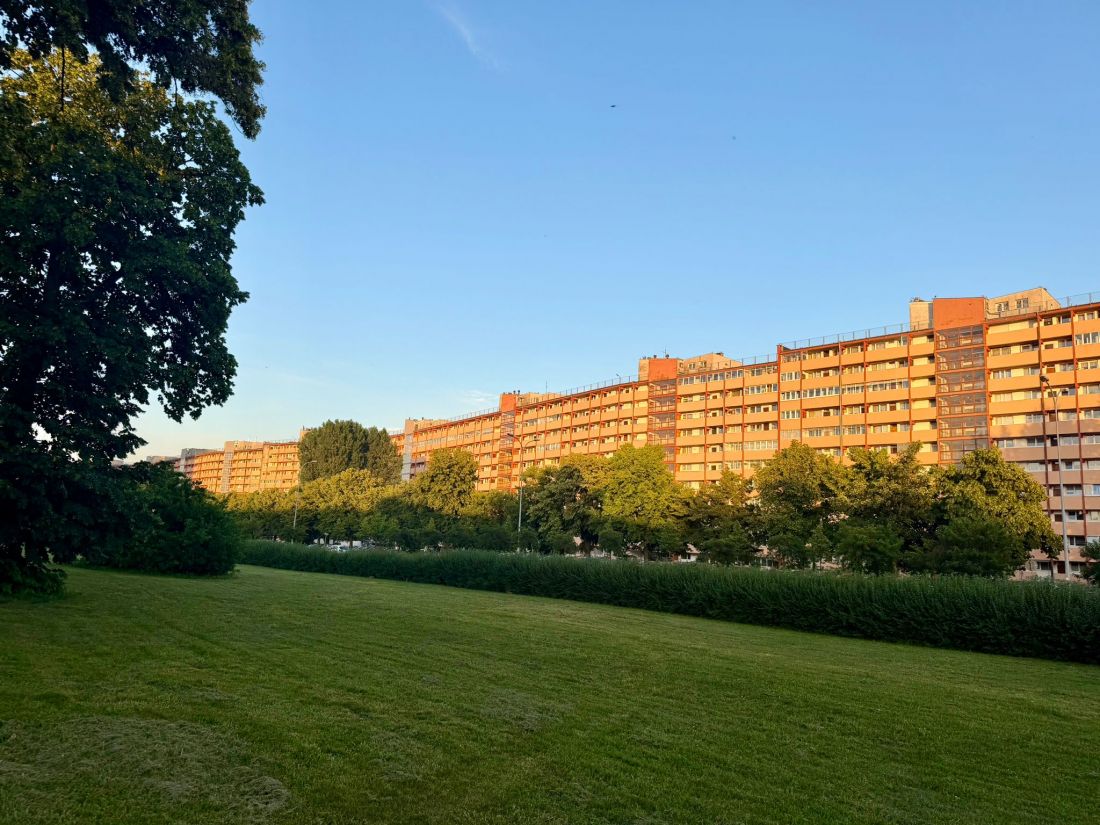
The student dormitories are to be built between the “Falowiec” and Galeria Przymorze
Ewa Karendys