




The vision of cities of the future is based on vehicles controlled solely by artificial intelligence. We are seeing changes on the roads - unmanned buses and robotaxis are getting bolder on public roads. Reality, however, is verifying the readiness of this technology to operate autonomously.
The topic of autonomous cars is increasingly manifesting itself in the contemporary debate on urbanity. While passenger cars have been introduced on the streets for some time now (more on that in a moment) fully self-driving buses have just been allowed in Norway.
The 8.3-meter-long autonomous bus was supplied by e-Atak and is electrically powered. It can travel 300 kilometers on a single charge, carrying up to 52 passengers. It reaches a speed of 50 kilometers per hour in all weather conditions, both day and night.
It took a decade to experiment and try these solutions. The buses in question are those operated by Vy, the state-owned transport company, and Kolumbus, the regional public transport authority in the southwestern Rogaland district.
Residents of the county have encountered this solution before - the vehicles have been running here since 2022, but until now they have always had a driver who, while not driving the bus, monitored how it was moving and intervened when necessary. The vehicles introduced are marked with a fourth level, which signifies a high level of autonomy, a system that in most cases does not require human interaction. However, this is lower than level five, or "full driving automation," which is the point at which the cars can perform all actions performed by the driver, without any intervention.
View this post on Instagram
It is worth noting, however, that the vehicle, capable of autonomous driving, but along a planned route. The vehicle is able to autonomously perform tasks such as stopping at stops along the route, managing passenger boarding and alighting, and negotiating traffic circles and intersections. Technically speaking, the entire solution focuses on equipping the vehicle with autonomous driving software provided by ADASTEC, supported by the xFlow management system. In other words - the control is still there, but by the operator, sitting in front of a monitor, watching how the vehicle moves and what happens in it. The image from the cameras, placed on the vehicle and inside, is shown in real time to the employee. The company released a record of what the viewing panel looks like some time ago:
This is the system that enables real-time monitoring and control of vehicles. It is a platform for remote operation and supervision, allowing operators to control multiple vehicles simultaneously from a central control point. It also allows remote assistance to passengers.
Mr. Car
With self-driving cars, the case is a bit different; they are widely tested. The market is growing rapidly. Several large companies are investing huge sums in autonomous driving. Tesla, Waymo, Mercedes-Benz, BMW and Ford stand out in the market. Competition in the industry is extremely intense. However, each player is taking a different approach to sensors and software.
In 2020, Waymo was the first to offer driverless cab rides in selected areas. By the end of 2025, however, no system had reached full autonomy (referred to as "level 5").
It may be worth turning to the definition - well, an autonomous car is a vehicle designed to move without direct human control. Such a vehicle is also sometimes referred to as an unmanned or self-driving car. The machine uses artificial intelligence and various types of sensors to operate. The vehicle collects real-time data for autonomous navigation on roads. On-board systems allow it to comply with traffic regulations. The driverless car responds independently to changing environmental conditions.
Autonomous cars base their operation on a combination of artificial intelligence software and mapping systems. Sensors help the vehicle interpret its surroundings. A computer makes real-time driving decisions. A GPS system is used in such a vehicle to plan the route. Cameras are responsible for interpreting the road environment. Special sensors detect objects near the car, and artificial intelligence systems process all this data and react in a fraction of a second. This technology enables the vehicle to steer and brake autonomously. The car can also accelerate without human intervention.
Autonomous vehicles usually combine several different sensor technologies. Cameras recognize road signs and traffic signals and to identify horizontal markings on the roadway. Radar measures speed and distance from other vehicles on the road. LiDAR technology generates detailed three-dimensional maps of the surroundings. Ultrasonic sensors are responsible for detecting objects over a short distance - for example, they help during a parking maneuver.
In 2025, about half of new cars sold worldwide will be equipped with automated steering and speed control systems (Level 2 automation). Just 10 years earlier, these systems were only available on a handful of high-end models, accounting for less than 1% of sales. However, the most commonly deployed systems, such as adaptive cruise control combined with lane-keeping assist, require the driver to keep his or her hands on the wheel and operate only under certain conditions, mainly on highways.
Levels of automation
|
Mode |
Level |
Summary |
Description |
Responsibility for: Direction and speed |
Responsibility for: Monitoring the environment |
Responsibility for: Emergency response (Fallback) |
|
N/A (Not applicable) |
0 |
No automation |
Constant performance of all aspects of driving by the driver, even when the vehicle is "assisted by warning or intervention systems." |
Driver |
Driver |
Driver |
|
Some (Some) |
1 |
Driver assistance |
Control of steering or speed by ADAS in a specific driving mode. |
ADAS uses information about the driving environment; the driver is expected to perform all other driving tasks. |
Driver |
Driver |
|
Some (Some) |
2 |
Partial automation |
The performance of steering and speed control by one or more ADAS systems in a specific driving mode. |
ADAS uses information about the driving environment; the driver is expected to perform all other driving tasks. |
Driver |
Driver |
|
Some (Some) |
3 |
Conditional automation |
Control over all aspects of driving by ADAS in a specific driving mode. |
The driver must respond appropriately to the call to take control (intervention). |
System |
Driver |
|
Many (Many) |
4 |
High automation |
Control over all aspects of driving by ADAS in a specific driving mode. |
If the driver does not respond appropriately to a call for intervention, the car is able to stop safely. |
System |
System |
|
All |
5 |
Full automation |
Control of all aspects of driving by ADAS in a specific driving mode. |
The system controls the vehicle under all conditions and circumstances. |
System |
System |
Note: ADAS stands for Advanced Driver Assistance Systems.
Are they safe?
Autonomous cars have some potential to make roads safer - they don't get tired or distracted, nor do they drive while intoxicated. They are not (yet?) safer than drivers in all situations. The systems have difficulty interpreting unusual or complex traffic scenarios, predicting human behavior on the road, and show problems operating in poor weather conditions.
Adverse weather conditions: rain, fog and snow can drastically reduce the visibility of cameras. These phenomena also interfere with the accuracy of other sensors. Bad weather often obscures signage (both on the roadway and on vertical signs) - human intervention is still often required in harsh conditions. Fog greatly reduces the range of object detection by sensors. A human in dense fog can see at a distance of fifteen meters, however, the autonomous system performs worse in such conditions - most autonomous cars need at least sixty meters of clear visibility to drive safely.
Extreme temperatures affect sensor calibration. A sensor calibrated at the default temperature gives different readings in severe cold or heat. The metal cantilevers expand and contract when exposed to temperature - so suddenly the precision LiDAR begins to indicate a driving path altered by two degrees. It's seemingly not much, but such an error is enough to miss a child crossing the street.
Computers can't cope with dynamically changing roadwork zones. Machines have difficulty interpreting hand signals given by police officers or workers. Autonomous cars lack the social intelligence to cooperate in dense urban traffic. Behavioral driving by robots often provokes aggressive reactions and deliberate obstruction of the road by humans. Algorithms react only to the facts at hand and cannot predict the sudden running of a child or animal in front of the hood.
Add that autonomous vehicles also rely on software with constant network connectivity, so it is limited in scope, but also breakable. So we are dealing with the potential threat of unauthorized access, leakage of sensitive data, interference with navigation systems or control of the car.
robotaxis
Robotaxis are fully autonomous vehicles designed to provide unmanned transportation services. Users can book a trip using a mobile app. Passengers travel without the presence of a physical driver. These services aim to reduce congestion on the roads. The solution reduces transportation costs and improves overall mobility accessibility. Robotaxis could significantly reduce private car ownership in cities in the coming decades.
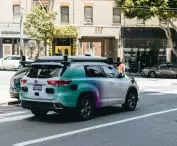
The aforementioned Waymo Company is owned by Alphabet (Google's parent) and is one of the most advanced developers of the technology. Waymo vehicles have already driven millions of kilometers autonomously on public roads. The company operates fully unmanned robotaxi services in parts of the United States. Its systems rely heavily on LiDAR technology and detailed mapping. Waymo is widely recognized as a leader in achieving level four driving autonomy. Unfortunately, officials in San Francisco and Austin, where Waymo has been transporting passengers without drivers for more than a year, said the performance of these vehicles is deteriorating. "We're actually seeing something interesting: a deterioration of some things that used to be better," Mary Ellen Carroll, executive director of the San Francisco Department of Emergency Management, told officials at the National Highway Traffic Safety Administration (NHTSA), which oversees the safety of autonomous vehicles in the US. "They are committing more and more traffic violations," he said.
"We've observed behavior that we haven't seen in several years... Waymo often blocks access to our fire stations," added Chief Patrick Rabbitt, head of the San Francisco Fire Department. "Their standard is to stop." The situation could prevent fire trucks from responding to emergencies in a "timely and appropriate" manner, he added.
Waymo also hit a 9-year-old girl walking to school in Santa Monica. The girl fortunately did not require hospitalization. The statement said she stepped out from behind the sizable SUV and ran in front of the driver. The car braked upon seeing her and slowed from 27 km/h to 10 km/h before hitting her. The company further claimed that it simulated a situation in which a fully attentive person would have been behind the wheel of the car, and the simulation showed that the situation would have been much worse.
In February, a power outage in San Francisco shut down traffic lights in a third of the city. This overloaded Waymo's remote assistance team, which helps with traffic situations. The team was so overloaded that many vehicles simply stalled, waiting for directions and completely blocking intersections.
That's right, the remote assistance team. Earlier this year, Waymo safety director Mauricio Peña noted that when the company's robotaxis encounter unusual situations, they request real-time information from a "remote response agent." This simply means that an employee takes momentary control of how they move on a monitor. Some of them work in the United States, but many more operate in other countries, such as the Philippines. These are so-called contract workers, who work "on contract" for much lower wages, ergo without adequate labor security.
Tesla's robotaxis drivers also use human assistants in each vehicle. In a disclosed letter, Tesla confirmed that remote assistance operators in some cases can simply take direct control of an "autonomous" vehicle. In documents as part of an investigation into autonomous vehicle technology, seven companies, including Tesla, Amazon-owned Zoox and Uber and Nvidia-funded Nuro, confirmed that they use remote assistants - humans responsible for responding to autonomous vehicles in situations where they are confused, stuck or in emergency situations. Each autonomous vehicle company, however, declined to disclose how often their autonomous vehicles require assistance.
Autonomous vehicles still have a lot of catching up to do in terms of autonomy and unconditional safety, but it should be added that according to a 2023 study by the U.S. National Highway Traffic Safety Administration (NHTSA), autonomous cars could prevent 94% of accidents by eliminating human error. However, it all depends on what conditions we're talking about.