



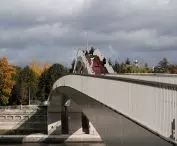
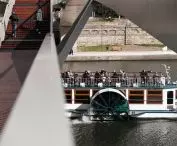




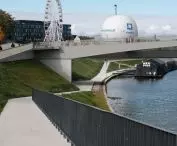
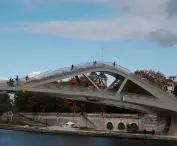

The new pedestrian and bike bridge connecting Kazimierz and Ludwinów has become a hit. Although its design divided public opinion for many years, today—more than a week after its grand opening— the footbridge continues to attract tourists and residents curious about the new view of downtown Kraków. A few days after it opened, however, not only its advantages but also its shortcomings are becoming apparent. How is the new Kazimierz-Ludwinów footbridge holding up in practice?
You can read about the first impressions, inspirations, and history of Kraków’s new footbridge in our article, where we speak with Kazimierz Łatak, co-author of the concept developed by Biuro Projektów Lewicki Łatak. A few days after the opening of the new pedestrian and bicycle bridge across the Vistula River in Kraków, we also have our first thoughts on it. What view does the observation deck offer? How well was it constructed? And does the traffic layout around the Kazimierz-Ludwinów footbridge ensure safety for both pedestrians and cyclists?
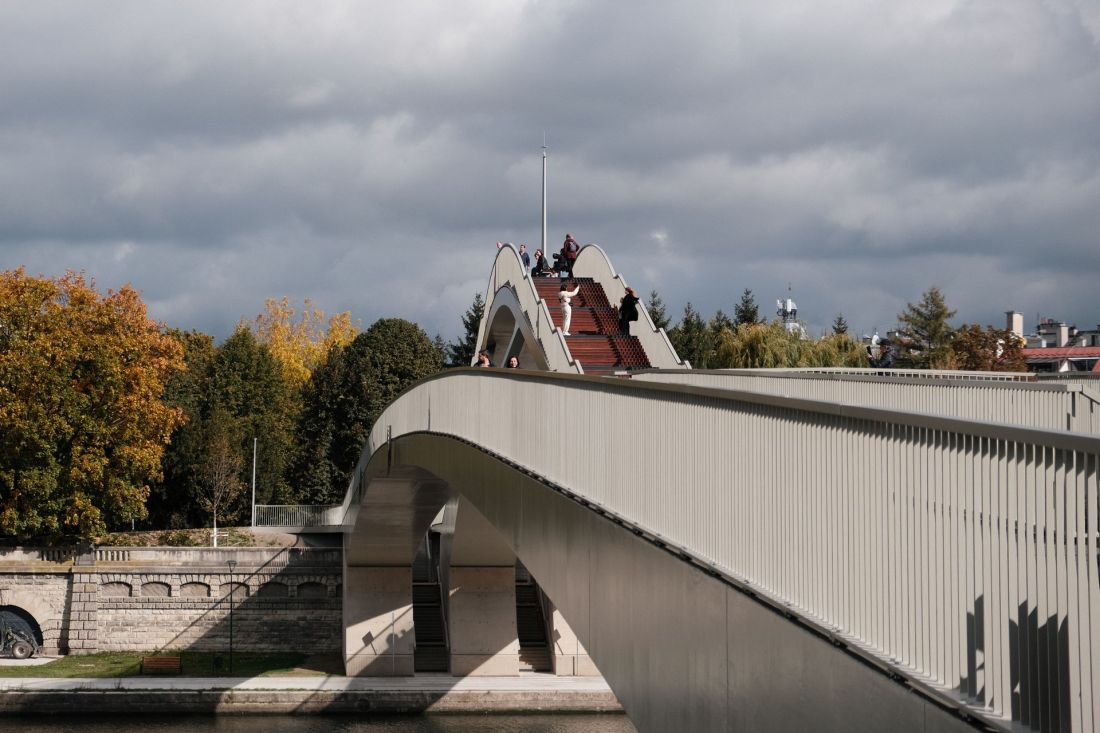
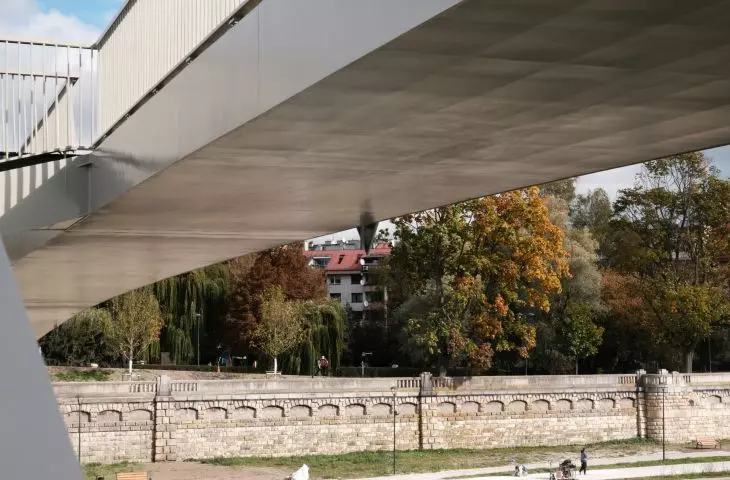
The Kazimierz-Ludwinów Footbridge in Kraków — designed by Biuro Projektów Lewicki Łatak
photo: Przemek Ciępka
Two functions in one footbridge
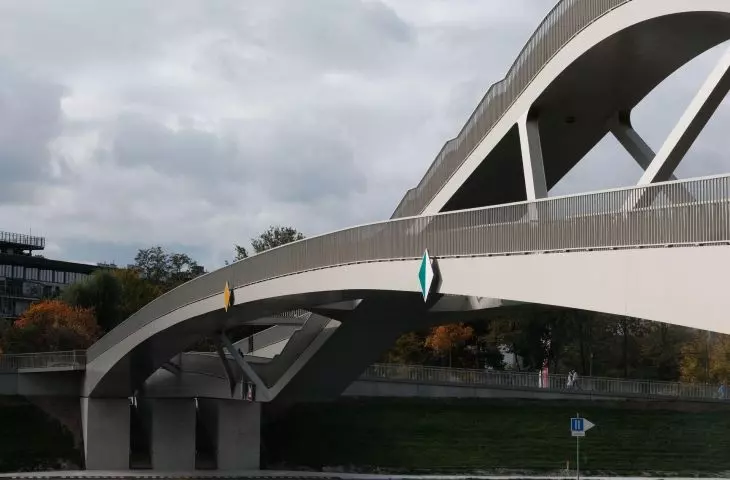
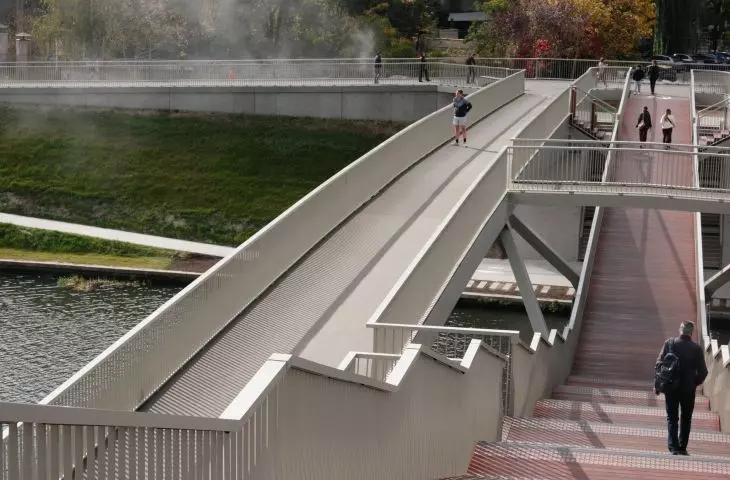
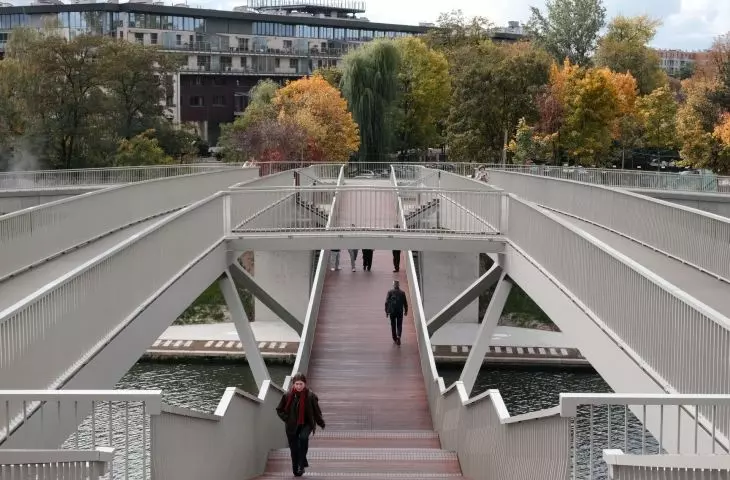
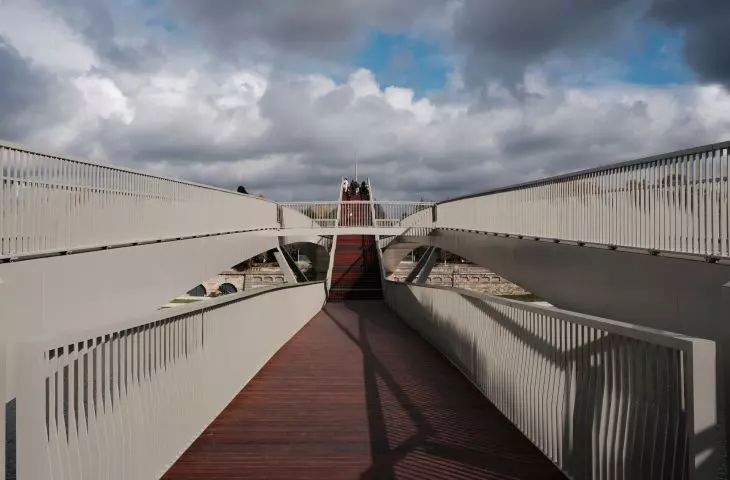
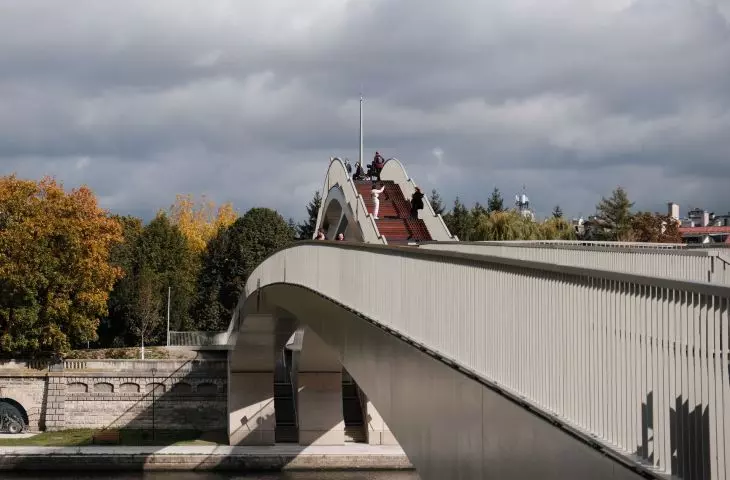
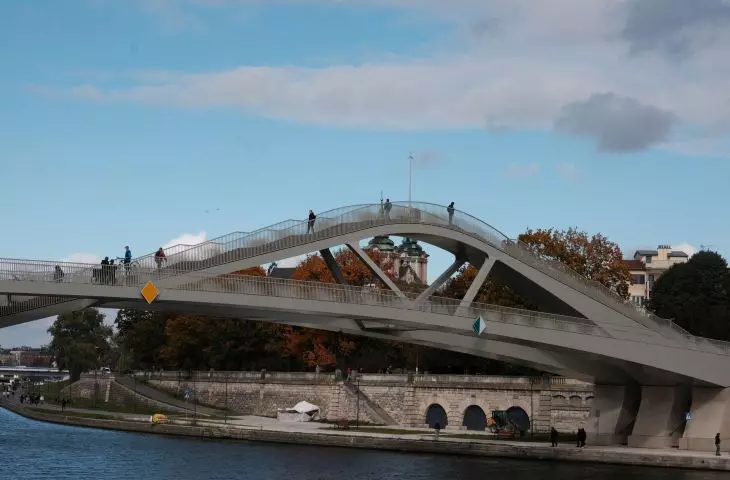
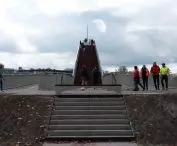
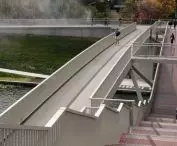
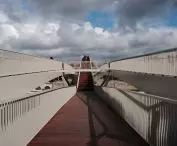
The new footbridge in Kraków is an unusual structure—it consists of three spans, each serving a different purpose. The two outer spans are for pedestrians and cyclists, while the middle span serves as an observation deck. As the designers explain, the distinctive, sinusoidal shape of the middle span is inspired by garden design. In garden design, an “ambulatio” is a winding path. It is not intended for quick travel but rather serves a recreational purpose, allowing visitors to admire the garden from various perspectives.
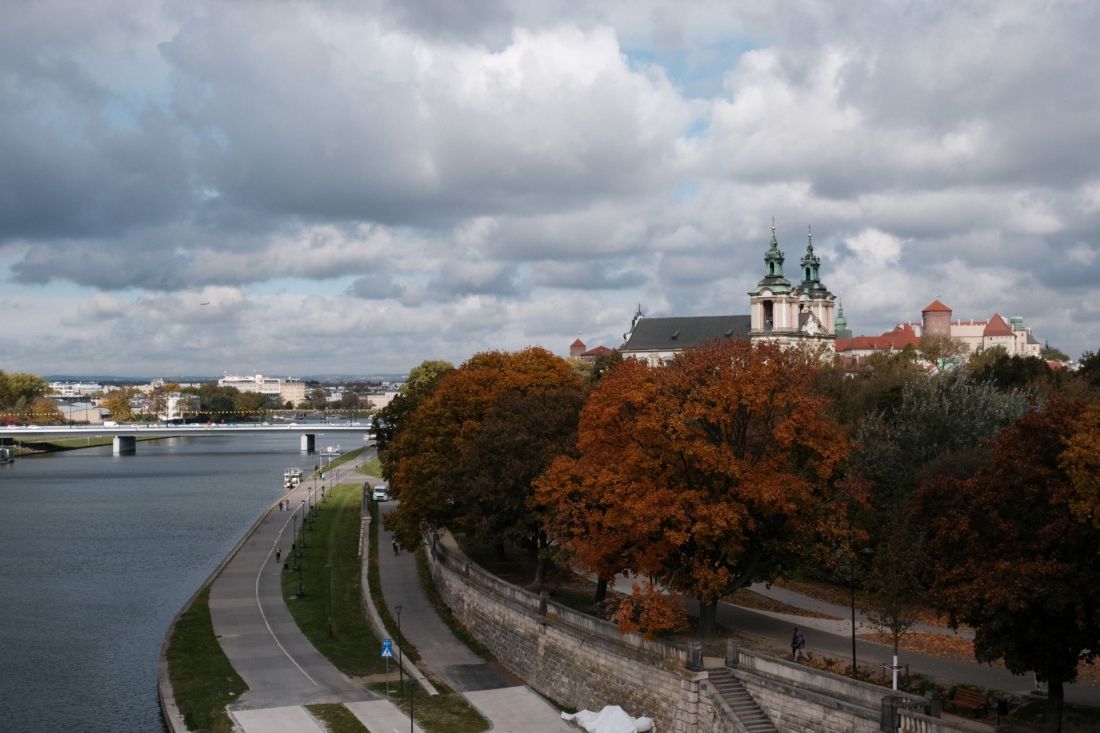
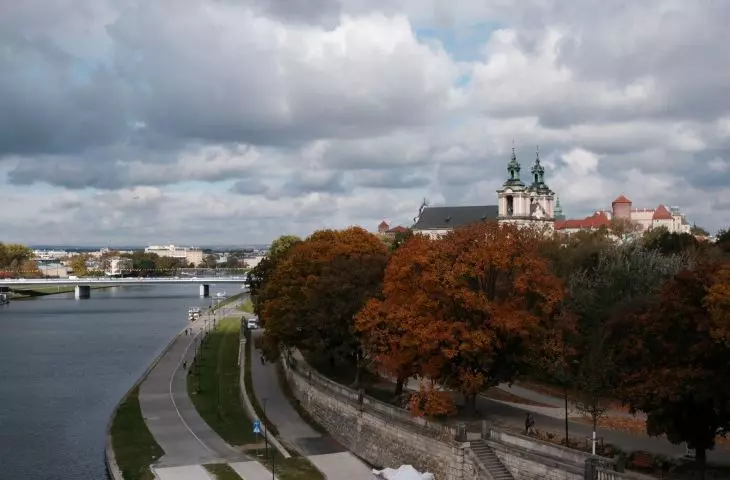
The new Kazimierz-Ludwinów footbridge in Kraków offers views of St. Stanislaus Church and Wawel Royal Castle
Photo: Przemek Ciępka
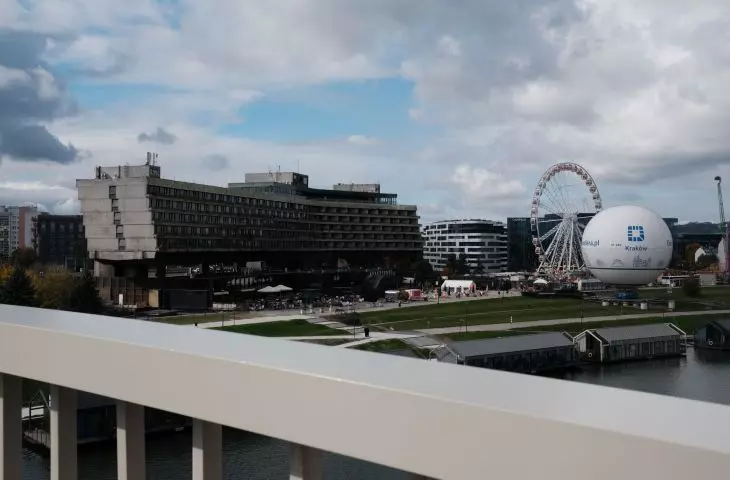
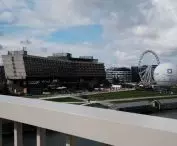
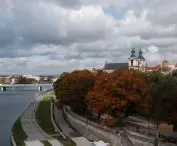
The central span of the new footbridge in Kraków serves a similar function and is the most distinctive feature of this project. So what can be seen from the sinusoidal viewing platform? Looking toward Kazimierz and the Old Town, you’ll see the towers of St. Stanislaus Church on Skałka and, looming behind it, the silhouette of Wawel Royal Castle. But the UNESCO zone isn’t all there is—the peak of the sinusoidal viewing platform also offers a close-up view of the terraces of the Forum Hotel, while on the opposite side, you can see the tower of St. Joseph’s Church in Podgórze.
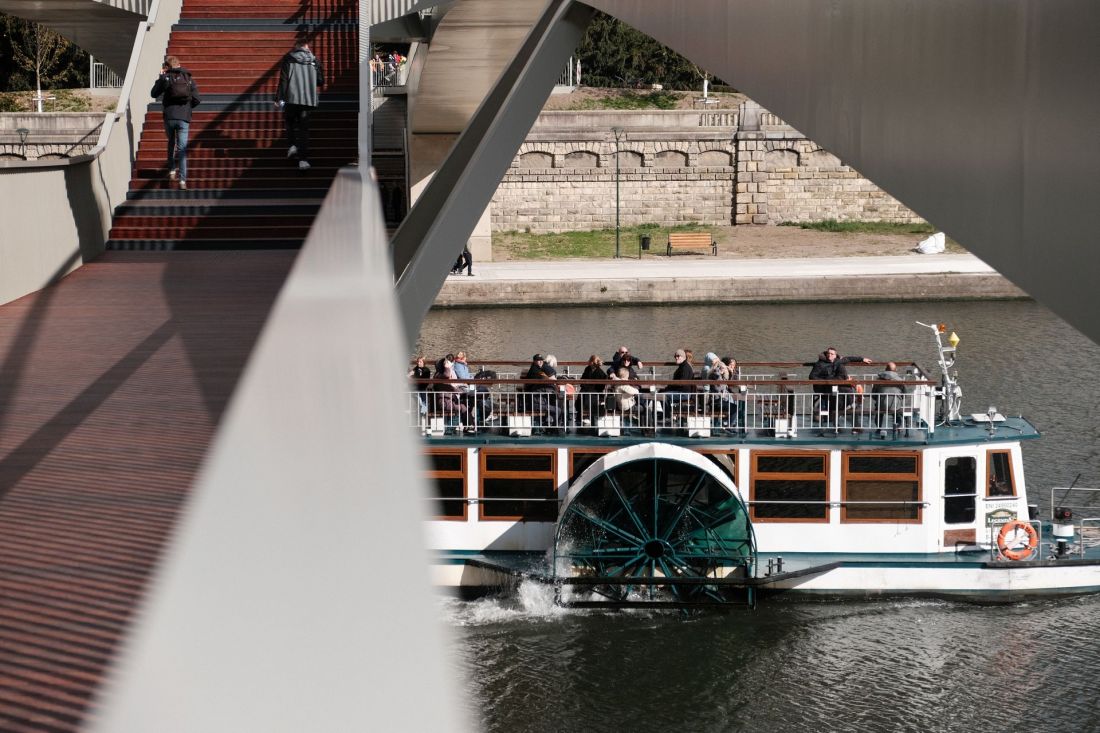
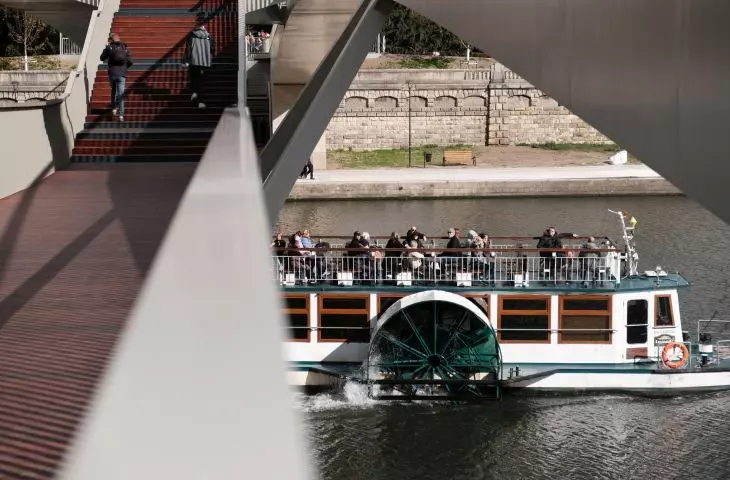
The Kazimierz-Ludwinów footbridge in Kraków offers new perspectives on Kraków and the Vistula River flowing through it
Photo: Przemek Ciępka
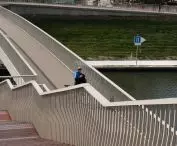
The sinusoidal viewing platform runs both above and below the level of the footbridge. The lower section allows visitors to get closer to the Vistula River. It’s a shame that the level couldn’t be lowered even further; however, as Kazimierz Łatak explains, the height of the lower level of the observation platform was dictated by the regulations and requirements of Wody Polskie.
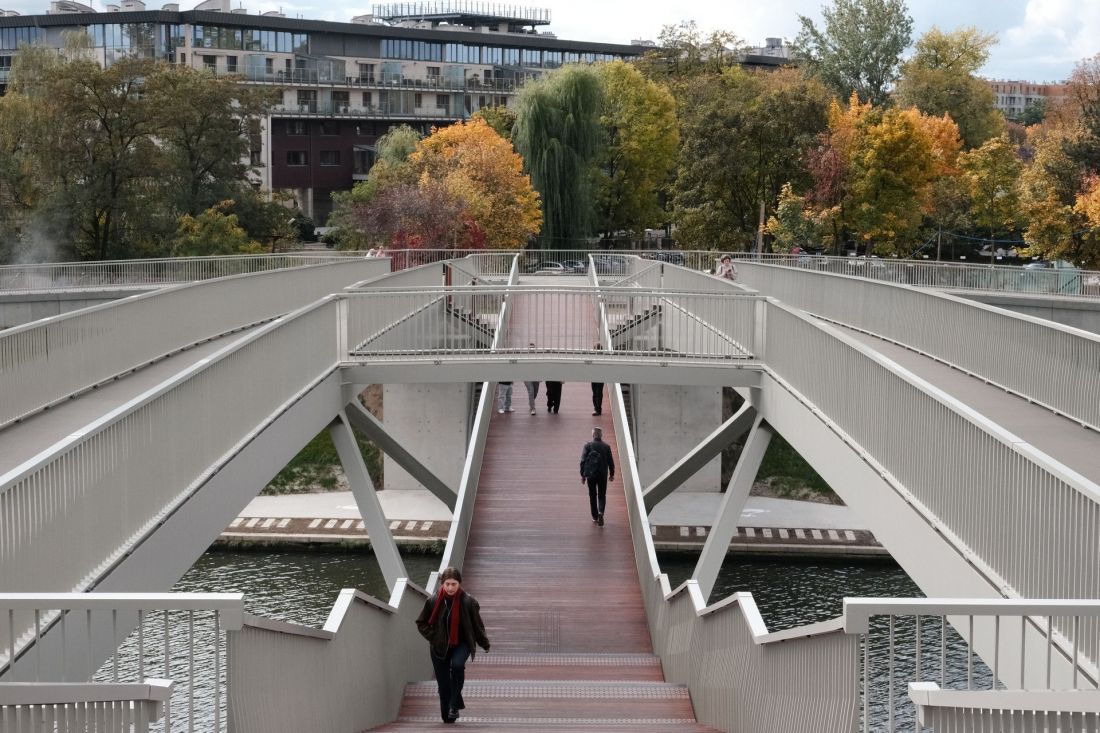
The Kazimierz-Ludwinów Footbridge in Kraków
Photo: Przemek Ciępka
A Footbridge with a Choice
In addition to its scenic value, the central span has another significant advantage. The panorama stretching out from the footbridge invites visitors to admire the city; many people stop at the railings to contemplate the view, chat, or take photos, inadvertently slowing down traffic in the process. Designating a separate section specifically for enjoying the views helps keep traffic flowing on the pedestrian section, which serves a transportation function. People who want to take photos or admire the Kraków panorama will choose the viewing section, stopping at selected points, while others crossing the river will head to the outer span.
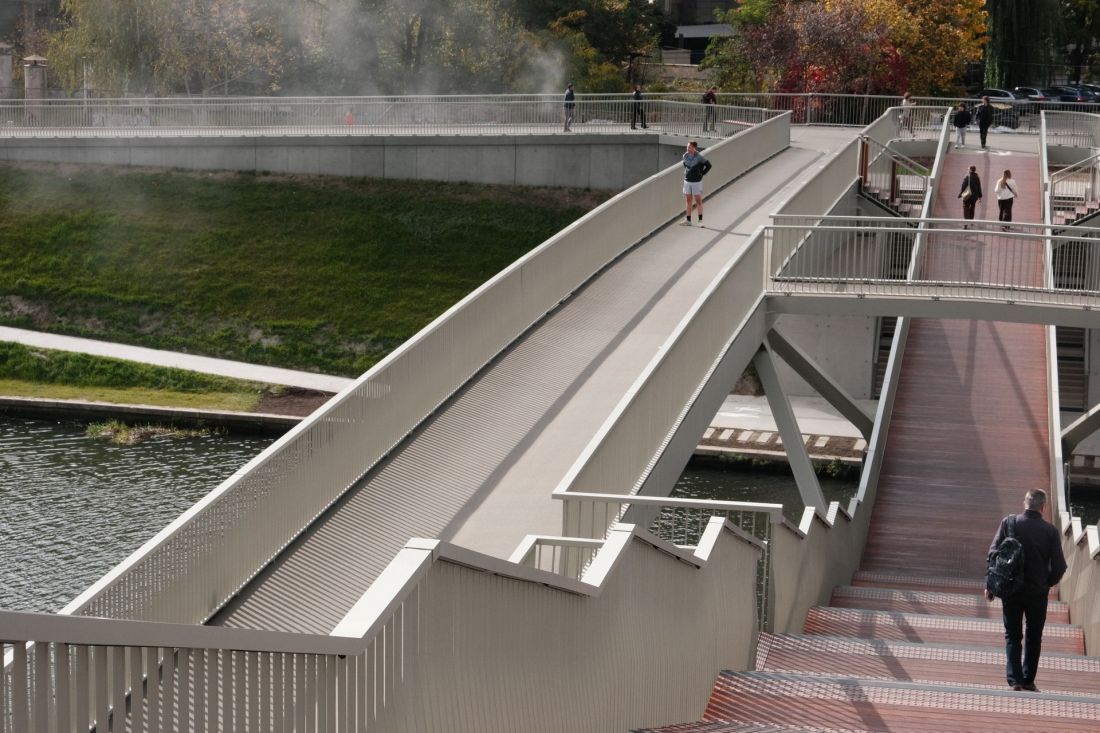
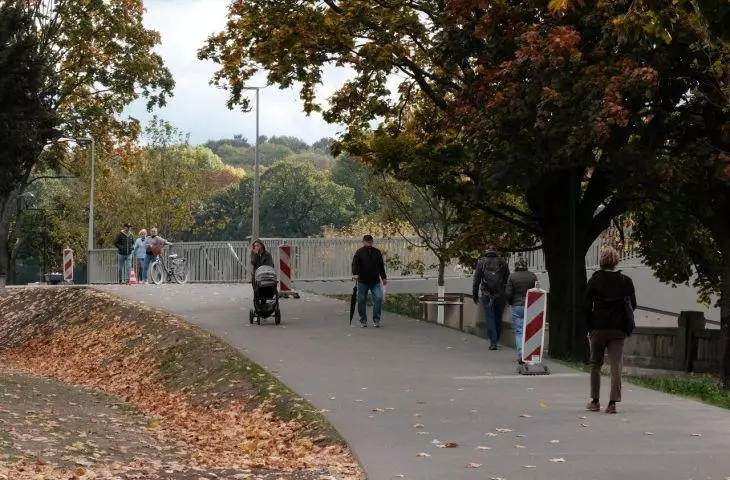
The Kazimierz-Ludwinów Footbridge in Kraków — pedestrians on the bicycle span
Photo: Przemek Ciępka
Separate in theory, combined in practice
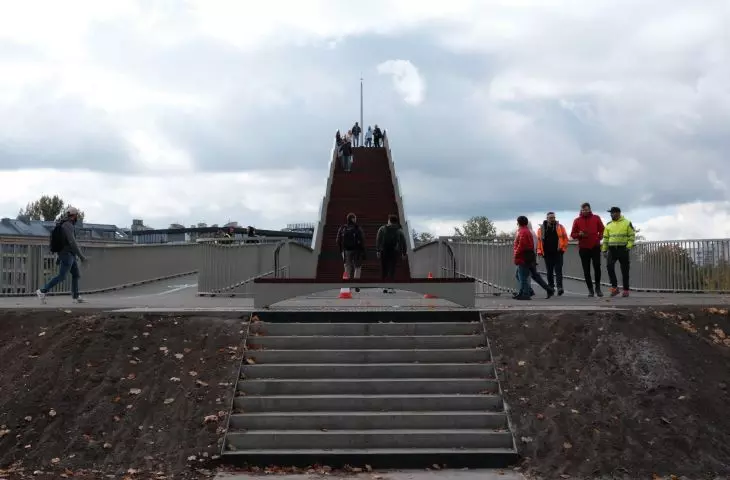
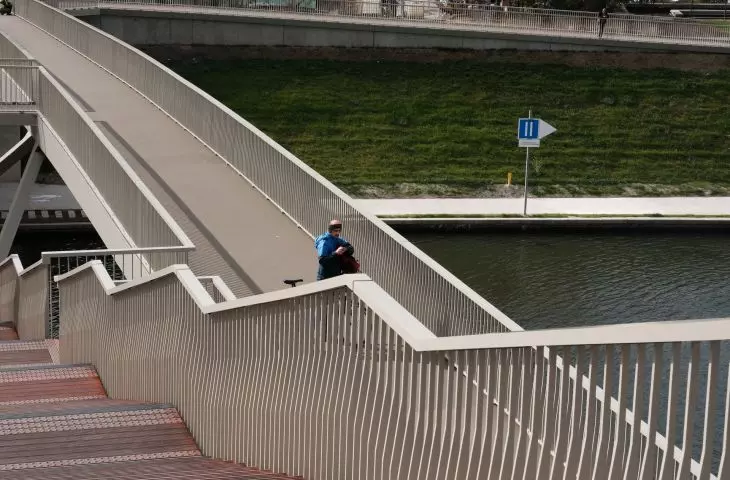
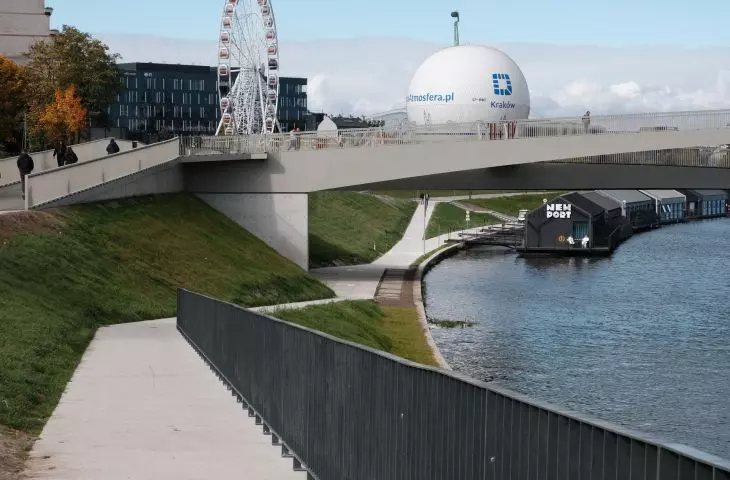
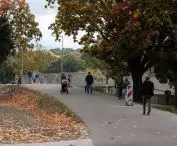
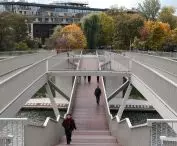
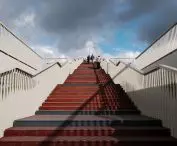
The design solutions adopted for the Kazimierz-Ludwinów footbridge’s traffic layout also have their drawbacks. From the Kazimierz side, both pedestrians and cyclists will access the footbridge via sloped ramps running roughly at a right angle to the structure’s axis. The surfaces are laid on elevated sections with relatively steep, unprotected slopes, which may not be sufficiently visible to cyclists approaching from the direction of the footbridge.
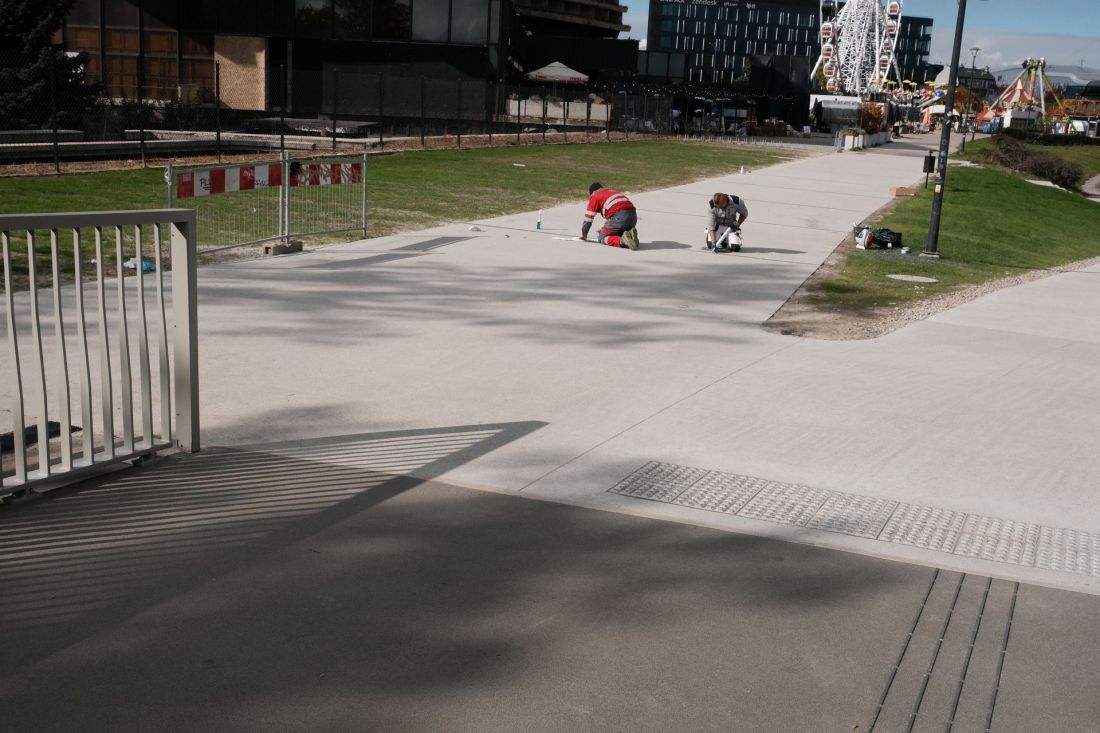
The Kazimierz-Ludwinów Footbridge in Kraków
Photo: Przemek Ciępka
Confusion arises right at the access ramps, since the intended use of a given section of the footbridge isn’t clear until just before you enter it. This is particularly important from the perspective of cyclists, who typically travel at higher speeds. On the upper levels of the abutments, the pedestrian and bicycle paths are not separated; in some places, intersecting pedestrian-bicycle paths (for example, on the western side in Ludwinów) do not leave much room for maneuver.
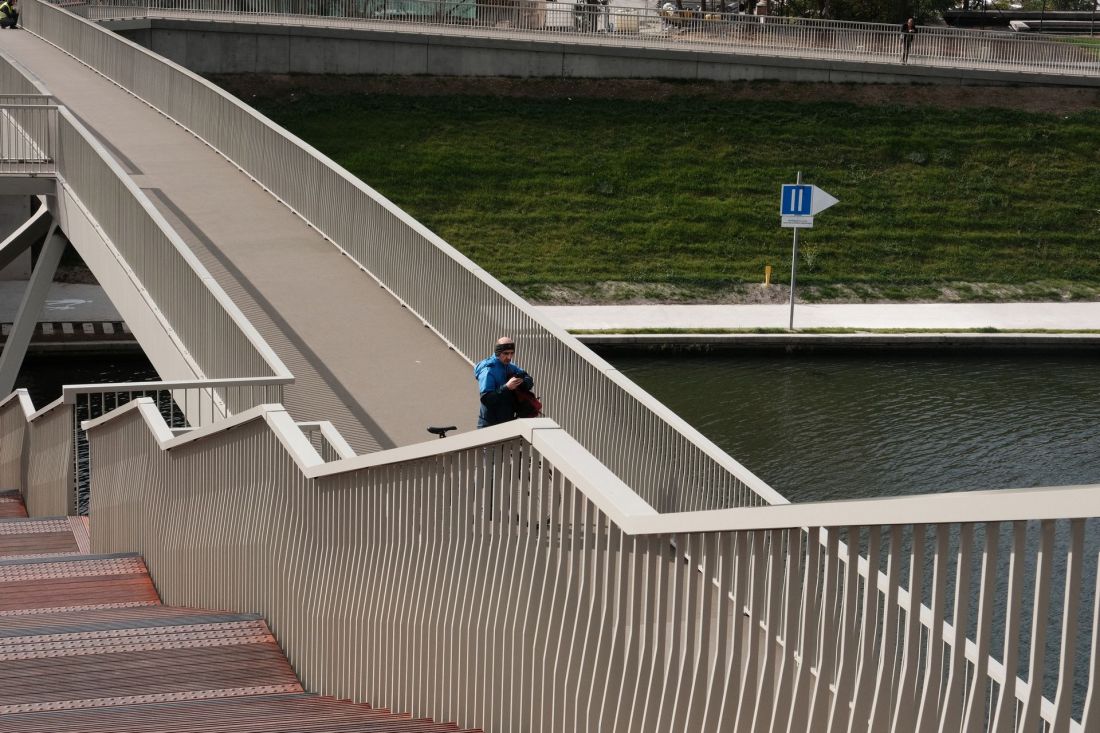
The Kazimierz-Ludwinów Footbridge in Kraków—cyclists on the pedestrian span—designed by Biuro Projektów Lewicki Łatak
photo: Przemek Ciępka
Furthermore, despite the separation of traffic lanes—as is the case with the nearby Father Bernatek Footbridge—there is a conflict between pedestrians and cyclists on the new Kraków footbridge. The construction of the three-span footbridge was intended to effectively separate pedestrian and bicycle traffic according to simple rules—the western and middle spans for pedestrians, the eastern span for bicycles. In practice, however, things are different, especially on the bicycle section, where individual pedestrians sometimes find themselves on the wrong side. The situation is complicated by the walkways connecting the spans—nothing prevents pedestrians from quickly moving from the pedestrian section to the span designated for bicycles. Careless pedestrians may use these crossings, for example, to see what the Vistula looks like on the other side. Discreet vertical signage could help prevent such situations, but this solution has not been implemented at this time. Potentially the most problematic spot, however, is where the footbridge meets the lower level of Inflancki Boulevard.
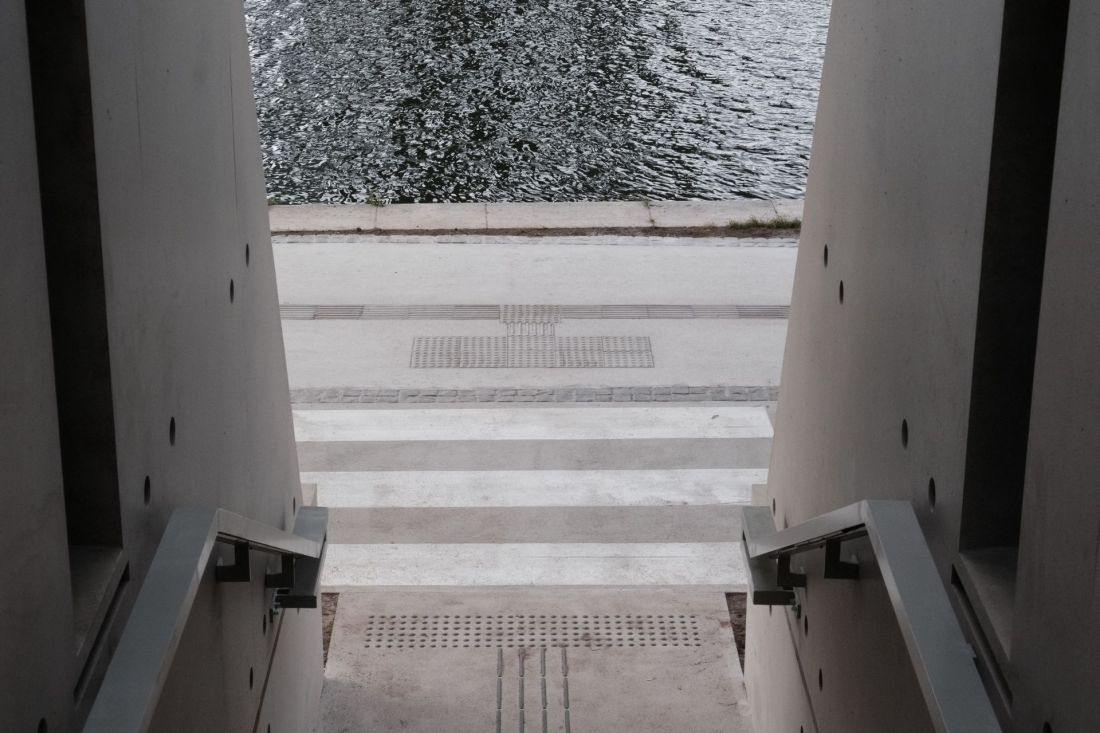
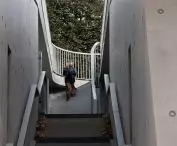
The Kazimierz-Ludwinów Footbridge in Kraków — stairs from the side of Inflancki Boulevard
Photo: Przemek Ciępka
when the scenic footbridge obstructs visibility
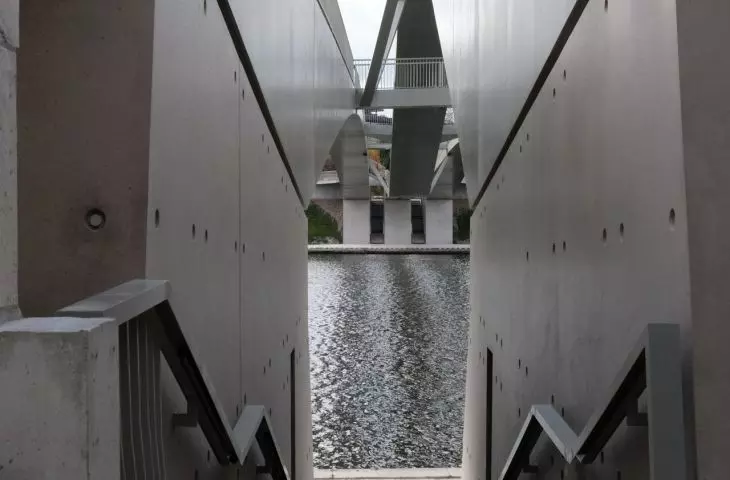
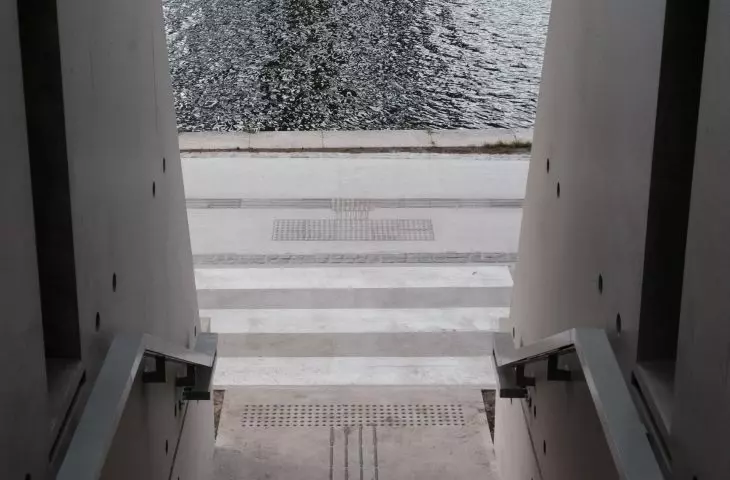
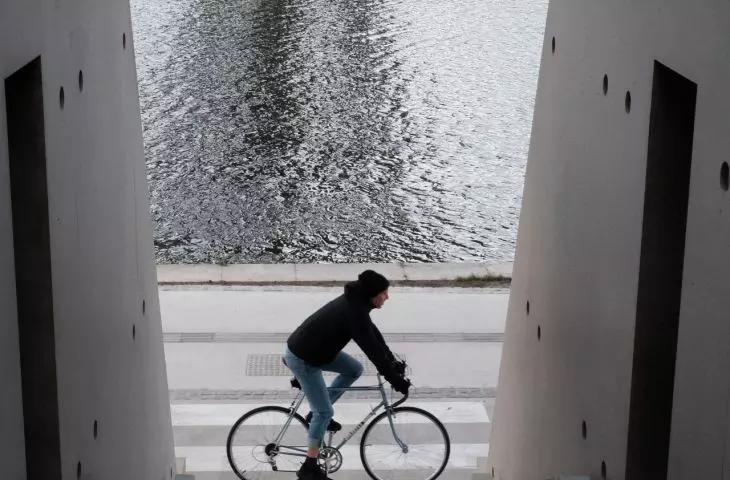
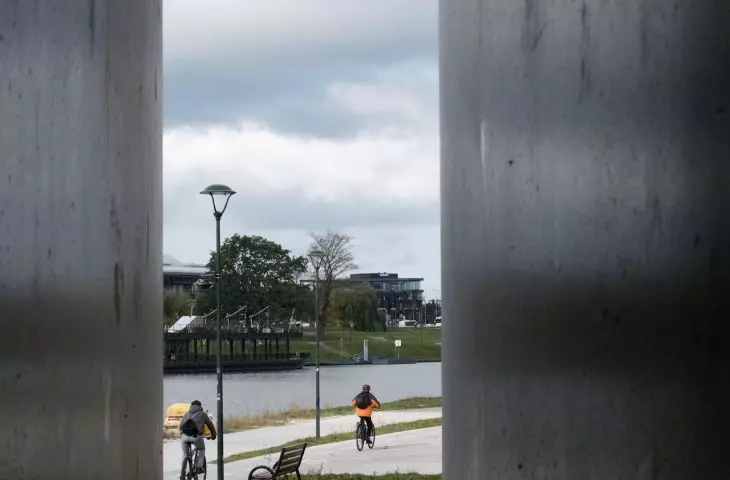
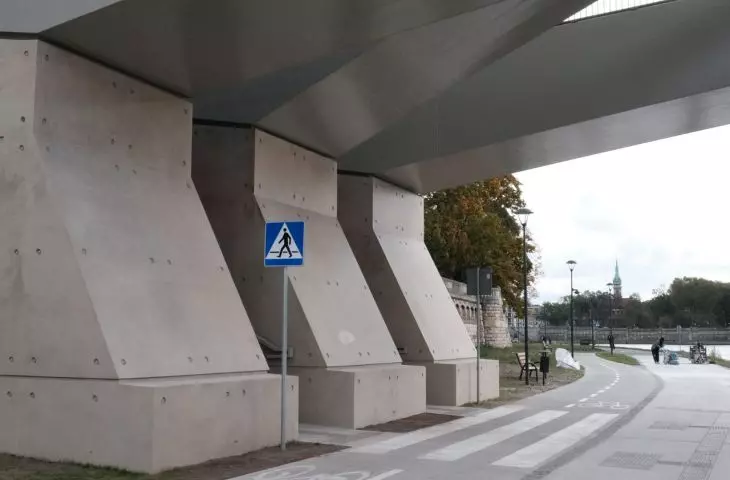
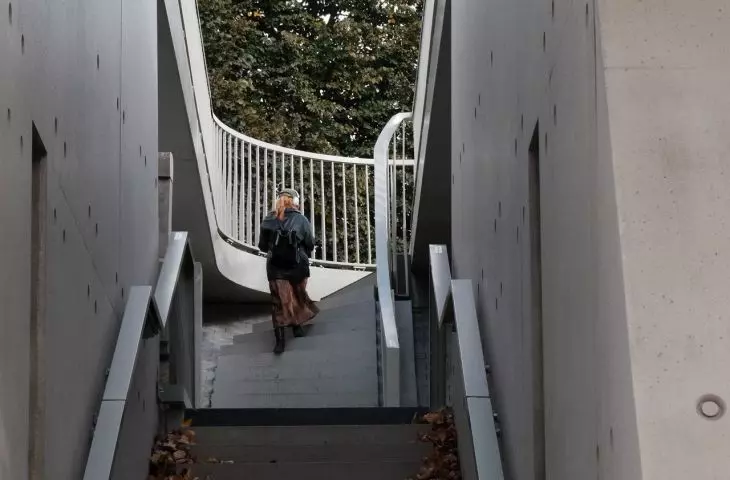
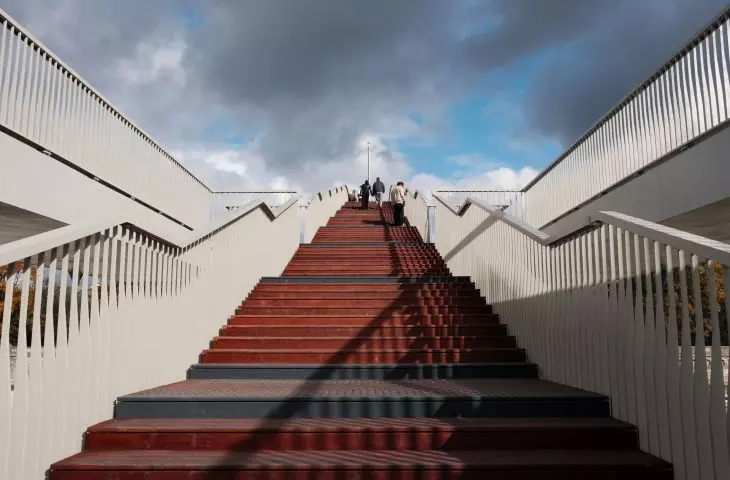
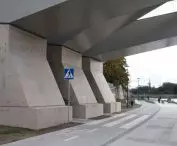
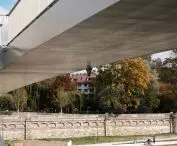
The abutments of the Kazimierz-Ludwinów footbridge allow people to move between the lower and upper levels of the boulevards thanks to stairs hidden within the structure. This solution stems from preservation guidelines that required the footbridge elements to be set back from the historic boulevards. Along Inflancki Boulevard, pedestrian and bicycle traffic are separated in such a way that the bike path is located on the inner side—it runs right next to the pillars, between which pedestrians emerge as they try to get from the footbridge to the lower level of the boulevards. The intersection of the pedestrian path and the bike lane is marked with crosswalks and two vertical signs; but even despite the angle of the pillars, the abutment’s design limits the visibility of people using the stairs, making it difficult for both pedestrians and cyclists to assess the situation.
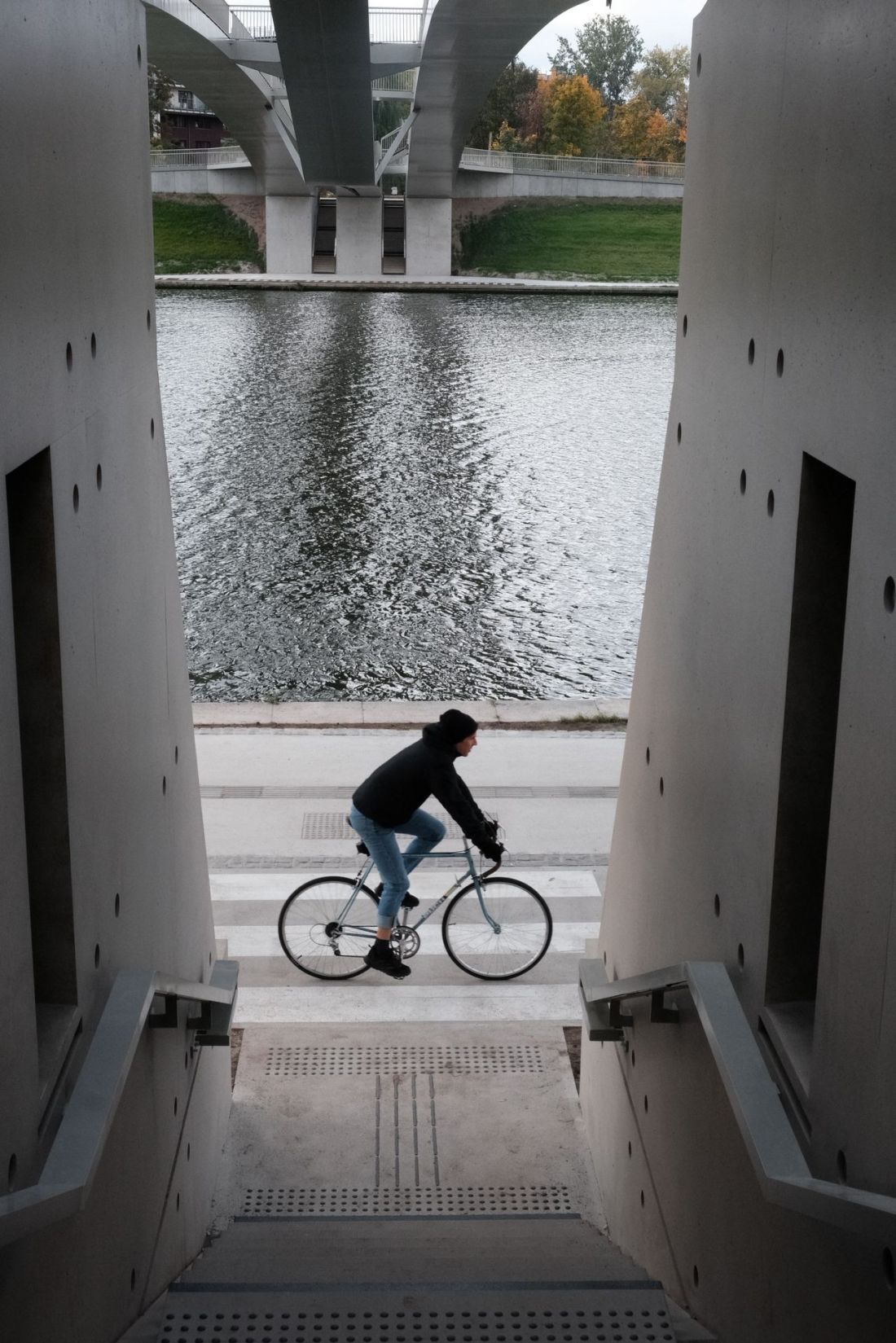
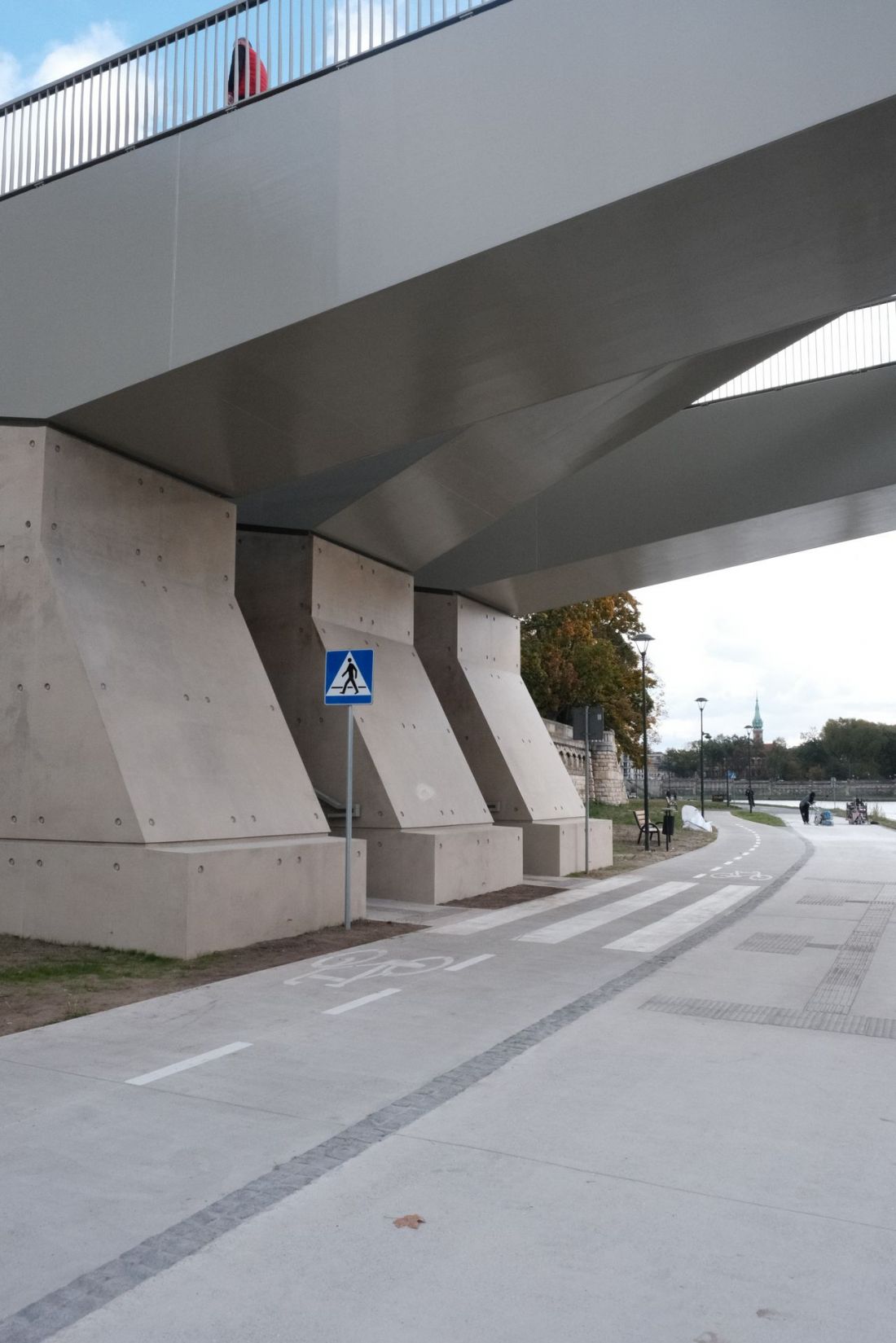
The stairs connecting the upper and lower levels of the boulevard end directly in front of the bike path
Photo: Przemek Ciępka
Currently, as the dropping temperatures reduce the number of people cycling, this isn’t such a big problem. In the summer, when thousands of residents will be strolling along the boulevards and the footbridge will be filled with tourists coming from Kazimierz, the likelihood of an accident on the lower level of Inflancki Boulevard may increase.

The Kazimierz-Ludwinów Footbridge in Kraków
Photo: Przemek Ciępka
The first week of the Kraków footbridge in practice
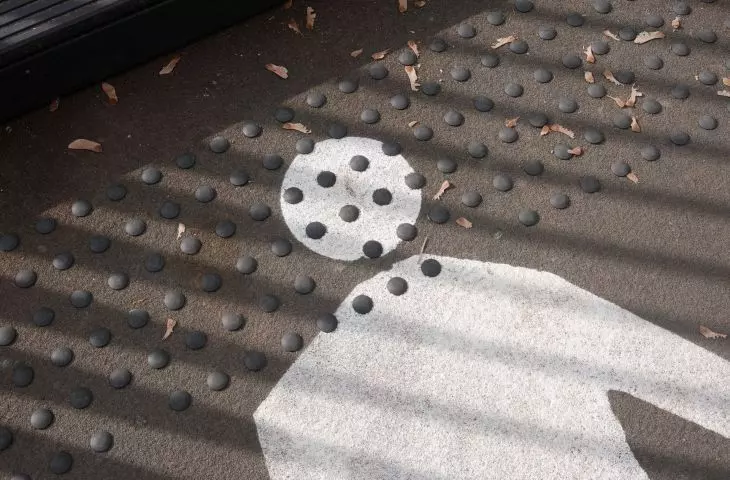
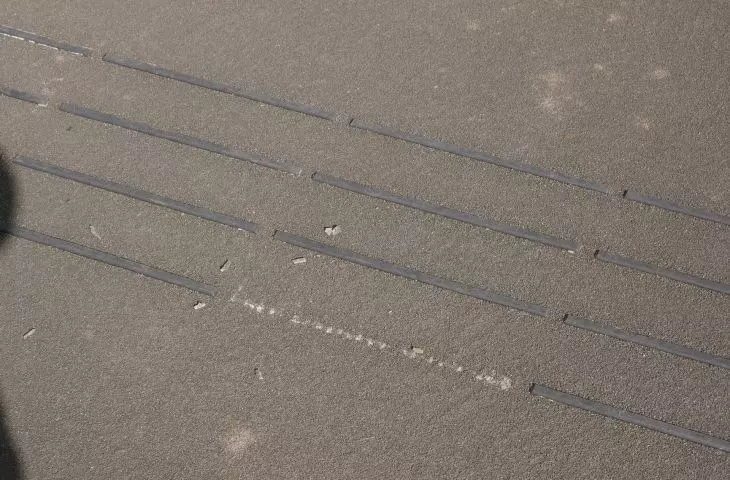
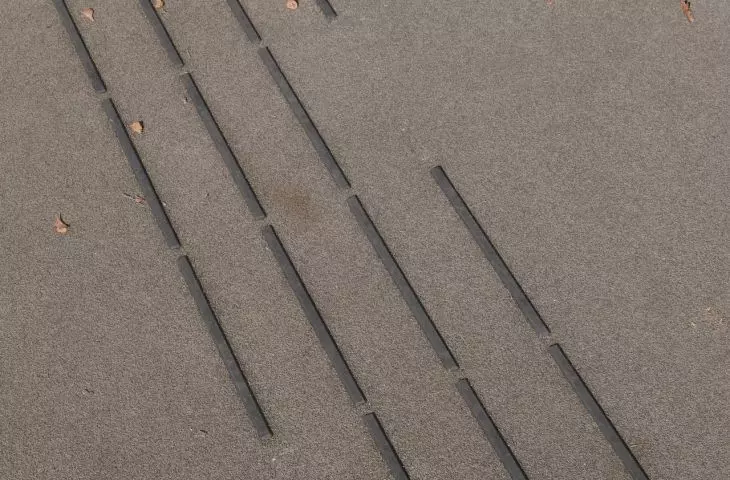
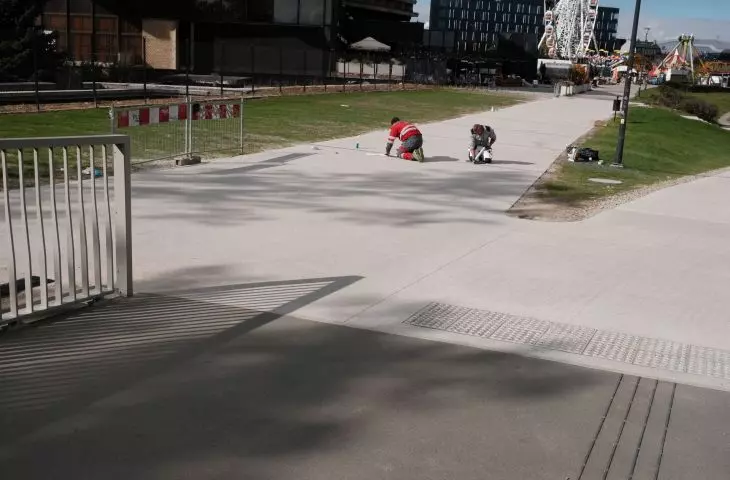
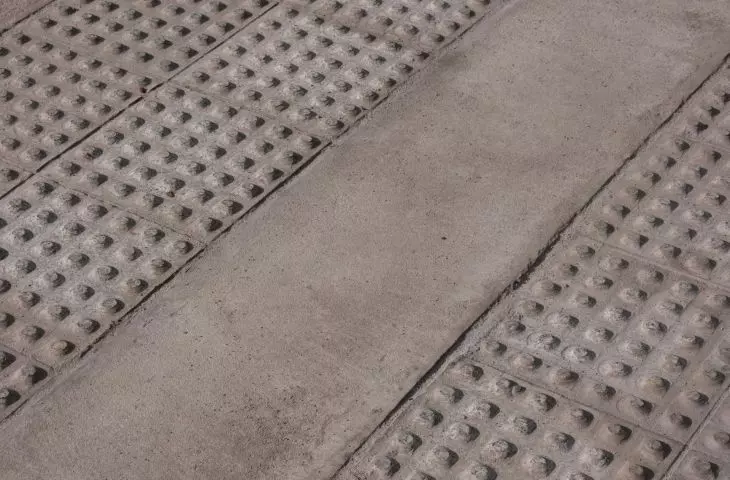
The footbridge also suffers from construction flaws. While the structure of the crossing was built with due care, the same cannot be said for the pedestrian and bicycle paths and the areas immediately adjacent to the footbridge. The surface on the central section of the pedestrian span is very uneven—there is a depression along the centerline through which water will flow in streams when it rains. A week after opening, the tactile paths—which help blind and visually impaired people navigate— are damaged in many places.
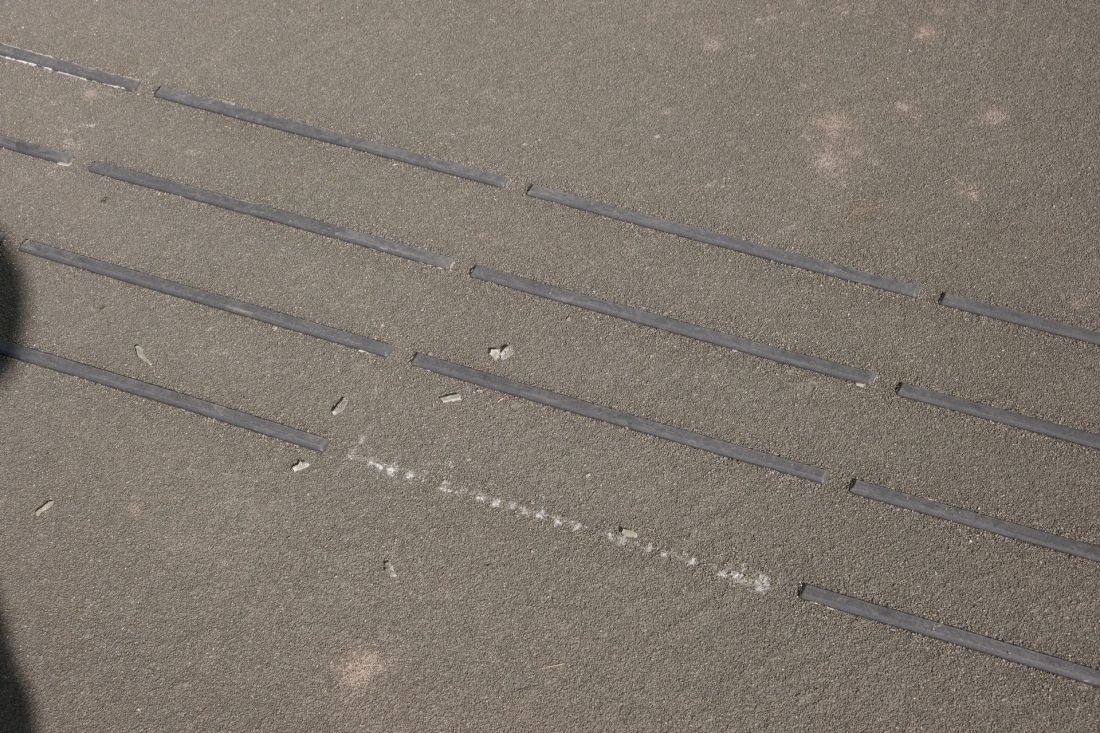
The Kazimierz-Ludwinów footbridge in Kraków is plagued by poor construction quality
Photo: Przemek Ciępka
The main issue lies with the guide lines, many of which are peeling away from the surface. The recesses housing the tactile markers (raised dots in the surface) were cut out carelessly, which may lead to the concrete crumbling in the future. The flooring made of durable merbau wood, used in the viewing area, does not make a good impression, and the benches placed on the abutments have many concave sections where falling leaves, as well as pieces of paper and even glass bottles, accumulate.
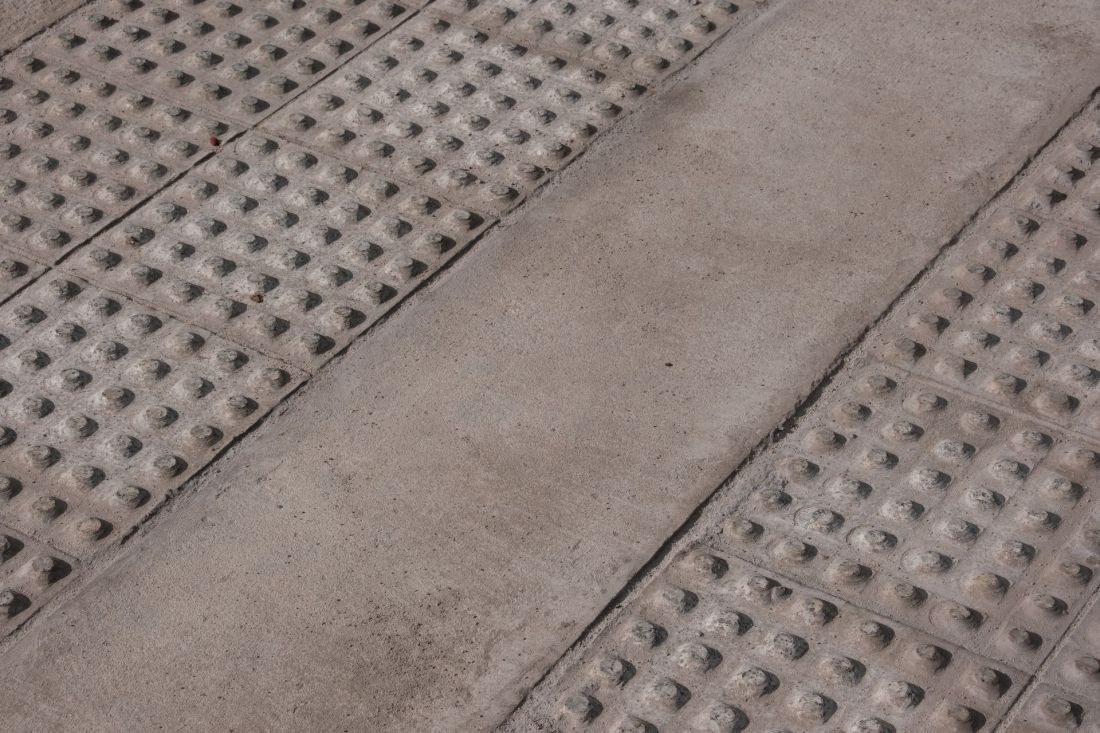
The Kazimierz-Ludwinów Footbridge in Kraków
Photo: Przemek Ciępka
The most significant consequence of the new pedestrian and bicycle bridge in Kraków, however, will be a change in the way residents and tourists travel between Kazimierz and Ludwinów. The new crossing is already attracting strollers and offers an attractive view of the city, but its first few days of operation show that a good concept does not always go hand in hand with sound transportation solutions and quality construction. Some of the shortcomings can still be corrected, while others will likely remain with the Kraków footbridge for years to come.