








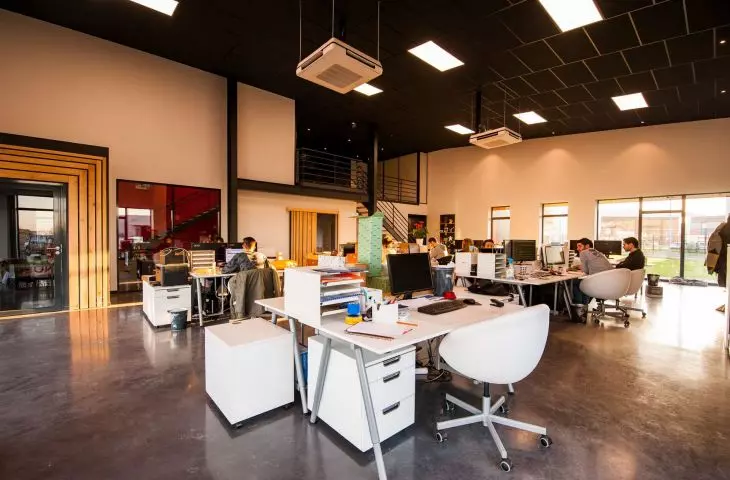









Personnel changes are a constant part of operations at both smaller companies and large organizations. Every time a new employee is hired—and later when their employment ends—it involves a series of organizational processes: from transferring information and access rights, to office access, to returning equipment and revoking access. More and more of these tasks can be supported by digital solutions.

Blue Bolt allows you to grant employees and guests access to the parking lot without issuing physical cards
© Blue Bolt
The first few weeks of employment are crucial to a new employee’s experience. O.C. Tanner, based on research conducted by its institute, identifies the first 45 days of employment as a particularly critical period in the onboarding process. Each year, the company publishes the Global Culture Report, which focuses on topics such as employee engagement, organizational culture, and employee experiences. Enboarder, a company specializing in HR process automation, highlights the costs associated with employee turnover during the first months of employment.
These data show that onboarding does not end with signing documents and providing basic information. How quickly a new employee can begin to function comfortably within the organization is also of great importance.

Maciej Grabowski, Founder of Blue Bolt
© Blue Bolt
One of the challenges for HR teams today is combining a positive employee experience with the efficient handling of numerous administrative processes. Technology cannot replace human interaction, but it can take over some repetitive tasks, thereby freeing up more time for activities that require the team’s direct involvement,” says Maciej Grabowski of Blue Bolt.
One such process is managing access to offices, parking lots, or specific areas of the company. Traditionally, access rights are often assigned to a physical card. An alternative is mobile solutions, where access can be granted digitally and managed remotely.
Blue Bolt is one example of such a solution. The app enables the management of access to offices and parking lots, as well as the provision of information to employees regarding the operation of a given space.
Flexibility Is Becoming Part of the Employee Experience
Changes in the work model mean that the ability to use the office and its infrastructure flexibly is becoming increasingly important.
In a hybrid model, convenience is paramount. Employees should know where to go, which spaces they can use, and what resources are available to them. The fewer additional organizational tasks this requires of employees and the teams managing the office, the smoother the entire experience is,” notes Michał Kozłowski, co-founder of Digital Real Estate and a Workday expert.
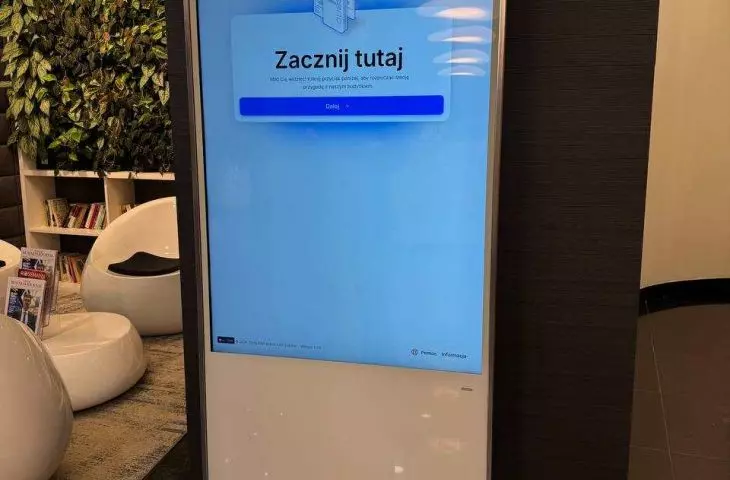
During the implementation process, technology can also support the communication of basic information: how to navigate the building, rules for using specific spaces, and available amenities.

Data helps make better use of office space
© Blue Bolt
This does not mean automating the entire onboarding process. Direct contact with a manager, team, or the person responsible for onboarding remains crucial. Digitization, however, can reduce the number of simple administrative tasks performed manually.
Offboarding: It’s Not Just About Recovering Equipment
Similar challenges arise when an employment relationship ends. In addition to recovering equipment, the company must also ensure that the employee’s access privileges are revoked.
In organizations operating under a hybrid model, the process of returning company equipment may take longer than in the case of on-site work. Synetic Technologies, a company specializing in IT asset lifecycle management, notes that depending on how the return process is organized, it can take anywhere from a few days to even several weeks.
At the same time, it’s important to consider access to offices, parking lots, and other company spaces. For physical access cards, this requires retrieving the card or deactivating it in the system. With digital solutions, access rights can have a specific validity period or be remotely revoked.
Access can be linked to a specific user and the period during which it should be valid. It can also be integrated with the HR system. As a result, granting and revoking access rights—whether for temporary, full-time, or part-time employees who work on specific days of the week—becomes part of a single process rather than an additional task performed separately — explains Maciej Grabowski of Blue Bolt.

A good start is more than just paperwork
© Blue Bolt
At Blue Bolt, access can be granted using, among other methods, a QR code or a mobile solution. The system also allows for the creation of access schedules that comply with the rules applicable to a given user.
From access to office usage data
Digital tools used in offices are increasingly going beyond simply opening doors. They can support the booking of conference rooms, lockers, and parking spaces, as well as conducting surveys or organizing internal employee initiatives.
As a result, data from various aspects of office operations can be collected in a single environment.
Data analysis provides a better understanding of how the space is being used. The organization can see, for example, the level of interest in specific resources or how the office is used during different periods. Such information can support decisions regarding space organization and its costs,” says Maciej Grabowski.

Access to the office is part of the employee experience
© Blue Bolt
A similar mechanism can be used for parking lots. Digital access control allows a parking space to be made available not only to an employee but also to a visitor or external collaborator without the need to hand over a physical card.
Data is also becoming increasingly important from an ESG perspective
One of the benefits of digitizing office-related processes is the ability to measure them more easily.
Data collected in the Blue Bolt app can be organized and analyzed, giving the organization a better picture of how the office, parking lots, and other resources are being used.
This is significant not only from the perspective of property management and Employee Experience. In the case of data corresponding to metrics monitored by the company, it can also support the preparation of analyses and reports used for ESG reporting.
Less administration, more time for people
© Blue Bolt
In practice, this means a shift from a process that requires piecing together information from various sources to a solution where some of the data is available in one place and can be regularly compared. It is precisely the ability to measure results—rather than digitization for its own sake—that is becoming one of the key arguments for integrating technology into the day-to-day operations of the office.
For more information, visit the {tag:Manufacturer} website on the A&B portal.