



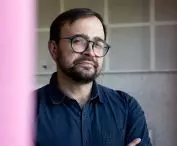
During an author's meeting held at the European Forum for New Ideas, Jan Klapa, a young lawyer, asked me how I thought the notions that make up the title of my latest book, "Luxury versus simple living," had changed in Poland over the past thirty-six years. The answer could not be simple. In the last chapter, I included statements from friends not only from Poland, but also from several countries in the global West. I asked Americans, Australians and Europeans to tell me what luxury and simplicity mean to them. Or put another way: how they understand the terms rich life and modest life. When I pieced together the emails from my mostly overworked working-age friends, I was struck by how many answers overlapped.
They showed, more or less, that today the sense of fullness, satiety and happiness is not defined by any particular physical object. No "merol, cyma, chavira or perfume." I point out that there may have been here a disconnect between declarations and facts that is common in the case of any type of research. Rather, it turned out to be a luxury to experience things, especially tranquility, which could come from doing nothing as well as from intense, non-money-making activities. Tranquility, too, inevitably equated luxury with simplicity. The experience, after all, took place around physical objects: old houses in a small Italian town, under the chassis of a 1980s Saab, or in the open back door of an RV, from which one can look out through one's own bare feet at the operatic drama of the Norwegian fjords. Responses indicated that the disconnection from media and excess impulses is accompanied by a longing to drink morning coffee in the woods or garden, to wake up in nature (for some, even to wander around naked) , or to traverse the rugged landscape indefinitely. There were also mild sensory experiences, mainly tastes, smells and sounds.
Although my questions didn't meet the standards of a professional poll, because those taking part were an overly broad age group and an unspecified sample size, they gave me a glimpse into the yearnings of a slice of the global middle class. From artists, scientists and entrepreneurs to managers and lawyers. It also allowed me to see that the private definitions of various individuals arrange themselves into certain algorithms, and that the path from the subjective to the objective gives space for analysis and action to all those who dream of fullness want to understand, but also shape and use for their own, especially sales and political, purposes. For me, the basic conclusion was that physical objects, including those in whose creation we architects take part, are in the category of available luxuries, even if someone can't afford them. It turned out that the luxuries that are most desirable, but hardly available, are time and the ability to focus. The second important set is physical security and independence from various types of oppressive forces, including systems of state control (fiscal?) to aggressive empires (Russia?) and political movements (far-right parties?).
What did these definitions look like for Poland's intelligentsia class in 1989, because after all, in 1989 the middle class, as a concept associated with capitalism, was just beginning to take shape? I'd be tempted to say that the dreams were about things that were, from today's point of view, rudimentary. Luxury was defined by one's own apartment, an equipped kitchen, any non-socialist car and vacations abroad. Even then, in a world almost devoid of telephones and information chaos, we also wanted a break from metropolitan overstimulation, although a dream plot of land on a lake was also a place to escape to our own little illusion of freedom from an oppressive political system. At the same time, having little, we didn't want to have less: people who rejected materialistic passions appeared at the time as even bigger freaks than today's minimalists. A plot of land by the lake was another item on the material list of Poles, not a symbol of self-discipline and negation of the logic of possession.
The political transition and the enrichment of our society (uneven and due to geography) have shifted the boundaries of the impossible in the first place: the perception of luxury through the ownership of industrial appliances, from a dishwasher to a car, no longer seems to affect this class as much as it once did, because tolerable quality products are available to it within everyday household budgets. Home appliances and consumer electronics are cheaper, though admittedly much less robust than in our parents' time. The availability of means of transportation is no different: these have become part of the privileges of working for large companies or as leasable and rentable tools for entrepreneurs. Today, hardly anyone takes out money for their purchase in the form of one large payment. Accessibility has been increased primarily by "subscription reality," which has gone much further than what we know from the late 1980s and early 1990s, when it was possible to buy a Frania washing machine by installment, but already the purchase of cars, usually low-quality machines from the Comecon countries, resulted from years of saving. Today's expansion of subscription has also introduced less necessity for ownership: things are also available as something we rent and use without the need for care and servicing. Saving, by the way, has become much less popular, because today we can enjoy items after a verification procedure of only a few days, paying only a portion of their value to begin with and not owning them until the end of the redemption period or, in the case of rentals, never. In addition, the interest rate on savings accounts in the face of inflation does not encourage people to slowly collect money either.
The situation with houses and apartments is more complicated, as Poland still suffers from a shortage of available housing offered on a rental basis by the public sector, to which the private sector responds by offering apartments for rent, including tiny 25-meter PRSs. At the same time, the rapidly shrinking population has a pool of units at its disposal from inheritances from the previous generation and the wave of post-1989 buyouts of cooperative and often municipal units at prices far below market rates. Our country's complicated history, including the loss of savings during World War II, has led us to believe in real estate as the best investments of capital for a "black hour." That's why, unlike multitudes of Western Europeans, especially Germans, we consider owning our own home as the basis of personal security. This is why, to this day, parents in Poland buy apartments for their children "to start with," just as American parents pay for their teenagers' college education. In our country, there are numerous consequences of this: parents from the provinces program their children's future by investing in an apartment in a big city, incidentally driving the construction and real estate market there, while contributing to the depopulation of their own localities. These apartments become practice spaces for hosts of young architects and interior designers, and for many of us, the beginning of a path associated with buying and renovating more real estate, again in the logic of investing in the physical, in an increasingly "liquid modernity," to invoke Zygmunt Bauman's term.
Here, however, another difficulty arises in assessing what kind of evolution our Polish dreams of luxury and simplicity have experienced, because even if we focus on just one middle class, what is it anyway? First of all, it is a very broad group stuck between the popular class and the upper class. The breadth of this group is shown by the fact that the middle class "catches on" to both a pair of teachers from a small urban center and a corporate lawyer from the capital. What best describes this class is the effort to live up to aspirations to move upward, that is, to a higher social and material status, both through education andwork, but also by, if possible, investing their efforts and resources in things (especially real estate and banking products) that are expected to generate income in the future. The middle class looks to the upper class, the wealthy and affluent people, but it also looks to the next tiers within it. It is these tiers that determine the levels of material dreams aroused by a neighbor's bigger car with a better job, a friend's renovated or self-built new house, or a vacation in southern Europe, the Azores or maybe even the Maldives. Dreams are derived from one's horizon of perceptions and associated available resources, especially surpluses that go beyond the monthly budget needed to "fuel" the household. Karl Marx's statement that "Being shapes consciousness" is most relevant.
Jan Klapa did not ask me about tomorrow, and tomorrow the answers may be even more interesting than today. I have every reason to suspect that the class to which I and probably most of those reading these words belong will begin to disappear. Not only in the United States, where multimillionaires, it seems, are doing their best to produce an arrangement from the early Middle Ages (1 percent master superhumans versus 99 percent near-slaves), but unfortunately also in Poland, our hitherto unprecedentedly wealthy "green island." I write this as an innovation advisor after several years of watching Polish entrepreneurs. Lack of access to labor, because eventually there will be even less manufacturing industry in our country, agriculture will dominate the global trust from megafarms, and because of AI most of the "creative industries" will disappear, will result in shrinking purchasing power, and with it languishing dreams and aspirations. Dreams will become very simple and universal. They will be able to be encapsulated in a question rather than an answer: how do you even survive here when no one (at the top) needs you?
Because, after all, what sense will we make if we can so easily be replaced by unneeded social security, non-unionized and in general not much in the way of labor? Perhaps finding any meaning of life in our existence will be the greatest of all possible luxuries?
Jakub Szczęsny
read more: A&B 11/2025 - Krakow from scratch
download free e-publications of A&B