







Over 200 thesis projects, five editions, and hundreds of young innovators committed to transforming the construction industry—the “Create a Green Future with Cemex” has been bridging the gap between the world of science and the real-world challenges of the cement, concrete, and aggregates industries since 2021.

© CEMEX
From the very beginning, the competition has focused on finding innovative solutions for the building materials industry in the spirit of sustainable development. Submitted projects cover topics such as the circular economy, reducing CO₂ emissions in the 5C value chain, low-emission technologies, and the optimization of production processes.
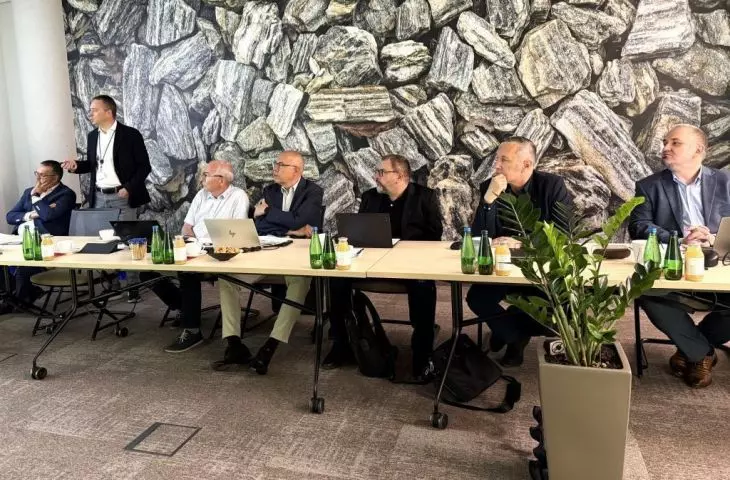
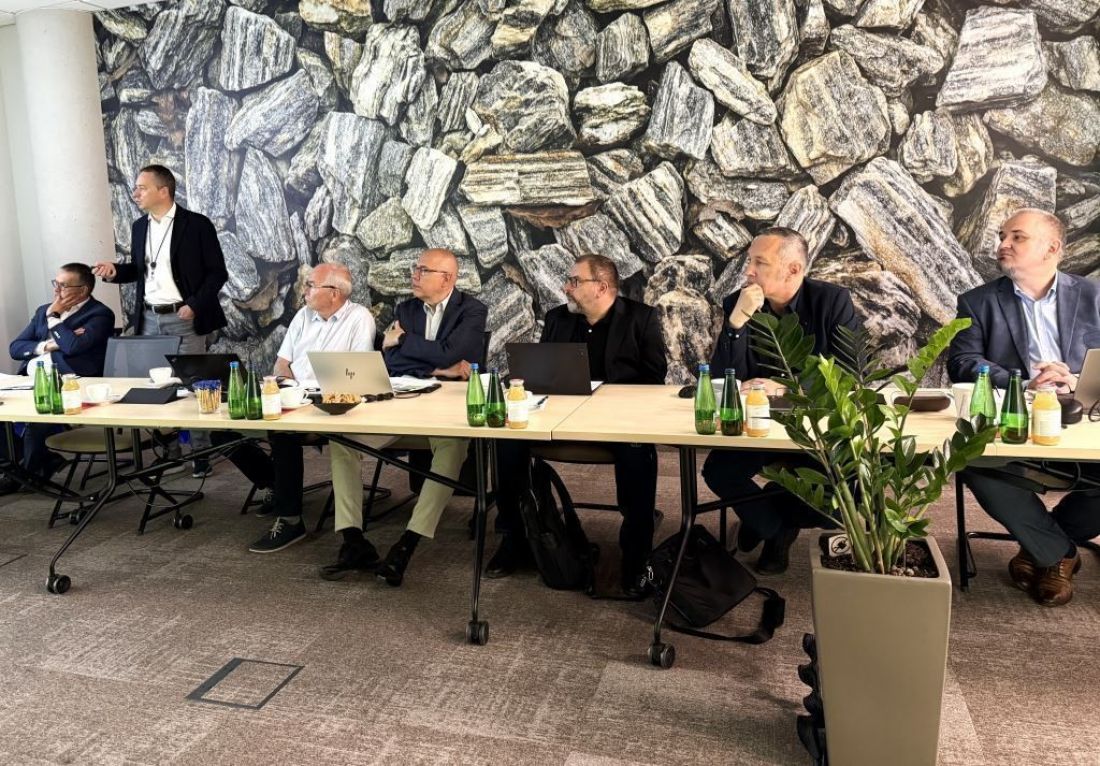
Each year, participants’ projects are evaluated by experts from Cemex and recognized representatives of the academic community. Traditionally, finalists selected in the first stage have the opportunity to present their ideas and findings to the competition’s jury and committee. Winners can count not only on a cash prize but also on the opportunity to have their work promoted in industry media.
Our competition has become a permanent fixture on the calendar of initiatives aimed at college students and graduates. “In every edition, we receive entries of a very high standard that can inspire the cement, concrete, and aggregates industry to implement changes,” says Rafał Gajewski, Director of the Sales Division and Member of the Management Board at Cemex Polska.
In the first edition, the competition jury selected four winners, including two tied for second place. First place went to Mateusz Jezierski from the Koszalin University of Technology, for his project titled “Assessment of Limit States of Selected Elements Made from Cement-Based Composites.” The next two best projects were by Paulina Dziduch from the Warsaw University of Technology, “Circular Economy in Concrete Technology,” and Krzysztof Duch from the Białystok University of Technology, “Modification of the properties of geopolymer composites with recycled concrete aggregate for use in bridge load-bearing structures.” Third place went to Magdalena Leończyk from the Białystok University of Technology for her paper titled “Properties of standard mortars modified with lightweight sodium-borosilicate glass.”
In the second edition, the following papers were recognized as the best: “Study of the properties of cements with the addition of fired clay and its impact on CO₂ emission reduction” submitted by Joanna Posłowska from the AGH University of Science and Technology, and “Study of the effect of calcium carbonate on the properties of multi-component cements” by Marcelina Szołdra from the AGH University of Science and Technology. Second place went to the paper titled “Properties of cement composites containing dust generated during cement production,” written by Robert Kowal from the Silesian University of Technology, and third place went to Muath Abuaskar from the Krakow University of Technology for his paper titled “Self-healing capabilities of cement mortars containing microorganisms produced in the sewage sludge treatment process.”
In the third edition, the jury and competition committee selected as the best the paper submitted by Olimpia Siemiątkowska from the AGH University of Science and Technology in Kraków, titled “Study of the Effect of Ground Calcium Carbonate on the Properties of Multicomponent Cements Containing Ground Granulated Blast Furnace Slag.” Second place went to the paper titled “Study of the effect of aggregate from autoclaved aerated concrete on perlite concrete,” submitted by Nicole Kocierz from the Silesian University of Technology in Gliwice. Third place went to Martyna Gos from the AGH University of Science and Technology in Kraków, author of the paper titled “The Effect of Setting Accelerators on the Hydration and Properties of Multi-Component Portland Cements.”
In addition to the top three papers, special honorable mentions were also awarded. The competition jury recognized the ingenuity and research-oriented approach demonstrated in the paper by Joanna Szechyńska from the Kraków University of Technology in Kraków, titled “The Effect of Plant-Based Bioadditives on Selected Properties of Low-Emission Alkali-Activated Binders”. The second recipient of an honorable mention was Dominika Świszcz from the AGH University of Science and Technology in Kraków, author of the paper “The Effect of Inorganic Anions on the Structure of Alkali-Activated Binders.”
In the fourth edition, the best paper was “The Effect of Thermal Treatment Conditions of Fine Fractions from Recycled Concrete on the Properties of Cements Introduced in EN 197-6” by Magdalena Wąsowicz of the AGH University of Science and Technology in Kraków. Second place went to Wojciech Bylica of the University of Warsaw for his paper titled “The Use of Geological, Geophysical, and Remote Sensing Data in Documenting and Monitoring Underground CO₂ Storage: Selected Case Studies.” The third-place entry was submitted by Magdalena Horbaczewska from the Warsaw University of Technology, titled: “Cement Mortars Modified with Carbonated Recycled Aggregate.”
© CEMEX
In this year’s fifth edition, the highest-rated paper was by Zuzanna Piechota, titled “Study of the Effect of Coal-Bearing Shale from Lubelski Węgiel ‘Bogdanka’ S.A. on the Properties of Selected Cements,” prepared at the Lublin University of Technology. Second place went to Olimpia Zielonkowska for her thesis titled “Study of the Properties of LC3 Low-Emission Cements,” prepared at the Stanisław Staszic AGH University of Science and Technology in Kraków. Third place was shared by Khorolsuren Byambatsogt with a paper titled “Study of the Effect of Cellulose Ether on the Hydration and Properties of LC3 Cement Composites Containing Calcined Kaolinite and Montmorillonite,” prepared at the Stanisław Staszic University of Science and Technology in Kraków, and Piotr Laskosz, who presented a paper titled “The Effect of the Preparation Method of Multi-Component Cement Binders on the Hydration Rate and Types of Products Formed,” also prepared at AGH.
In this year’s edition, the quality of the submitted papers was so high that the jury decided to award a special distinction to Natalia Galus, who presented a paper titled “Activation of LC3 Cements to Modify Early Hydration Kinetics,” prepared at the Stanisław Staszic University of Science and Technology in Kraków.
“We are extremely pleased that people who are just starting their professional careers are interested in sustainable development and are investing their potential in creating new, more environmentally friendly solutions ,” said Sylwia Delewczyńska, competition coordinator and Sales Development Specialist at Cemex Polska.
“Create a Green Future with Cemex” is a nationwide competition aimed at college students and graduates interested in sustainable development and modern construction. Its goal is to inspire young people to seek innovative solutions that reduce the building materials industry’s environmental impact. The competition promotes an interdisciplinary approach to climate challenges, combining academic knowledge with market practice and the real needs of the cement, concrete, and aggregates sector.