




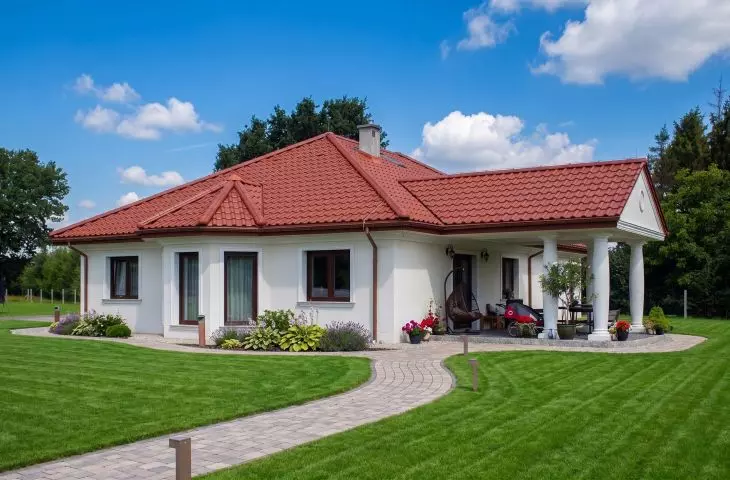





There’s a moment in the late afternoon when the sun begins to set and bathes the world in amber light. At that moment, the red ceramic roof takes on a unique character. It ceases to be mere roofing and becomes a source of warmth—not temperature. Atmosphere.
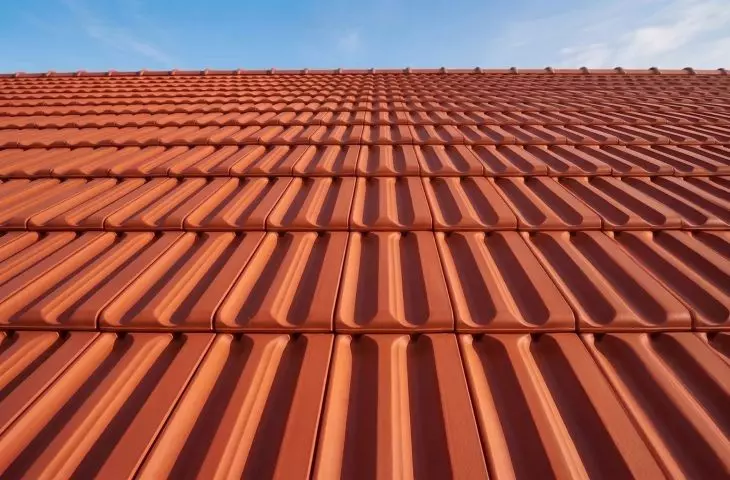
A ceramic roof tile in shades of red is one of those designs that works on many levels at once. Architecturally—it fits into the European tradition so naturally that we subconsciously perceive it as a synonym for a safe haven. Materially—clay fired at over a thousand degrees guarantees durability for generations. Emotionally—its warm hue consistently evokes a sense of calm and stability.
As Żaneta Kuczek —an experienced expert at swisspor Polska specializing in swissporTON pitched-roof products—emphasizes:
Contemporary architecture too often falls into the trap of safe, monochromatic repetition. Meanwhile, the red ceramic roof tile is not a relic of the past, but a powerful tool in the hands of a discerning designer. Its strength lies in the authenticity of the material and the versatility of its color.
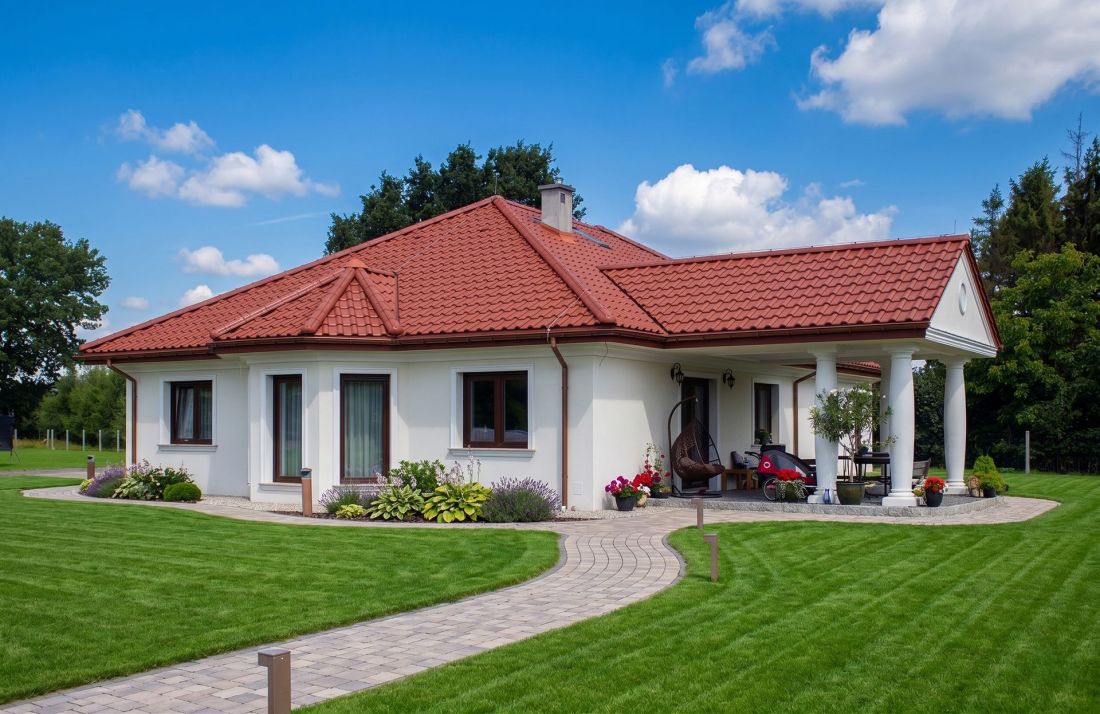
Red is at its best when paired with materials of equal nobility—swissporTON solutions combine a tradition spanning generations with modern technology
© swissporTON
A color that no one designed
The red of a ceramic roof tile is unique in that it does not come from the RAL color palette, nor was it created by a design team’s decision. It comes from the earth—literally. It is the iron oxides contained in the clay that determine the color, and since every deposit is different, every batch of raw material carries its own story.
The result is impossible to replicate. No laminate, printed sheet metal, or painted concrete roof tile can recreate what is created in a ceramic kiln—a living, non-uniform surface in which each element is the only one of its kind in the world.
It is precisely this impossibility of replication that is leading architects and interior designers to turn to ceramics more and more often. In a world where almost anything can be 3D-printed or ordered from a catalog, a material with a genuine, unpredictable identity is a luxury. And it’s a luxury that doesn’t draw attention to its price—it simply radiates quality.
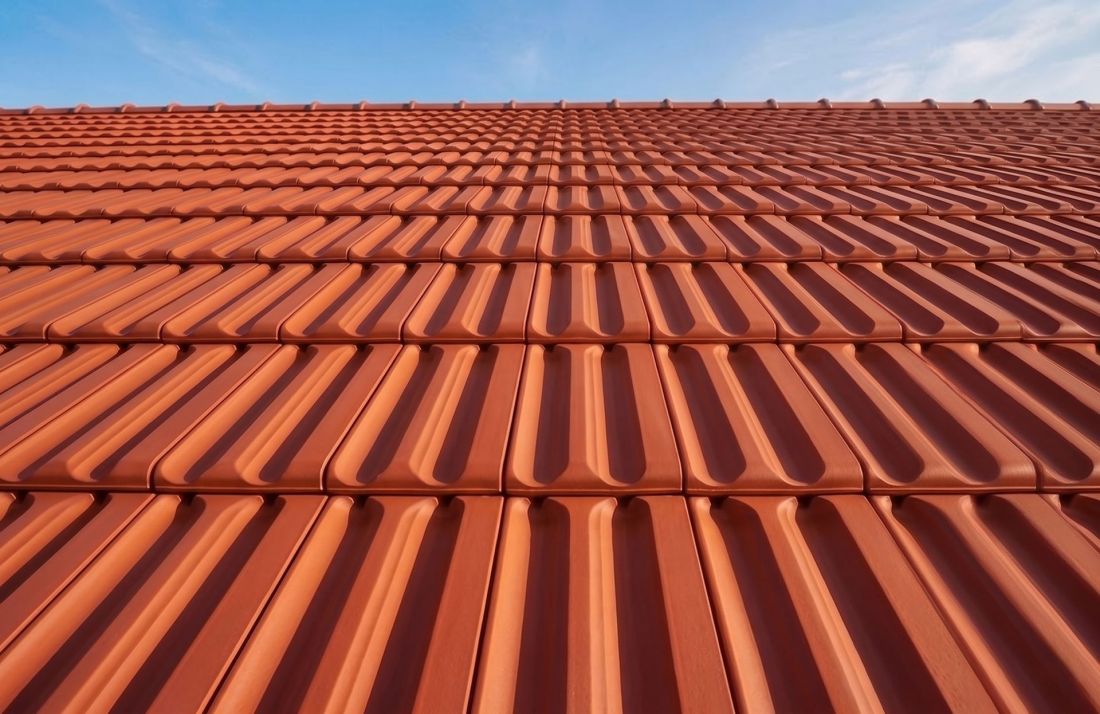
The red ceramic roof tile is not a relic of the past, but a powerful tool in the hands of a discerning designer. Its strength lies in the authenticity of the material and the plasticity of its color
© swissporTON
Three finishes, three moods
Red ceramic roof tiles aren’t just one option, but an entire family of models. Natural, engobed, and glazed—these are three different ways of telling the same story. Each appeals to a different sensibility.
Natural—unrefined beauty
Imagine the old terracotta floors in a Provençal home—warm, worn smooth over the centuries by footsteps, with each tile unique in appearance. Natural ceramic roof tiles work exactly the same way. Matte, porous, shifting in hue with every moment of the day and every change in the weather.
In the morning, their color is cooler, almost pink in the soft light. At noon, they reach their full depth—becoming a classic, brick-red hue, rich and satisfying. In the evening, they warm to the color of aged wine, and after rain, they become deep and dark like wet soil. This isn’t just a color. It’s a performance.
A house covered with natural ceramic tiles—such as the KLASSIK Lenti carp-style tile or the BALANCE flat Dutch-style tile by swissporTON—possesses an aesthetic that designers have been seeking for years: effortless authenticity. Such roof tiles complement Mediterranean architecture, brick-and-wood homes, and any setting where we want the structure to appear as if it’s growing directly out of the ground rather than simply sitting on top of it.
In the case of natural ceramic tiles, the moss that may appear over time in shaded areas is, for many homeowners, not a problem but a desired patina effect —proof that the house is alive.
Engobed — Maturity in Every Shade
Engobe is a thin layer of colored ceramic slip applied before firing. From a technical standpoint, it provides sealing and color. From an aesthetic standpoint, it offers a completely different quality. Engobed red has depth —we find it in the classic shade of the RAPIDO roof tile color range, in the intense copper hue of the KODA ceramic roof tile by swissporTON, and also in a burgundy shade: intense, saturated, and multidimensional. Satin or matte—but in that very deliberate, European sense that evokes nobility, not cheapness.
It’s a finish that gives designers and investors what they’re looking for: greater color predictability while preserving the material’s organic, earthy essence. The roof looks cohesive as a whole—still vibrant, still ceramic, still authentic.
Architects eagerly turn to the engobed red of swissporTON roof tiles in projects where the facade echoes the same stylistic language—composed of raw brick, dark wood planks, and earth-toned stucco. Materials that harmonize with one another in terms of texture and color, not just aesthetic conventions. The engobe-glazed roof tile is the red choice for those who want more.
Glazed — haute couture ceramics
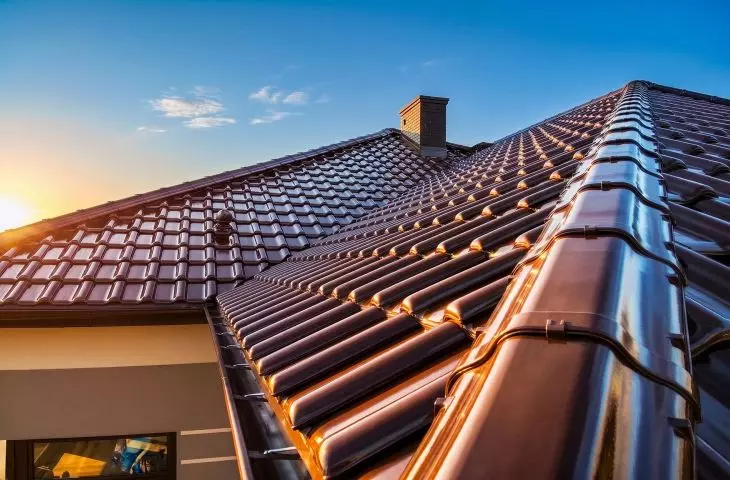
If a natural roof tile is linen and an engobe-glazed one is heavy wool, then a glazed tile is silk. The same raw material, the same ceramic history, but told differently. A vitreous coating fired at high temperatures creates a surface that reflects light with a subtle sheen — not aggressively, not tackily, but with the kind of sheen we see on the tiles of historic stoves or the azulejos in Lisbon’s townhouses.
Glazed red —especially in the deep chestnut tones of the TITANIA ceramic roof tile, captivating with its dark mahogany hue or intense brick color—has a certain jewel-like quality. It’s a color that takes on an almost velvety richness at dusk and glistens like the surface of an ancient mosaic in the sun. The roof ceases to be merely a backdrop for the house. It becomes the most important defining feature of its style.
That is precisely why glazed ceramics feature in so many striking designs. A house with clean, geometric lines set against the green of the forest—with a roof in deep chestnut glaze—leaves a lasting impression. An anthracite-colored facade, minimalist lines, and that red at the top: it’s a combination that needs no further explanation.
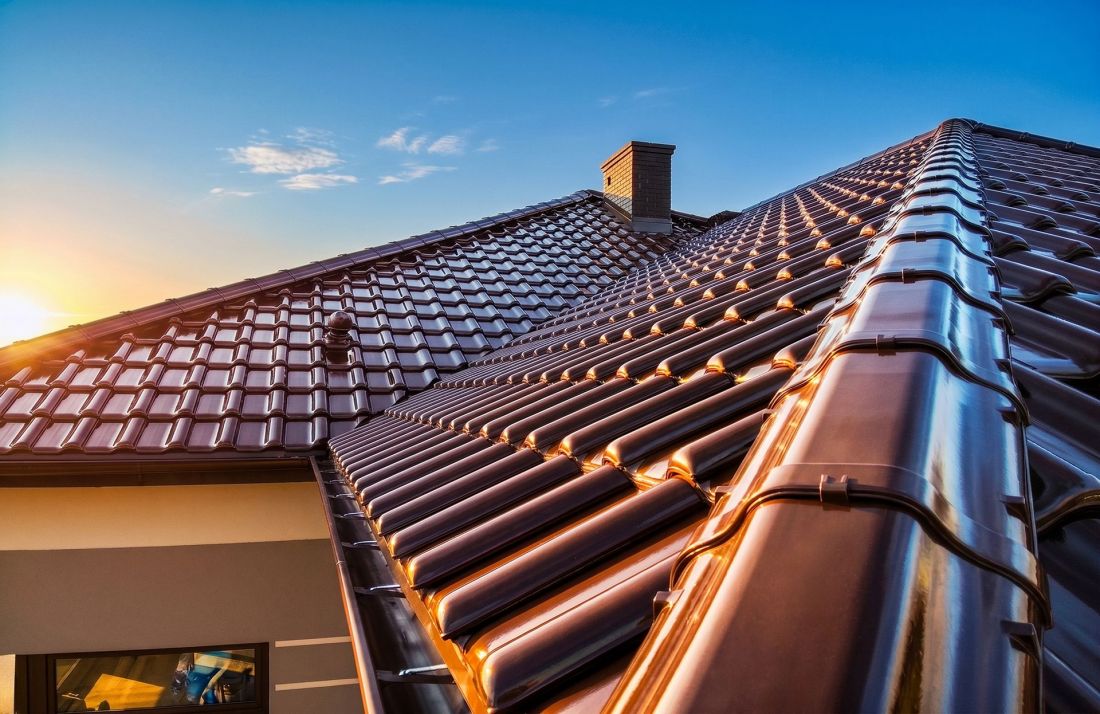
The glazed TITANIA by swissporTON in a deep chestnut shade captivates with its rich palette of hues and elegant sheen, proving that roof tiles are true jewels of contemporary architecture
© swissporTON
Red and Space
Red ceramic roof tiles are surprisingly versatile—they blend seamlessly with many styles, provided they are treated as part of a narrative rather than an isolated choice.
The Mediterranean region and Tuscany: Here, ceramic red is in its element—literally. A white or cream-colored facade, wooden shutters with a weathered finish, wisteria winding up the wall, the scent of lavender wafting through the air. It’s an image that has captured the imagination for centuries. And no other roofing material brings us closer to it.
New rustic and modern barn: One of the strongest trends in residential construction in recent years—rural architecture filtered through a contemporary sensibility. Exposed brick or dark wood planks, large windows offering views of the magnificent landscape, and industrial steel details. An engobed or natural red roof is perfect here—materials that tell the story of the place.
Contemporary minimalism: A house with a simple form, a facade in graphite or warm beige, no unnecessary ornamentation—and a roof in a deep, glazed red. This contrast is entirely deliberate and precise. Red does not overwhelm; it defines. It gives the house its own unique style.
A house in the landscape: Whether the house stands among fields, orchards, near a forest, or by a river—the ceramic red does not compete with nature. It belongs to the same realm as damp soil, a crimson autumn, and the bark of an old beech tree. A red ceramic roof blending into the landscape creates a harmony that goes beyond mere aesthetics.
Żaneta Kuczek, an expert at swissporTON, notes:
Whether we’re working with the archetype of a modern barn, where red defines minimalism and gives it a human scale, or with designs inspired by southern Europe, context is key. Red does not tolerate imitations—it feels most at home in the company of materials that match its nobility: raw concrete, natural wood, stone, or large glass surfaces. When treated as part of a broader narrative, it can integrate a building with the surrounding landscape, creating architecture that not only looks good in photos but, above all, will stand the test of time and fleeting trends.
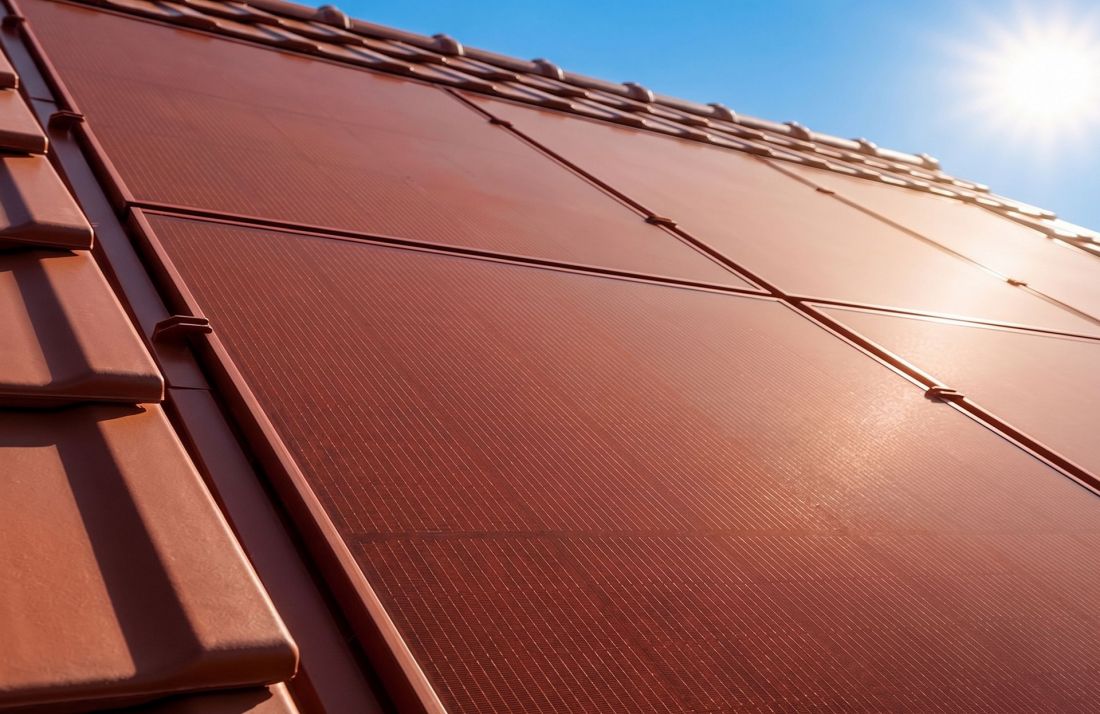
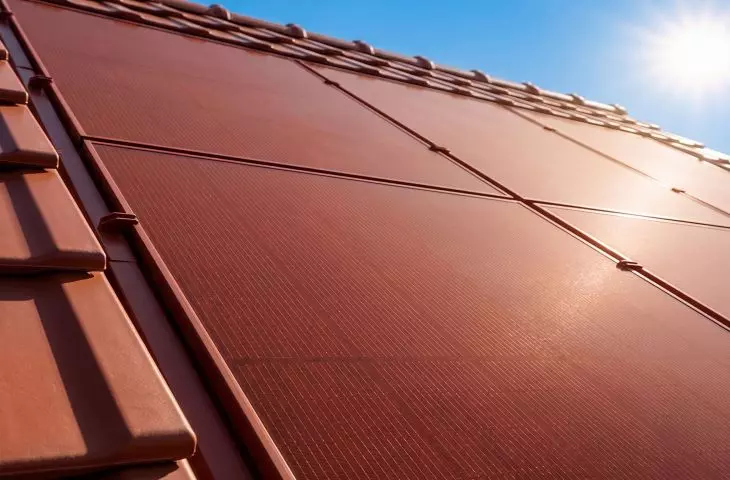
The swissporTON brand proves that fine craftsmanship and a culture-rooted aesthetic can create the perfect synergy with modern SunLACE photovoltaic technology and energy efficiency requirements
© swissporTON
An Indisputable Choice
In architectural and interior design, there’s a rule that all good designers know: the most important decisions are the ones that seem like the only possible ones—as if it couldn’t be any other way. Choosing a ceramic red roof can be just such a decision.
It’s not a color that “cries out” for attention. It doesn’t scream or disrupt. It simply gives the house character. A sense of rootedness. Identity.
You choose natural ceramic tiles—and you’re saying: this house ages with dignity. You choose an engobe finish—and you’re saying: everything here is well thought out; nothing is for show. You choose glaze—and you’re saying: we know what we want, and we’re not afraid to show it. Each of these statements is important. Each is true. And each is conveyed by a color that comes from the earth. Red on the roof is the oldest color in European architecture. And the only one that truly has no expiration date. It will remain on our home long after every current “trendy” color palette has faded into oblivion.
For more information, visit the Swisspor Polska company page on the A&B portal.