




Poland no longer attracts investors solely based on costs, location, and warehouse capacity. Increasingly, Asian companies’ choice of location is determined by the facilities’ readiness for automation, systems integration, and real-time operations management. The market is thus entering a new phase: from nearshoring, based mainly on location and costs, to techshoring, where digital infrastructure provides the competitive edge.
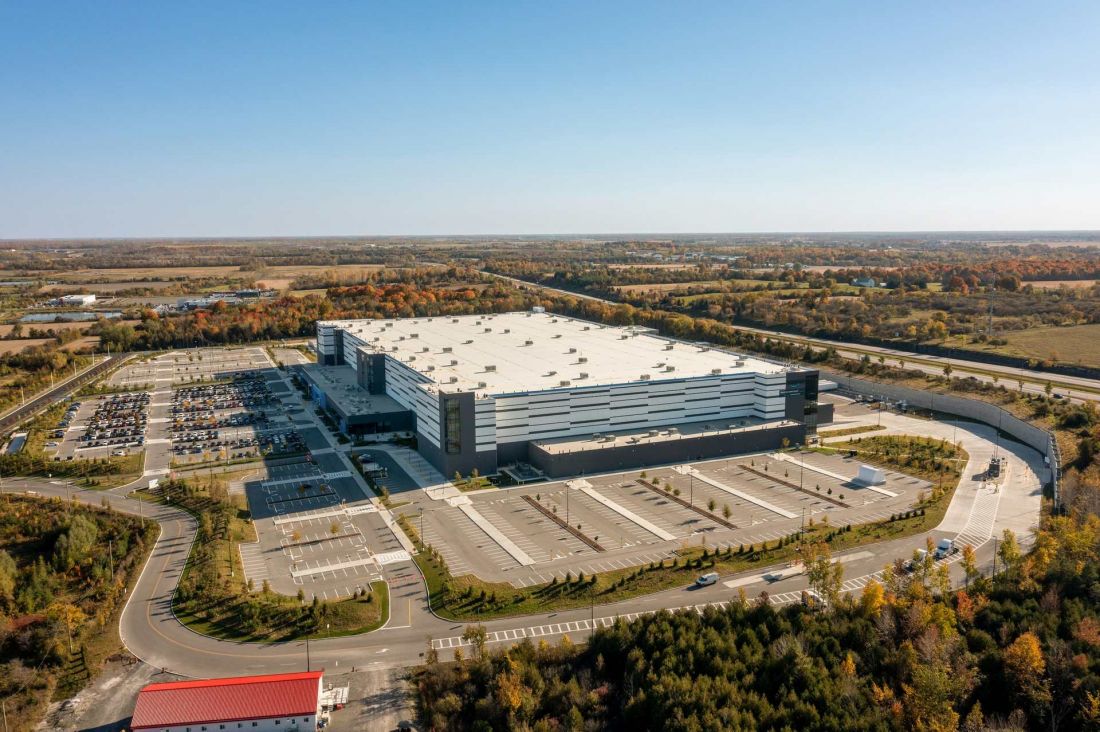
The Warehousing Sector
© MARIEL HAAN
Europe remains one of the most important destinations for global investors, despite a slowdown in the foreign direct investment market. According to the EY European Attractiveness Survey 2026, the number of investment projects in Europe fell by 7 percent last year, while Poland recorded a 10 percent increase. At the same time, the number of investments related to technology, artificial intelligence, and advanced manufacturing is growing the fastest.
Just a few years ago, investors primarily asked about the height of a warehouse or the number of loading docks, and discussions focused on location and rental costs. Today, questions about energy capacity, a facility’s readiness for automation, systems integration, and the ability to scale operations come up just as often. “Poland is no longer competing solely on the basis of warehouses—where we may soon see a supply gap—but on the entire business environment,” saysIgor Roguski, a partner at the consulting firm SQM Advisory.
This shift clearly illustrates how expectations regarding commercial real estate are evolving. According to JLL’s study “Are Polish Warehouses Aging?”, smart technologies (62 percent) and the automation and robotization of processes (54 percent) will have the greatest impact on the development of modern warehouse facilities over the next five years. Thus, the building itself is becoming less and less of a deciding factor in competitive advantage. What matters more and more is whether it can be integrated with security, logistics, energy management, and access control systems, and whether it allows for real-time data analysis and process automation.
Real estate advisors are also observing this shift. According to KPMG’s “German CEE Business Outlook 2026” survey, more than half of German companies planning to expand their operations in Central and Eastern Europe cite Poland as their preferred investment location. At the same time, business owners are increasingly focusing not only on costs and location, but also on the availability of energy infrastructure, automation potential, and opportunities for further business growth.
One area where this shift is particularly evident is logistics. Blue Bolt is implementing digital access management solutions in logistics facilities as well, where the technology can support, among other things, the management of courier traffic, employees, and subcontractors. Processes that previously required manual handling can thus be transferred to a digital environment and integrated with other systems operating within the facility. This reflects a broader shift in the approach to logistics real estate—digital infrastructure is increasingly being factored in during the design and operational planning stages, rather than only after the building is operational.
The digitization of logistics facilities is no longer merely a technology project implemented after the completion of the investment. It is increasingly planned as part of the overall operational environment, as it affects not only the efficiency of day-to-day processes but also the potential for further business growth and scaling. Proptech technologies are no longer merely a component of a building’s equipment; they are becoming an integral part of the infrastructure used by companies.

Maciej Grabowski – Founder of Blue Bolt
© MARIEL HAAN
A warehouse is no longer just a place to store goods. It is becoming an element of a company’s digital operating environment. Investors, including Asian companies, increasingly expect a standard that can be implemented in new facilities and integrated into existing infrastructure across different countries. Today, the greatest value comes not from the number of systems, but from their integration. For companies operating in multiple countries, proptech is becoming part of the operational infrastructure, rather than just an add-on to the building,” addsMaciej Grabowski, founder of Blue Bolt, a Polish proptech company.
In the coming years, investment advantages will no longer stem solely from location or operating costs, but from the level of digitization of the entire logistics ecosystem. Countries and markets that fail to build a coherent data and real-time management infrastructure will gradually lose their competitiveness in the race for the most advanced investments in e-commerce, manufacturing, and new technologies. Poland still has certain advantages today, such as costs and the availability of workers in select regions; however, the key factor will be whether it can translate these into a sustainable market standard.
For more information, visit the BLUE BOLT company page on the A&B portal.