





Extruded polystyrene ( XPS ) is a thermal insulation material designed for applications where the insulation must withstand not only heat loss but also moisture, water, and mechanical loads. Thanks to their closed-cell structure, XPS panels are characterized by very low water absorption, high compressive strength, and resistance to freezing. It is precisely this combination of properties that makes them suitable for use in the most demanding areas of a building.
Why does XPS perform well in humid environments?
When selecting thermal insulation for areas in contact with the ground or water, special attention must be paid to the material’s water absorption. Moisture in the insulation can impair its thermal properties and, in the case of repeated freezing and thawing, also affect its durability.
swissporXPS is distinguished by its very low water absorption. For selected panels, including swissporXPS 300, 500, and 700, the declared water absorption during prolonged immersion is a maximum of 0.7%. The material also retains its resistance to freezing and thawing after absorbing water during prolonged diffusion.
It is important to note, however, that XPS does not replace a waterproofing membrane. Its primary purpose is to reduce heat loss and provide durable thermal insulation in conditions where moisture or increased loads are present. Waterproofing must be installed as a separate, watertight layer in accordance with the design.
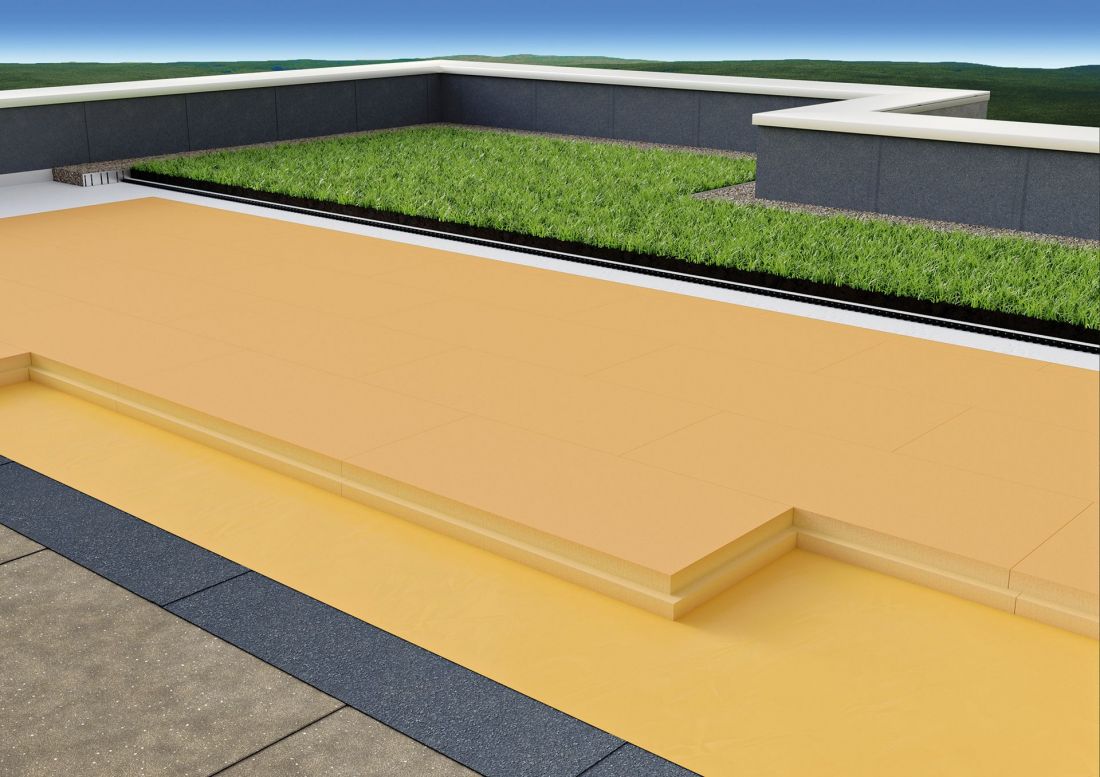
XPS is resistant to rainwater and protects the waterproofing layer from mechanical damage
© swissporTON
XPS for Foundation Insulation
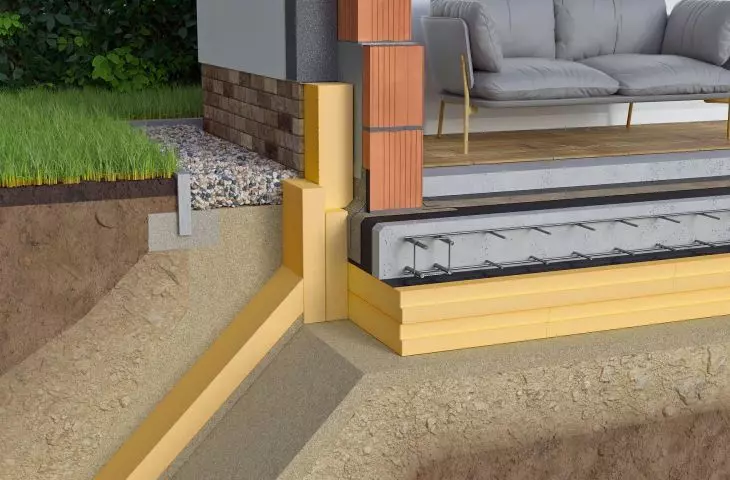
One of the most important applications of extruded polystyrene is foundation insulation. Foundation wall insulation is located in direct contact with the ground and may therefore be constantly exposed to elevated humidity. Under such conditions, low water absorption and mechanical strength are particularly important.
swisspor Polska recommends XPS as a material for thermal insulation of building components in contact with moisture, including foundation walls, basement walls, and foundation slabs. XPS is used both beneath the foundation slab, above the foundation slab, and for insulating foundation footings.
The swissporXPS product line includes panels with varying compressive strengths. swissporXPS 300 achieves ≥300 kPa, swissporXPS 500 ≥500 kPa, and swissporXPS 700 ≥700 kPa. This allows the solution to be tailored to the anticipated structural loads.
Proper installation is crucial
Before installing thermal insulation on foundation walls, a watertight waterproofing layer must first be applied. swisspor also emphasizes that the material used for waterproofing must not contain organic solvents, to which XPS boards are not resistant.
The method of bonding the boards must be adapted to the soil and water conditions. In the case of groundwater without hydrostatic pressure, spot bonding, spot-and-strip bonding, or strip bonding may be used; however, in the presence of hydrostatic pressure, the manufacturer recommends full-surface bonding.
In the plinth area above ground level, the panel surface may be of particular importance. Panels with a waffle-textured surface provide better adhesion for the ETICS system layer.
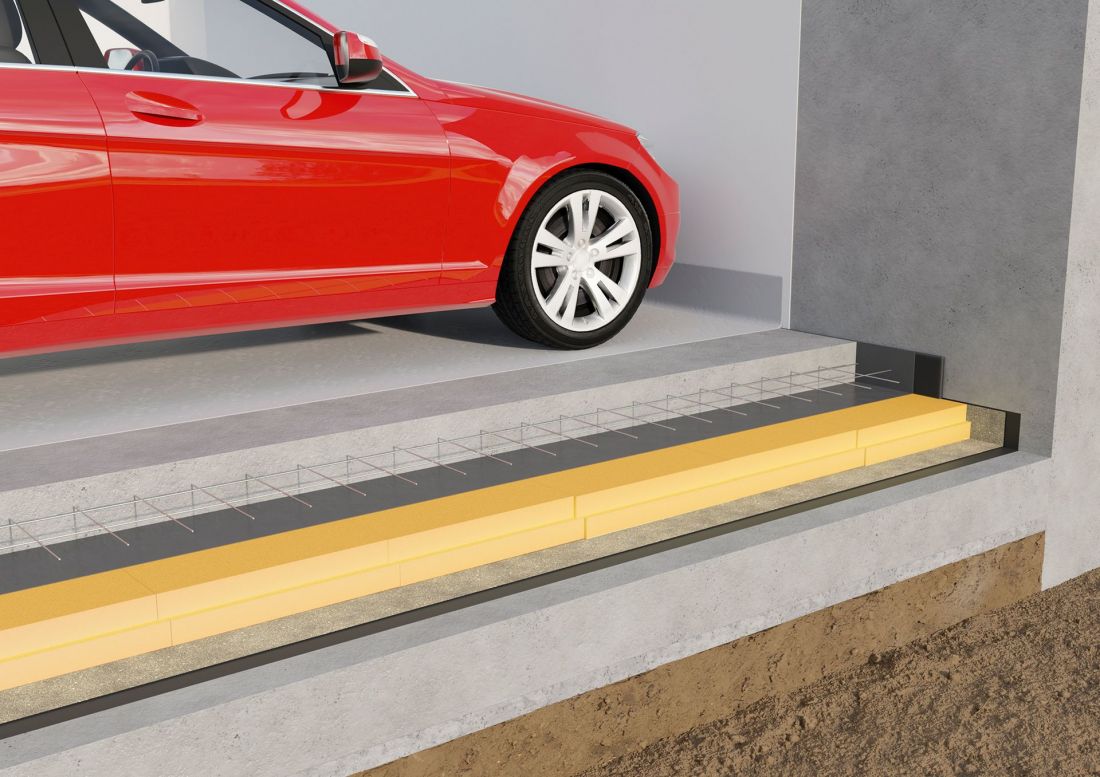
In areas exposed to significant static and dynamic loads, selecting the appropriate type of XPS board is crucial
© swissporTON
Foundation slab—insulation below and above the slab
XPS also works well as thermal insulation for foundation slabs. Depending on the design solution, it can be installed either beneath or above the slab. The choice of a specific option depends, among other factors, on the building’s structure, soil and water conditions, and the adopted layer configuration.
Insulation beneath the foundation slab must not only limit heat transfer but also bear the loads transmitted by the structure. Therefore, adequate compressive strength is essential in this application.
For the insulation of floors and structures exposed to long-term loads, swisspor recommends selecting the appropriate XPS variant—300 SF, 500 SF, or 700 SF—depending on the room’s intended use and the loads present.
Floors on Ground, Garages, and Parking Lots
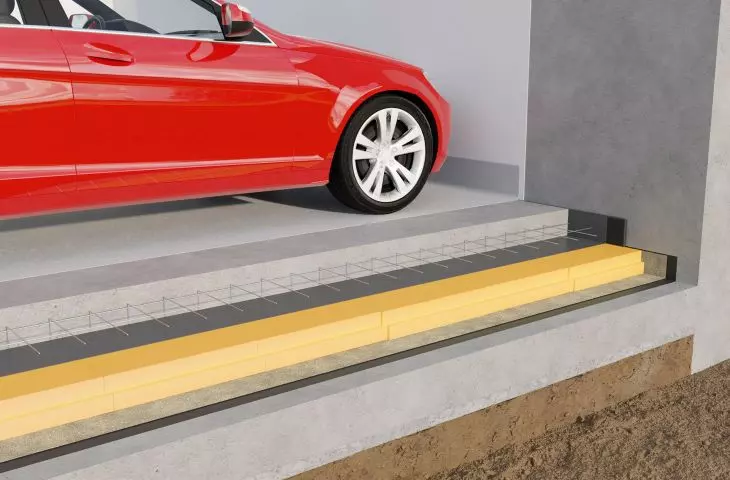
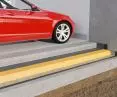
Another application for XPS is floors on ground level, particularly in areas where, in addition to moisture, significant loads are present. The material can be used, for example, in garages, industrial and warehouse facilities, cold storage facilities, and parking lots.
In such applications, it is not enough to consider only the thermal conductivity coefficient. Compressive strength is also important. For industrial flooring, swisspor recommends using panels with a compressive strength of 300, 500, or 700 kPa, depending on the magnitude and nature of the loads.
The selection of material should therefore take into account the anticipated static and dynamic loads. Special attention must be given to surfaces where vehicles or forklifts travel or where heavy materials are stored.
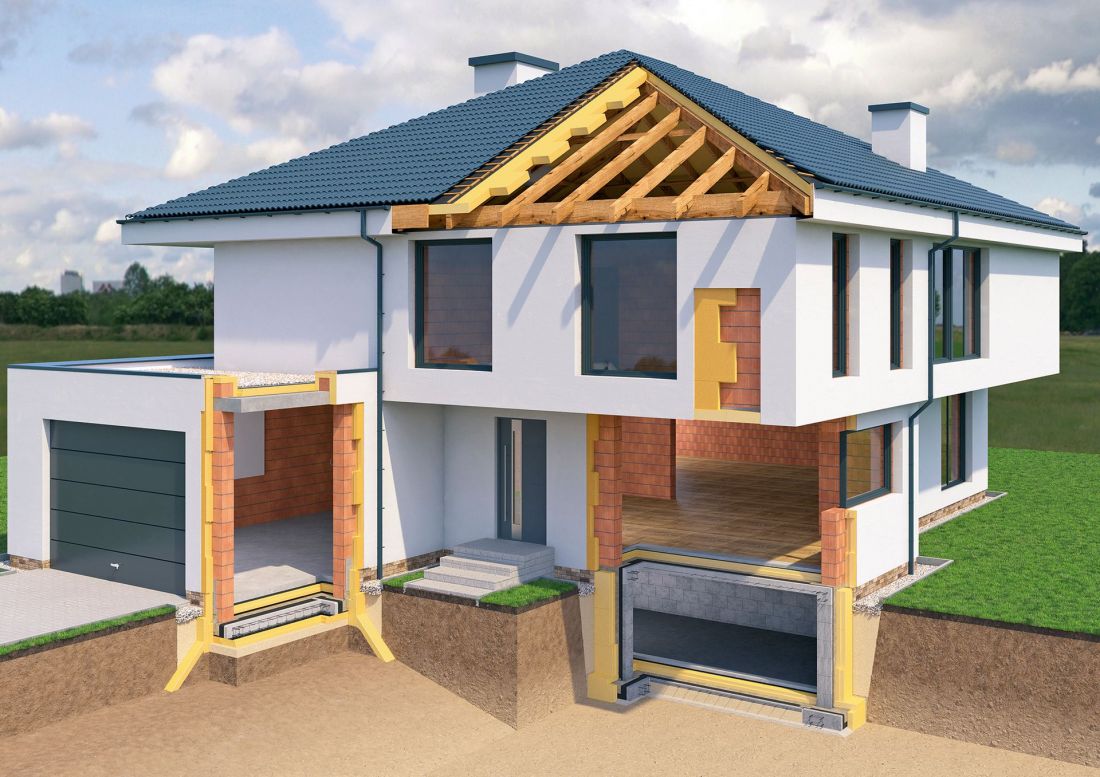
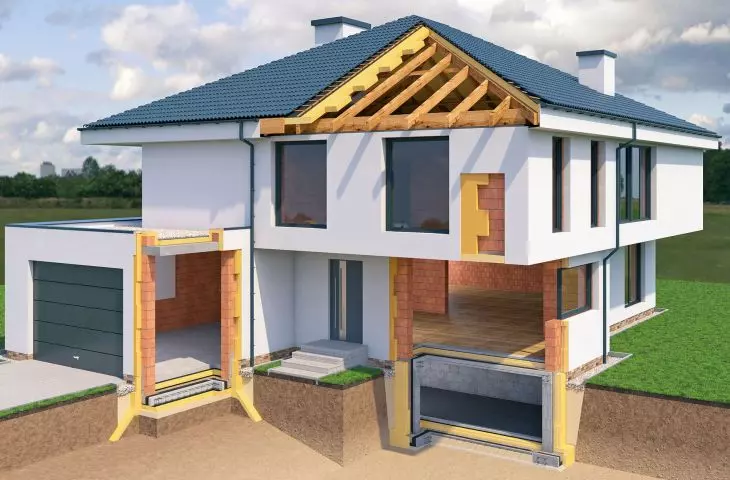
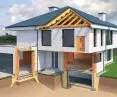
A cross-section of a modern energy-efficient building illustrates the comprehensive use of swissporXPS panels
© swissporTON
Inverted roofs—thermal insulation in contact with water
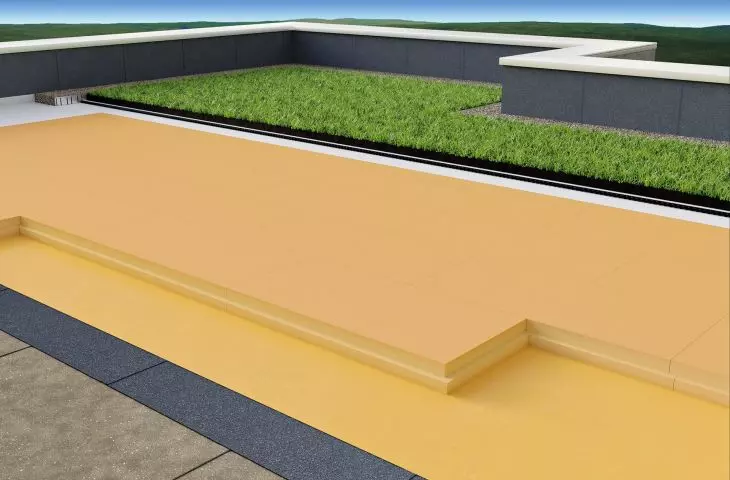
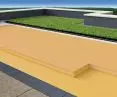
One of the characteristic applications of XPS is in inverted flat roofs. In this design, the thermal insulation is located above the waterproofing layer and may therefore come into direct contact with rainwater.
Under such conditions, very low water absorption, adequate compressive strength, and good thermal insulation properties are particularly important. swissporXPS is therefore an excellent solution for inverted roofs as well, including green roofs, ballast roofs, and traffic-bearing roofs.
In an inverted system, XPS also serves a protective function for the waterproofing layer below. It shields it from the effects of weather and potential mechanical damage during construction, maintenance, or when people walk on the roof.
For green roofs, resistance to increased loads is particularly important. Depending on the roof structure and intended use, a material with appropriate mechanical strength must be selected.
Balconies, terraces, and other demanding areas
XPS is also used for insulating balconies and terraces, where the material may be exposed to periodic moisture and variable weather conditions. Thanks to its resistance to water and mechanical loads, it can be used in applications where standard insulation would require additional protection.
However, the list of applications for swissporXPS is much broader. It includes, among other things, the insulation of walls below ground level, plinth areas, sandwich walls, parking garage floors, roofs subject to pedestrian and vehicular traffic, as well as the insulation of thermal bridges, such as ring beams and lintels. XPS is also used for insulating roads, rail tracks, and traffic routes, as well as for permanent formwork.
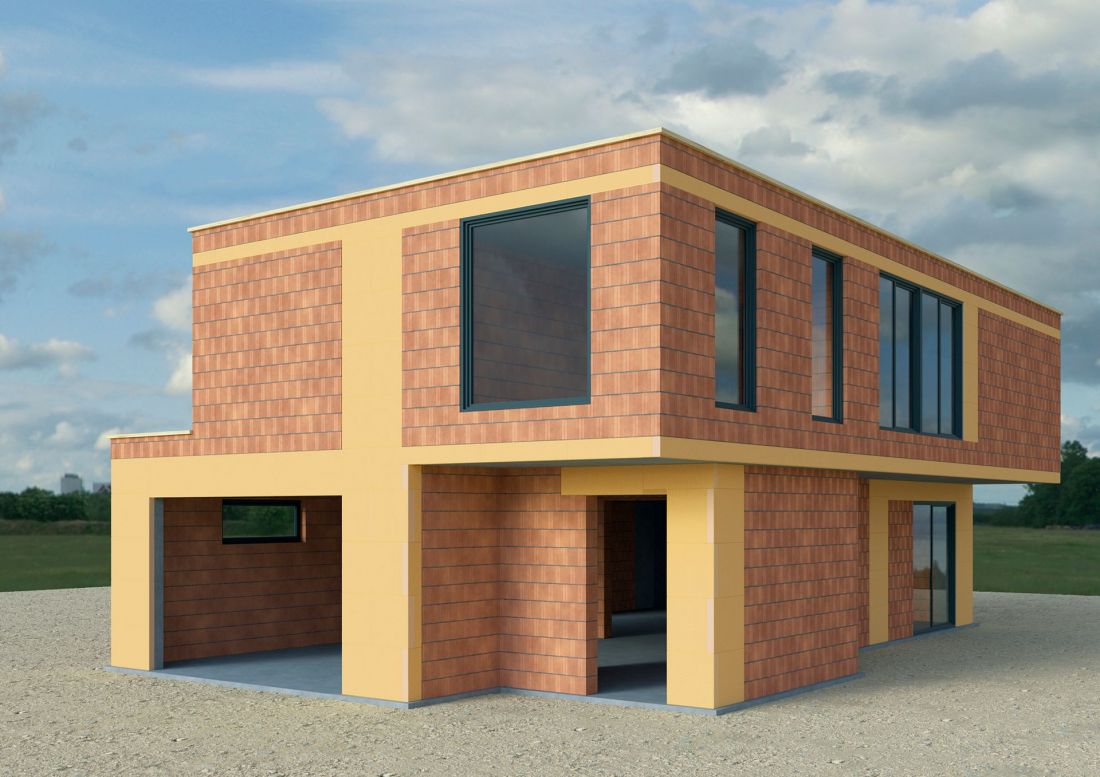
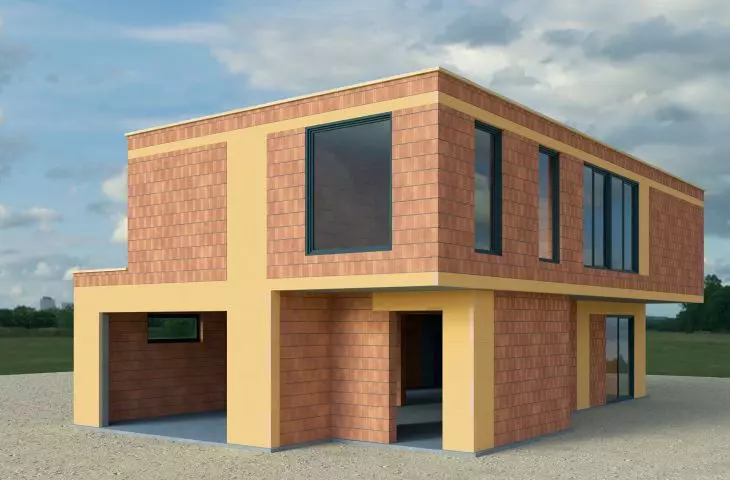
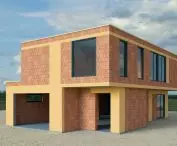
XPS is used in the most demanding areas of a building—from the foundation to the roof—protecting against moisture and heat loss
© swissporTON
XPS vs. EPS—Can They Be Used Interchangeably?
Although XPS and EPS belong to the same group of thermal insulation materials, they differ in their properties and intended uses. XPS is harder, more cohesive, and significantly more resistant to moisture and mechanical damage. According to swisspor’s data, the long-term immersion water absorption coefficient (WL(T)) for selected swissporXPS boards is a maximum of 0.7%.
However, this does not mean that XPS should replace EPS in all applications. The choice of thermal insulation should be based on the operating conditions of the building envelope. Where there is contact with moisture, soil, or increased mechanical loads, the properties of XPS may be particularly important.
Key Principles for Using XPS
When designing and installing insulation in areas exposed to moisture, it is important to keep a few basic principles in mind:
-
the material should be selected based on soil and moisture conditions and anticipated loads,
-
XPS does not replace a watertight waterproofing membrane,
-
waterproofing must be properly installed before insulating foundation walls,
-
use materials compatible with XPS and avoid organic solvents,
-
the bonding method must be adapted to soil and water conditions,
-
For floors and foundation slabs, select the appropriate compressive strength,
-
for inverted roofs, all layers of the system and the method of water drainage must be taken into account,
-
the specific application of a particular board type should be determined by the design.
XPS is therefore a particularly useful solution where thermal insulation must simultaneously reduce heat loss, be moisture-resistant, and withstand increased loads. Foundations, foundation slabs, ground-level floors, parking lots, balconies, terraces, and inverted roofs are examples of structures where the properties of extruded polystyrene allow for the creation of durable and effective thermal insulation solutions. However, the key to their proper functioning lies not only in the choice of material, but also in proper design, correctly installed waterproofing, and careful installation.
For more information, visit the Swisspor Polska company page on the PdA portal.