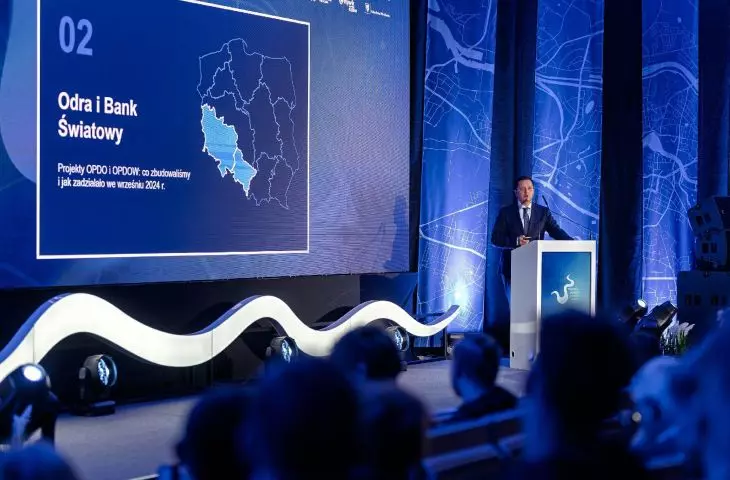
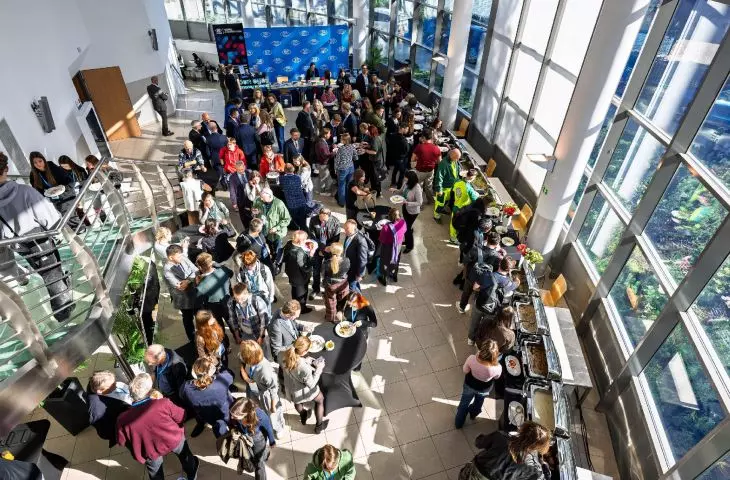
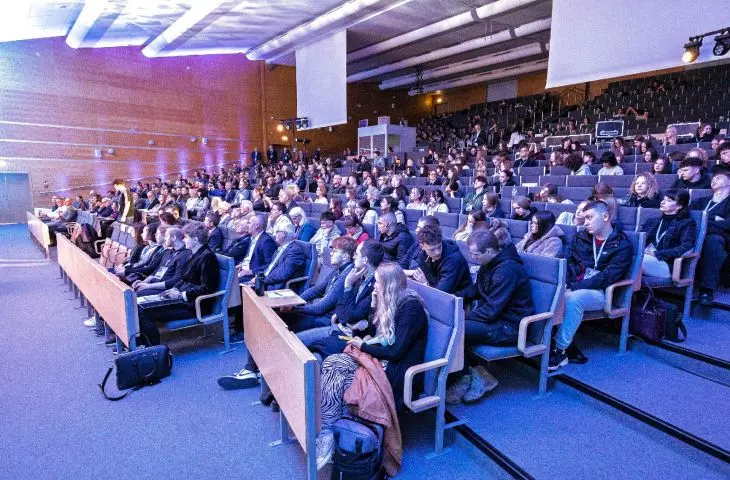






“Drinking water is more valuable than diamonds, and yet we use it to flush toilets” —this statement was made during the 8th City–Water–Quality of Life Congress, which took place on October 13 and 14 in Wrocław. How can we take care of this incredibly valuable resource while ensuring the security of its supply, properly protecting water infrastructure against various threats, and perhaps even finding ways to generate revenue from the city’s water supply (as Sviataslau Valasiuk from the Warsaw Center for Environmental Economics noted during the Congress, it turns out that everything can be valued—even birdsong)?
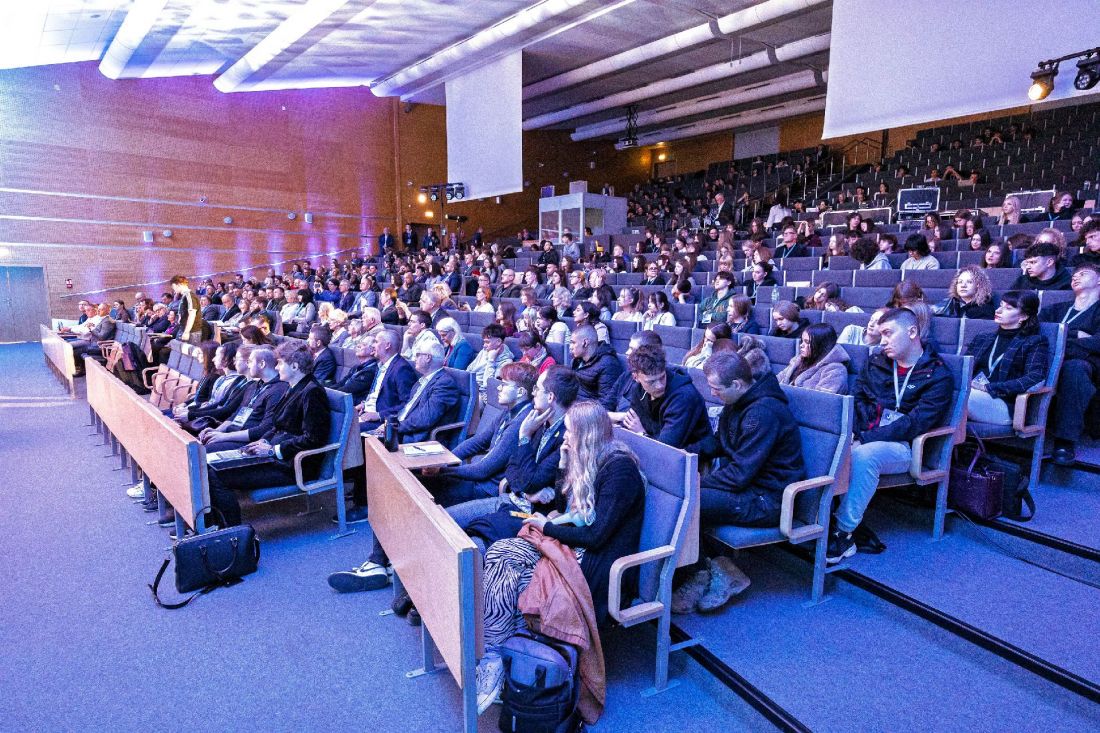
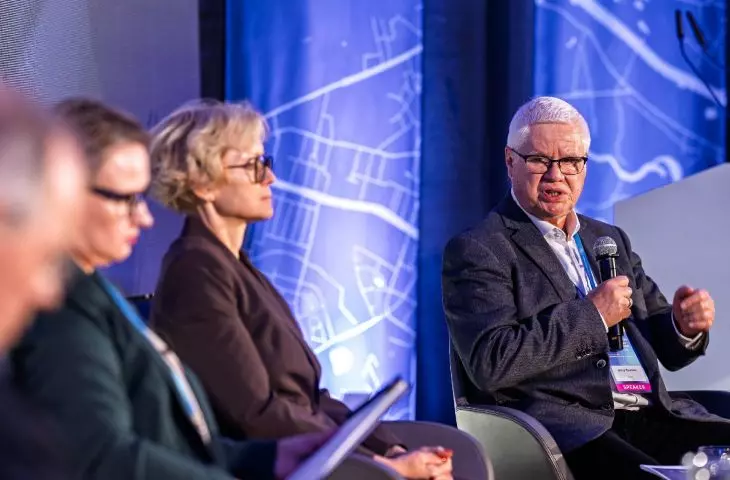
8th City–Water–Quality of Life Congress in Wrocław
© organizers’ archive
Sometimes too much, sometimes too little
We tend to pay attention to water as a resource most often in two situations—when there’s too much of it (such as during heavy rainfall or floods) and when there’s too little (droughts, supply disruptions). It turns out there is a third scenario of which we are less aware—cyberattacks on water infrastructure. Last year, the Polish water and wastewater sector recorded 94 cybersecurity incidents; in 2024, there were 59. Such situations can lead to disruptions in water delivery to residents and wastewater collection, so we must prepare for emergency scenarios and practice them accordingly.
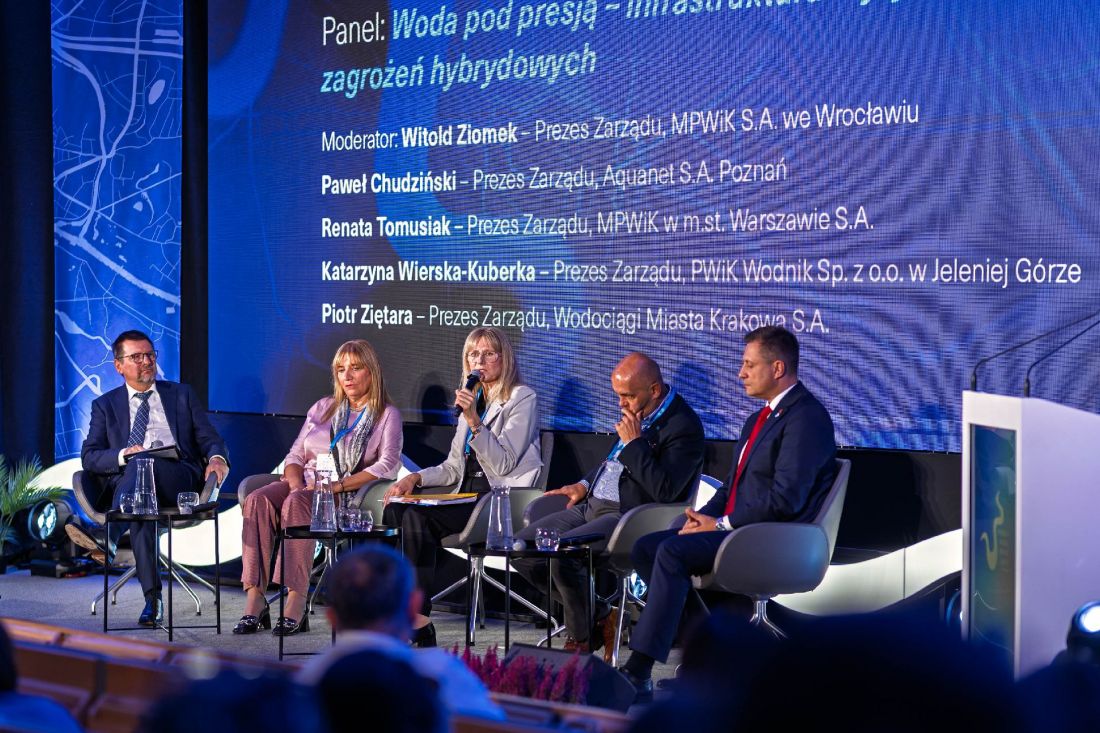
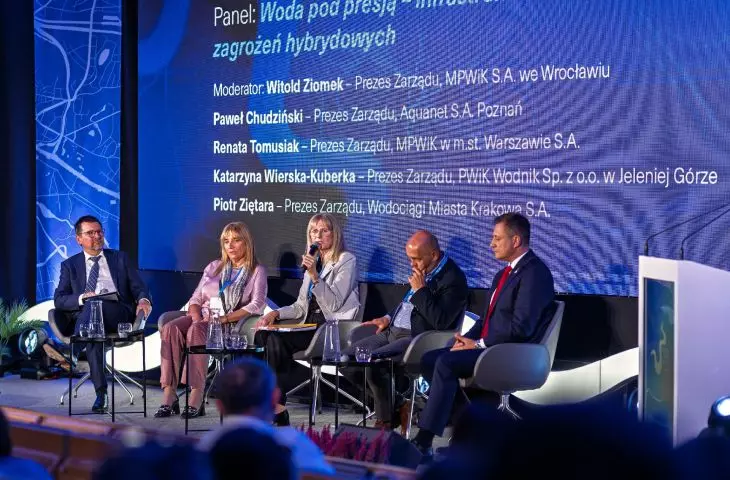
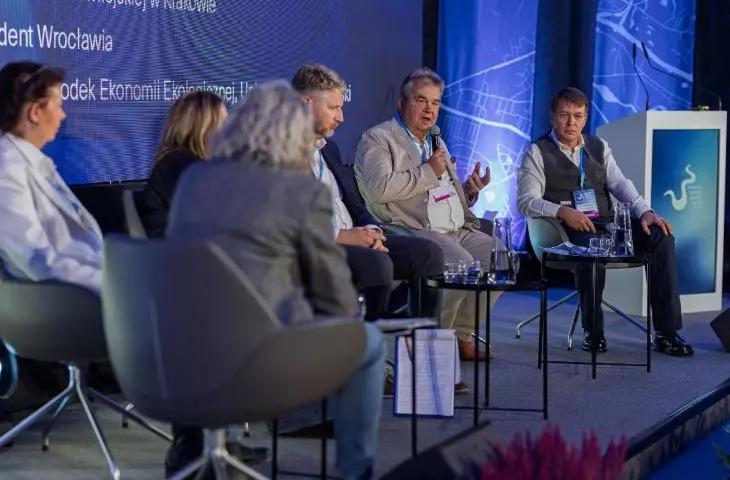
The panel “Water Under Pressure” featured CEOs of municipal water companies from various cities
© Organizers’ archives
Water security should be the subject of public debate, as it is one of the elements of national security. We are shifting from managing a surplus of water to managing a shortage of it—a resource we all use every day, as residents, in the economy, and in the natural environment. It is a shared resource that requires our active involvement
— said Mateusz Balcerowicz, president of the State Water Management Authority Wody Polskie.
A real sponge is brown
Awareness is growing that rainwater is not waste but a resource, and consequently, there is increasing discussion about its retention—that is, its ability to be temporarily stored in the environment. Natural retention (as opposed to technical retention) is supported by natural systems.
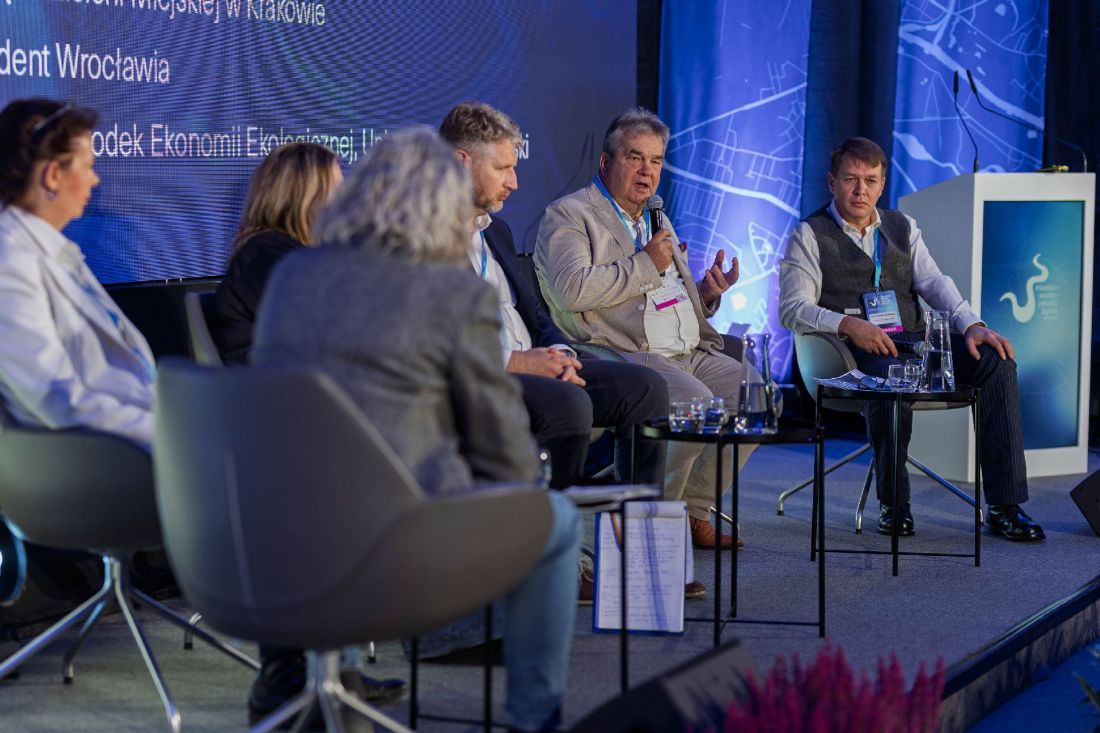
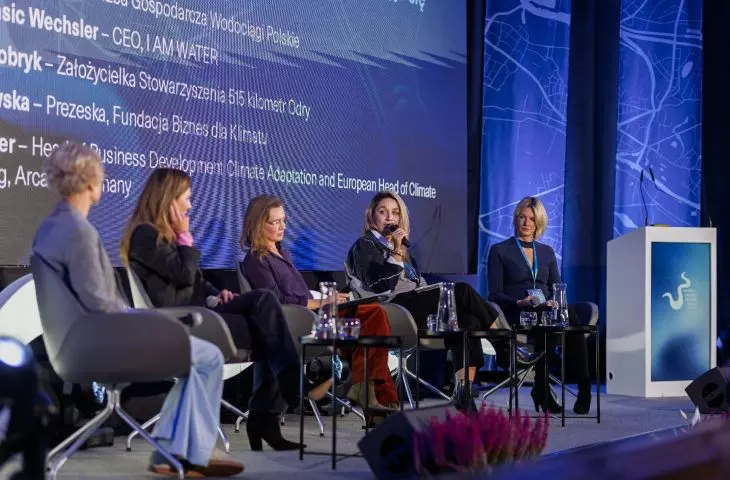
Panel: “A City’s Natural Capital: Can Polish Cities Profit from Nature?”
© Organizers’ archive
“Green where I can, and gray where I must ”
— said Prof. Janusz Zaleski, Vice Chair of the Congress Program Council, emphasizing the complementary nature of dry, wet, and natural retention.
Is that enough? As Joanna Rayss, a landscape architect and CEO of Moderna EcoLogic, emphasized during her speech at the Congress — it is important not to fall into the trap of pseudo-solutions, in which greenery is used as a guarantee of active material cycling, even though these are often nothing more than “flowers planted on a pipe.” If a rain garden is lined with PVC sheeting and drainage layers, it will function as a mechanical drain that, instead of nourishing the biotope, will dry out the surrounding greenery and exclude it from the natural cycle. The foundation of water retention, however, is peat and living soil — these, as Joanna Rayss said, are the true sponges.
Peatlands are like a plug in a bathtub—they take up little space, but they determine how much water stays and how much flows away
— as stated in this year’s program document for the 6th Water Roundtable.
Today, however, they cover just 4 percent of the country’s area, while wetlands cover nearly 14 percent. Yet, as Alexandra Hughes of the British nature conservation organization Wildfowl & Wetlands Trust demonstrated during the Congress — even in a city like London, there is room for wetlands, as exemplified by the complex of artificial wetlands, lakes, ponds, and reed beds in the Barnes neighborhood.
Is there room in Polish cities for nature-based solutions, and can they serve similar functions to so-called “gray infrastructure”? We asked Joanna Rayss about this during the Congress:
However, these cannot be isolated solutions—areas in our country are complex landscapes with varied soil types. The goal of nature-based solutions (NBS)—solutions based primarily on nature—is therefore also to regenerate the mosaic-like character of individual areas and create a network of stormwater catchment basins that function simultaneously.
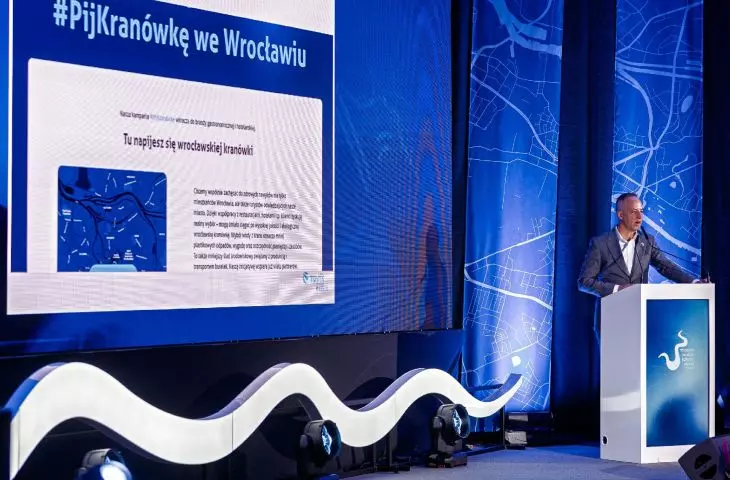
But how should these ecosystem services be incorporated into urban strategies? We asked Grzegorz Roman, Vice Mayor of Wrocław, about this:
Water and Quality of Life
The common thread running through the presentations and debates at this year’s 8th City–Water–Quality of Life—an event organized by the City of Wrocław and the Open Eyes Economy Summit—was responsibility for resources whose quality and availability will shape cities’ development opportunities in the years to come.
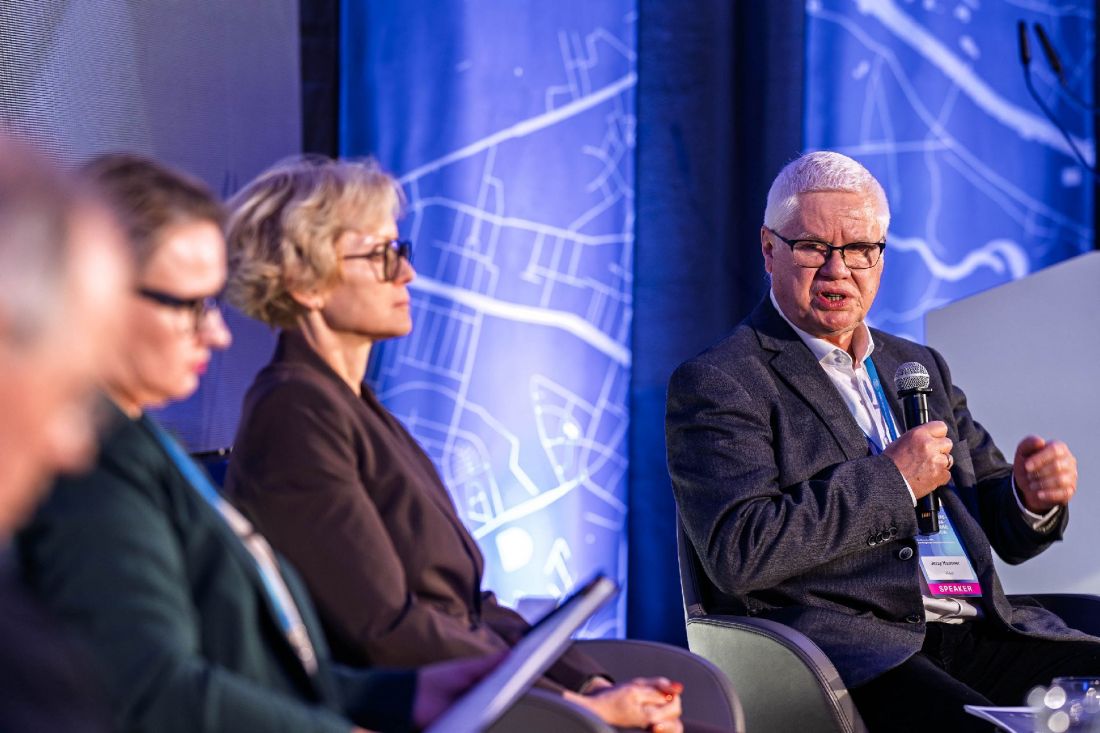
The panel “Financing the Water Sector in Poland” was moderated by Prof. Jerzy Hausner
© organizers’ archive
For Open Eyes Economy,water is a symbol of quality of life. When we talk about quality of life, we mean the health and safety of residents. We use water every day, which is why we must manage it responsibly, think long-term, and respect this resource. Because without water, there is no life—and thus no quality of life
— emphasizes Kinga Taćkiewicz, CEO of Open Eyes Economy.
As shown by the results of this year’sWater City Index 2026, which covers 218 Polish cities, Kraków currently ranks highest in terms of water management (in the metropolitan category). The ranking assessed how individual Polish cities manage their water resources, cope with the threats of flooding and drought, and utilize water in their development. What is the situation like outside the metropolitan areas? Among cities with county-level status , Gdynia, Słupsk, and Jaworzno received the highest ratings, while in the medium-sized cities category, Mrągowo, Czeladź, and Wieliczka ranked highest. The full report can be downloaded from the website: Water City Index