




The history of architecture cannot be presented solely on the basis of designs and their implementation. Even the most outstanding architects did not create in a vacuum, as vividly illustrated by the biographies of Helena Syrkus and Barbara Brukalska, the subjects of a new exhibition at the Museum of Architecture in Wrocław. Przemek Ciępka speaks with Aleksandra Kędziorek and Małgorzata Jędrzejczyk, curators of the exhibition „Interwoven. Barbara Brukalska, Helena Syrkus and the Networks of Modernism.”
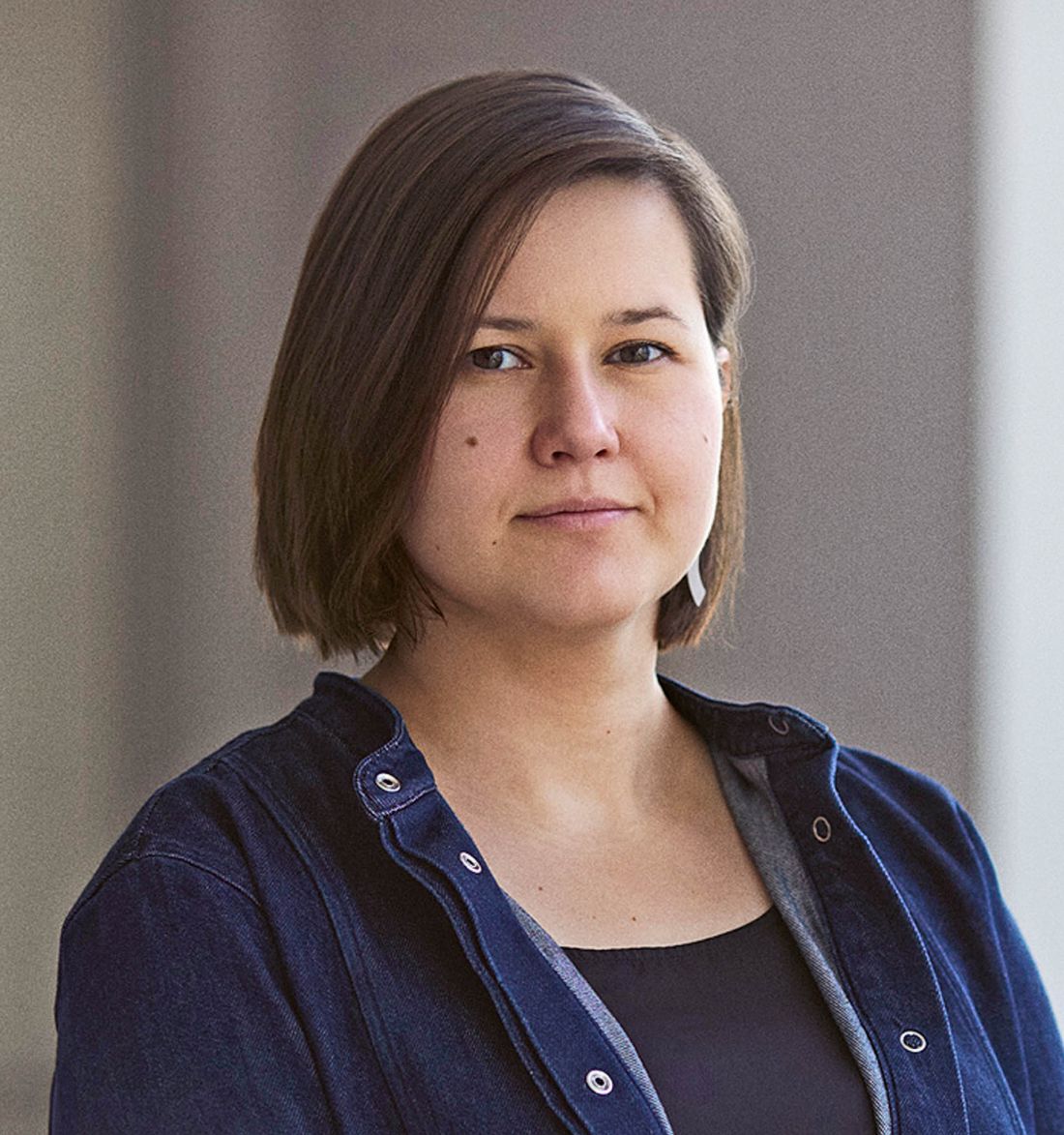
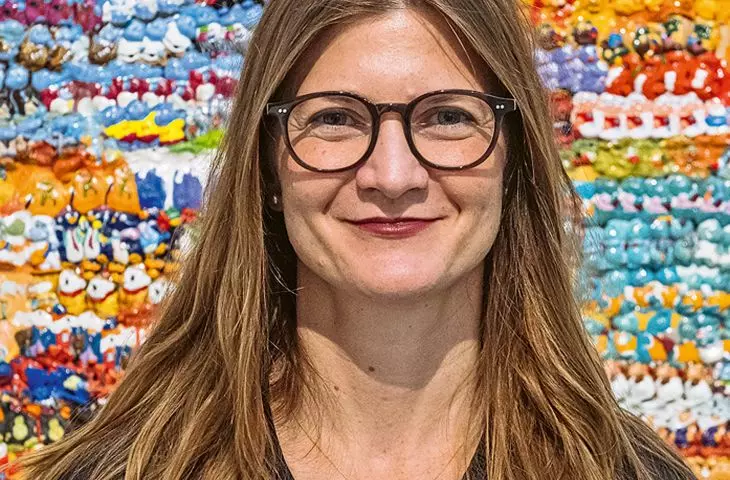
Aleksandra KĘDZIOREK — Art historian, curator, and editor. She works at the intersection of architecture, design, and the visual arts. She uses research methods to seek inspiration in the past and find creative responses to the challenges of the present. She has explored the sense of security in architecture (the exhibition „Lares and Penates” at the Polish Pavilion at the Venice Architecture Biennale, in collaboration with Krzysztof Maniak, Katarzyna Przezwańska, and Maciej Siuda, 2025), the use of textiles in interiors before the widespread adoption of electricity (the exhibition „The Clothed Home” with Alicja Bielawska and the Centrala design group at the London Design Biennale, 2021), and the role of aquatic plants in modernist architecture (Centrala”s artistic intervention „Nenúfars blancs” at the Mies van der Rohe Pavilion in Barcelona, 2022). She coordinated an international research and exhibition project on Oskar and Zofia Hansen at the Museum of Modern Art in Warsaw and oversaw the maintenance of their summer home in Szumin (2013–17).
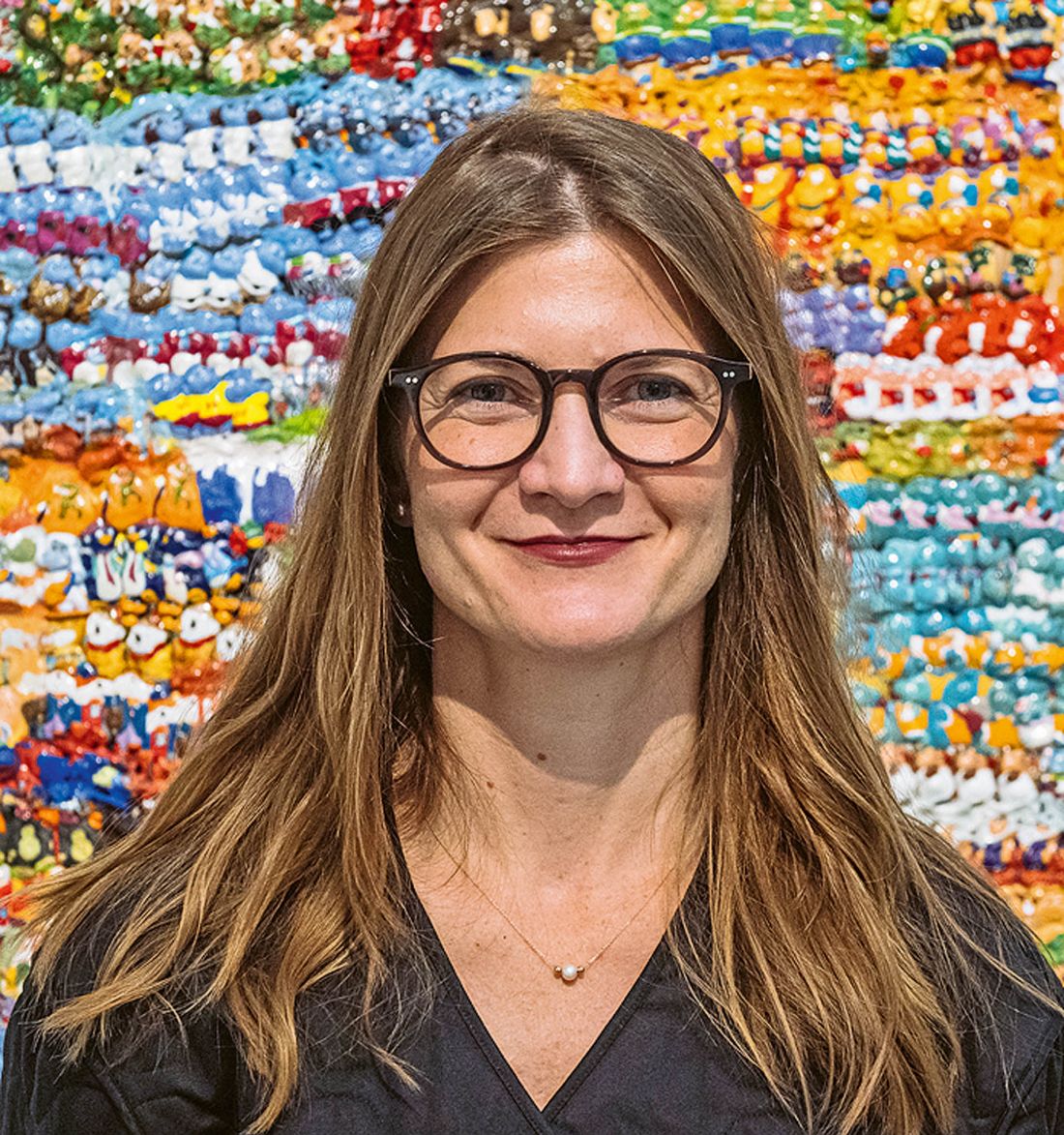
Małgorzata Anna JĘDRZEJCZYK — Art historian, curator, assistant professor at the Academy of Fine Arts in Katowice, and program director of „Exercising Modernity” at the Pilecki Institute in Berlin. She is an associate of the International Cultural Center in Kraków. She earned her Ph.D. in art history from Jagiellonian University. Author and editor of publications on 20th- and 21st-century art and architecture, including *Moderne in Krakau* (2025), „Katarzyna Kobro. Ruch w czasoprzestrzeni” (2021), and „Udomowiony modernizm” (2019). She has curated exhibitions, including „Interwoven: Barbara Brukalska, Helena Syrkus, and the Networks of Modernism” (with A. Kędziorek, Museum of Architecture, 2026); „Interwoven. Barbara Brukalska, Helena Syrkus and the Networks of Modernism” (with A. Kędziorek, VI PER Gallery, Prague, 2026); „Moderne in Krakau” (Architektur im Ringturm, Vienna, 2025); „Sections. Gallery of Polish Architecture of the 20th and 21st Centuries” (National Museum in Kraków, 2021); „Identity: 100 Years of Polish Architecture / Kraków” (NIAiU).
Przemek Ciępka: The history of Polish modernist architecture was shaped by a relatively broad group of female architects, including Jadwiga Grabowska-Hawrylak, Halina Skibniewska, Stanisława Sandecka-Nowicka, and Zofia Garlińska-Hansen, but for some reason your exhibition focuses on Barbara Brukalska and Helena Syrkus. Why were these two architects chosen?
Małgorzata Jędrzejczyk: A significant portion of the research on Helena Syrkus and Barbara Brukalska focuses on the first half of the 20th century. We wanted to take a broader look at their lives and work, including their activities during the war and the postwar decades, which are extremely important from the perspective of these two architects” creative output. The idea for the exhibition emerged as part of the „Exercising Modernity” program, organized by the Pilecki Institute in Berlin. This program aims, among other things, to integrate research on the history of architecture in Central and Eastern Europe—including Poland—into a broader reflection on the connections, networks, and complex trajectories of European modernism. Another key point of reference was the book *The CIAM Archipelago: The Letters of Helena Syrkus*, edited by Aleksandra Kędziorek, Katarzyna Uchowicz, and Maja Wirkus, which demonstrated that figures such as Helena Syrkus can be discussed not only in relation to their architectural work but also through the lens of the social and geopolitical transformations that took place in the 20th century.
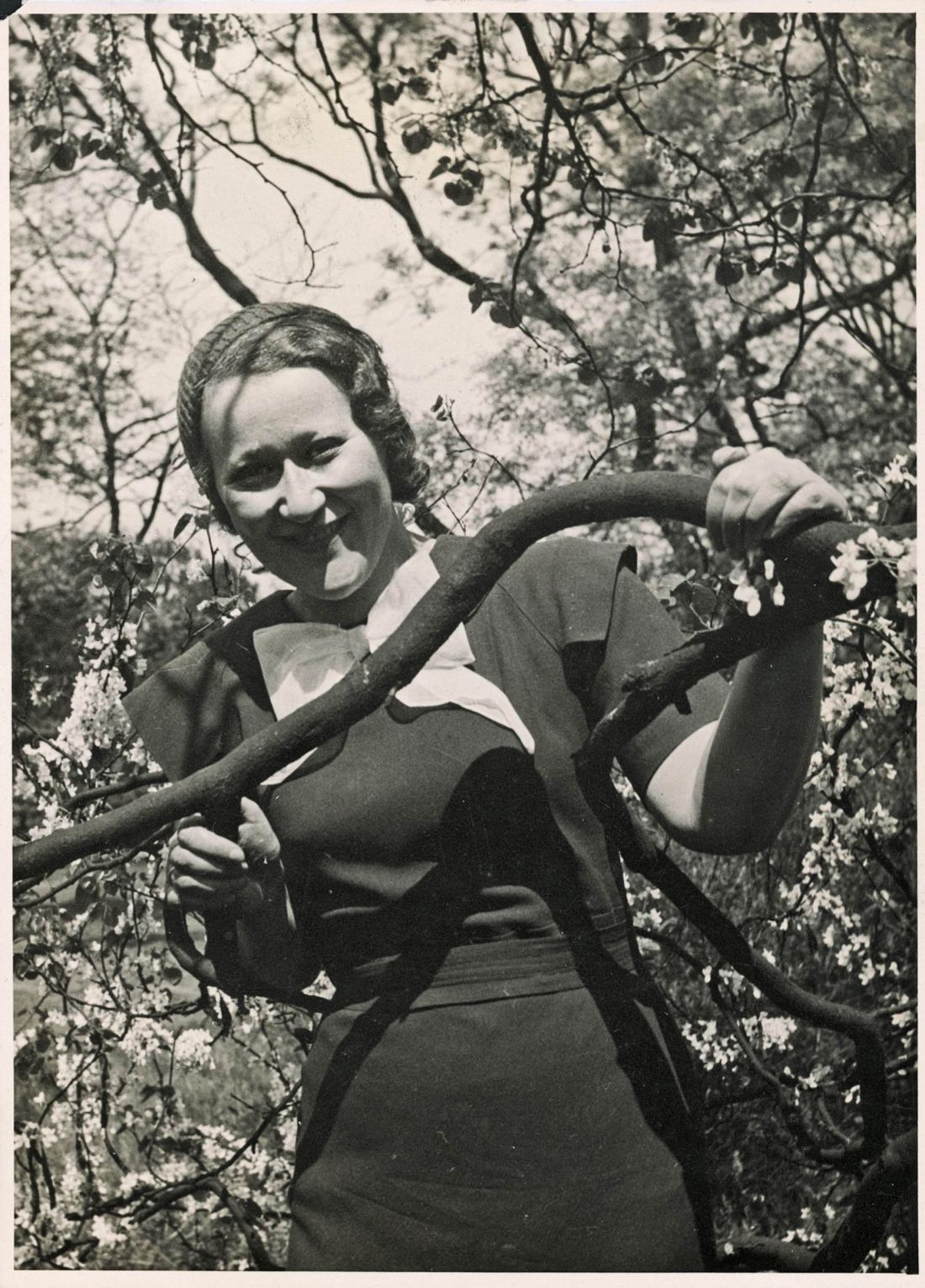
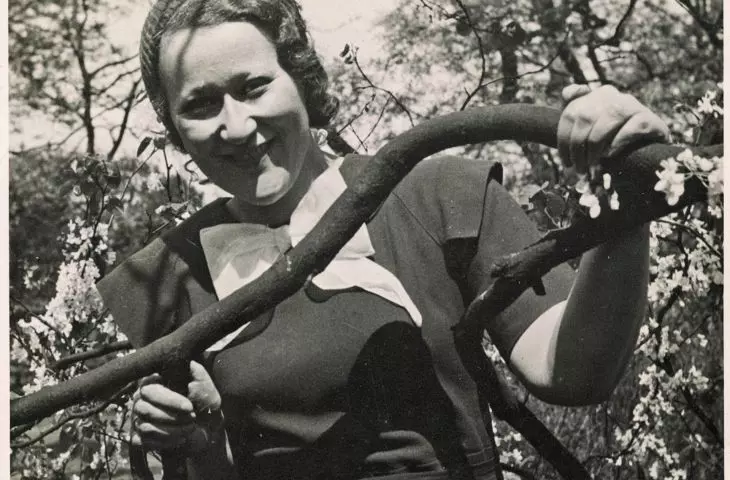
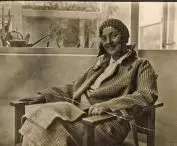
Helena Syrkus, 1930s, photograph
© Collection of the Museum of Art in Łódź
The women featured in the exhibition were born at nearly the same time, entered the professional world during the interwar period, and both remained active in design for decades to come, while at the same time being entangled in a vast web of geopolitical upheavals and shifts that unfolded on the international stage.
Aleksandra and I agreed that examining these two designers would allow us to discuss architecture, but also the broader context in which it emerges. I”m not referring here to infrastructure, but rather, for example, to interpersonal relationships, which can also be understood as part of the history of architecture.
Aleksandra Kędziorek: This is not a monographic exhibition of Barbara Brukalska and Helena Syrkus, and visitors to the Museum of Architecture in the coming months will not see a comprehensive overview of their work there. That was not our goal. „Interwoven” is, above all, an exhibition about the relationships that shape architecture—not only those between buildings, but also those between the people who make up the architectural community. Choosing Barbara Brukalska and Helena Syrkus as the focal figures of the exhibition and designating them as our guides through the 20th century allows us to examine these relationships on various scales — from the interpersonal level, expressed in their marriages, through the local level, associated with the Praesens group or social housing projects, to the international level, for example, related to their activities in the International Congresses of Modern Architecture (CIAM).
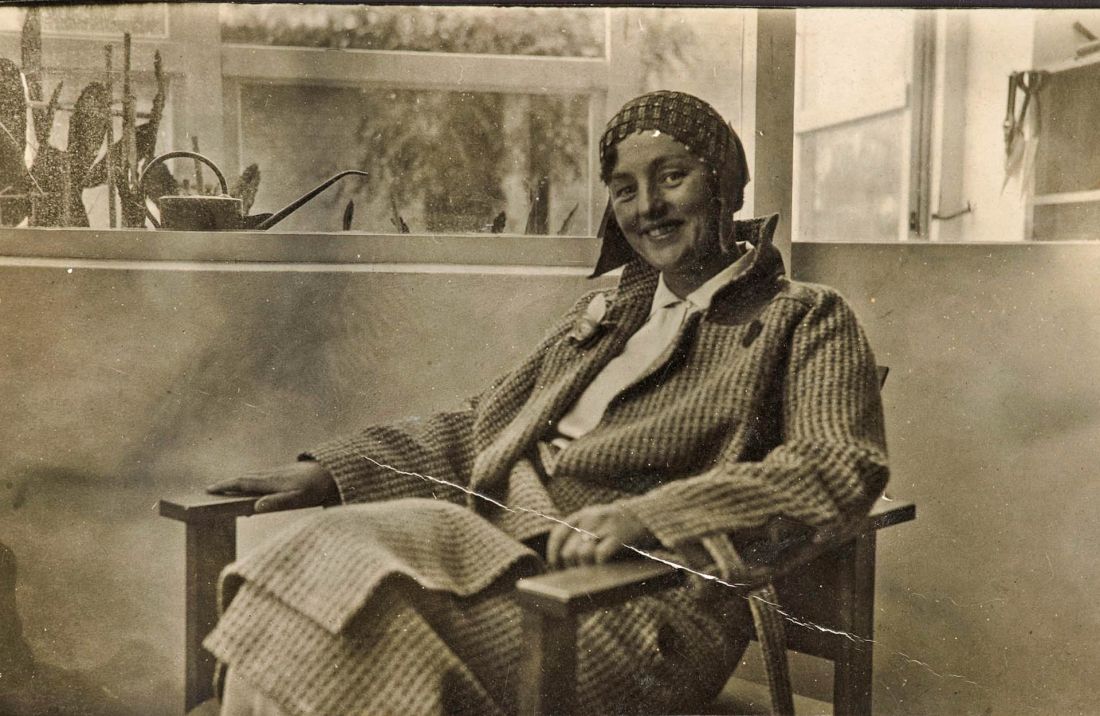
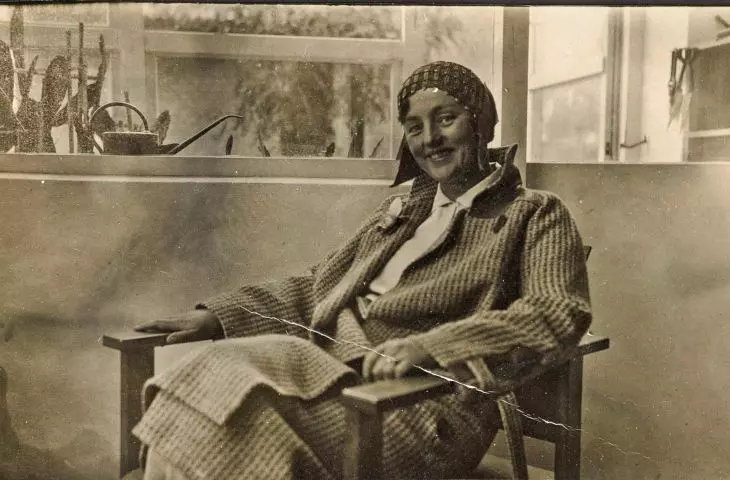
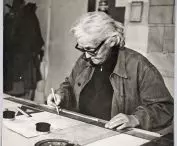
Barbara Brukalska in the foyer of her home at 8 Niegolewskiego Street in Warsaw, photo by an unknown photographer, 1930s
© Collection of the Museum of Architecture in Wrocław
Przemek Ciępka: What picture of Helena Syrkus and Barbara Brukalska—as well as the history of modern architecture—emerges from the perspective you”ve chosen for your exhibition?
Aleksandra Kędziorek: Comparing these two architects has allowed us to highlight areas of activity that, at first glance, might not seem related to architecture, but in reality contribute to this field. Although Barbara Brukalska and Helena Syrkus were active in similar circles— both were members of the Praesens group, participated in CIAM congresses, and taught at the Faculty of Architecture at the Warsaw University of Technology, they practiced architecture in slightly different ways.
From the very beginning of her career, Barbara Brukalska designed extensively: houses, housing developments, as well as furniture and interiors. Helena Syrkus came to architecture by a different path—she began her career as a translator and editor, and only took up design through her collaboration with her husband. Architecture as a creative discipline encompasses various fields that we fail to notice if we focus exclusively on the projects and the outstanding individuals who create them.
Małgorzata Jędrzejczyk: From this backdrop, several less obvious narratives also emerge—ones that are still not always captured by the radar of 20th-century architectural history. In the context of the International Congresses of Modern Architecture, this includes, for example, the organizational work carried out by the entire support staff of women associated with CIAM: stenographers, secretaries, and authors of reports and other types of documentation. Without their contribution, the International Congresses of Modern Architecture could not have functioned in the form we know them today, since from the very beginning the bulk of decisions and organizational matters were conducted through written correspondence.
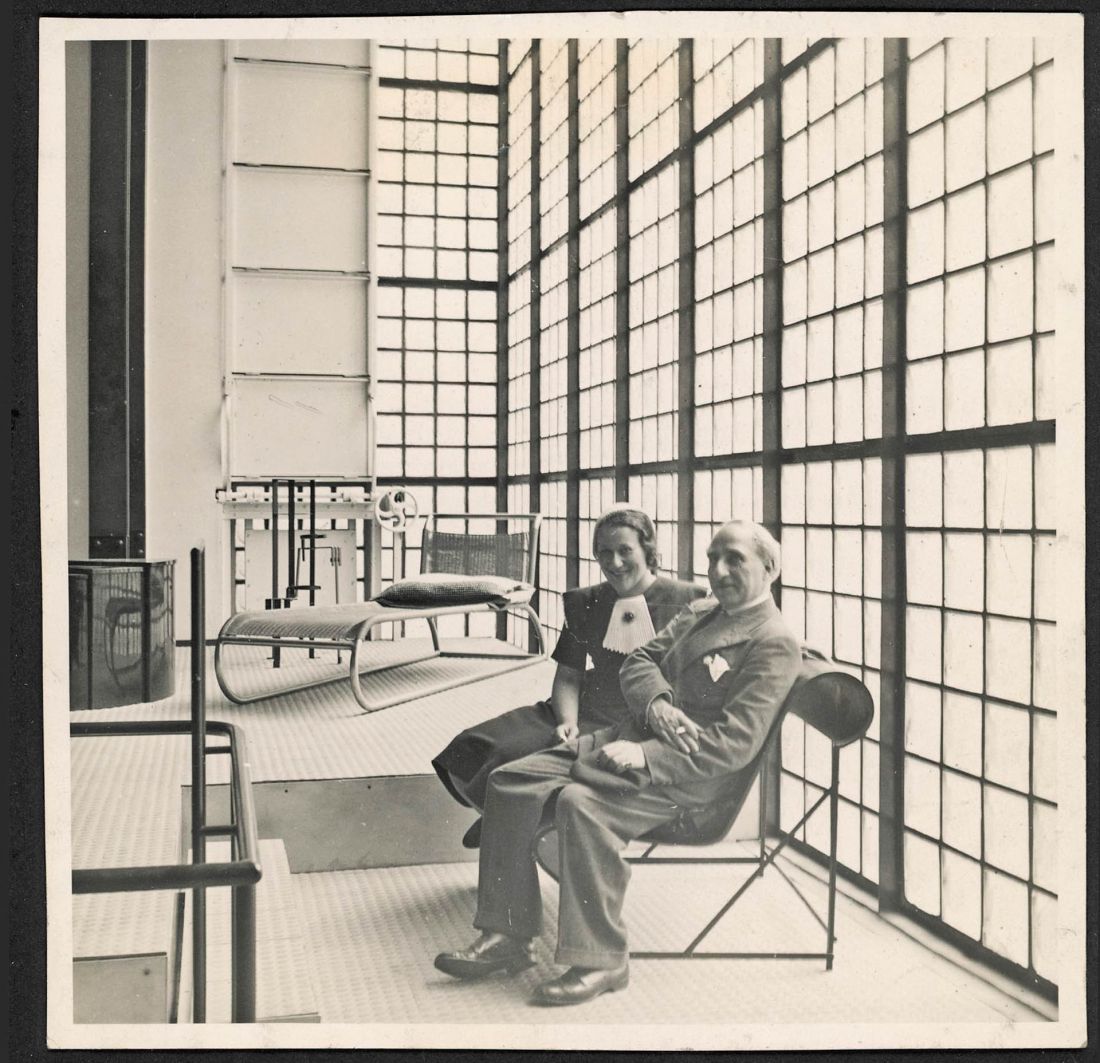
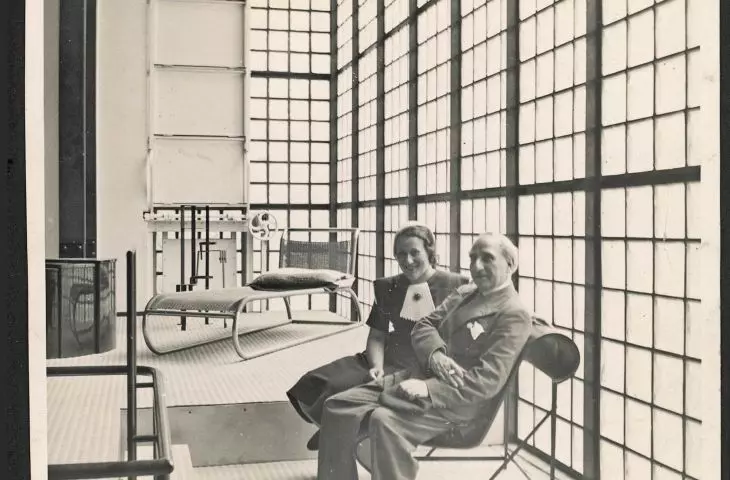
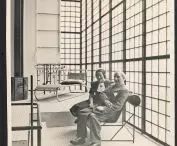
Helena Syrkus and Pierre Chareau at the Maison de Verre, 1930s, photograph
© collection of the Museum of Art in Łódź
Przemek Ciępka: The work of Barbara Brukalska and Helena Syrkus is often viewed through the lens of their collaboration with Stanisław Brukalski and Szymon Syrkus. How did you approach this issue? Did you try to distinguish the architects” work from that of their partners, or quite the opposite?
Aleksandra Kędziorek: We do not believe that separating their work is necessary or advisable, since they signed these projects jointly with their husbands. Such marital partnerships had been one of the ways women operated in the field of architecture since the interwar years. From today”s perspective, we are not in a position to determine which of them was responsible for specific elements of the designs.
The work of Helena Syrkus and Barbara Brukalska—both that created jointly with their husbands and that created independently—features prominently in our exhibition, but for us, they are first and foremost guides in the story of human relationships. We can tell their stories from their own perspective, and this does not contradict the fact that for a long time they created works together with their husbands.
Małgorzata Jędrzejczyk: For Helena Syrkus, her professional partnership with her husband was a natural part of the creative process and of how she thought about her work in the field of architecture. In a letter written toward the end of her life to Ise Gropius, she recalled the recently deceased Szymon Syrkus, noting that after many years spent together, she had to learn to think of herself as „I” rather than „we.” Nor do we have any evidence suggesting attempts to repress her professional partnership with Szymon Syrkus. In the case of Barbara Brukalska, however, the postwar period marked her professional emancipation, as she clearly and explicitly distanced herself from her joint work with Stanisław Brukalski. She then began to place greater emphasis on working independently, designing, for example, churches and housing estates for the Warsaw Housing Cooperative, while simultaneously emphasizing in her correspondence that she ran a separate design studio.
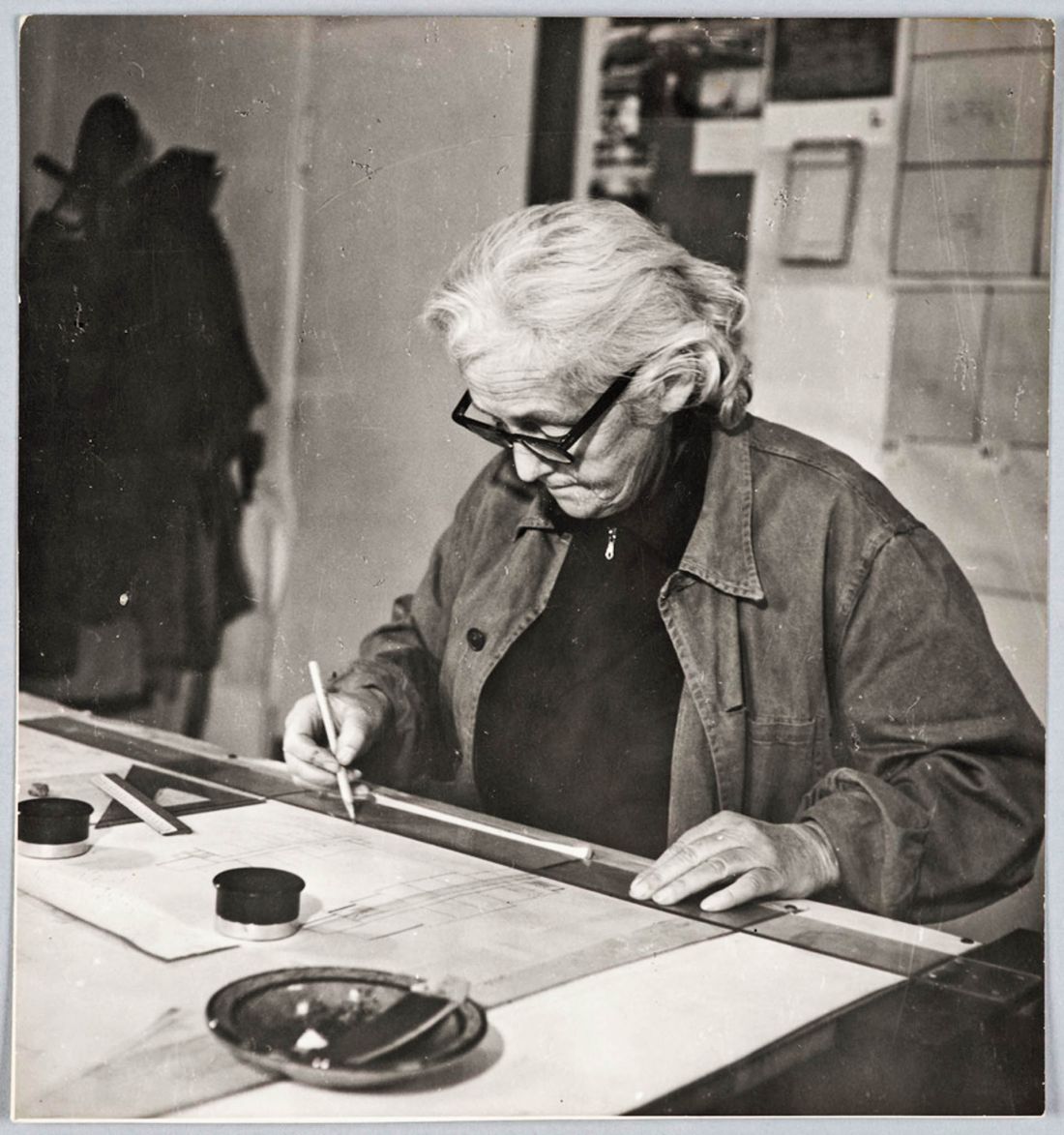
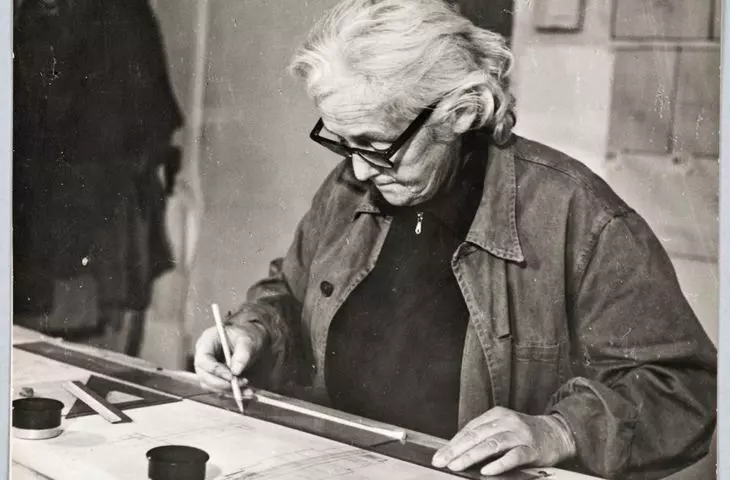
Barbara Brukalska at WSM Studio No. 3 while working on the Warsaw Housing Cooperative”s Okęcie-Pola (Jadwisin) Housing Estate in Warsaw; photo by an unknown photographer, circa 1962
© Collection of the Museum of Architecture in Wrocław
Przemek Ciępka: Was there any connection between Barbara Brukalska and Helena Syrkus?
Aleksandra Kędziorek: We know as much about this as can be gleaned from the available archival materials. The two architects were certainly in contact; the exhibition opens with a portrait of Helena Syrkus by Barbara Brukalska, which attests to their close, collegial relationship.
They were active in the same circles and supported one another professionally. During the fourth CIAM congress, Helena Syrkus—who was highly proficient in foreign languages—read a lecture by Barbara Brukalska; later, she wrote a recommendation for her when Brukalska applied for a professorship.
At the same time, their personal situations and political choices differed. These differences are evident from the very beginning of their life stories. Barbara Brukalska came from a landowning family; she initially studied horticulture and only later turned to architecture. Helena Syrkus, on the other hand, came from an assimilated Jewish family; her father was a doctor who worked with Janusz Korczak. She spent a very long time searching for her path, changing her field of study many times. Both architects work closely together, but their biographies are somewhat different.
Małgorzata Jędrzejczyk: The social circles in which they move are also different. Aside from points of overlap, such as Praesens or the CIAM community, Helena Syrkus is far more active in the field of international contacts; she maintains an intensive correspondence with people associated with the International Congresses of Modern Architecture, as well as with those outside that circle. She was also the „operational mastermind” behind many projects carried out within the Polish section of CIAM. Of course, Barbara Brukalska was also active in this circle; she participated in the fourth CIAM Congress and was in contact with Margarete Schütte-Lihotzky, with whom she corresponded regarding a kitchen design developed jointly with Stanisław Brukalski. At the same time, however, she built extremely interesting local platforms for collaboration with artisans and folk artists, as well as with other female architects—such as Nina Jankowska, with whom she co-founded a consulting service for interior design at the Warsaw Housing Cooperative.
Przemek Ciępka: Under what circumstances did female architects become part of the CIAM circle?
Małgorzata Jędrzejczyk: The International Congresses of Modern Architecture were established in 1928, following the announcement of the results of the competition for the design of the League of Nations Palace in Geneva. Le Corbusier felt he had been treated unfairly as a participant in the competition, so he gathered a group of architects around him who began discussing modern architecture. The architects associated with CIAM were simultaneously searching for other architects who shared their views, and while reviewing the results of the aforementioned competition, they came across a design by Szymon Syrkus, whom they considered a „kindred spirit.” He was invited to a CIRPAC committee meeting, to which he traveled with Helena Syrkus. Upon his return, he established the Polish section of CIAM, which was de facto composed of architects from the Praesens group, including Barbara Brukalska. As for Helena Syrkus, although she initially attended as a companion, her knowledge of foreign languages and shorthand quickly made her a valuable asset to the team of secretaries organized by Sigfried Giedion. Helena Syrkus then began drafting reports from subsequent congresses and facilitating correspondence among the participants. Ultimately, her charisma and assertiveness led to her becoming president of the International Congresses of Modern Architecture in 1947.
Przemek Ciępka: Did the relationships that both architects established through their work with CIAM extend beyond the congress itself?
Aleksandra Kędziorek: Professional contacts gave rise to social relationships, and sometimes friendships. These proved particularly important during World War II and in the immediate postwar period. As early as 1938, Helena Syrkus reported to her friends at CIAM on the difficult situation in Poland, including rising anti-Semitism, and during the war, her friends supported her in her efforts to free Szymon Syrkus from the Auschwitz concentration camp.
Przemek Ciępka: Did the geopolitical situation in postwar Europe affect these connections in any way?
Małgorzata Jędrzejczyk: Certainly. Helena Syrkus joined the Communist Party while the country was still under occupation. She knew Bolesław Bierut from her work at the Warsaw Housing Cooperative; she moved in those circles. Shortly after the war, Helena Syrkus was in charge of the Propaganda Department at the Warsaw Reconstruction Office—today we would likely call it the communications department. Thanks to the connections she had established earlier, she helped raise funds for the reconstruction of Warsaw and attracted the interest of foreign experts. During the Stalinist era, having such extensive international contacts posed a threat; at the National Architects” Conference in June 1949, the Syrkus family was forced to make a self-criticism. A month later, at the CIAM Congress, Helena Syrkus delivered a paper that was also, de facto, a self-criticism, while at the same time taking a stand in favor of communism; for example, she linked Le Corbusier”s work to imperialism. Congress participants were taken by surprise; they did not know how to respond to the new, propagandistic language used by Helena Syrkus.
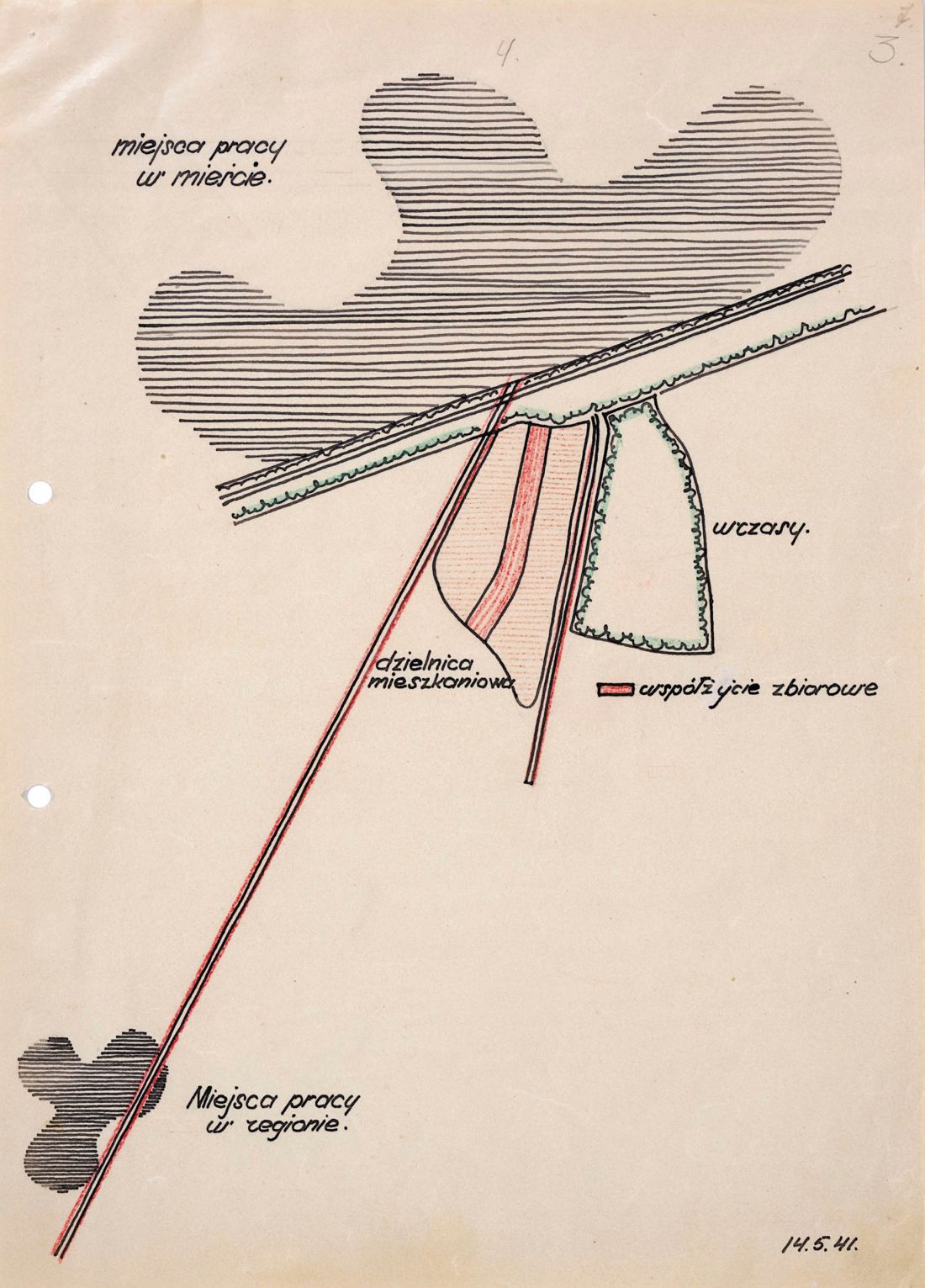
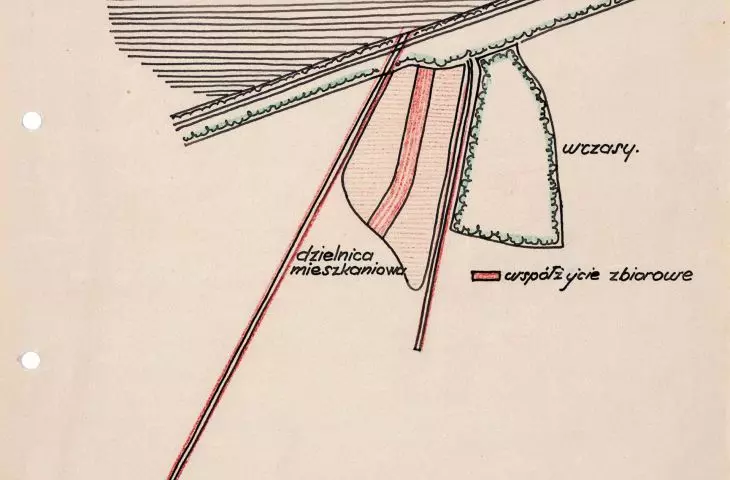
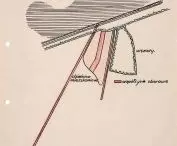
Design for the expansion of the Warsaw Housing Cooperative housing estate in Rakowiec, Warsaw—a schematic showing the location of workplaces, recreational areas, and residential areas within the city; designed by Helena Syrkus and Szymon Syrkus, May 14, 1941
© Collection of the Museum of Architecture in Wrocław
Aleksandra Kędziorek: The political declaration by Szymon and Helena Syrkus caused most people in the CIAM circle to turn their backs on them; correspondence with their former friends in that circle— such as Walter and Ise Gropius. Toward the end of her life, Helena Syrkus attempted to rebuild these relationships. In one of the films we are showing at the exhibition, she speaks of various figures from the CIAM circle with great admiration and affection.
Przemek Ciępka: Did all of Helena Syrkus”s international contacts suffer as much as her relationship with Ise Gropius?
Aleksandra Kędziorek: The durability of interpersonal relationships was based in part on shared experiences: war, migration, and everyday hardships. Members of the Bauhaus, which was dissolved in 1933, also experienced migration, economic problems, and the hardships of finding their footing in a new country, so the situation in Central Europe was understandable to them. Even later, when martial law was declared in Poland, Georg Muche sent Helena Syrkus coffee.
The catalyst that caused a rift in these relationships was individual choices related to the political situation, such as a change in the language they used to communicate. In one of her letters, Ise Gropius writes to Helena Syrkus that she suddenly began to sound like a „propaganda mouthpiece.” She is surprised by this change and spends a long time analyzing its causes—she asks Katherine Creighton, an American journalist who visited Poland in the 1950s and met with Syrkus, to assess, following that direct contact, whether the Polish architect truly believed what she was saying or whether she had adopted that stance out of necessity.
Małgorzata Jędrzejczyk: Much depends on exactly which contacts we”re referring to. For example—the relationship between Helena and Szymon Syrkus and Werner Hebebrand, a German architect and urban planner who, during the war, worked, among other things, in the Third Reich”s city reconstruction office established by Albert Speer, and who, after the war, was responsible for creating new urban plans for Hamburg—were not at all bad during the postwar period. Helena wrote to him, calling him „my faithful hussar,” while he tried to have the Graz University of Technology award Szymon Syrkus an honorary doctorate. Ultimately, this did not happen, but the correspondence that remains from these efforts proves that, despite the shifting situation on the international stage, certain contacts were still maintained.
Przemek Ciępka: How did Barbara Brukalska”s life unfold in this new political reality?
Małgorzata Jędrzejczyk: Barbara Brukalska did not make the same political about-face as Helena Syrkus. During the war, Stanisław Brukalski was sent to the Woldenberg camp, leaving her alone with three children. Although this was a very difficult time for her, she supported the activities of the Home Army.
In 1948, she published the book *Social Principles of Housing Estate Design*, which she had been working on during the war. In it, she advocated for „socialized individualism”—building spaces designed to foster local communities while leaving room for individual self-expression. In essence, it was a critique of totalitarianism. After a few months, the book was withdrawn from circulation, and most of the print run was destroyed. In the years that followed, Barbara Brukalska devoted herself to teaching architecture and design—she continued projects related to the reconstruction of Warsaw and designed approximately ten churches, including those in Izabelin, Truskaw, and Warsaw.
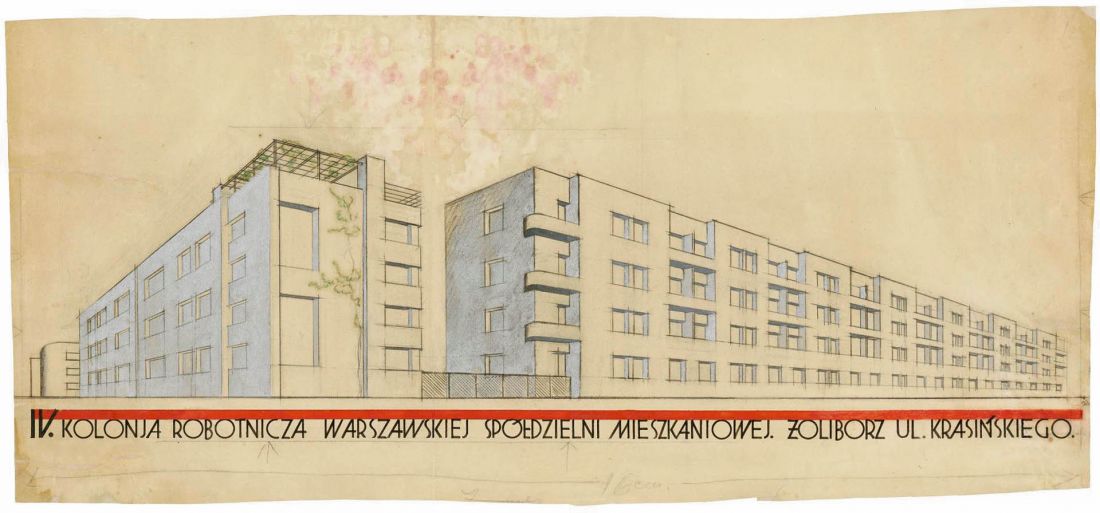
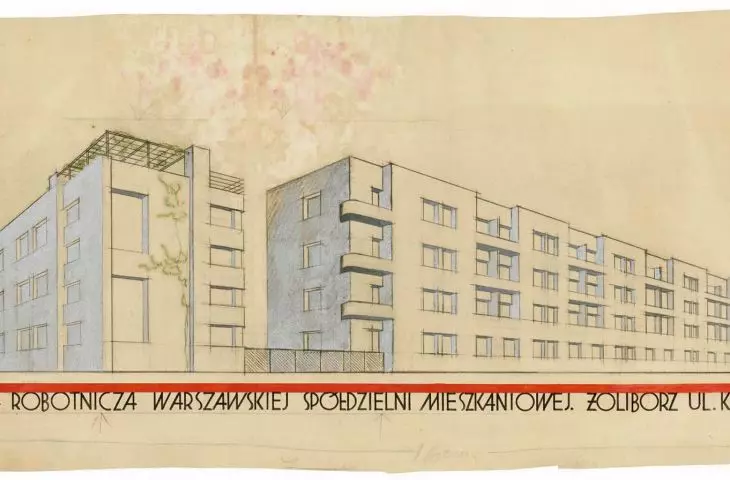
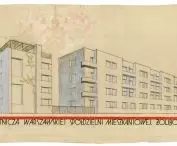
Design for the Warsaw Housing Cooperative housing estate in Żoliborz, Warsaw—Colony IV, Buildings B and C, unrealized version, designed by Barbara Brukalska and Stanisław Brukalski, 1927
© Collection of the Museum of Architecture in Wrocław
Przemek Ciępka: Did the censorship to which Barbara Brukalska”s publication was subjected have any impact on her career as an architect?
Małgorzata Jędrzejczyk: It is difficult to assess this precisely and unequivocally, because even after the book”s publication, Barbara Brukalska remained a professor at the Warsaw University of Technology, and from the late 1950s onward, she began receiving prestigious commissions again.
Aleksandra Kędziorek: From today”s perspective, we sometimes view the socialist era as a monolith, yet in reality, that system underwent significant changes over the decades. During the Stalinist era, such events might have been decisive, but then the Khrushchev thaw set in. Barbara Brukalska was deeply rooted in the community of the Faculty of Architecture at the Warsaw University of Technology, while also being known for her design work. I think that, in the long run, this did not affect her standing as an architect.
Przemek Ciępka: I get the impression that Helena Syrkus and Barbara Brukalska are usually discussed in the context of their interwar work. Does the exhibition also explore aspects of their postwar activities? What did those look like?
Aleksandra Kędziorek: Their postwar work was particularly important to us, both because it is less well-known and because the differences between them became most evident during this period. Both were active in teaching and supported their students through international networks they had built up over the years. Syrkus continued his research into prefabricated housing estates; after the war, he designed the(unbuilt) Tatary housing estate in Lublin. Barbara Brukalska continued to design a few projects with her husband, including the 13th WSM summer camp (the so-called „House for the Lonely”) and the Komedia Theater in Żoliborz, while becoming increasingly independent. She designed the Okęcie Housing Estate and the Matysiak Family Retirement Home, and she also participated in the reconstruction of Warsaw by designing the restoration and expansion of the House of the Eagles.
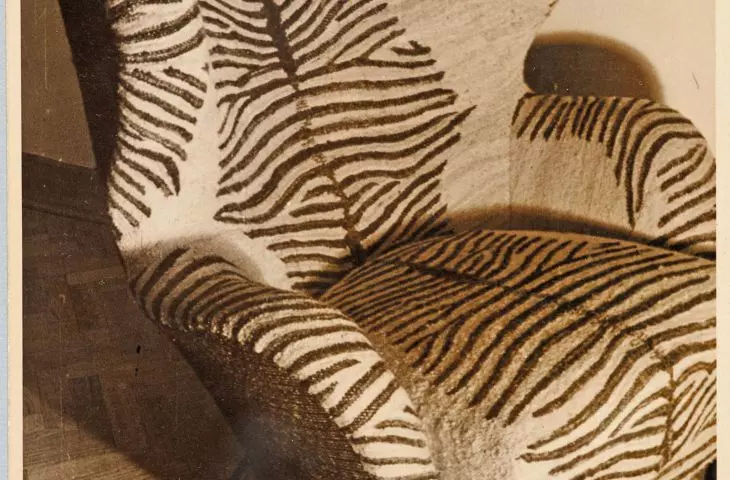
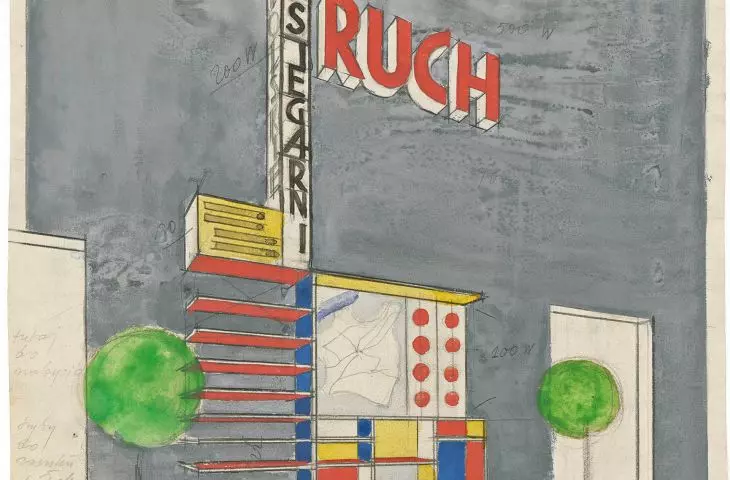
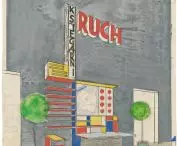
Małgorzata Jędrzejczyk: A less frequently discussed aspect of Barbara Brukalska”s work is her furniture design, which included pieces created, among other things, to furnish pavilions at world”s fairs—such as those in Paris and New York—as well as furnishings for apartments and stores. This area of her work spans both the interwar period and the decades following the end of World War II.
Przemek Ciępka: You mentioned that while working on the exhibition, you focused on relationships within the architectural community, and that „Interwoven” is not a monograph on the work of Barbara Brukalska and Helena Syrkus. What kinds of exhibits do you use to tell this story?
Małgorzata Jędrzejczyk: There aren”t many archival materials such as letters or documents in the exhibition, because they aren”t particularly suitable for display. However, „Interwoven” features a rather interesting constellation of objects, mainly designs and photographs. They come from Barbara Brukalska”s archive and collections related to Helena Syrkus, which are currently scattered between the Museum of Architecture in Wrocław and the Museum of Art in Łódź. One of these archives was „curated” and donated by Syrkus herself; the other consists of documents that ended up in Łódź after her death. While preparing the exhibition, we also collaborated with the Institute of History and Theory of Architecture at ETH Zurich, which houses the largest collection of materials related to CIAM”s activities, as well as the Bauhaus Archive, the Netherlands Institute for Art History, and the Department of Modern Art at the Museum of Art in Łódź.
The objects from these collections are presented within the context of the broad network of connections we are discussing—for example, two paintings, one by Fernand Léger and the other, depicting Helena Syrkus, by Le Corbusier. We are also showcasing two contemporary works created specifically for the exhibition in Wrocław. The first is a textile by Alicja Bielawska, and the second is a sound piece by Barbara Kinga Majewska.
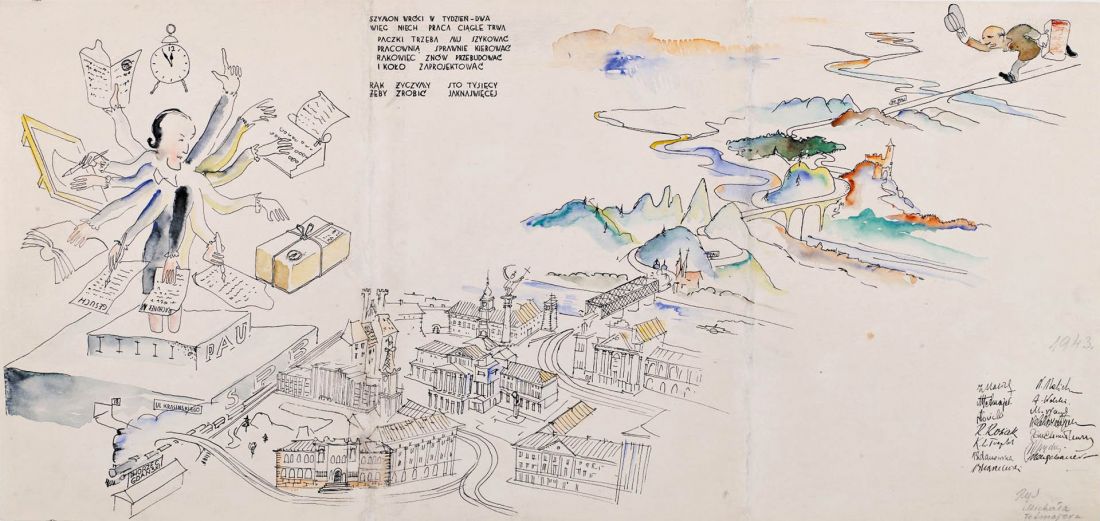
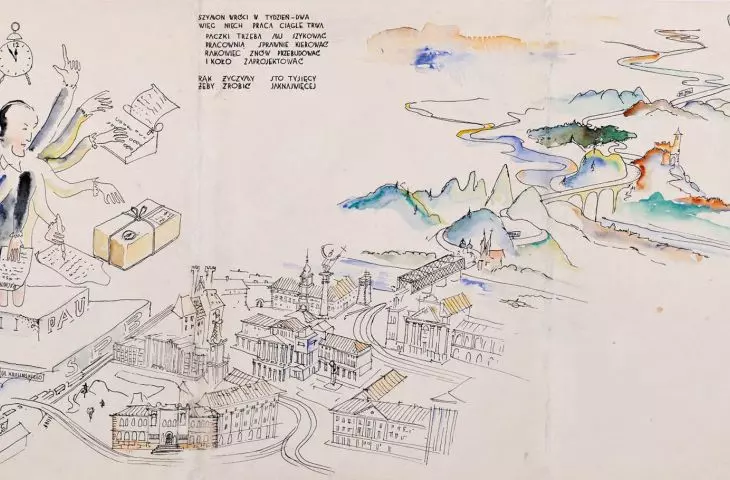
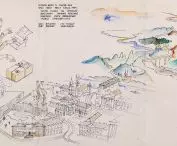
a greeting card for Helena Syrkus on her name day, by Michał Przerwa-Tetmajer, March 2, 1943—drawing with signatures of fourteen colleagues from the underground Architectural and Urban Planning Studio (PAU), cardboard, watercolor, pencil, ink
© Collection of the Museum of Architecture in Wrocław
Aleksandra Kędziorek: The main theme of our exhibition is interpersonal relationships, and that is precisely what we are emphasizing.
Of course, visitors who come to explore the work of both architects will not be disappointed, but our intention was not to create an exhibition that exhaustively covers this topic. In developing the concept, we wanted instead to provide some insight into their work, while also showcasing many projects that have not been exhibited before. We also hope that „Interwoven” will serve as a catalyst for even more in-depth research into the lives and work of Helena Syrkus and Barbara Brukalska—and perhaps even lead to a comprehensive publication dedicated to them.
Przemek Ciępka: While working on the exhibition, did you encounter any problems finding sources or significant gaps in the archival materials?
Małgorzata Jędrzejczyk: Yes, and that”s the nature of archives—you have to piece together fragments of correspondence scattered across different archives and, only then, try to tell a coherent story based on them, though this isn”t always possible. One example is the correspondence between Helena Syrkus and Werner Hebebrand, which is incomplete. The same is true of the messages that Barbara Brukalska and Margarete Schütte-Lihotzky may have exchanged. Only Helena Syrkus”s archive at the Museum of Architecture is somewhat organized, but even it contains many gaps. This was partly due to World War II, when many important archival materials were destroyed, leaving us today with an incomplete picture of the interwar activities of these two architects and the circles in which they operated.
Przemek Ciępka: What role do contemporary works play in your exhibition?
Małgorzata Jędrzejczyk: These two works are an attempt to comment on the work of Helena Syrkus and Barbara Brukalska from today”s perspective, while simultaneously moving away from the traditional language of architecture exhibitions and opening it up to dialogue with other disciplines. Barbara Kinga Majewska created a sound collage consisting of text fragments, phonemes, and the ways in which the exhibition”s protagonists expressed themselves. This fragmentary nature is, in a way, a reflection of the process of creating exhibitions on the history of architecture, where the narrative is based on archival collections that, by their very nature, are neither complete nor sufficiently contextualized.
Alicja Bielawska, meanwhile, created a work using the jacquard technique, which produces a double-sided fabric. As we developed the curatorial concept, we were guided by the conviction that we were creating an exhibition whose main protagonists are Helena Syrkus and Barbara Brukalska, but at the same time, we are telling the story of modern architecture from a different perspective than the one presented in textbooks and classic studies on modernism. Jacquard, therefore, is, in my view, a metaphorical representation of a situation in which certain threads are visible on the surface, while others remain hidden. Depending on which side of the jacquard fabric we look at, it will tell us a slightly different story—one inextricably intertwined with what lies on the reverse side, yet opening up a different perspective.
Przemek Ciępka: Thank you for the interview!
Interviewed by: Ola Kloc
Illustrations courtesy of the Museum of Architecture in Wrocław and the Museum of Art in Łódź.
more: A&B 7-8/2026 – Single-Family Homes,
download free e-issues of A&B