





How can we create tree-friendly surfaces in the city? Marzena Suchocka, a professor at the Warsaw University of Life Sciences, has patented a stone-soil mixture that resolves the conflict between trees and infrastructure, proving that it is possible to reconcile care for nature with urban development. Marzena Suchocka will be one of the speakers at the “Strongly Green City” Conference, an event that is part of the “Greenery Is Life” fair —this year’s theme is “The Heart of Green Business.”
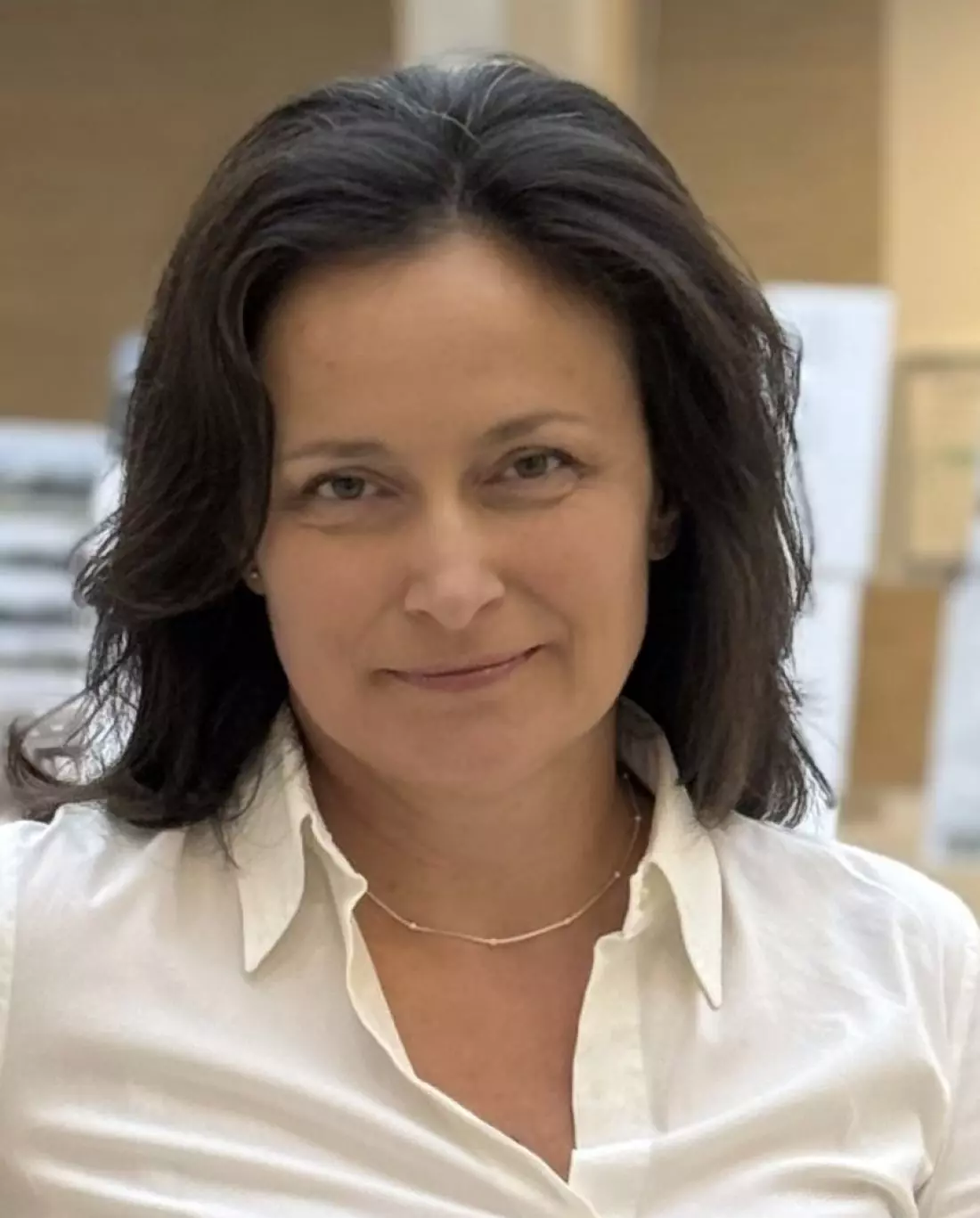
Marzena SUCHOCKA — professor at the Warsaw University of Life Sciences (SGGW) in the Department of Landscape Architecture, Institute of Environmental Engineering. Member of the Task Force for the Protection of Trees and Shrubs appointed by the Minister of Climate and Environment, the National Commission for Environmental Impact Assessments under the General Director for Environmental Protection, and the Expert Commission on Climate and Space established by the Ombudsman. Expert in the field of tree protection, including during the Supreme Audit Office (NIK) audit titled “Tree Protection in Urban Development Projects.” Her research interests include urban tree management, tree protection in development projects, resolving conflicts between trees and infrastructure, tree condition assessment, risk assessment methods, replacement value estimation, assessment and valuation of ecosystem services provided by trees, and nature-based solutions (NBS). She is the author of patents, including the SGGW Anti-Compression Stone-Soil Mixture — a subbase for pavement that improves habitat conditions for tree growth and enables low water retention within the pavement, supporting the adaptation of modern cities to climate change.

The “Greenery Is Life” Fair will be held under the theme “The Heart of Green Business”
© organizers’ archive
Ola Kloc: You’re an expert on tree protection during urban development projects—is there a formula that can help avoid tree removal in new projects?
Marzena Suchocka: Essentially, we need to be aware of just how much we need trees in the era of climate change. This awareness will lead to the protection of existing trees. Conducting an assessment, on the other hand, will help identify trees worth preserving.
Ola Kloc: Why do we get rid of trees in urban spaces so easily?
Marzena Suchocka: We’re often driven by misguided motivations and fears; for example, trees with hollows are considered “diseased,” when in fact they’re usually old-growth trees for which the presence of hollows is a natural characteristic. I think we need to trust trees more and let them grow the way nature intended. In return, they provide benefits to city residents, such as cooling, improved water retention, and many other benefits known as ecosystem services. The rule is that the larger the tree, the greater the level of ecosystem services it provides.
Ola Kloc: A hot topic recently was the planned mass tree cutting in Warmia, allegedly due to concerns about driver safety. How can we protect old-growth trees while also ensuring the safety of road users?
Marzena Suchocka: Cutting down roadside trees is not a sensible move. Trees planted along roads actually increase safety; drivers tend to drive more slowly and safely. Cutting down trees does not improve safety — the increase in speed that results from the felling leads to more accidents.
Ola Kloc: The compensation measures are sometimes disproportionate to the losses—we see stunted trees in newly developed neighborhoods. Is their condition just a matter of time, or does the problem lie elsewhere?
Marzena Suchocka: Yes, by removing a mature tree, we lose the ecosystem services it provides. Every new tree planted must acclimate, which is very difficult in urban areas affected by the urban heat island effect. And it must live as many years as the removed tree did in order to replace it. So, when we lose a 50-year-old tree, we have to wait 50 years for a tree to replace it. However, new plantings have a very hard time taking root due to urban climate extremes. Heat waves and urban droughts do not help in maintaining newly planted urban trees.
Ola Kloc: During the “Strongly Green City” Conference (September 4, during the “Greenery Is Life” fair), you’ll be talking about how to design tree-friendly surfaces. Why is the surface so important? What should we pay attention to?
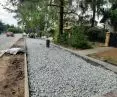
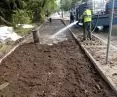
Marzena Suchocka: Conflicts between trees and road infrastructure and transportation systems are a common reason for tree removal. I developed the BlueGreenWay anti-compression stone-soil mixture, which, when laid in the pavement subbase, provides a living environment for roots and thus resolves conflicts between trees and infrastructure. Using this solution resolves the conflict — trees can grow, and we have the road surfaces we need. In this case, the only conflict is with the tree trunk; the roots develop within the subbase beneath the pavement.
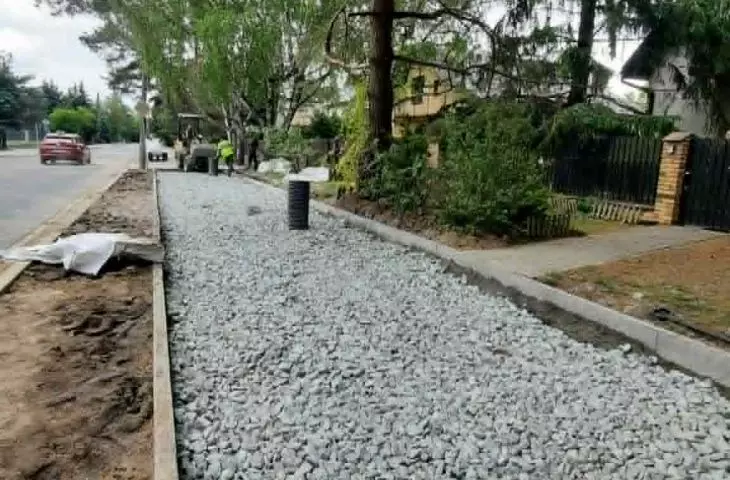
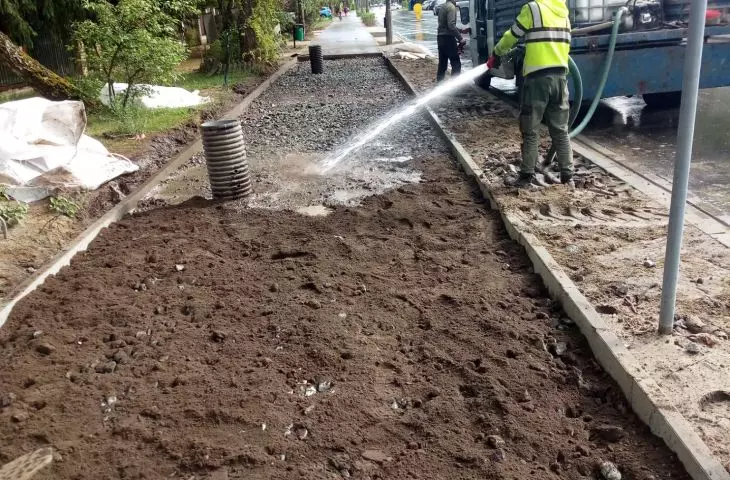
The design principle for this type of solution is simple: a 30-centimeter layer of coarse crushed aggregate is compacted using standard road construction equipment, then covered with a special substrate. A 20-cm layer of finer aggregate is laid on top of this layer and, after compaction, covered with the substrate; on top of these two layers, the structural layer is placed—either a 10-centimeter layer of fine aggregate if load-bearing capacity for heavy traffic is required, or without this layer for light traffic. Finally, the pavement is laid, and this can be any type of pavement — permeable or impermeable. It is important that the layers of the anti-compression subbase are laid over existing roots when constructing pavements in close proximity to trees. The anti-compression subbase serves to enlarge the tree’s root zone beneath the pavement.
The base layer serves three functions: it provides load-bearing capacity for light or heavy traffic, provides space for the development of tree root systems, and provides a water retention capacity of up to 0.3 m³/m² of base layer. These three functions make it a valuable system that supports tree growth and benefits modern cities.
The Warsaw University of Life Sciences (SGGW) provides information and supports designers and contractors; it also grants licenses for this solution. For inquiries regarding the anti-compression subbase, I recommend contacting technology broker Renata Szabelak.
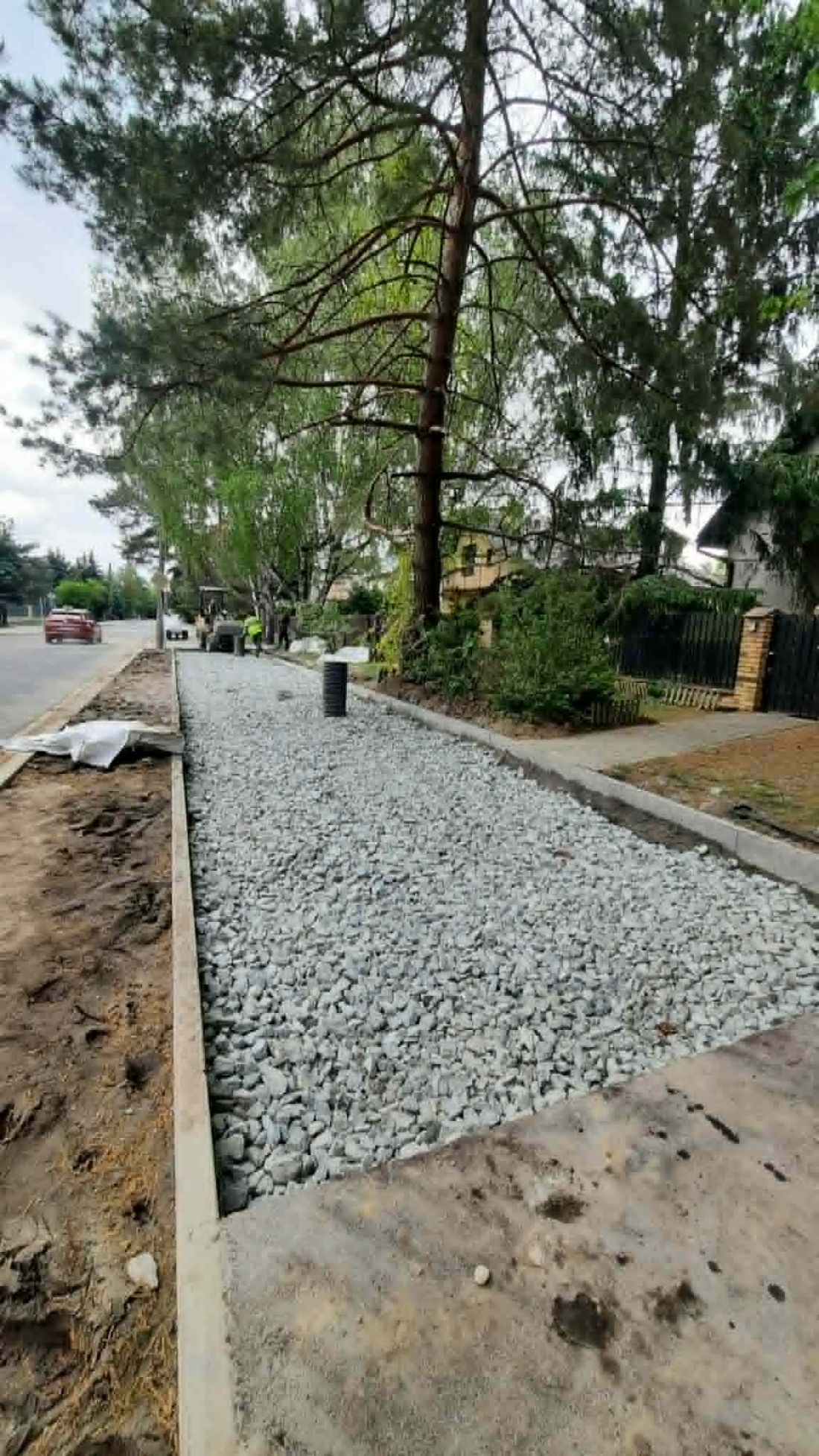
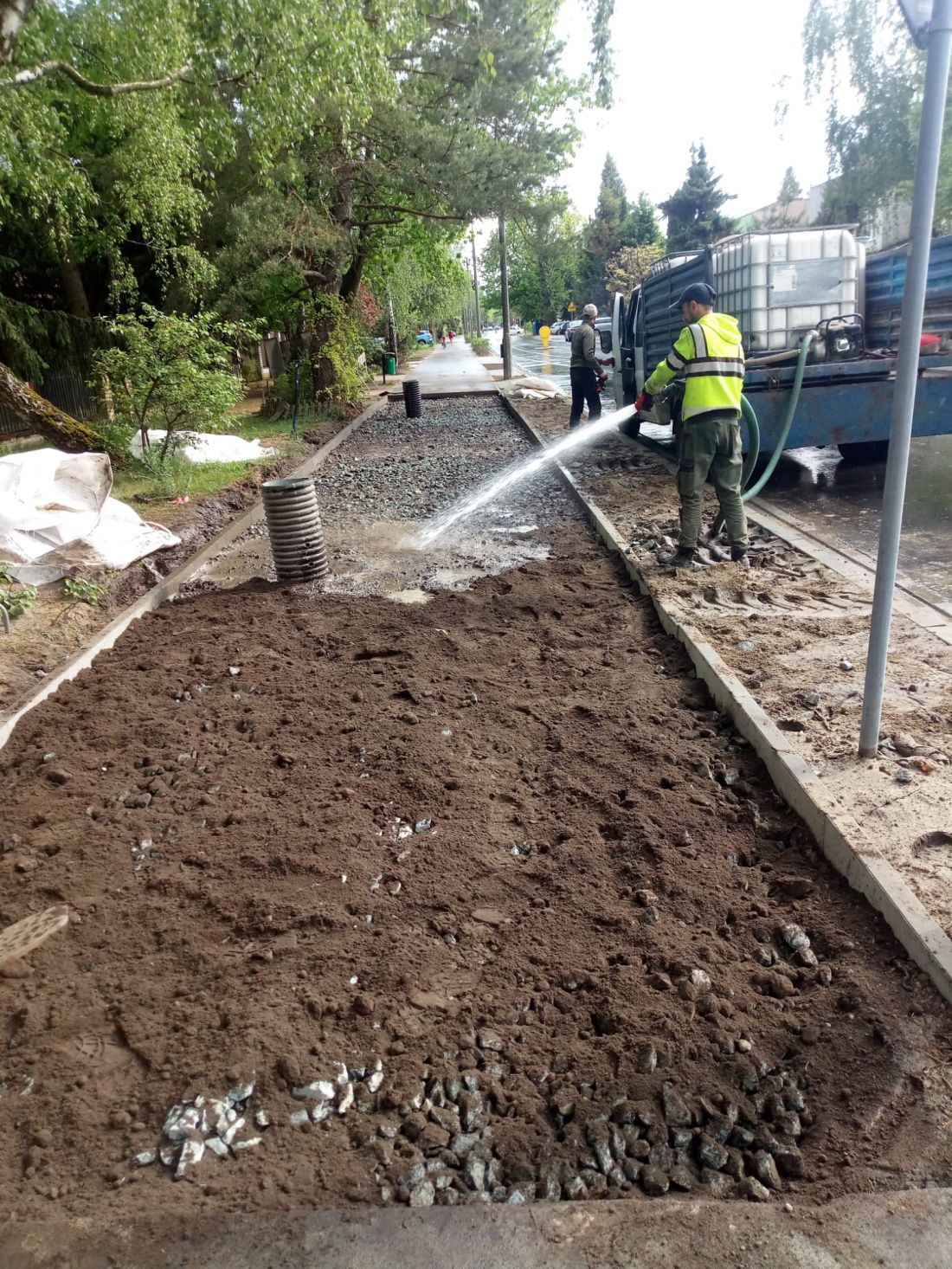
compacted top layer of AMKG aggregate; silting of the top layer of AMKG
© Marzena Suchocka
Ola Kloc: How are trees in the city coping with the effects of climate change—can we help them adapt in any way?
Marzena Suchocka: We can help trees by providing them with good habitat conditions—that is, sufficient soil volume for root system development. This can be done in various ways — by ensuring adequate space in design projects, removing concrete from previously paved areas, or using anti-compaction subbases, such as BleuGreenWay.
Ola Kloc: How can we reconcile expectations regarding durable pavements with the needs of tree root systems? Do today’s technologies already offer such possibilities?
Marzena Suchocka: Yes, we have methods that can help in this process. For example, a stone-soil mixture is a solution that allows us to reconcile the need for different types of surfaces (pedestrian, vehicular, light traffic, heavy traffic) with the needs of tree root systems. We live in cities that must use both standard planting methods and innovative technologies.
Ola Kloc: How should design standards for streets, squares, and parking lots change in the face of increasingly frequent heat waves and periods of drought?
Marzena Suchocka: First and foremost, they should prioritize the protection of existing greenery—especially trees—as well as the removal of concrete from urban spaces and the introduction of vegetation wherever possible. However, I am convinced that we cannot afford to lose a single tree, and the future of cities depends to a large extent on how green they are.
Ola Kloc: Thank you for the interview.

The “Greenery Is Life” Fair will take place September 3–5, 2026, at EXPO XXI in Warsaw
© Organizers’ archives
Program for the “Strongly Green City 2026” Conference