





"Don't throw it away, it's still useful!". Karol Lacki, founder of Use.to, a platform where you can find second-hand building materials, and a studio that tries to arrange the construction process from scratch - circularly and responsibly - talks about recycled interiors, design-build logistics and bringing debris to the construction site.

Karol ŁĄCKI - originator and co-founder of Use.to. Graduate of the Faculty of Architecture in Wroclaw. Awarded in many student competitions, in which he addressed, among other issues, the problem of ocean litter. In 2017, he started working at the LK-Architekci studio in Zielona Gora, from which he moved to Switzerland, where he worked in Basel at Piotr Brzoza's design office, XM Architekten, with whom he later carried out projects in Poland. From 2021 to 2023, he worked at Warsaw-based BBGK Architects. Since 2023 he has managed Use.to.
Dominika Drozdowska: What was the beginning of Use.to: an idea or a need?
Karol Lacki: It was happening in parallel. While I was still a student, I got a call from a friend who wanted to do a general renovation of an apartment in Zielona Gora. And he intended to do it himself. The budget was critically low, but that didn't deter us. At another friend's house there was also a renovation going on and there was a kitchen built-in to take... And that was the fuse that started the thought process. We followed suit, snooping around on Facebook groups, forums and portals, looking for other furnishings. Our first project showed that in such ventures, design is not the most important thing. Instead, a big role is played by logistics, which we have to invent again and again. Each piece has to be searched for, find someone to dismantle it, transport it and sometimes store it, which is often a challenge. That's when I thought the whole process needed to be arranged in a different way.
Dominika Drozdowska: Going with the flow - you founded Use.to?
Karol Lacki: No, life went on. I went to Switzerland and worked at the XM Architekten studio. At that time we talked a lot with the founder of the studio, Piotr Brzoza. Also about how to think about architecture. That's when I learned about the Swiss design studio In Situ, which , having access to information from a general contractor about demolition materials, for example, is able to build them into its design. This fascinated me - the number of variables, their dynamics and reactivity. The fact that an element of sourced materials can still be added to the context of construction or renovation. So the result is uncertain, but also amazing. After returning to Poland, I decided it was time to roll up my sleeves and get started. I looked at solutions that are hugely successful - online second-homes such as Vinted and OLX. What was missing was a similar market response for recycled building materials.
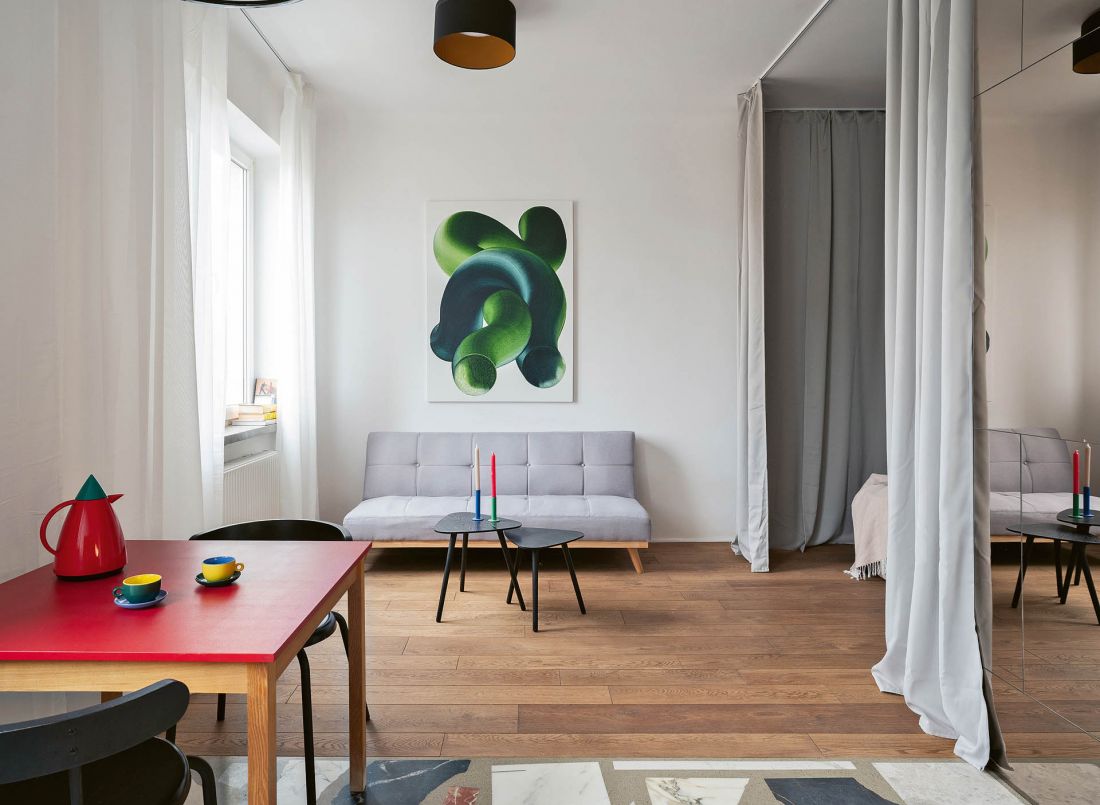
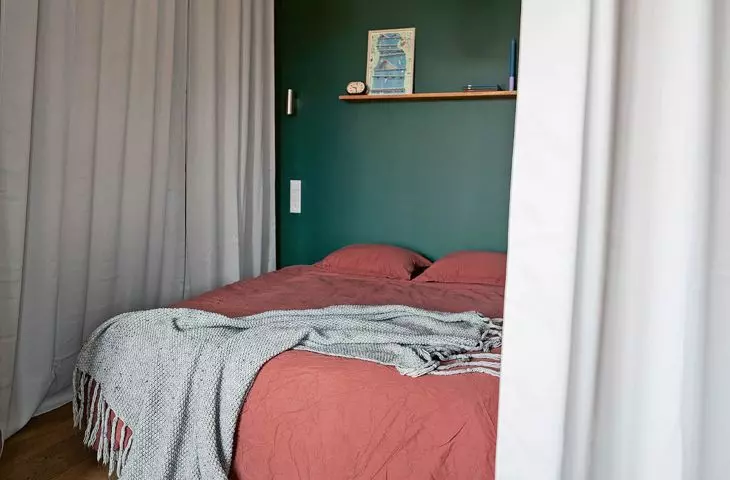
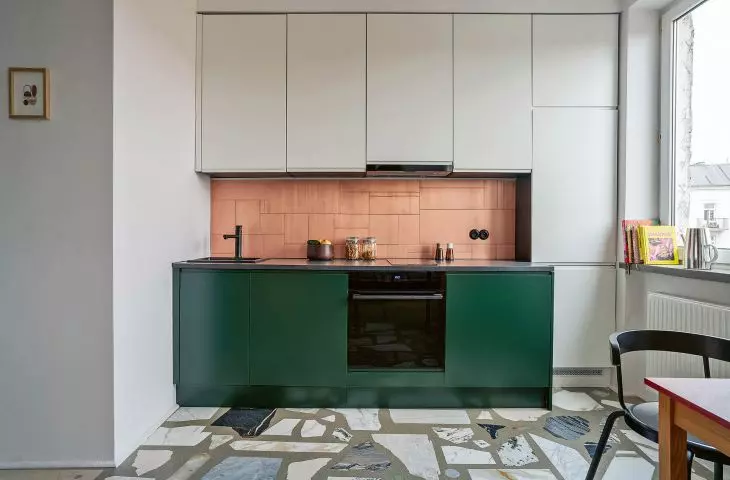
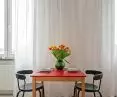
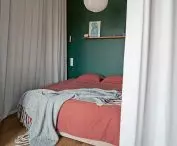
Model Apartment in Warsaw's Praga district - proj.: Aleksandra Milanowska, Karol Łącki, Tomasz Ploch
Photo: Zuza Pomaska-Oszczyk
Dominika Drozdowska: Your proposal to fill this gap is the Use.to platform.
Karol Lacki: Yes. However, it is worth noting that building materials have many more nuances than clothing. So we tried to create a portal that would be easy for both those listing goods and those looking for them. While it may seem trivial, the search paths for ceramic tiles, sinks or windows are completely different. That's why we continue to refine our portal.
Dominika Drozdowska: Are architects using it?
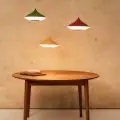
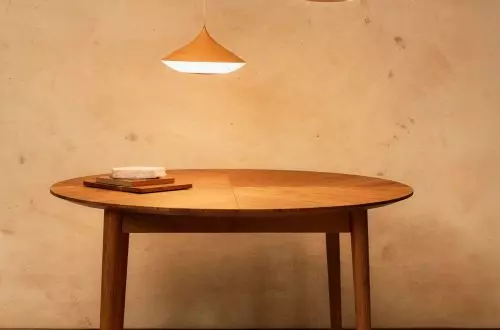
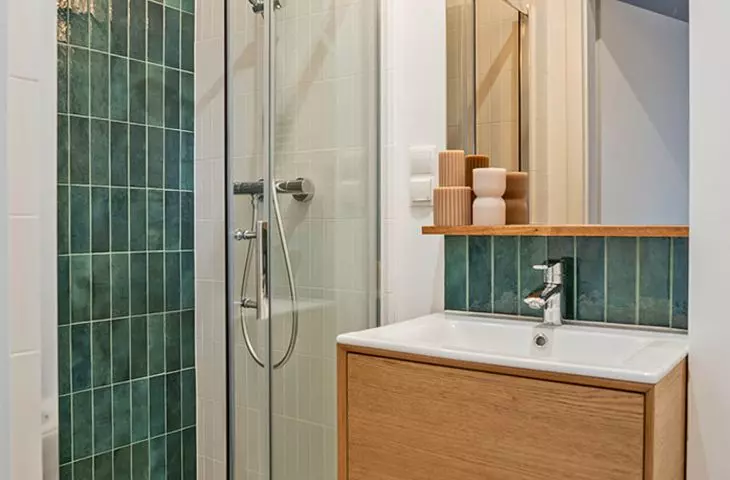
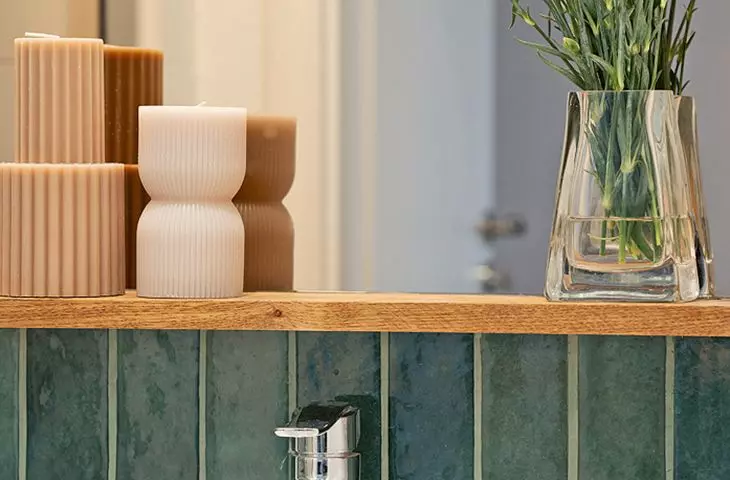
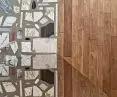
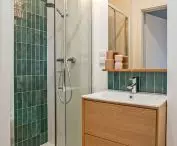
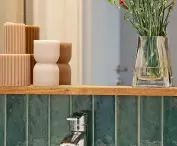
Karol Lacki: Not yet, or at least not on the scale I dream of. We started three years ago, and for a year and a half the platform has been fully functional. Let me check [Karol turns on the Use.to website]. Today four new ads were added, including a beautiful steel lamp, a sliding door with frosted glass and a new interior door from a well-known brand. This is a fairly common case - someone bought and unpacked the doors, but found that they don't fit. Or he tried to install them, so they have some minor signs of use. The door is not suitable for return, even though it is almost new. So the price is automatically 30 percent lower. The portal also includes post-renovation materials, which are usually unused surplus items that remain after any renovation. In our Model Apartment in Warsaw's Praga district, we laid just such post-renovation tiles in the shower enclosure. The beautiful green ones - of the Spanish brand Equipe - came to us in batches and we picked them up in... a parcel machine.
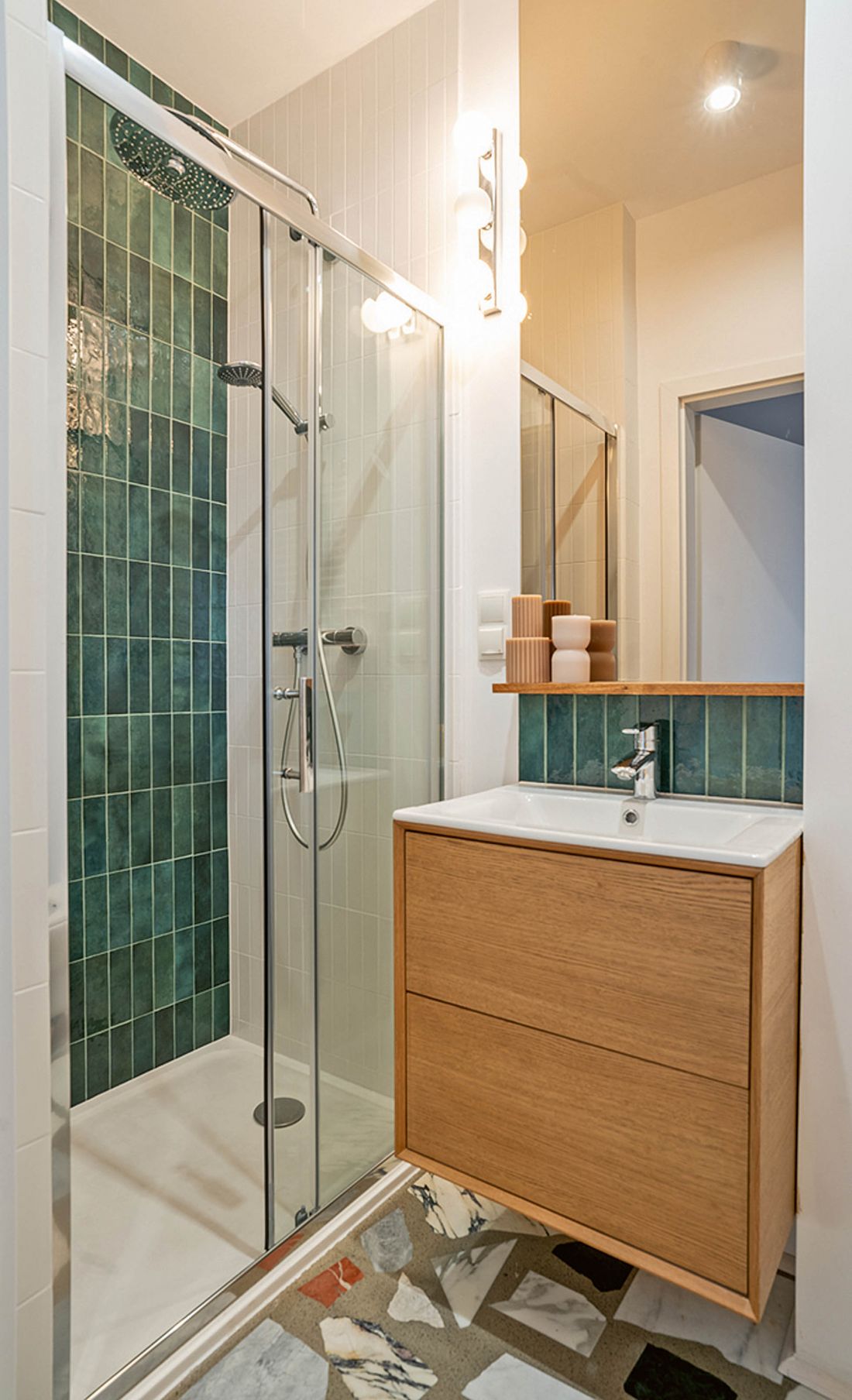
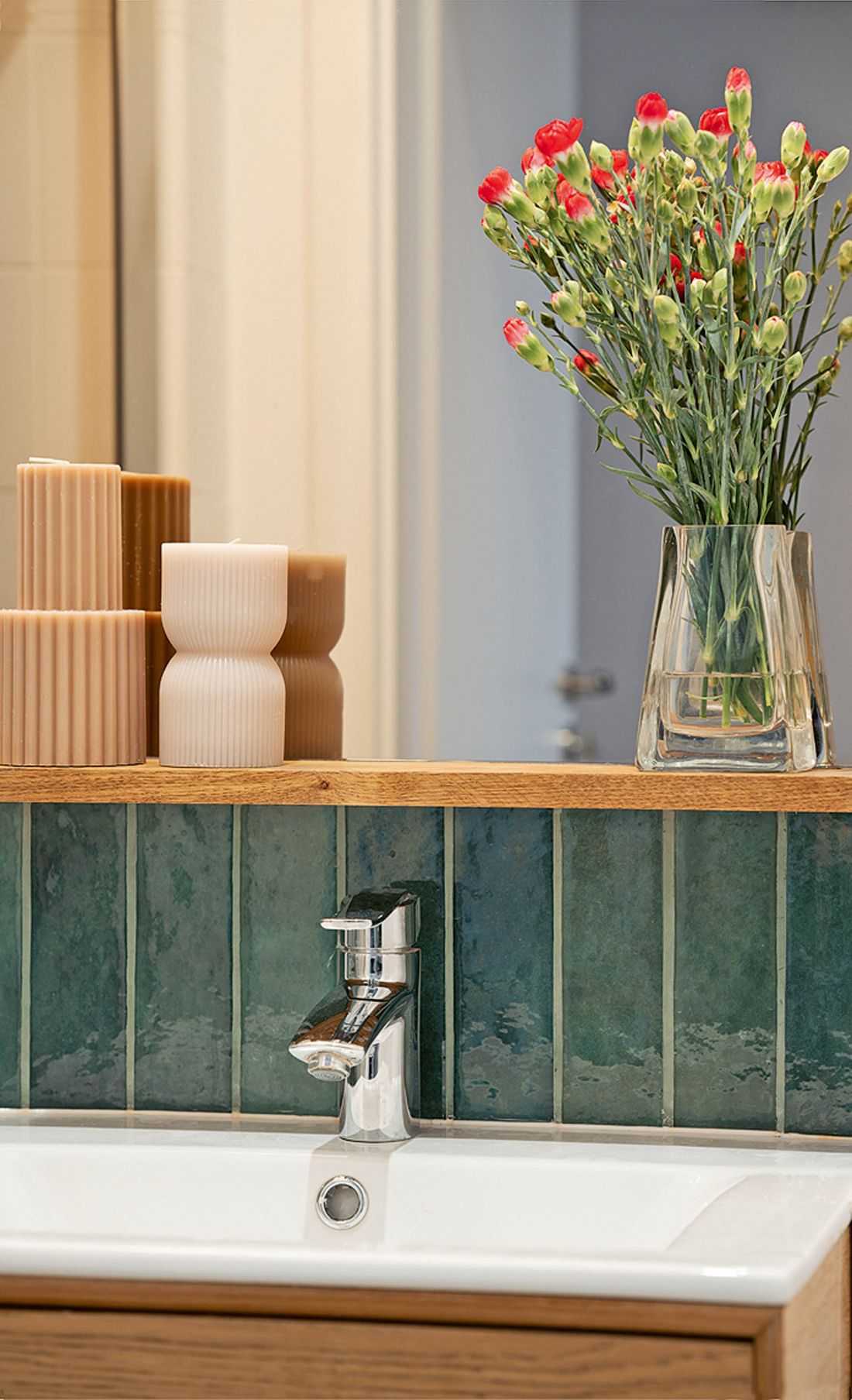
Model Apartment in Warsaw's Praga district - design: Aleksandra Milanowska, Karol Łącki, Tomasz Ploch
Photo: Zuza Pomaska-Oszczyk
Dominika Drozdowska: It sounds like not an easy design process.
Karol Lacki: It's a very complicated and not yet fully structured process, it's still a struggle and building mechanisms on the fly. During our circular design process, we start with a certain thesis, more spatial than aesthetic and color. We are committed to providing direction, but we know that the process is dynamic and the result can be unexpected. The key is to combine design with timing and availability of facilities. If a client approaches us with plans to do a renovation six months from now, for example, and we start designing now, it means that the investor has to purchase the elements we want to use now. Because announcements have this way of appearing and disappearing. As Use.to, we have also started to invest in storage, so that we have a space where the items we have accumulated can wait for the moment of reuse.
Dominika Drozdowska: You are planning on a grand scale.
Karol Lacki: "Operation" Use.to is multidisciplinary and requires combining different threads. If we want to be competitive for an investor who lives in a newly purchased apartment, there is no space both physically and mentally to deal with it. With classic design, we send out a shopping list and the stores are responsible for maintaining inventory.
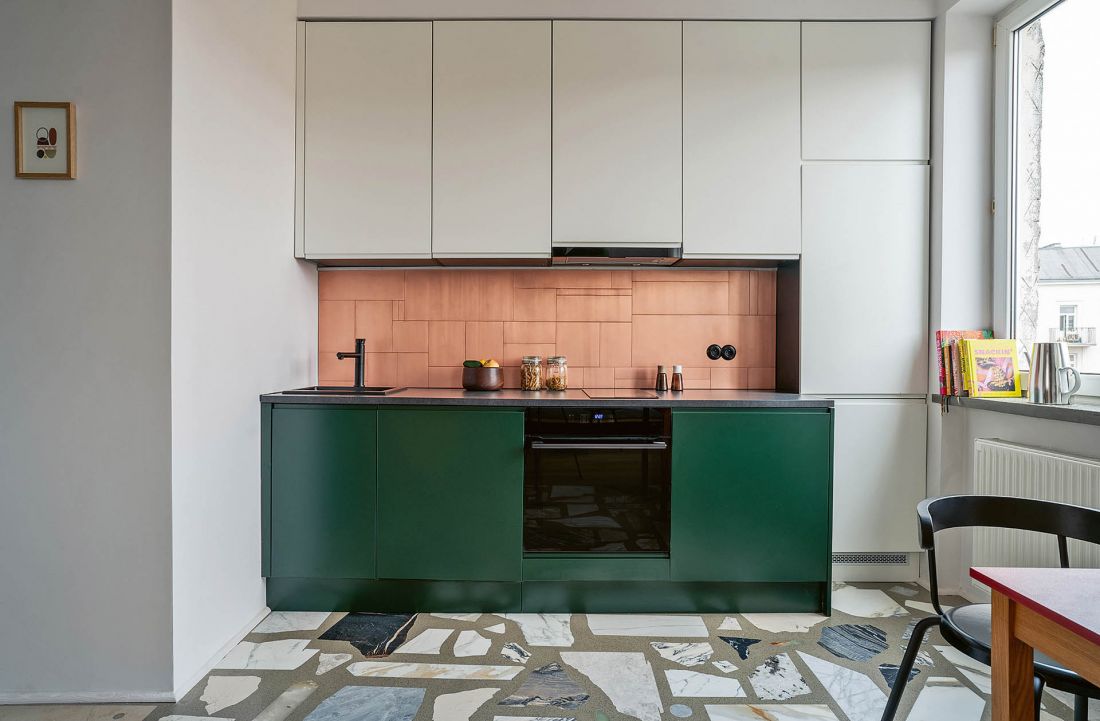
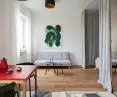
Model Apartment in Warsaw's Praga district - proj.: Aleksandra Milanowska, Karol Łącki, Tomasz Ploch
photo: Zuza Pomaska-Oszczyk
Dominika Drozdowska: So you are not only designers, but also searchers. You are in charge of logistics, warehousing and managing this whole new process.
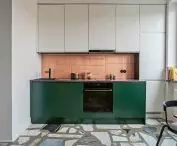
Karol Lacki: Yes, it is quite complicated, but at the same time simple. Let's take the kitchen development. We managed to get it in good condition, disassembled it, and now all its elements are in our warehouse. All that remains is "only" to find a specialist who will treat this furniture with sensitivity - transport it, assemble it, make the necessary modifications on site. Our experience shows that this is not complicated. What is difficult is finding carpenters and assemblers. It seems simpler and cheaper to do something from scratch. So we are building teams of collaborators who understand our idea and want to work with us. But this applies to Warsaw and the surrounding area for now, and is an arduous and lengthy process.
Dominika Drozdowska: Who else do you cooperate with within Use.to?
Karol Lacki: Use.to has several verticals. It's a technology company with programmers who take care of our portal. There is also the design division Use.to Studio - a collective of architects working with great passion and dedication, for which I am extremely grateful. This includes Tom and Ola, who is second to none in scouring online platforms for used items that might be of interest to us and our investors. Because finding items of value whose potential can still be exploited is no easy task. Shaping the process is sometimes breakneck and exhausting, but fascinating at the same time. We don't give up and keep fighting. We are driven by the people we meet along the way.
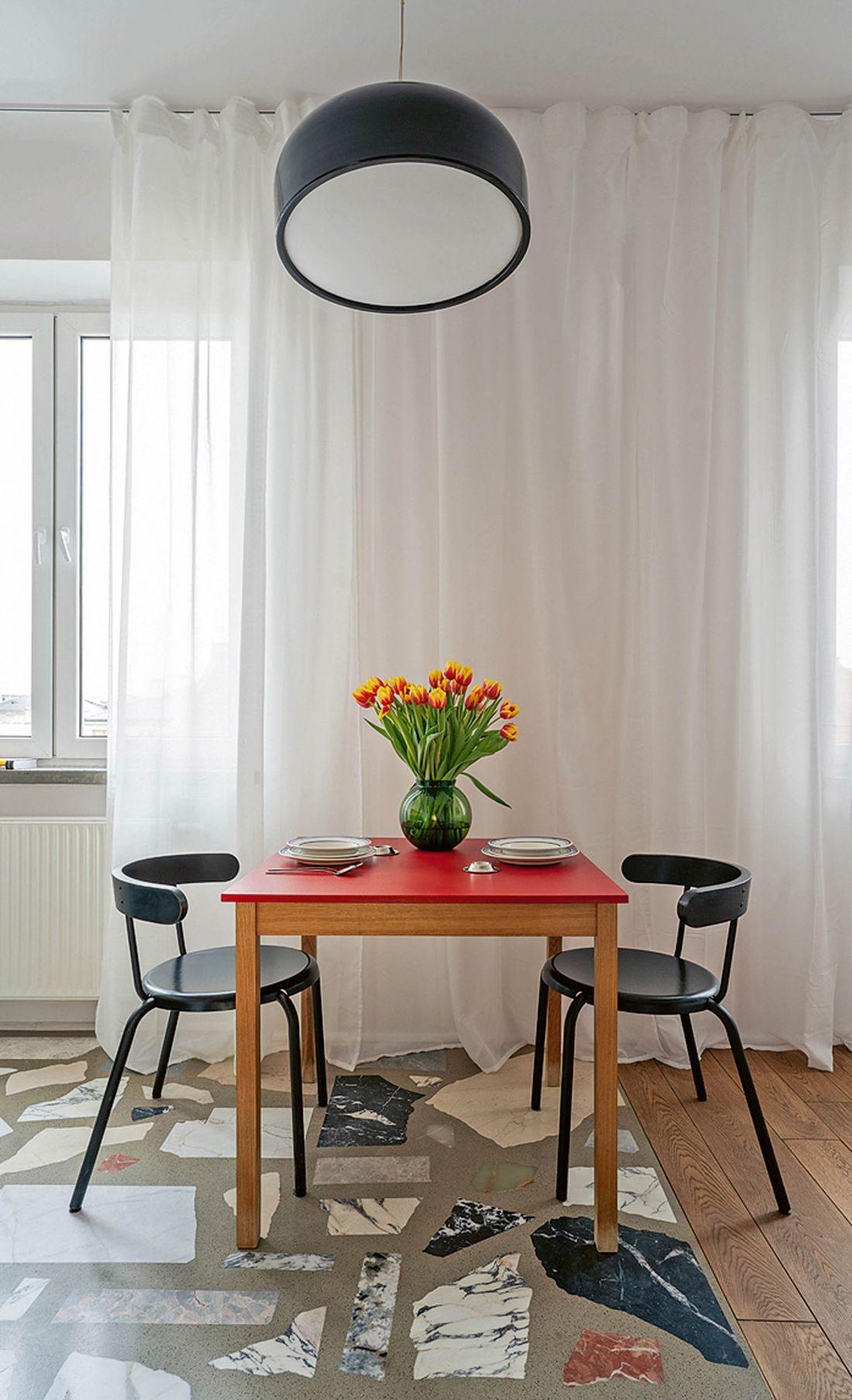
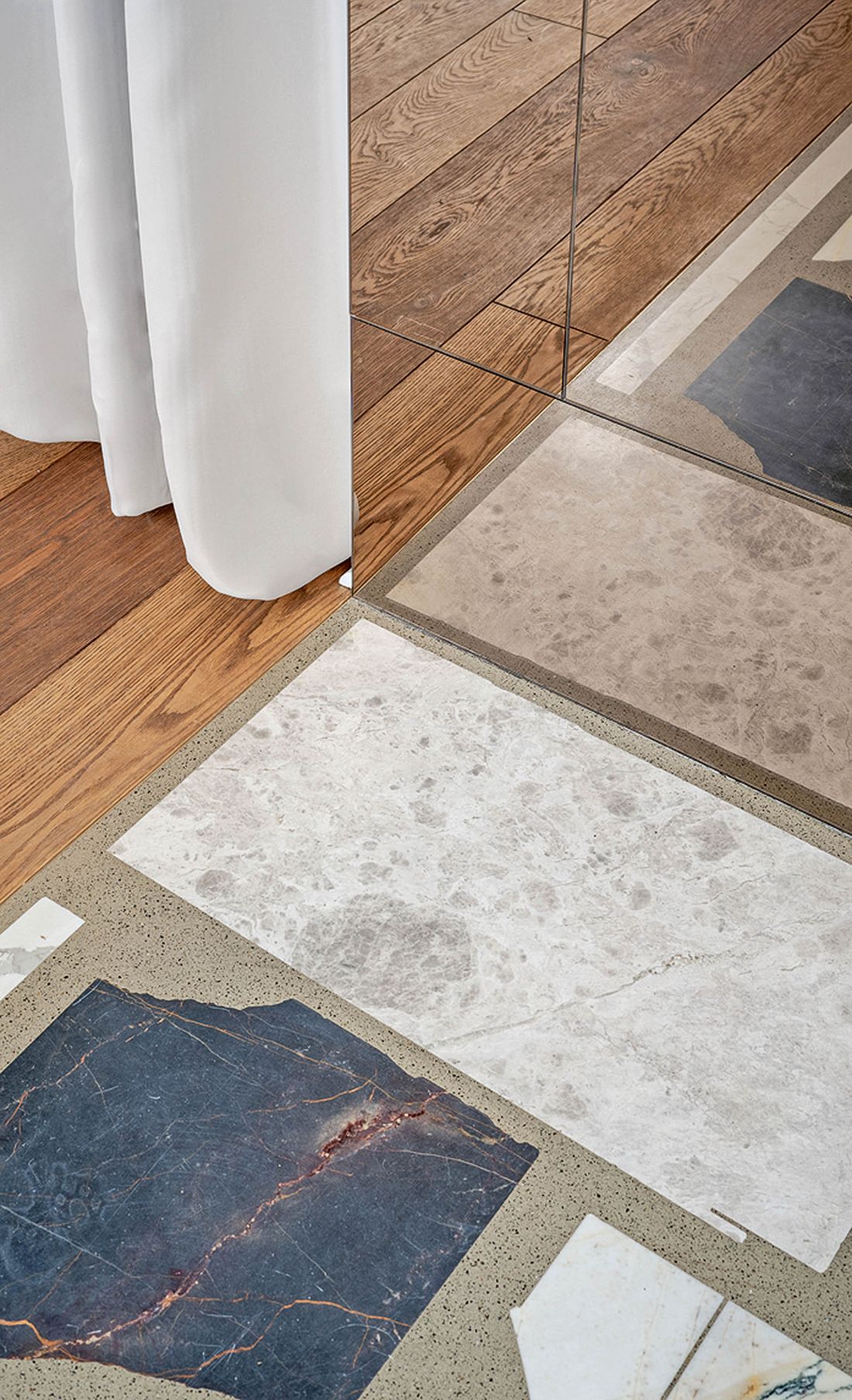
Model Apartment in Warsaw's Praga district - design: Aleksandra Milanowska, Karol Łącki, Tomasz Ploch
photo: Zuza Pomaska-Oszczyk
Dominika Drozdowska: What are they like, especially your investors?
Karol Lacki: We wondered about this: will they be people who are looking to save money in a renovation, or who have similar values? Or maybe someone who just finds themselves in such an eclectic and patchwork aesthetic? It turns out to be a 95 percent passionate group. They come to us because they are enthusiastic about what we do. So we sometimes have pretty decent budgets, which we don't allocate to high-end solutions, though. The project we are currently doing for investors in Gdansk is in line with their world view and values. We also design in Warsaw, and recently there have been quite a few inquiries and projects are "queuing up." Although the cost of materials is lower, our priority is not to lower the price. If we are looking for recycled oak parquet, of course it will be cheaper than new parquet, but the price will not be lower than panels from the market.
Budget is very important, but it does not play the main role. Even if we obtain second-hand materials, someone has to logistically put it together. Search, select, design, so although the products can be found cheaper, we will spend much more time and work on the whole process compared to the traditional path. So the Use.to portal was also created to make our work - ours and that of other architects - easier. The platform and the idea are so fresh that our mission is also to educate: to spread the idea so that Poles - both investors and designers - will be convinced to use recycled materials. There is also potential in this not strictly related to architecture. Each of us has found ourselves in a situation where something small broke in our apartment, for example, a baseboard fell off. So we go to the store and buy glue, use it once. I imagine that in every second or third apartment there is this mounting glue, from which we used a few drops. My dream is to be able to replace it. That's why we test and then show how it can be done. Because it really can be done. And who knows, maybe we'll get Poles interested in recycled housing to the point that this is what they'll demand from developers? Or by small steps - from bathrooms and recycled apartments we will get to public facilities?
Dominika Drozdowska: The shortcomings seem to be time and availability. You have to be patient and be aware that goods cannot be ordered with one click.
Karol Lacki: Yes, and it is difficult. Many times this has been the biggest problem, although we also have examples of great collaborations to our credit. We were recently doing a renovation of an apartment in Zielona Gora, a property located in the Old Market, intended for short-term rentals. When we first entered the apartment, we felt as if time had stopped there. We didn't want to get rid of that spirit, so it came out a bit like a movie set. The investor was very involved. I found a dance floor - the investor found a similar one much closer. He was able to go in the middle of the night to pick up various finishing elements, he took some of this renovation logistics on himself. For us, each project is a new experience that will make the next renovation smarter and better, and each one is a great joy - especially with such clients.
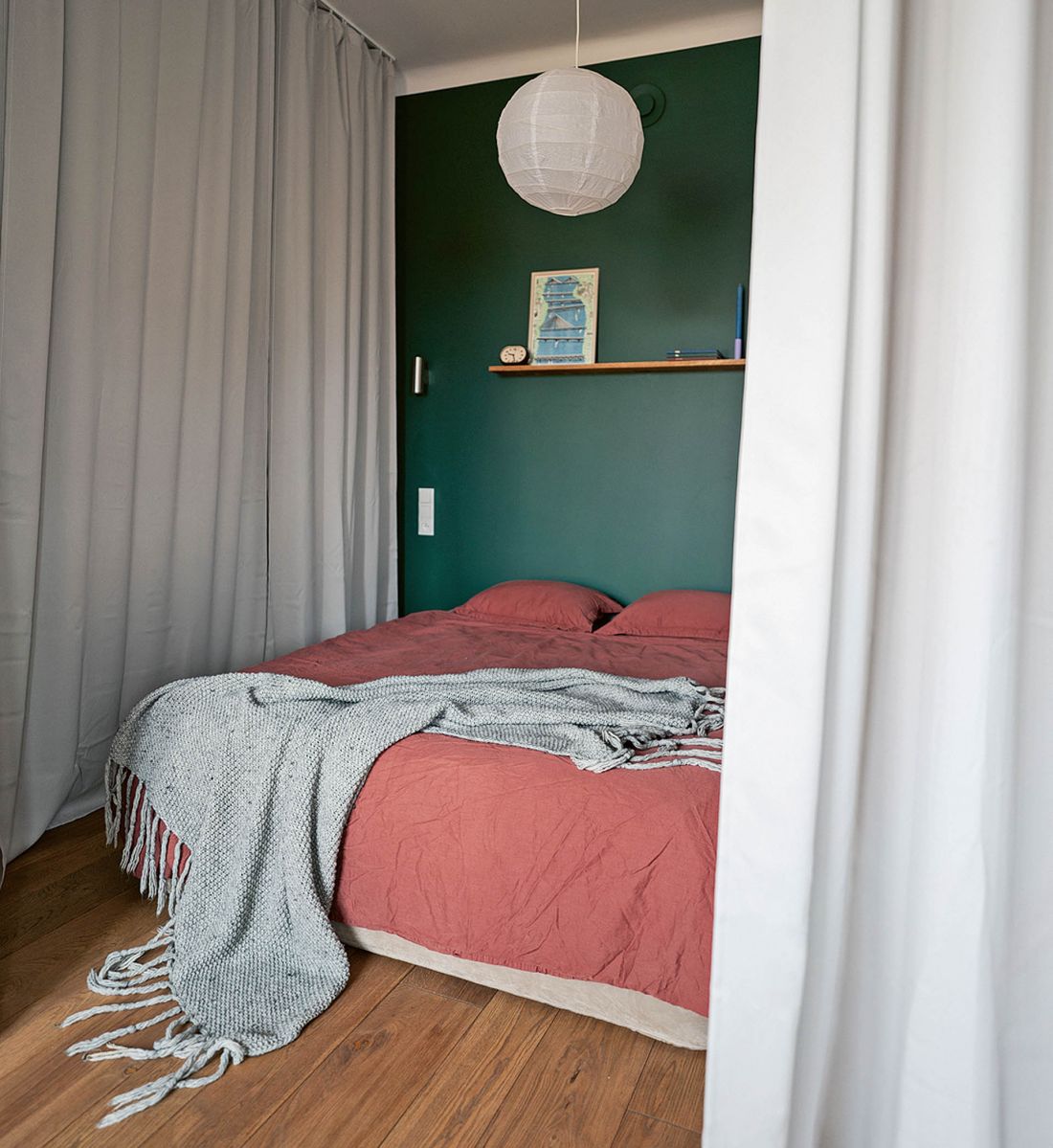
Model Apartment in Warsaw's Praga district - design: Aleksandra Milanowska, Karol Łącki, Tomasz Ploch
photo: Zuza Pomaska-Oszczyk
Dominika Drozdowska: And the contractors! In your social media, one can find a video of a construction worker saying that for the first time, instead of carrying debris away from the construction site - he brings it in. Do you think finishing an apartment with only second-hand materials is possible?
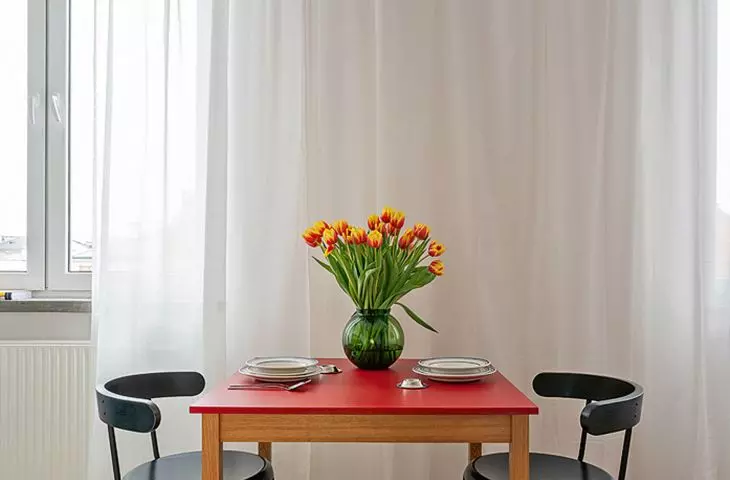
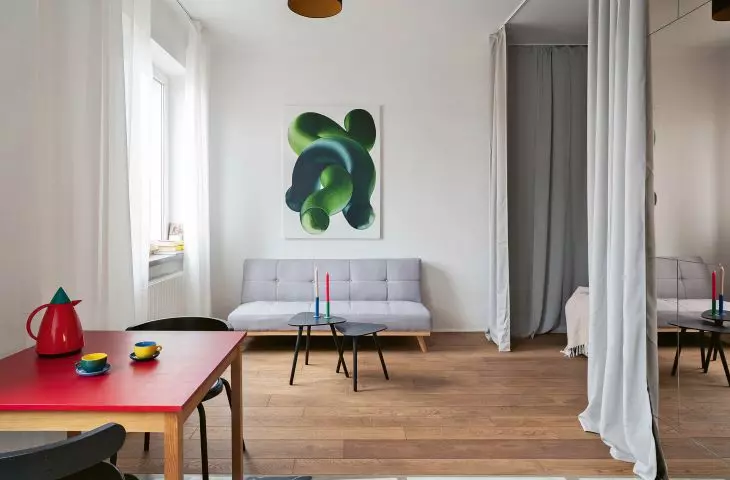
Karol Lacki: I think it is. It all depends, of course, on how we define second-hand materials. We understand it in the way that we didn't buy them in the store - we didn't create a demand for the production of new goods. Problematic are the materials that are united with the building, which are difficult to shell out, such as tiles, which are labor-intensive and very difficult to tap out without any damage. Changes should also take place in the building chemicals industry to allow materials to be reclaimed, rather than fix them in interiors for eternity. Circular design also needs legislative support. An example? We were renovating an apartment where the electrical installation was no longer fit for purpose and a new one had to be laid. However, components of this installation were still in working order - such as switches or outlets. There were many questions about how safe it was to reuse these components. We just built them into the Model Apartment in Praga. In this space, everything you look at, everything you can touch, is recycled. So we estimate that this model space is 90 percent recycled. The remaining 10 percent is assembly parts.
Dominika Drozdowska: What materials are the easiest, and what are the hardest to source from second-hand?
Karol Lacki: We can look at it from different perspectives. Radiators in development apartments barely installed are already being removed. Why? Understandably, the vision of a lifetime apartment does not include the cheapest radiator. So there are plenty of such items on the market and they are much cheaper than products with a store label. It is more difficult to recover silicate blocks from a demolished wall. These are issues that we should speak out about in order to minimize the scale of waste. Although general awareness is still lacking, it is very easy to obtain electrical fixtures. A used kitchen cabinet in good condition sometimes disappears within a day. Especially one with simple shapes and layouts. People often, when moving into a new apartment, no longer have the budget for a dream kitchen, so they install a "temporary" built-in. One that will last a year or two, so it's a full-fledged element with few signs of use. In addition, these are movable, modular elements that are easy to remove, so interest in such goods is growing.
Dominika Drozdowska: You are trying to reduce waste. So what do you think about when you pass another container of construction waste on the street?
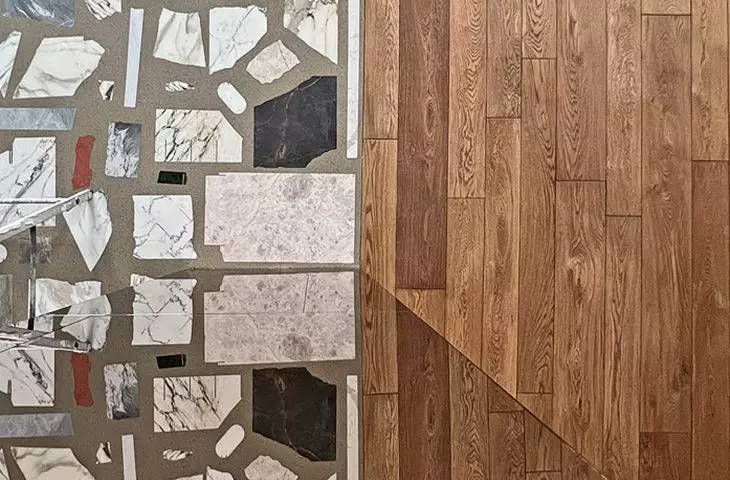
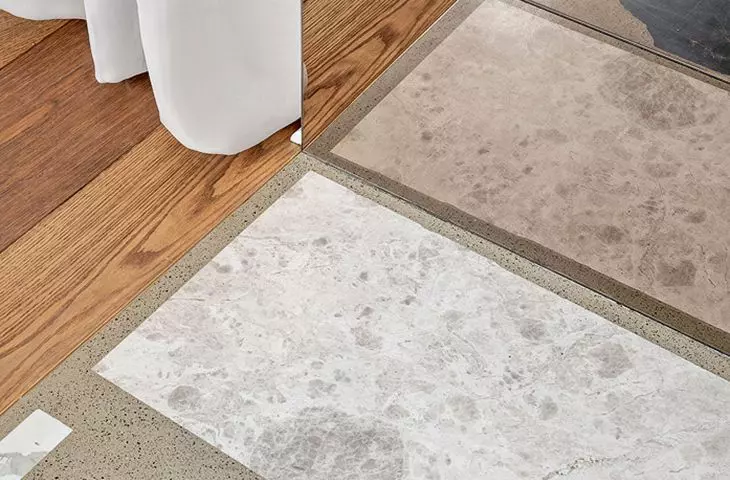
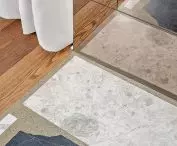
Karol Lacki: My approach and thoughts around this topic are evolving. In the beginning, I was diving into the containers, trapping what could still be used. This approach can be seen, for example, in our Model Apartment in Praga, where we just laid the floor with stone offcuts and waste. As Use.to Studio, we try to use our creativity and look for such solutions to utilize a given material to the fullest. Today I know that these materials should be used with head. And that's how with Friends of Use.to we try to act. With sensitivity to the environment - designing recycled space from the bottom up.
Dominika Drozdowska: Thank you for the interview.
interviewed by: {tag:AuthorA&B}
more: A&B 2/2025 - TIME OF TRANSFORMATION | REDACTED byKWK PROMES,
download free e-issues of A&B