




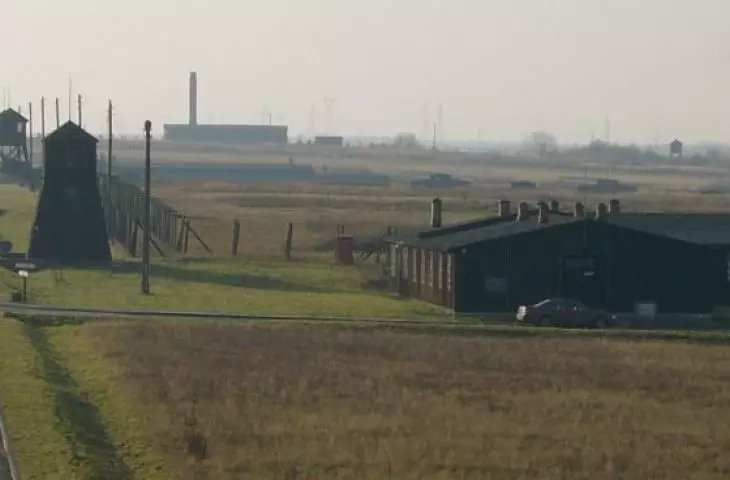
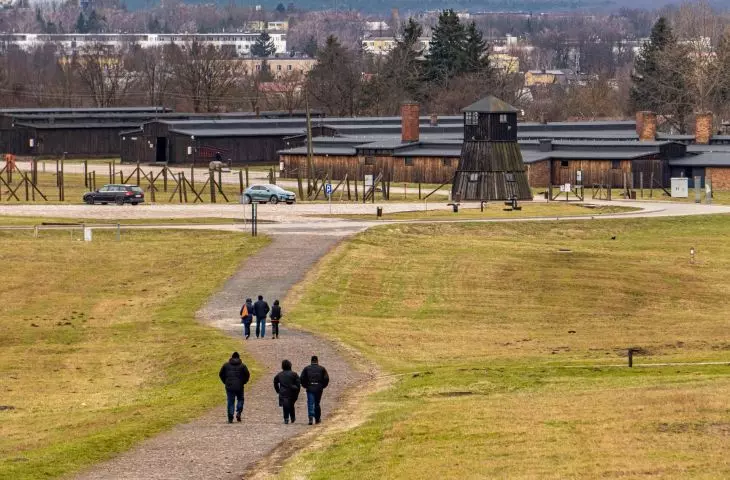
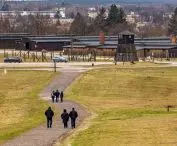

The State Museum at Majdanek, one of the oldest museums dedicated to the tragedies of World War II, is a place where architecture tells the story of tragedy in two ways. The historical narrative is provided by the buildings of the KL Lublin camp, mute witnesses to the suffering experienced there by hundreds of thousands of victims. The second, metaphorical dimension of the Holocaust story is brought by the Monument to Struggle and Martyrdom, designed by Viktor Tolkin. The socmodern structure has recently undergone a major renovation. What is its symbolism based on?
Although we associate socmodernism mainly with apartment blocks, public edifices or leisure architecture, a somewhat less noticed, but equally unusual face of buildings constructed during the Soviet era are monuments. The tragic events of World War II provided countless reasons for their construction, and the modernist design language offered a repertoire of forms with which to tell stories in ways that universally evoked emotion. Although many of these monuments stand forgotten today (many are also testimonies of the propaganda of the authorities of the time, today destroyed in the name of "decommunization"), there are also those that have permanently entered the canon of memorial architecture. One of them is the Monument to War and Remembrance, located on the grounds of KL Lublin, a concentration camp where 80,000 people died between 1941 and 1944.
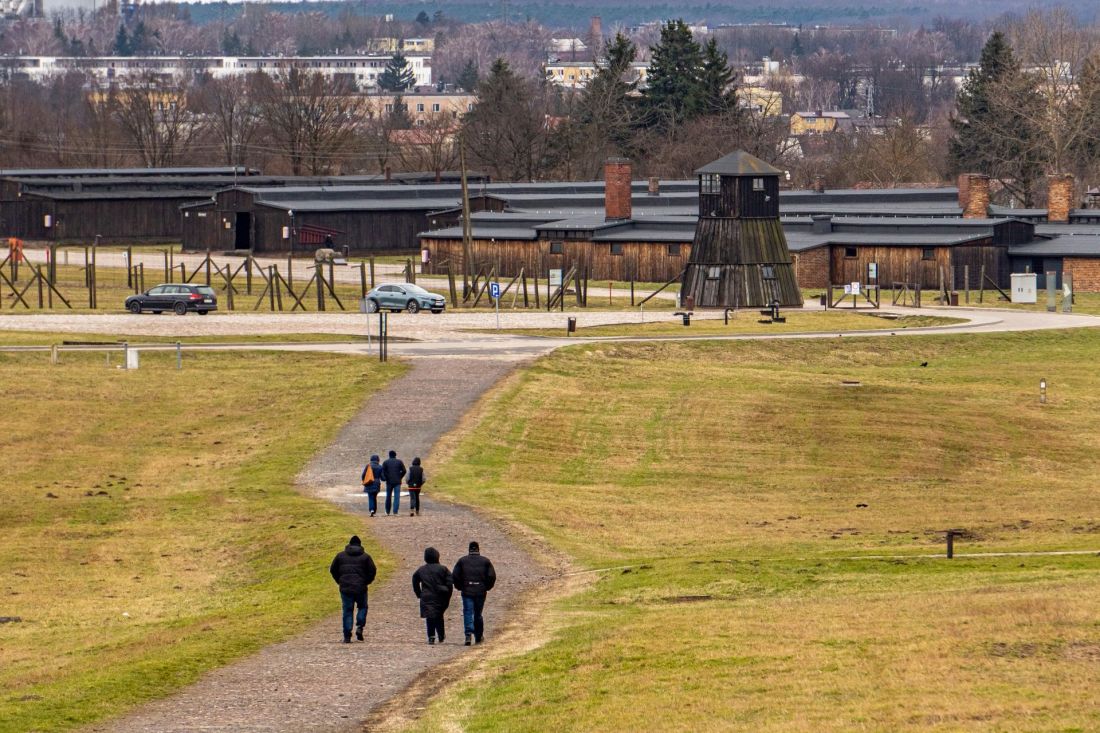
KL Lublin, State Museum at Majdanek
Photo: Adrian Tarnowski © CC BY 4.0 | Wikimedia Commons
need for remembrance
Initially, the site of the current monument was a mound that was raised to commemorate the victims of KL Lublin in 1947. However, voices were quickly raised saying that the commemoration of the camp's victims should be more monumental, and that the soil mixed with the ashes of the victims from which the mound was built needed to be better protected. It was therefore decided to make the memorial in the form of a monumental spatial monument - a work at the intersection of sculpture, architecture and urban planning.
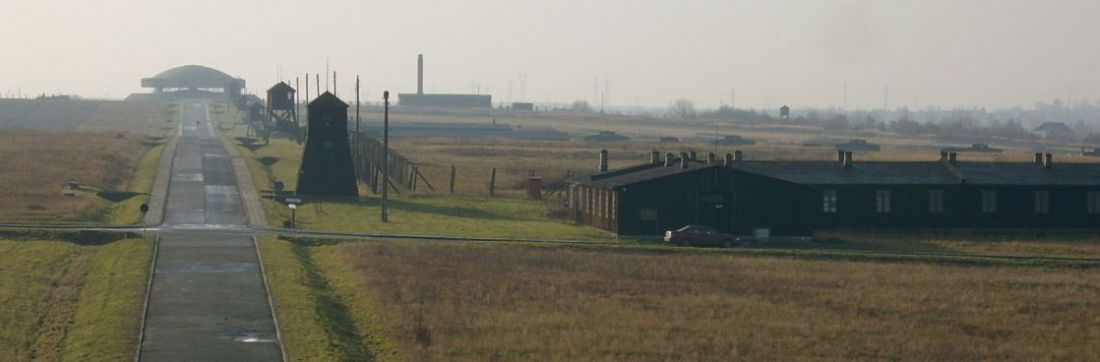
The Road of Homage and Remembrance, part of the Monument to Struggle and Martyrdom at Majdanek
Photo: Ralf Lotys © CC BY 2.5 | Wikimedia Commons
The design of the foundation at Majdanek in Lublin was selected as a result ofa"general competition for a monument in memory of the victims of the Majdanekextermination camp" held in 1967 by the Council for the Protection of Remembrance of Struggle and Martyrdom and the Society for the Protection of Majdanek in cooperation with ZPAP and SARP. The jury included, among others, Prof. Ludwika Nitschowa, author of the Warsaw "Mermaid," and Henryk Buszko, then president of the SARP Main Board.
the third will be the first
Although first place was not awarded, and second place went to the work created by the team of Stanislaw Strzyzynski and Janusz Klachek, the concept of third place winners Janusz Dembek and Viktor Tolkin, a former Auschwitz prisoner and artist who already had other monuments to his credit, both those martyrological and those commemorating second-war victories.
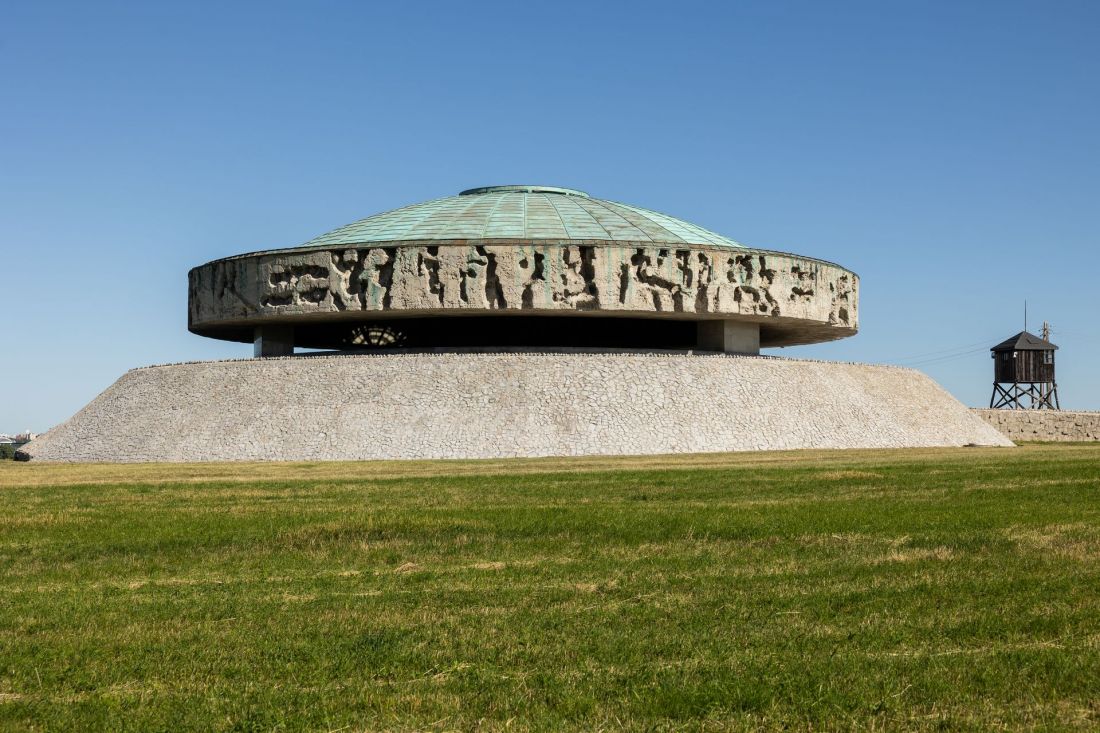
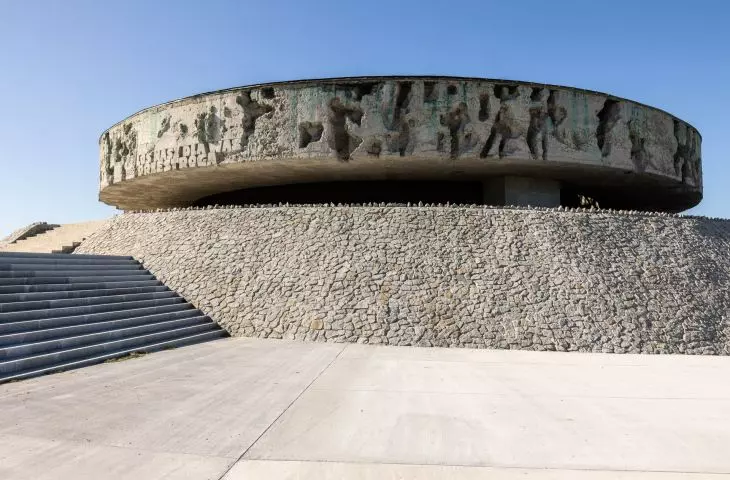
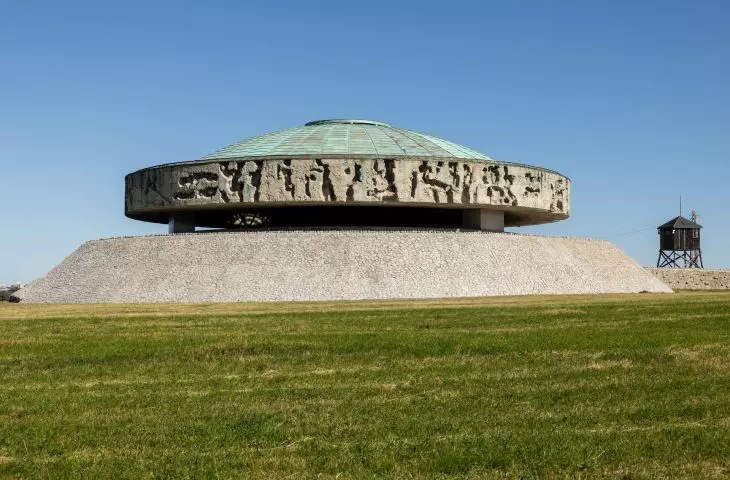
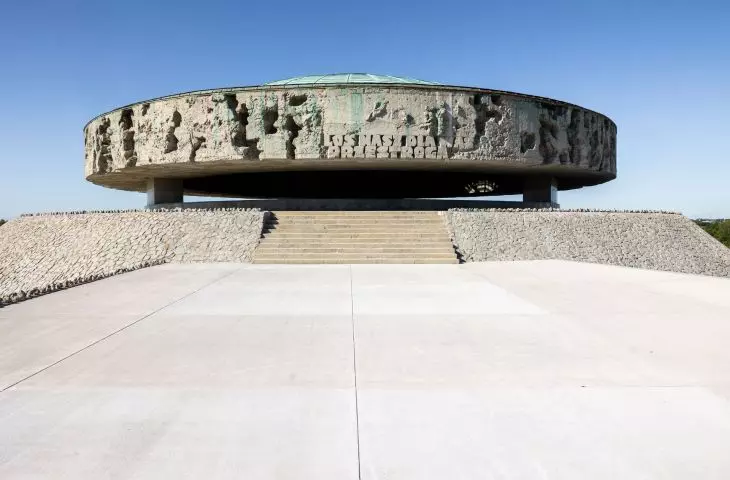
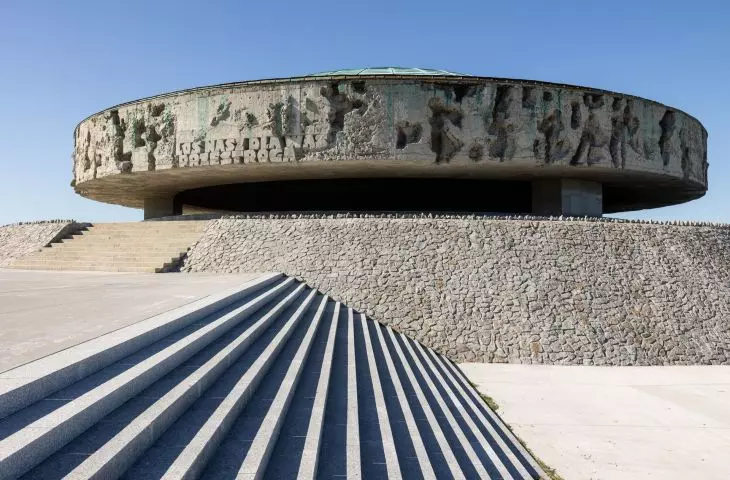
The mausoleum, part of the Monument to Struggle and Martyrdom at Majdanek after renovation
Photo: Krzysztof Stanek © State Museum at Majdanek
It is not known why the work of Strzyzynski and Klychuk was abandoned, but as Magdalena Howorus-Czajka, a researcher of Viktor Tolkin's work, points out, it was the slightly earlier memorial at the Stuthoff camp, designed by the sculptor, that may have determined that it was his concept that was materialized. Danuta Olesiuk and Krzysztof Kokowicz, in their monograph on the memorial, write that the idea was to be able to protect the ashes from the weather, while the artist himself was to state that the choice of his work was a decision by a government official who came to Lublin after the competition was decided.
The work lasted several months, and was completed with a grand opening ceremony on September 21, 1969. Up to 100,000 people were expected to gather at the event.
A total of 800 m³ of concrete, 1,500 tons of granite and 400 tons of reinforcing steel, among others, were used in the construction of this monumental establishment, and in addition to laborers, foremen, engineers working in three shifts 24 hours a day, scouts and troops of the army and militia also took part in its creation.
- reads the social media of the State Museum at Majdanek.
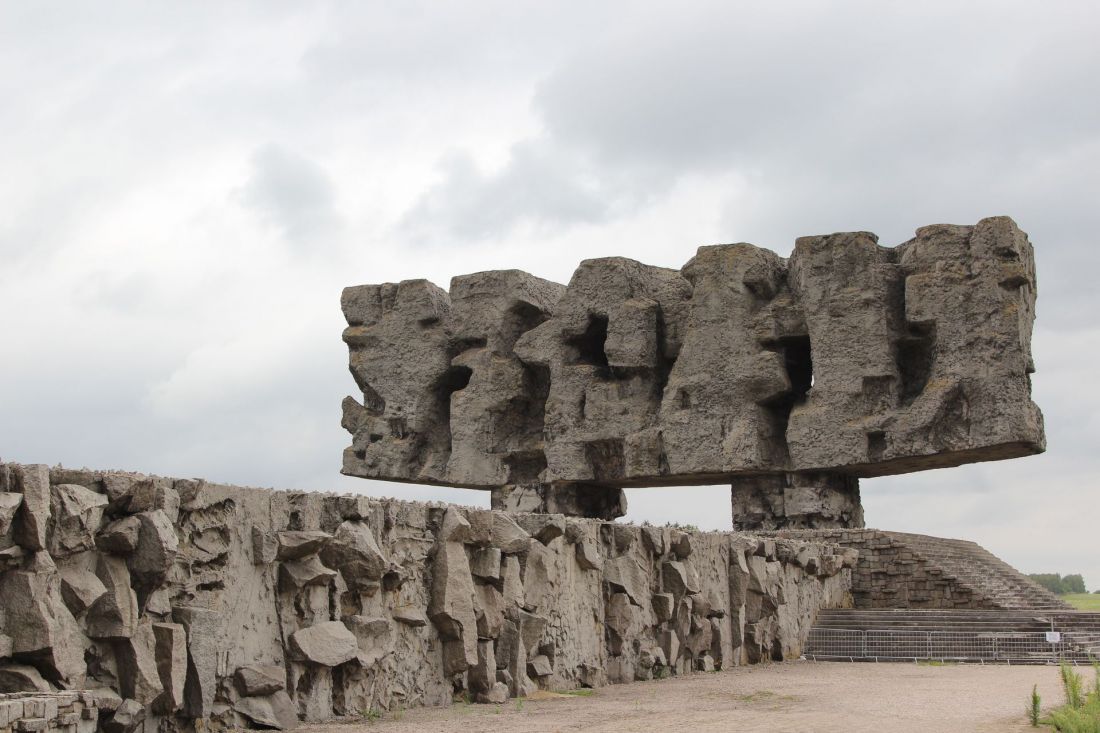
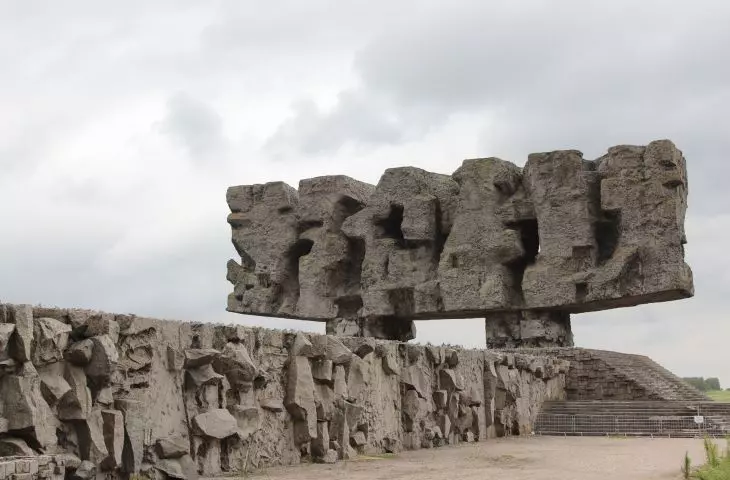
The gate, part of the Monument to Struggle and Martyrdom at Majdanek
photo: Fallaner © CC BY-SA 4.0 | Wikimedia Commons
Monument to Struggle and Martyrdom at Majdanek
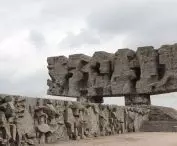
The entire establishment, located on the grounds of the KL Lublin camp with an area of about 60 hectares, consists of three elements. The first is the Gate, which is a monumental concrete monument with abstract forms, supported by two massive pillars. The placement of the "passage" at the beginning of this symbolic road is a sculptural reference to the gate of hell from Dante's "Divine Comedy. "
The elongated amorphous construction of reinforced concrete and stone was meant to symbolize the fate of the camp's victims and resemble a pile of compressed, deformed human bodies. On the axis of the Gate the Road of Homage and Remembrance was laid out, the first forty meters of which run in a trench with walls lined with stacked boulders.
- write Michal Wisniewski and Lukasz Galusek in their book "Socmodernizm. Architecture in Central Europe during the Cold War."
The Road of Tribute and Remembrance, stretching 1,300 meters north-south, runs along the camp fields that visitors to KL Lublin see to their right. It was mostly made of asphalt, although a small section, located on the north side, was paved with granite slabs.
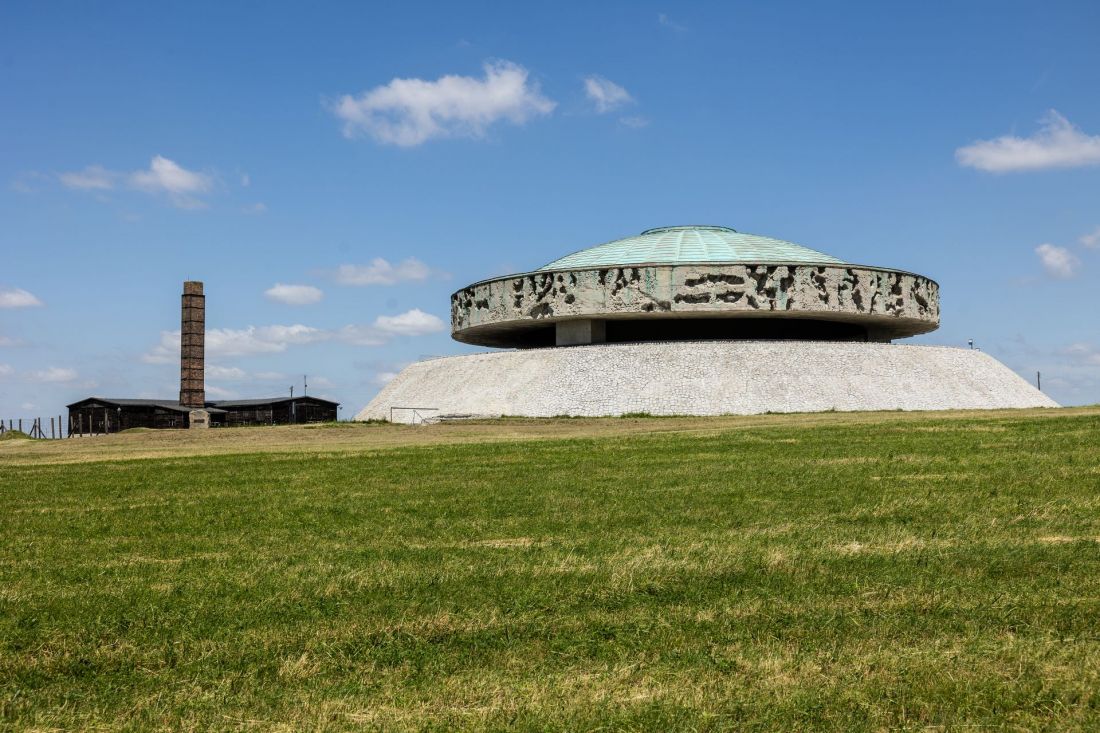
Mausoleum, part of the Monument to Struggle and Martyrdom at Majdanek after renovation
Photo: Krzysztof Stanek © State Museum at Majdanek
Social-modern Mausoleum at Majdanek
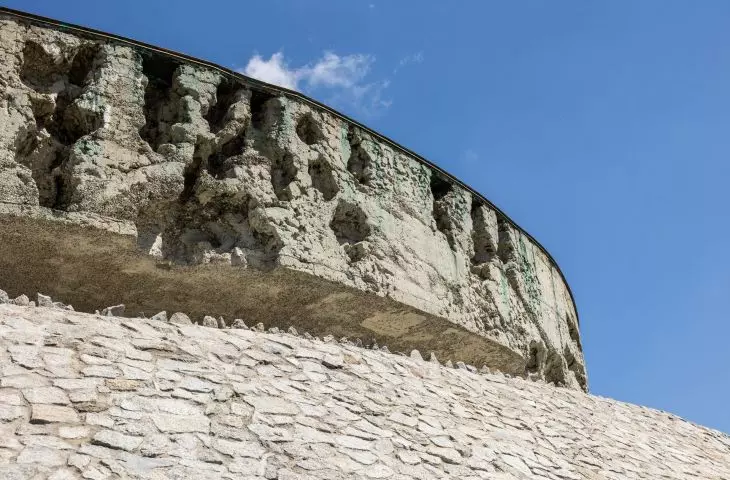
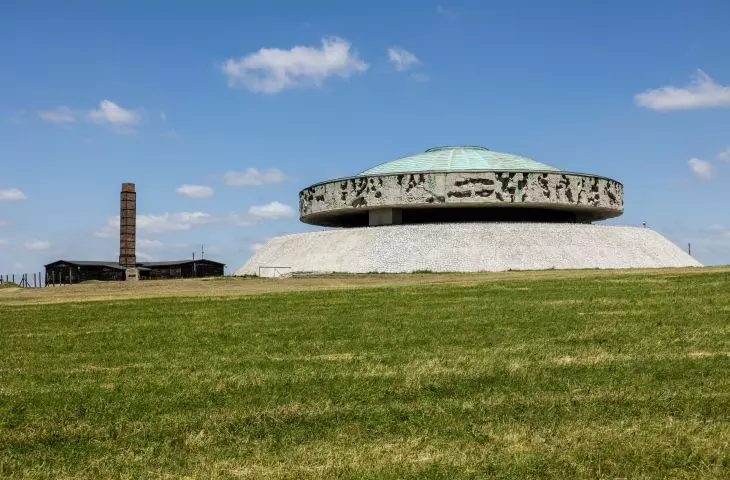
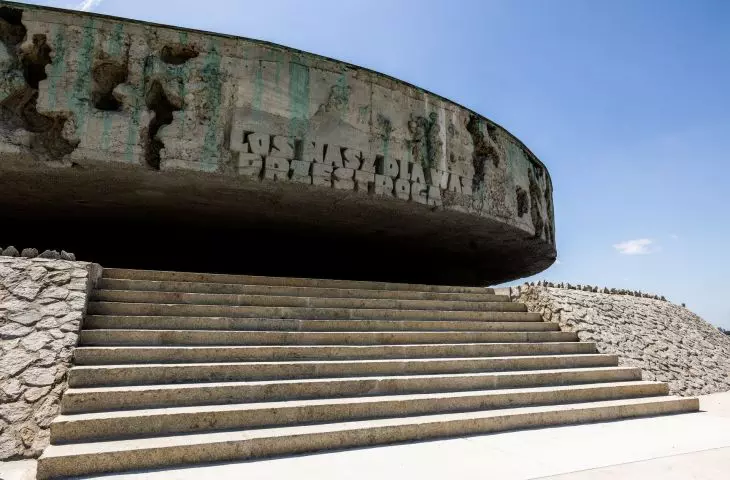
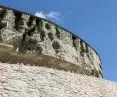
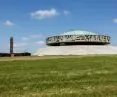
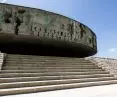
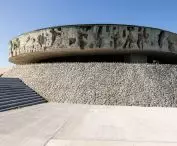
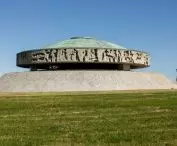
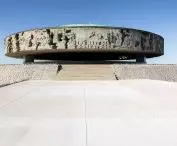
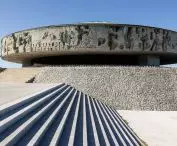
At the end is the Mausoleum in the form of a rotunda whose outer walls are covered with a frieze, similarly abstract to the amorphous Gate on the other side of the monument. The message is concretized by the words of Franciszek Fenikowski's poem "Requiem": Our Fate for You a Warning.
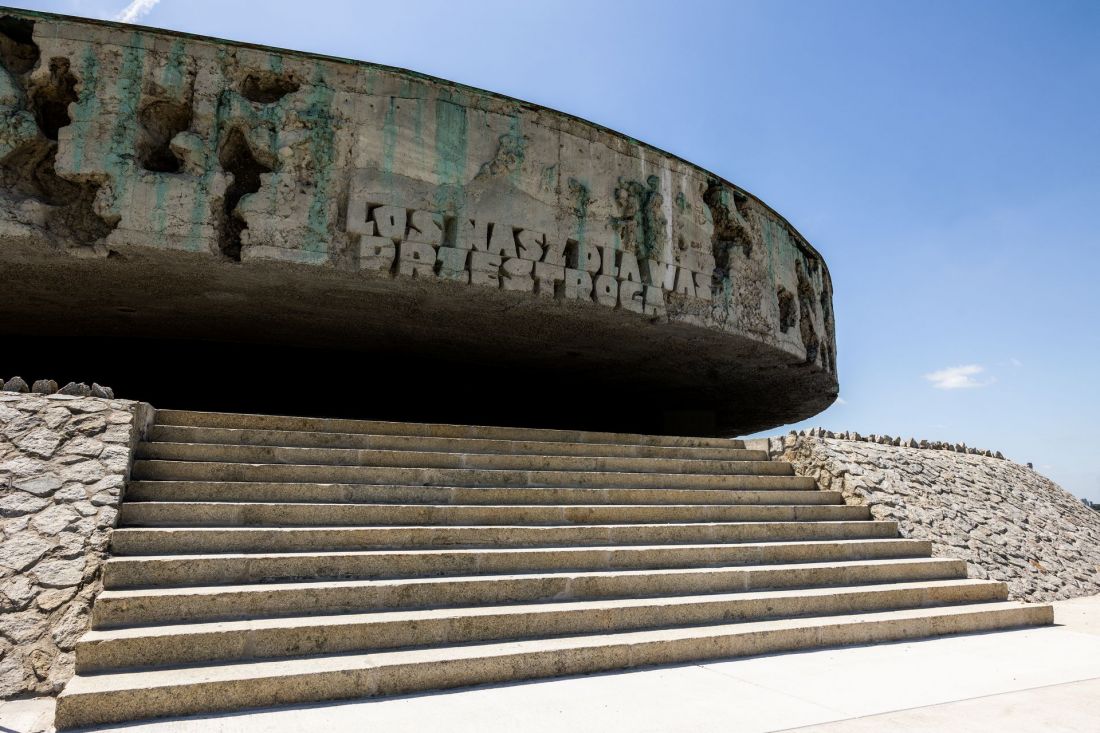
Mausoleum, part of the Monument to Struggle and Martyrdom at Majdanek after renovation
Photo: Krzysztof Stanek © State Museum at Majdanek
The whole is covered by a dome spanning 35 meters, supported by three massive pillars. Beneath it, in a bowl made of syenite, 700 cubic meters of ashes of people who died in the KL Lublin camp during World War II were placed. The structure can be read in several ways, all related to the language of sepulchral art - in the context of the Mausoleum at Majdanek one speaks of a Slavic urn, a mound and even a candle.
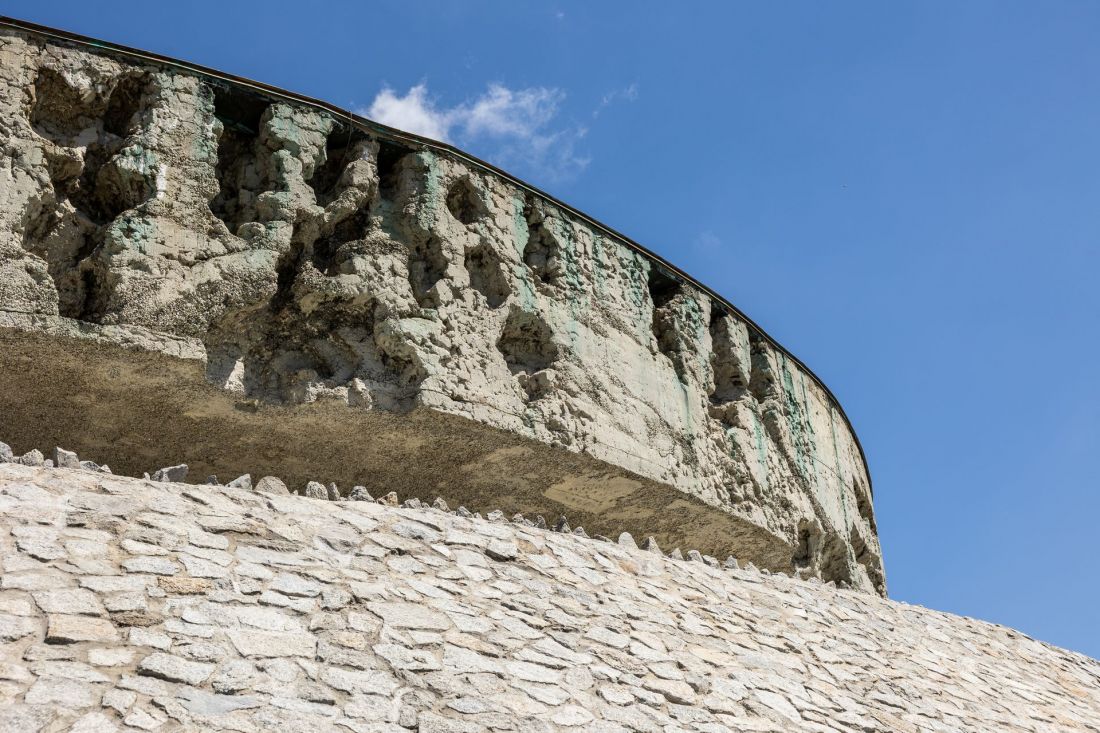
Mausoleum, part of the Monument to Struggle and Martyrdom at Majdanek after renovation
Photo: Krzysztof Stanek © State Museum at Majdanek
Despite the lack of figurative narrative, as well as the use of poetic quotations on the walls of the Mausoleum, the symbolism is extremely evocative, and thanks to the placement of the most important elements of the foundation on two sides of the Majdanek camp, the architecture of the monument is read over time. Despite the passage of years, the strength of the message encapsulated in a non-figural form is still striking.
A year after the anti-Semitic campaign and the expulsion of twenty thousand people of Jewish descent from Poland, festivities at Majdanek were far from the truth about the Holocaust. The martyrdom of the Poles, the heroism of the Red Army and the threat from Western imperialism were emphasized. Nevertheless, the abstract composition, concise language and monumental form of the memorial were resistant to manipulation. They remained a warning against the fall of humanity.
- We read in the book "Socmodernism. Architecture in Central Europe during the Cold War," accompanying an exhibition at the International Cultural Center in Krakow.
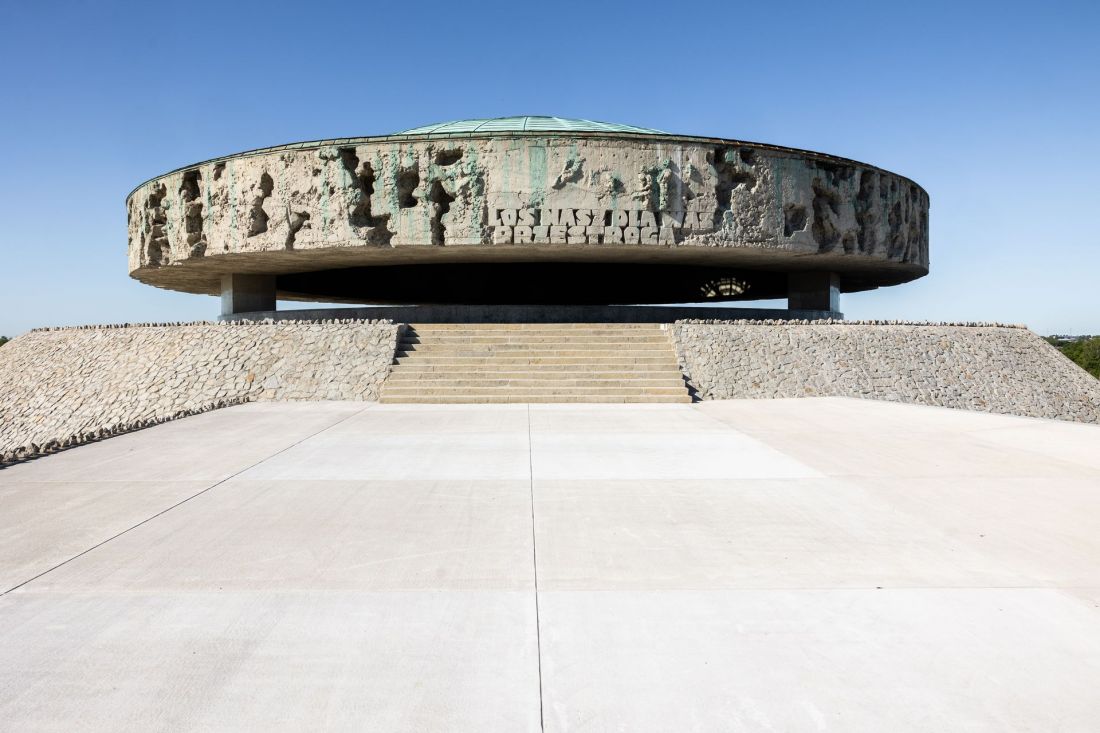
Mausoleum, part of the Monument to Struggle and Martyrdom at Majdanek after renovation
Photo: Krzysztof Stanek © State Museum at Majdanek
first renovation in history
For 54 years after its construction began, the Monument to Struggle and Martyrdom at Majdanek was not renovated. Finally, time and funds were found for it. The work began back in 2023. The renovation, initially planned for 14 months, was finally completed in June 2025, consuming nearly PLN 8.5 million raised from the state budget. Since July 1, the Mausoleum has been open to the public again.
The scope of the work was extensive and included, among other things: replacing the Mausoleum's roofing with a glass skylight, cleaning and conserving the concrete surfaces of the dome and the frieze with the inscription "Our fate is a warning to you," repairing the cracked elements of the bowl and slopes that are part of the monument, and replacing the electrical system, including the facility's lighting. Its surroundings - the slabs in the squares located around the Mausoleum, stairs and sidewalks - were also repaired.
- we read in the social media of the State Museum at Majdanek.
The Gate is still awaiting renovation. Although in its case the structure is not so vulnerable, and the surface is not covered with damp patches from the copper sheets protecting the dome, without proper maintenance even the bronze monument will not resist the destructive effects of time.