






Should cultural, urban and architectural heritage be a battlefield of worldviews? It would seem that by gaining distance in time we are able to separate difficult experiences, ideology and tragic stories from the precious remains of material culture. However, it turns out that this approach does not always prevail. An urban worldview battle has been taking place for several years in Olsztyn, where the Monument to the Liberation of the Warmian-Masurian Land is planned to be demolished. The demolition and the astonishing reconstruction of Xawery Dunikowski Square is being sought by the current Olsztyn Mayor, while the Olsztyn architectural community is speaking out against the devastation. What are their arguments?
Countries that were in the Soviet Union's sphere of influence after World War II are dotted with numerous monuments commemorating the exploits of the Red Army. Examples include the monumental Treptower Park in Berlin or the Red Army Heroes Monument on Schwarzenbergplatz in Vienna. In recent years, many of these objects have been removed, not because of their artistic merit, but because of the tragic events that followed the march of the Red Army.
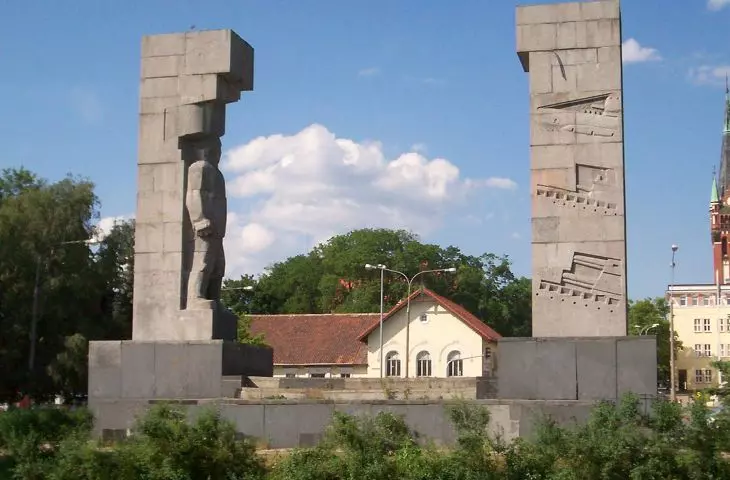
A similar fate may befall the Liberation Monument of the Warmian-Masurian Land in Olsztyn, whose author is one of the most famous Polish sculptors, Xawery Dunikowski. This structure, too, is associated with an extremely difficult history - for it commemorates the events of the night of January 21-22, 1945, when Red Army troops entered the city, then occupied by Nazi forces, and "liberated" the city, committing looting, murder and rape of Olsztyn's civilian population.
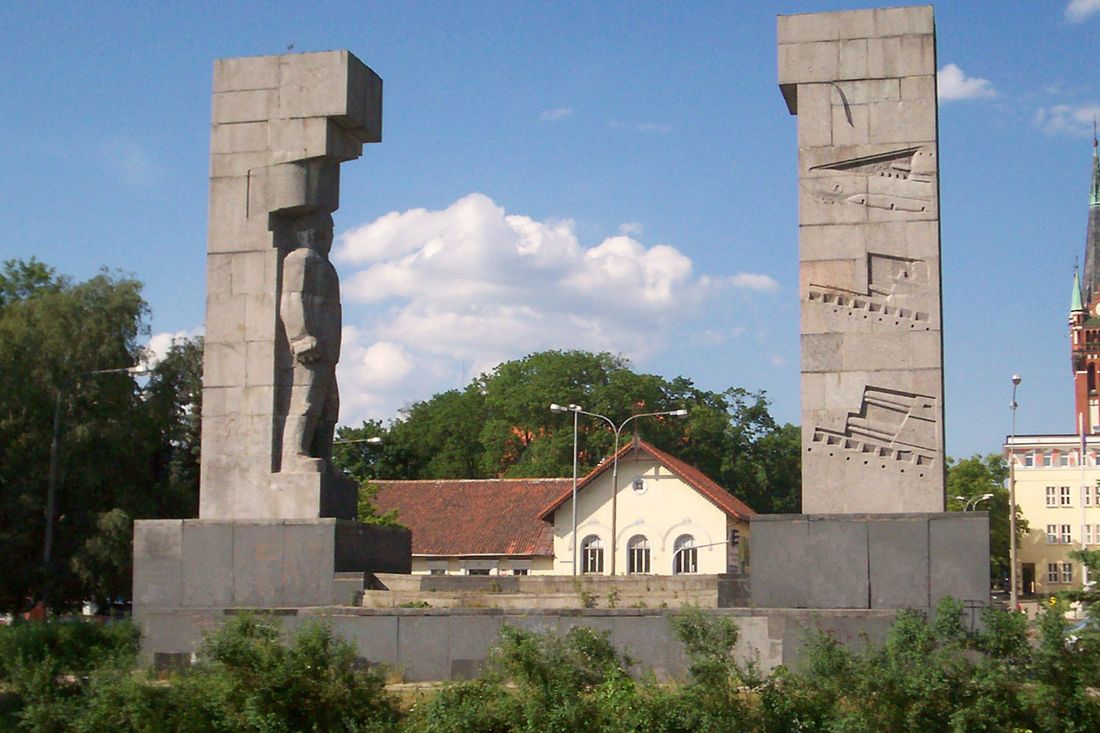
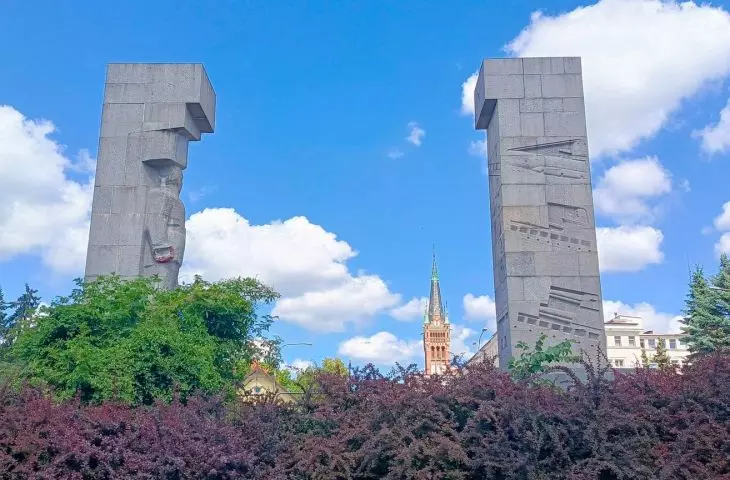
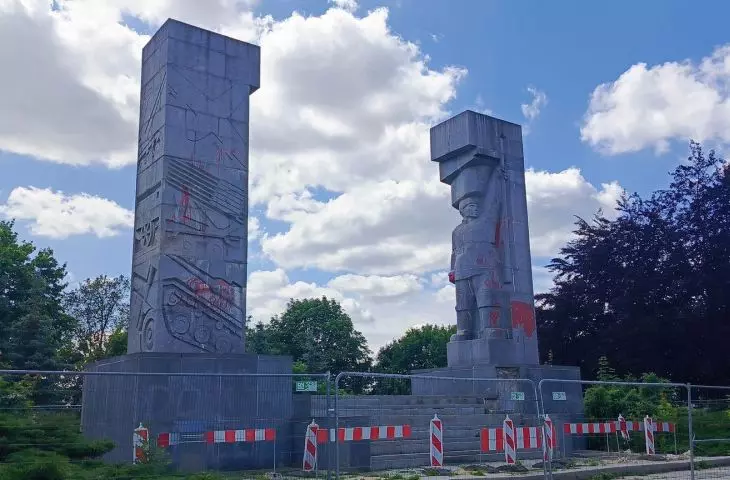
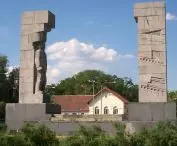
Monument to the Liberation of the Warmian-Masurian Land in Olsztyn - designed by Xawery Dunikowski.
Photo: Serdelll © CC BY-SA 3.0 | Wikimedia Commons
Shortly thereafter, the city was successively destroyed - in February 1945, 40% of Olsztyn's buildings were burned down, including more than half of those in the Old Town area. In accordance with the doctrine of the time, however, it was ordered to commemorate the deeds of the Red Army, of course, only those that were considered glorious. On the initiative of Mieczyslaw Moczar, the Olsztyn governor, the Monument of Gratitude to the Red Army was erected.
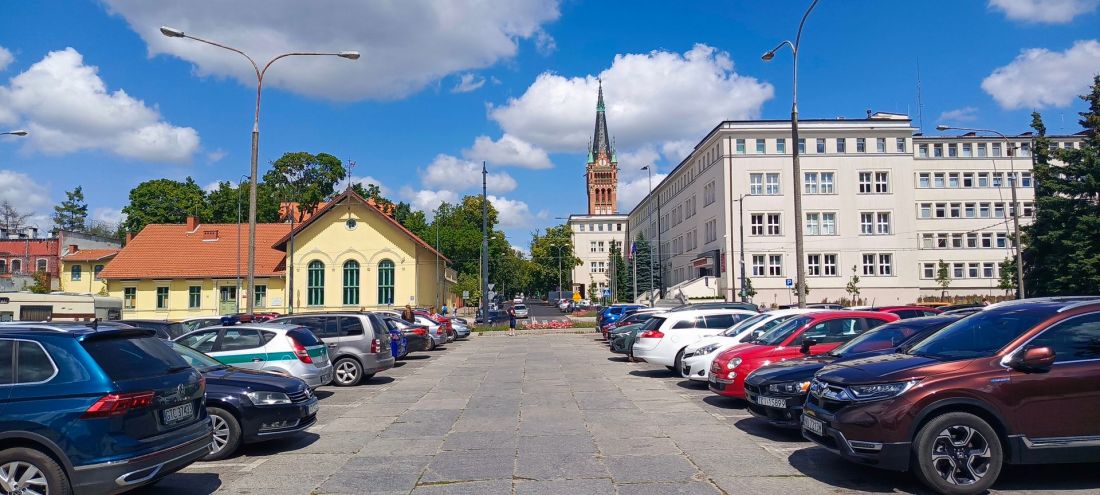
Monument to the Liberation of the Land of Warmia and Mazury in Olsztyn - designed by Xawery Dunikowski.
photo courtesy of SARP Olsztyn Branch
Olsztyn's postwar axis
However, it was not an ordinary Socialist-Realist memorial, such as many were built along the route of the Red Army's march towards Berlin. The composition, which was designed by a prominent Polish sculptor, Xawery Dunikowski, turned out to be extremely important, both from the point of view of the history of Polish artistic creation and the urban development of destroyed, post-war Olsztyn:
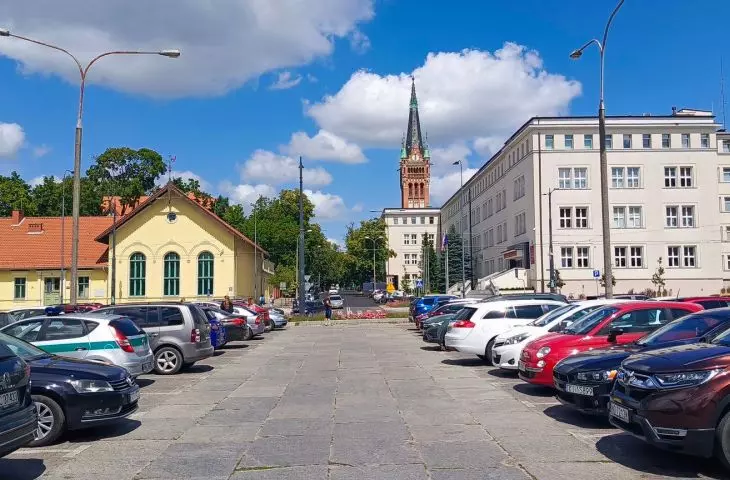
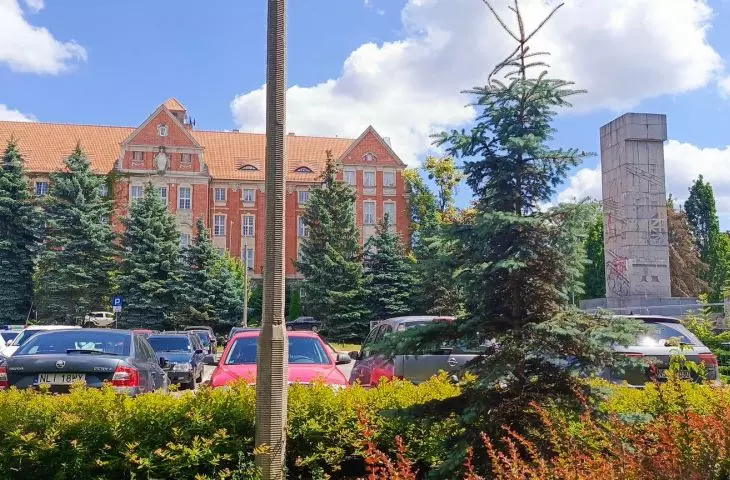
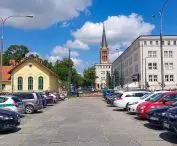
Olsztyn was once a small town of county format. The end of the 19th century - the construction of railroads and barracks, and the establishment of the Olsztyn regency in 1905 - were city-forming factors that caused the rapid development of the city. However, the development of the city was not based on the creation of interesting urban layouts - compositional axes - important for the image of the city, but was realized by locating suburbs along the outlet streets. Today Olsztyn basically lacks well-thought-out urban compositions. In addition to the Polish Consulate Square, the former Belian Square (now Slavic Unity Square) and Nicolaus Copernicus Square (now Józef Bem Square) - have become transportation hubs, losing the function of public spaces. The only one of the post-war urban compositions in the city is the axis marked by the Liberation Monument of the Warmian-Masurian Land. This is the compositional axis of Nicolaus Copernicus Street, where a church from the early 20th century stands, and one of the main entrances to the Provincial Office is located. One of the markers of the square is the monumental building of the former regency, today the headquarters of the Marshal's Office. This space, thoughtfully built up, was saved thanks to this monument, which, along with the square in front of it, was included in the register of monuments.
- says Urszula Madeja-Kulecka, architect, member of the Olsztyn branch of SARP.
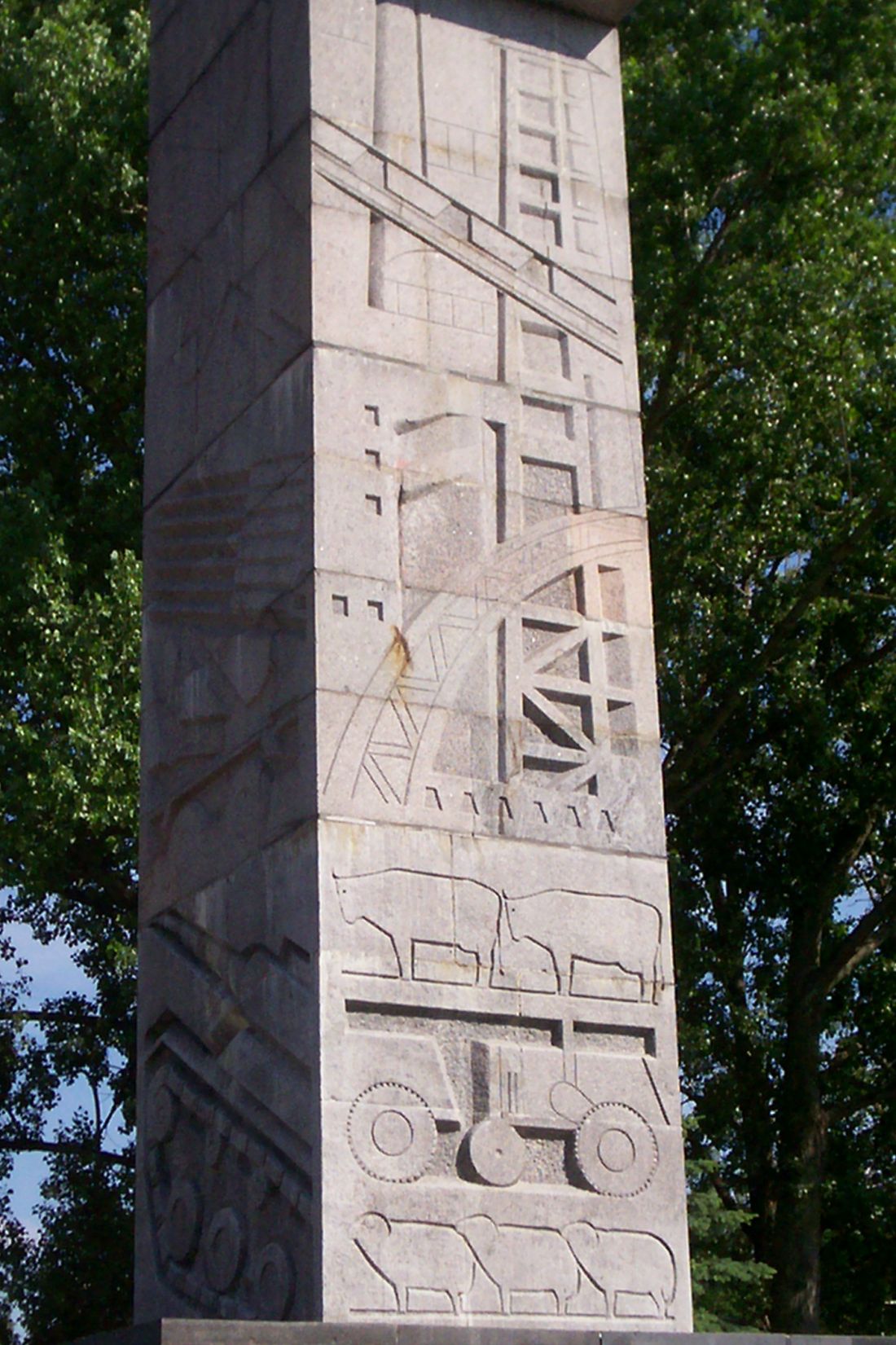
Monument to the Liberation of the Land of Warmia and Mazury in Olsztyn - designed by Xawery Dunikowski.
Photo: Serdell © CC BY-SA 3.0 | Wikimedia Commons
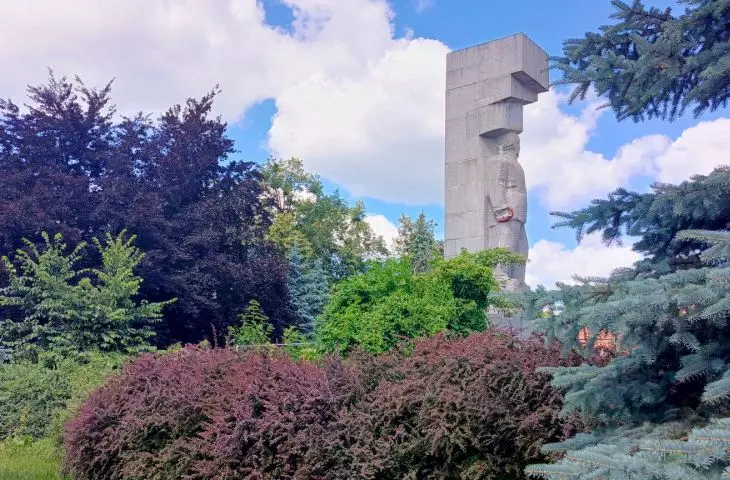
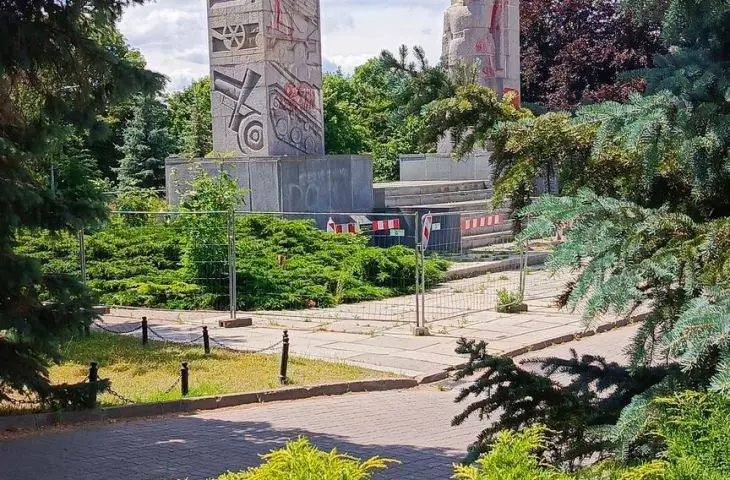
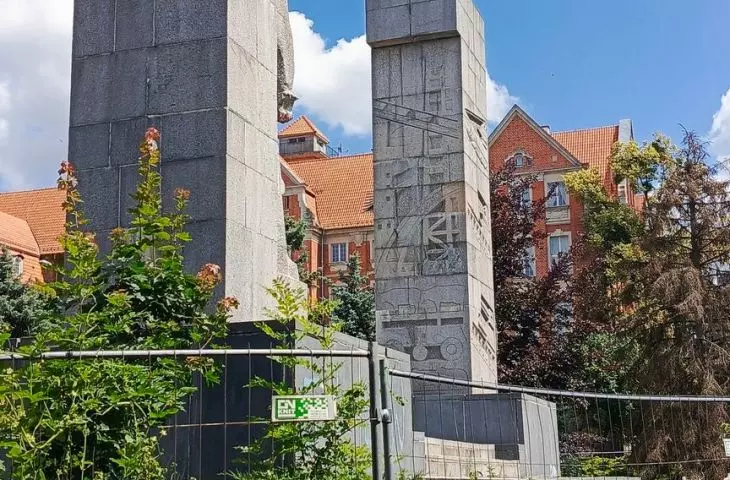
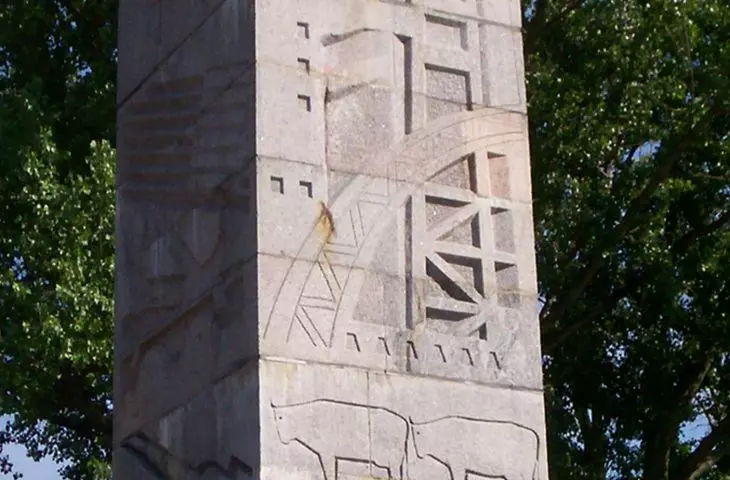
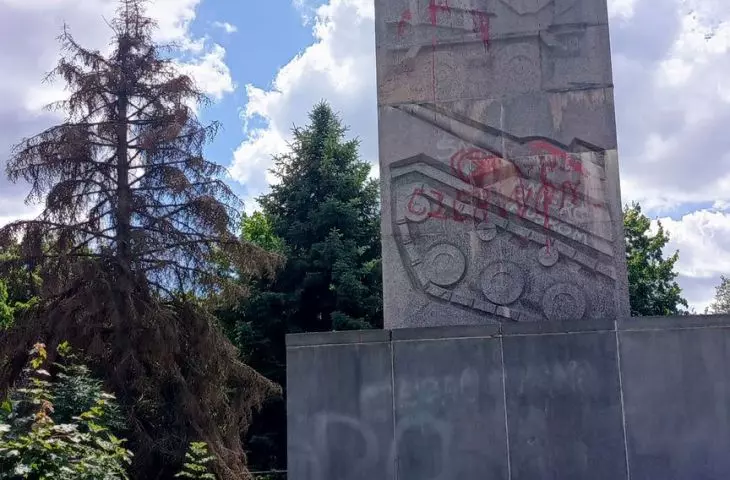
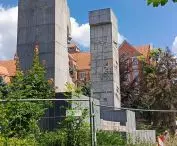
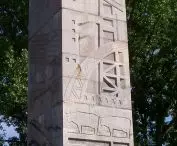
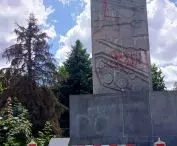
The monument designed by Xawery Dunikowski stood on the axis of Pilsudski Avenue in 1954. Made of stone, the composition consists of two pylons, forming an arrangement resembling an uncompleted triumphal arch. The pylons, intended to symbolize the silhouettes of Red Army soldiers, feature reliefs showing war scenes and symbolic representations of the country's economic development.
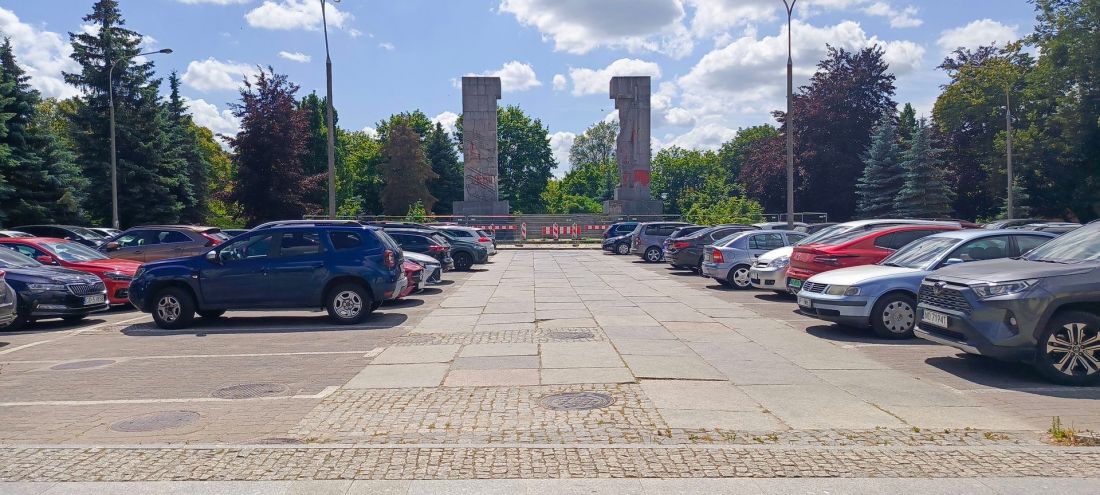
Monument to the Liberation of the Warmian-Masurian Land in Olsztyn - designed by Xawery Dunikowski.
photo courtesy of SARP Olsztyn Branch
creative recycling
The Warmińsko-Mazurskie Land Liberation Monument also occupies an important place in Xawery Dunikowski's overall oeuvre. Interestingly, although the monument is now associated with the tragic events of 1945, its layout was based on the concept of an earlier memorial dedicated to one of the most important figures in Polish history:
The stature of this monument is unparalleled, not least because its composition refers to the design of an unrealized monument in honor of Józef Piłsudski. Comparing the Olsztyn realization with the design of the aforementioned monument, one can clearly see how the author - a prominent sculptor - Xawery Dunikowski very precisely transferred the concept of the Pilsudski monument to the Olsztyn realization. The lack of a central figure between the two pylons, which appears in the design in honor of Jozef Pilsudski in the Olsztyn monument [creates a space that - ed.] is empty, or perhaps is a kind of "open book" - dramatically written in the language of war. This space between the pylons can be read in many ways, it is an excellent concept here. Sometimes the lack of additions says more than they do. This is also the case here.
- Urszula Madeja-Kulecka says.
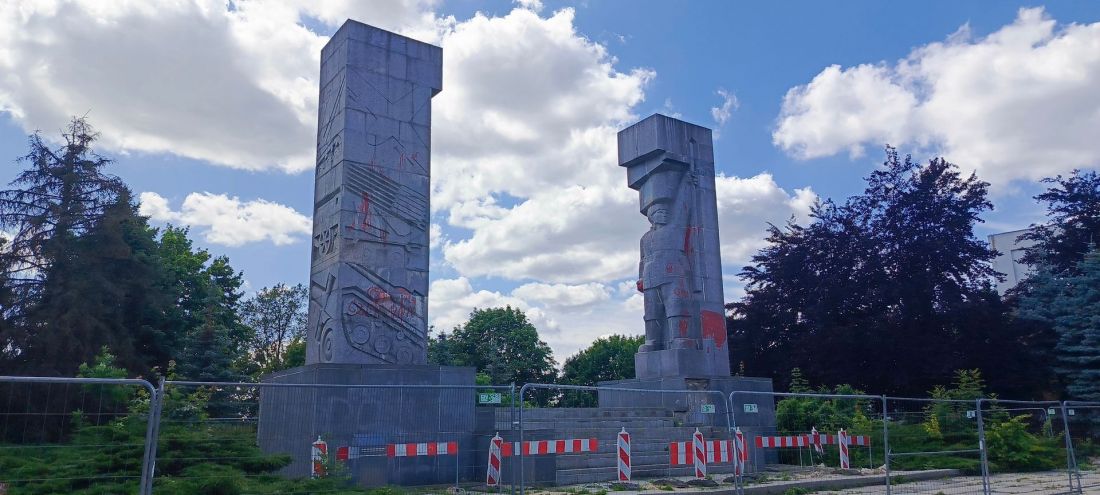
Monument to the Liberation of the Land of Warmia and Mazury in Olsztyn - designed by Xawery Dunikowski.
photo courtesy of SARP Olsztyn Branch
Controversy surrounding the Liberation Monument
The tragic history made the "life" of the monument not easy. Very soon the composition, based on two pylons, began to be called "gallows." Immediately after the political transformation of 1989, efforts began to modify the overtones of the foundation - for example, the name of the memorial was changed, which that same year ceased to be the Monument to the Gratitude of the Red Army, because there could be no question of any gratitude, and became the Monument to the Liberation of the Warmian-Masurian Land. The name of the square, which was previously called Red Army Square, also changed. It is now Xawery Dunikowski Square.
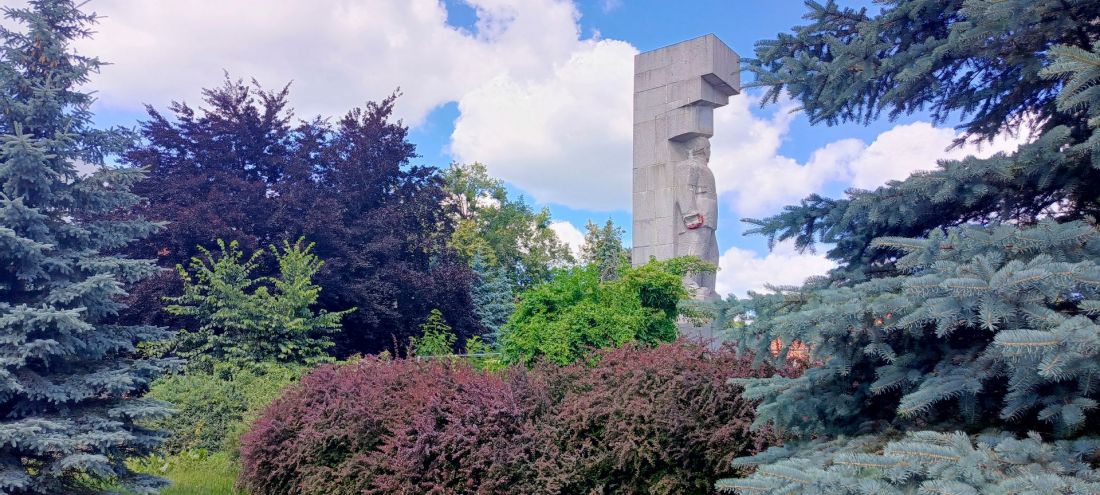
Monument to the Liberation of the Warmian-Masurian Land in Olsztyn - designed by Xawery Dunikowski.
photo courtesy of SARP Olsztyn Branch
There were also much more radical proposals, including the complete removal of the monument, which numerous circles signaled with an open letter to the authorities in 1992. It would seem, however, that the entry in the register of monuments, which took place in 1993, would quell discussions on the liquidation of the memorial. After all, its renovation was carried out in 2010, and the memorial's surroundings were also included in the registry, while an architectural competition for the development of Dunikowski Square was held in 2013. However, it turns out that the political conjuncture favorable to right-wing circles has contributed to the return of ideas to demolish the work of the Polish sculptor.
Demolition of the presidential format
In October 2022, Karol Nawrocki, then president of the IPN, had a speech at the monument, who - citing the 2016 decommunization law - called for the monument's removal. He was echoed by the Olsztyn governor, who, despite the objections of Piotr Grzymowicz, who held the office of Olsztyn's mayor at the time, issued a ruling to demolish the monument. This was made possible by its removal from the register of monuments, which took place in August 2022 on the recommendation of the Minister of Culture, Piotr Gliński.
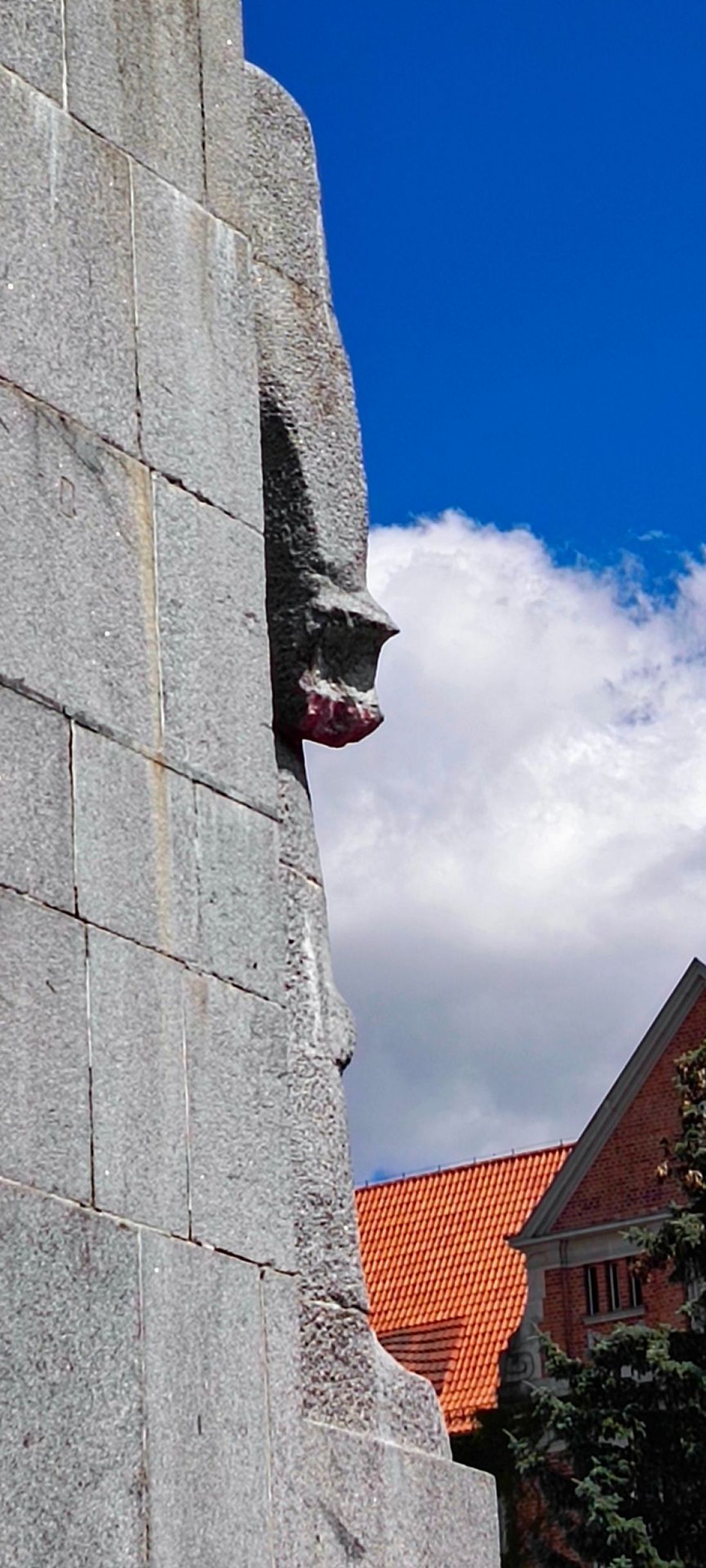
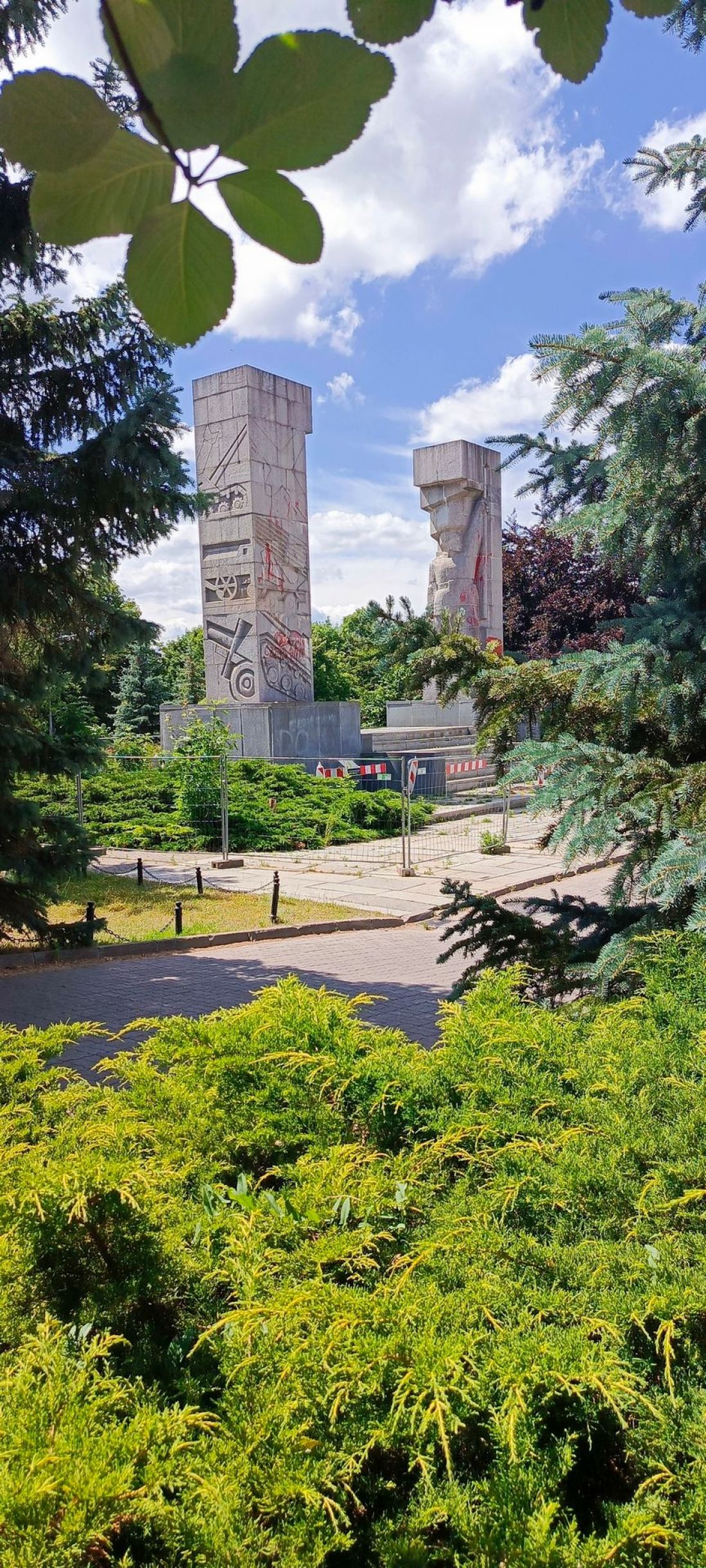
Monument to the Liberation of the Land of Warmia and Mazury in Olsztyn - designed by Xawery Dunikowski.
photo courtesy of SARP Olsztyn Branch
Implementation of the order dragged on until the next local elections, which were won by Robert Szewczyk. Already as a candidate he announced that he would lead to the demolition of the monument. Already from his position as mayor, he presented a preliminary concept, which consisted of dismantling Xawery Dunikowski's sculptures and then developing a new city square in their place using the demolition material.
A competition to save the Olsztyn monument?
Before deciding on the future of the Liberation Monument of the Warmian-Masurian Land, Robert Szewczyk decided to form a special team to discuss possible variants of what the monument could look like in the future. The first of the group's meetings was held on April 23, and the next, after which the Olsztyn mayor announced that plans for demolition were upheld, took place on June 17.
At the meeting on the future of the monument, organized by the Olsztyn mayor in the form of consultations, also appeared representatives of the Królikarnia, or Xawery Dunikowski Museum, the Municipal Conservator of Monuments and the Institute of National Remembrance (IPN), whose representative on the matter did not hide his lack of a neutral stance on the issue. During the second meeting, it turned out that there was no longer a discussion about preserving the monument - instead, there was a question about how to formulate the terms of the competition for the development of the area. I took up the proposal that it should be an ideological competition, which will only define further steps regarding the character of the site. It is not out of the question that there could then be concepts leaving the monument on the square, especially since the sickle and hammer have already been cut from it. Unfortunately, during the discussion there was only talk of full deconstruction and reuse of this material for the public space to be Xawery Dunikowski Square - incidentally, located on Jozef Pilsudski Avenue. There was even an idea to carry out the request of the mayor of Olsztynek, to return a fragment of the monument to Olsztynek. It was no accident that Olsztynek was mentioned. In the vicinity of this town was the mausoleum of General Hindenburg, from which the material for the Olsztynek monument was obtained.
- Urszula Madeja-Kulecka reports.
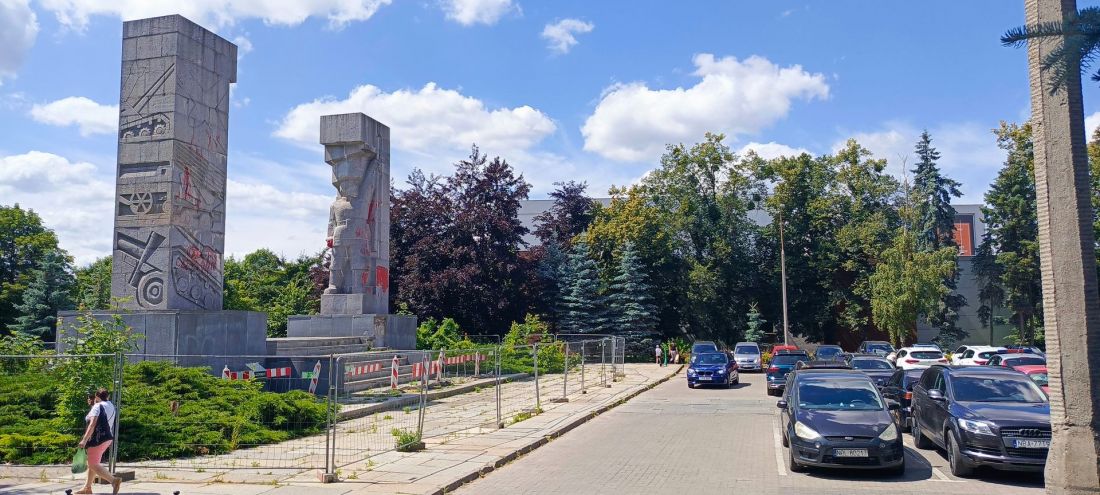
Monument to the Liberation of the Land of Warmia and Mazury in Olsztyn
photo courtesy of SARP Olsztyn Branch
negotiating wall
Despite the negative opinions coming from representatives and representatives of various circles, including architectural and urban planning, as well as historical, Robert Szewczyk seems adamant in his decision to demolish the monument on Pilsudski Avenue in Olsztyn:
So we have reached a wall in the debate about preserving the monument. This is all the more surprising, since since the current president's pre-election campaign took up the topic of "deconstructing the monument" (whatever that is supposed to mean) - until now - a lot has changed in international politics, and it seems that any activity around the monument, in view of Olsztyn's proximity to the Kaliningrad region, is problematic. The city does not have the resources, which it admits to. All of this - as well as the lack of widespread consent to the monument's removal - indicates the legitimacy of deeper reflection on its fate. However, it is not out of the question that "meeting the requirements of the Decommunization Law" - as invoked by the president and groups of right-wing activists who favor the idea of liquidating the monument - will occur and saws treat Xawery Dunikowski's work as a quarry. Is this the only thing we can afford in this discourse? The buzz saw is not a good tool for having a serious conversation about the history of this land.
- Urszula Madeja-Kulecka says.
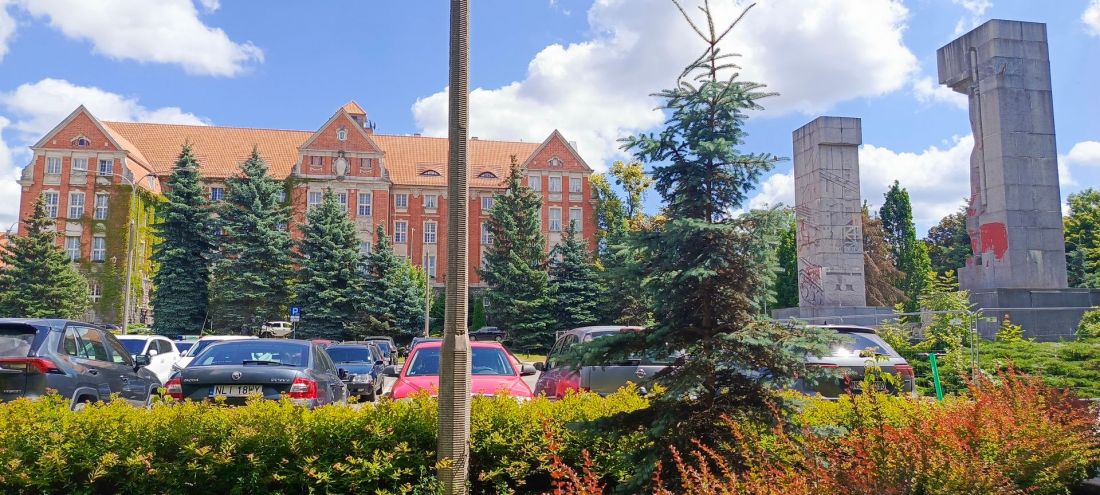
Monument to the Liberation of the Warmian-Masurian Land in Olsztyn
photo courtesy of SARP Olsztyn Branch
SARP Olsztyn in defense of the Dunikowski monument
Faced with the threat of demolition of the Liberation Monument, the official position was presented by the Society of Architects of the Republic Olsztyn Branch, whose president is Adrianna Patalas:
"Demolition is always the easiest.
Always.However, it is more interesting to perform a "forward run".
Monument to X. Dunikowski in Olsztyn is not a mere lump in a mere place. It is an interesting object closing the axis of Kopernika Street, opening the space of the Central Park.
"In our majority we are a community of local patriots, Olsztynians and Poles, but we are also aware that our roots are not very deep, because statistically we are most often here in the second, third or fourth generation. It is impossible to deny our hard work and sincere intentions in emphasizing the Polishness of our "small homeland," but we are also aware that there is still a lot ahead of us, and besides, there are new generations ahead of us who are not born with this consciousness, but have yet to develop it in themselves. That's why this monument, both as an artistic, visual and historical value, should remind everyone, especially us and posterity, of the path we took to get to where we are and what it cost. This place is an ideal base to show our non-negotiable position - no totalitarianism will find its place on earth or support here. The form is a technical matter, the next step in our work on this issue. The ideal idea seems to be, on the basis of the existing monument, to point out that both communism and fascism are equal ideologies, which, although they have afflicted us severely, have not destroyed us and will never manage to do so."
Here is a statement from one of the residents of Olsztyn - a person close to me. I am quoting it in the original, because I don't know if I would have put it better. I will only try to add to the story, cite arguments and provide some facts to give a broad context to the situation we found ourselves in, and not only us as residents of Olsztyn, but Poles.
The discussion about the duty to carry out activities related to the monument has been going on since 1989. That's a very long time... During that time, the monument has been vandalized, listed as a monument and repaired, a competition for its setting was announced, the monument was written out of the list of monuments and ordered to be demolished, and in the meantime, people protested against demolition and lobbied for demolition.
The talks were always very emotional, even aggressive, while the monument itself became a material symbol of the injustices experienced by the residents of the area from the people who "liberated" them. After all this time, it is the building that is almost "to blame," one would think. It's hard to be surprised - after so many years of inaction in any action to make this place already 100% our Polish symbol of hard history, and at the same time pride in the work of an outstanding Polish artist of the 20th century. we did nothing, because there was no money, because there was no good time... We changed the name of the monument, we changed the name of the street where it is located, we named the square to commemorate the artist, now expensive but necessary changes must be undertaken.
The Association of Architects SARP Olsztyn is not the only community that sees an opportunity to commemorate and learn for future generations, leaving the monument and finding a functional-spatial and ideological solution in a representative place of Olsztyn. The meaning of monuments is given by people, so the right narrative can be created. For us, a convincing idea, also due to the brutalist form of the monument, is to remind the victims of the great totalitarianisms of the 20th century - fascism and communism. The idea of tearing down a monument - a part of our history, for some also a work of art - is fundamentally barbaric. We cannot remove all reminders of difficult and often tragic history from the public space, because this will lead to total amnesia among the next generations. The history of Poland, including Warmia and Mazury, should be constantly reminded. The monument is a great memento. It arouses emotions, and that is precisely the point, because thanks to this it is impossible to ignore it, thereby also impossible to ignore the anti-totalitarian narrative given to it, and after all, this is what we are all about. In a city with such a history as Olsztyn, today a provincial city marked by the forced replacement of virtually its entire population, this is of particular importance.
A solution, and certainly a constructive way of solving the problem, is to hold an ideological open competition, the outcome of which would decide the final shape of this part of Olsztyn. It would allow us to choose among the many ideas the most interesting one, the one that best fits the place and emphasizes the narrative we want to create around the monument.
The idea of overturning and leaving the monument in this form, as supposedly the most meaningful, is a curiosity. Setting aside the questionable effect, according to the law one does not make changes to a copyrighted work of art, at least without the permission of the author or his heirs. In Olsztyn we have no other monument by such a famous artist as Xawery Dunikowski, much less can we afford to lose it.
At this point I would like to introduce readers to the author of the monument, an artist, a man not always humbled by the system of the time, and the history of the creation of the monument itself, which is one of the important arguments for the preservation of this work. To preserve it in its original form, in the place where it was created and where our history took place. In order to tell and teach about those times in an authentic "setting".
The creation of the Olsztyn monument by Xawery Dunikowski (b.29.11.1875 -m.26.01.1964), is the post-war period of his work. According to many, the most outstanding Polish sculptor of the 20th century, bequeathed his entire oeuvre to the Polish Nation by his last will. On the anniversary of his death, a museum named after him was opened as a branch of the National Museum in Królikarnia, Warsaw.
"Convinced of his own genius and mission, in various periods of his work he proved to be unruly to the public, critics and authorities alike." Released in 1945, after five years, from Auschwitz by Soviet troops, he wanted to return to work as soon as possible.
Despite his poor health, mobilized by the fact that the recipient of his art would be the government, which would provide him with financial security, he devoted himself to creating monuments, which had always been his greatest desire. Monuments, not ideology.
Here are examples:
- The "Deed of Uprising" monument on Mount St. Anne near Opole.
The work was created as a result of a competition announced by public initiative and was supposed to be completed in 1948, but due to financial problems, politics and Dunikowski's difficult character, the opening did not take place until 1955. "The impetuous Dunikowski was extremely irritated by the constantly new tasks of the Monument Building Committee changing earlier arrangements," he said.
- Lenin bust project.
"The bust of Lenin, created in 1949 and sent to Moscow for exhibition, to which he gave a menacing, almost demonic character, emphasized not only by his facial features, but also by the rough texture, caused consternation. He was forced to explain that he was depicting the leader of the revolution as he conceived the idea of it."
- Competition for the design of the Stalin monument.
"Dunikowski was placed outside the group of invited sculptors with the indication that he could present his design if he wished. (...) The artist did not want to miss such an opportunity. The competition was ultimately not decided, but Dunikowski's Stalin went down in history as the most controversial depiction of the Marshal of the Soviet Union. Włodzimierz Sokorski described the silent astonishment that prevailed after the sculpture was unveiled, when the viewers saw the figure of a "dwarf with a big paw." Undoubtedly, among other projects, Dunikowski created the sculpture closest to the truth about the portrayed, showing an undersized, bloated megalomaniac, also not shying away from revealing frailties (a lame hand). Built of sharply cut, angular blocks, the figure was far from the canons of Socialist Realism. Such an original and controversial design, testifies to the need to create unconstrained, regardless of the consequences."
"Dunikowski was subjected to the pressures of socialist realism and the supervision of state bodies over artistic creation. For an artist who grew up on modernist philosophy and recognized no compromise, this was very difficult to accept. More than once, with his irreverent and provocative behavior, about which anecdotes circulated, he became a nuisance to state authorities. Despite his official speeches in support of the socialist system, he caused the authorities considerable embarrassment with his work."
During the construction of the monument on St. Anne's Mountain in 1949, Dunikowski was given a priority commission to design and build the "Gratitude to the Soviet Army" monument in Olsztyn. Despite the ruin of almost 40% of the city, including many cultural monuments, by the "liberating" Red Army, the authorities of the time decided to commemorate the liberation from the German occupiers in a tangible way.
"As the premise of the monument used the concept presented in the competition for the design of the monument to Marshal Jozef Pilsudski in 1938, placing a candle in the place of the central figure. Planted on a pedestal, the two pylons with figures of Red Army men and military reliefs topped with partial cornices symmetrically facing inward, Poles began to call "gallows." Construction of the monument was completed in 1953."
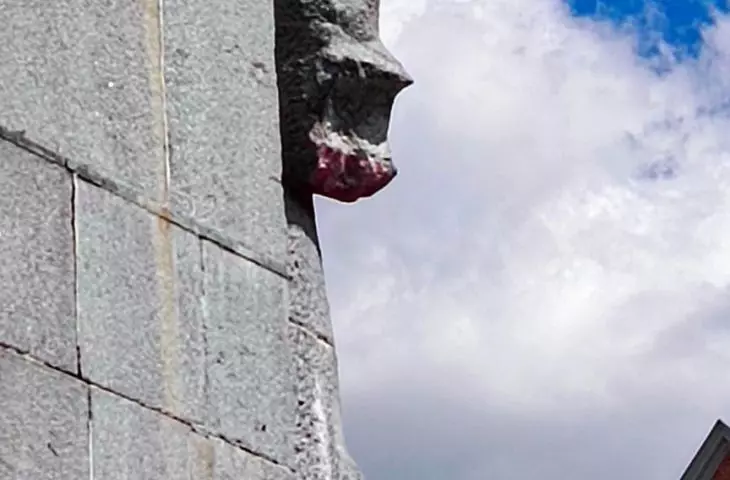
Artistic supervision over the execution of the whole thing belonged to Dunikowski, and the construction of the monument was carried out by sculptors from Dunikowski's studio in Cracow: Jerzy Bandura, Antoni Kostrzewa, Tadeusz Sieklucki, with the help of stonemasons from a construction company in Warsaw. Xawery Dunikowski forged the soldier's head with his own hands. Granite slabs from the monument to the Battle of Tannenberg, later transformed into the Hindenburg Mausoleum near Olsztynek, were used to build the square in front of the monument. Today only the slabs on the axis of the foundation and on the walls bordering Al. Pilsudski - the others were given to Olsztynek, which claimed them as the original owner. The monument was unveiled on February 21, 1954.
In the early 1990s, due to regime changes and numerous pressures from patriotic activists, the monument was renamed "Monument to the Liberation of the Warmian-Masurian Land." In 1993, it was entered in the register of monuments, and in 2022, by decision of the Minister of Culture and National Heritage, it was stripped of this protection. In the same year, in accordance with the provisions of the Law "on Decommunization" the symbol of the sickle and hammer was removed.
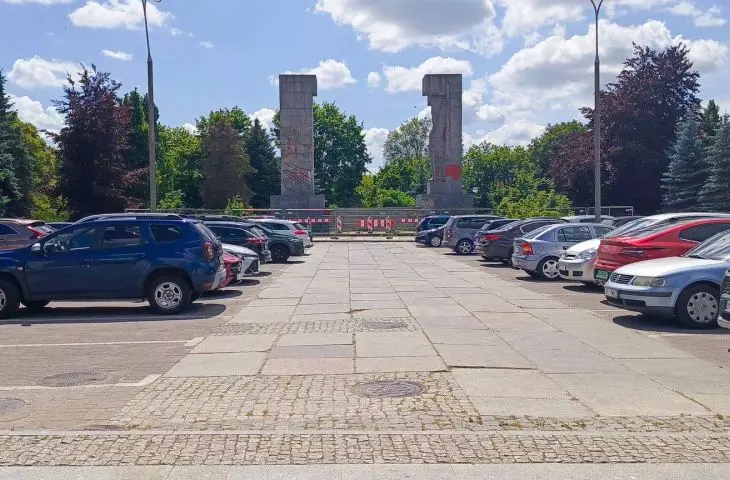
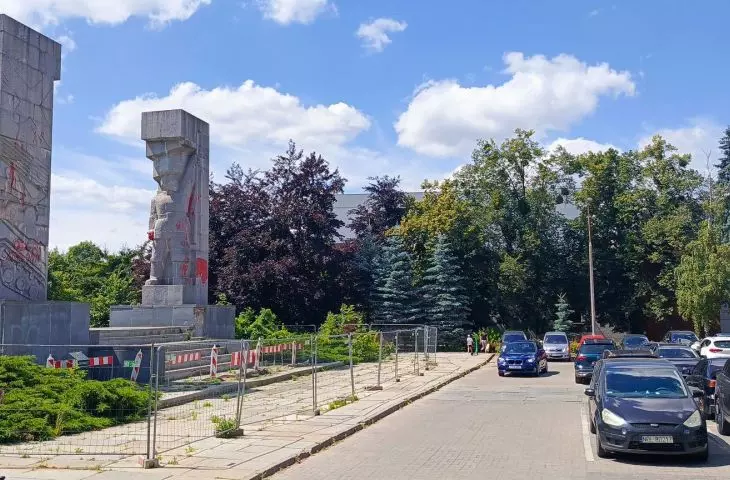
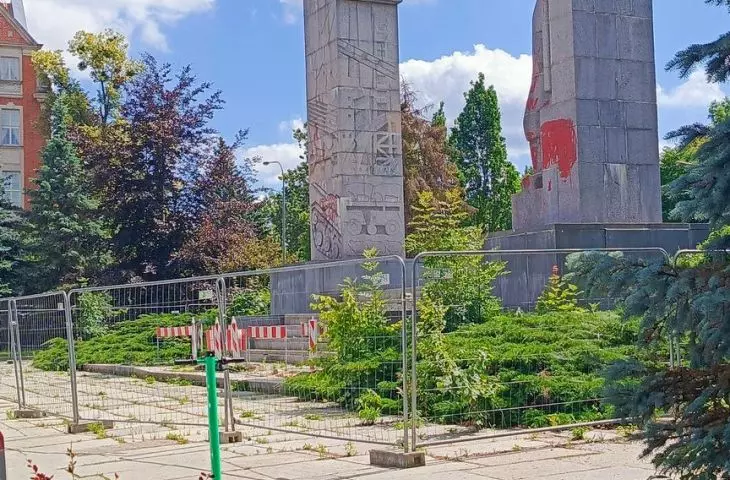
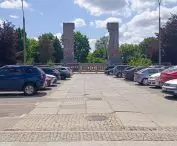
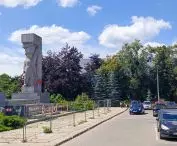
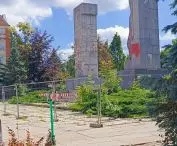
The square now houses a municipal parking lot, which, according to the Olsztyn Local Development Plan, should have been removed after the construction of a garage hall in the adjacent shopping mall. The monument is fenced with a temporary construction fence to curb its devastation. The information board set up after the renovation in 2010 is behind the fence, and its legibility has long since faded. The square described in the Local Development Plan as a public space has not been so for years.
In summary, SARP's position is based on two key assumptions. These are the protection of the function of the city square, the artistic and historical value of the monument, and the patriotic narrative necessary to complete the identity layer, emphasizing our history, causality in the Warmian-Masurian land, and the unequivocal rejection of all totalitarianism, with communism and fascism at the forefront.
However, being aware of financial constraints, we do not agree to the simplest and at the same time UNREFUNDABLE action, which would be the demolition of the monument. The solution could be, for example, a "phased" project. In the first place to give a proper and clear message to this place, and in the nearer or more distant future to build on this foundation a space for a comprehensive story about us, about the Polishness of this land. I point out that so far there is no such place in Olsztyn.
(Writing the text used the album accompanying the exhibition under the curatorship of Joanna Torchała "UNPOKORNY. Xawery Dunikowski" at the Polish Sculpture Center in Orońsko 2011. Editor. Halina Gajewska)
P.S..
While preparing to write the above text I came across an article about the monument to Ivan Chernyshevsky in Pieniężno(https://dzieje.pl/wiadomosci/ambasador-rosji-w-polsce-zlozyl-wieniec-w-pienieznie-zostal-wygwizdany-i-zakrzyczany). This example shows how unfounded is the argument that by leaving the monument we are making a place to lay flowers, because flowers can also be laid at the former monument. More, the example of Pieniężno shows that this attracts the attention and presence of our "liberators," which we can all agree is counterproductive. It's hard to compete on whistles, shouts and escalation, especially with a stronger and violent neighbor. It is many times more effective to use his symbol to disavow his attitude, actions, ideology.
Changing the narrative instead of demolition - Project for Peace in Olsztyn
One of the most ardent opponents of the demolition of the Liberation Monument of the Warmian-Masurian Land is Professor Robert Traba, a respected historian and political scientist, founder of the Center for Historical Research in Berlin and founder of the "Borussia" association. In several open letters to the Mayor of Olsztyn, he has emphasized the importance of the Liberation Monument of the Warmian-Masurian Land both for the urban layout of the city and the nature of the narratives concerning the memory of the events of early 1945.
The researcher gives examples of preserving monuments with negative overtones today, which, thanks to a change of perspective, began to tell completely new stories. The message of Kyiv's Peoples' Friendship Arch monument , which was renamed the Ukrainian Nation's Freedom Arch after its spire was dismantled in 2024, was transgressed in such a way.
In a post on the website of the Olsztyn-based "Borussia" association, Professor Traba, instead of demolition, calls for the creation of an open museum as part of a project called "Project for Peace."
[...] an artistic and museum premise that will - first - neutralize the militaristic message of the monument and - second - create a story about the tragic time of both world wars and the first decade of the post-war period, when a new communist system was being founded in Poland, and Poles were recovering from the trauma of five years of occupation, German and Soviet.
- describes the "Project for Peace" by Professor Robert Traba on the "Borussia" website.
The space around the monument would house a museum telling the story not only of the tragedies of January and February 1945, but also of many other difficult periods in the region's history, including the events of World War I or the reality of the post-war era. In this way, it would be possible to create a place for dialogue and honest telling of history, without resorting to petty destruction of its testimonies, which are, by the way, outstanding works of fine art.
I was reminded of the story of my professor of urban planning - Wladyslaw Czerny. An outstanding figure - the winner of the first prize in the competition for the construction of St. Roch Church in Bialystok, already after 1944 the vice-president of Warsaw, vice-president of Gdansk, co-organizer of the Faculty of Architecture at the Gdansk University of Technology, co-initiator of the reconstruction of the Gdansk Old Town, author of "Architecture of settlement complexes". Professor Czerny postulated the demolition after the war in Gdansk of such buildings as the Gdansk Główny railway station, the building of Gdansk's famous Conradinum technical school - and even the buildings of the Gdansk University of Technology as "Prussian symbols." Soon after, he became a professor at the same Gdansk University of Technology, and even after moving to Wroclaw, he regularly came by plane to Gdansk for lectures at my Gdansk Alma Mater. And the buildings - they remain, currently renovated - with preserved original details indicating their "Prussian" origin - ...and delight. They are also a lesson in history, also not an easy one....
- Urszula Madeja-Kulecka concludes in an interview with A&B.