






Commercial interior architecture is entering 2026 with a clear focus on human well-being, flexibility to accommodate different personality types, and design with an emphasis on expectations for as much individual human performance as possible. In offices, retail spaces, hotels, healthcare or education facilities, designers are increasingly seeking to combine aesthetic innovation with technical precision. In 2026, commercial interior architecture is focusing on sustainability, certifications such as BREEAM, LEED and WELL, and the use of recycled materials, which translates into increasing demands for building solutions. The answer to these needs is modern fire glass systems - large-format glazing and aluminum fireproof profiles that combine fire safety, space transparency and high interior aesthetics.
Global trends - from biophilic design to smart, sustainable materials - are meeting European standards such as BREEAM, LEED and WELL, redefining the way we shape interiors. Here are the key trends that will define commercial interior architecture in the coming year, combining creative approaches with functional requirements.
occupant well-being
and biophilic design
Commercial interiors are increasingly focusing on well-being-oriented design, with a strong emphasis on the mental and physical health of its users. This trend is evident in offices and hotels, where spaces are created to reduce stress and promote well-being, while there is also a noticeable shift away from the typical "corporate rush" aesthetic.
Biophilic design - understood as introducing elements of nature through greenery, daylight and organic materials - plays a key role. Designers are eager to use warm woods, green plants, aquatic details, and nature-inspired patterns to enhance the mood and overall comfort of users.
This direction is reinforced by health-promoting standards, such as the WELL Building Standard 's principles promoting access to daylight, good air quality and contact with nature. Even medical facilities are implementing biophilia, and hospitals are increasingly offering access to gardens, and already at the design stage are assuming the construction of well-lit rooms, illuminated by natural light and incorporating natural motifs in the design to promote well-being and regeneration.
The resi-mercial design trend - which involves bringing domestic warmth to public spaces - is also prevalent in many sectors. Offices and hotels are gaining cozy lounge areas with soft fabrics and details that make users feel decidedly more at ease.
Human-centered design has become a priority. Interiors are to be not only functional, but also restorative and inspiring, with well-being and comfort as the main determinants of quality.
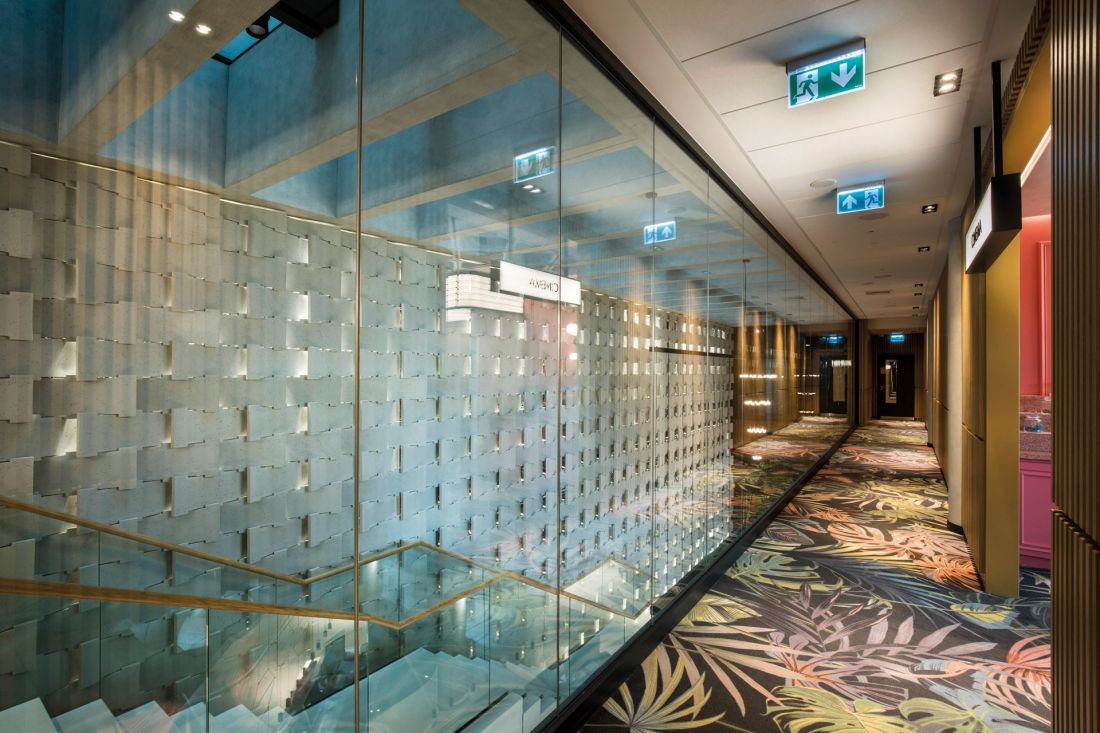
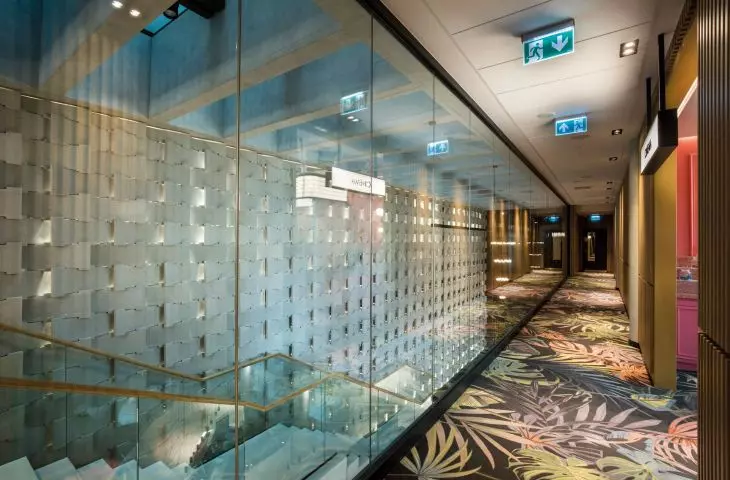
Hotel Puro
design: ASW ARCHITECTS
© ALUFIRE
evolution of aesthetics -
from minimalism to character
The aesthetics of interiors in 2026 is moving away from strict minimalism towards designs with more original character and local color - simplicity does not disappear completely, but it takes on decidedly warmer colors and friendly textures. Instead of cool whites or grays, deeper, atmospheric shades appear - greens of precious stones, brown red of terracotta, intensely deep reds in maroon shades, and purples - combinations that guarantee natural and neutral tones.
Layering also becomes a key design element - combinations of stone, wood, metal and fabrics create interiors full of depth. Bold floral or geometric patterns are making a comeback in commercial designs in a more sophisticated form. The hospitality industry is leading the trend, combining modern luxury with vintage accents and local art, replacing the old aesthetic of uniformity. In retail and foodservice, on the other hand, interiors are becoming more immersive - light, smell and sound create a cohesive, memorable experience.
Across all sectors, there is an increasing emphasis on authenticity and identity of place - interiors are meant to reflect local culture and history. The result is more personal, engaging spaces for all the senses that are memorable, moreover, positively emotionally impactful.
sustainable materials
and green certifications
Sustainability is no longer just a trend - in 2026 it will become the foundation of interior design. Environmentally conscious design decisions are now an expectation of clients, investors and users. This applies to the selection of materials, as well as construction methods or waste disposal.
Low-emission and recycled materials are taking the lead: reclaimed wood, metal, PET panels or bio-composites, which are not inferior to the aesthetics of traditional solutions. Dynamic development can also be seen in material innovations - glulam structures, carbon-neutral flooring and solutions designed with closed-loop cycles in mind. In Europe, a particularly strong emphasis on the circular economy, as well as stringent environmental regulations, is leading to the selection of materials with EPD declarations and Cradle to Cradle certifications.
Certification systems such as LEED, BREEAM and WELL remain markers of quality - enforcing high energy efficiency, low VOC emissions, water conservation and concern for occupant health. Certified facilities not only reduce environmental impact, but also bring business benefits: they improve concentration, reduce reasons for absenteeism for health reasons, and increase the value of the property itself.
Manufacturers are responding by offering environmentally friendly solutions - recycled furniture, carpeting made from recycled fibers or low-emission coatings. Aluminum and glass systems are also part of this trend: aluminum, thanks to its infinite recyclability without loss of quality, has become one of the most sustainable materials.
In 2026, "sustainable by design" will become the norm - the use of green materials and the pursuit of certification will be a matter of course.
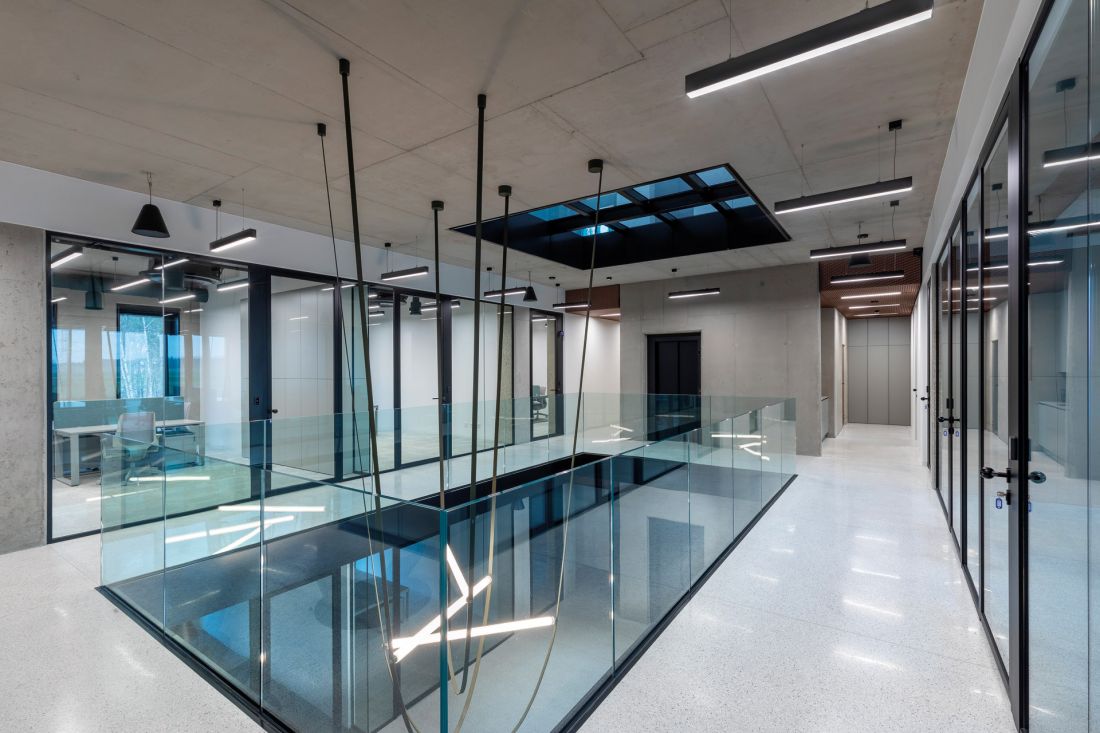
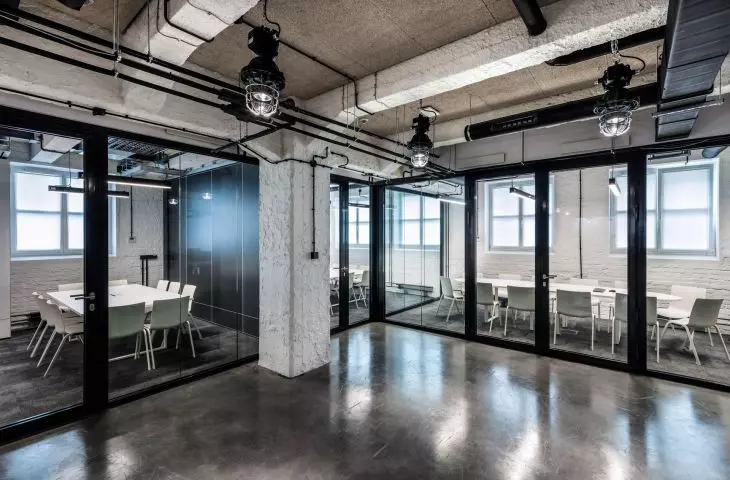
Romgos Offices
proj.: ODA STUDIO
© ALUFIRE
smart technologies
and responsive spaces
Developments in smart technology are transforming interiors into responsive, modern environments that respond to users' needs. Technology discreetly supports comfort, efficiency and user experience.
IoT and sensor-based systems are becoming standard. Offices are equipped with receptors that monitor air quality, temperature or noise levels, automatically regulating lighting and air conditioning. Smart buildings are adapting to the rhythm of the day, optimizing energy consumption, and improving comfort.
The future belongs to individual climate zones - workstations with local control of temperature and ventilation, controlled by intelligent HVAC systems.
acoustic comfort
and user privacy
With the popularization of open space layouts, the importance of acoustics is growing. Awareness of how noise affects health and productivity is making sound control as important as attention to light or temperature. Designers are turning to modern solutions that combine function with aesthetics - PET felt panels, wooden laths, acoustic light fixtures or decorative partitions. Modular acoustic systems make it possible to adapt the space to changing needs.
Instead of traditional walls, acoustic zoning is used - free-standing partitions, acoustic glass and ceiling panels create zones of silence while keeping the interior open. Digital sound masking systems that respond to noise levels in real time are also increasingly being implemented in offices.
In hotels, restaurants and hospitals, acoustic design has become an integral part of comfort and the treatment process itself. The WELL standard underscores the importance of acoustics to occupant well-being. Modern walls and firewalls combine transparency with excellent acoustic insulation - today they are multifunctional solutions that combine security, privacy and aesthetics.
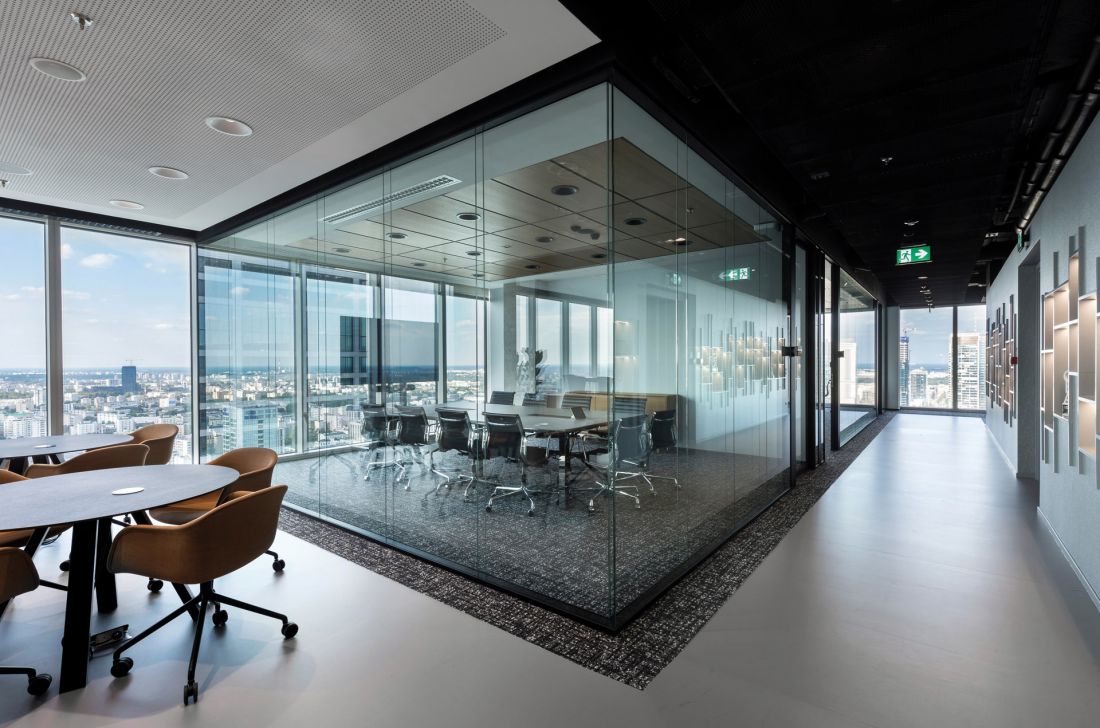
CBRE offices, Warsaw UNIT
proj.: PBPA Projekt
© ALUFIRE
glazing, daylighting,
fire safety and efficiency
One of the key challenges of contemporary interior design is the combination of open, light-filled spaces and security requirements. The trend of transparent interiors - with extensive glazing and open lines in which nothing disturbs the view - must go hand in hand with safety and fire protection.
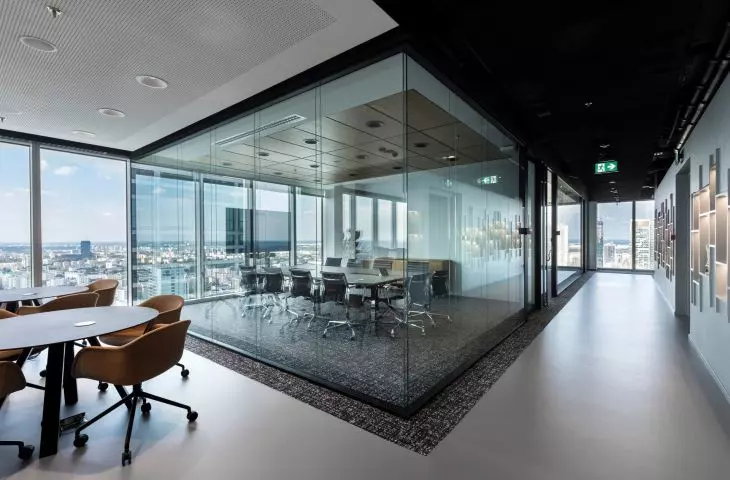
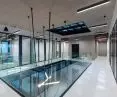
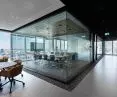
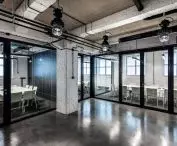
Modern fire glass systems make it possible to design floor-to-ceiling glazing that combines elegance with safety. Glass panels are bigger, brighter, and are also more efficient than ever. Slim aluminum profiles, available in a variety of colors and finishes, make it possible to integrate fireproof solutions with interior aesthetics - safety no longer requires compromises. Such systems not only protect against fire and smoke, but also dampen sound and promote effective natural lighting, which improves well-being and productivity.
Collaborative efforts between designers, engineers and manufacturers are producing solutions that provide safety and visual integrity at an early stage of design. Increased investor awareness, as well as stringent regulations, are making fire protection systems an integral part of modern interior architecture.
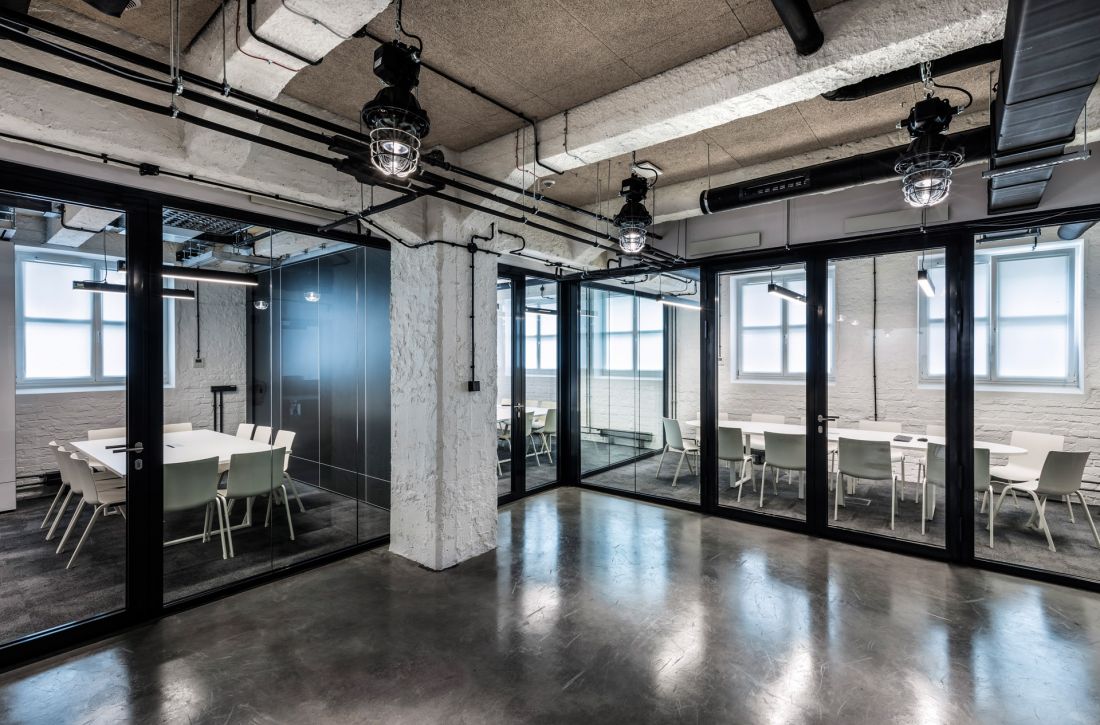
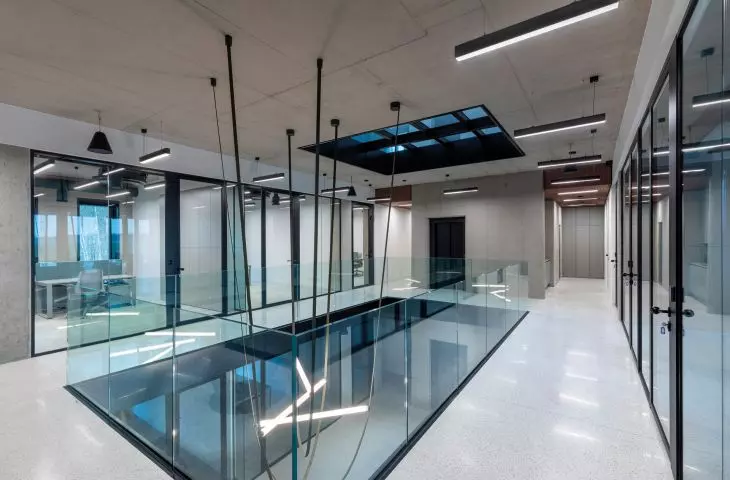
APA Wojciechowski,
Head office - Warsaw
© ALUFIRE
summary
Commercial interior architecture in 2026 is a combination of creativity and technological excellence. The spaces of work, education, retail, hospitality and healthcare are dominated by a common denominator: experience, well-being and sustainability - without the need to compromise.
Warm color palettes, natural materials and daylight give interiors a human dimension, while smart building technologies, acoustic engineering or fireproofing systems make them safe, quiet and more environmentally friendly.
European and global standards - from fire safety standards to green certification - ensure that the office or hotel of tomorrow will not only be beautiful, but also safe, healthy and low-emission.
Michal R. VOZNIAK
Illustrations provided courtesy of ALUFIRE.