



![Kongjian Yu [1963-2025]](https://cdn.architekturaibiznes.pl/upload/cms_aktualnosci/41596/images/kadr12/fit/730x480/kongjian-yu-491464.webp?)
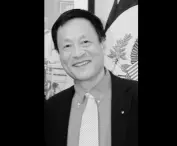
On September 23, 2025, at the age of 62, Kongjian Yu, a Chinese-born landscape architect and urban planner known for developing the "sponge city" concept and promoting nature-based solutions with a special focus on the role of water management in cities, died in a plane crash.
© Turenscape
Kongjian Yu was born on May 12, 1963 to a farming family in Zhejiang Province, China. He studied landscape architecture at Beijing Forestry University. In the 1990s, he defended his doctoral thesis on safety patterns in landscape planning at the Harvard Graduate School of Design (Cambridge, USA). In 1997, after returning to China, he founded the Department of Architecture and Landscape Architecture at Beijing University and became its dean. He returned to Harvard over the years as a visiting professor.
He was also the founder of the journal Landscape Architecture Frontiers and the interdisciplinary studio Turenscape(Tu stands for land, soil, and Ren for man, human being), whose philosophy is to create harmony between land and man and shape a sustainable environment for the future. The team has completed more than a thousand projects in two hundred cities, where it has combined traditional Chinese water management techniques with modern urban planning.
Yanweizhou Park in Jinhua City
© Turenscape
city like a sponge
In his actions, he encouraged people to accept the city's water, not to "box" with it, to fight it, but to create a relationship, a gentle game, as in tai-chi exercises. He promoted a holistic approach to managing water wisely, working with it - adapting and mitigating climate change instead of focusing on solving individual problems, harmoniously intertwining green and blue infrastructure, creating millions of small unsealed cells that together can build water-absorbing "sponge cities."
Purification terraces in Handan
© Turenscape
Yu's proposed "sponge city" concept, which has evolved over time to a vision of a "sponge planet," is a nature-based approach to urban water management that seeks not only to mitigate flooding and improve water quality, but also to increase biodiversity. "Sponge cities" thus use wetlands and permeable surfaces to absorb, filter and store rainwater. This planning model has been adopted in China as a nationwide urban policy.
© Museum of Science
think like a king, act like a peasant
More than ever, we need to pay attention to the way we build our cities, the way we treat water and nature, and even the way we define civilization. [...] The "Sponge City" or "Sponge Planet" is a holistic and nature-based solution to protect and restore ecological infrastructure and use nature's services wisely for the benefit of the planet and the well-being of people. We must think like a king who had a vision to heal the Earth and live in harmony with nature. But we must act like peasants, not with very sophisticated technologies, but with very simple tools. Individually they may be small actions, but together they will create a green planet, turning gray into green
- he said.
© Frontiers
On September 23, Yu was in São Paulo on the occasion of the Architecture Biennale there. The plane he was flying in crashed in the Pantanal region of Brazil, the largest wetland in the world, where the architect was filming a video about his work. In the small, single-engine plane, in addition to the architect, were Brazilian filmmakers Luiz Fernando Feres da Cunha Ferraz and Rubens Crispim Jr. and pilot Marcelo Pereira de Barros. All were killed. The causes of the crash, according to Brazilian media, are still under investigation.