






We’ve spent long days searching for even a sliver of shade during the recent heat wave. Everything seems to indicate, however, that such extreme conditions may occur more frequently and last longer. Where can we find respite? How can we design shade? Can architecture become climate infrastructure? Architects from the TŁO studio offer an answer, having presented an installation at the Concéntrico festival in Logroño, Spain, that passively regulates the microclimate.
Read more: Architecture for a Different Climate
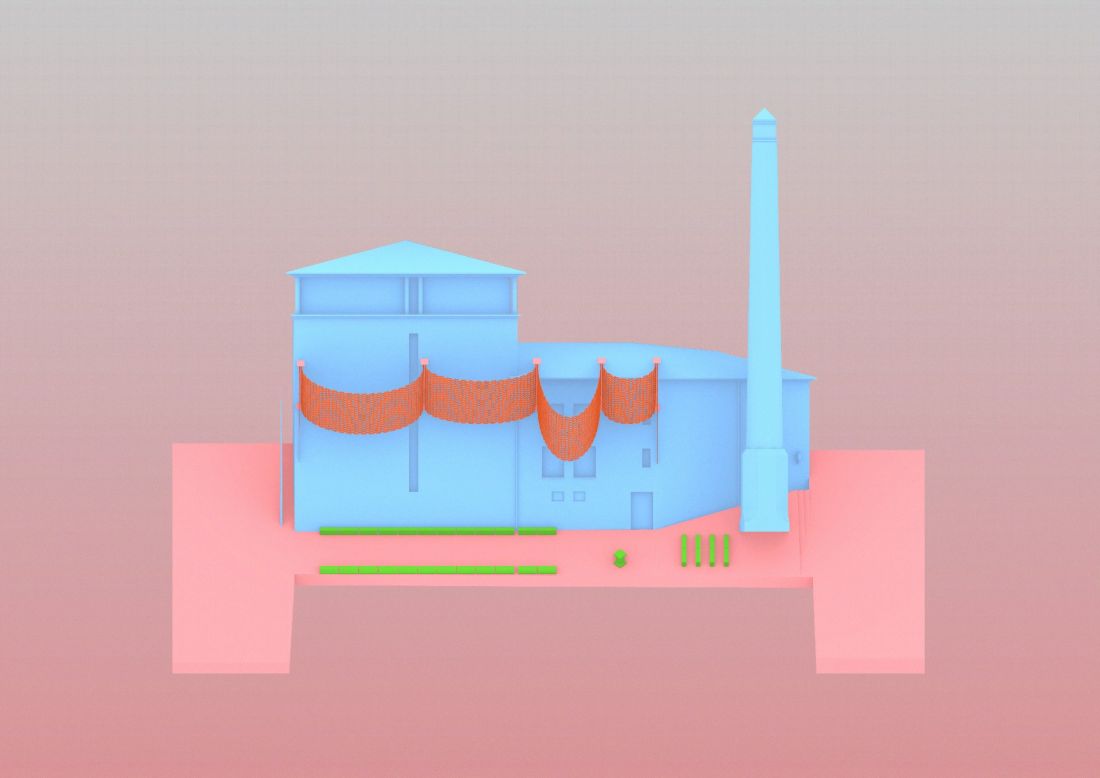
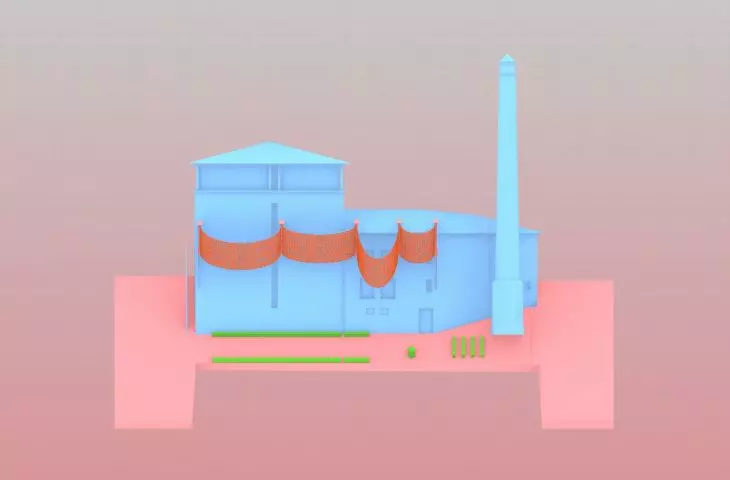
The “Los Sábados” installation at the Concéntrico Festival in Logroño, Spain; axonometric view
© TŁO
A space for building relationships
Logroño, a city in northern Spain, has hosted the Concéntrico international architecture and design festival since 2015. For several days, public spaces become an urban laboratory—temporary installations created by designers from around the world allow for the testing of various ideas and solutions for the squares, courtyards, and streets of the historic center of the capital of the province of La Rioja. The temporary transformation of individual spaces and the proposal for new ways to use them allow us to view the space around us differently, perhaps to define new needs, and at the same time—thanks to the inclusivity of the process—to give residents a sense of agency and belonging.
Over the years, the project has become highly process-oriented [...]. It is not about the end result, but about the sense of influence over what is being created, which makes the community feel like a part of the change. In this way, we sought to show that architecture, design, and public space can be tools for creating new relationships. Ultimately, it’s not so much about the durability of the structure as it is about the durability of the strategy, perspective, and education that we’ve built through this dialogue
— says Javier Peña Ibáñez, the festival’s director, about the event.
Los Sábados
The Spanish festival has previously featured works by many Polish artists: in 2019, Jakub Szczęsny installed the Taburete Tower in Logroño—towers made of wooden stools that, after being dismantled, found their way into the homes of the city’s residents; a year later, Iza Rutkowska created an installation in the form of an oversized plywood rocking horse, reminiscent of a traditional equestrian statue, while the Centrala Design Group and the Bęc Zmiana Foundation presented an exhibition dedicated to the imagination of planetary architecture; in 2022, the BudCud studio presented “Miejskie Sadzonki,” and Paweł Grobelny created minimalist benches in the square in front of the town hall designed by Rafael Moneo; In 2024, Jacek Wielebski of Traffic Design repurposed the only remnant of the demolished building—an old wall—and this year, the TŁO presented the installation “Los Sábados,” meaning “Saturdays.”
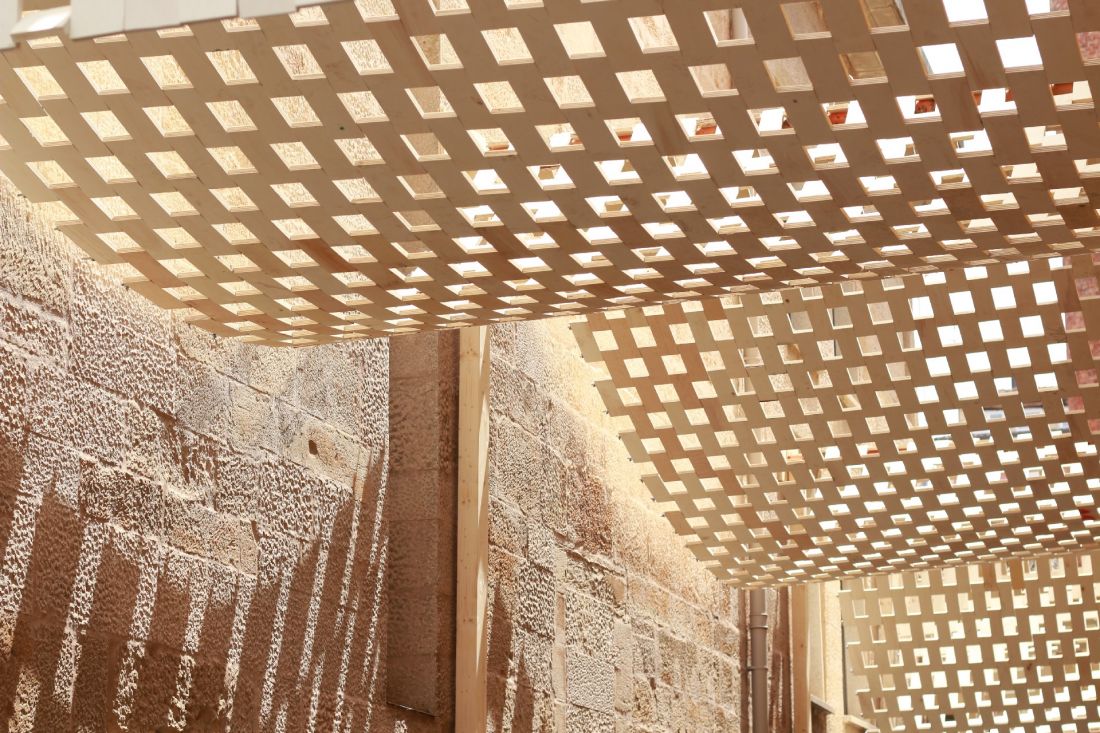
The “Los Sábados” installation at the Concéntrico Festival in Logroño, Spain
photo: Filip Pawłowski
We wanted to bring a piece of Polish hospitality to Logroño—the kind that offers shelter from the weather to every traveler, without asking why they’ve come. That’s the logic behind Polish Saturdays, and that’s what our installation conveys
— explain the project’s creators.
The “Saturdays” referred to by the architects— Michał Sikorski and Filip Pawłowski —are low arcades that traditionally surround wooden churches or Orthodox churches in Poland. This architectural element, initially a structurally critical feature designed to protect the building from rainwater, eventually also became a place of refuge for pilgrims traveling on foot, who—due to the distance — would arrive for Sunday services a day early and wait for them to begin right under the “soboty.”
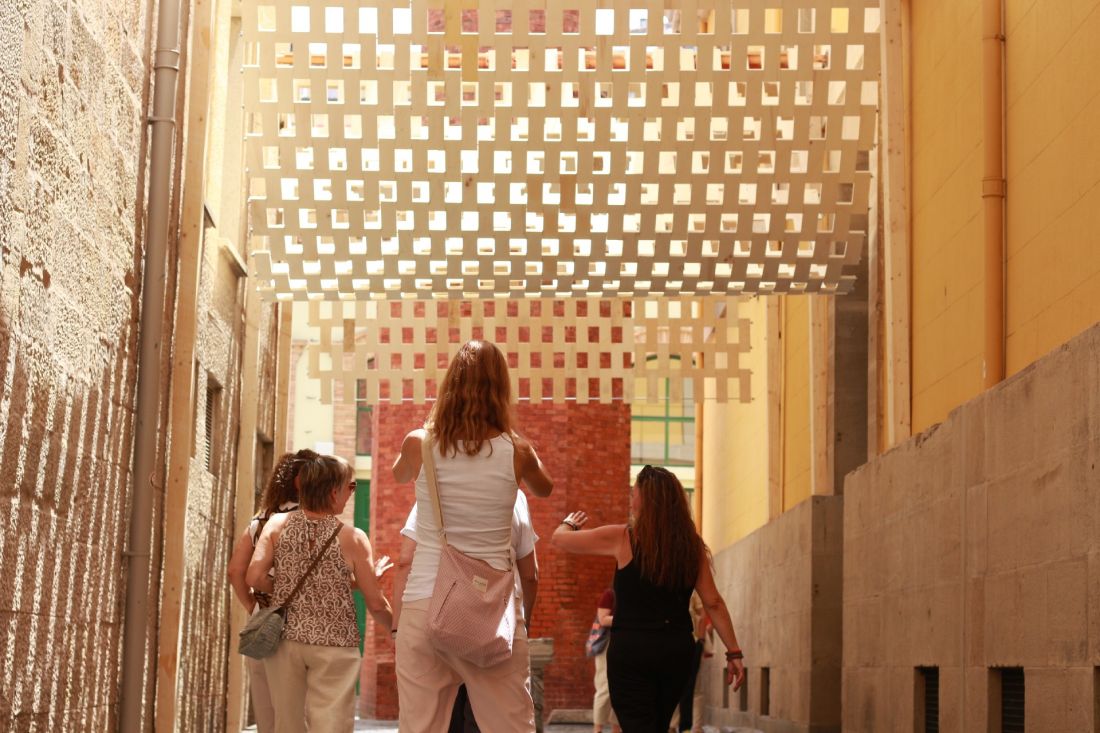
The “Los Sábados” installation at the Concéntrico Festival in Logroño, Spain
photo: Filip Pawłowski
Their significance stemmed not from their form but from their function: they provided shelter from the weather and allowed people to rest [...]. In Logroño, the same idea responds to different conditions: not rain, but sun and heat. The installation passively regulates the microclimate
— the architects add.
architecture of shade
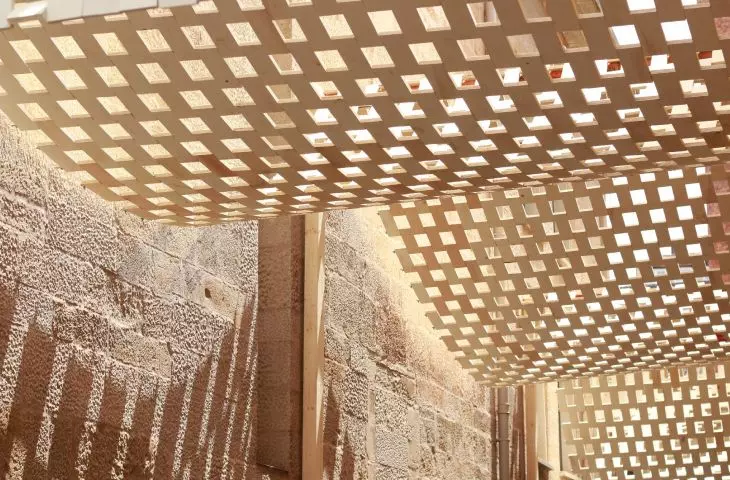
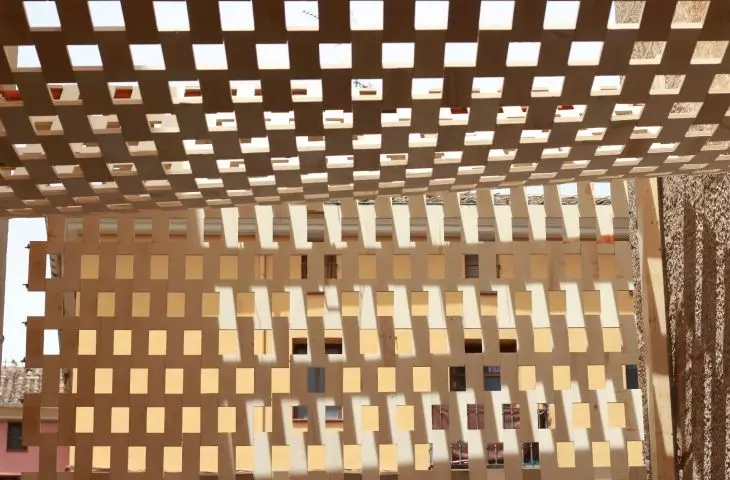
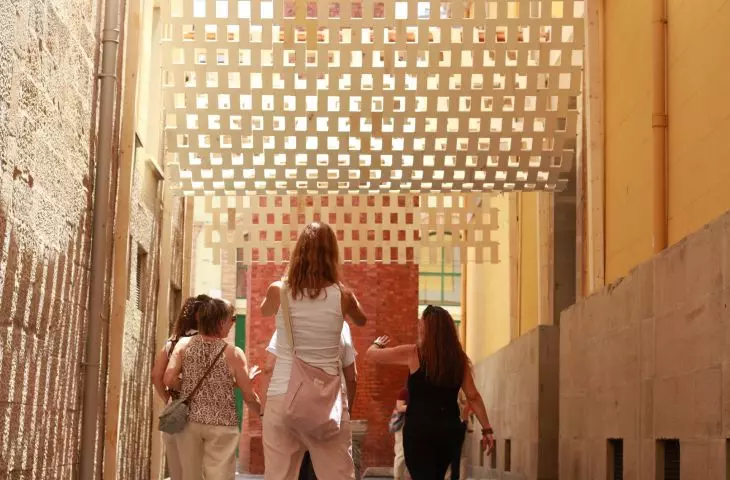
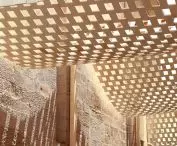
The “Los Sábados” installation, for the duration of the festival (June 18–23, 2026), was located in a narrow, heavily trafficked passageway in the very heart of the city, right next to the seat of the La Rioja regional parliament, housed in a former tobacco factory. Its form is reminiscent of Spanish “toldos”—fabric awnings popular especially in the summer, stretched across the streets to protect pedestrians from the sun’s rays, which are often unbearable at this latitude.
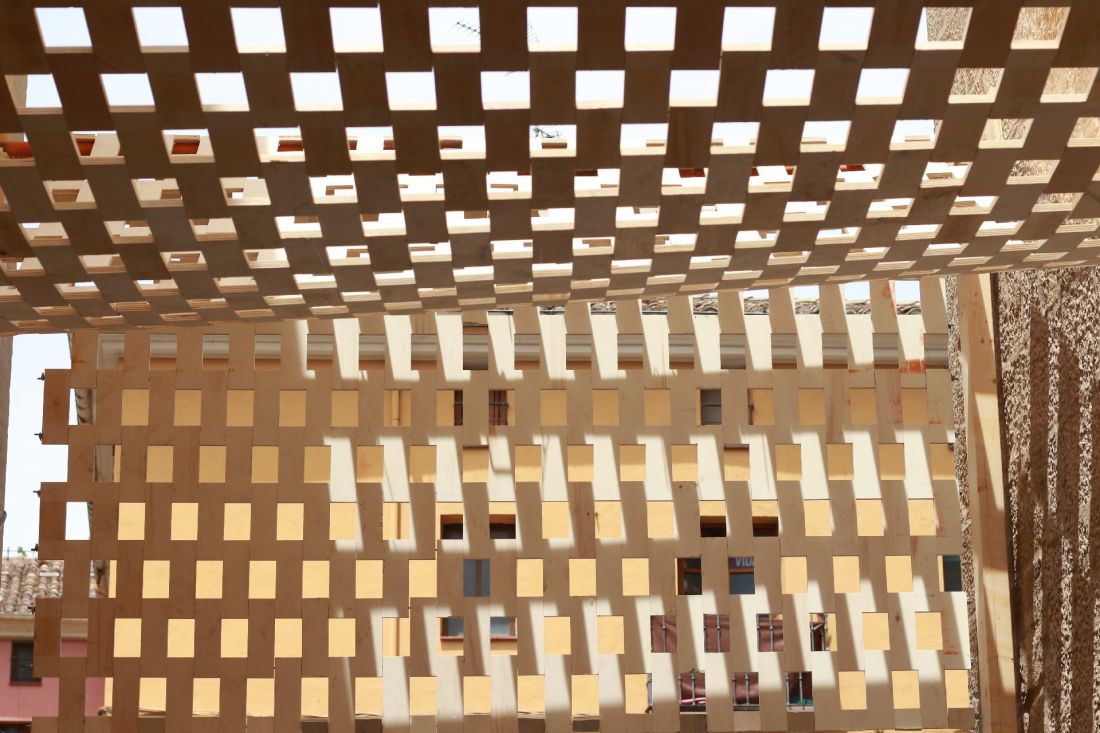
the interplay of light and shadow, which changes depending on the time of day
photo: Filip Pawłowski
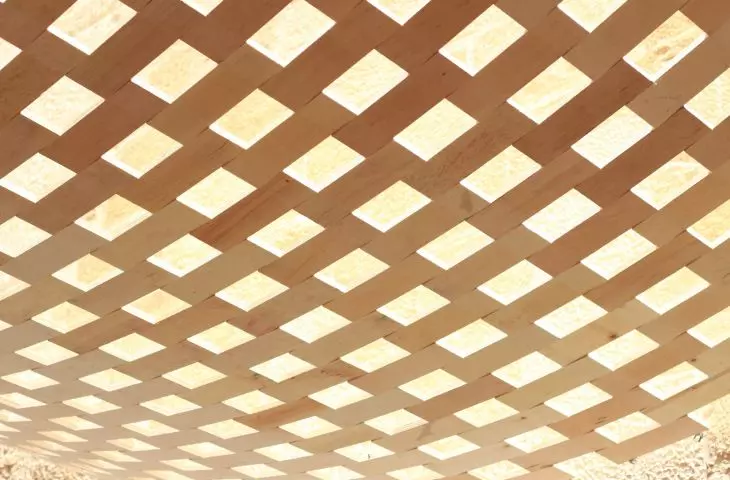
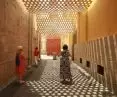
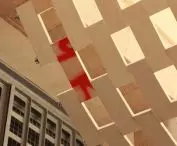
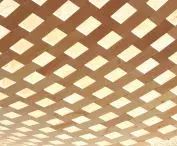
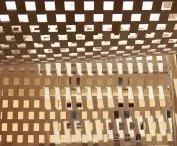
The installation by the TŁO studio functions similarly—it provides shade during hot weather and creates a space to pause. To create the canopy, however, the architects used wooden slats rather than fabric, which is part of the studio’s series of experiments with “fabrics” constructed from rigid elements. The effect of softness in the suspended structure achieved by the designers is impressive. The interplay of light and shadow, which changes depending on the time of day, is also striking.
© Concéntrico
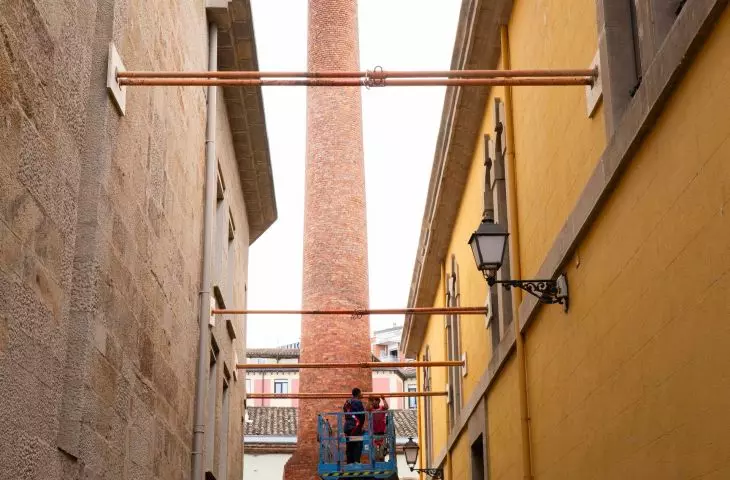
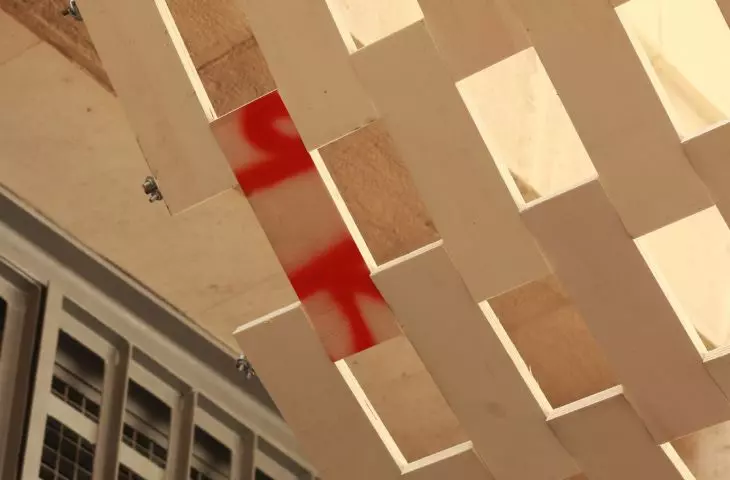
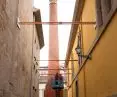
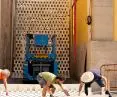
“Architecture functions here as climatic infrastructure —not an iconic structure, but essential urban infrastructure that responds to environmental conditions,” the designers explain. — Wooden slats cut from a mix of discarded and new sandwich panels were threaded onto rods and suspended above the passageway. Like the shingles on a church roof , they form an openwork canopy that filters light rather than draining rain. The entire structure is held apart between two facades by steel struts working under compression—without a single anchor in the historic walls. The semi-permeable structure responds dynamically to the sun’s movement, creating ever-changing patterns of light and shadow throughout the day. It is complemented by stone curbs arranged as seating—together, they provide the basic elements: shade, a place to pause, and protection from the sun.
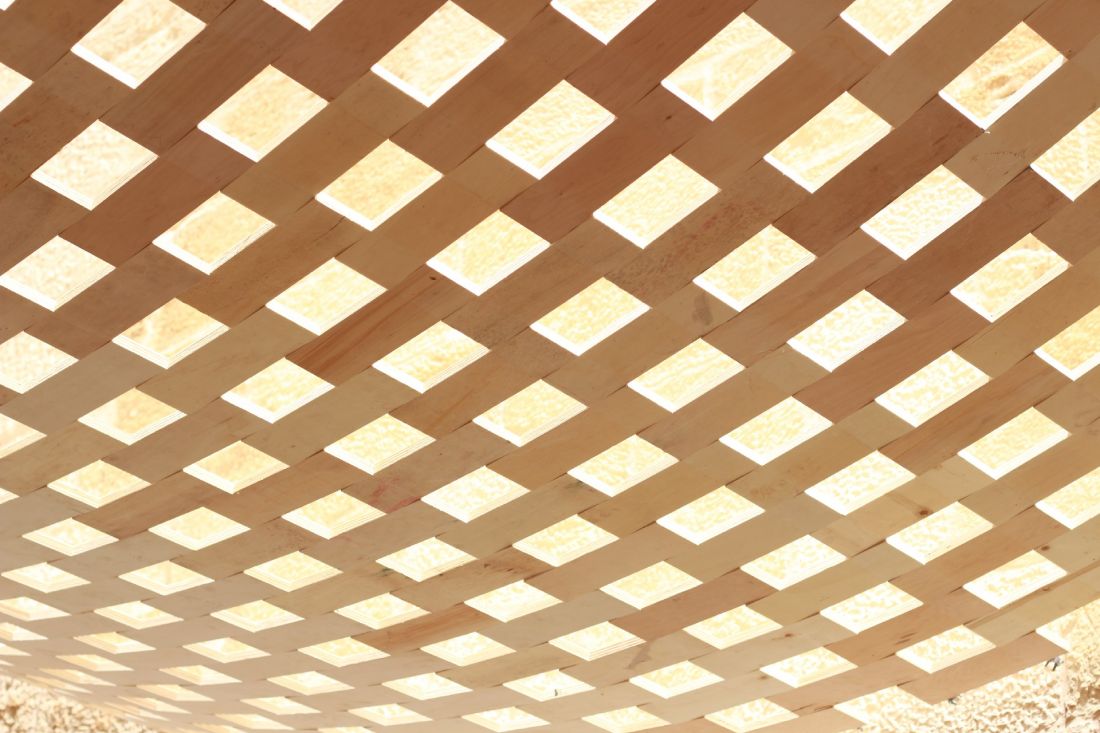
The use of wood in the installation is part of the studio’s series of experiments with “fabrics” constructed from rigid elements
photo: Filip Pawłowski
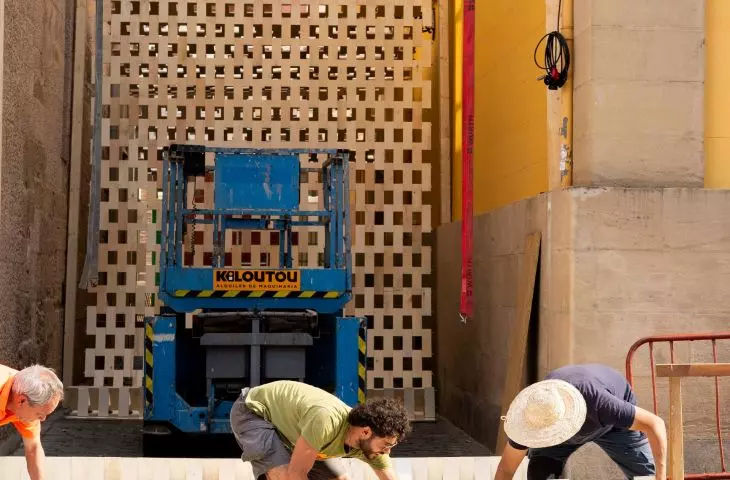
In accordance with the “design for disassembly” principle promoted by the TŁO studio—that is, designing products or buildings with their end-of-life cycle in mind—the architects have planned for the future of the installation, which is fully disassemblable. After the festival ends, the curbs serving as seats are to be returned to the municipal warehouse from which they were borrowed, and the steel struts will be unscrewed and folded so that they are ready for reuse.
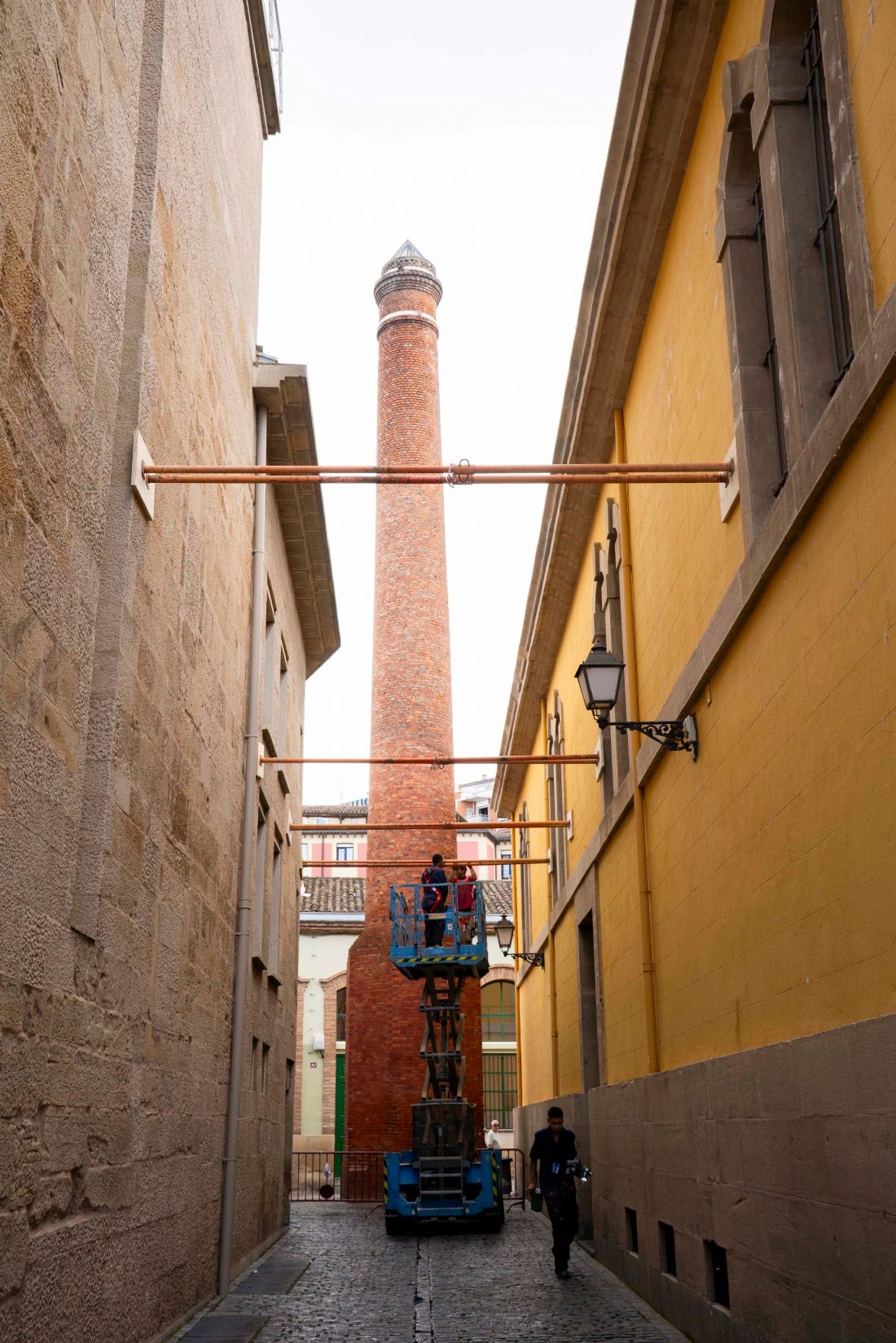
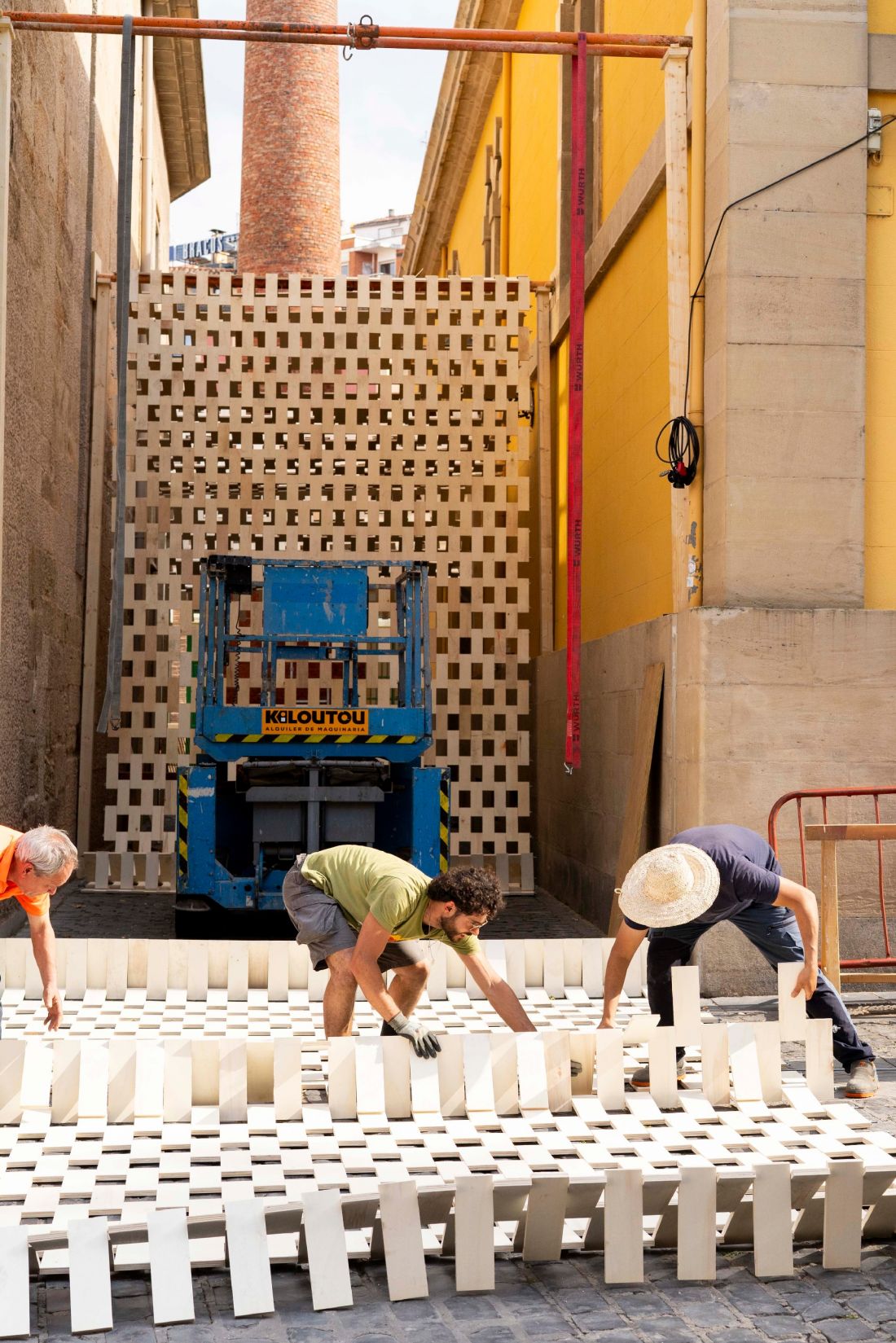
Wooden slats cut from a mix of discarded and new sandwich panels were threaded onto rods and suspended above the walkway
Photo: Sara Cuerdo
“Los Sábados” transforms a narrow passageway into a temporary, sheltered urban interior— an accessible and non-hierarchical infrastructure of shade. It does not introduce a new program, but rather reinforces the potential that already existed in this space
— the designers conclude.
The installation was created in collaboration with the Polish Institute in Madrid, the Institute of Creative Industries, and the Adam Mickiewicz Institute as part of the “Polish Culture in the World 2026” program.