




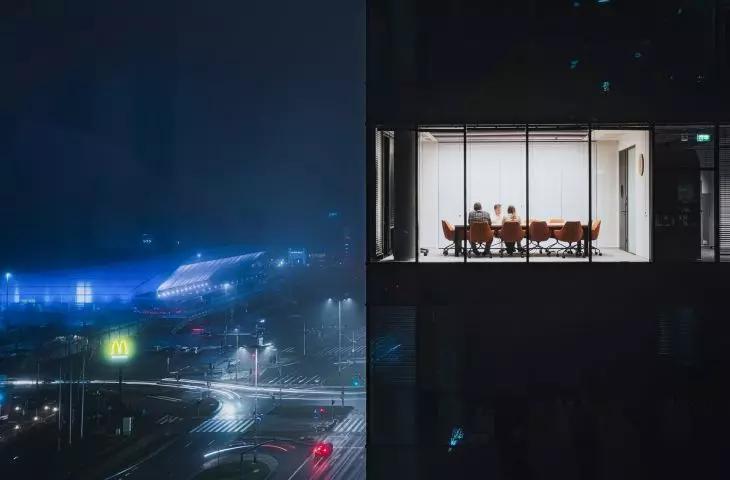



Mass production of goods, large-scale food production or the development of new technologies - these phenomena have accompanied humans for only a fraction of the history of the species - as opposed to nature. This approach was presented by one of the promoters of the biophilia concept - Stephen R. Kellert - justifying the natural human need to identify with the processes present in the environment and connect with nature. And it is the understanding of this inclination that is the starting point of biophilic design (from Biophilic Design). How do spaces created according to this concept influence humans and fit into the idea of sustainable buildings? What role do light and lighting play in them? We answer together with Dr. Pawel Morawski, an expert from TRILUX Poland.
Biophilia itself - first mentioned as early as the 1980s. - is understood as the primordial bond between man and nature. Designing with reference to this concept translates into creating healthier and more sustainable spaces - both commercial and otherwise - that deepen people's contact with nature in the built environment. Despite the fact that today we spend up to 90% of our time indoors, it is the connection with nature that influences our physical and mental health, well-being and productivity of the activities we undertake. How does it become possible to "allow" nature into commercial spaces as part of the design process?
Natural conditions in modern buildings?
The framework for biophilic design in modern buildings is formed by three types of experiencing nature: direct, indirect, and space and place. Among the attributes of biophilic design that fit precisely into this framework and the three categories are natural materials, ornamentation inspired by shapes and forms found in nature, natural geometries, spatial features characteristic of the natural environment, or natural light and reproduction of natural light. These elements complement each other, and when combined they form, as Kellert calls it, "an integrated ecological whole." This takes into account the conditions of the specific project, including the use of the building and the landscape, logistical and economic factors, or ecological conditions.
Where there is light, there is life - about the role of light in biophilic design
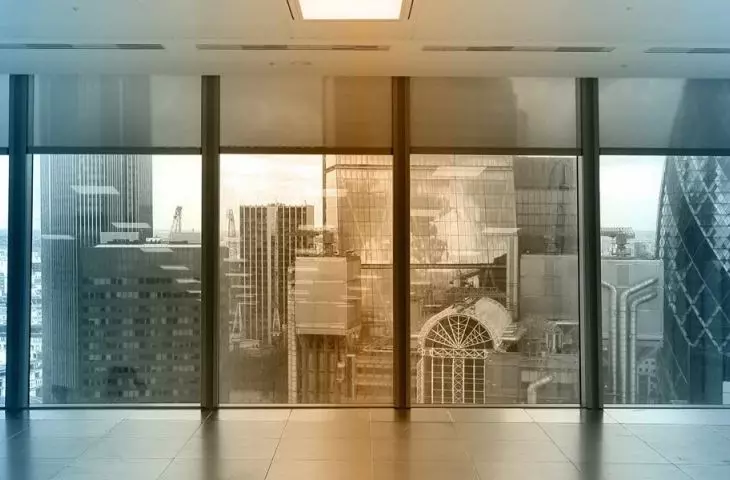
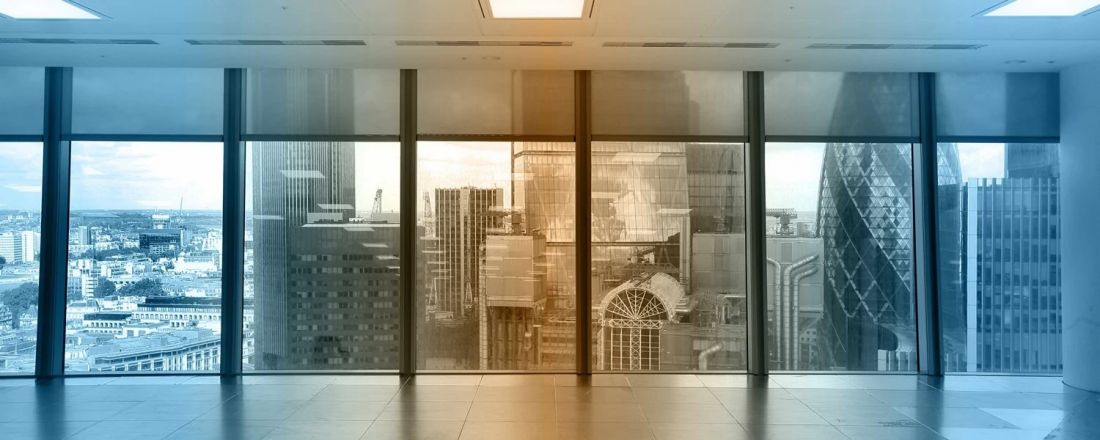
Natural light influences the human body and health, regulating, among other things, the diurnal rhythm, and promotes well-being and productivity. The functional aspect should not be forgotten either - it facilitates orientation and movement. Solutions that provide access to natural light are, for example, glass facades or skylights. However, in spaces that have no or limited access to natural light, artificial light compensates for the shortage of natural light. And it, too, has become part of the biophilic design concept:
According to biophilic design, artificial light should replicate the sun's journey across the sky and the dynamic properties of natural light. Such an approach is at the same time consistent with the concept of Human Centric Lighting - variable and adaptable to the needs of users, contributing to the proper work of the body and supporting human biorhythm. Artificial light of the right intensity and color thus appears in spaces where it is needed, and only when it is necessary, says Dr. Pawel Morawski, head of TRILUX Academy Poland.
© TRILUX
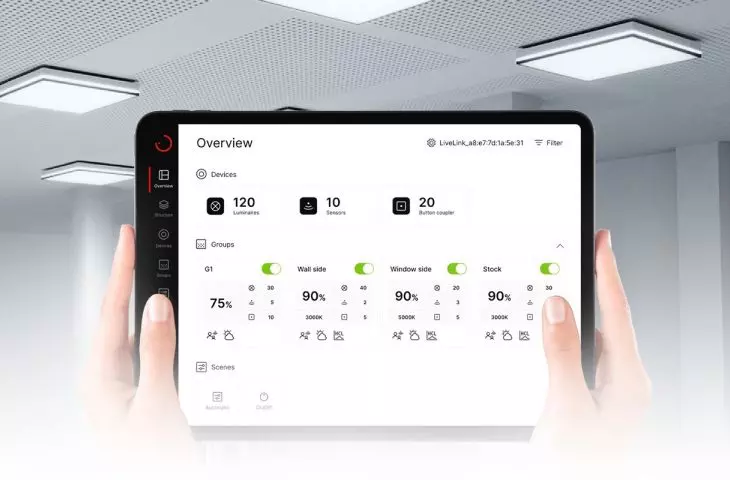
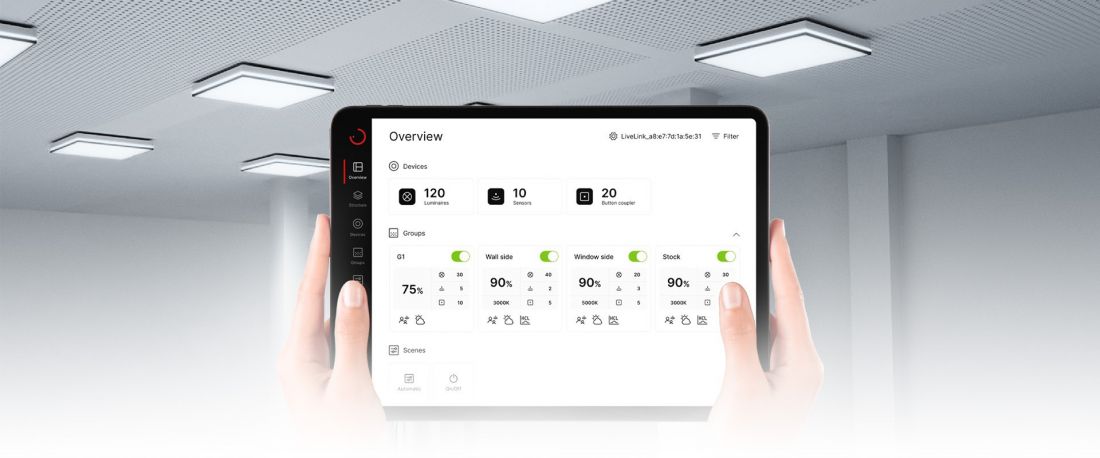
The reproduction of natural light in the rooms is possible through the use of appropriate LED luminaires, managed automatically by a control system, such as LiveLink. How does such a solution work in practice?
© TRILUX
The system automatically adjusts the light, such as its color, to the actual needs of the users. And so, for example, in the morning we start work in warm light with a large admixture of red, which does not pull the body out of its nocturnal rest mode, by noon there is an increase in the blue component of the lighting, reproducing the presence of the sun at its highest point, which stimulates action, while the afternoon light warmer and more yellow calms, relaxes and prepares for the evening rest. This type of lighting provides optimal lighting conditions in commercial buildings, the TRILUX Poland expert explains.
Sustainable means meeting natural needs
Biophilic design is at the same time consistent with the postulates of integral sustainable architectural design, i.e. sustainable and taking into account ecological, social and economic considerations. Thus, the concept fits in with the strategies implemented by investors, which aim, among other things, to reduce the impact of their activities on the environment, such as by minimizing the consumption of raw materials or taking care of the energy efficiency of buildings. This is therefore another step towards creating the buildings of the future - and not only in the context of pro-environmental and technological solutions, but also, importantly, natural human needs.
© TRILUX
For more information, visit www.trilux.com.