or

Log in and download the free e-publication of the latest A&B!
The printed version is available for sale online in our store and press salons throughout Poland.




Contact us



![SARP branch presidents and presidents in the 2024-2028 term [updated article].](https://cdn.architekturaibiznes.pl/upload/cms_aktualnosci/33097/images/kadr12/fit/730x480/prezesi-i-prezeski-oddzialow-sarp-w-kadencji-402375.webp?)




|
Website
|

|
Email
|

|
Address
|

|
Phone number
|
| * click on the selected item to view its data | |

SARP Katowice Branch
"President of the branch in the 2019-2023 term: Mikolaj Machulik
Upper Silesia under the Prussian partition, remaining outside the mainstream of cultural events, lived a life of its own, built on native folk traditions, enriched over the centuries by the influence and impact of other nationalities and ethnic groups. The customs were created by the dialect preserving the Old Polish core, folk costumes, church and secular choirs, and above all the messages of faith and respect for hard, solid work. The architecture of the region, which has its roots in the magnificence of wooden buildings, especially churches and historic towns, for example, Cieszyn, Skoczow, Zory, Rybnik, Mikolow, Tarnowskie Gory, Bytom, in the beginning of our century in its basic mass was shaped by well-trained building technicians and local builders, as well as architects from Wroclaw and various regions of Germany. After the annexation of Poland, only a few architects worked in Silesia, which, by the way, had its justification in the post-war construction stagnation. The economic recovery and the slowly developing construction movement resulted in a gradual influx of engineers from other parts of Poland, mainly alumni of the Lviv Polytechnic, to the province and settling here permanently. The lack of its own union organization limited the ability of Silesian architects to influence construction decisions, the terms of announced competitions, and the criteria for evaluating and selecting works. This state of affairs was worrisome, especially since many of the decisions made at the time were considered misguided or even harmful. All this determined the establishment of the Union of Architects in Silesia. This took place on January 21, 1925, and the founders were Marian Lobodzinski, Tadeusz Lobos, Tadeusz Michejda, Aleksander Pezanski, Eugeniusz Pogoda, Henryk Szoldra and Karol Tchórzewski. The initiator and animator of the association movement, Tadeusz Michejda, born in Zaolzie, a legionnaire, participant in the struggle for Cieszyn Silesia and the Third Silesian Uprising, became the first president. The tasks and goals of the Union of Architects in Silesia were defined in the statute as follows:
- to unite the widest possible group of architects for joint work near the development of Polish art in general and architecture in particular,
- to arouse interest in art in general, to popularize it and to protect monuments,
- rational normalization of artistic, moral and material relations concerning the architectural profession.
The goals emphasized by the statute did not change until 1939, although the organization itself underwent further evolution, related to the desire to bring together all Polish architects in one organization. A stage on this path was the establishment of the Union of Associations of Polish Architects in 1929, during the General National Exhibition in Poznan, and it ended with the creation of a new organization, as of July 1, 1934, called the Association of Architects of the Republic of Poland - SARP, uniting all existing architectural organizations in Poland. The Union of Architects in Silesia, which was part of the ZSAP, was transformed into the Katowice Branch of SARP, and Tadeusz Michejda became its President, a delegate to the General Assembly of the newly formed Association and a member of its General Board. The new organization manifested considerable activity, as evidenced by its efforts to pass the Silesian Construction Act, develop its own price list for architectural works, initiate the submission of important investment projects to competition settlements, counteract arbitrariness and so-called "wild" competitions, and make efforts to integrate the creative circles of other fields of art - visual artists, writers, theatrical circles. In its decisions, the Branch maintained full autonomy and independence. The development of the organization is characterized by an increase in the number of its members. At the time of its founding, it had only 7 members, the minimum required by law. A year later it already had 15 members, in 1930 - 25 members, in 1935 - 26 members, and by the end of the 1930s - more than 40 people.
The outbreak of World War II interrupted the period of creative activity of architects and their Association. With the Nazi occupation came repression and displacement of Poles, including architects. Those who were mobilized took part in the defensive war, some found themselves in exile, while the majority, scattered throughout the General Government, struggled to survive, imitating various gainful occupations. After the war ended, a significant number of architects returned to Silesia, took up professional work and led to the reactivation of the Katowice Branch of SARP.
The restoration of the traditional forms of professional organization was a return to normality and had the character of formal rather than substantive activities. This was accomplished by the pre-war activists of the Katowice Branch of SARP by establishing communication with the Main Board in Warsaw, registering with the Artistic Commission of Associations and Societies existing at the District Commission of Associations of the Silesia-Dabrowa Province, holding a general meeting of members, electing a new board of directors and beginning the official activities of the Branch at the beginning of 1947.
The Katowice Branch is currently one of the association's 25 branches. It covers the area of the former Katowice province. It cooperates closely with the SARP branches in Bielsko-Biała and Częstochowa. It is one of the larger branches in the country - it has about 450 members, which is the vast majority of active architects in the region."
Architektura & Biznes – articles

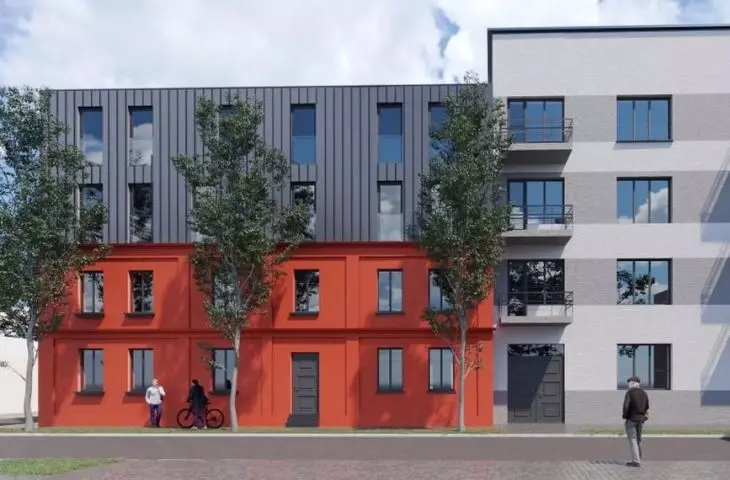
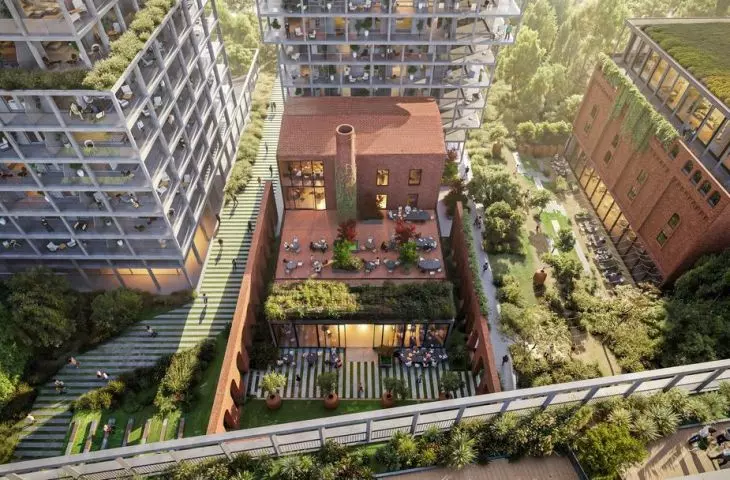
Raciborska 44 - Silesian pragmatism, modernist functionalism and shameless provocations
Universities | Competitions
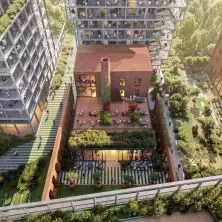
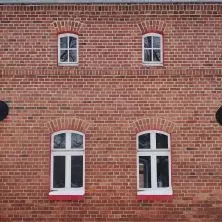
Familok crown jewel
Residential | Multi-family houses | Revitalization | Reconstruction | Urban planning | Small architecture | Public spaces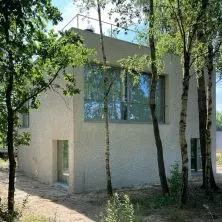
Great prize for a small building—a house in the Jamna Valley with the Grand Prix of Architecture of the Year of the Silesian Province!
News | Competitions | One-family houses
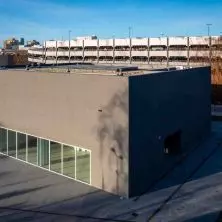
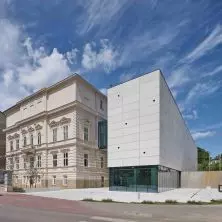
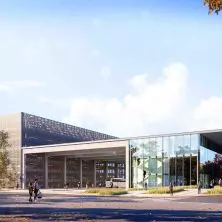
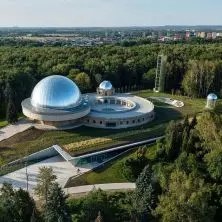
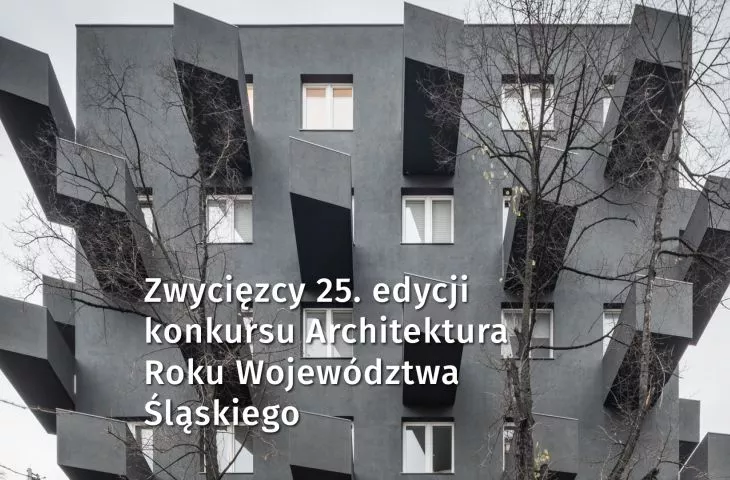
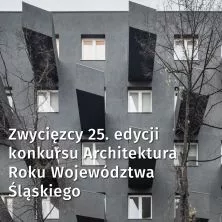
No Grand Prix and multifamily housing. Winners in the Architecture of the Year competition of the Silesian Province.
Kindergarten | Culture | Museums and galleries | Residential | One-family houses | News | Competitions | Publicity | Public spaces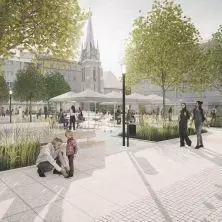
Competition for the development of an urban and architectural concept for the development of the Old Town area in Raciborz
Contest results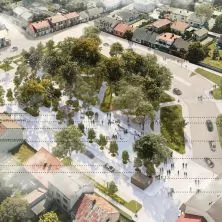
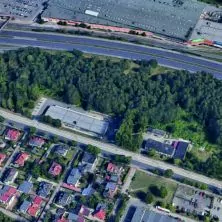
Competition for the design of the headquarters of prosecutors' offices of various levels in Katowice
Competitions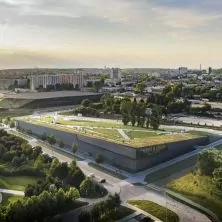






By clicking the OK, I AGREE button, all default consents will be activated for trouble-free use of the portal. Personal data/cookies may be used to personalize advertising. You can specify the consents precisely by clicking the CONSENTS button.
A&B with trusted partners, e.g. Google (How Google processes personal data) stores or reads information contained on your device, such as cookies, we process personal data such as unique identifiers, information sent by end devices necessary to personalize ads and content, sharing social media traffic measurement functions as well as for the development and correctness of our products. With your consent, we as well as partners may use precise geolocation data and identification through device scanning. By going to the site you agree to the indicated activities.
You can consent to the above processing purposes by clicking on the OK, I AGREE button, or you can choose not to consent by selecting the advanced settings. In the situation of lack of consent, we will process personal data for other purposes on other legal grounds (information in this regard is available in our privacy policy). By clicking on the CONSENTS button, you can manage your preferences before giving or withholding your consent. The purposes of processing your data without the need for your consent based on the legitimate interest of AiB Publishing Ltd. and information about the possibility of objecting to such processing can be found in the privacy policy. The purposes of processing your data without the need for your consent based on the legitimate interests of A&B Trusted Partners and the opportunity to object to such processing can be found in the advanced settings.
Consent is voluntary and you can withdraw it at any time, consent will also be the basis for the transfer of data to our Trusted Partners located in third countries (outside the European Economic Area).
In addition, you have the right to request access, rectification, deletion or restriction of data processing, as well as to file a complaint with the President of the Office for Personal Data Protection. See the privacy policy for information on how to exercise your rights. For detailed information on the processing of your data, please refer to the privacy policy.
The administrator of this data is us, i.e. AiB Sp. z o.o sp. k. based in Cracow.
Use of cookies and other technologies
We and our partners use cookies and other related technologies to:
- Ensure security when using our sites
- Improve the services we provide by using data for analytical and statistical purposes
- Learning about your preferences based on how you use our sites
- Displaying personalized ads that match your interests
You can determine the extent of the use of cookies in your browser settings. Without changing the settings, information in cookies may be stored in the memory of your device. For more details, see our Cookie Policy.