








Zero nominees! This has never happened before in the long history of the Poznań student competition named after architects Janina and Władysław Czarnecki. Over 80 entries were submitted, but the jury did not nominate a single one for the second stage. The reason? The judges cite a sharp decline in the quality of the projects. What exactly does this mean? How is one of the universities commenting on the matter? What will happen next with this edition of the competition?
The competition for the best semester project by architecture students has been held in Poznań for 42 years. It is organized by the local branch of the Association of Polish Architects in cooperation with the Wielkopolska Regional Chamber of Architects of the Republic of Poland. The organizers point out that winning the competition has often been a harbinger of future success; in past decades, the winners have included architects who are now widely recognized, outstanding educators, winners of prestigious architectural competitions, and representatives of the professional community.
The competition’s first patron was Władysław Czarnecki (1895–1983), an architect and highly regarded urban planner, theorist, and educator who dedicated his life to Poznań and, in the 1930s, helped shape the city’s development. In 2023, his wife, Janina Czarnecka—an architect who worked independently and, at times, in collaboration with her husband (though this was not always noted)— was added as a patron. Until the early 1990s, the competition was held twice a year, once per semester. Later, it was held once a year. Currently, students majoring in architecture and interior design at two Poznań universities— the Poznań University of Technology and the University of Arts—participate in the competition.
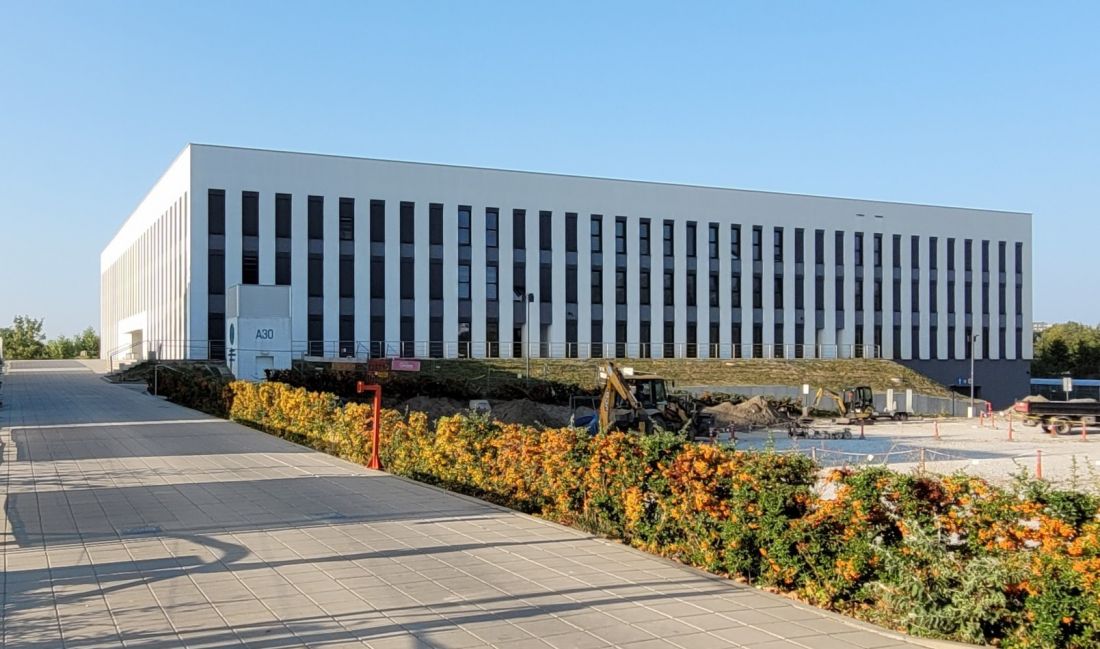
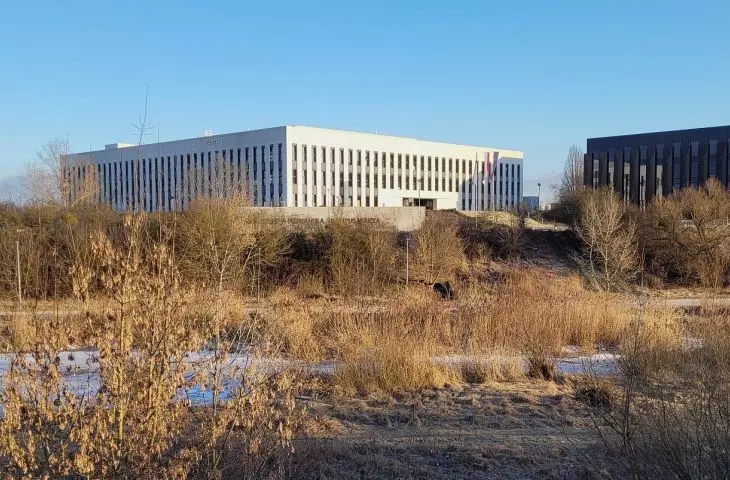
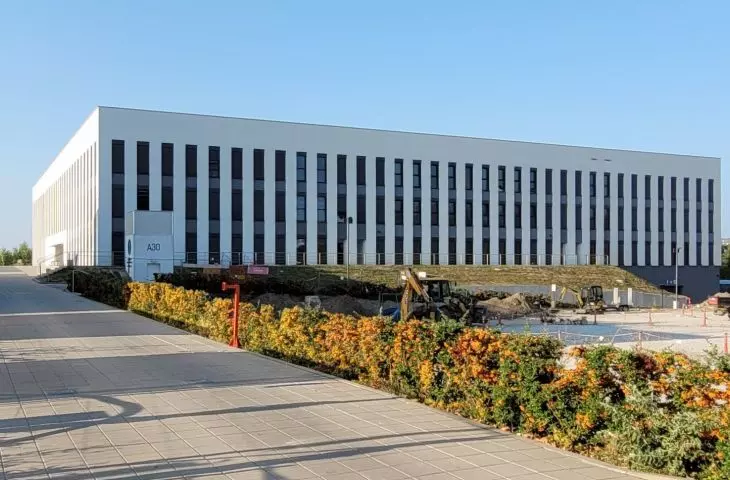
Building of the Faculties of Architecture and Environmental Engineering at Poznań University of Technology — designed by Prof. Sławomir Rosolski, Poznań University of Technology
Photo: Jakub Głaz
This year marked the 46th edition of the competition; over 80 entries were submitted, but for the first time, no winners were selected. A statement released a few weeks ago reads that
the competition jury (…) refrained from selecting finalists due to a significant decline in the substantive quality of the submitted entries compared to previous years. The vast majority of the 80 entries were presented in a manner insufficient to allow for an objective evaluation.
At the same time, the judges announced that they are postponing this edition for another semester and appealed to:
We encourage the academic staff to examine the entries they recommend for the competition more closely.
What are the reasons?
The statement and decision sparked considerable interest and reactions within Poznań’s architectural community. Wojciech Krawczuk, president of the Poznań branch of the Association of Polish Architects, comments on the matter for us :
It is surprising that this has happened for the first time in the competition’s long history. Unfortunately, according to accounts from members of the competition jury, the weaker entries were not exceptions but the majority.
Michał Bekas, an architect (BOAA studio) and member of the competition jury, clarifies:
I’ve been judging this competition for several years now, and we’ve never encountered a situation like this. The main problem in evaluating the submitted entries was formal deficiencies, such as the lack of a recommendation from the project supervisor, the lack of information on which university the work was created at or in which semester of study, as well as a presentation format insufficient for a substantive evaluation—one that lacked basic data such as the project name, information on the project’s location and context, and architectural drawings in the form of floor plans, sections, and elevations. Hence our reaction—perhaps a bit too harsh, but I believe it is a rational one. By postponing the decision on this edition until after the summer break, we are now giving both current participants and those who wish to submit work from the most recent semester a chance.
Why the sudden drop in quality? Is it a coincidence or a sign of a growing trend? Or perhaps the requirements for entrants are too lenient, even though—on the other hand—they haven’t changed in recent years? The last change, however, took place about a decade ago. Until the 2010s, only course instructors could submit entries to the competition . This requirement was later dropped following reports that a lecturer’s sometimes biased attitude toward a student (rather than toward the student’s work) could jeopardize the student’s chances. A more flexible requirement was therefore introduced: a “recommendation” from the instructor (though the student was the one who submitted the entry). Has this recommendation filter failed, then, and is the criticism directed at the instructors in this year’s statement justified? The dean of the Faculty of Architecture at Poznań University of Technology, Prof . PP, Dr. hab. Eng. Arch. Agata Gawlak, comments on the statement for us:
This was certainly not an uplifting comment, neither for the students nor for the faculty members to whom it also referred. Of course, it is quite natural that the quality of the competition may vary from year to year. In last year’s edition, our students ranked very highly in the competition. If the jury rates this year’s edition poorly—which it is, of course, entitled to do—then that was certainly the case. However , it may simply be an oversight, the result of imprecise wording in the rules, or the fact that the competition deadlines were not aligned with the university’s academic calendar. Entries had to be submitted by May 8, while we finished the semester on June 16. It is therefore natural that many entries may not have been completed yet [though entries for the competition could also have come from the previous semester—Ed.].
tighten the criteria?
Professor Gawlak also adds that the Czarnecki competition has a long-standing tradition; for years it has had its ups and downs, though it seems to have had greater impact in the past . Today, there are many more student competitions, including international ones, so students’ attention may be scattered. The dean also adds that
we discussed the matter with SARP, which—partly in response to our concerns— softened the tone of its statement and resumed this edition of the competition, a fact we have already communicated at the university, naturally encouraging students to participate.
Wojciech Krawczuk, in turn, reports that
Following a conversation with representatives of the University of Technology, who were surprised by the court’s decision, we would also like to reinstate the requirement in the future for instructors to select and submit student projects. A requirement we had abandoned because students increasingly viewed it as a restriction.
Michał Bekas also wants to appeal to the university administration and students to jointly consider whether to return to the idea of instructors selecting the best semester projects from a given project group. These projects would then be automatically submitted to the competition.
The dean comments:
I believe that what makes sense is not so much the requirement to submit entries as the recommendation itself, as introduced by SARP. Perhaps the recommendation need not necessarily come from the instructor of the course in which the project was created. Such a selection process is always useful, because it may be the case that students with little self-criticism submit their work, while those who hold themselves to higher standards do not submit their projects despite their high quality.
Michał Bekas adds that perhaps the competition was not well publicized at universities, and students were unaware of the benefits it offers, including fairly substantial cash prizes. He also notes that
it’s possible that the competition’s prestige is declining, even though there were, after all, a relatively large number of entries. Surprisingly, there was a lack of good projects that—while also serving as semester projects—had participated in this year’s infill development competition, which took place alongside the Design and Architecture Forum at the Budma trade show. This is strange, because the Czarnecki competition essentially requires only the submission of existing designs, without any additional work.
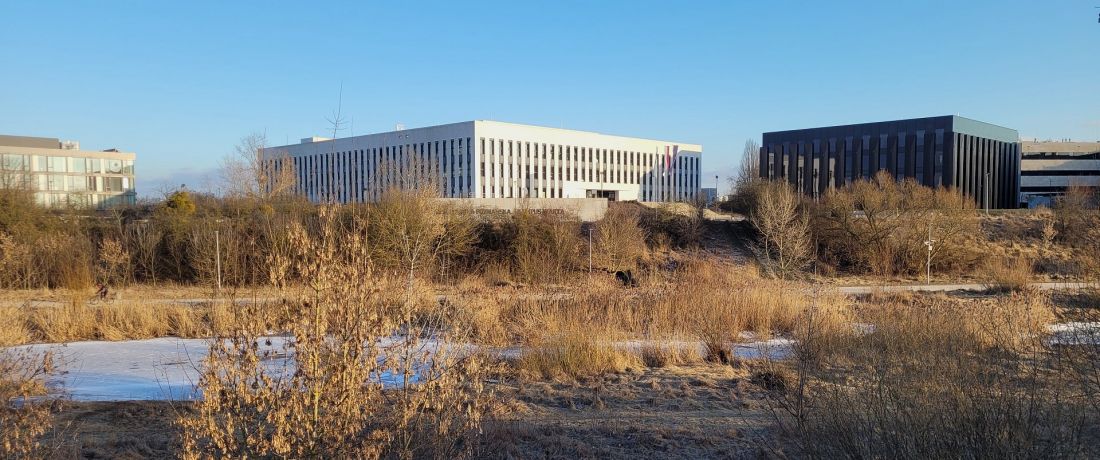
In the center, the building housing the Faculties of Architecture and Environmental Engineering at the Poznań University of Technology (2020); on the right, the new rector’s office (2025)—designed by Prof. Sławomir Rosolski of the Poznań University of Technology
photo: Jakub Głaz
A false culprit?
There is another aspect raised in informal discussions about the competition: the inept or excessive use of artificial intelligence relative to other elements (with visualization playing a leading role, as indicated in the court’s statement). Could the increased use of AI in project development be behind the decline in quality? Prof. Gawlak advises caution in making such judgments:
It’s still too early to say. At the university, we make sure that students clearly indicate which part of their work was done by AI, to what extent, and using which program. Besides, the semester project is a process discussed during weekly classes. AI is not a dominant tool, but I’m not familiar with the specifics of the entries submitted to the competition. I think it will be a few years before we can reflect on the use of AI, which, incidentally, we’re also implementing in some university projects.
We’ll find out whether the quality of student work has indeed changed significantly this fall, when the results of the postponed 46th edition of the competition are announced. For now, the requirements remain unchanged. Submitted projects (up to 4 per student) must, among other things, be submitted on time and be recommended by the instructor. Students who submitted entries for the unresolved round of the 46th edition must resubmit them (details are available on the Poznań SARP website). At the same time, the organizers urge:
We encourage students to review the award-winning projects from previous editions of the competition, available on the SARP Poznań Branch website, payingparticular attention to the presentation of the projects and the analytical approach to the design process.