



Sponsored material
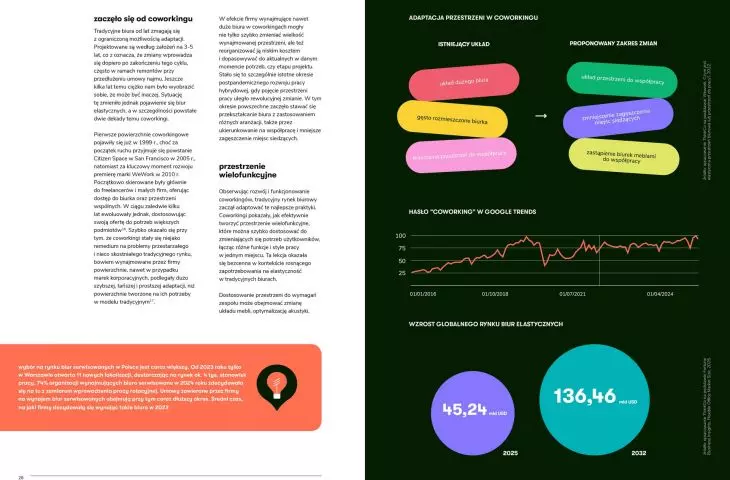
The offices of the future don't have to have gadgets straight out of a science fiction movie, instead they show a sincere interest in the needs of employees. Thanks to a new ThinkCo report, prepared jointly with Skanska, IKEA, Mute, NAI Reina and Workplace, we can get a glimpse into the office future.
Flexibility and openness to change make it possible to redesign an entire space in a few hours. On-demand peace and quiet allow you to truly focus on your work. Empathy and understanding give insight into the diverse needs of employees. The office spaces of the future are built from these elements.
© ThinkCo
Change possible from hour to hour
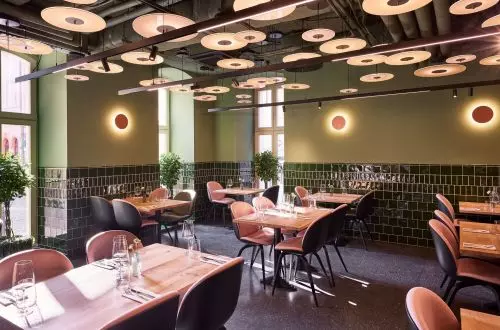
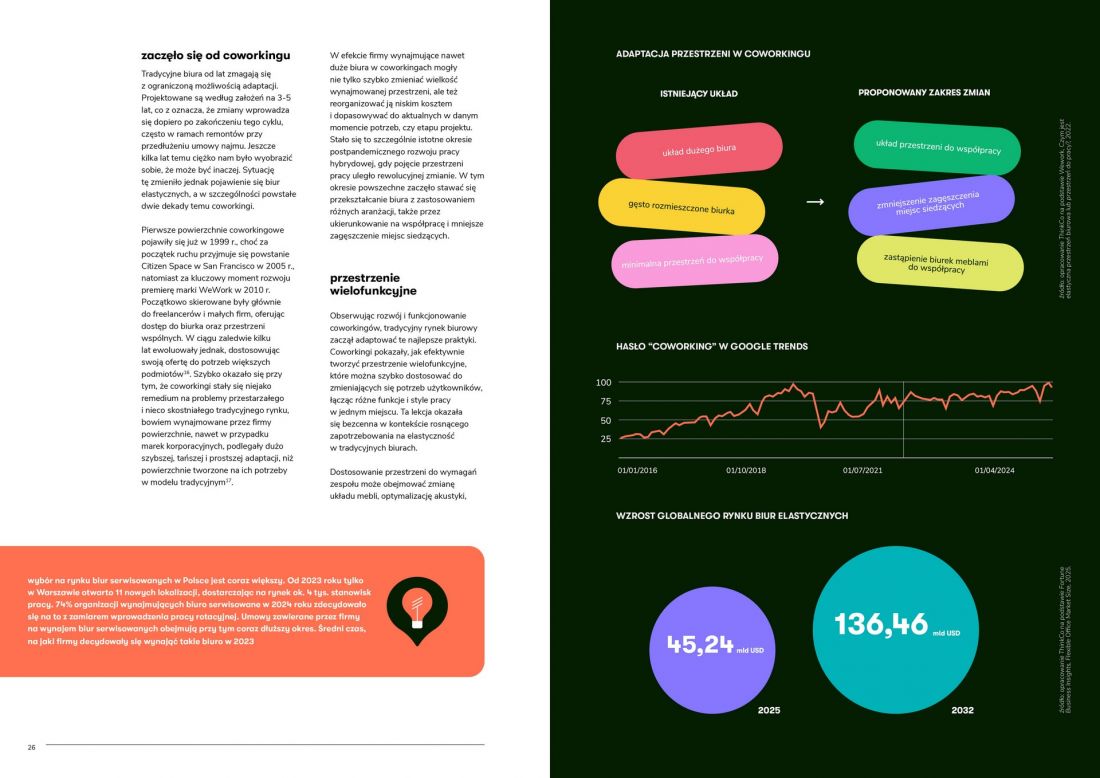
Offices are no longer just places where we "serve" a full-time job. They are meant to inspire, integrate and support employee well-being. Companies are no longer thinking of space as a fixed structure - instead, they are creating dynamic, flexible environments that can change from hour to hour. What does this look like in practice?
We're seeing an increasing demand for spaces that can be rearranged quickly. There is also an increased focus on the quality and functionality of spaces. Offices of the future will not only be a place to work, but also a platform to support the development of the organization
- says Łukasz Kwiecinski, Director of Customer Relationship Management and Property Management at Skanska CDE.
In response to these changes, many companies are moving away from traditional office construction methods.
Instead of drywall construction, they are increasingly opting for modern space arrangement solutions based on mobility or modularity. As a result, they are always ready for changes - regardless of the situation, they can quickly adapt their space to new requirements. The effects are lower renovation costs, less waste and a healthier work environment
- notes Andrzej Smolinski, Associate Area Sales Director at Mute.
© ThinkCo
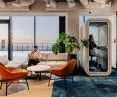
Silence instead of foosball
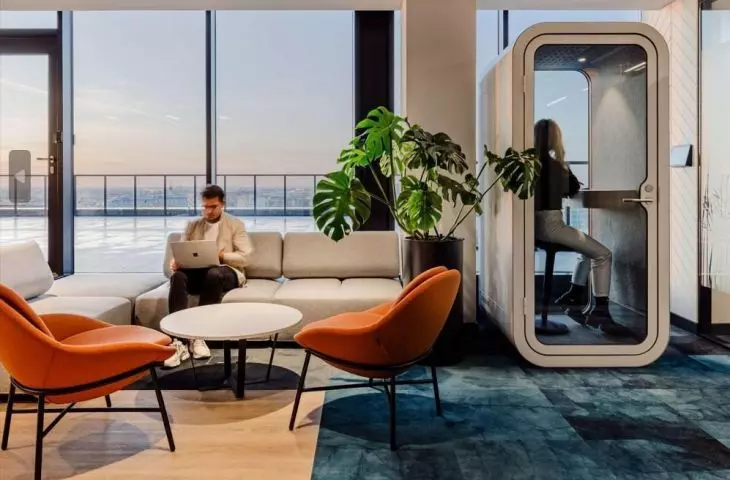
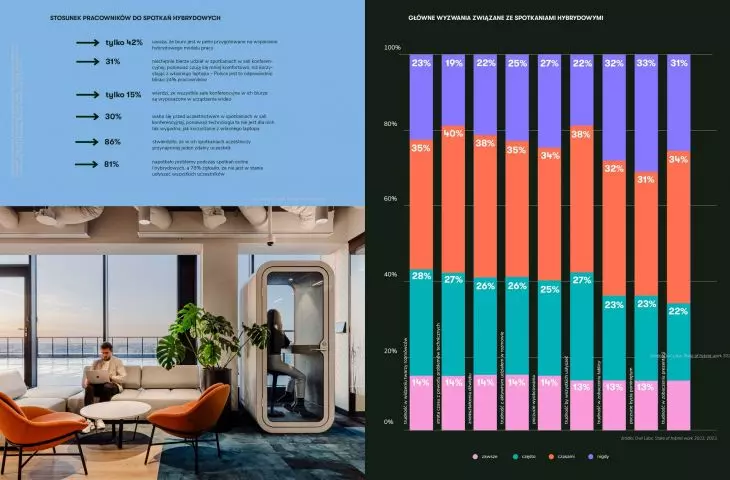
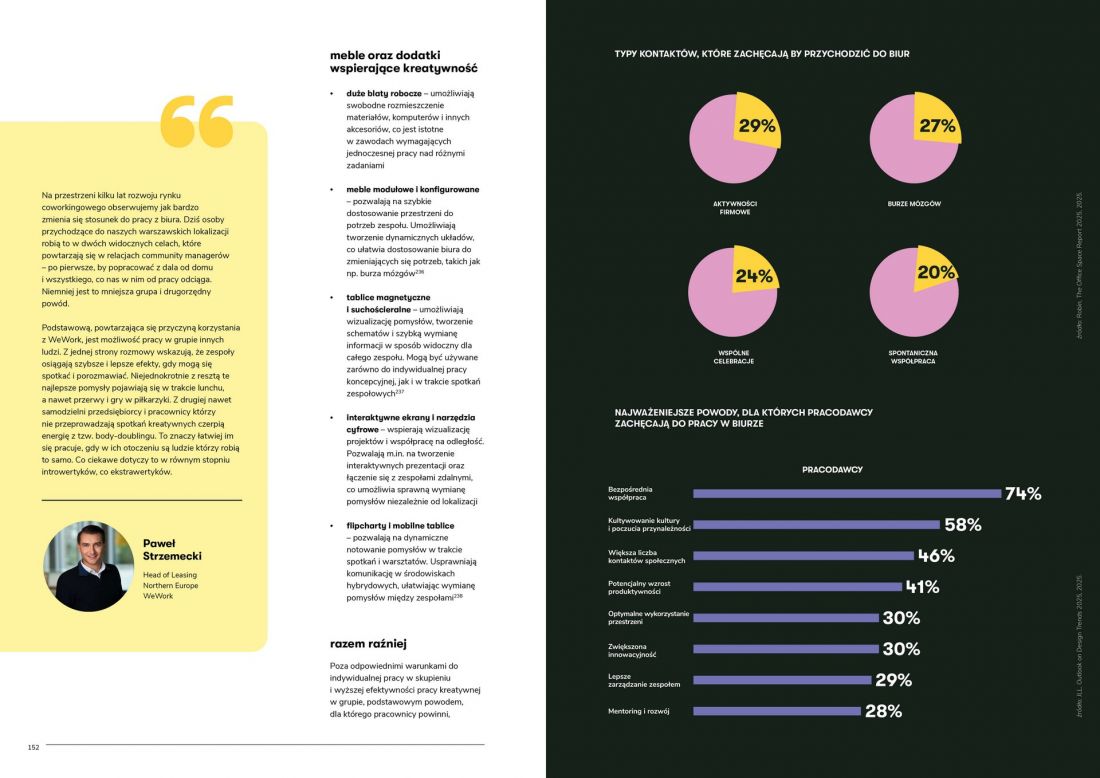
As many as 96% of employees in high-performance environments report easy access to areas conducive to concentration. In less efficient companies, only 26% have such an opportunity. What's more, 48% of U.S. workers return to their offices primarily to be able to focus in peace. The conclusion is clear from this data: instead of foosball and game consoles, whose popularity triumphed a decade ago, what matters today is getting back to basics - quiet, concentration and the ability to focus on tasks. Offices of the future do not resemble playgrounds; instead, they are spaces where a state of deep work can be achieved.
© ThinkCo
Growing expectations for employee well-being are not just about ergonomic chairs, but also spaces that support mental and physical comfort. It's no longer just fruit Thursdays, but deeply considered work and collaboration spaces
- emphasizes Damian Luczkowski, IKEA for Business Manager.
Designed together with the user
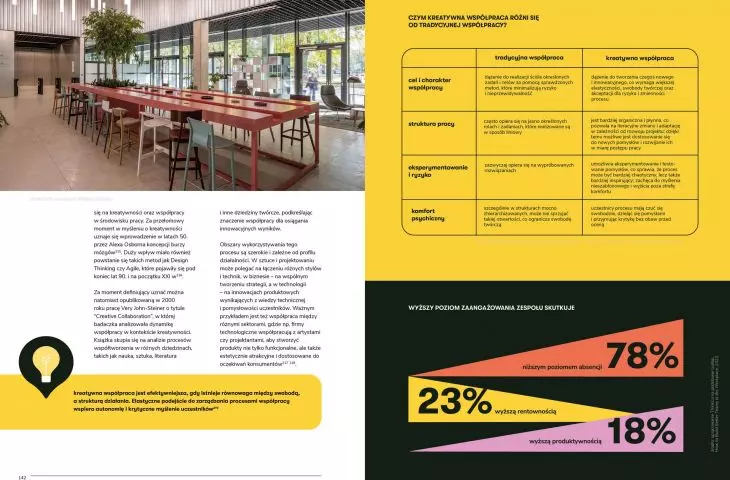
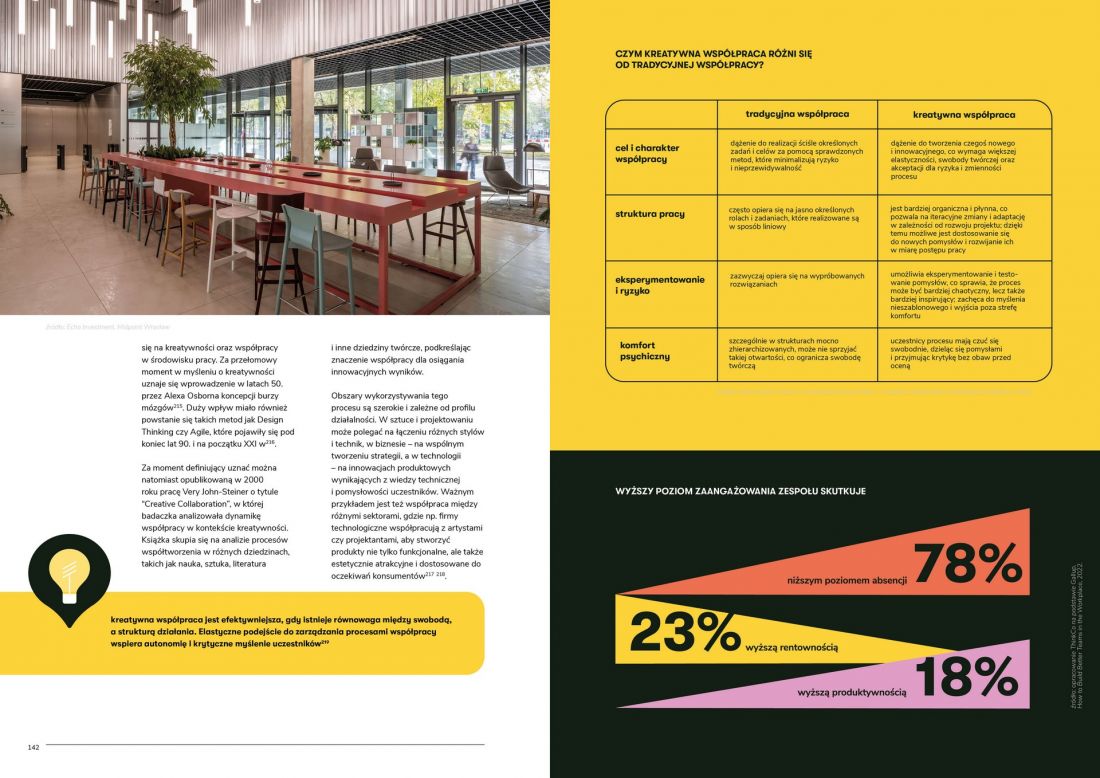
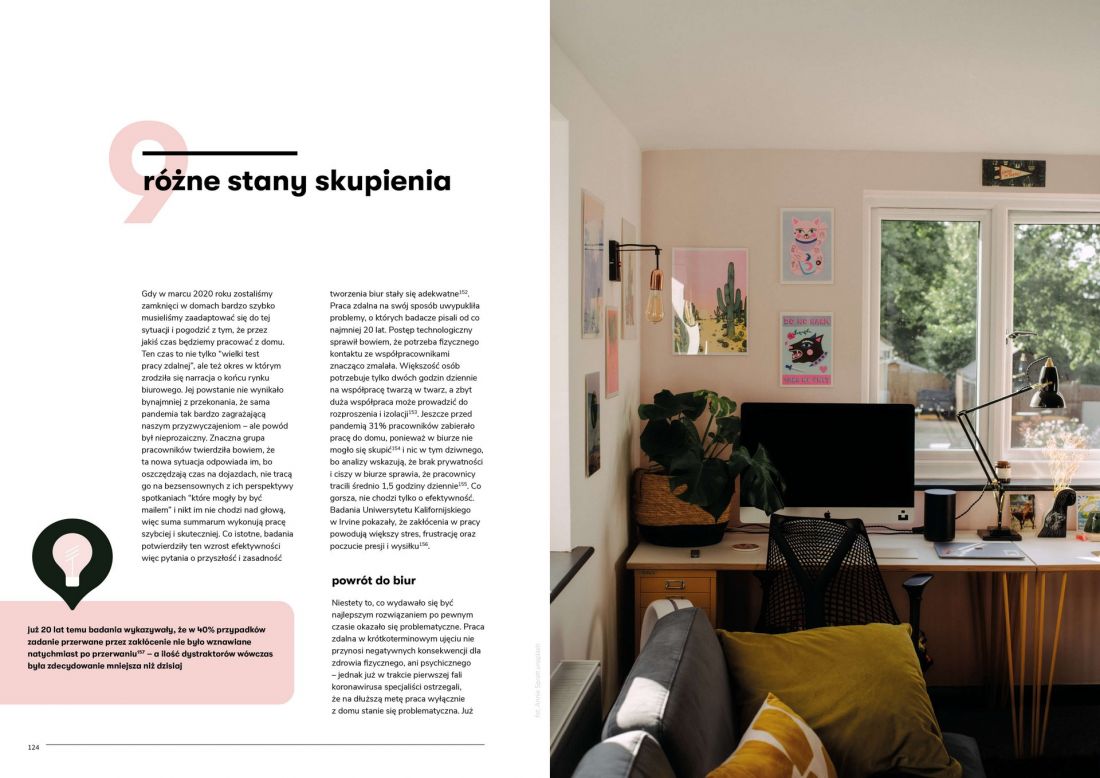
It is increasingly important to involve future office users in the design process already at the needs analysis stage. Practices include methods such as design thinking, a process of creating innovative solutions based on a deep understanding of users' needs. Another popular solution is modular room-in-room systems - prefabricated micro-spaces that can be inserted into an open office and transformed at will without renovation. They respond to the challenges of today and prepare offices for the unpredictable changes of tomorrow.
There is a return to the essence of design: the office of the future is a space that does not dominate, but supports - providing calm, flexibility and a sense of control. In times of stimulus overload and constant change, these are the values that are becoming the new standard for a friendly workplace.
© ThinkCo
With changes in the labor market, including automation and AI, it is possible to build an office that meets the needs of constant change for years to come. A well-thought-out workplace remains the hallmark of self-respecting companies. In addition to a dream and pride, it is a deep human need to work in an inspiring and ergonomically designed environment
- says Robert Z. Karniewski, CEO & Founder NAI Reina.
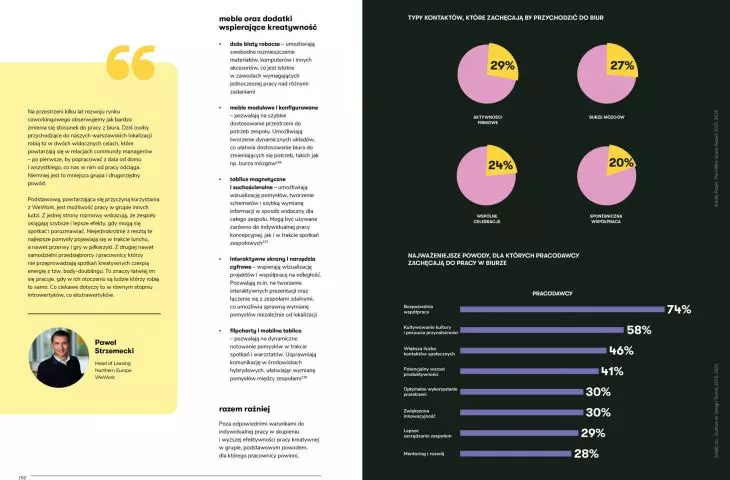
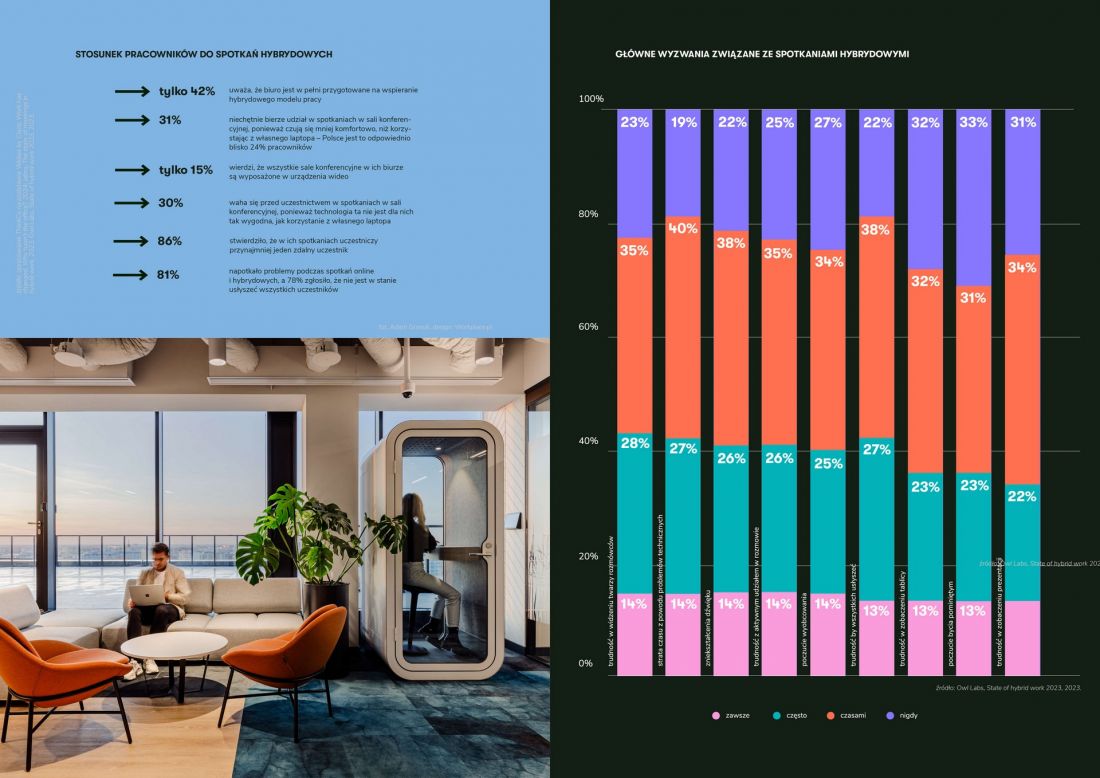
Among other things, we write in the report about why silence is gaining status as the most valuable resource - acoustic booths, focus zones and room-in-room systems are displacing noisy open spaces. The future cannot be imagined without ecology and circularity. That's why we're devoting attention to prefabricated, modular solutions that allow companies to respond flexibly to change without generating waste. The report shows how to design offices for hybrid work - to support communication and integration of teams working in different modes. We analyze how office designers are responding to neurodiversity needs. How are spaces being created that are friendly to the highly sensitive and cognitively diverse. Our report describes current trends, but it is also more than that, a complete guide to a world where the workplace truly serves people.
© ThinkCo
Offices of the future are not designed once and for all. They are like an operating system - updated, tweaked and adapted to the user. Office flexibility today may seem like a choice. In the future, it may prove to be a condition for survival.
About the authors of the report:
The report "READY FOR THE FUTURE. How to create offices for changing times" was prepared by ThinkCo, a boutique agency specializing in narrative information processing. The report's strategic partners are IKEA for Business, which offers comprehensive and accessible interior design solutions; Skanska CDE, a leader in sustainable construction that creates inclusive workspaces in Poland's largest cities; and Mute, manufacturer of the innovative adaptable office system Mute Modular. The report's content partner is Workplace - which has been designing ergonomic offices for major brands for more than a decade. Other report partners: NAI Reina, trusted advisors for anyone looking for the perfect office; WeWork, a global provider of flexible workspaces, also present in Poland; CreoConcept, a manufacturer of interior glazing to support modern offices; Echo Investment, a developer creating sustainable workspaces in major cities; and TDJ, the developer responsible for, among others, the modern office complex.KTW in Katowice.
The full report "READY FOR THE FUTURE. How to create offices for changing times" is available for download here: h ttps:// thinkco.pl/gotowe-na-przyszlosc/