




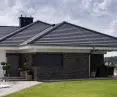
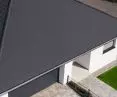
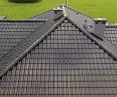
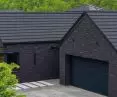

When planning the construction of a house in 2026, we face a paradox: never before have we had such a wide choice of materials and solutions, and at the same time never before have roofing decisions been so strategic. It is no longer just a matter of protection from rain - the roof has become the "place" where aesthetics, technology, ecology and long-term economics meet.
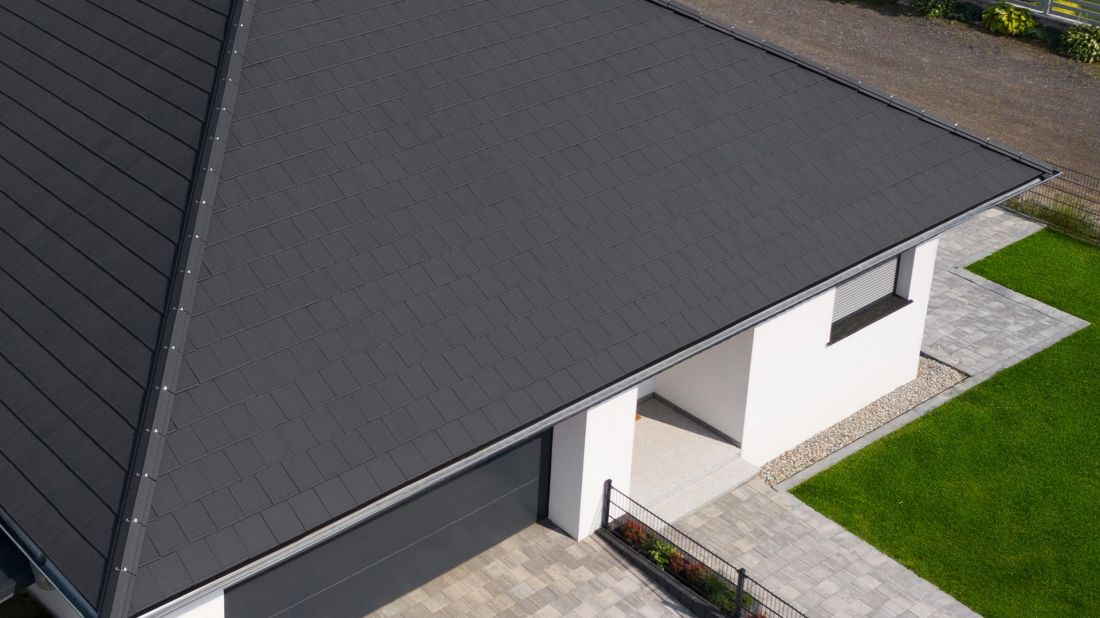
Cement tiles, as an economical alternative, often offer warranties of up to 30 years
© swissporTON
In 2025 and 2026, roofing is changing not only in terms of aesthetics, but also in terms of technology and ecology. Investors are no longer content with simple answers and are starting to ask the right questions. Not "which tile is the cheapest?", but "which solution will be, in many ways, the best in the next 50 years?". Let's take a look at the key expectations that define roofing choices in 2026.
-
Minimalism as a manifesto
In 2026, houses with flat roofs, glazed living rooms and terraces opening to the garden will dominate, with minimalism dominating - simple forms, flat tiles, uniform surfaces. But true minimalism is not poverty - it is precision.
As Marcelina Parchanski, an expert in pitched roofs from the swissporTON brand, points out: the modern investor understands that simplicity of form requires perfection of execution. A minimalist roof is a smooth, uniform surface without random irregularities, with perfectly matching elements and their consistent colors - from the tile to the ridge tiles to the flashings.
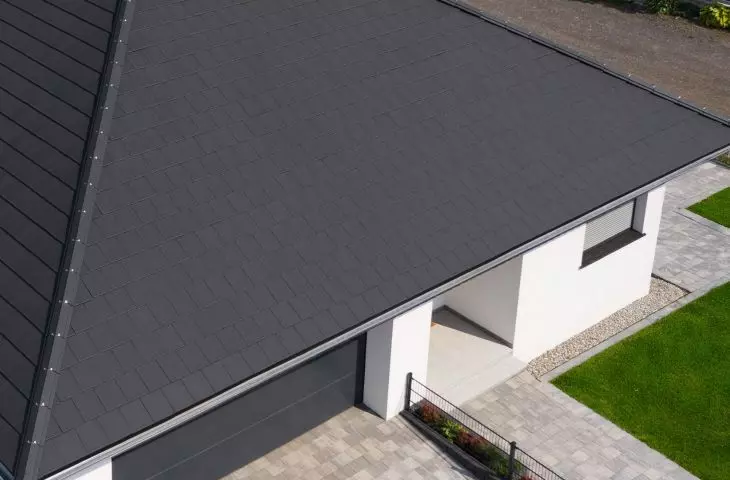
Flat ceramic and cement tiles perfectly meet this need. Their geometric shape and precise locks allow to achieve a roof surface that looks like a monolithic plane - elegant, clean, timeless. It is a roof that "does not scream" for attention, but which cannot be overlooked.
-
Color as the language of architecture
In 2026, roof color is no longer an add-on - it is one of the main languages with which architecture speaks to us. Glossy coatings are giving way to matte and semi-matte finishes that look modern.
The color palette is becoming simultaneously more sophisticated and more limited. On the one hand, classic reds and browns that never go out of style. On the other - the increasingly popular dark shades: anthracite, graphite, black, which create a striking contrast with light facades and blend with dark window frames.
The key, however, is the color consistency of all elements of the roof - from slope tiles to ceramic accessories to communication and snow protection systems. A professionally designed roof is a harmonious whole in which every element is available in the same or very similar shade.
-
A system, not a set of random products
More and more manufacturers are offering complete roof systems - from covering to membranes to roof communication and accessories. This makes the entire roof consistent, and the warranty covers all the components.
SwissporTON expert Marcelina Parchanski points out: The modern investor does not build a roof from randomly selected elements from different manufacturers. He chooses a complete system from a single source - a solution in which each component is designed to work with the others. An example is the offer of swisspor, a manufacturer of comprehensive thermal insulation solutions from the foundation to the roof.
Such a system includes not only tiles, but a whole range of accessories: ridge tiles, ventilation and through tiles, chimneys, finishing elements. In addition, roof membranes with high vapor permeability, roof communication systems (steps, chimney benches, platforms), snow protection elements and photovoltaic solutions integrated into the roofing.
The benefit? Full compatibility, consistent aesthetics, and the assurance that in the event of problems, there will be no disputes between manufacturers over who is responsible. One supplier, one warranty, one point of contact. That's not convenience - it's investment wisdom.
-
Durability backed by warranty
In a world where many products are designed for quick replacement, a roof remains an investment for decades. That's why investors in 2026 are asking not only about technical parameters, but most importantly about the warranty.
Top-quality clay roof tiles, such as those by swissporTON (formerly CREATON Polska), offer up to a 50-year warranty for waterproofness and frost resistance. This is not marketing - it is confirmation that the manufacturer is so confident in the durability of its product that it is willing to sign a commitment for half a century.
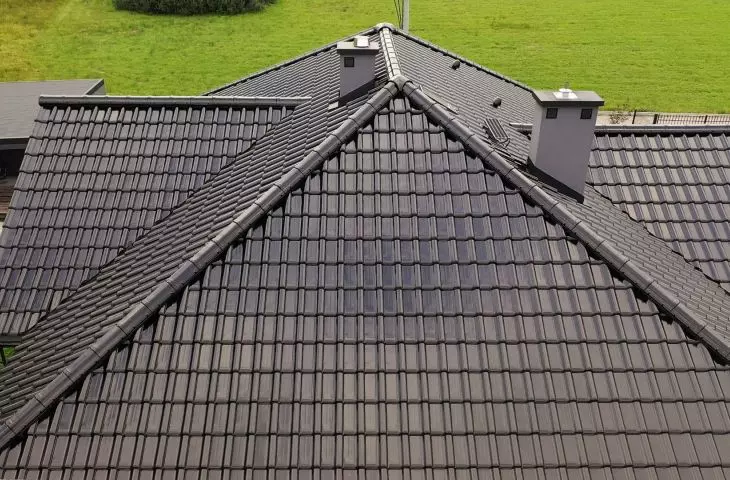
Cement tiles, as an economical alternative, often offer warranties of up to 30 years. This is still an impressive period that exceeds the warranties for most building materials available on the market.
But the true value of a warranty is only revealed when something goes wrong. That's why it's crucial that the manufacturer is stable, has been on the market for decades and is part of a larger group that guarantees continuity.
-
Energy efficiency in every detail
Roofs play a key role in the heat balance of a building - improperly installed insulation can lead to 20-30% heat loss. In an era of rising energy costs and tightening building standards, the roof is no longer just a covering - it is becoming an active component of energy management.
Modern clay and cement roof tiles, thanks to their diffusion properties, help minimize heat escape in winter and reduce heating in summer. When combined with highly vapor-permeable roofing membranes, such as the BLACK line by swissporTON, they create a system that "breathes," regulating humidity and temperature in the attic.
Integrated photovoltaic solutions, in which solar panels are not an extension, but an integral part of the roofing, are also becoming increasingly popular. Photovoltaic modules blended into the roof slope maintain a consistent aesthetic while harvesting renewable energy.
It's not the future - it's the current standard for conscious investors who understand that an energy-efficient roof is not a cost, but an investment that pays off over decades of use.
-
Versatility that connects eras
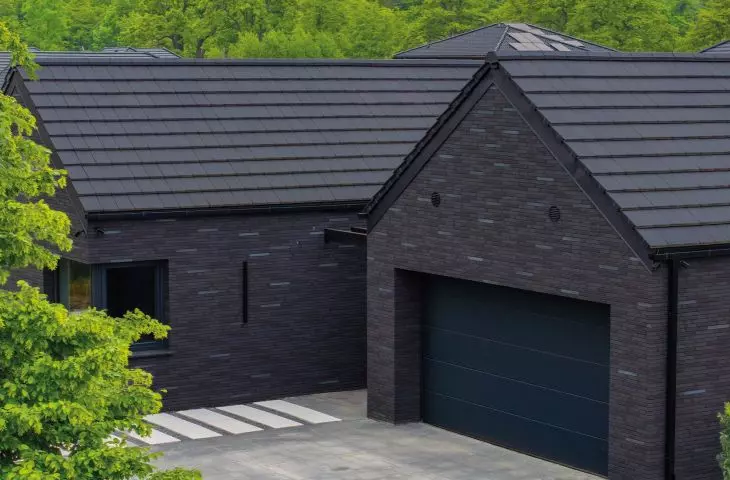
One of the most exciting trends of 2026 is the return to forms that combine modernity with tradition. A modern barn-style house is the perfect combination of traditional, archetypal form with minimalist, modern detailing.
According to Marek Miodowski, swissporTON's roofing solutions expert, today's architectural trends pose a unique challenge to roofing materials: they must be versatile enough to work well on both an ultra-modern villa made of glass and concrete and a house inspired by traditional regional architecture.
The answer is tiles with simple, geometric shapes like the cement KAPSTADT available in a wide range of colors - from classic reds to modern anthracites and blacks. As a result, the same model of tile can look traditional in combination with warm tones and a brick facade, or avant-garde in matte black, juxtaposed with a white concrete facade.
This stylistic flexibility is no coincidence, the swissporTON expert continues, as it is a well-thought-out design strategy that allows the builder greater architectural freedom without having to compromise on the quality of the covering.
-
Conscious choice as responsibility
The architecture of the future is increasingly based on authenticity, closeness to nature and responsible choices. The modern builder is increasingly asking "what is it made of?" and "what impact does it have on the environment?".
Ceramic tiles such as TITANIA or NOMINA by swissporTON are made from natural clay - a renewable resource whose extraction has a relatively low environmental impact. At the end of their useful life, they can be reused or safely deposited without harming the ecosystem.
Cement tiles, such as KAPSTADT or KIOTO by swissporTON, made from cement, sand and water, are distinguished by lower CO₂ emissions during production, making them more environmentally friendly. Their durability and weather resistance reduce the need for frequent repairs and replacement of the covering.
But true responsibility also means choosing a manufacturer that takes sustainability seriously - not as a marketing slogan, but as an integral part of its business strategy. This is a manufacturer that invests in cleaner production technologies, reduces energy and water consumption, and cares about employees and local communities.
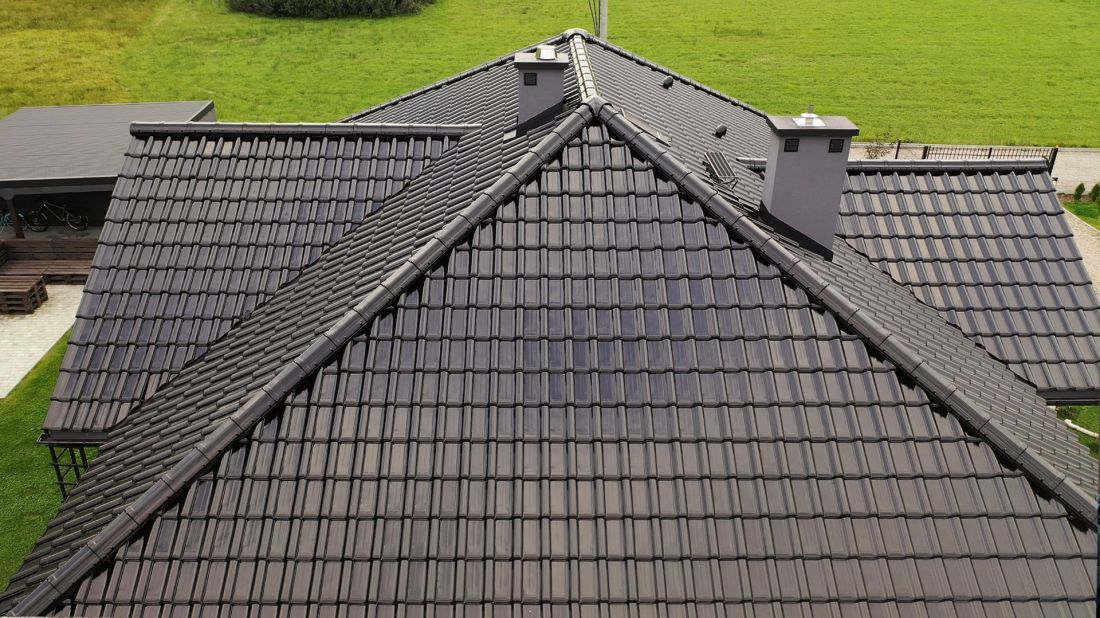
One of the most exciting trends of 2026 is a return to forms that combine modernity with tradition
© swissporTON
The roof as an architectural manifesto
In 2026, choosing a roof is no longer a technical detail to be handled by a roofer. It is a strategic architectural decision that affects the aesthetics, functionality, energy efficiency and value of a home for decades.
Today's builder is looking for solutions that meet all seven key expectations simultaneously:
-
minimalist form with perfect execution,
-
sophisticated colors available in all system components,
-
completeness of the offer from one manufacturer,
-
long-term guarantee confirmed by the stability of the company,
-
energy efficiency confirmed by parameters,
-
stylistic versatility allowing design flexibility
-
ecological responsibility without compromise.
That's why investors are increasingly choosing brands that combine a manufacturing heritage that spans decades with membership in international groups offering comprehensive building solutions. Brands that don't just produce tiles, but create complete roofing systems - from ceramic and cement roofing, to color- and shape-matched accessories, to membranes, communication systems, snow protection and photovoltaic solutions.
Questions to ask
As you face the choice of roofing in 2026, it's worth asking yourself a few key questions:
-
Is the tile you choose part of a complete roofing system from a single manufacturer, or do you have to combine components from different brands?
-
What is the actual warranty - not a marketing slogan, but a concrete legal commitment from a manufacturer that is stable and will be on the market in 30 or 50 years?
-
Are all accessories - ridge tiles, ventilation tiles, snow protection elements - available in the same shade as the slope tiles?
-
Does the manufacturer also offer roof membranes, roof communication systems and photovoltaic solutions, creating a cohesive ecosystem of solutions?
-
Will the selected covering work well for your current architectural vision, but also be fashionable 20 years from now?
-
What is the actual environmental footprint - from raw material extraction to manufacturing to recyclability?
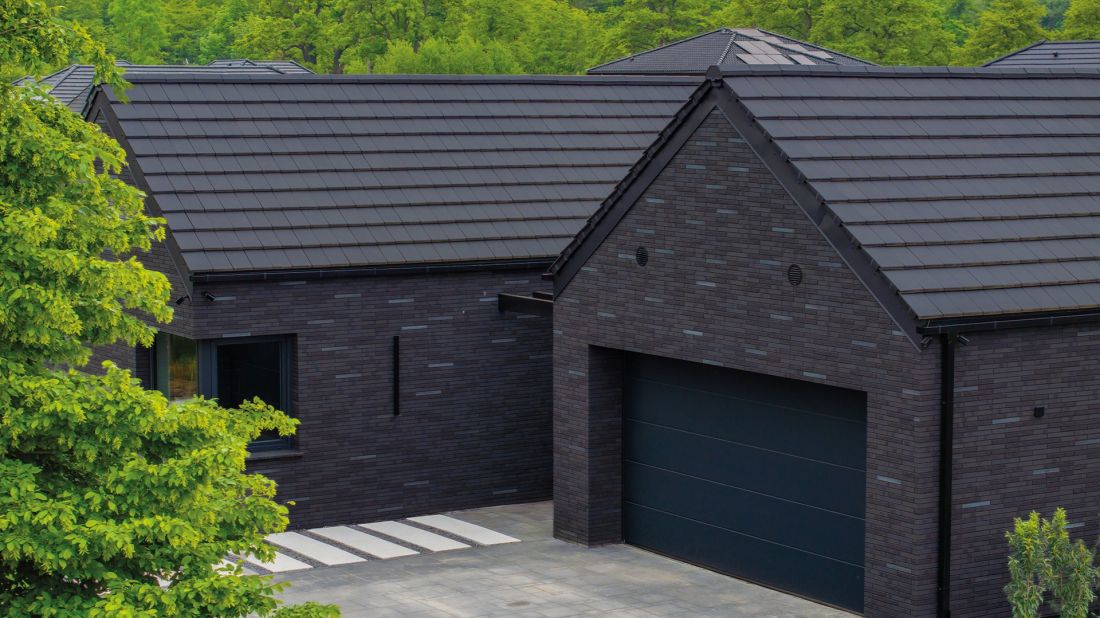
In 2026, roof color is no longer an add-on - it is one of the main languages that architecture speaks
© swissporTON
The answers to these questions will indicate whether one chooses just a tile or invests in a complete roofing system from a manufacturer that understands the challenges of modern architecture. In 2026, conscious investors choose roofs that meet all key expectations at the same time - without compromising, without choosing between aesthetics and functionality, between ecology and economy, between tradition and modernity. They choose solutions from manufacturers who understand that a roof is not just a covering - it is a complex system that must work flawlessly for decades.
For more information, visit the company's Swisspor Polska page on the A&B portal.