





Can an exhibition convey knowledge without engaging visitors in active participation? The project “Space of Inaction” by Oliwia Dziedzic, an interior architecture student at the Jan Matejko Academy of Fine Arts in Kraków, addresses this issue by drawing on the Taoist concept of wu-wei, described as “non-action” or “non-coercion.” Instead of a traditional exhibition based primarily on texts and explanations, the artist proposes an experience of space that allows viewers to gradually transition from the need for control to acceptance and contemplation. The project was developed as part of the Exhibition Space Design Studio, led by Dr. Patrycja Ochman-Tarka and Jagoda Piotrowska, M.A. The task was to design a scholarly exhibition devoted to a selected topic. Oliwia Dziedzic chose a philosophical theme—more specifically, wu-wei—a Taoist principle that became both the subject of the exhibition and the foundation of its spatial concept.
© Oliwia Dziedzic
From Control to Letting Go
The starting point for the project was an analysis of the history and principles of wu-wei. This analysis helped define the exhibition’s aesthetic, the selection of materials, and the organization of the space. The main goal was to create a space where visitors could feel a sense of calm and reflect on whether letting go of the need to control everything might allow them to find their own path.
It was important to move away from conveying knowledge exclusively through text. Here, information serves a complementary role to sensory and emotional experiences. The greatest design challenge was to develop the exhibition in such a way that it conveys content with the least possible active involvement on the part of the visitor. The exhibition is divided into three zones that guide visitors through successive stages of reflection: from the need for control, through the realization of its limitations, to a space of inaction.
© Oliwia Dziedzic
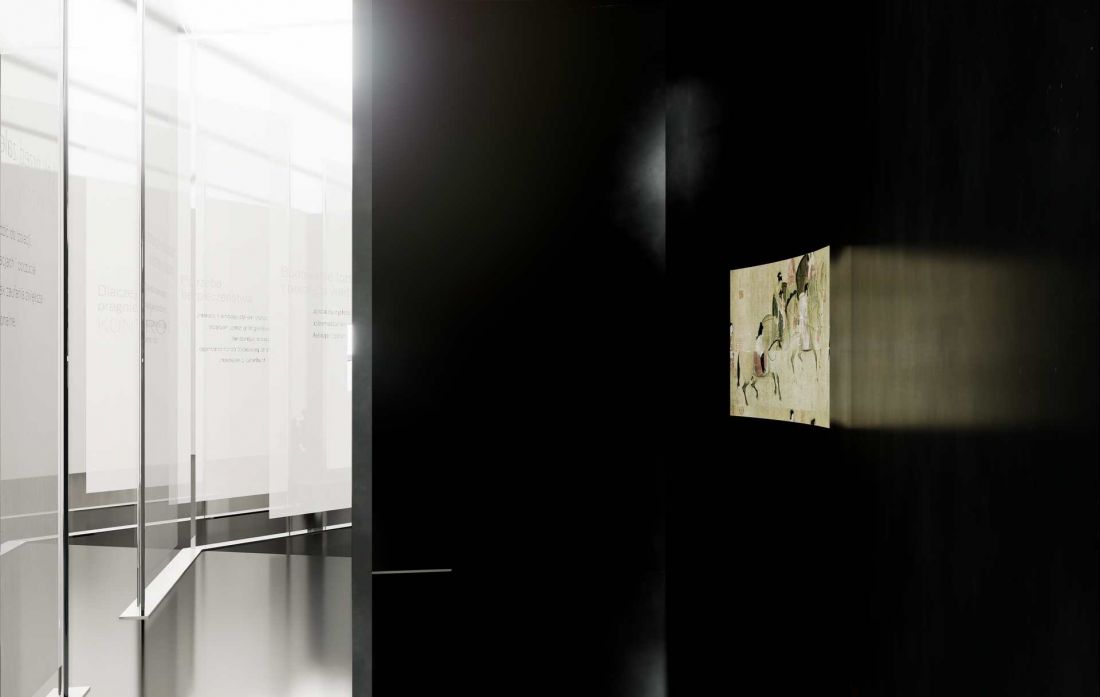
Zone of Control
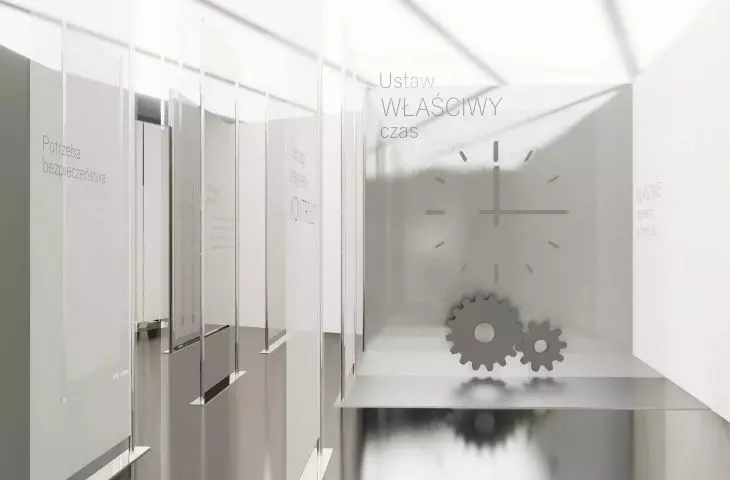
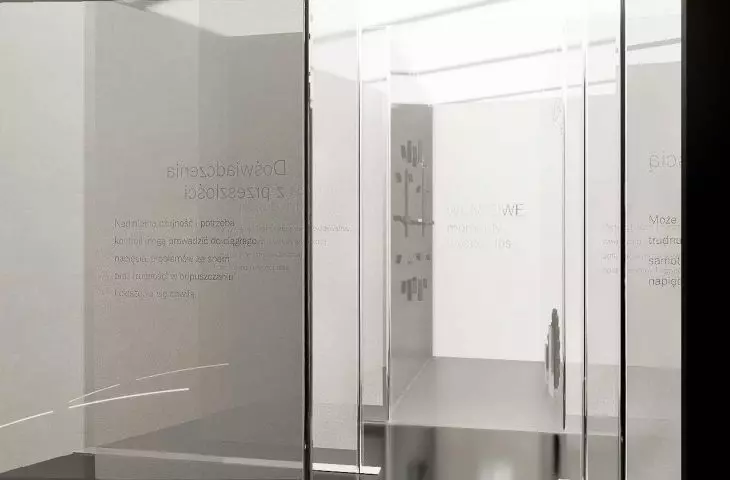
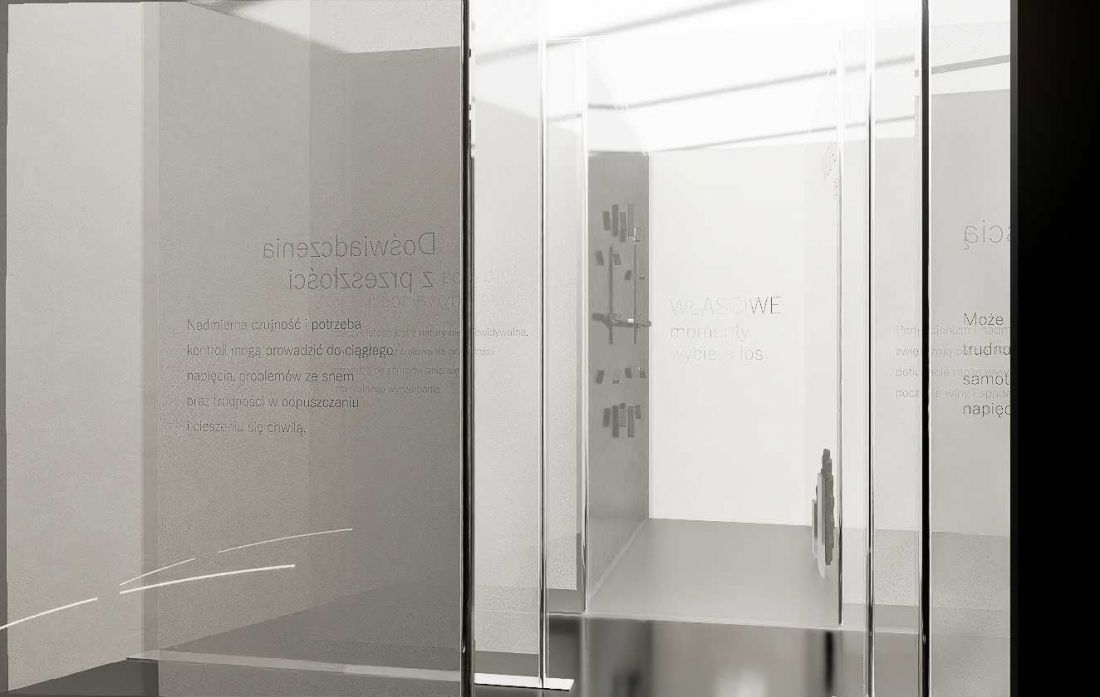
The first part of the exhibition was designed as a space that is unpleasant to experience. The cold, intense light and ubiquitous glass evoke the rigid rules and restrictions that we often impose on ourselves. This sense of discomfort is intended to prompt visitors to reflect on the relationship between the need for control and their own nature.
The first element of the exhibition is a loudly ticking clock, symbolizing discipline and planning. The inscription above it, “Set the RIGHT time,” encourages visitors to try setting the clock themselves. It turns out, however, that this is impossible—the hands move independently of the visitor’s actions. This device provokes reflection on the extent to which we can truly control the course of events.
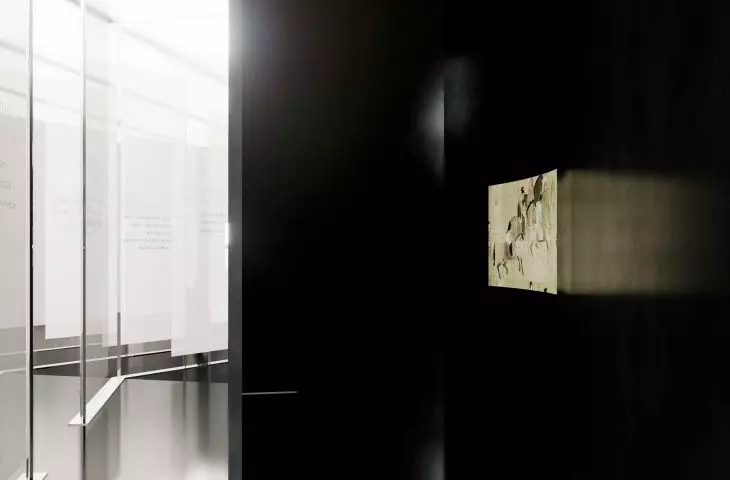
Another message—“the right moments are chosen by fate”—appears after taking a few steps. This is the only interactive element in the entire exhibition. The rest of the exhibition has been designed in the spirit of passivity, in accordance with the idea of wu-wei. In the control zone, visitors also learn about the reasons behind humanity’s need to control reality and are then introduced to the basic principles of the Taoist concept of non-action.
© Oliwia Dziedzic
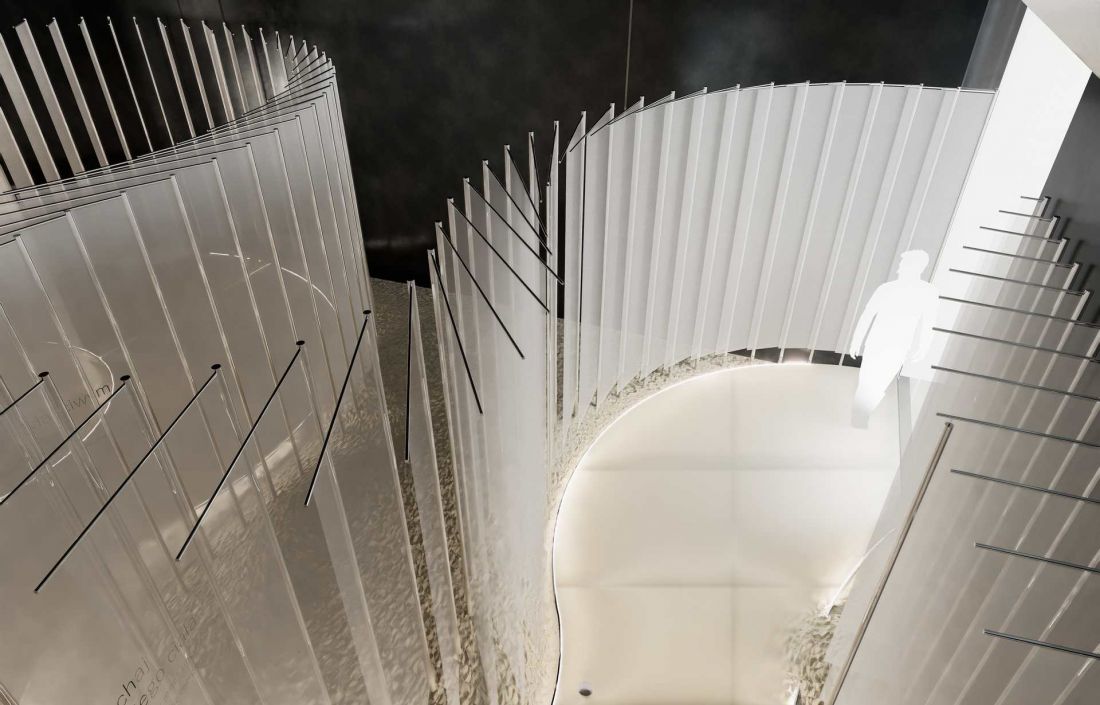
Awareness Zone
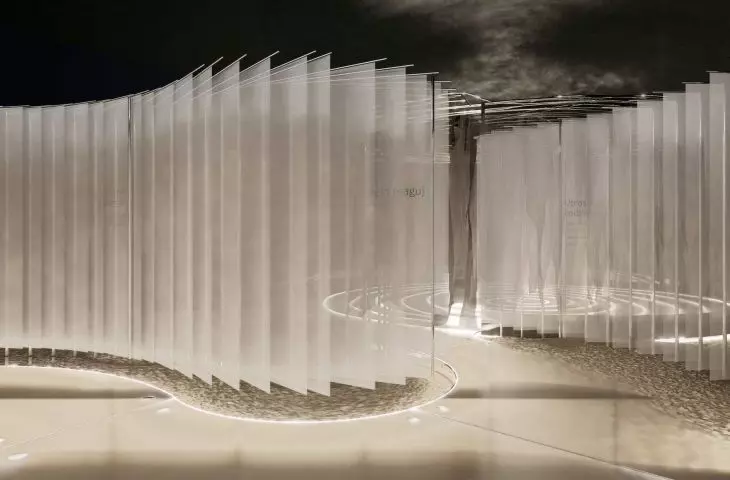
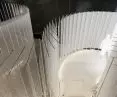
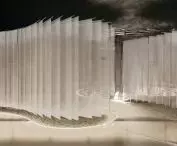
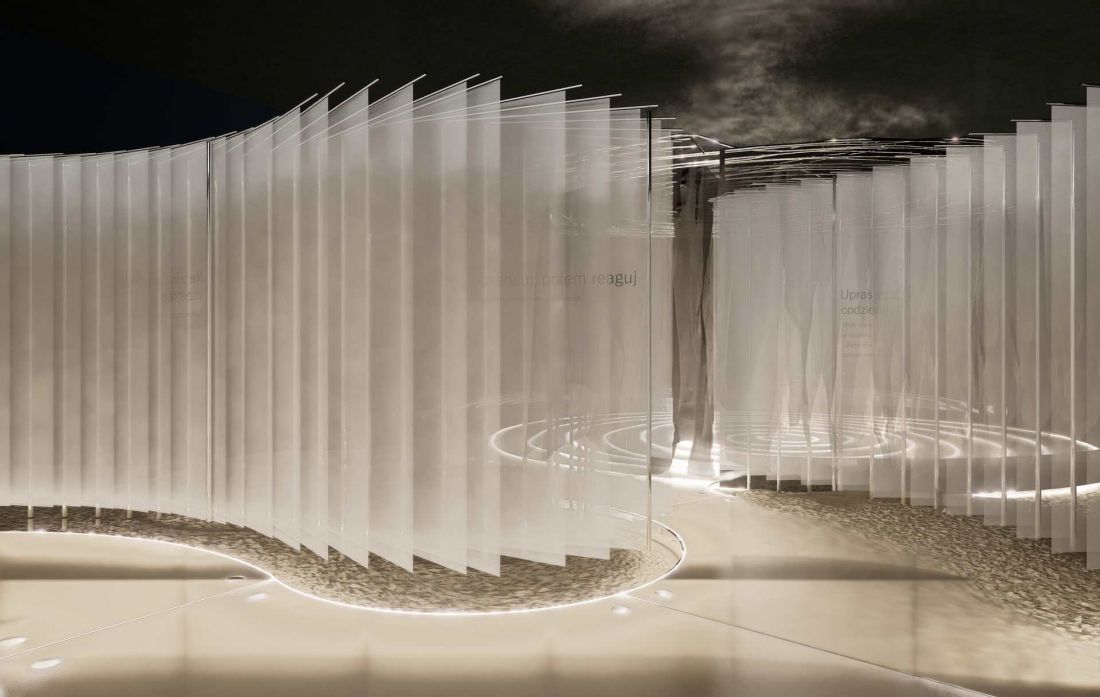
After leaving the cool, orderly control zone, visitors enter a completely different environment. The second zone takes the form of an educational path that illustrates the principles of wu-wei as they relate to everyday life. Its character is defined by a light, lively structure set in motion by the wind. Silk fabrics suspended on movable frames serve as the primary medium of expression. Under the influence of gusts of air, they create undulating forms, introducing variability and a sense of freedom to the exhibition. The wind accompanies visitors all the way to the end of the exhibition. In the artist’s concept, it symbolizes the invisible force that gives life its dynamism.
Instead of the glass panels that dominate the first zone, delicate, moving fabrics take their place. The principles of wu-wei are inscribed on selected fabrics and can be found on the steel tubes attached to their surfaces. The educational nature of the exhibition is thus combined with an experience of movement and change. This space is complemented by scattered sand. It evokes associations with an hourglass while simultaneously emphasizing the ephemeral nature of the exhibition. Its presence alludes to the passage of time and the difficulty of capturing that which is constantly changing.
© Oliwia Dziedzic
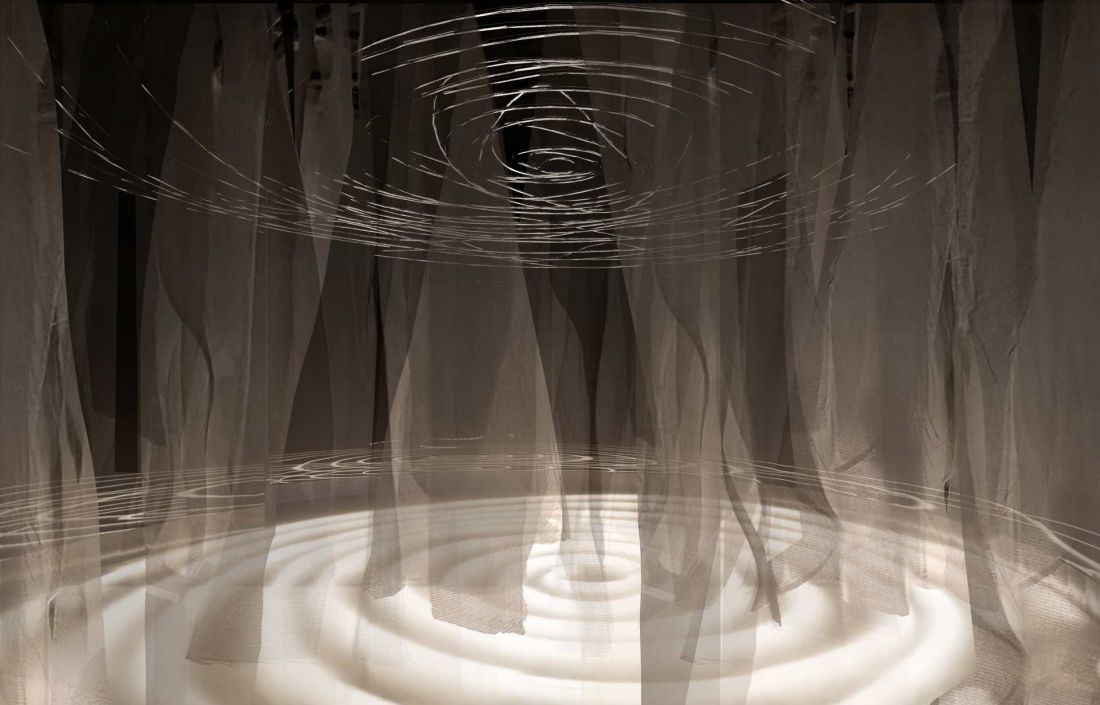
zone of inaction
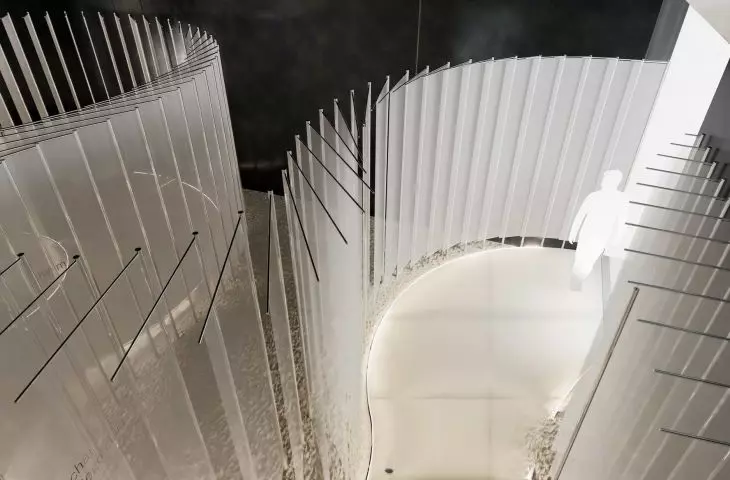
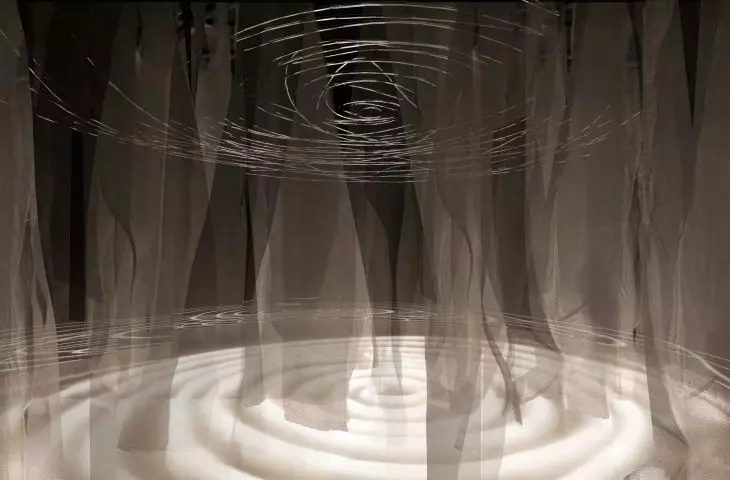
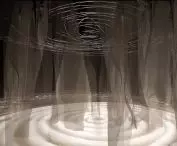
The final section of the exhibition serves as its climax. It is an open, free-flowing space filled with hanging strands of fabric suspended from a metal spiral. Its form alludes to the cyclical nature of life, and the layout of the exhibition departs from a clearly defined path.
Here, visitors receive no detailed instructions or additional information to absorb. Direction is guided by the senses and intuition, and the space encourages independent exploration and surrender to the surroundings. Instead of following an imposed order, the viewer can allow themselves to be guided by the movement of the fabrics and the air.
The absence of additional messages is intended to create conditions for contemplation. In this part of the exhibition, the most important thing is simply being in the space and experiencing inaction—without the need to perform tasks or seek out further information.
© Oliwia Dziedzic
The Exhibition as an Experience
“Space of Inaction” demonstrates how a philosophical theme can serve as the foundation for a multisensory exhibition. Three zones create a gradual shift in atmosphere: from cold and discomfort, through movement and change, to freedom and tranquility. Materials, light, sound, and wind are not merely elements of the installation but collectively shape the way the content is conveyed.
The project reflects the interests of Oliwia Dziedzic, who focuses in her work on in-depth analysis of a topic and the search for ways to translate its ideas into space. Her approach to design combines interior architecture with other fields of art, including painting, sculpture, and art history. Dance is also an important source of inspiration, evident in her interest in movement, fluidity of form, and the freedom of space.