




Raising the bar or a drop in the ocean of needs? Wroclaw has announced two new green initiatives: its own Green Building Standard and new plantings in the Market Square.
Wrocław Green Building Standard
Taking its cue from the Warsaw Green Building Standard implemented last year, Wrocław has adopted its own version of the document (WSZB). It is a set of guidelines that must (or can - some of the guidelines are not mandatory) be met by both any newly designed and modernized building by the City (defense infrastructure facilities are excluded). Importantly, the guidelines also apply to retrofit projects for pre-war townhouses, which are quite a challenge in terms of accessibility and energy efficiency.
The WSZB focuses on six main thematic areas - greenery and landscaping; stormwater management; energy efficiency; health, quality, building solutions (using GOZ); sustainable mobility and accessibility; location and linkages to the environment.
What is the priority of the WSZB? Improving the quality of use of facilities, energy improvements, increasing the use of renewable energy sources, accessibility, rainwater retention, and care for greenery and lighting. The criteria, of which there are 65 in total, are clearly spelled out - they include compensation for felling, preservation of all trees with a circumference of more than 200 centimeters, rainwater management, design to protect existing soil and ground for the duration of construction, or emission-free energy sources and no architectural barriers for people with special needs.
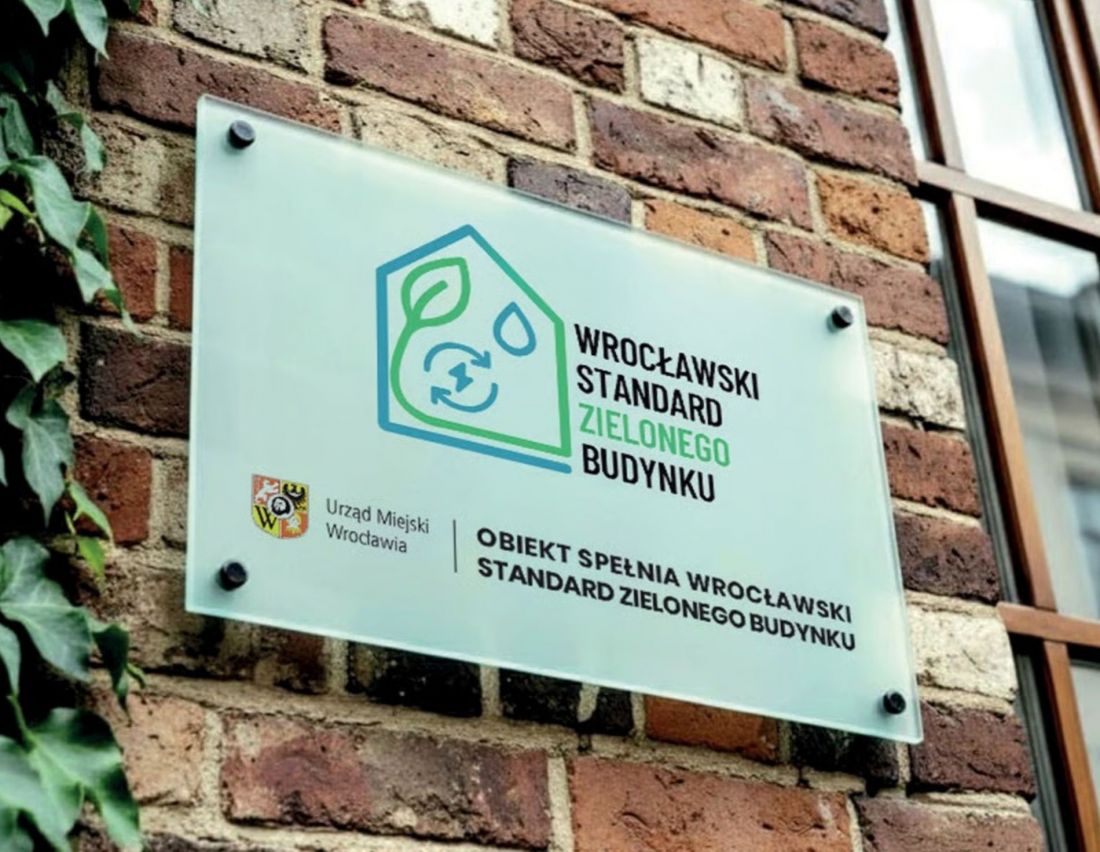
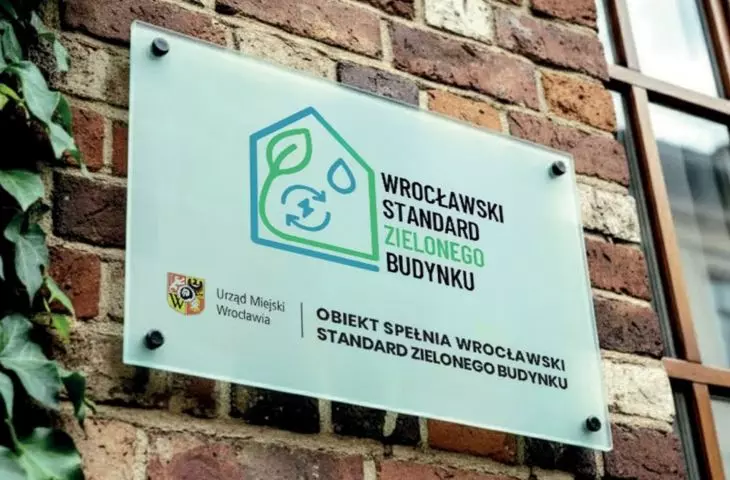
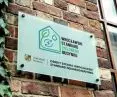
There will be plaques on the buildings indicating that the building meets the Wroclaw Green Building Standard
© UWM
What will the procedure look like? Investors will have to attach a certificate of compliance with the Standard to the application for a building permit submitted to the Department of Architecture and Monuments. They are required to confirm this compliance in advance with the UWM Department of Strategy and Sustainable Development. Obtaining a positive assessment will depend on meeting criteria in all areas: for newly designed buildings, it will be necessary to meet 24 criteria (11 mandatory and a minimum of 13 selectable), and for existing buildings undergoing modernization - 6 criteria (1 mandatory, regarding primary energy demand, and a minimum of 5 selectable).
The city is starting with itself and is basically raising the bar for itself (the guidelines have already been followed by, among others, a school on Zwycięska Street and TBS in Wrocław's Brochów district), but it is also encouraging private investors, who are, after all, responsible for most of the city's construction projects, to use the WSZB. Who knows, maybe thanks to the Green Building Standards, healthy, accessible, safe and energy-efficient architecture will become a standard?
trees in Wroclaw's Market Square
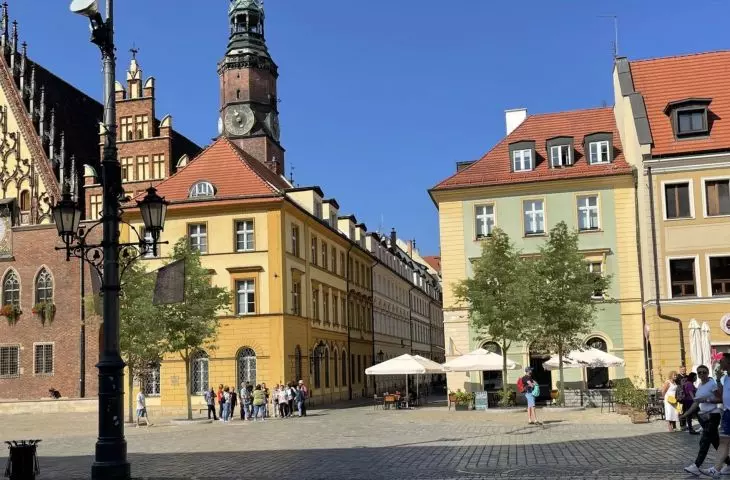
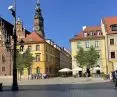
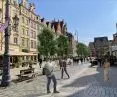
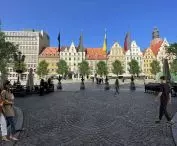
The trend of planting trees in the main squares of Polish cities has developed in earnest - Wroclaw is following this fashion. After the crowning deconstruction of Nowy Targ Square, the city announces the planting of more than a hundred trees in the Market Square and adjacent Świdnicka Street.
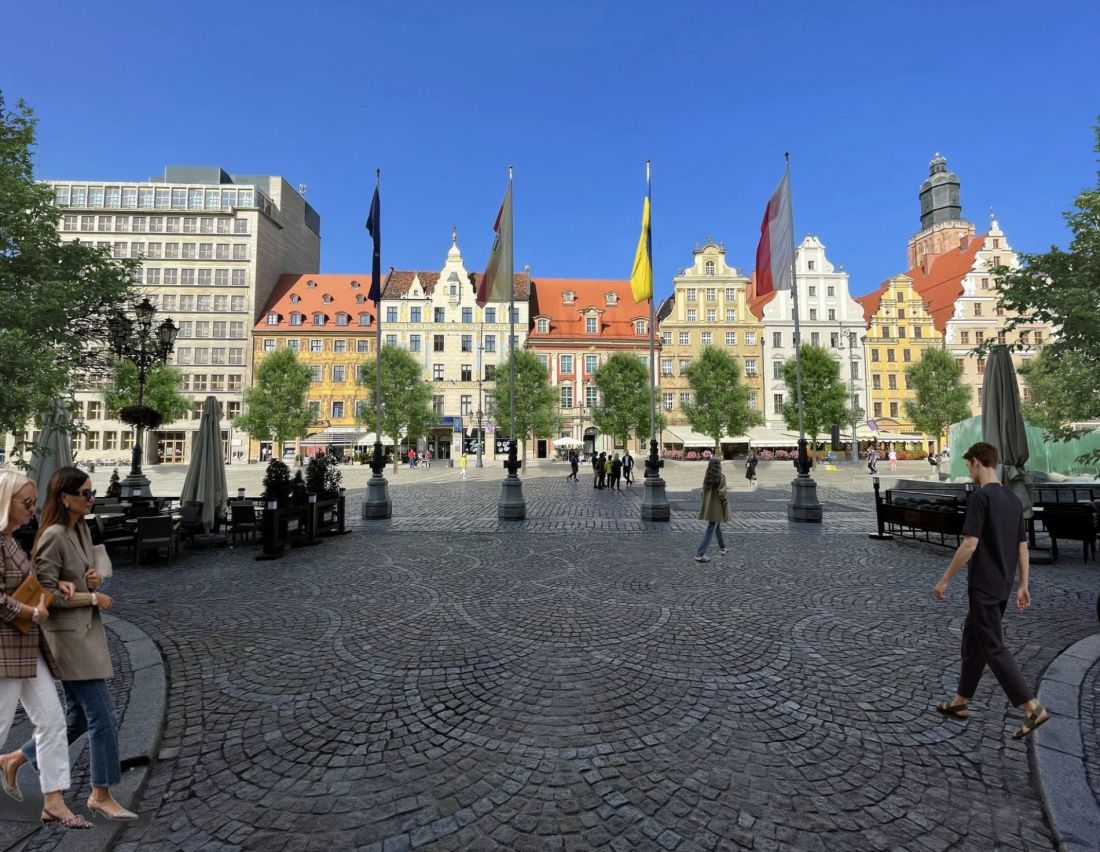
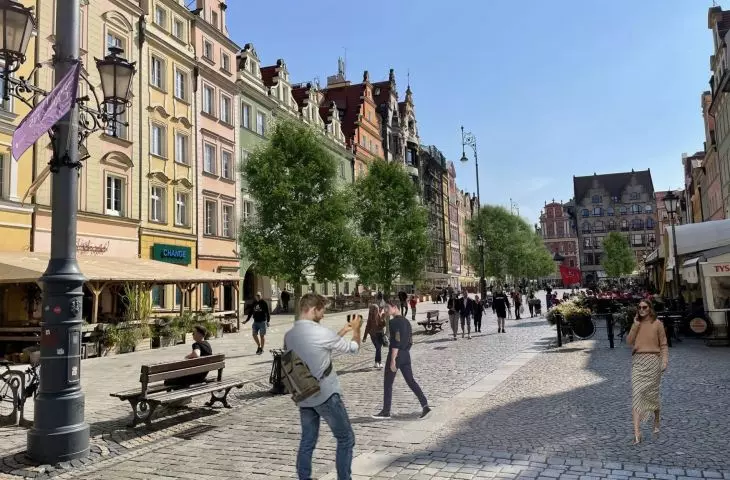
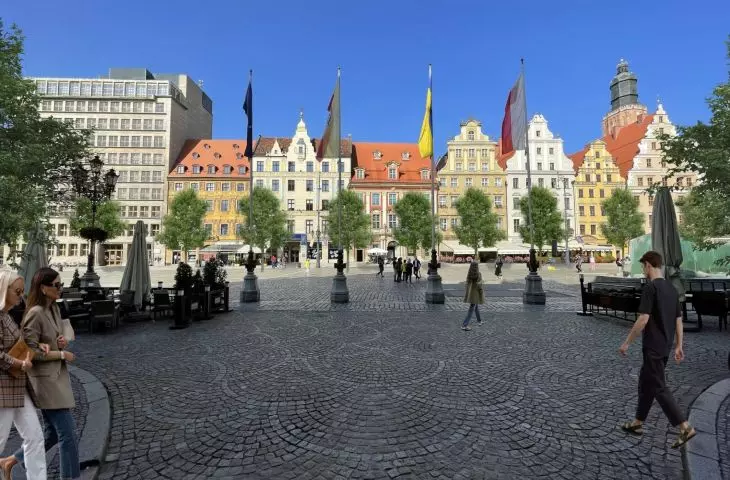
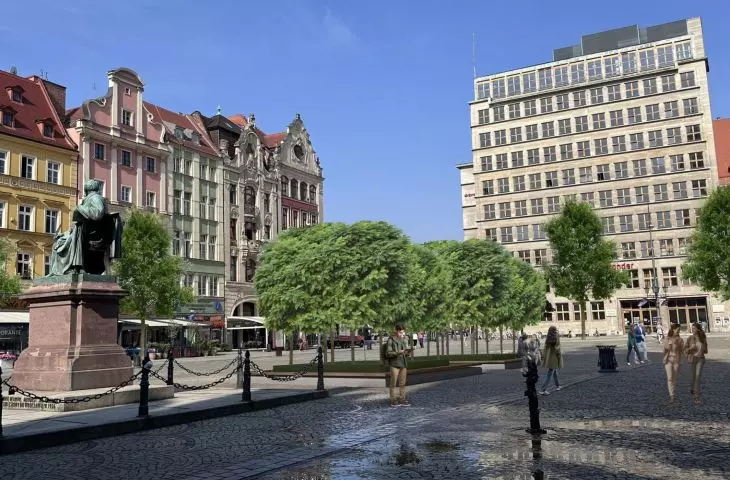
121 trees will appear in Wroclaw's Market Square and Świdnicka Street
© visualization: ZZM | materials provided by UMW (wroclaw.pl)
The pavement in the heart of the capital of Lower Silesia underwent a major overhaul in the 1990s, at which time vehicular traffic was removed from the Market Square. So the time has come to green up the granite pavement a bit. The scope of possible interference is limited due to the historic and representative nature of the site, which hosts many mass events. However, the modern challenges of urban heat islands require progressive solutions, and the Lower Silesian Regional Conservator of Monuments has agreed:
We have been in discussions and joint design work for months. The market is an area of exceptional conservation sensitivity, but at the same time the answer to the phenomenon of concreting of urban spaces must be real
- says Daniel Gibski, Lower Silesian Provincial Conservator of Monuments.
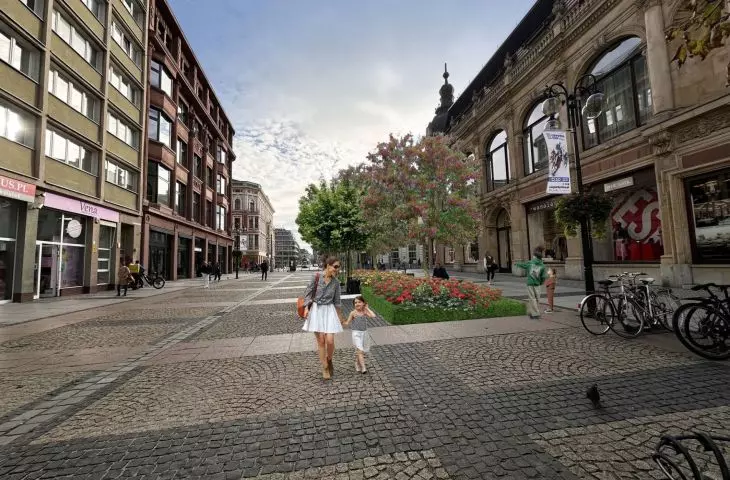
As a result, the pavement will be partially unsealed, 121 trees (elm and maple) and more than 2,500 shrubs and perennials will appear, as well as elements of small architecture. The trees are to be planted in anti-compression boxes, which will protect the roots while directing their growth in the designated direction. The whole is to be connected to an automatic watering system.
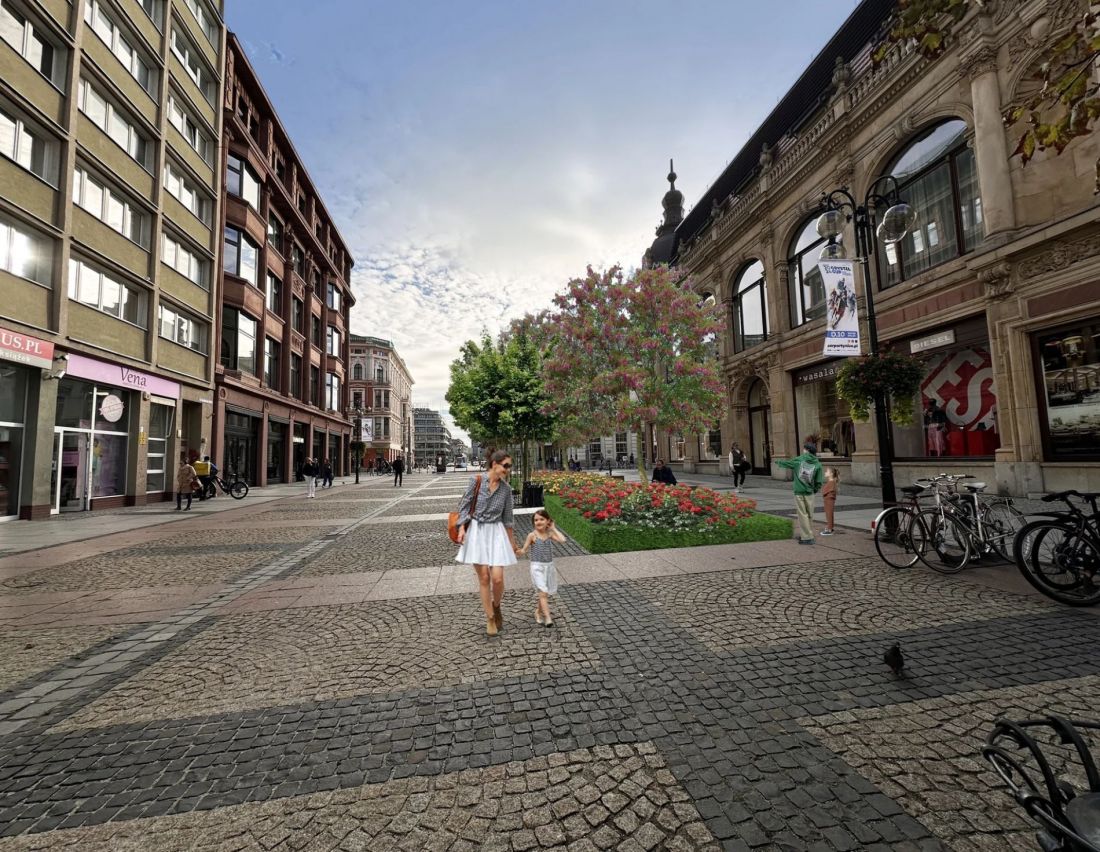
Trees will also be planted on Świdnicka Street
© visualization: ZZM | materials provided by UMW (wroclaw.pl)
At the scale of Wrocław's Market Square - one of the largest in Europe - with an area of 3.64 hectares, replacing the already growing trees and planting new ones is a drop in the ocean of the city's microclimatic needs. The question is also whether the new trees will take in this demanding location - the hawthorns growing near the Fredro monument have not had much luck.
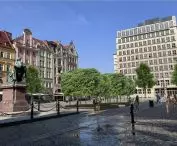
In the Market Square itself, trees will be replaced near the New Town Hall and the entrance to Cloth Hall Street (25 field maples), 23 elm trees will be planted along the perimeter, and 27 acacia robinia trees will be planted near the monument to Alexander Fredro. The remaining 46 trees will be planted along Świdnicka Street. However, you will have to wait a while for the effect - the work will take place in three stages, gradually until the end of 2026. The cost of the investment is estimated at 5 million zlotys.
elaborated: Ola Kloc