



















For hundreds of years, acoustics has been associated with concert halls, recording studios, and auditoriums. It is only in recent years that it has made its way into office buildings, hotels, and, more recently, residential buildings. Should contemporary architects bury their heads in the sand out of shame that they are only now beginning to understand the impact of acoustics on people? Three eminent specialists already knew this decades ago.
It all began with an American physicist. As a young scientist, Wallace Clement Sabine faced a task that many considered impossible. In 1895, he undertook the task of improving the acoustics of Fogg Lecture Hall, one of the buildings comprising the Harvard University complex. To this day, this place and Sabine’s work are considered the cradle of modern architectural acoustics.
For several years, the scientist and his team tested the interiors by placing and moving various types of materials from one spot to another. For nighttime tests, when there were no students in the auditorium, they borrowed hundreds of seat cushions from Sanders Theater, which was considered at the time to have perfect acoustics. Using an organ pipe and a stopwatch, they took thousands of measurements of the time it took for sounds to fade away inside the space. They experimented with carpets and people in the room. The result of their work was the formal definition of reverberation time—a parameter that remains one of the most important factors in determining whether a space is acoustically pleasant.
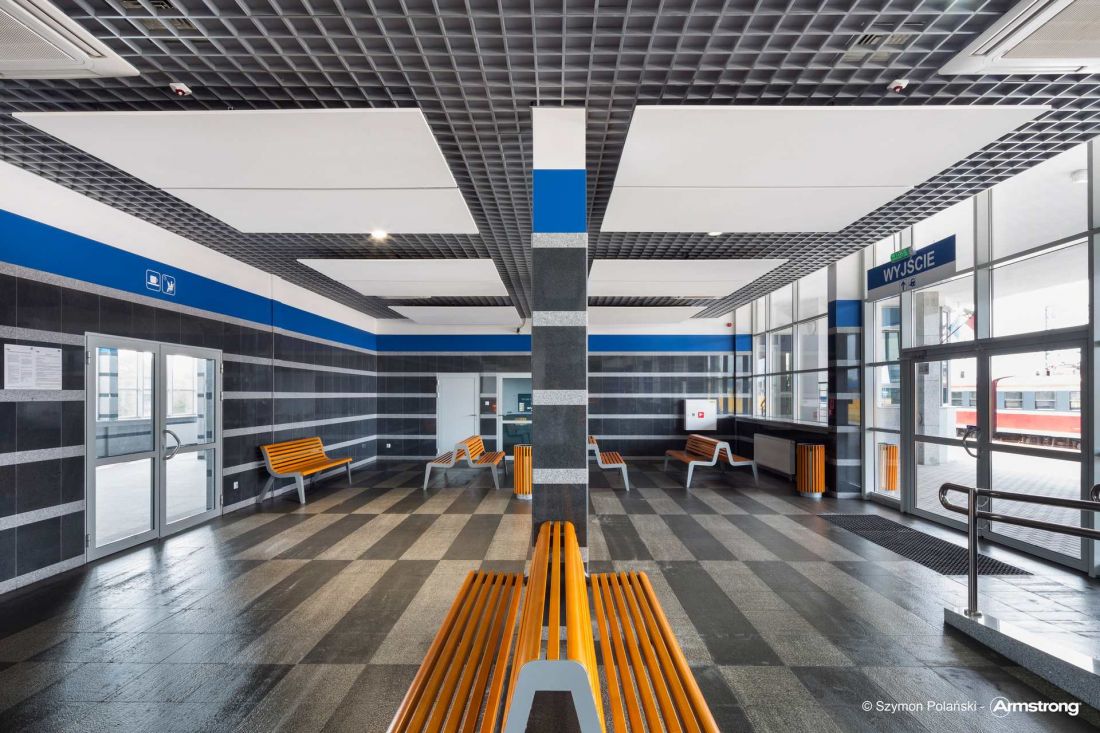
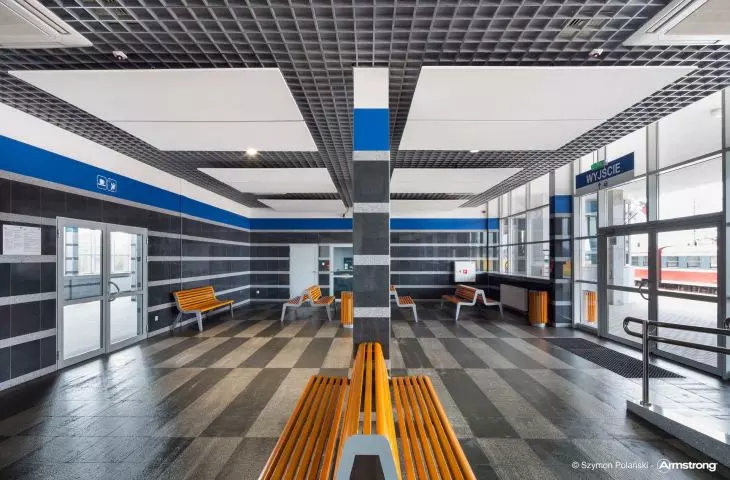
Even in challenging spaces such as train stations, acoustics can be effectively managed. Acoustic islands or vertical panels effectively absorb noise. PKP Train Station in Terespol
Photo by Szymon Polański for Knauf Ceiling Solutions,

London Paddington
Photo by Philip Durrant for Knauf Ceiling Solutions
Before an interior is built, it’s possible to predict whether it will sound good
It’s surprising that the fundamentals of acoustics in architecture were established over 130 years ago, yet today many architects and designers still overlook these principles. They design interiors to please the eye, not the ear. Meanwhile, it is sound that has a much greater impact on users’ well-being; it can improve it or, conversely, cause fatigue, irritability, pain, and nervousness,” explains Sebastian Staniewicz of Knauf Ceiling Solutions.
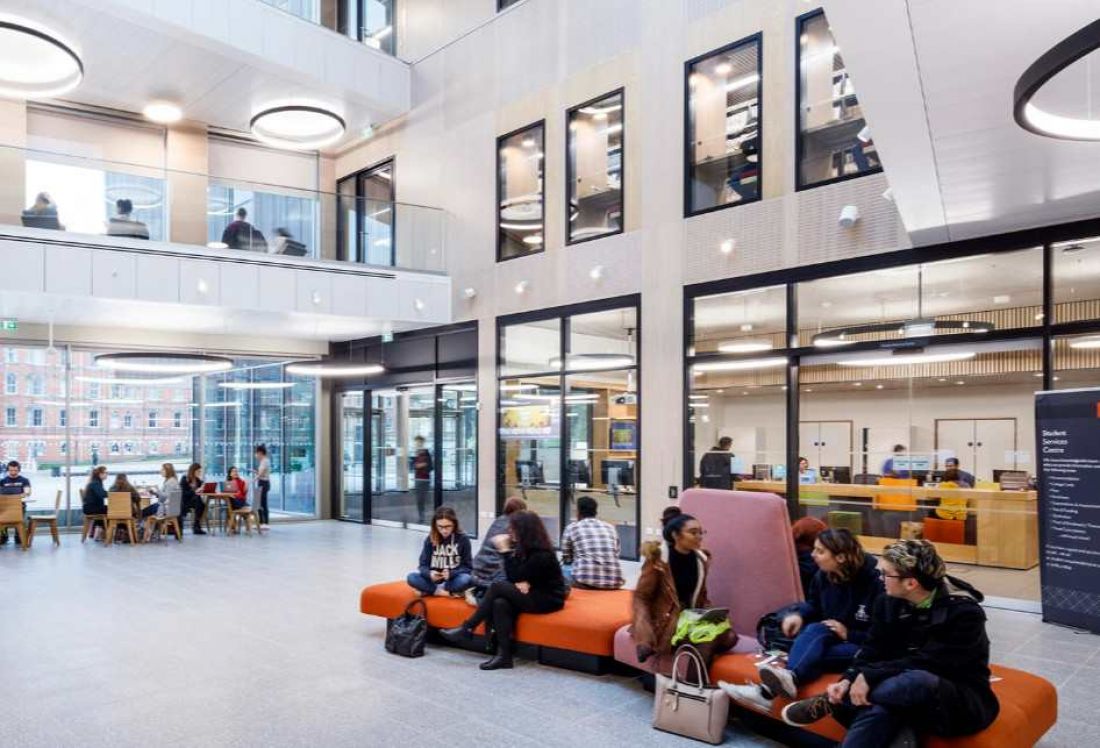
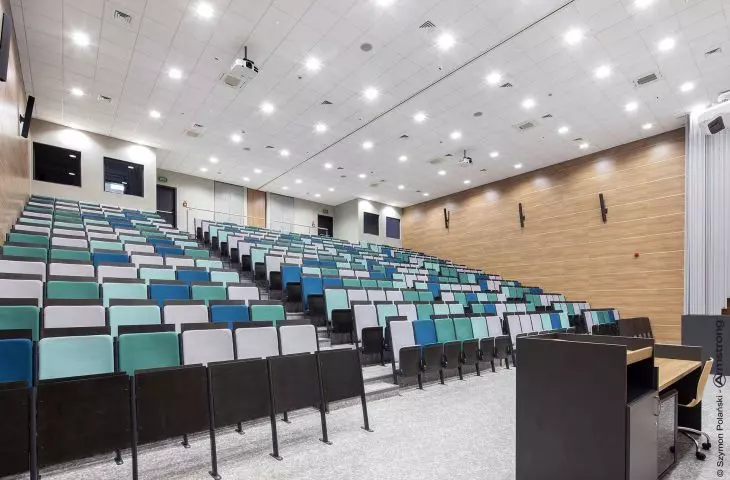
Research into acoustics began over 130 years ago. Today, many modern universities prioritize students’ acoustic comfort by installing acoustic panels on their ceilings. Royal Holloway, London
Photo by Philip Durrant for Knauf Ceiling Solutions,
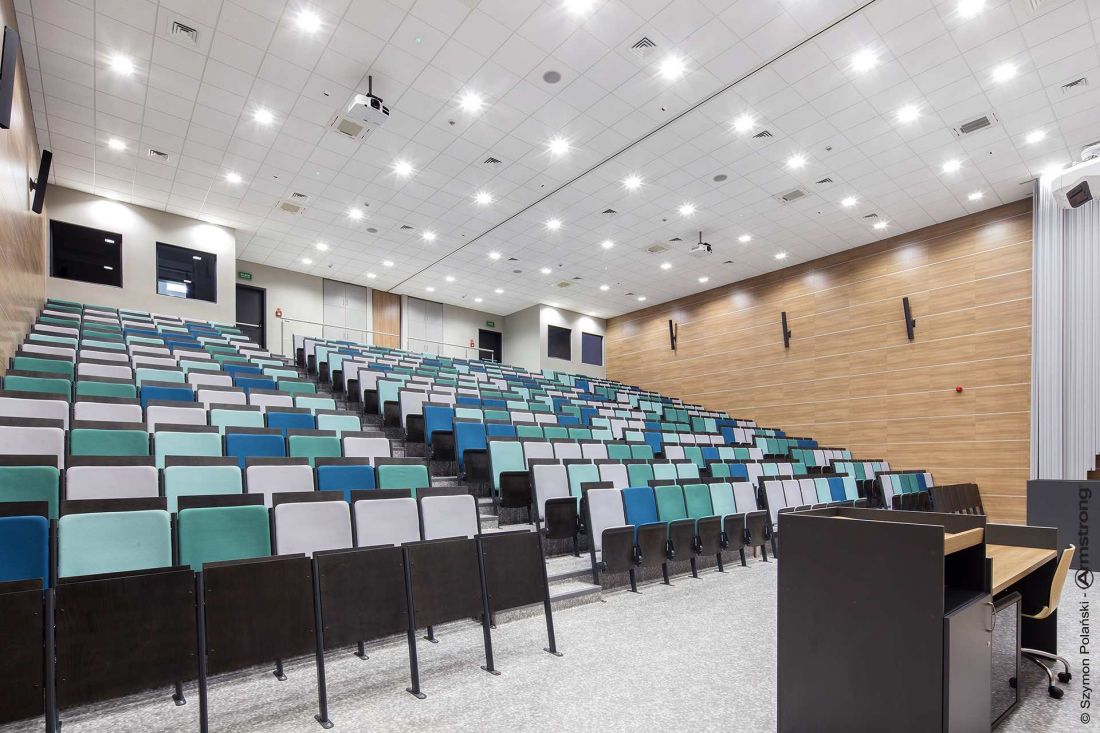
Kochanowski University in Kielce
Photo by Szymon Polański for Knauf Ceiling Solutions
We’re all very familiar with excessive noise in schools, restaurants, shopping centers, and other crowded public places. Noise levels, reverberation, and sound reflections are often unbearable in such settings. And it was precisely the study of this effect—the reflection of sound waves—that another scientist, Helmut Haas, devoted his work to. He described his findings in his doctoral dissertation in 1949. He conducted his research at the University of Göttingen, which was then considered one of the most important research centers in the fields of acoustics, wave physics,
and psychoacoustics.
While Wallace Clement Sabine demonstrated that interiors should be designed with acoustics in mind, Haas made his mark as a master of sound design itself. The so-called Haas effect refers to the way sound propagates and how the human brain perceives it.
The results of these groundbreaking discoveries are now utilized as psychoacoustics in most theatrical performances, concerts, movie theaters, and concert halls. It is the physical and technical properties of sound waves that Haas studied that allow sounds to be synchronized during concerts and live events. Sound engineers use the Haas effect to capture the audience’s attention and evoke emotions through auditory experiences, such as the realism of sounds approaching from different directions within the venue.

In stores, noise is merely annoying, but in healthcare facilities such as hospitals, it not only causes discomfort but also hinders the healing process. Serbia, Univerexport
Photo by Marko Cvetkovic for Knauf Ceiling Solutions

WUM Children’s Hospital in Warsaw
Photo by Szymon Polańsk for Knauf Ceiling Solutions
In some interiors, sound reflection is designed to enhance the atmosphere, while in others, sound absorption and the suppression of reverberation are key.
Absorbing sound waves with acoustic materials is extremely important in places such as schools, restaurants, and hospitals. In all these settings, acoustic ceiling
and wall panels help improve comfort and well-being. The echoes of hundreds of conversations no longer become tiresome to occupants. For children or patients in hospitals, this is of immense importance,” says an expert from Knauf Ceiling Solutions.
Why should ceilings, in particular, be acoustic? Because they are the largest flat surface in a room, located directly above people’s heads, and when properly equipped, they can effectively reduce the perceived noise level—often by half. As one of the world’s largest manufacturers of acoustic materials for interior design, Knauf Ceiling Solutions offers architects unlimited possibilities for creating designs that enhance acoustics, thanks to a portfolio of thousands of solutions. Designers can choose from materials such as mineral boards, metal panels, and wood wool panels, and can experiment with colors, shapes, and installation methods. They can design both full surfaces made of panels and free-hanging decorative island ceilings or vertical baffles.
Overcoming the Mirror Effect
The third great pioneer of acoustics is also German: physicist Manfred Robert Schroeder. He is often regarded as the expert most closely associated with design acoustics. In 1975, he introduced sound-diffusing panels, known as the Schroeder Diffuser. It is a special panel with slats and grooves of varying depths. It sounds scientific, but his invention, in its modern, design-oriented version, is simply various types of wall and ceiling decorations: acoustic panels, three-dimensional cladding, and upholstered panels.
The varied structure helps combat the mirror effect. When sound hits a flat, hard wall, it reflects in a single direction, just as light reflects off a mirror. This creates an unpleasant echo.
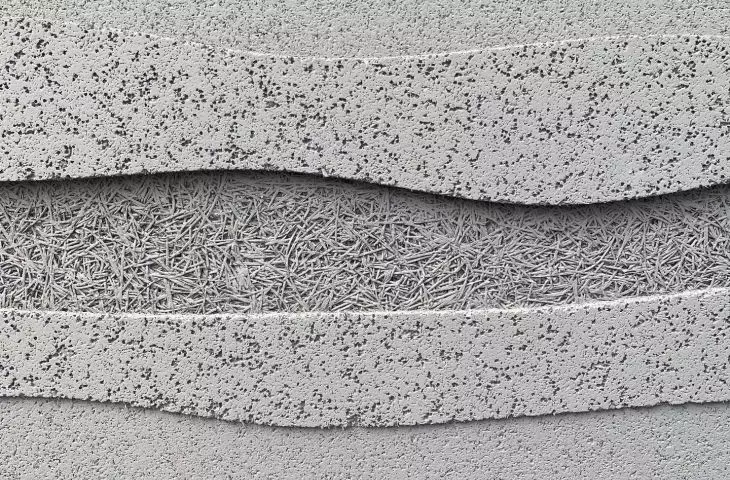
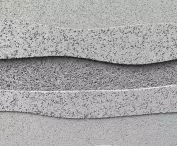
The acoustic properties of wall and ceiling cladding, the perforations in their surfaces, or the special grooves—which, for example, we can custom-make for architects in any pattern in our Heradesign wood-wool panels—produce exactly the same effect as the famous Schroeder Diffuser: they disperse the sound,” says Sebastian Staniewicz.

At the Claas restaurant in Hamburg, the architects opted for solutions from the Heradesign Creativ line; the mineral wool acoustic panels were specially treated at the Knauf Ceiling Solutions manufacturing facility and featured custom grooves.
Photo: Matthias Stoewer for Knauf Ceiling Solutions
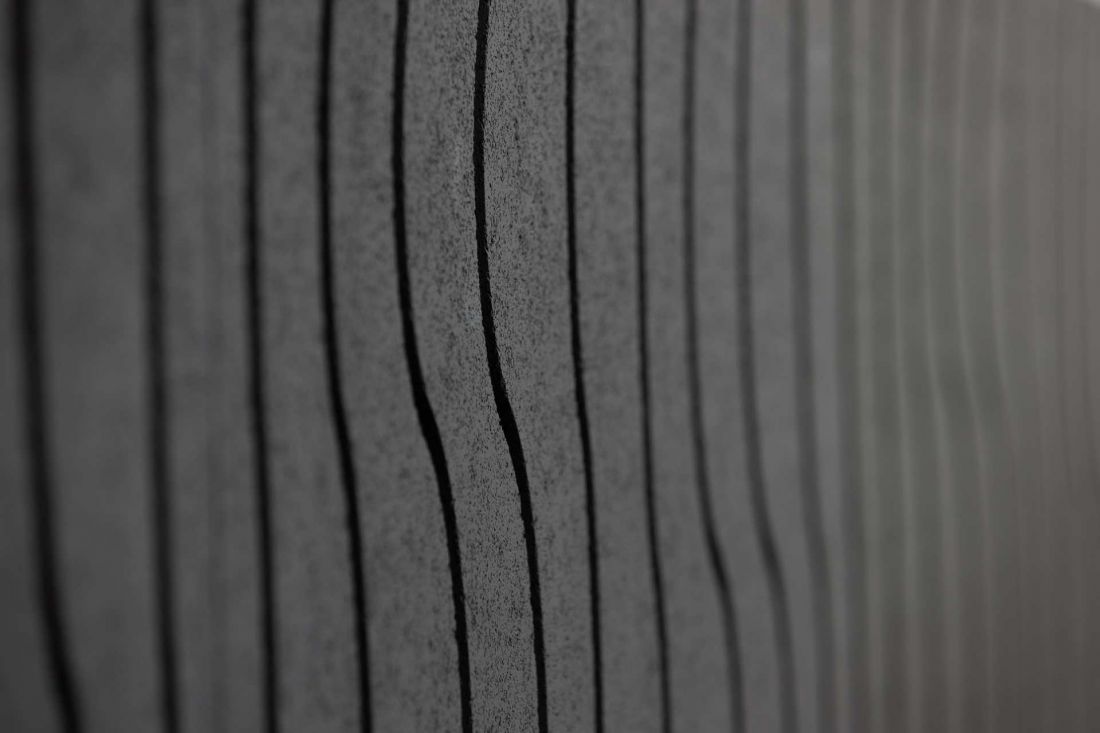
Photo: Matthias Stoewer for Knauf Ceiling Solutions
A new era has already begun. Acoustically friendly spaces are making their way into homes
Over 100 years ago, Sabine taught us how to measure comfort in architecture; he gave architects a language of numbers so they could design acoustically friendly spaces based on hard data. Haas taught us how the brain reacts to incoming sounds. He made designers realize that interiors are governed by the principles of spatial psychology. Office building developers and employers already understand this well. For many years now, acoustics have been important
in offices, as it undeniably affects people’s well-being and their productivity at work.
Now, very slowly, acoustic design—similar to Manfred Schroeder’s invention—is beginning to find its way into homes. People are increasingly turning to acoustic panels—now even available at home improvement stores—to install them in their bedrooms and living rooms. The popularity of these products is fostering greater awareness of acoustics.
Starting September 20, 2026, legislation will also contribute to this improvement. Stricter acoustic regulations for residential units will take effect in Poland. The new regulations—specifically, the technical requirements of the applicable PN-B 02151-3:2015-10 standard—require developers to implement solutions that are even more comfortable for homeowners: higher insulation levels for walls, ceilings, and entry doors. The changes are intended to reduce noise in multi-family buildings, as well as, for example, in row-house developments. Every construction project will be required to include an acoustic analysis.
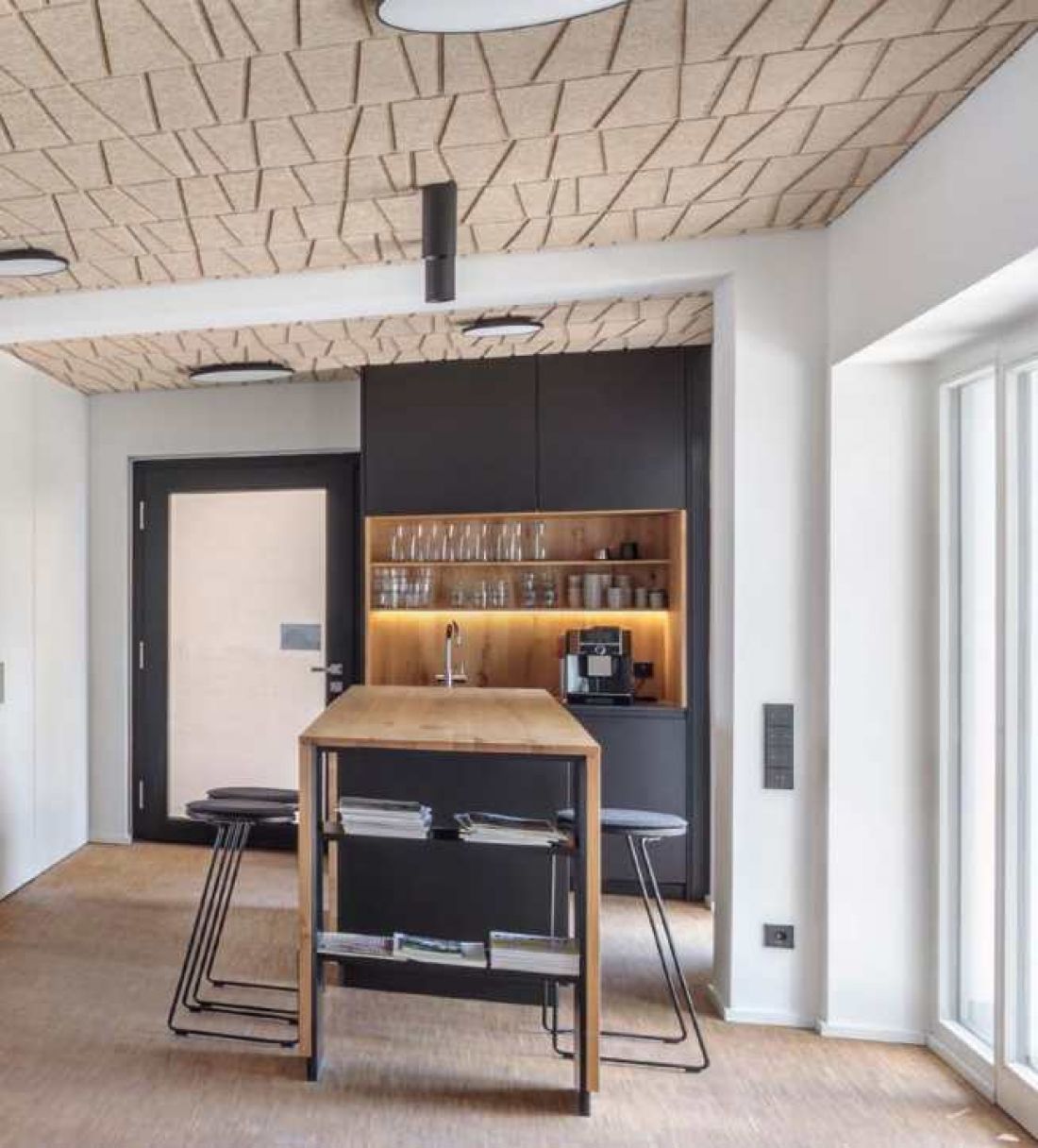
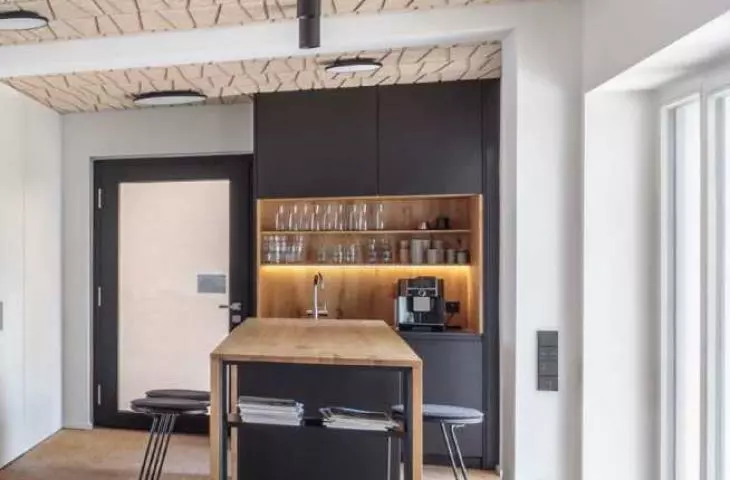
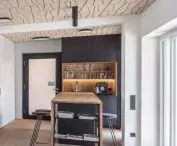
Architects at Schwille in Germany approached the interior design of their office as if it were a living space: it is intimate and cozy, and the ceilings are adorned with Heradesign acoustic panels featuring a special custom-made pattern,
Photo: Stefan Meyer for Knauf Ceiling Solutions
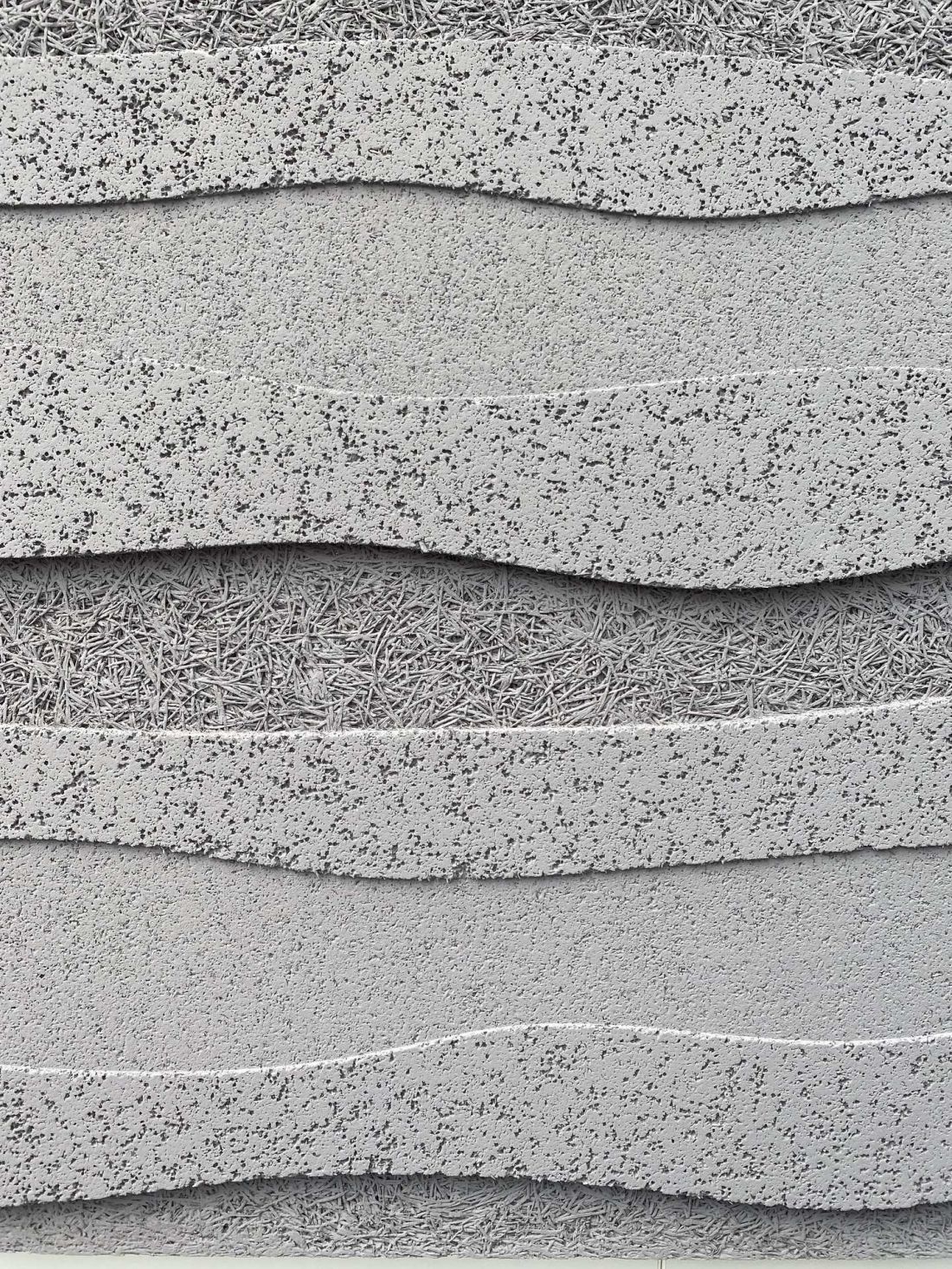
Photo: Stefan Meyer for Knauf Ceiling Solutions
For more information about the Knauf Group, visit: www.knauf.com