




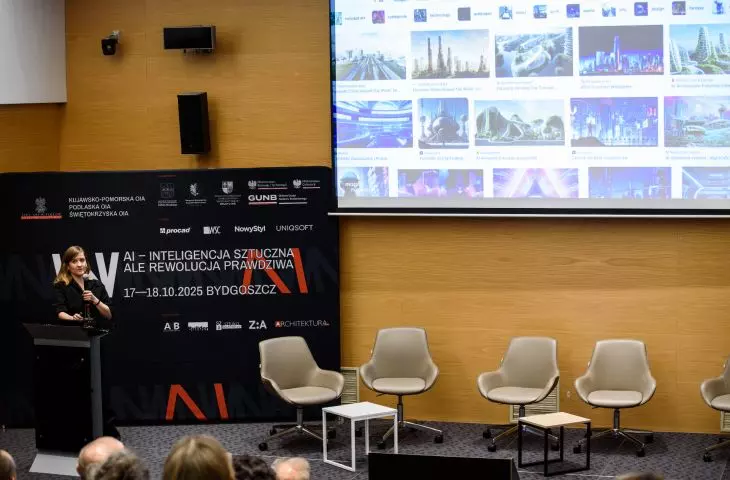
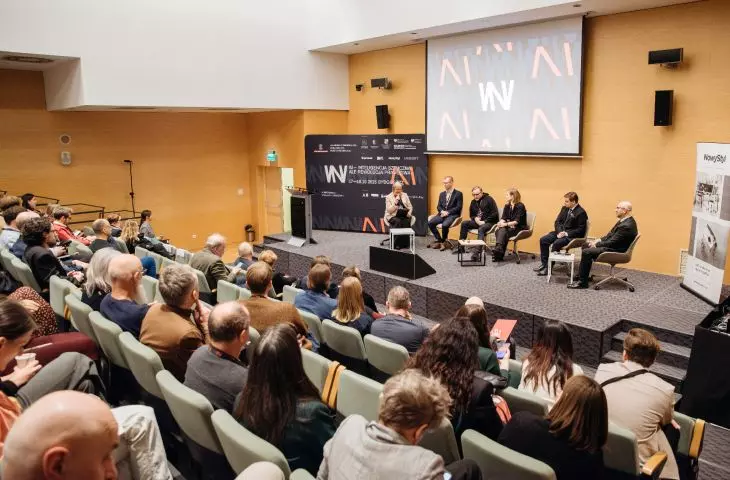
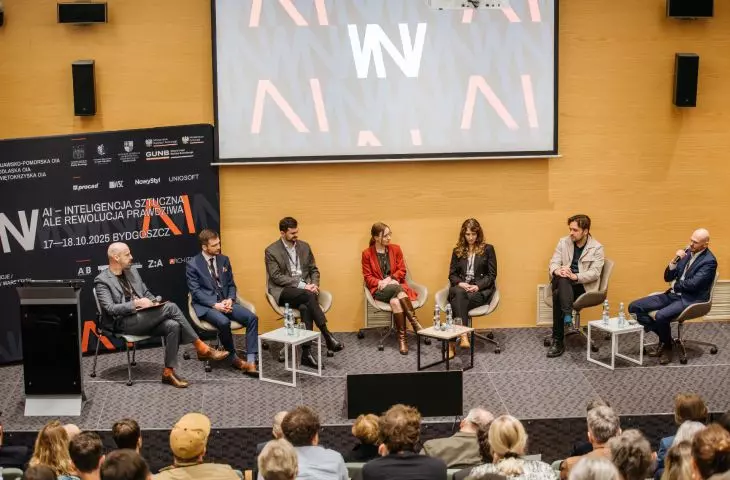
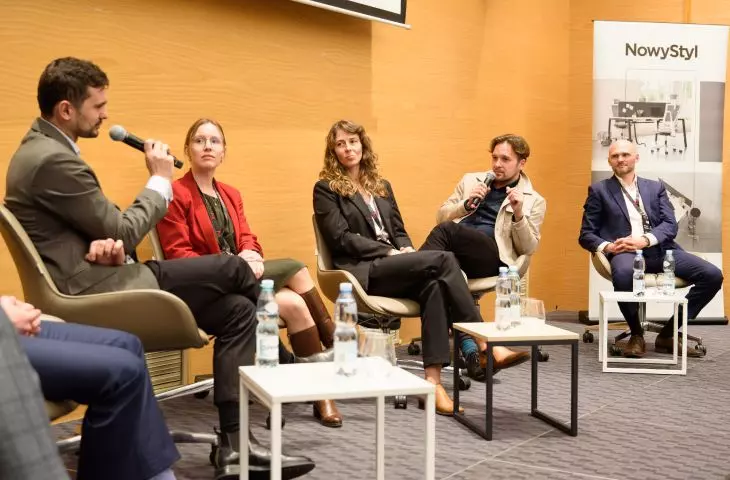
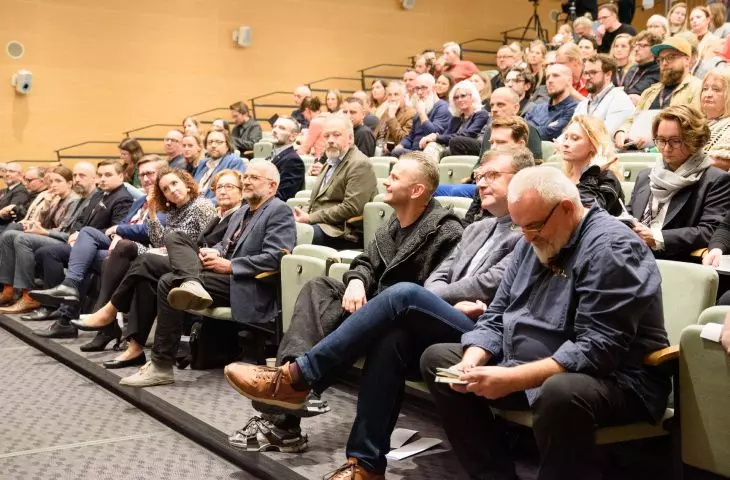
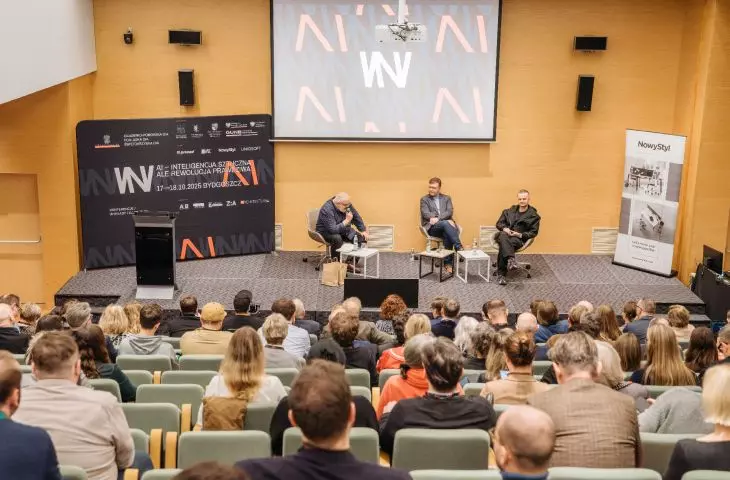
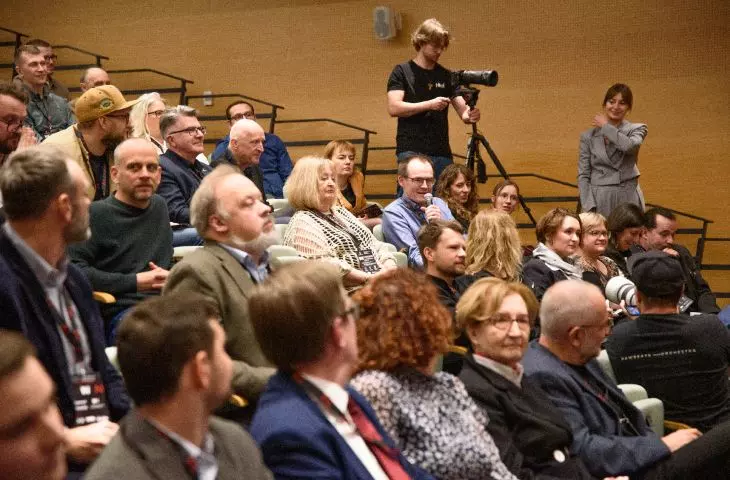
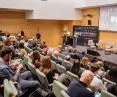
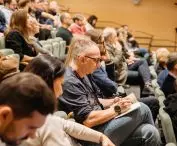
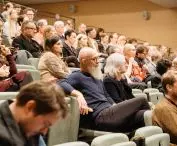
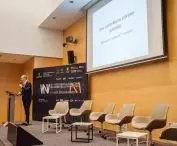
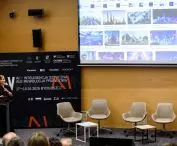
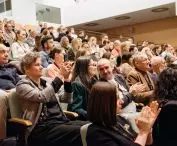
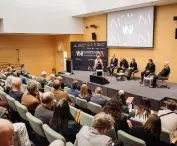
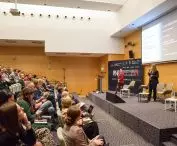
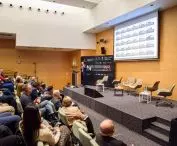
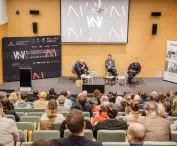
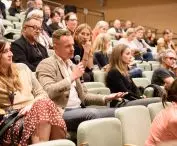

On October 17-18, 2025, a conference and workshop "AI - Artificial Intelligence, but the Real Revolution" took place in Bydgoszcz, organized by the Kuyavia-Pomerania, Podlasie and Świętokrzyskie District Chamber of Architects of Poland. The event brought together experts from the world of architecture, technology, law and philosophy, creating a space for interdisciplinary reflection on the impact of artificial intelligence on design practice.
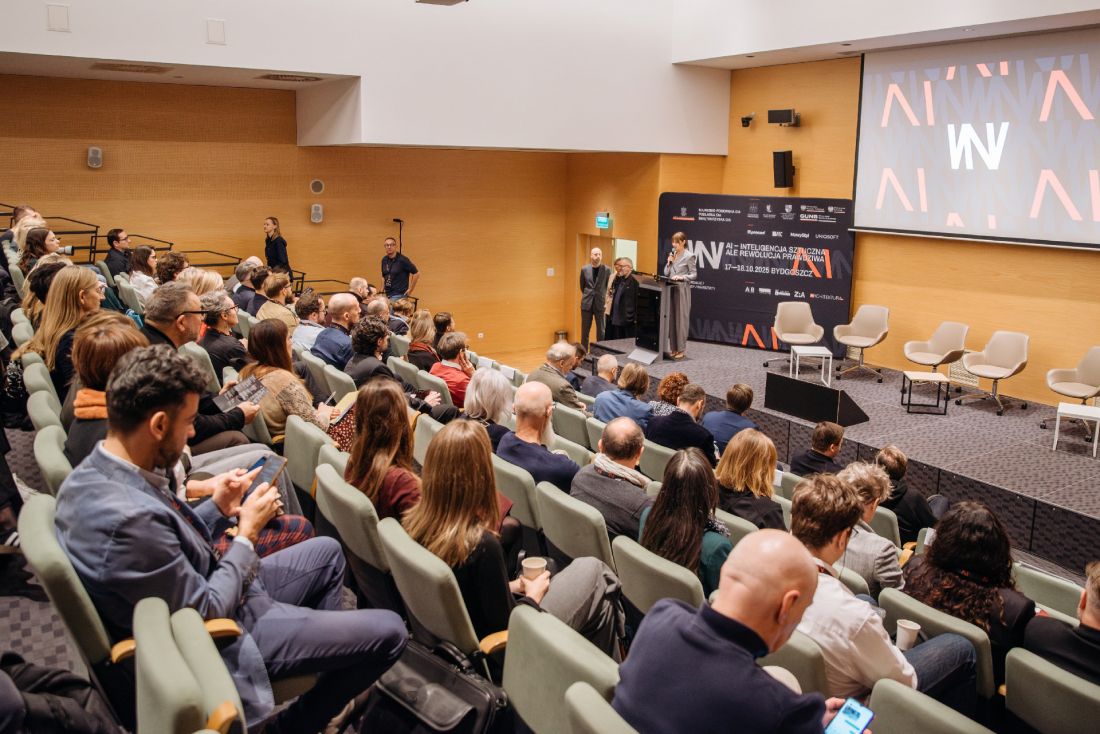
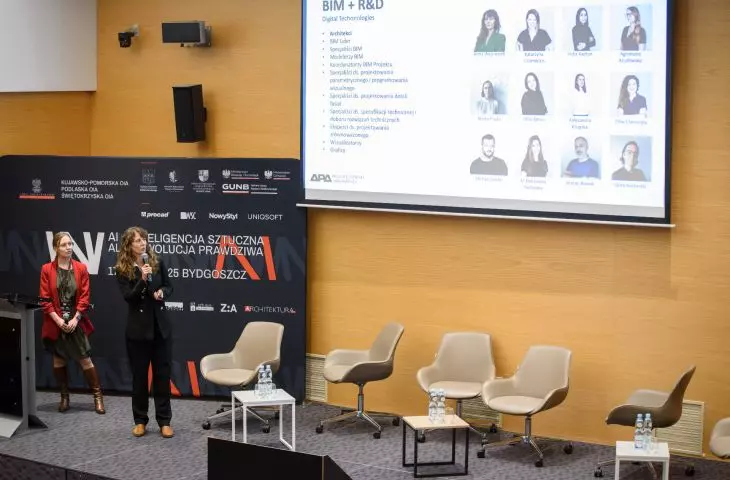
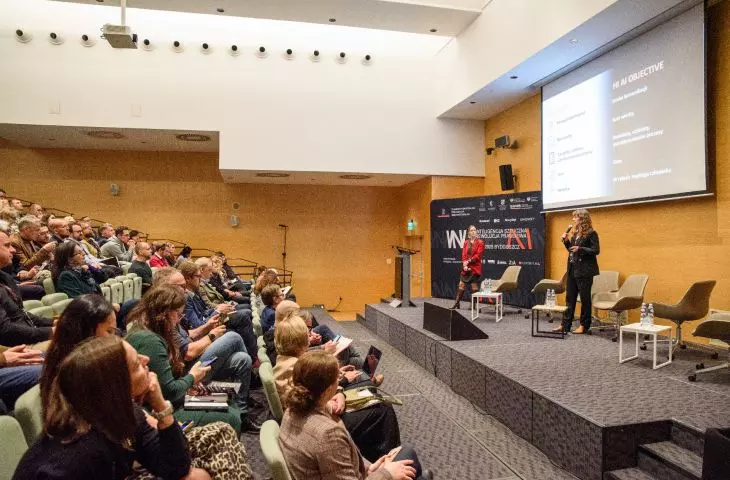
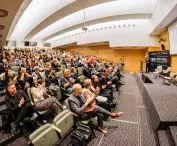
Conference and workshop "AI - Artificial Intelligence, but the Real Revolution".
photo: Dariusz Gackowski
From the history of AI to contemporary challenges
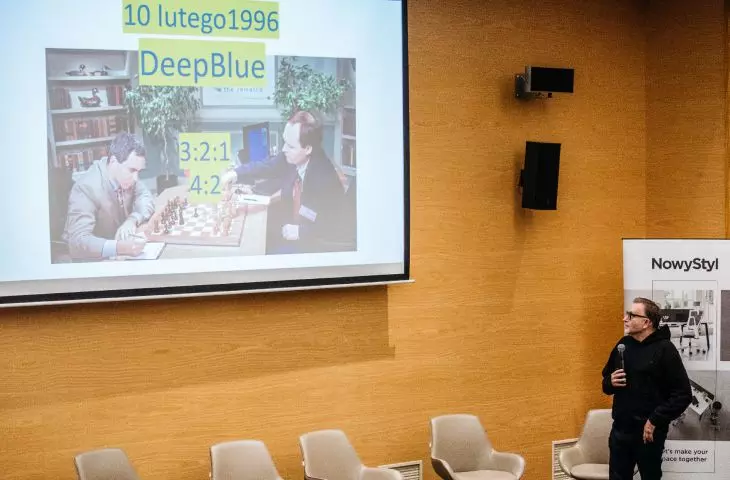
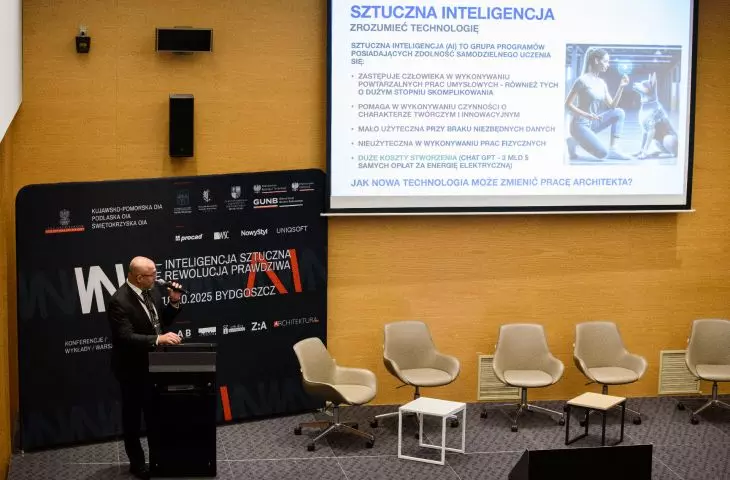
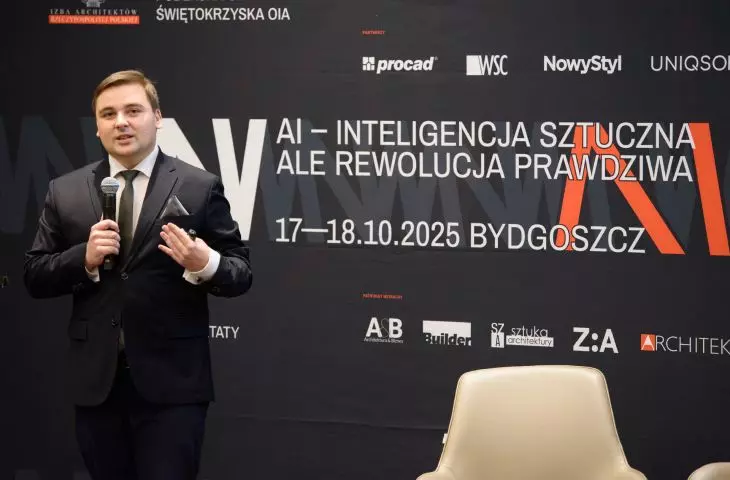
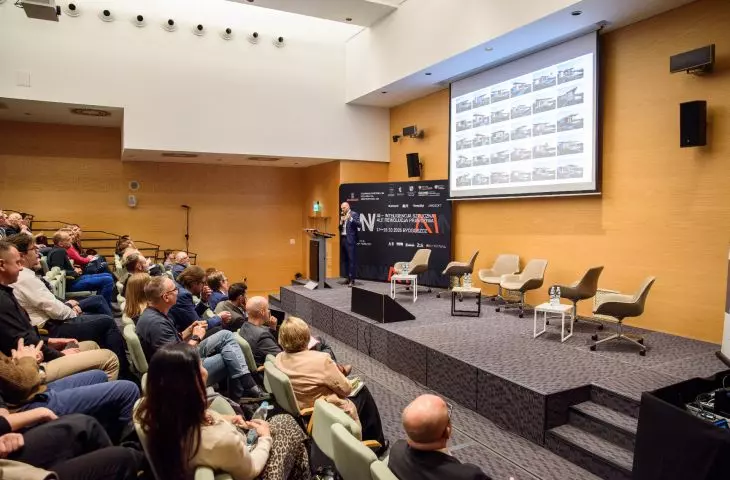
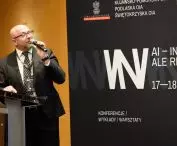
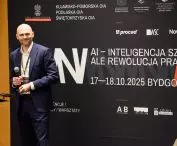
Wojciech Gwizdak (SWOIA) started the conference with a broad overview of the development of artificial intelligence - from the Turing test, to breakthroughs in machine learning, to generative tools such as Midjourney and ChatGPT. The historical background showed the speed with which AI is entering more and more areas of design today.
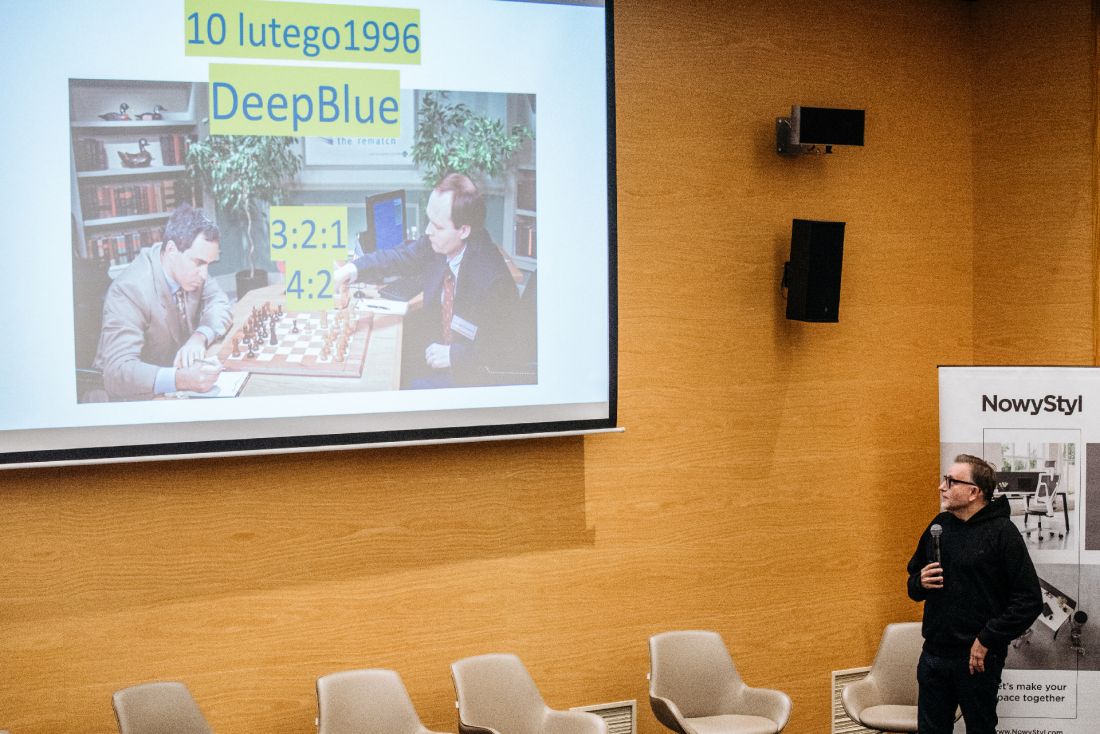
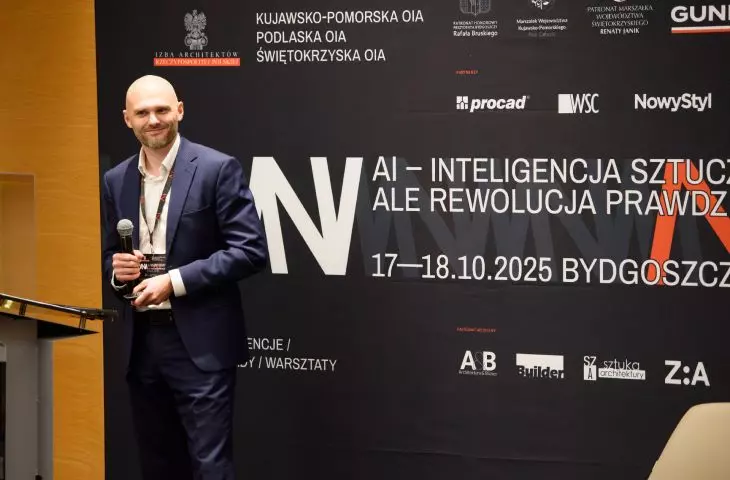
Wojciech Gwizdak (SWOIA) opened the conference with a broad overview of the development of artificial intelligence
photo: Dariusz Gackowski
the role of the architect in a changing reality
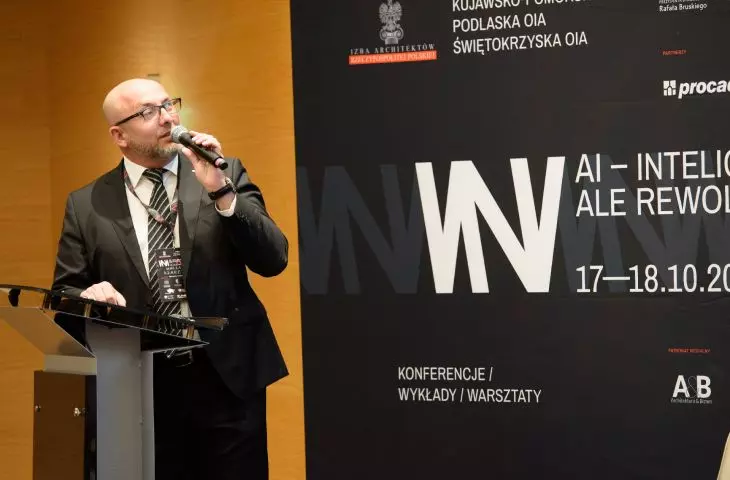
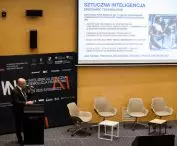
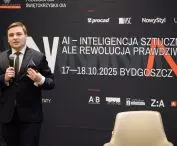
Waclaw Szarejko (DSOIA) highlighted the structural problems of the profession and the growing influence of AI on the design process. He discussed, among other things, the automation of analysis, integration with BIM, and the challenge of accountability - especially in the context of AI "black boxes" and the lack of consistency on the part of technology developers.
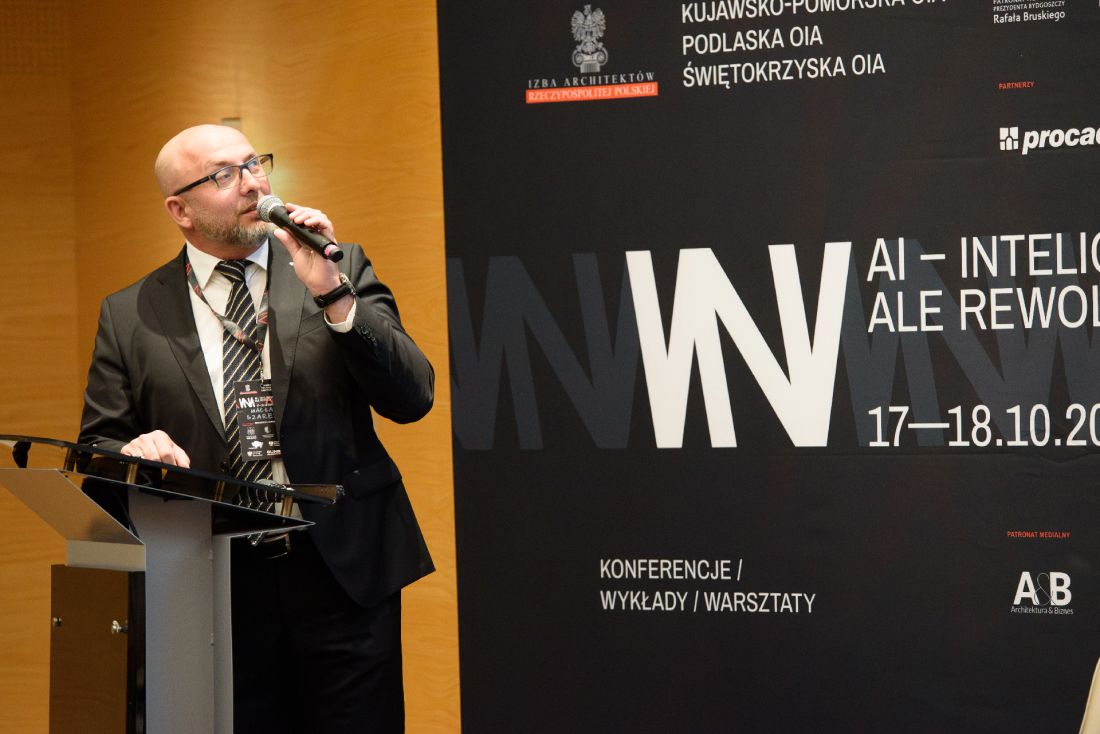
Waclaw Szarejko (DSOIA) highlighted the structural problems of the profession and the growing impact of AI on the design process
Photo: Dariusz Gackowski
Law, ethics and narratives about the future
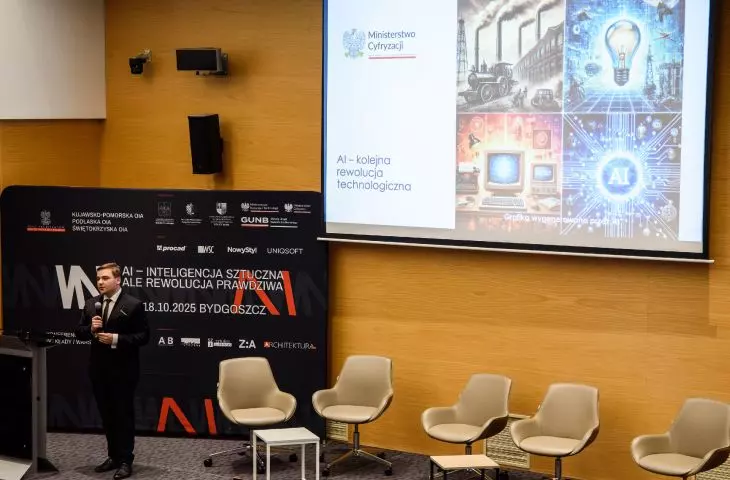
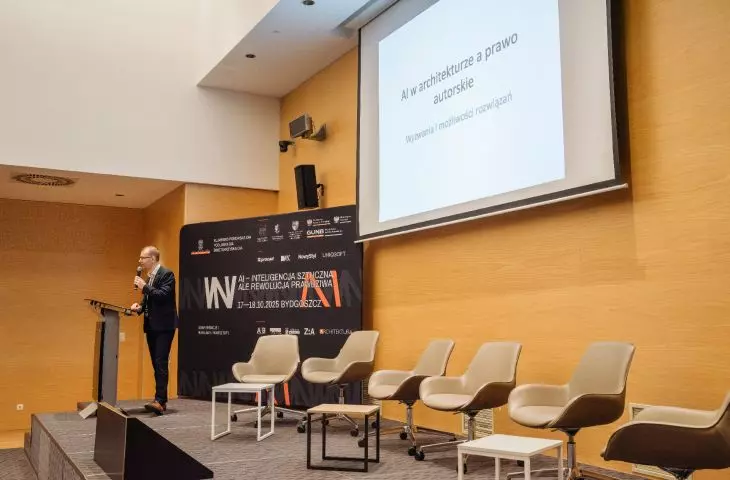
Kamil Giera (Ministry of Digitization) presented the key tenets of the EU AI Act and the resulting obligations, especially for high-risk systems. Malina Dabrowska spoke about the need for active co-creation of technology and caution against extreme visions of the future, emphasizing the importance of multi-scenario foresight thinking. Jakub Piszczek (Piszczek and Partners Attorneys' Office) discussed the challenges of copyright law when creating content with AI, and Magda Mojsiejuk (futurologist) highlighted the role of narratives, which often distort public perceptions of new technologies.
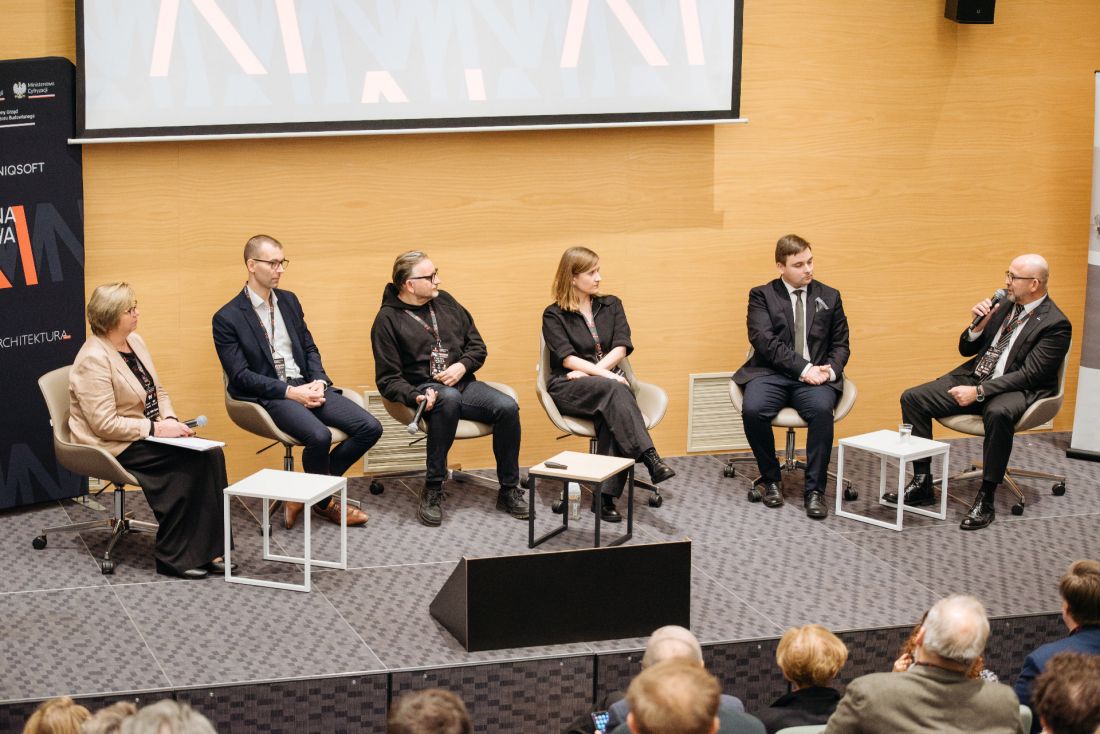
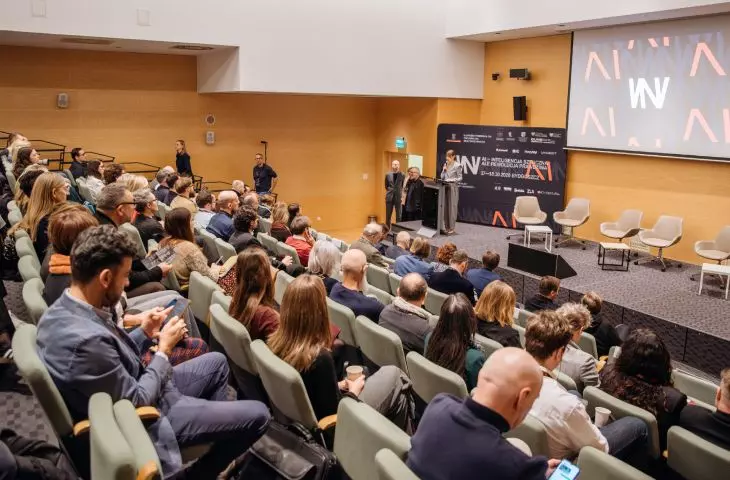
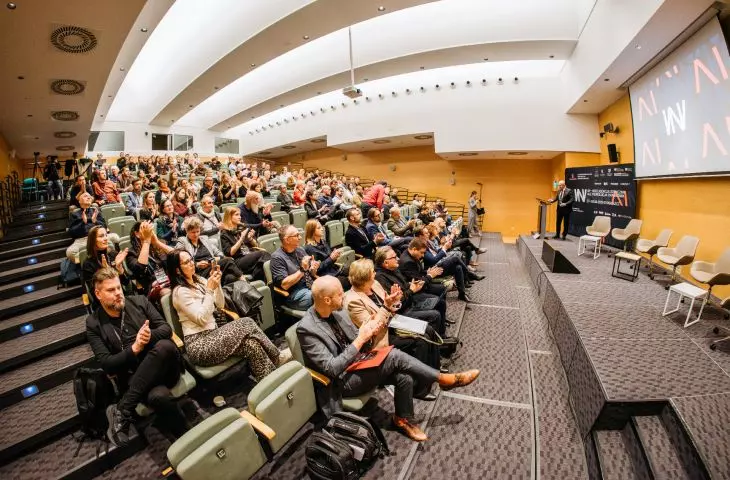
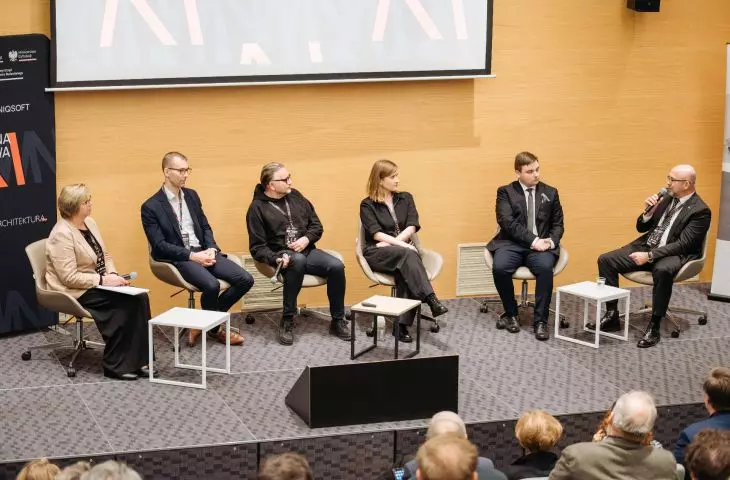
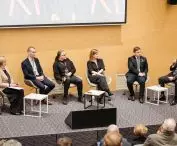
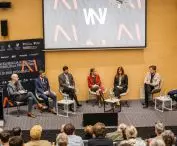
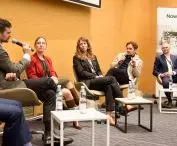
The conference "AI - Artificial Intelligence, but the Real Revolution," closing panel
photo: Dariusz Gackowski
In the concluding panel, moderated by Małgorzata Schmidt - chairman of the Kujawsko-Pomorskie District Chamber of Architects - the topic of the definition of "AI product" and the need to create industry regulations for public trust professions returned. The discussion was dominated by the issue of responsibility and whether AI can remove it from humans, which can be particularly dangerous.
AI in the practice of design offices
Anna Wojcieszek and Marta Pisula (APA Wojciechowski) showed how the APA Wojciechowski office uses AI in automating analysis, research and concept variation, noting the need to work on controlled data sets.
Adrian Iwanek (Uniqsoft) emphasized the importance of precise prompting and data security, pointing to the need for on-premise solutions.
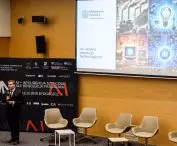
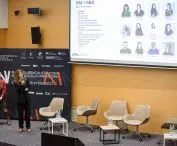
Jakub Bladowski (POOIA) presented the Kolega tool, based on generative algorithms, emphasizing the role of the architect as a curator of solutions.
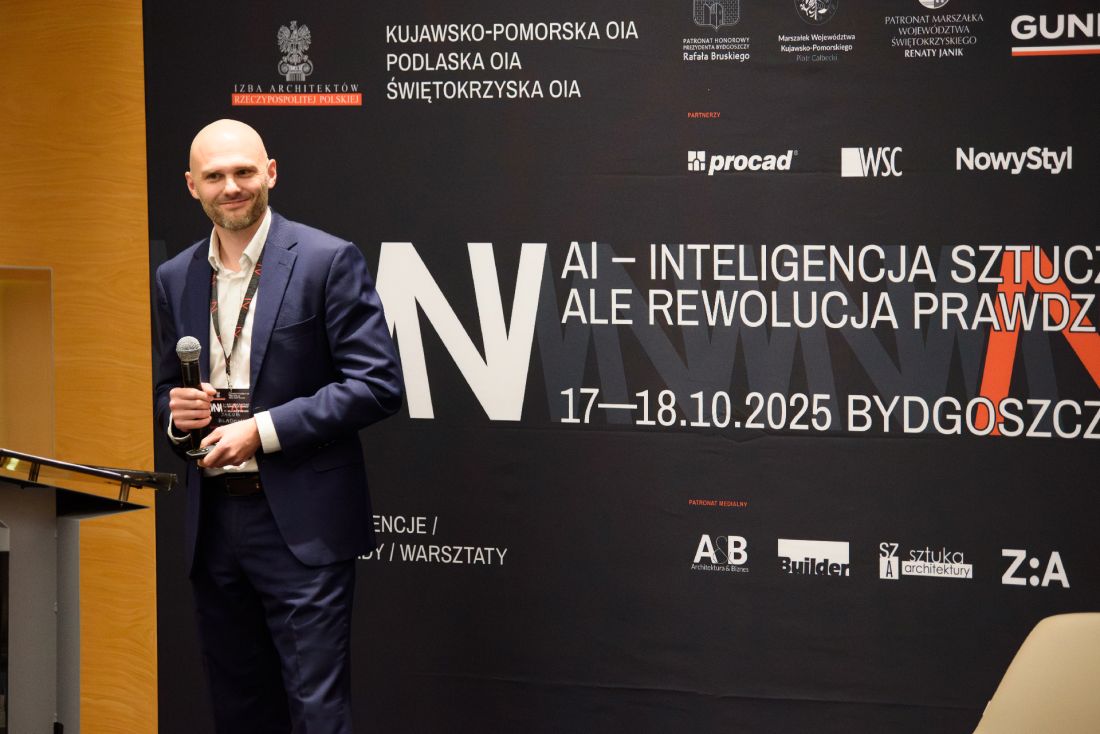
Jakub Bladowski (POOIA) presented the Kolega tool, based on generative algorithms
Photo: Dariusz Gackowski
In a discussion led by Marcin Marczak - chairman of the Podlasie Regional Chamber of Architects - the risks of AI creating a large amount of low-quality content and the need to combine programming and architectural competencies were raised. Adrian Iwanek highlighted the risks of AI generating low-quality information and graphics, while Marcin Kosicki pointed out that he himself chose programming as his medium, acting as a link between the world of technology and architecture. The discussion showed how important it is becoming to harmoniously combine both fields in modern design practice.
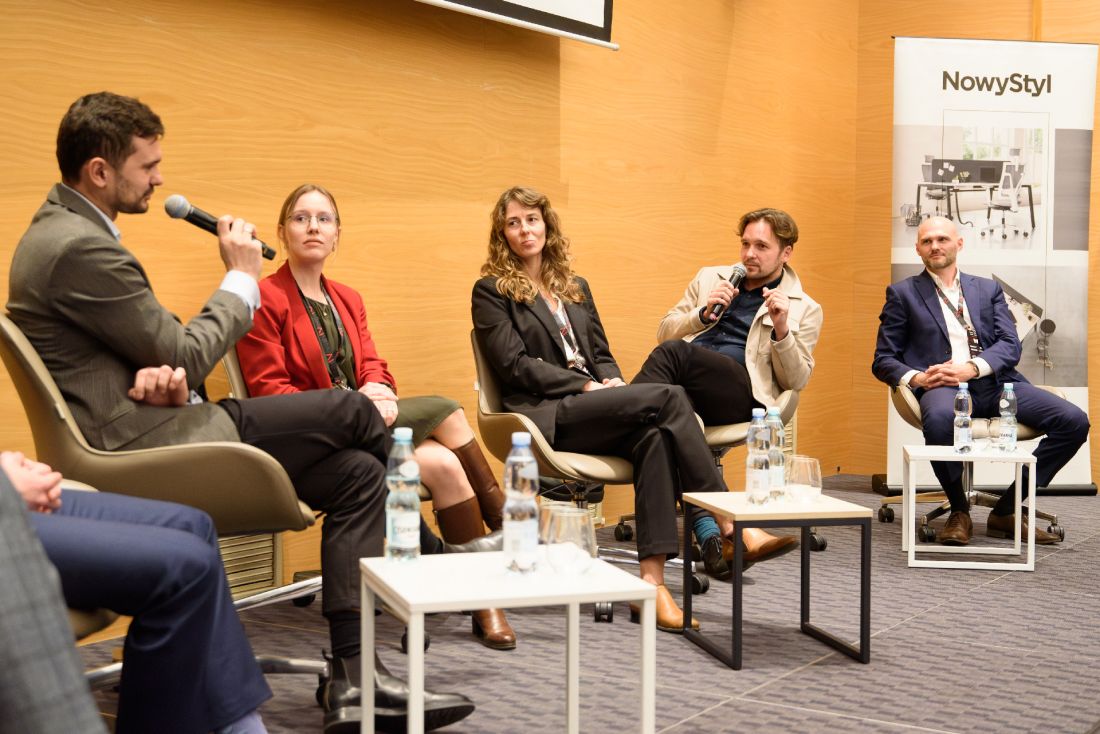
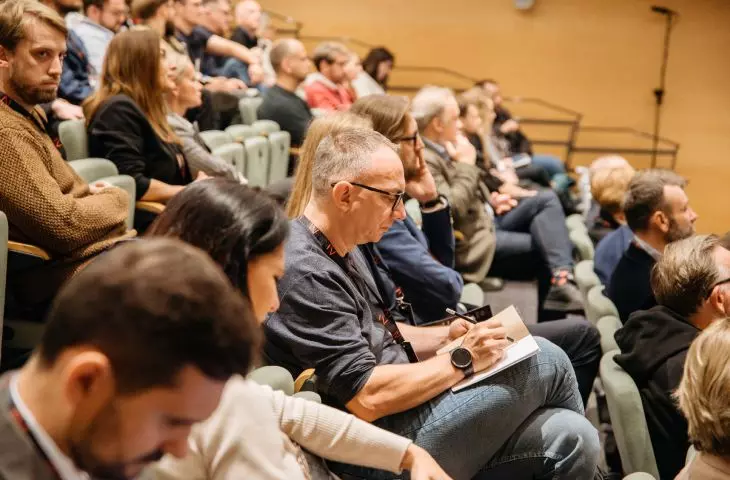
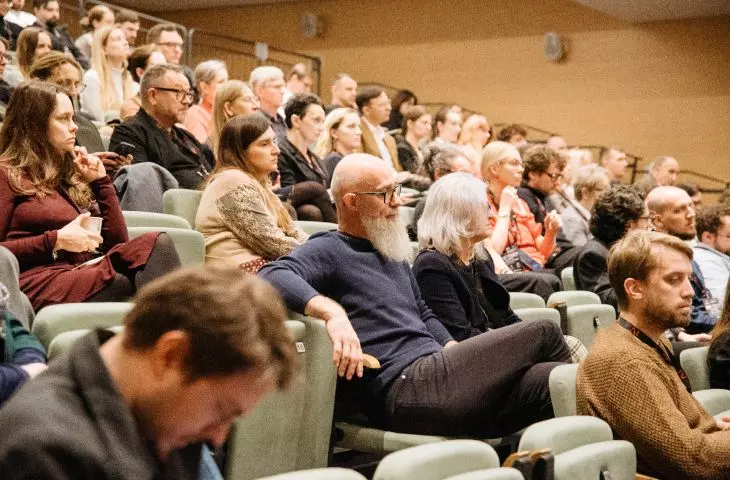
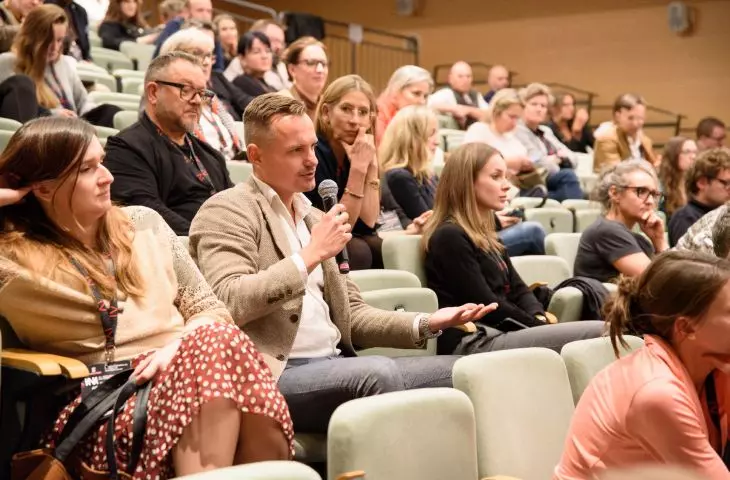
Conference and workshop "AI - Artificial intelligence, but the real revolution".
photo: Dariusz Gackowski
algorithms and optimization in large offices
Marcin Kosicki from the world-renowned Foster and Partners office showed practical applications of parametric algorithms and tools such as Cyclops and AI Portal, invented and created for their use by Foster and Partners, highlighting their impact on optimizing costs, geometry and visualization processes.
A philosophical look at the inevitability of AI
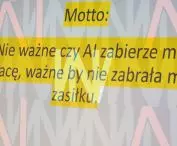
The invited guests, writer Jacek Dukaj and Prof. Andrzej Dragan, in a conversation moderated by Marcin Kaminski - chairman of the Świętokrzyskie District Chamber of Architects - presented a vision of the inevitable and hard-to-stop development of artificial intelligence. Prof. Dragan stressed that AI is becoming a "meta-tool", capable of creating more tools beyond the reach of classical programming, which is part of the global civilization race. In the conversation, both speakers also pointed to pessimistic scenarios: the time when humans will be able to fully control the development of AI may be very short, and these systems will begin to generate solutions and technologies that humans would not be able to design themselves. In such a future, creative professions - while still possible - may function increasingly as passionate activities.
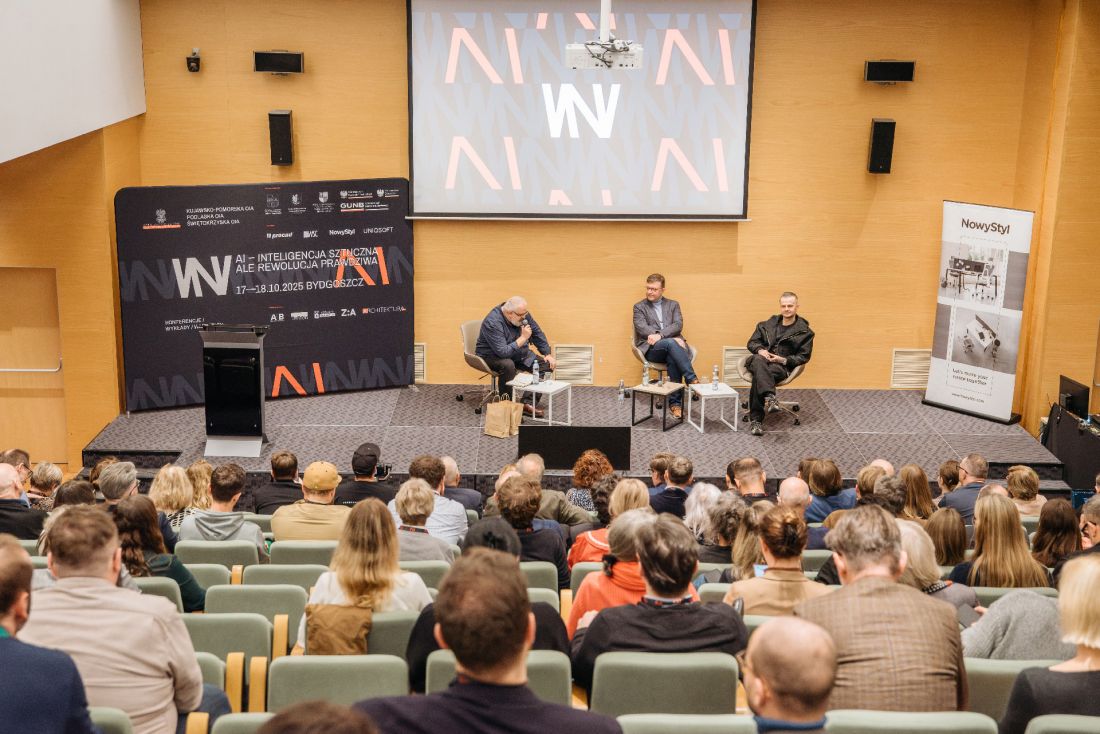
Marcin Kaminski's conversation with writer Jacek Dukaj and Prof. Andrzej Dragan
photo: Dariusz Gackowski
second day: practical workshops
On the second day, participants took part in a wide block of workshops led by, among others: Mikołaj Wójcik and Maciej Szymanik (WSC), Anna Wojcieszek, Marta Pisula (APA Wojciechowski), Wojciech Gwizdak (SWOIA), Wojciech Karnowka (Foster + Partners), Arkadiusz Mackiewicz (Procad), Marcin Kosicki (Foster + Partners), André Agi (spacio.ai), Adrian Krężlik, Adrian Iwanek (Uniqsoft).
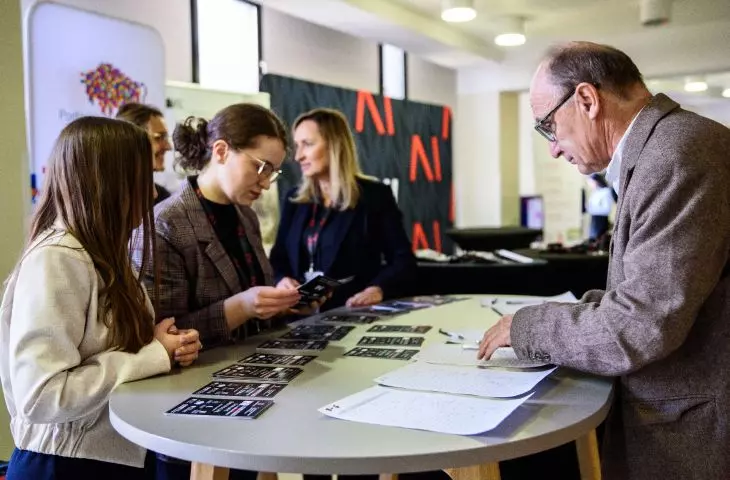
The workshop allowed participants to practice some of the tools, compare the approaches of different offices and translate theory into the practice of project work. For many it was the first opportunity to get realistically accustomed to the possibilities offered by AI, others expanded the scope of their competence.
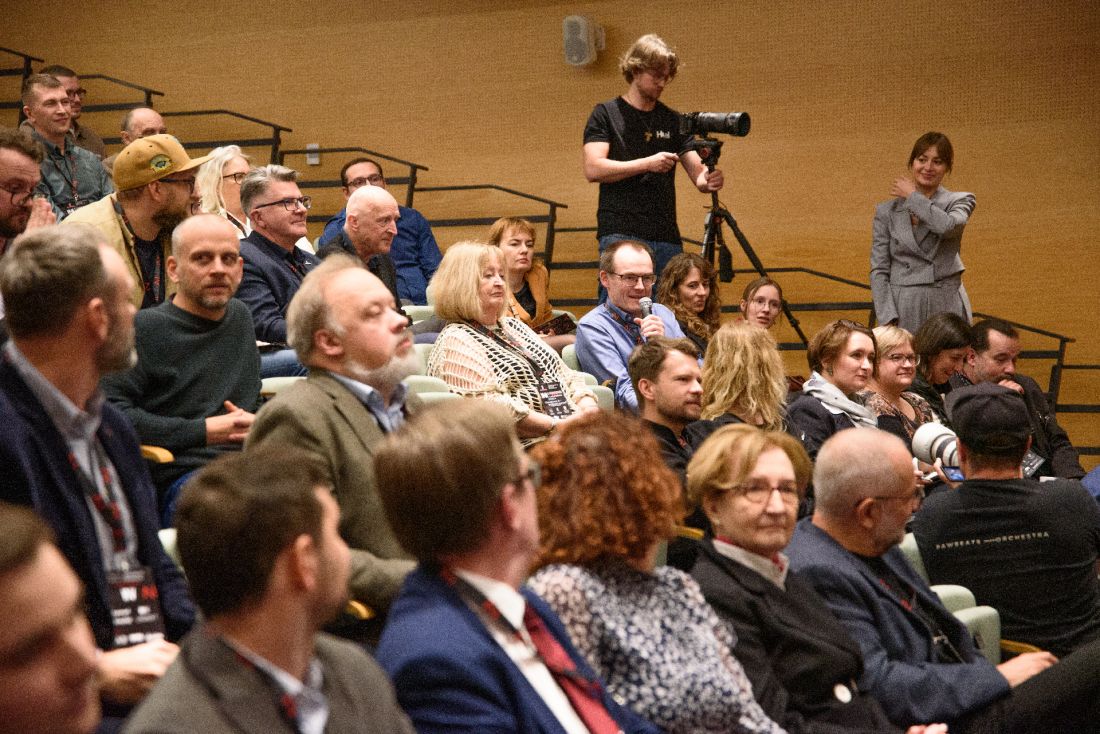
Conference and workshop "AI - Artificial Intelligence, but a real revolution".
photo: Dariusz Gackowski
The organizers emphasize that the architectural community must prepare today for the coming changes, even if their final shape remains uncertain. In this spirit, we are already starting work on the next edition of the conference, planned for next year, to which we cordially invite all interested parties.
Wojciech GWIZDAK
graduate of the Faculty of Architecture and Urban Planning at the Silesian University of Technology; since 1997 owner of the author's design studio 2G Studio. Since 2006 active in IARP at the district and national level; member and activist of SARP o. Kielce; in 2021 received a doctoral degree for his work analyzing the regulations in the legal systems of various countries regarding the insolation of apartments.