




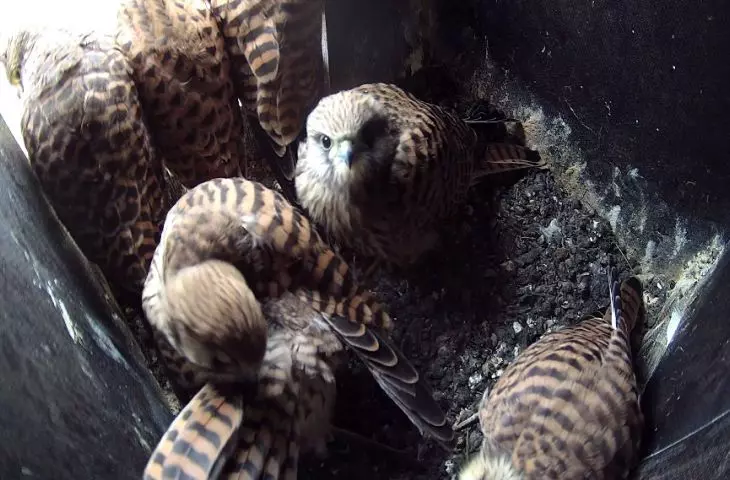

The birds have once again confirmed that Cemex Poland's plants are a safe place for them to live and raise their young. According to estimates by ornithologist Dr. Bartosz Janic of the University of Lodz, as many as 48 kestrels were raised at the two cement plants last year.
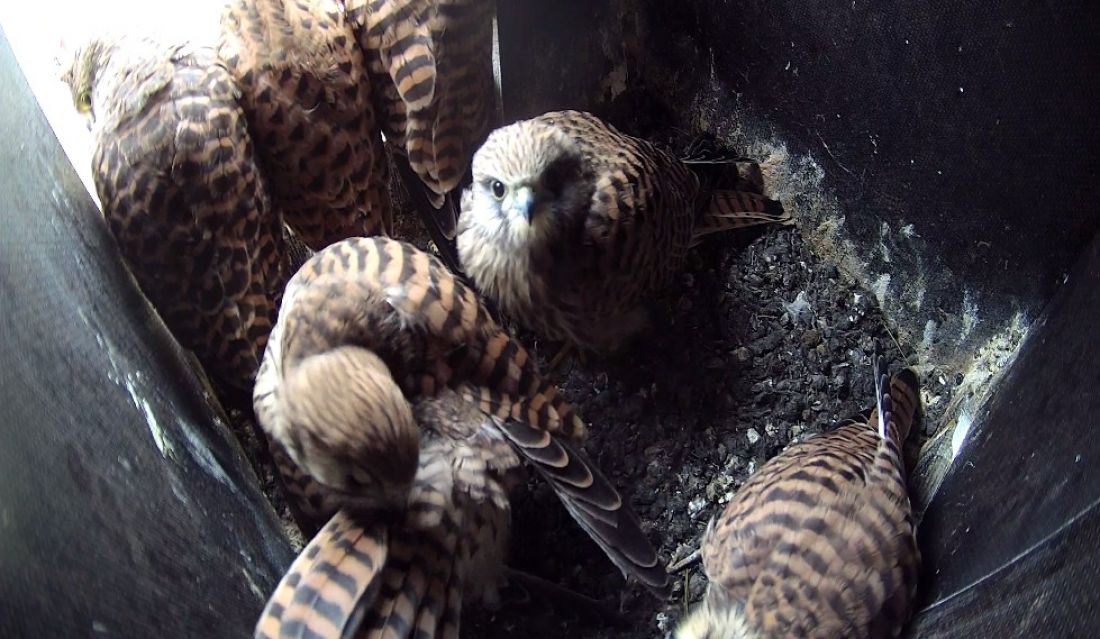
© CEMEX
The start of hatching at Cemex plants could be observed from April 1 last year, when the first egg appeared in the Kruszywowski Family's box. And while egg-laying usually continues until mid-May, the past nesting season provided unusual observations.
During the inspection, which took place on May 31, there was only one egg in the R8 box. Another visit, on June 28, revealed the presence of five eggs, confirming that laying did not begin until the last days of May, says Dr. Bartosz Janic, an ornithologist at the University of Lodz. - Such late breeding could be due to a loss in the first attempt or the pair's little experience. Late entry into breeding may be associated with poorer conditions for rearing the young, he adds.
However, the pair from the R8 box lived to raise 2 chicks, and a total of as many as 48 kestrels have grown up at Cemex facilities, of which 29 have been ringed and sexed. Field inspections, bird tagging and genetic testing took place thanks to Cemex's cooperation with the Department of Vertebrate Ecology and Zoology at the University of Lodz.
Kestrels throughout the season were watched by more than just an ornithologist. Broadcasts from the three nesting boxes were available live on the YouTube platform, so Internet users could also get involved in the observations. The total viewing time of the streaming was more than 2,600 hours.
In 2025, observers exchanged more than 1,500 messages under our broadcasts sharing their observations and impressions," says Anna Maciag Environmental and Sustainability Specialist and Kestrel Conservation Project Coordinator at Cemex Poland. - Such a high level of involvement shows that environmental initiatives based on dialogue and education can build real social value. Streaming has become a shared experience that brings people together around the idea of protecting biodiversity and is part of our sustainable development strategy, she adds.
Protecting kestrels is important for preserving biodiversity and balancing ecosystems, as these birds naturally regulate populations of rodents and small pests. Mounting nesting boxes at height and long-term monitoring make it possible to effectively support the species' population and provide valuable scientific data.
Cemex has been conducting activities for kestrels since 2011. There are currently 14 nesting boxes operating at the company's cement plants. Six of the nests have cameras installed for 24-hour monitoring. During the nesting season, broadcasts from three of them are made available live on the YouTube platform. At the same time, the company carries out educational activities dedicated to kestrels and organizes contests for Internet users, encouraging them to learn more about these birds of prey.
A new breeding season begins in March, and Cemex invites you to watch its channel and accompany the birth of the next generation of kestrels.
For more information, visit the company's CEMEX Polska Sp. z o.o. page on the A&B portal.