





In the few years following the pandemic, tourism has returned with even greater force than before - but not everyone is happy about it. From Barcelona to Honolulu, the streets are filled with demonstrations by residents who are fed up with the appropriation of space by visitors. Today, tourism is no longer associated with carefree living, but with fighting for the right to live in one's city.
In the pandemonium in Venice, fish began to be seen in the canals, while only pigeons could be seen in Krakow's market square (zero English bachelor parties). There was a lot of symbolic imagery from that period: that nature is reborn, that we need to rethink our behavior, we promised ourselves to improve. But regret for sins was short-lived, and a few years after the lockdown international tourism returned, and with unprecedented force, adding fuel to the tourist fire.
with a gun in the street
"Hundreds of Barcelona residents took to the streets with guns!" - that's what the headline of many an article might sound like, and it wouldn't be so much clickbait again. In fact, in the summer of 2024 in Barcelona, a gun became an objection to mass tourism - rest assured, however, that it was a plastic water gun.
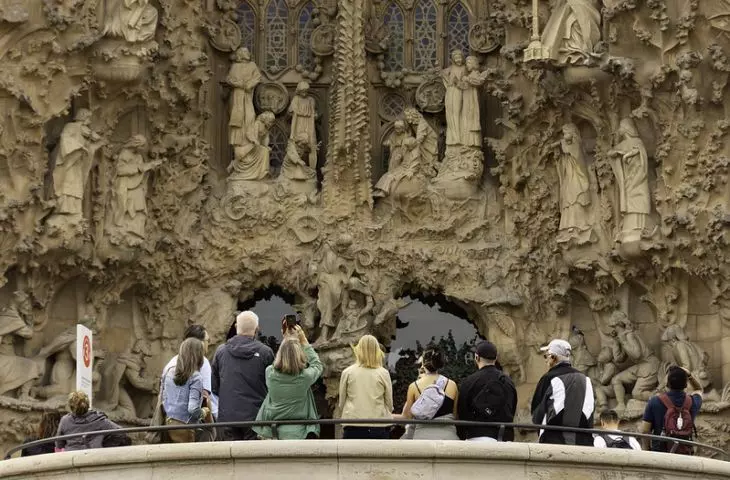
The action, in which residents of La Rambla doused tourists with water, attracted worldwide media attention and set off a series of similar events throughout touristic Spain and other southern European countries. By 2025, activists were already blocking tourist buses under the Sagrada Família, and demonstrations were also held in Venice, Lisbon and Mallorca. The water gun has evolved into a symbol of the fight against inequality.
In July, a demonstration swept through the center of Barcelona, with slogans chanting "Your vacation, our anguish," flares being set off, and stickers reading " Neighborhood self-defense, tourists go home" [Neighborhood self-defense, tourist go home] appearing on storefronts and hotel windows. The demonstration was part of a coordinated action "Southern Europe against tourism," representatives of movements from Spain, Italy, Portugal and France met recently in Barcelona for a multi-day conference. The joint action was intended to show that the problem of over-tourism affects the entire Mediterranean region.
In Barcelona, mass tourism is seen as the source of a whole team of crises, the most serious of which concerns housing affordability. The city of 1.6 million residents received as many as 26 million tourists last year. Through the expansion of short-term rentals, rents in Barcelona rose by about 20% between 2022 and 2023, and by as much as 68% over the past decade. According to many residents, the main culprit is short-term rental platforms, which turn apartments into profitable tourist locations. It's already getting to the point where many young residents are forced to simply move out of their hometown because they can't find affordable housing.
View this post on Instagram
The influx of huge cruise ships has also become controversial, with up to 20,000 visitors pouring ashore each day, tightly filling the most popular neighborhoods, yet making no significant contribution to the local economy. Residents don't mince words and even speak of the occupation of public spaces by visitors who only show up for a short while.
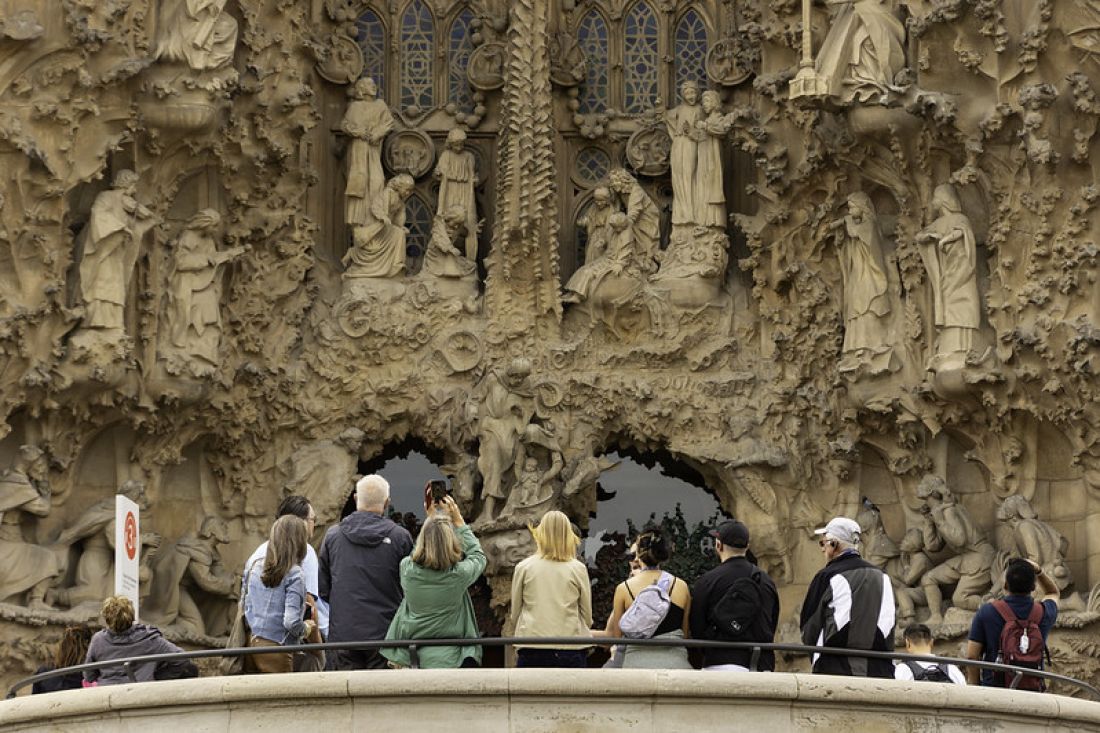
Sagrada Família, Barcelona" - CC BY-NC-SA 2.0
© Harald Felgner
It's likely that before long it will no longer be possible to buy tornas and T-shirts not with the silhouette of the Sagrada Família, but with a group of tourists and a forest of selfie-sticks around them. Residents complain that tourist-driven activity is crowding out local commerce, and traditional stores are giving way whether to souvenir stalls (pulled from mass production in Asia), international chain stores (with clothes also sewn in Asia), or sweet snack stands. Urban infrastructure is no longer efficient - there is a lot of garbage being produced that needs to be picked up, public transportation is bursting at the seams, and the presence of water on tap is less and less certain.
we collect signatures
Lisbon's charming streets have also become a magnet for tourists and a curse for locals. After a pandemic decline in the number of visitors, the city has seen their return very quickly, noting it in the price of housing. By 2023, rents and real estate prices in Lisbon had nearly doubled compared to 2015, while far outpacing the growth in local wages. Residents blame this situation primarily on short-term tourist rentals.
Apparently, anger is the emotion that motivates us to act. This would probably be confirmed by activists there, who in late 2024 launched an unprecedented campaign for a municipal referendum to ban short-term rentals in residential buildings. The movement, called Movement for a Housing Referendum, collected more than 6,600 signatures from residents, obliging the city government to consider the proposal. If the referendum had been allowed, residents would have voted to gradually (within six months) extinguish more than 20,000 apartments for tourist rentals and ban the creation of new units of this type. "Short-term rentals occupy most of the residential space in Lisbon's historic center. We must finally press the brake," explained organizer Raquel Antunes.
Will it lose its "Wonder of the World" status?
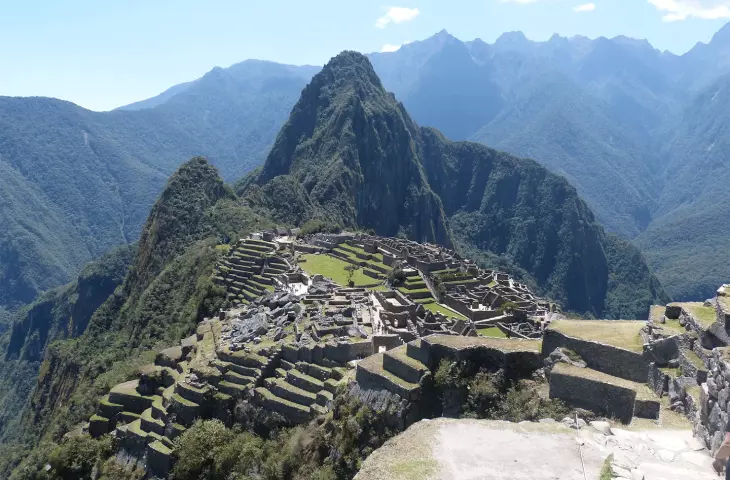
It's not just in Europe that tourism is getting in the way. In September 2025, the New7Wonders Foundation issued an official warning that Machu Picchu could lose its status as one of the New Seven Wonders of the World, pointing to growing problems with the site's management, infrastructure and conservation. Among the allegations were an uncontrolled influx of tourists, non-transparent ticketing practices, rising prices and the commercialization of tourism, as well as social conflicts and protests that are crippling access and spoiling Peru's reputation.
Although the title bestowed by New7Wonders is not legal, its loss could seriously damage Peru's image. It would mean the loss of an important marketing symbol that has been attracting tourists from around the world for years and generating huge revenues, as these flow in a wide tourist stream. A possible drop in visitors could cost the region tens or even hundreds of millions of dollars, threatening an economy based precisely on tourism.
View this post on Instagram
The Peruvian government countered rather quickly that UNESCO, not New7Wonders, is the proper institution to assess the state of heritage conservation. The Ministry of Culture, on the other hand, said that Machu Picchu is not listed as an endangered site after all, and that the foundation is simply exaggerating and hyperbolizing.
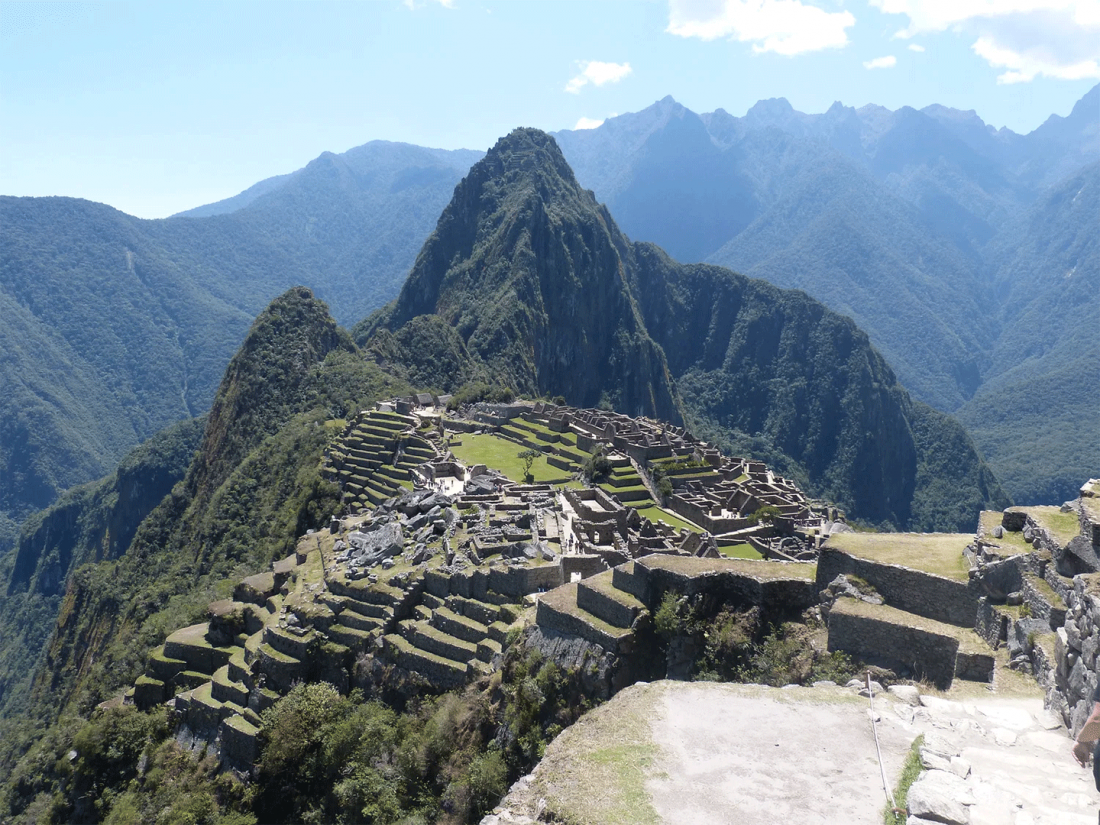
Panorama of Machu Picchu - World History Encyclopedia. Retrieved from https://www.worldhistory.org/image/3469/machu-picchu-panorama/
© Richard Twigg (CC BY-NC-SA)
It may also be worth mentioning here that the whole story goes back to 2024, when Peru's Ministry of Culture suddenly privatized the sale of admission tickets to Machu Picchu, handing over operation of the system to a private company. The decision sparked an outcry, as it was considered an attempt by an outside entity to take over tourism profits and thus weaken the role of the communities (who make their living by serving visitors). So an indefinite general strike was launched in January 2024, blocking the railroad leading to Machu Picchu. For more than a week, no trains ran, and about a thousand tourists were stranded in the town of Aguas Calientes, at the foot of the ruins.
Demonstrators also staged marches in Cusco and Machupicchu Pueblo, demanding the cancellation of the company's contract and the resignation of the culture minister, accused of "selling out national heritage." Here, however, police stepped in and used tear gas against the protesters. An estimated $4.7 million was lost during the week as a result of the strike. Under mounting pressure, the government relented and on February 1, 2024, the so-called Machu Picchu Declaration was signed, cancelling the contract with the private company and reinstating the state ticketing system. The investigation into possible irregularities in the previous tender was also resumed. So the protests, track blockades and controversy over the concession did something there, but probably not enough to signal that the whole system needs to be fixed. Peru, on the other hand, needs not only to improve tourism management, but also to strengthen heritage protection and engage local communities. This also means limiting the number of visitors and modernizing transportation to improve cooperation with locals in making decisions about tourism development.
protecting paradise
Hawaii has also struggled with an ambivalent attitude toward tourism for decades. On the one hand, it's a steady source of income, but also a growing problem. After the pandemic, the islands experienced a sharp return of tourists and tensions resurfaced. In 2022-2023, protests organized by local communities showed more and more strongly that uncontrolled tourism development will quite effectively destroy what makes Hawaii unique - its nature.
One of the most symbolic events was a protest in October 2022 against the construction of the world's largest artificial wave pool - Wai Kai Wave - being built as part of a luxury complex in Ewa Beach. The facility, which requires about 6.4 million liters of potable water to operate, was to open at a time when the island was struggling with drought(!) and groundwater contamination after a fuel spill from a naval base(!!). Residents saw the investment as a blatant example of wasting resources in the name of tourist entertainment. Rallies and signature-gathering campaigns were organized against the project, and it was emphasized that using drinking water to create artificial waves goes against Hawaiian values. Despite thousands of signatures and a media storm, the investment... opened in 2023. The only upside is that public pressure has led to the imposition of stricter limits on water use.
The protests are also on a smaller scale - and here with slightly better results. In 2023, the number of tourists on Maui and Kauaʻi reached pre-pandemic levels again. Some residents began blocking access to the popular waterfalls, demanding the introduction of a reservation system. Residents pointed to traffic jams and disrespect for places considered sacred. In Kauaʻi, local communities have raised alarms that tourists are trespassing on sacred sites and destroying valuable wildlife in the process. In response, county authorities have introduced a reservation system for access to selected attractions and a new signage and enforcement system to remind visitors that "paradise" requires a little more responsibility.
colonizers thank you
Protests erupted in Mexico City in the summer of 2025 by Mexico City residents against growing gentrification, fueled by foreign tourists and remote workers, among other things. Protesters chanted slogans such as "Gringo[1], go back to your place" and "You're not expats, you're colonizers," accusing newcomers of raising rents and displacing long-term residents. There was vandalism during the demonstrations - breaking windows in cafes and stores, which drew harsh criticism from the authorities. The demonstrations were an escalation of tensions after residents banded together and demanded regulation of the real estate market and restrictions on short-term rentals in the city center. In response, city authorities announced an ambitious package of reforms, including: capping annual rent increases (to keep them below the rate of inflation), appointing an ombudsman for tenant rights, and strengthening oversight of platforms such as Airbnb.
panorama
We are painted a common picture that, if it were a triptych, would show packing for a trip on the first panel, a selfie at a famous property on the second, and a mass of protesting people on the third. Tourism, for years considered a form of carefree discovery of the world, has become an arena for disputes over the right to the city, access to housing and protection of common space. It's apparent that the global travel debate is increasingly beginning to encompass social, environmental and cultural issues, and that at the center of the dispute is not the tourist himself, but the model that is transforming someone's place of life.
Magdalena Milert
[1] In Latin America, the term "gringo" usually refers to foreigners from Anglo-Saxon countries (mainly the United States), often those wealthy, white, perceived as privileged. In the context of the protests, the use of the word has clear social overtones - it expresses opposition to the economic and cultural domination of foreigners, who contribute to the rising cost of living and push residents out of urban centers.