













It's hard to find another public project in Poland that has been talked about for so long, and which is undergoing so many metamorphoses, as the Central Transportation Port. It's been a long time since the announcement that Foster + Partners, a studio working with a number of partners in Poland, including the Warsaw office Kuryłowicz + Architekci, would be responsible for its design, and in the meantime several key elements of the project have changed. What is CPK like in 2025?
The construction of a giant transfer terminal near Warsaw is not an idea that has emerged in the last few years. The Okêcie airport was built in 1934, was never intended to handle passenger traffic, and eventually became the capital's main airport. The creation of a new port to replace or relieve Okecie has always been only a matter of time and a natural consequence of Warsaw's sprawl. The idea of building a central airport in the place where CPK is now planned first appeared in the 1970s, through a project by Prof. Henryk Panusz and Boguslaw Jankowski, but due to the small role of air traffic during the communist era, it was not realized.
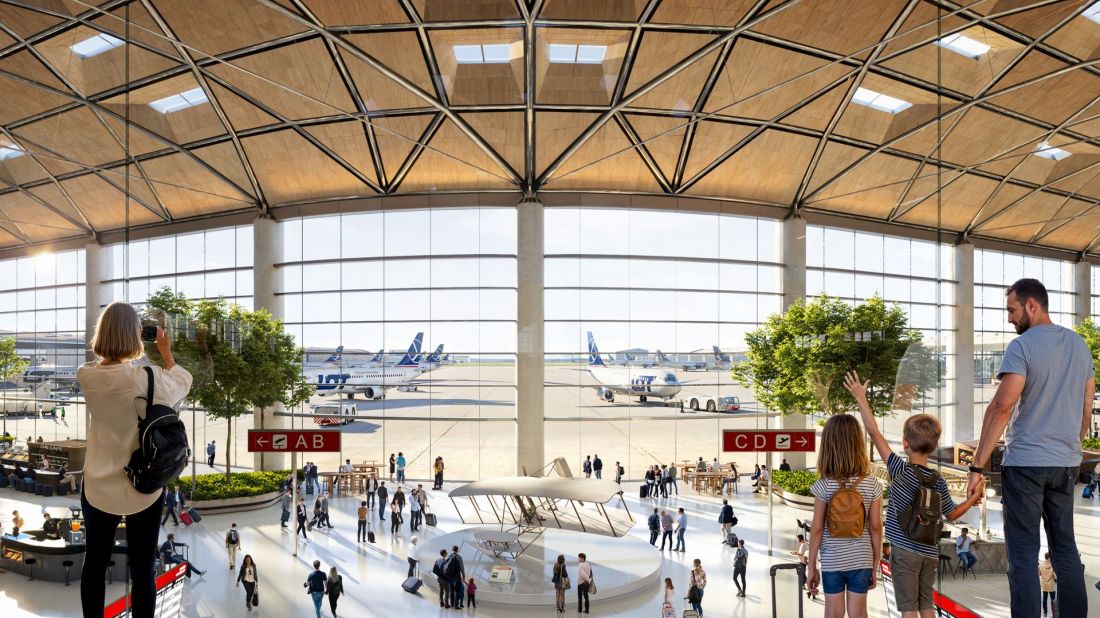
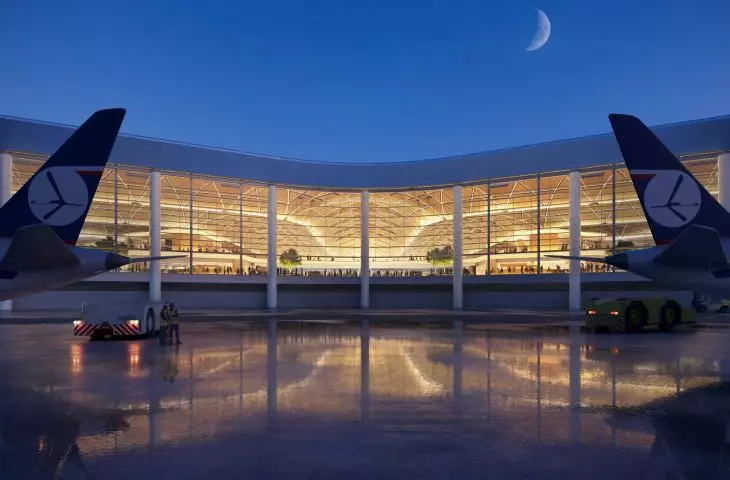
Central Transportation Port - proj.: Foster + Partners
© CPK
Similar proposals were already made after 1989, when the Central Airport was planned. The project remained in the realm of concept, which - already under a new name - was revisited in 2017, when a plenipotentiary for the realization of the Central Communication Port was appointed.
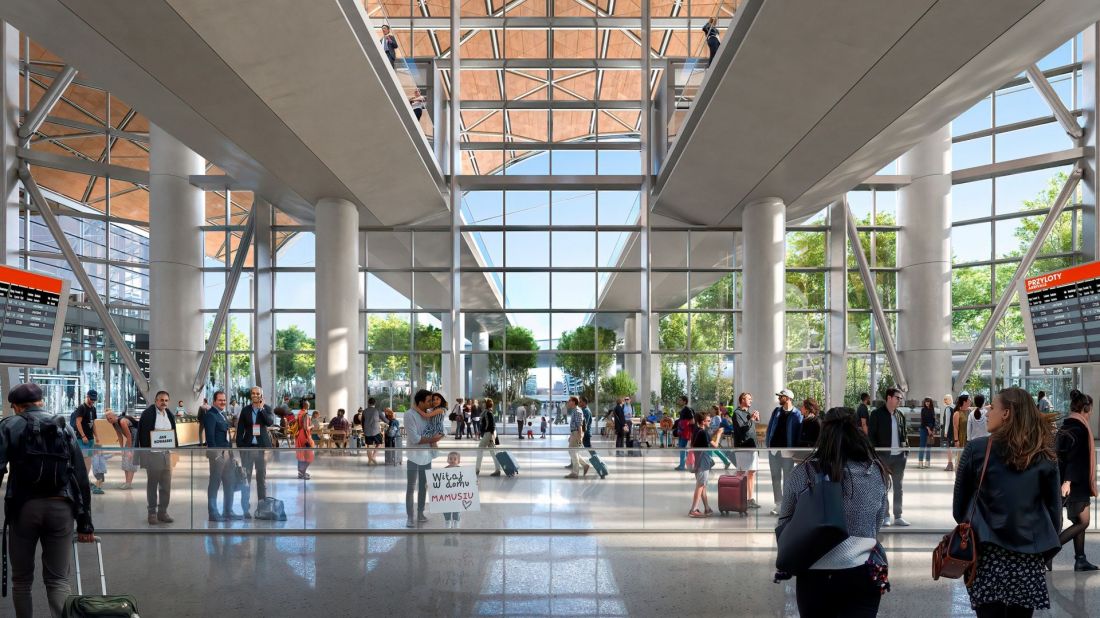
Central Communication Port - proj.: Foster + Partners
© CPK
From the very beginning, the Central Communication Port was not only an investment designed to benefit the Polish economy and the people living in our country, but also a card in the showdown between Poland's two dominant political camps. Unsurprisingly, with the change of power that took place in 2024, the concept of Poland's largest airport also changed. Now, however, the construction of the multimodal transfer terminal is entering a decisive phase, as the CPK company has announced that it has received the construction project. So what is the Central Communication Port like in 2025?
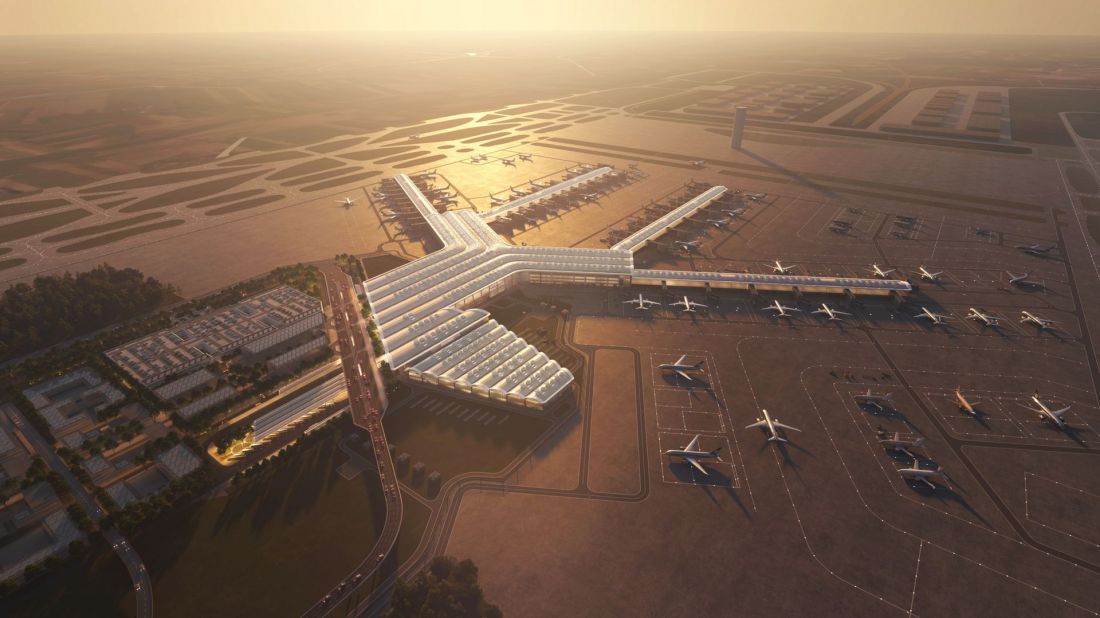
Central Communication Port - proj.: Foster + Partners
© CPK
What is the Central Communication Port in 2025?
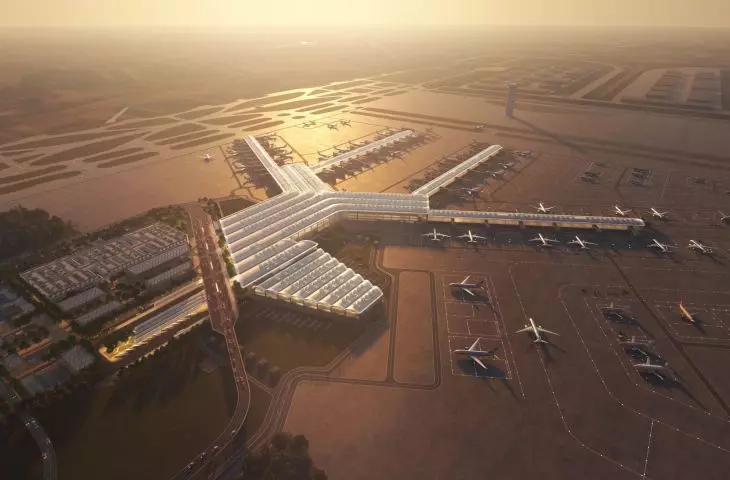
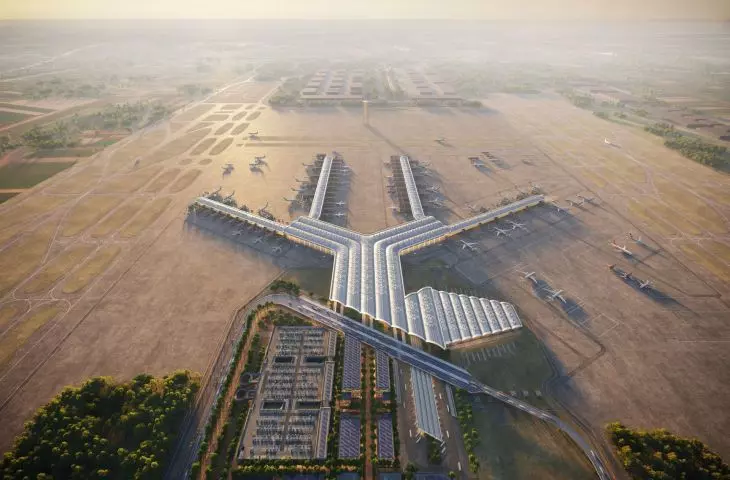
The highlight of the Central Communication Port, located near Warsaw, in the Baranow municipality, will of course be the terminal building, which will integrate rail, bus and air connections. Responsible for its design is the British studio Foster + Partners, which was selected for this task in a... tender formula, in which experience was the most important criterion. Back in 2022, the CPK company reported that it was in talks with five studios to build the airport. Among this narrow group was Zaha Hadid Architects, but in the end it fell to Norman Foster's studio.
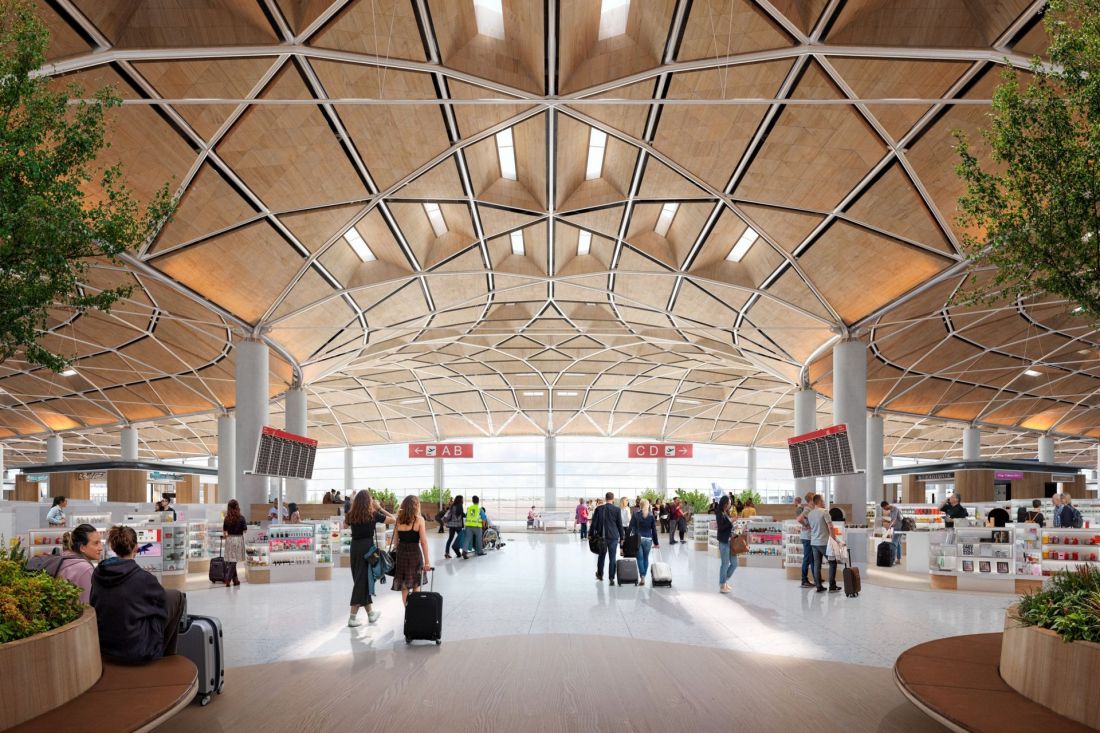
Central Transportation Port - proj.: Foster + Partners
© CPK
communication hub braided with steel
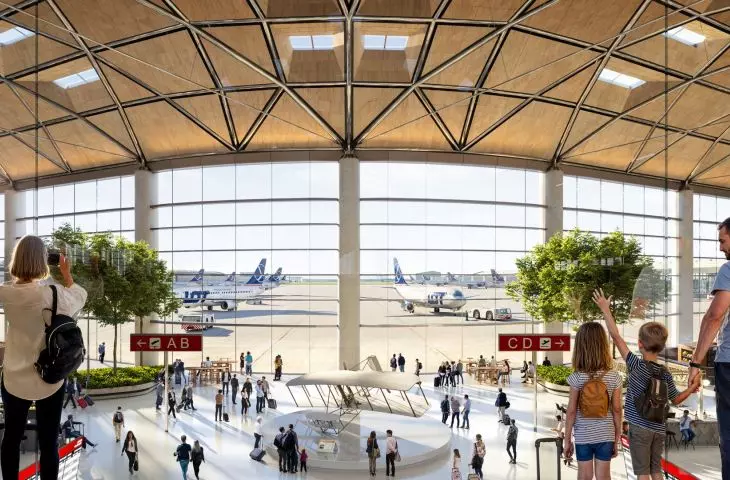
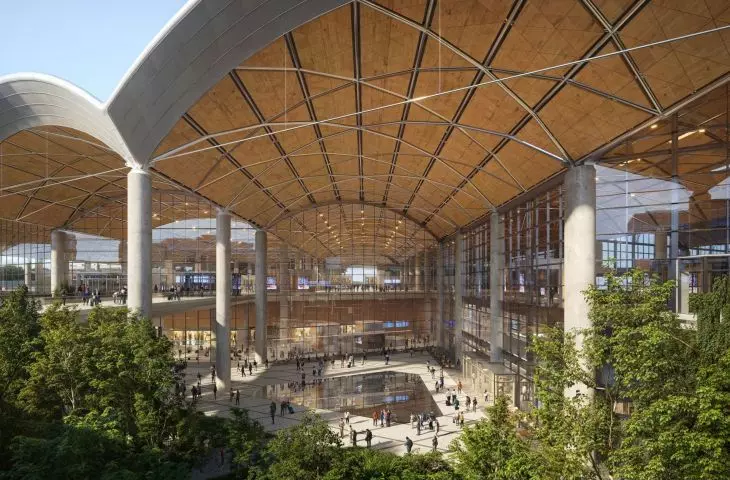
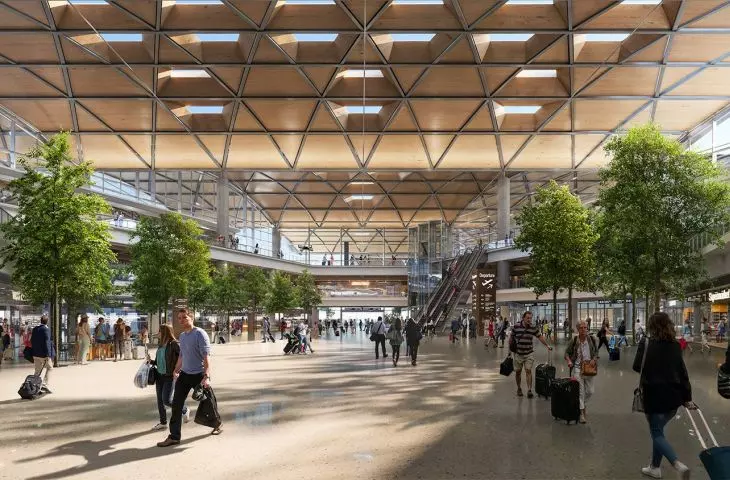
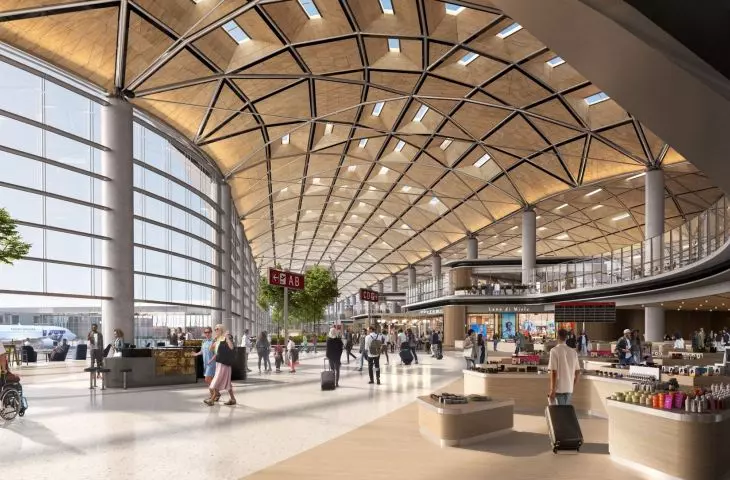
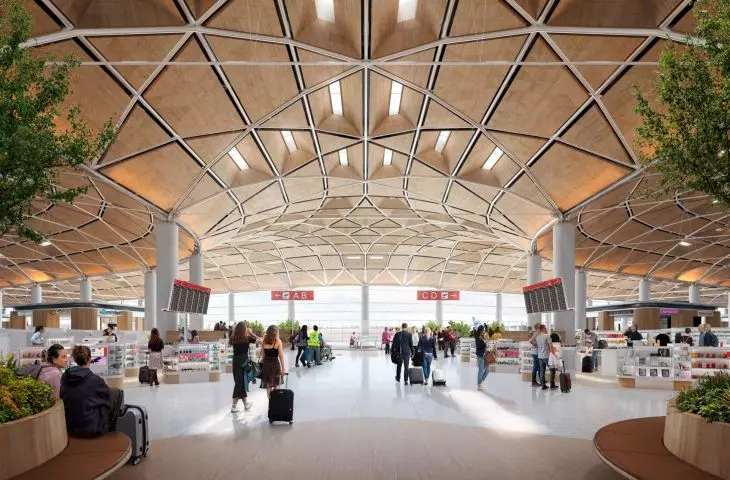
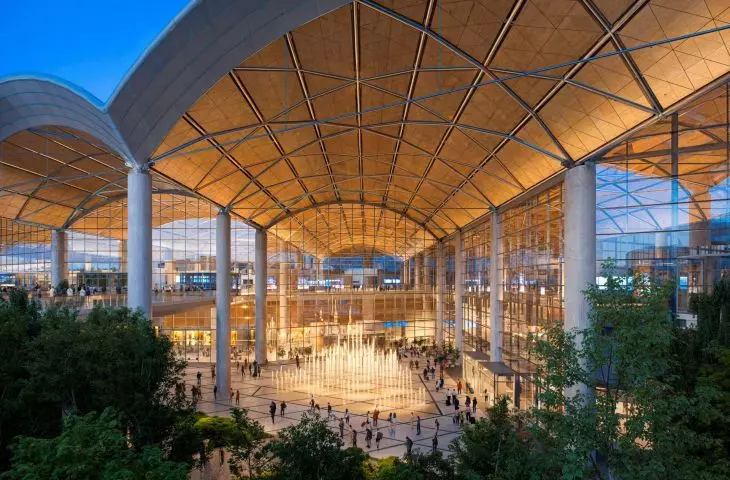
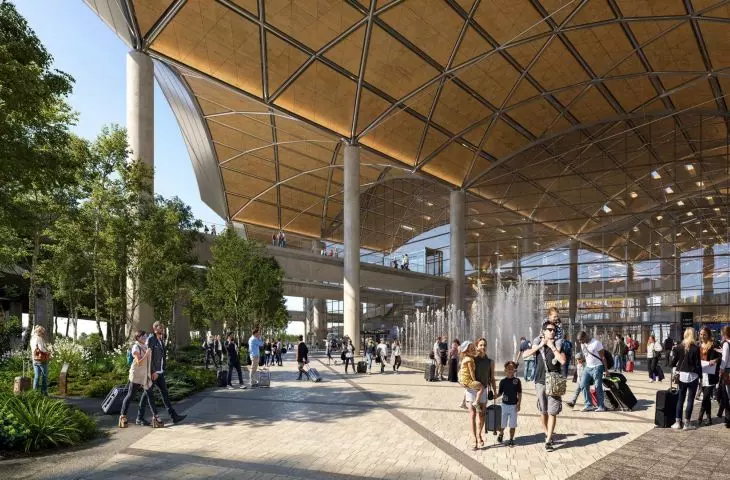
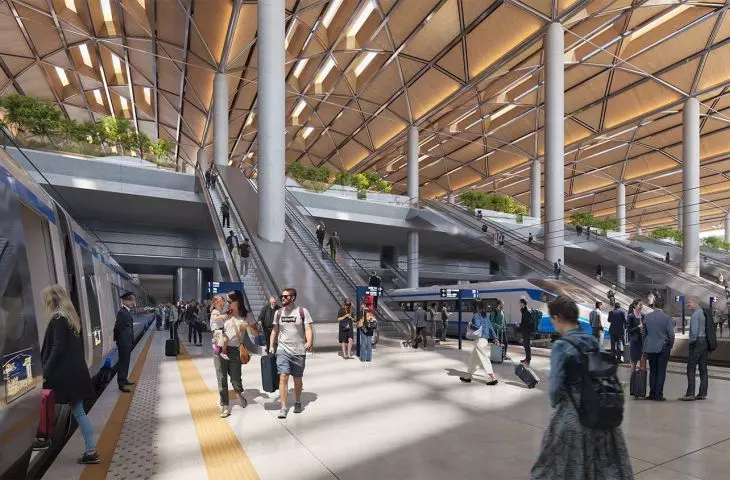
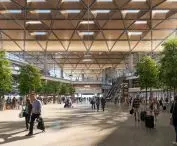
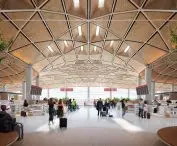
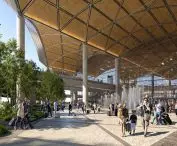
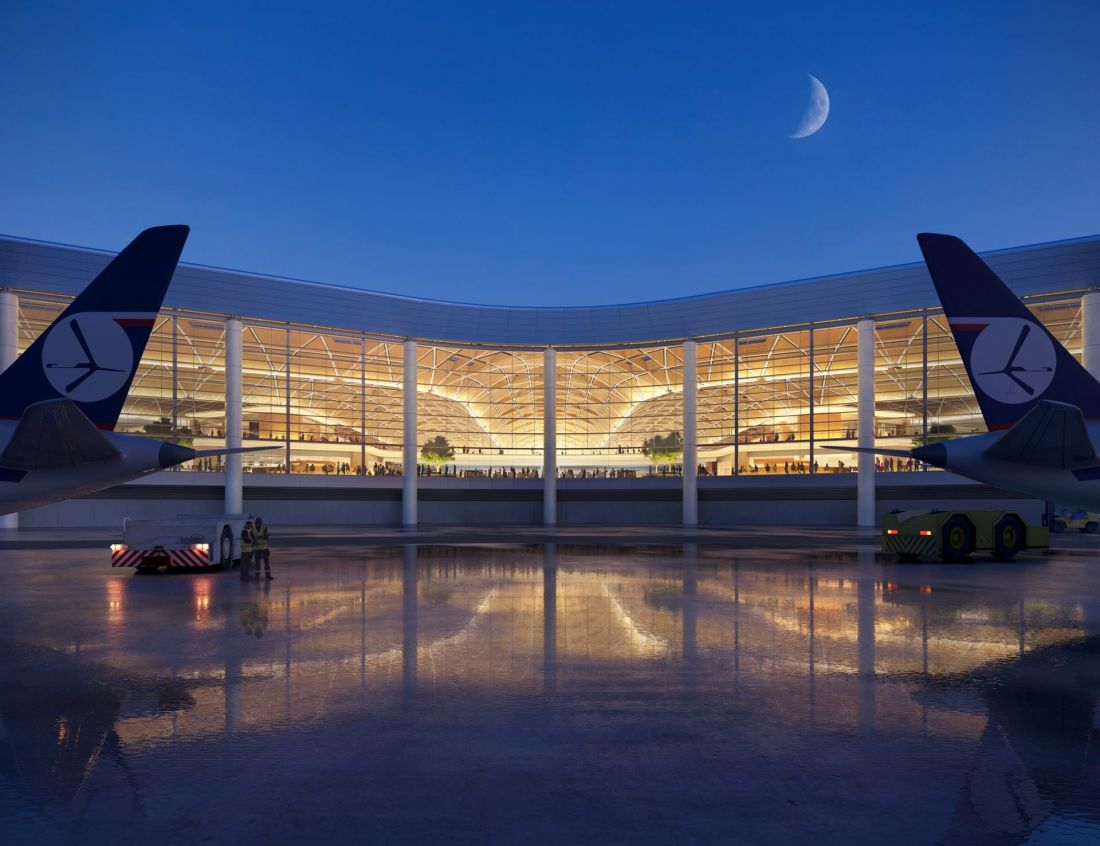
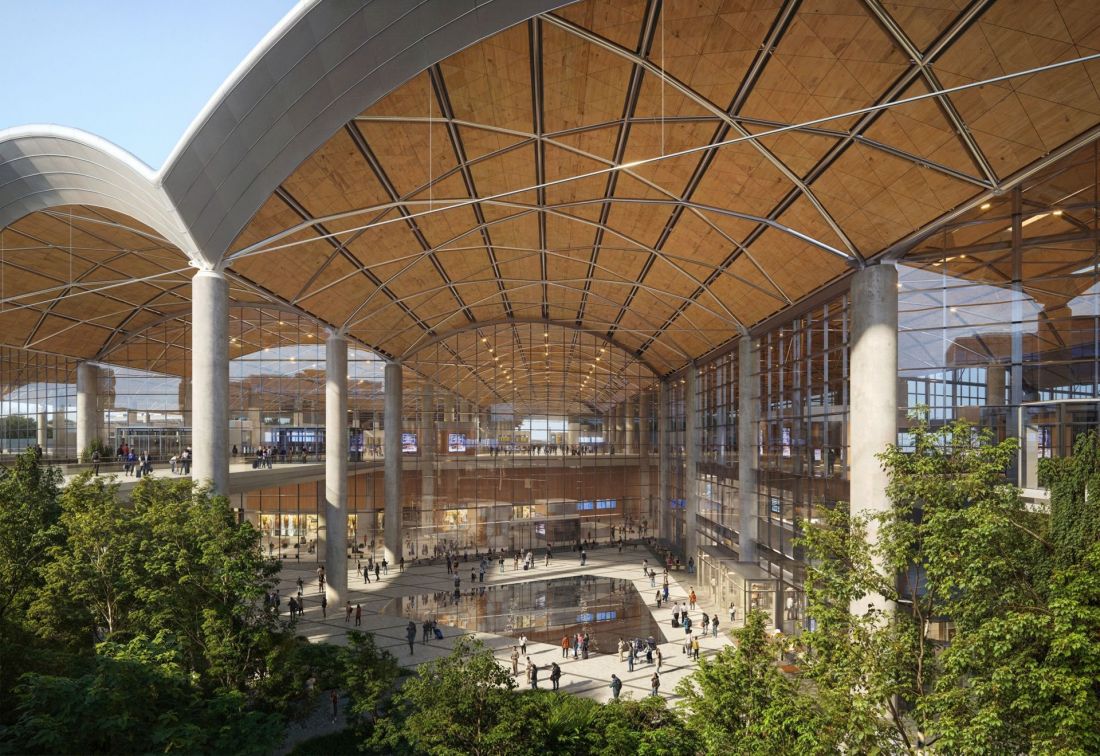
All parts of the Central Communication Port will be organized around a giant atrium. The visual dominant of the large-scale hall will be the canopy. The volume on the one hand will refer to 19th-century railway station halls, on the other is to be filled with symbolism associated with Polish folk traditions. The canopy will attract the eye with its exposed structure, consisting of countless interlocking metal ribs. As the laconic description provided by the Foster+Partners studio reads:
We are proud and excited that CPK has selected us as the designers for this project. Together we will work to create a concept for the future of fully integrated transportation design. We believe that this project will completely revolutionize travel at home and abroad. The vision of an intertwined architectural form is strongly expressed. It can shape the building's massing and guide passengers through its spaces, while also serving as a symbolic reference to Poland's rich cultural heritage and the united strength of its people.
- says Grant Brooker, executive director of Foster + Partners [translated by the author].
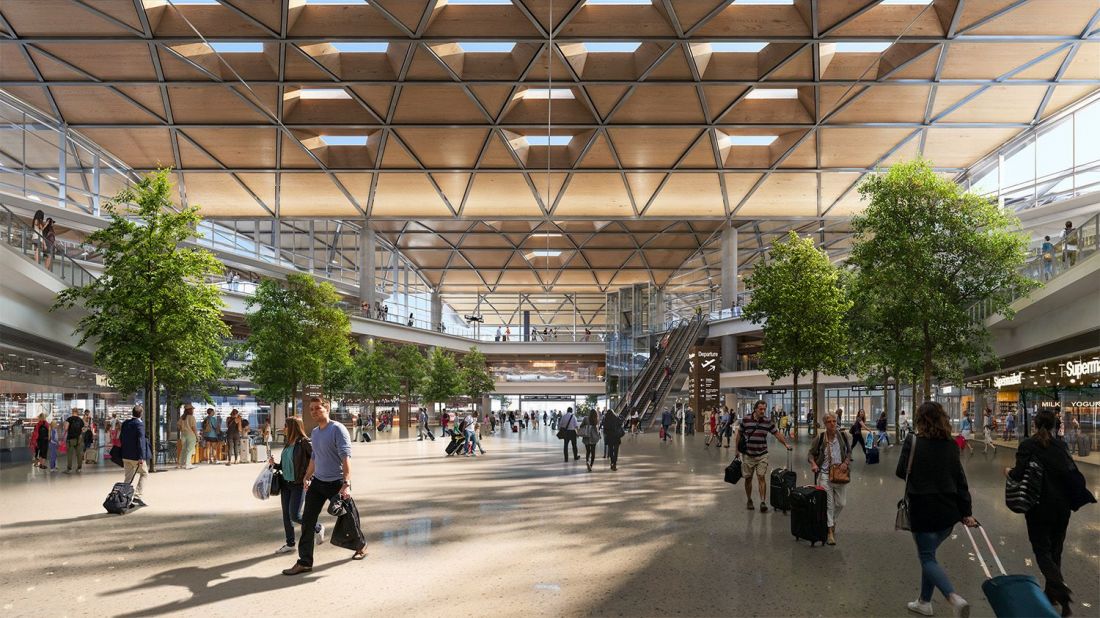
Central Communication Port - proj.: Foster + Partners
© CPK
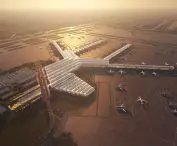
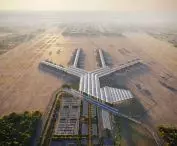
As Grant Brooker explained at the 2022 conference, the individual, elongated segments of the CPK will allude to the patches of fields that make up much of the Polish landscape. The intricate structure of the canopy, in turn, will be a rather casual reference to traditional crafts in which "braiding" is the main method of work - for example, wickerwork, embroidery or lace-making.
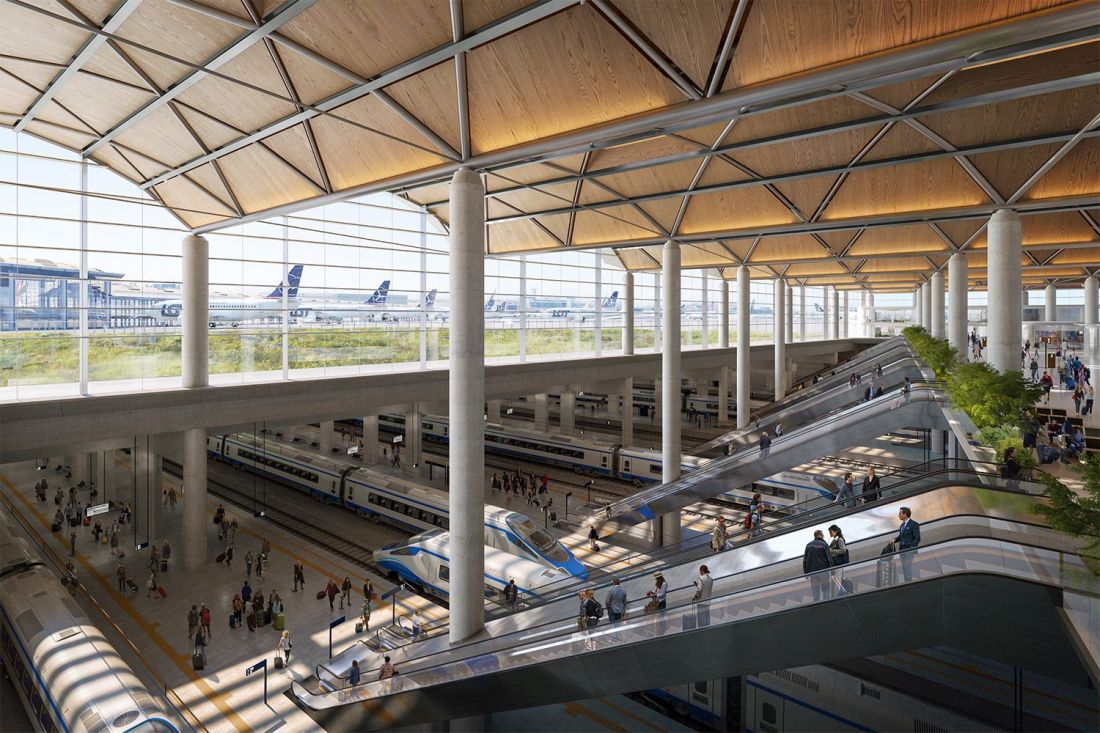
Central Port of Communications - proj.: Foster + Partners
© CPK
30 million on three levels
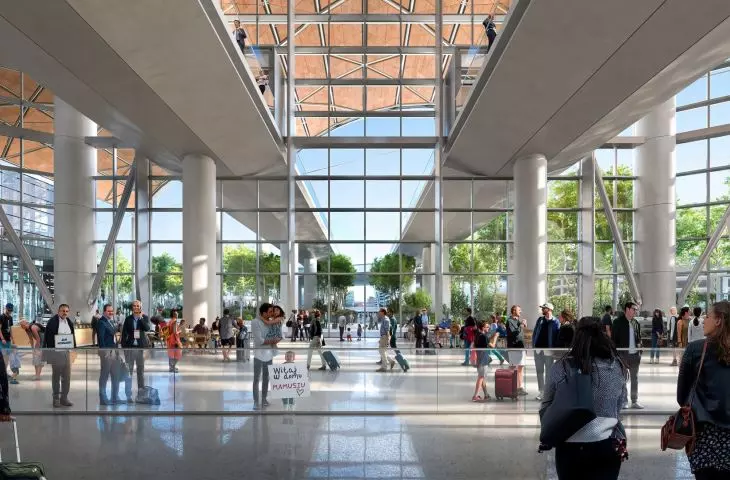
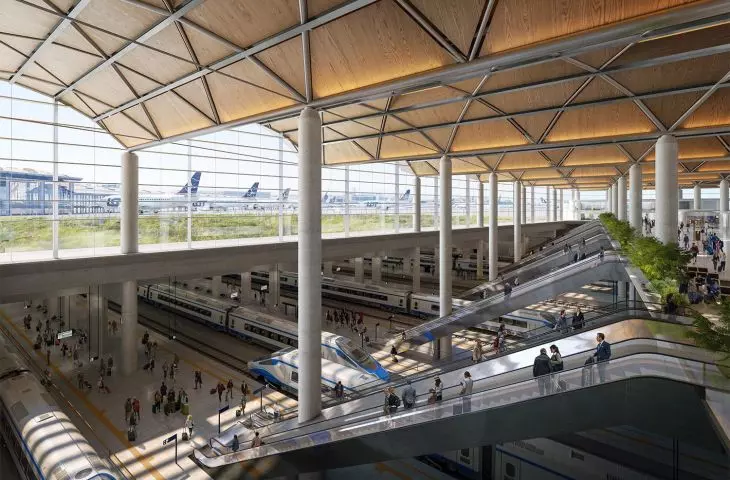
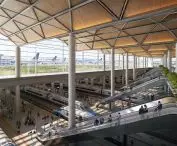
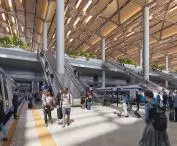
Three functions will find their space in the main volume - an airport terminal, a train station and a bus station. The atrium space, CPK assures, will be located even before the security gates, so it will be accessible to all travelers. The terminal itself is designed to be three-story, where each level will correspond to a different type of air traffic:
-
Level 0: bus exits for Schengen and Non-Schengen zones, baggage claim hall and arrivals hall,
-
Level +1: arrivals and departures for the Non-Schengen zone, transfer centers, and passport control,
-
Level +2: check-in, security control, arrivals and departures for the Schengen zone, and some arrivals from the Non-Schengen zone.
Such a complex division of traffic suggests a high intensity of CPK use. Indeed, according to projections, about 34 million passengers are expected to pass through the terminal in the first phase of construction, later the capacity will be increased to 44 million. At the same time, passengers will board up to 67 aircraft docked at one of the six piers.
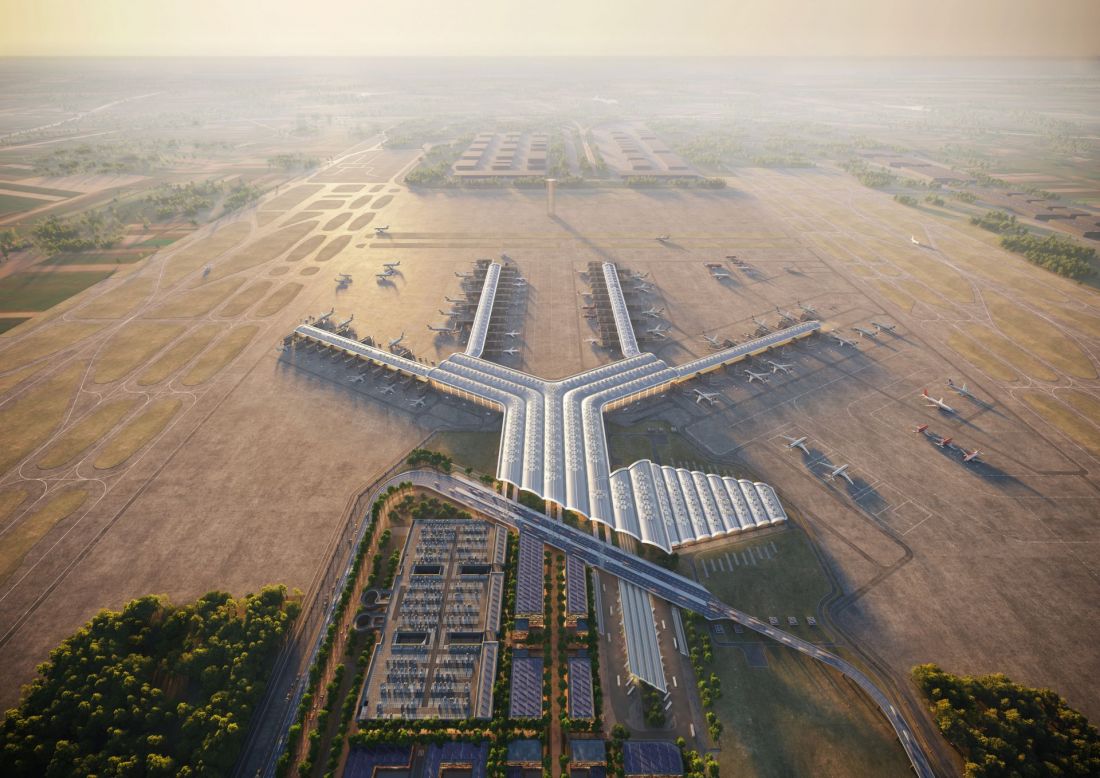
Central Port of Communications - design: Foster + Partners
© CPK
Not all piers will be built at once, the construction of some is not even entirely certain - an important part of the design prepared by Norman Foster's studio is the possibility of further expansion. The southern pier, whose possible construction has been planned in stages, with implementation depending on the amount of traffic generated by CPK, could be built in such a way. The entire infrastructure of the aviation part of the Central Transport Port has been designed in a similar way:
The main hall of the CPK terminal will be built from the very beginning in a larger volume taking into account the first future expansion, but with the assumption of phased finishes and equipment. It will be possible to flexibly increase capacity by appropriately equipping the terminal with, among other things, check-in desks, security control, passport control and baggage claim.
- reads the project website.
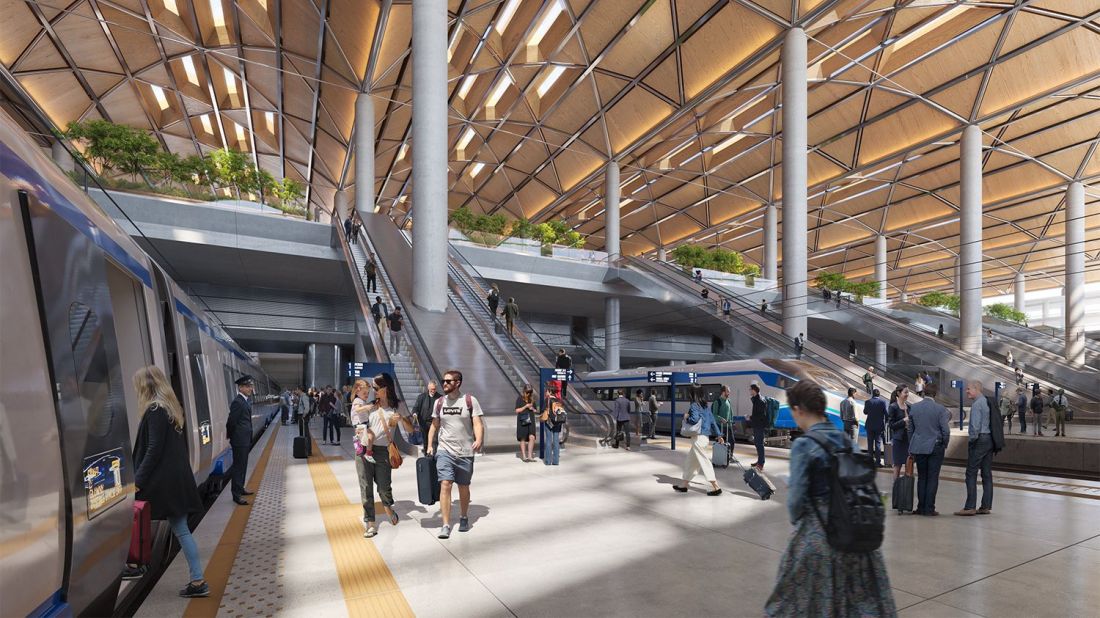
Central Port of Communications - proj.: Foster + Partners
© CPK
CPK across Poland
It seems, however, that for the general public, the most important role in CPK will not be played by the hub itself, but by the accompanying infrastructure scattered throughout Poland. It is in this area that the CPK project has seen the most significant changes. It is primarily about rail transport - as part of the CPK construction there will be a High-Speed Railway, which will connect Łódź with Warsaw using a 140-kilometer route, on which trains will speed up to 350 kilometers per hour. The entire trip is expected to take only 40 minutes. The same railroad will also establish connections from the capital to Poznań and Wrocław, where the trip will take 1 hour and 40 minutes. And what about the other cities?
Central Transportation Port - proj.: Foster + Partners
© CPK
excluding speed
The original design of CPK assumed that the train would travel at a slower speed, but would stop at more stations. In addition, 10 "rail spokes" were planned to connect CPK with smaller towns in all Polish provinces. Will the changes to the project, which were introduced in 2024, contribute to increasing transportation exclusion in Poland? It's difficult to make a judgment on this issue at the moment, as the government is currently betting on decentralized measures that are expected to be more economically efficient, but will probably cover fewer localities.
Central Communication Port - design: Foster + Partners
© CPK
When will CPK be built?
In addition to the stations, Airport City, a business center for travelers, and Cargo City, an infrastructure for cargo flights, will be built near the terminal. The financing method and construction dates for these elements of airport infrastructure are not yet known. What we do know, however, is when we can expect the first construction work associated with CPK's erection. According to the company, piling of foundations will begin as early as 2026, with the first passengers the terminal and stations will receive in 2032. That's still quite a long time - it will be interesting to see how many more transformations CPK will undergo in those few years.