






From an Art Nouveau gem, to a postmodern temple, to.... a tin container? Lodz residents have been able to observe three completely different faces of the Lodz Kaliska railway station over the past half-century. Soon, its latest face, designed by An Archi Group studio, will fully open. How has Łódź Kaliska changed over the years, what did the city lose with the demolition of the previous edifice, and what are the characteristics of the current station?
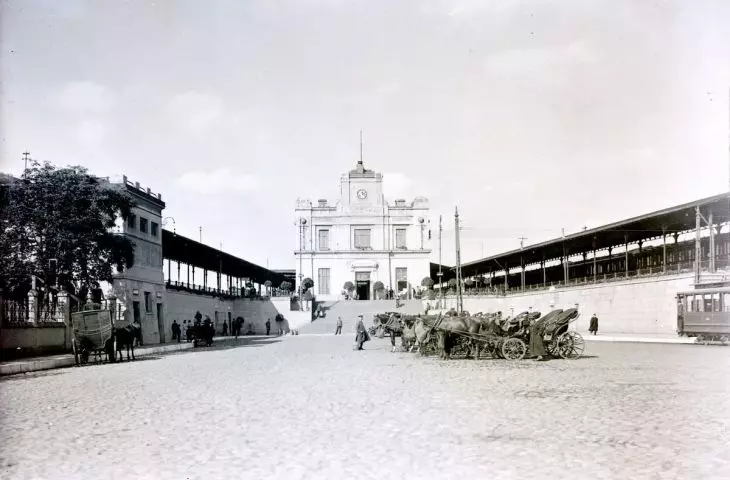
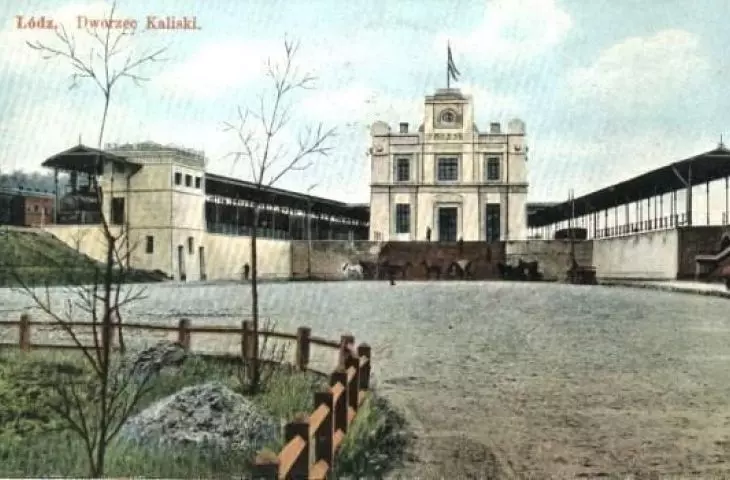
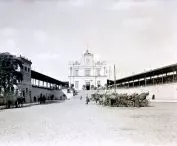
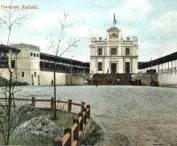
The current building is the third iteration of Lodz Kaliska. The first to stand here was the Art Nouveau edifice, which was completed in 1902. It was designed by Czeslaw Domaniewski, an architect specializing in railroad infrastructure - concepts for stations in Kalisz, Ciechocinek and even Warsaw, where he created plans for the southern pavilion in the now-defunct Vienna Railway Station, came from his hand.
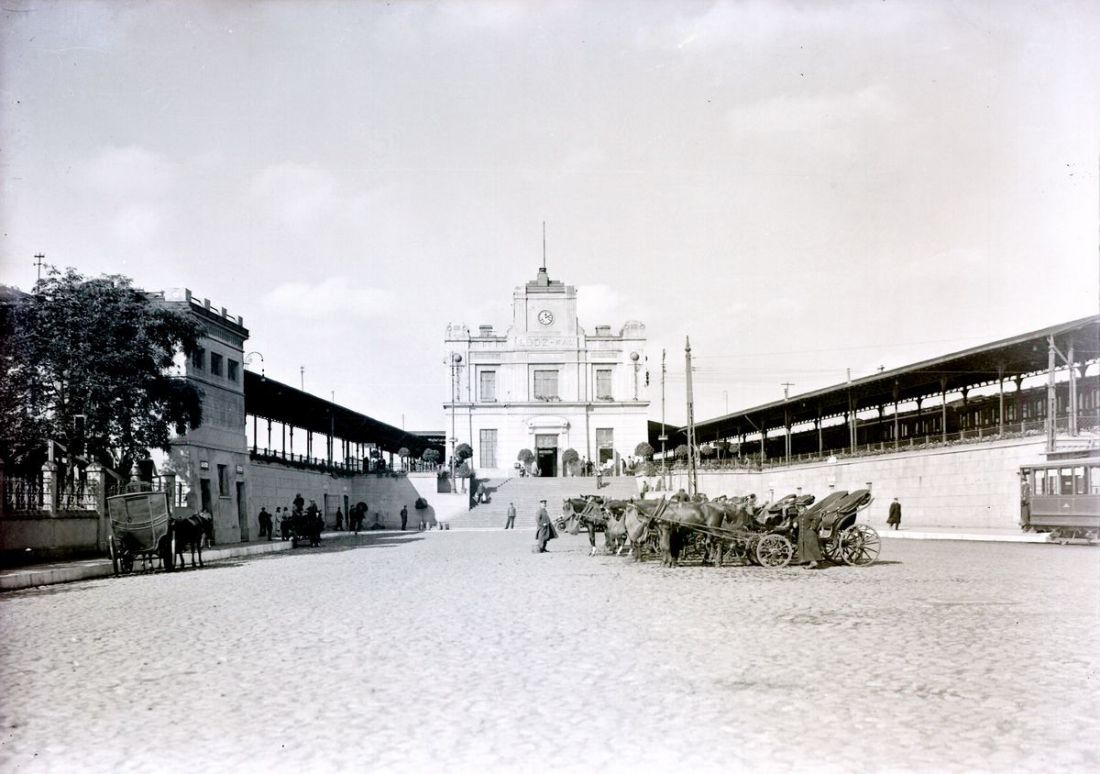
Art Nouveau building of the Łódź Kaliska Railway Station - designed by Czesław Domaniewski.
© Włodzimierz Pfeiffer Archive, APŁ, public domain
art nouveau, crystal and a cinema at the station
In Lodz, he designed an Art Nouveau building, preceded by a monumental staircase and set on a high foundation. On the axis of the two-story façade with semi-historicizing and Art Nouveau detailing, there was a clock tower - an element emblematic of railway station architecture. The interiors, like the facade - Art Nouveau, were finished according to the design of Jan Heurich. Inside, there was paneling, crystal glass or brass finishes. A whole communication infrastructure grew up around Lodz Kaliska - from a square for wheeled means of transport (at that time primarily horse-drawn), to workshops, a steam locomotive depot or houses for railroad workers.
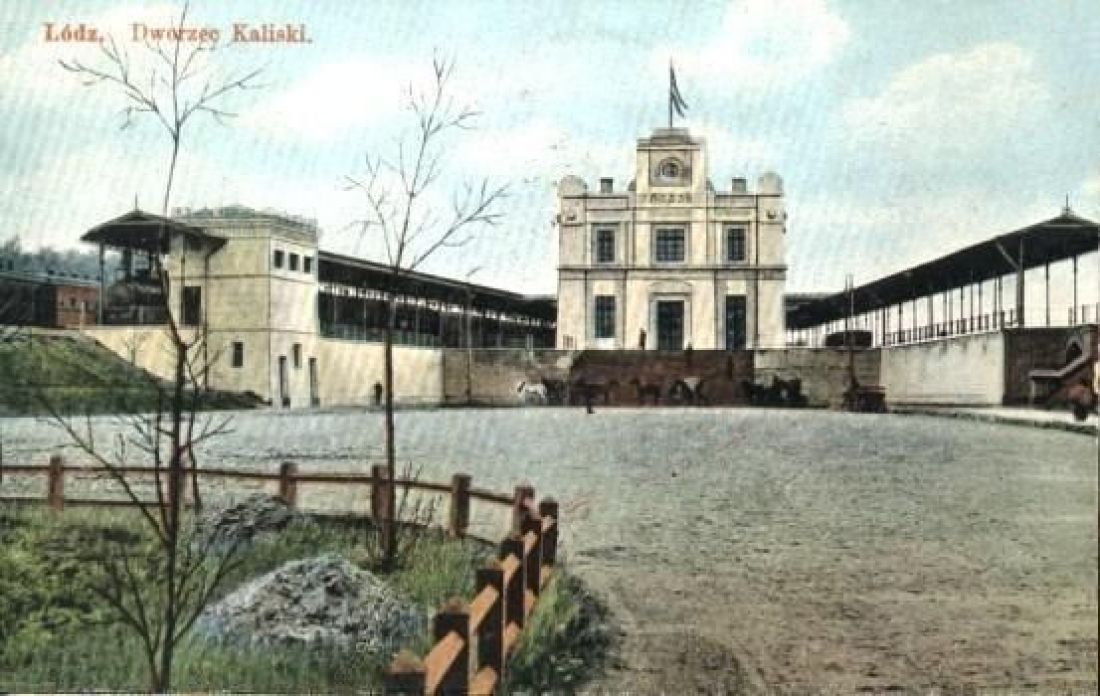
The first building of the Łódź Kaliska Railway Station - design: Czesław Domaniewski
© public domain
Although not without damage to its architectural substance, the Art Nouveau station in Lodz, survived two world wars, railroad disasters and even plans for modernist reconstruction according to Rudolf Lachert's design. It would seem that, like many other historic buildings in Lodz, the first Lodz Kaliska Station will survive into the 21st century - back in the 1970s there was a station cinema in Lodz Kaliska, making the time of those waiting for a train more pleasant.
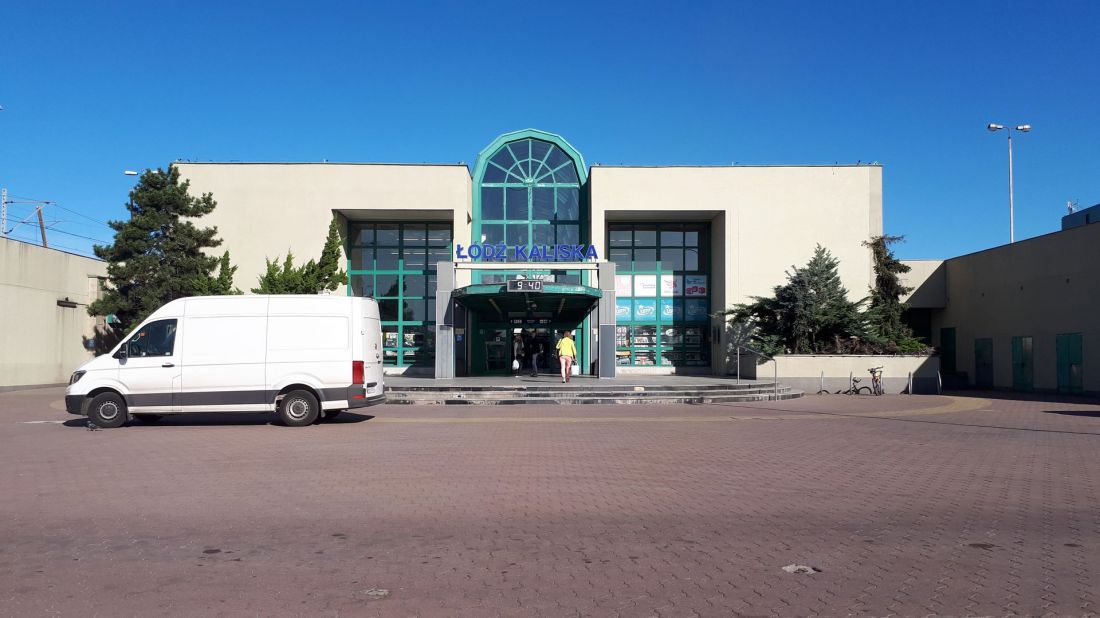
Postmodern Łódź Kaliska railway station
Photo: Rakoon © CC0 | Wikimedia Commons
Lodz Kaliska II, or the postmodern temple of railroads
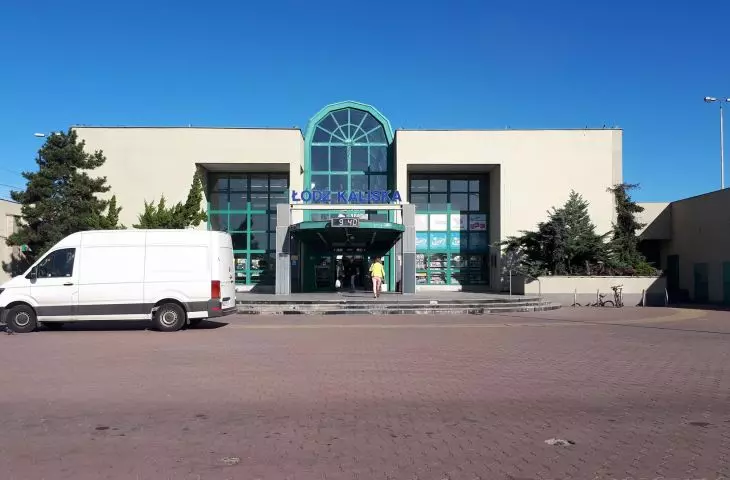
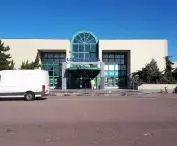
In 1982, however, the decision was made to close the station - a design in line with the spirit of the times was quickly created, today undoubtedly classified as postmodern. In 1994, a completely new building was opened, with a body designed by a team led by Jan Gorgul. The interiors, platforms, atrium and forecourt, in turn, were designed by the MWM studio, led by Marek Skurnog, Wojciech Gaszynski and Marek Lisiak. As befits a postmodern building, the new Lodz Kaliska includes plenty of references to historical architecture. This is what Anna Cymer wrote about the Łódź station in her book "The Long 90s: Architecture in Poland in the Time of Transformation."
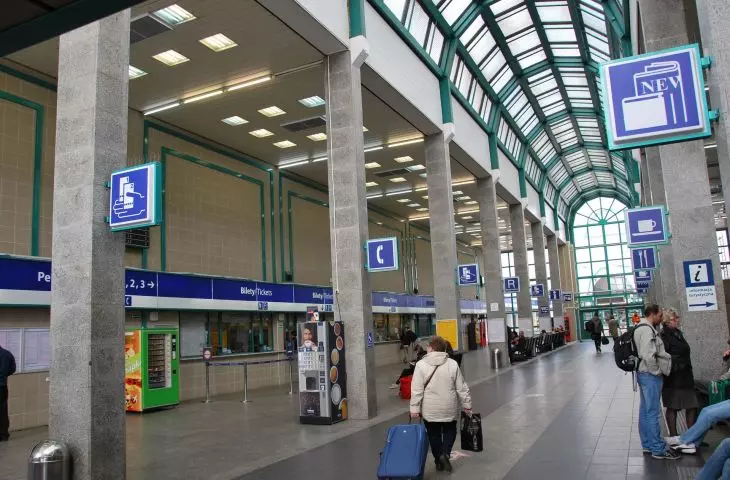
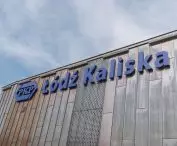
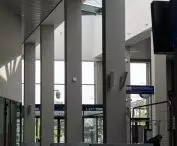
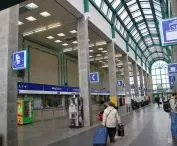
In the layout of the interior it is easy to find similarities to a temple - the space is divided into three naves separated by stone pillars. The middle one is tall and slender, with a semicircular glass roof spanning its entire length. [...] The façade of the building has a classicizing layout: symmetrically arranged rectangular glazing on two sides of the entrance is preceded by a portal with a simplified form: an apex with an inscription with the name of the station is carried here by square pillars, and a glazed arcade towers over everything.
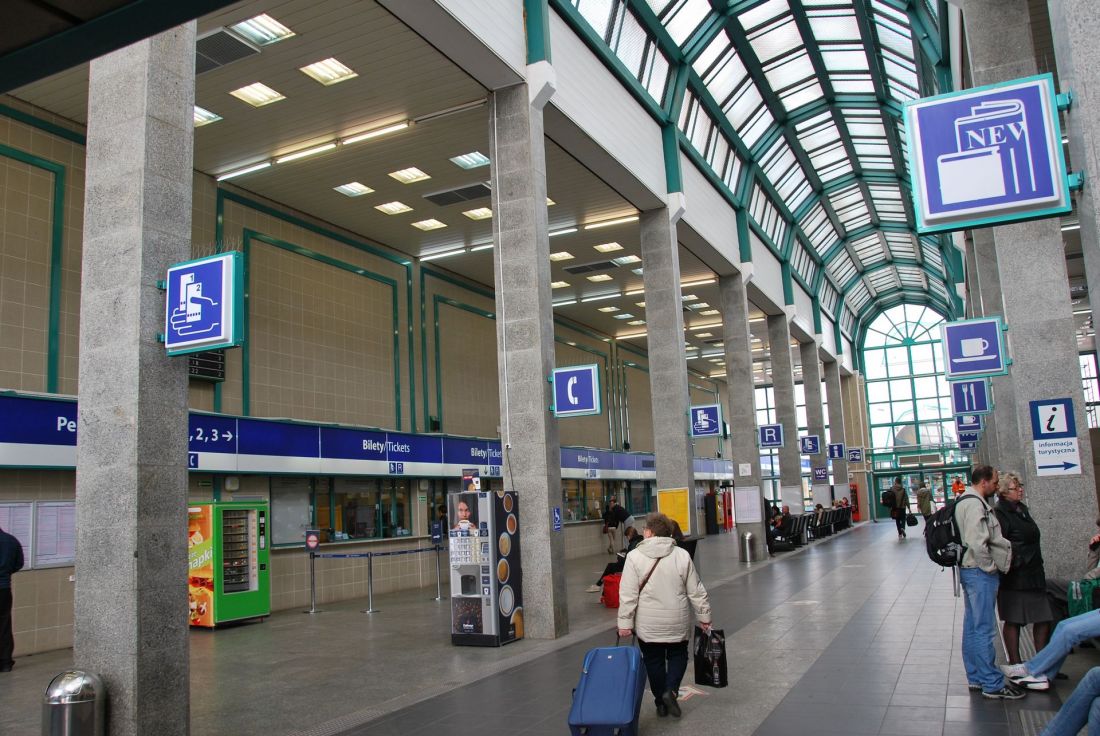
The interior of the postmodern Łódź Kaliska station
Photo: Zorro2212 © CC BY SA 4.0 | Wikimedia Commons
It seems to be the thread connecting the postmodern building with its Art Nouveau predecessor. In Czeslaw Domaniewski's station, a clock tower with a spire dominated the central axis, above the side axes. In Jan Gorgul's design it was matched by the aforementioned glass arcade, enclosed in bright green woodwork and preceding a semicircular roof suspended over the main hall of Lodz Kaliska.
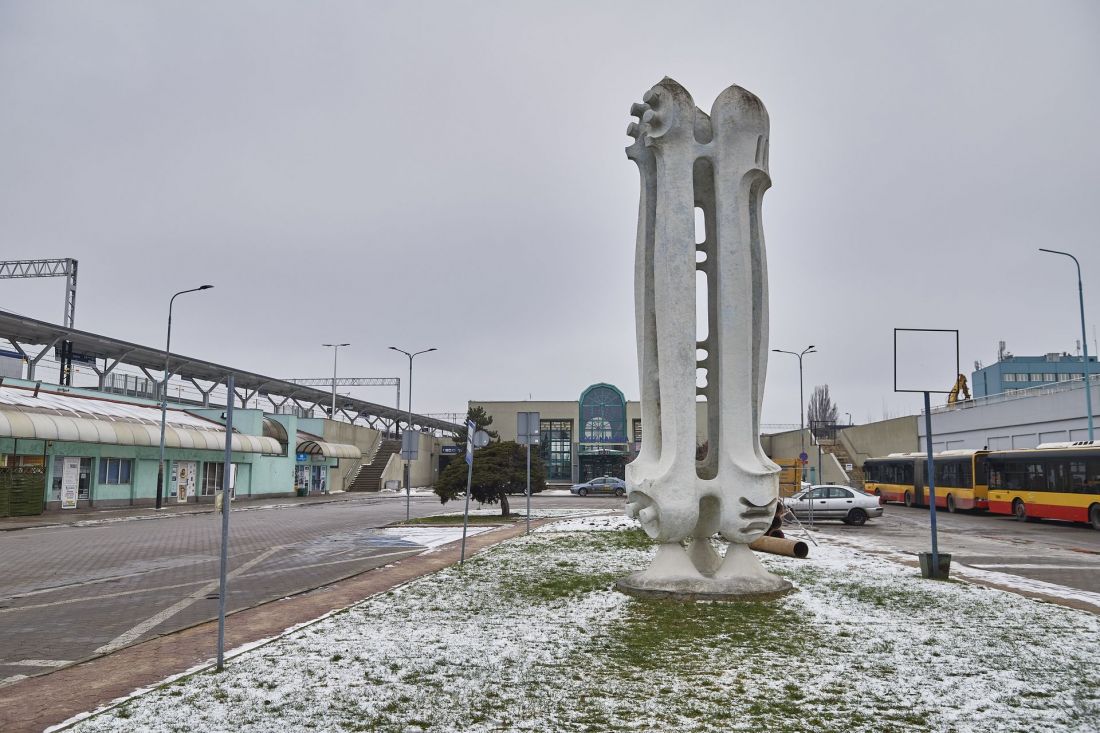
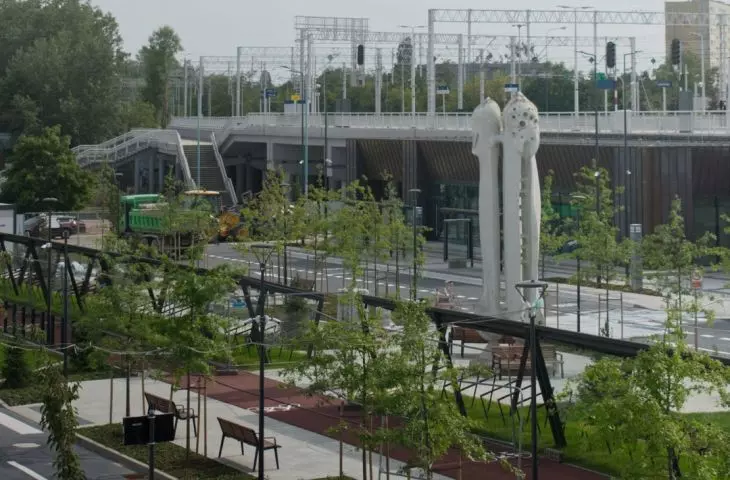
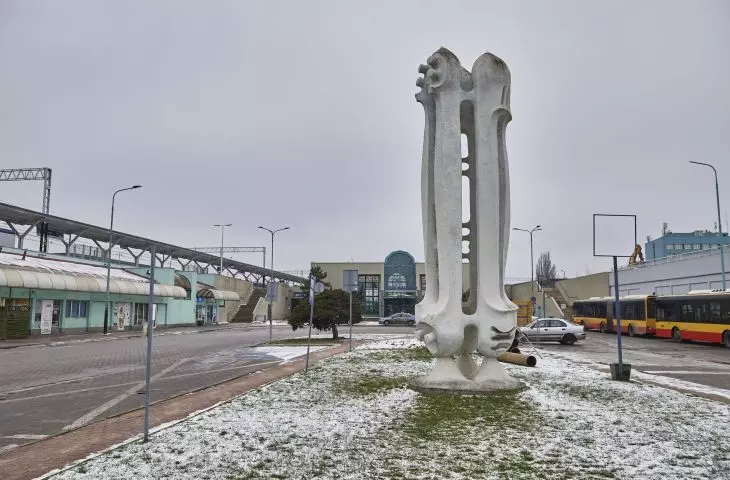
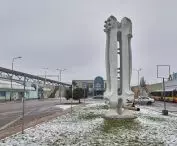
Sculpture of the Dugout in front of the Lodz Kaliska train station, author. Andrzej Jocz
photo: Radosław Jóźwiak © CC BY SA 4.0 | Wikimedia Commons
verdict on postmodernism
The verdict on the 40-year-old building was passed in 2021, when it was decided that the Jan Gorgul station would undergo a far-reaching modernization. The project, in accordance with widely followed PKP practice, was selected through a tender, which was won by the An Archi Group studio, responsible for, among others, the Academy of Fine Arts Building in Katowice, the PKP Railway Station in Czeremcha and the Transfer Center in Zabrze Rokitnica.
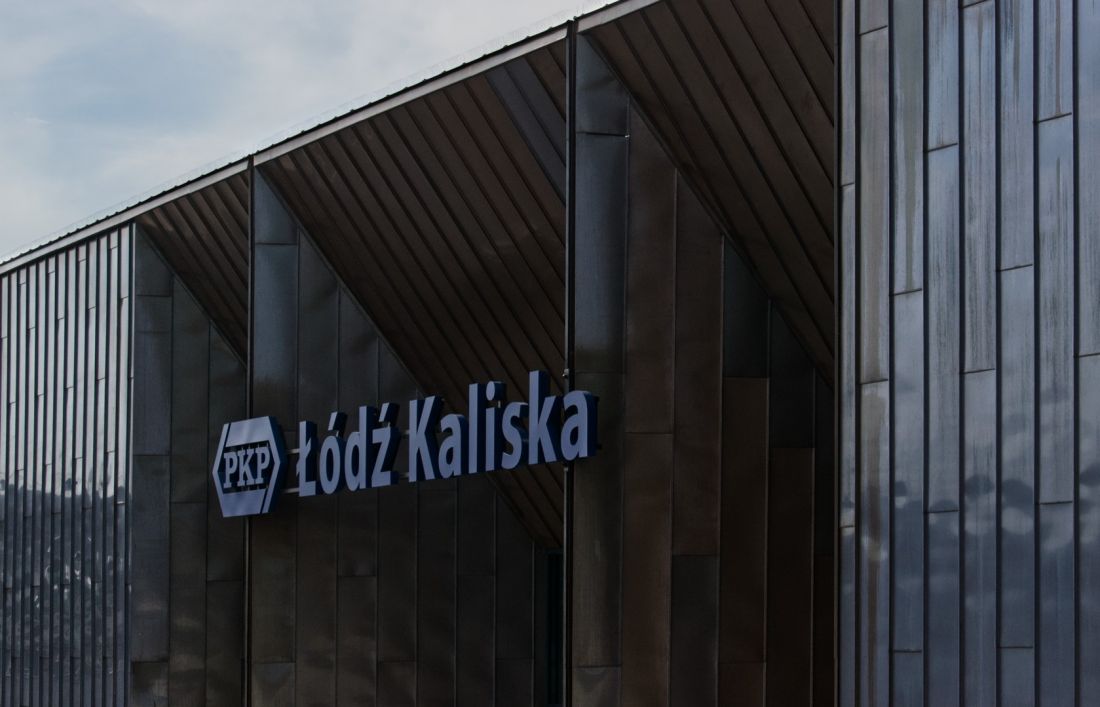
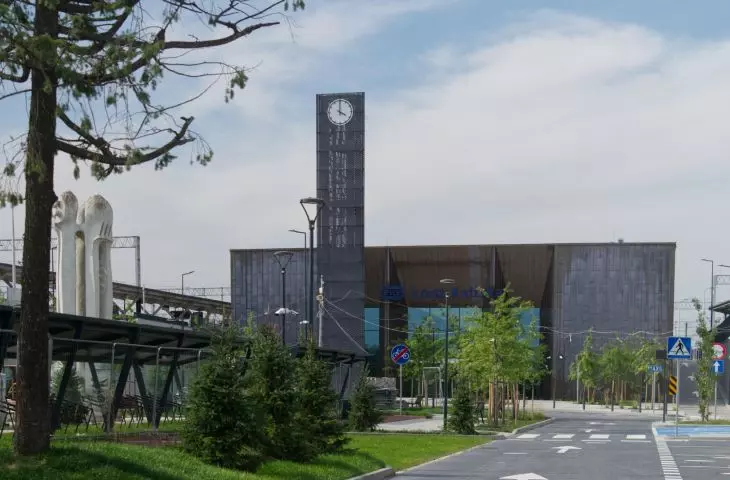
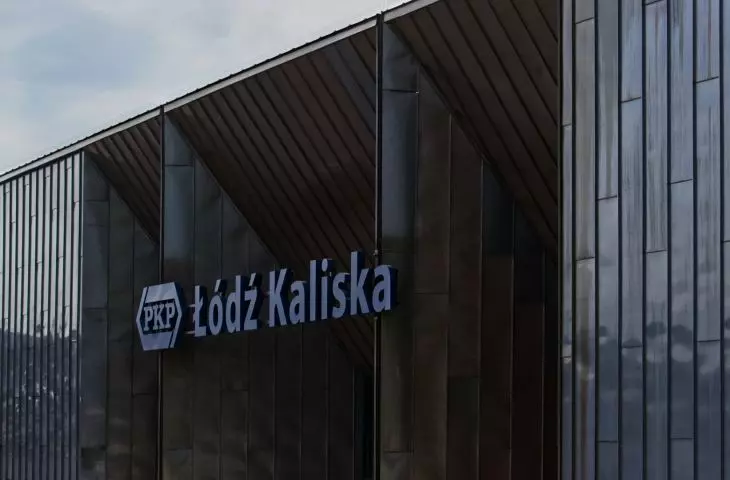
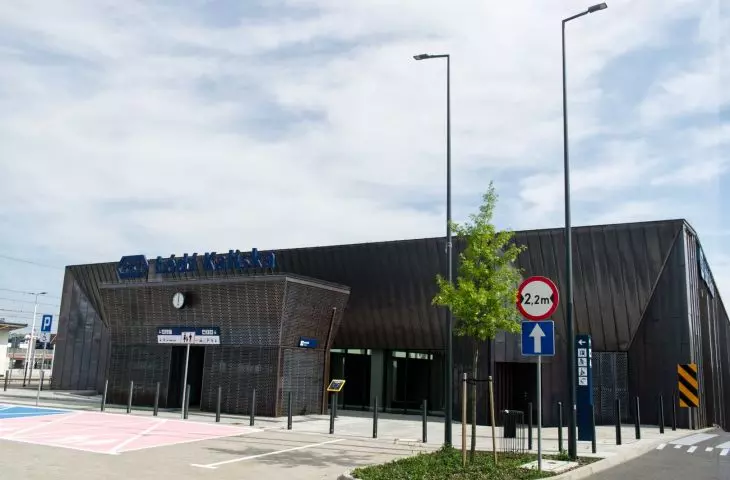
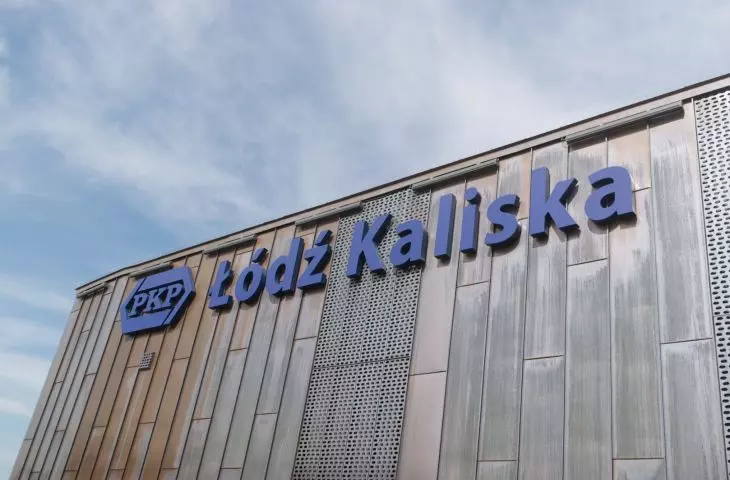
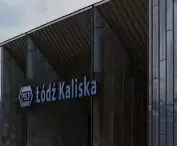
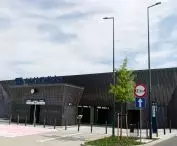
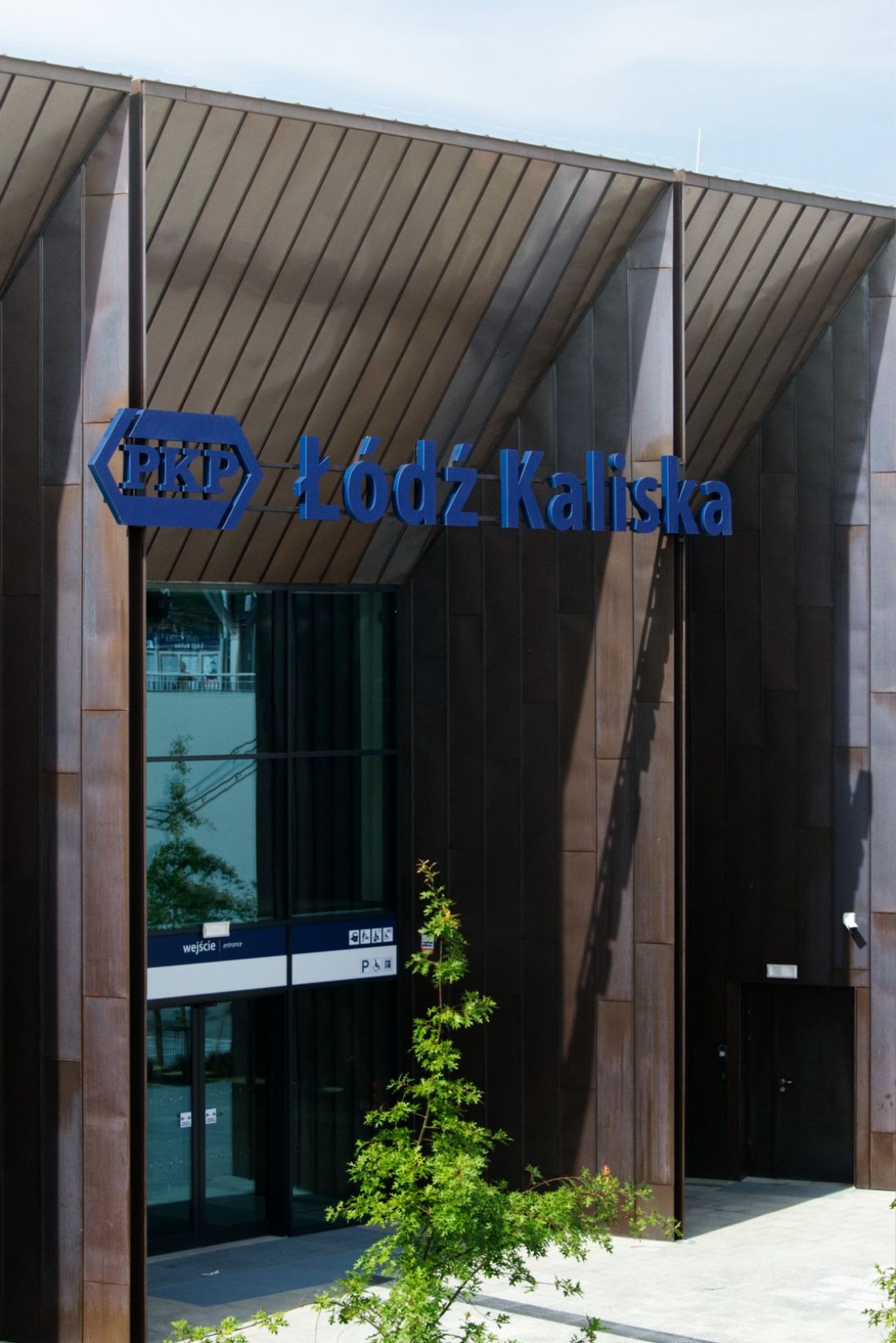
New Łódź Kaliska Railway Station - Facade of the Łódź Kaliska Railway Station.
photo: Maria Cipinska
design, demolish and rebuild
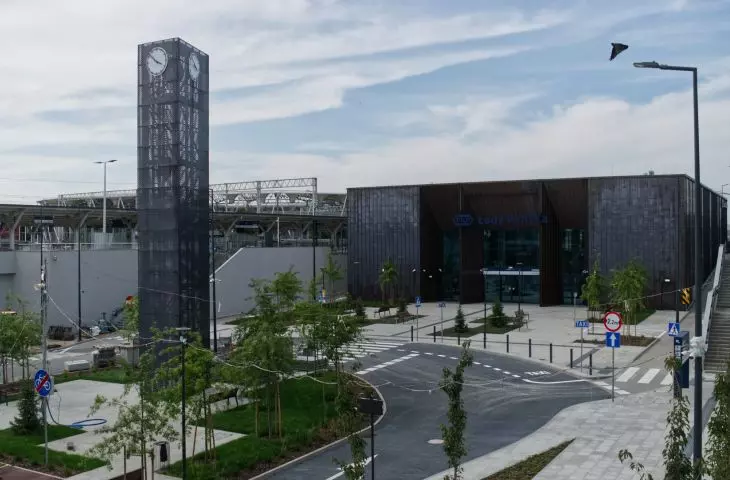
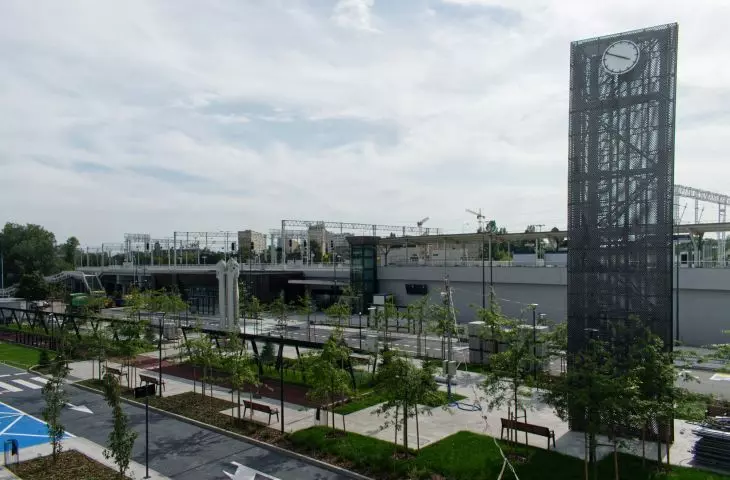
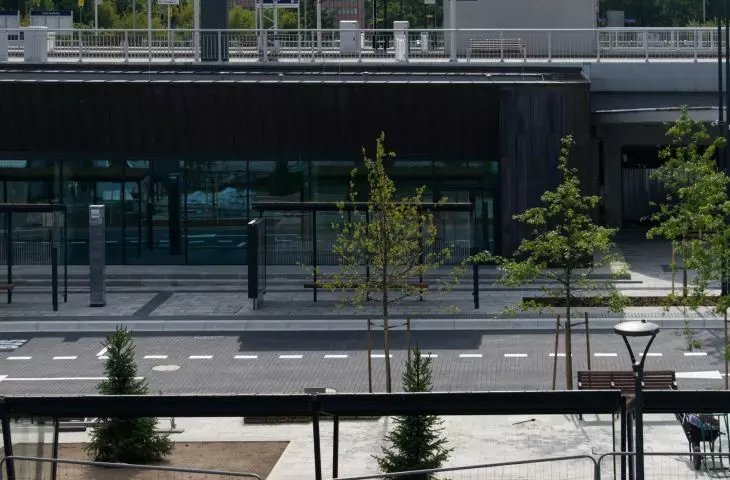
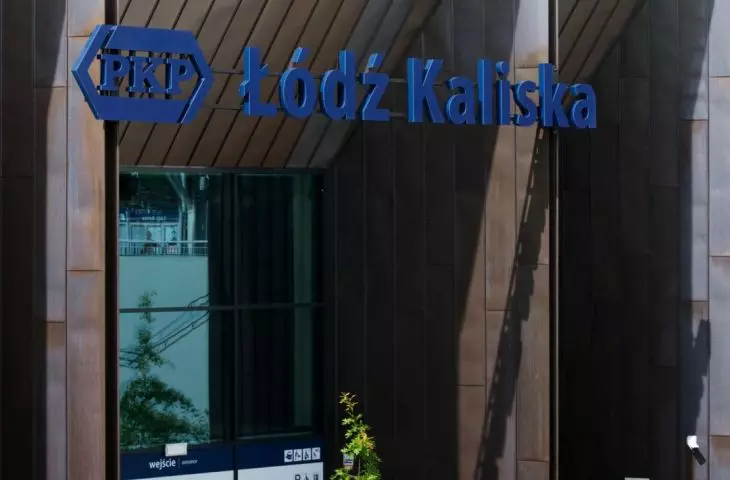
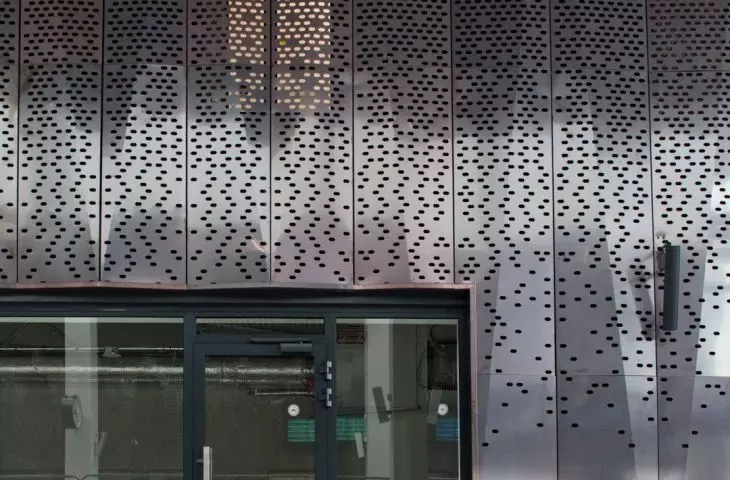
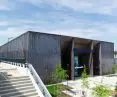
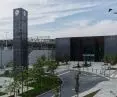
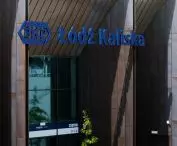
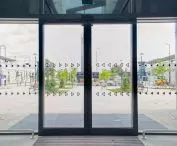
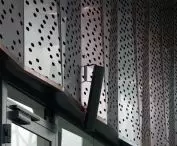
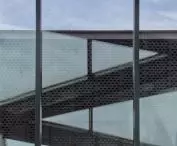
The reconstruction began with demolition - of the old Lodz Kaliska only its nave skeleton remained, on the canopy of which a completely new building materialized. Lodz Kaliska in 2025 is a predominantly blind, cuboidal block, covered with oxidized sheet metal. The central part of the façade features three sizable glazed windows, mounted in bifold diaphragms. At the top of the new station, the clock tower no longer stands out - this one stood as a separate volume on Station Square.
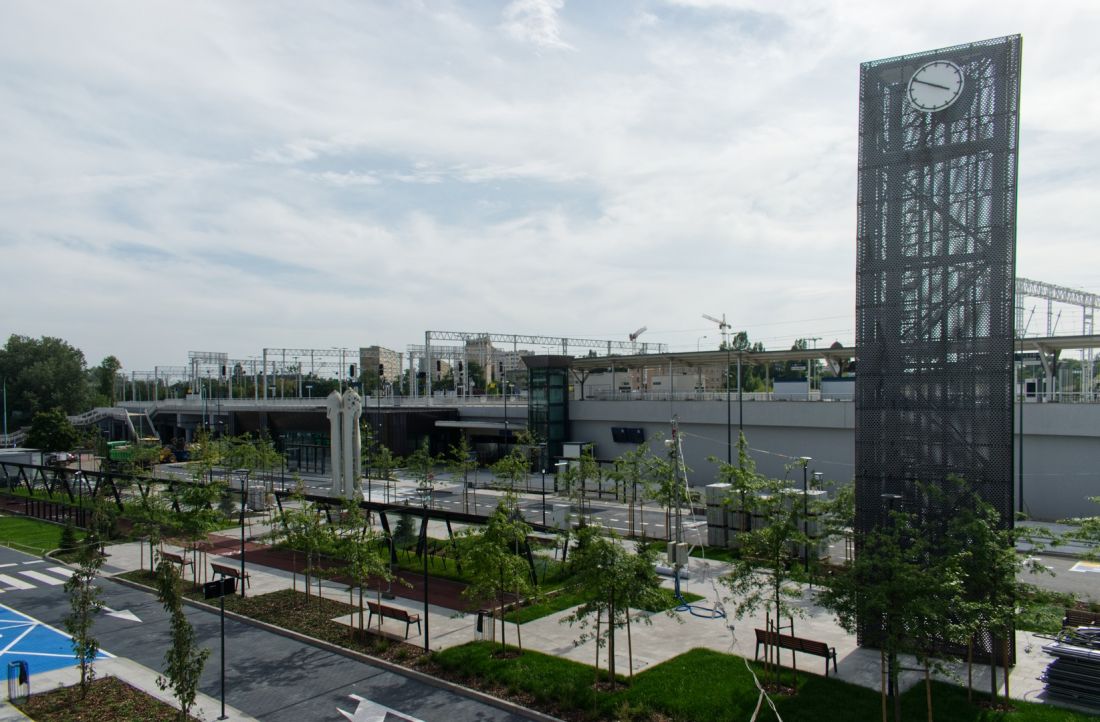
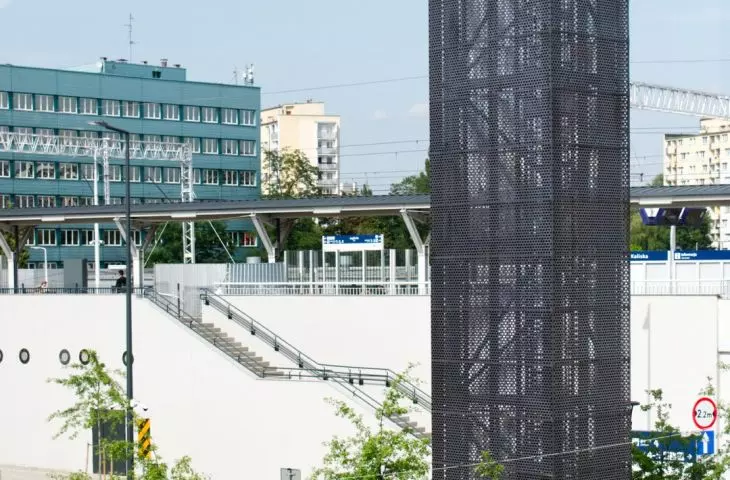
The new Łódź Kaliska station - View from platform 4
photo: Maria Cipinska
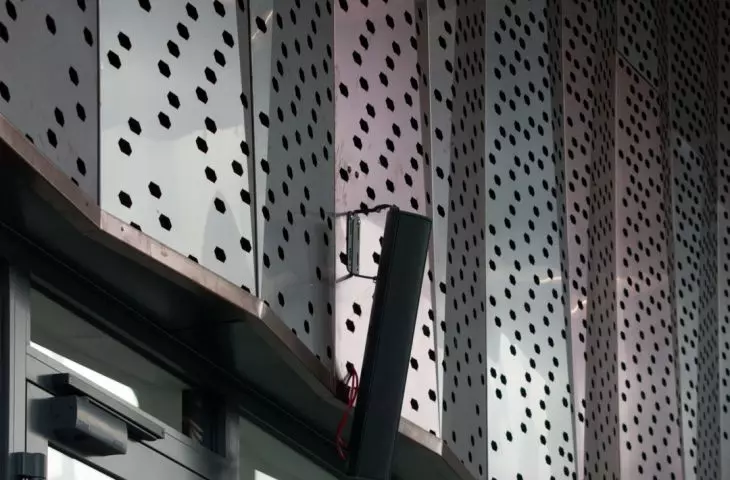
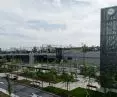
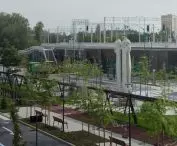
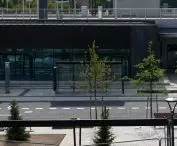
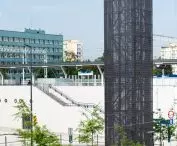
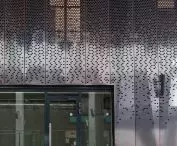
As in the case of the body of Łódź Kaliska, its immediate surroundings also underwent a metamorphosis. The aforementioned clock tower, covered with perforated metal sheets, towers over the entire establishment. It grew in the center of a green square, surrounded by pedestrian, road and bicycle routes. A lot of new plantings have appeared, as well as small architecture, including bicycle racks and benches. Instead, the several-meter-high "Dugout" sculpture, which Andrzej Jocz decorated the station square in 1979, has remained in its place.
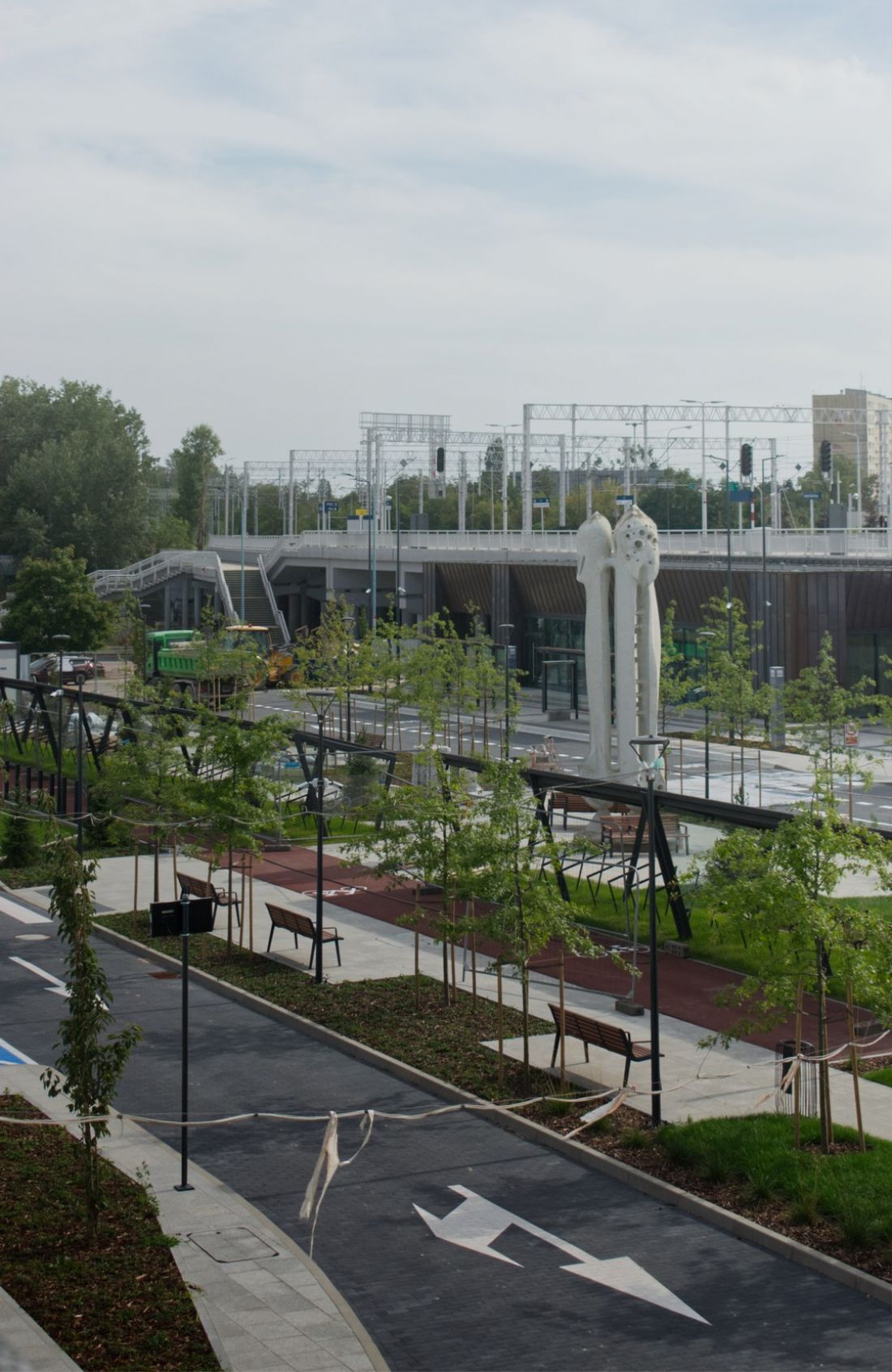
New Łódź Kaliska Station - View from platform 1
photo: Maria Cipinska
pitted interior
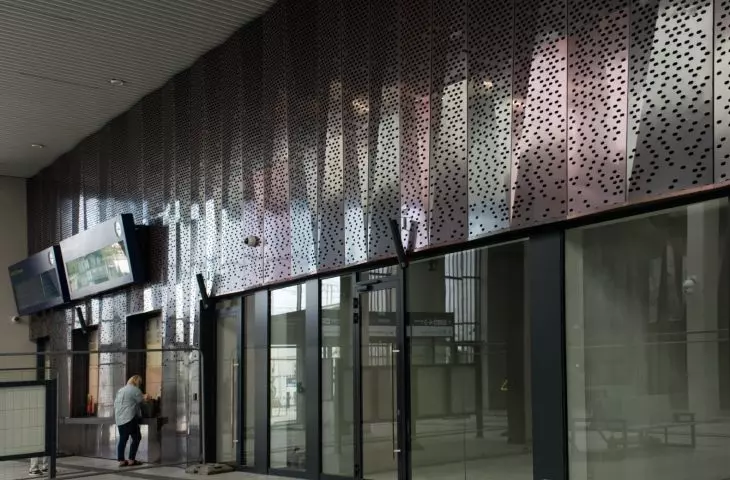
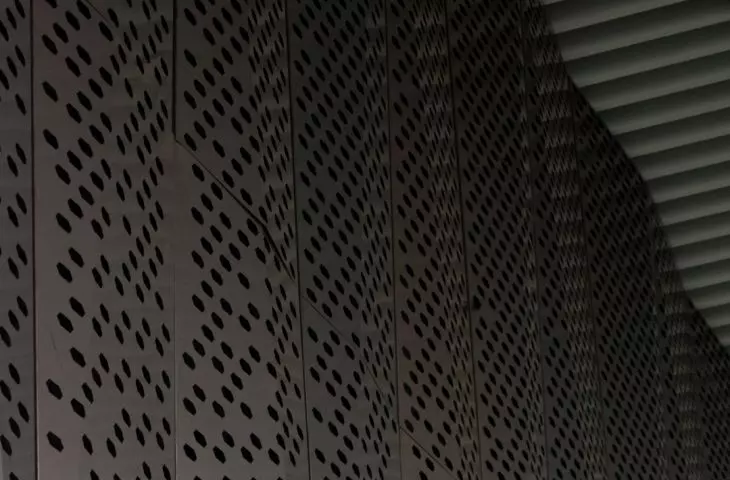
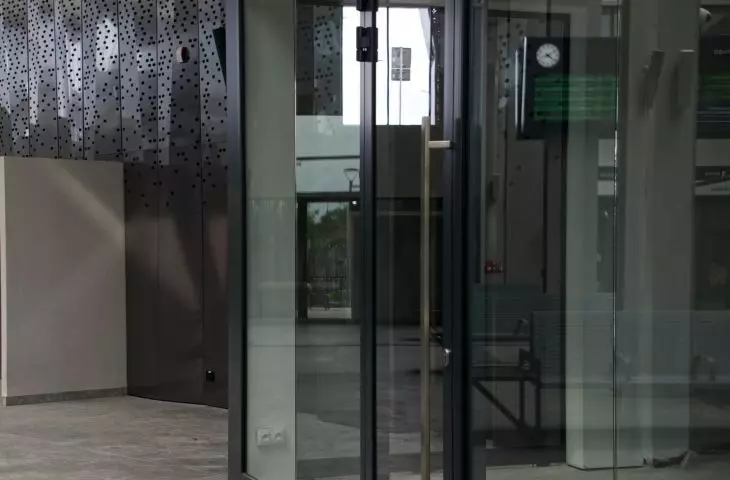
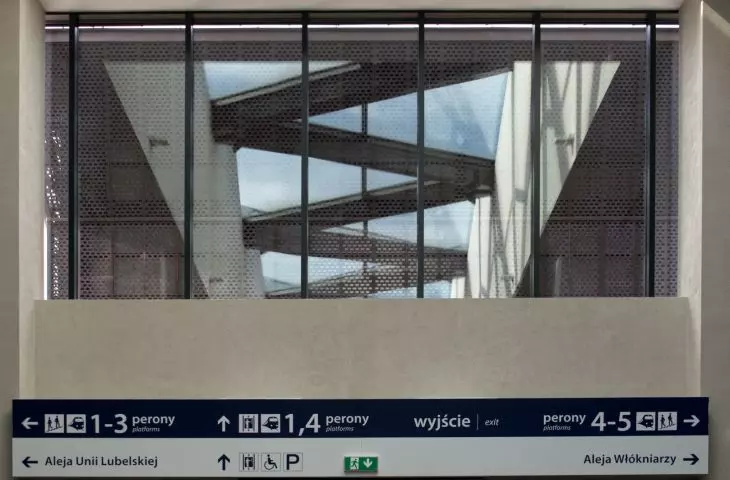
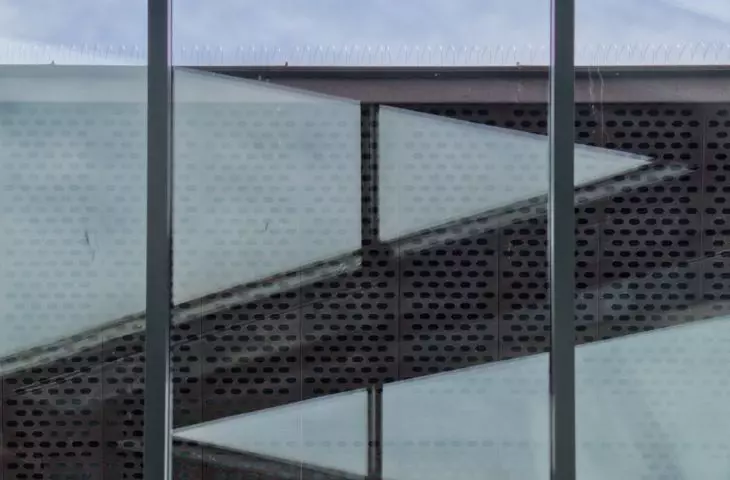
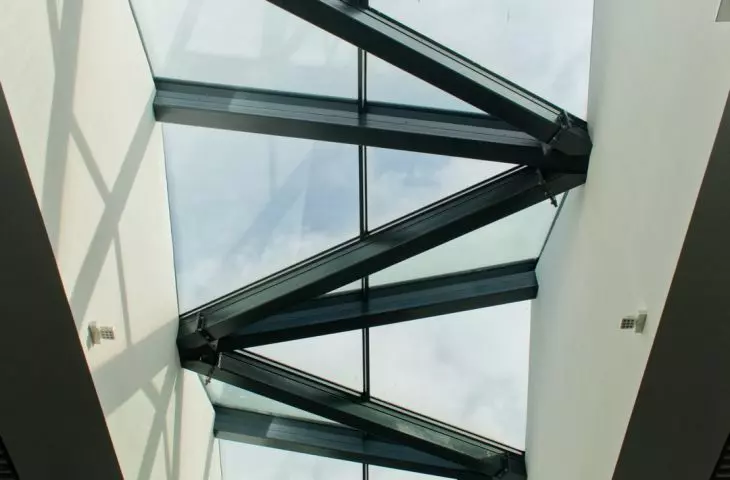
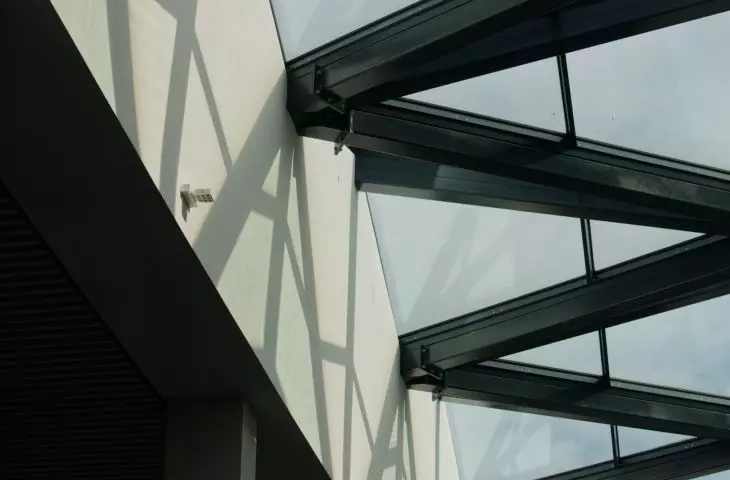
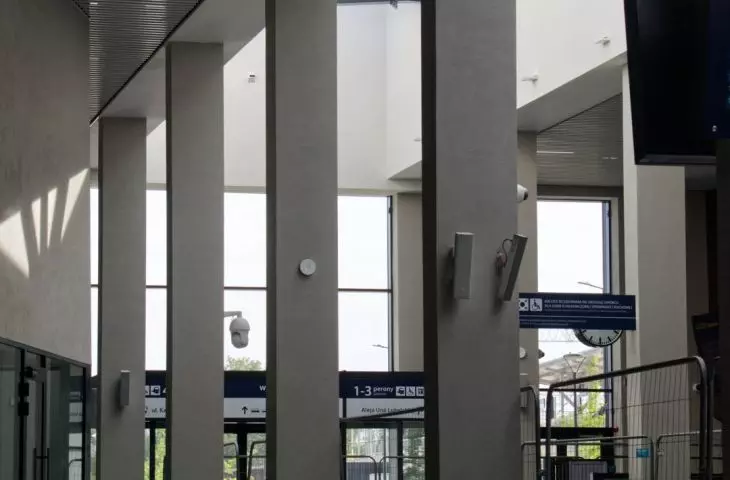
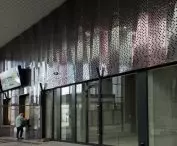
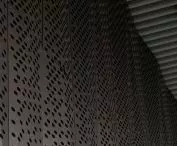
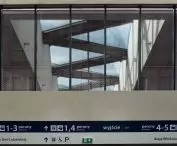
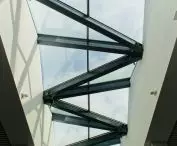
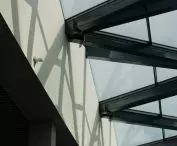
The interior of Lodz Kaliska has also changed beyond recognition. Although the layout is still nave-like, as in the case of Jan Gorgul's building, the manner of finishing seems more "subdued." Sheet metal is once again king here, especially the perforated one. A keen eye will notice that the shape of the openwork is not accidental - the hexagonal perforations resemble the outline of the PKP logo. The skylight on the axis of the interior has returned from the old station, but the arched glazing has been replaced by "zigzag" woodwork.
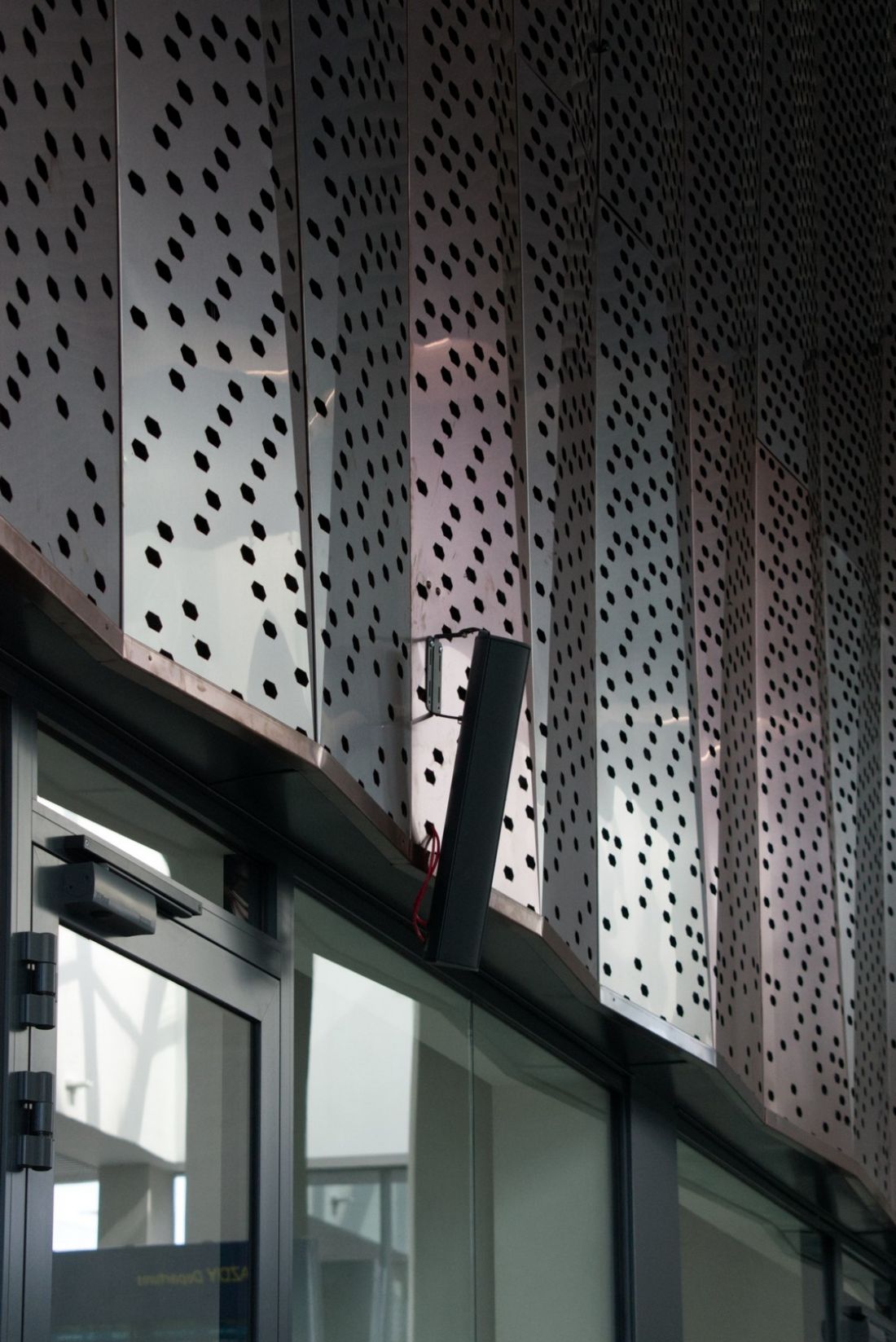
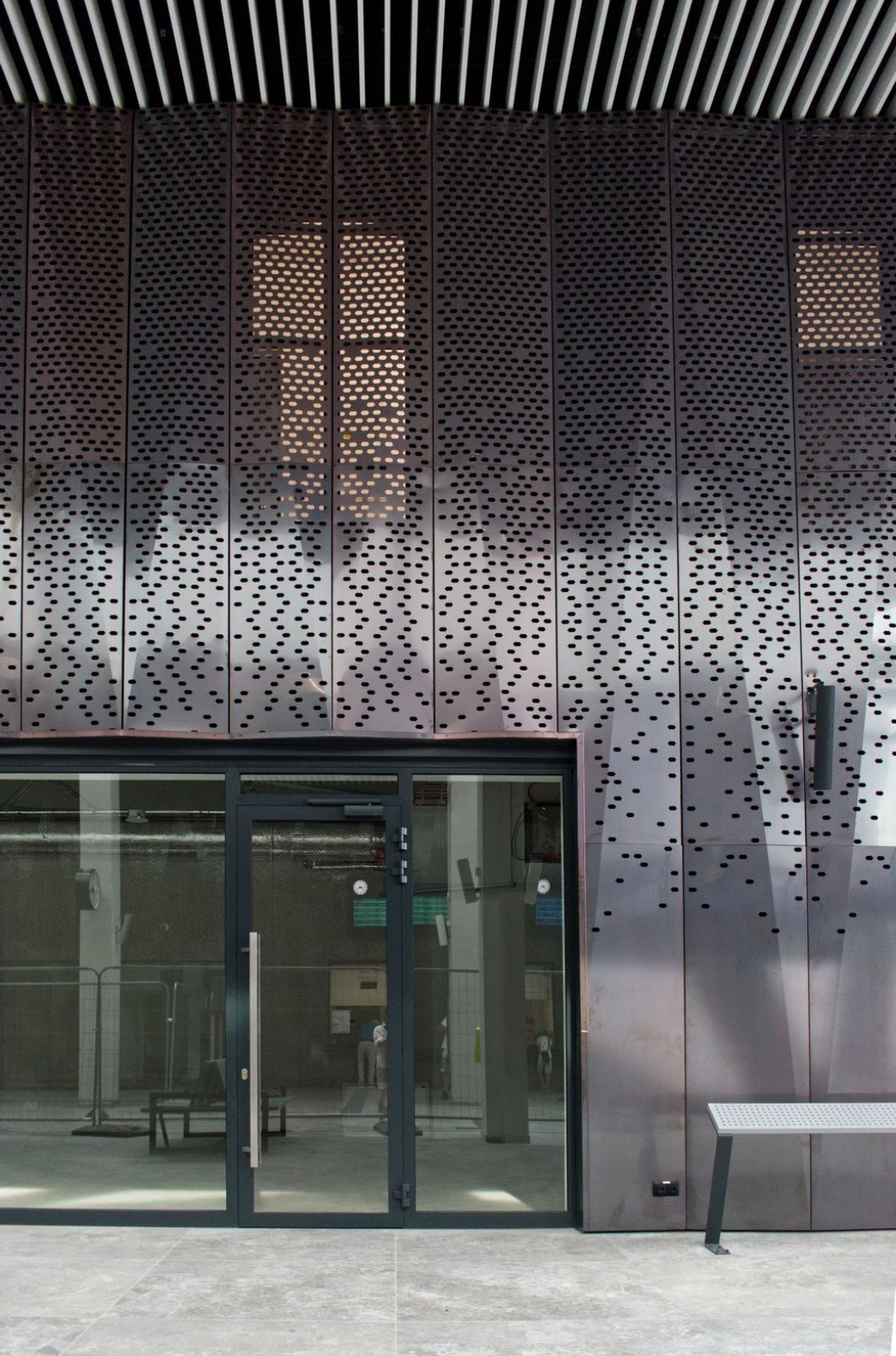
The new Łódź Kaliska train station - Łódź Kaliska - interior.
photo: Maria Cipinska
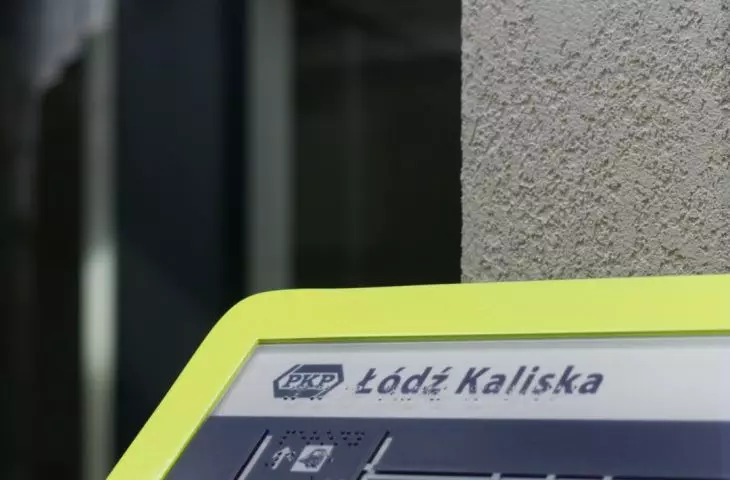
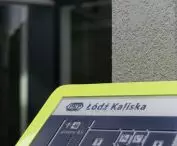
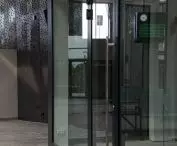
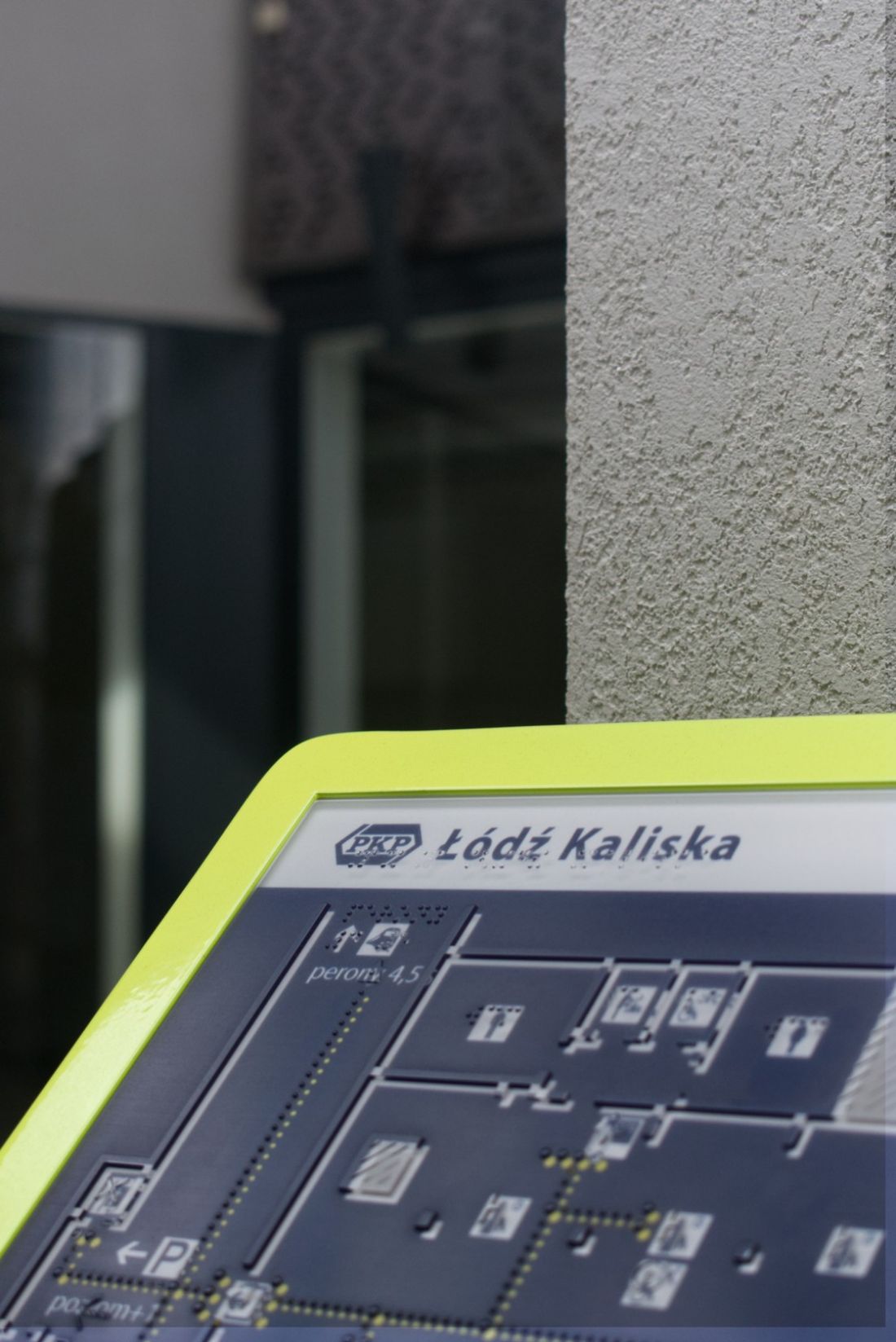
Inside, various accessibility amenities have appeared - in addition to the mandatory elevators, tyflographs have been installed, for example with a map of the station, and the interiors have been stripped of architectural barriers. All this is in line with the announcements made in 2023 by Waldemar Buda, then Minister of Development and Technology:
This investment is badly needed in Łódź, and I'm glad that soon, in place of the heavily exploited and unsuitable for our times station, the construction of a modern facility with well-thought-out infrastructure, facilities for people with limited mobility and all the facilities for travelers will begin.
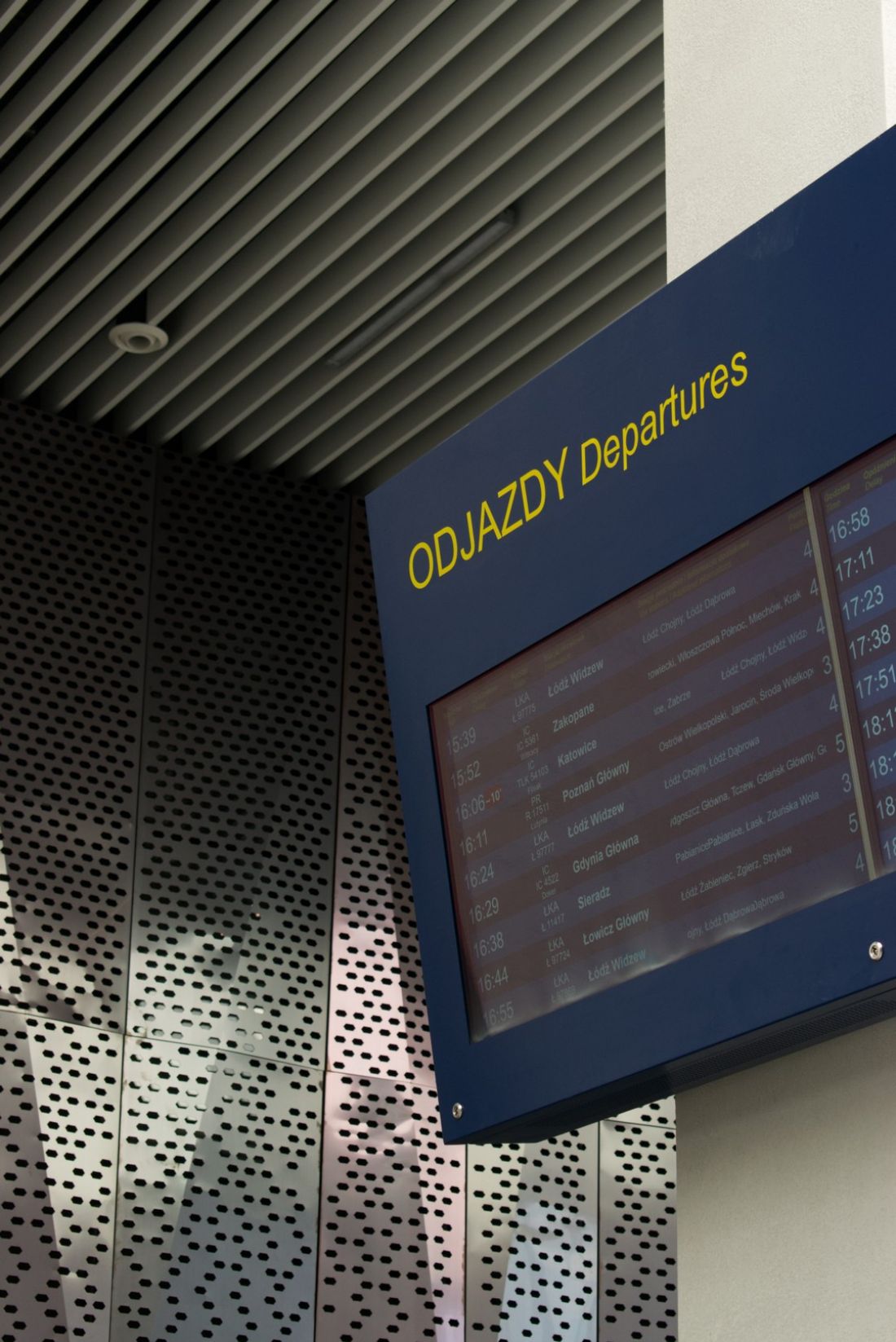
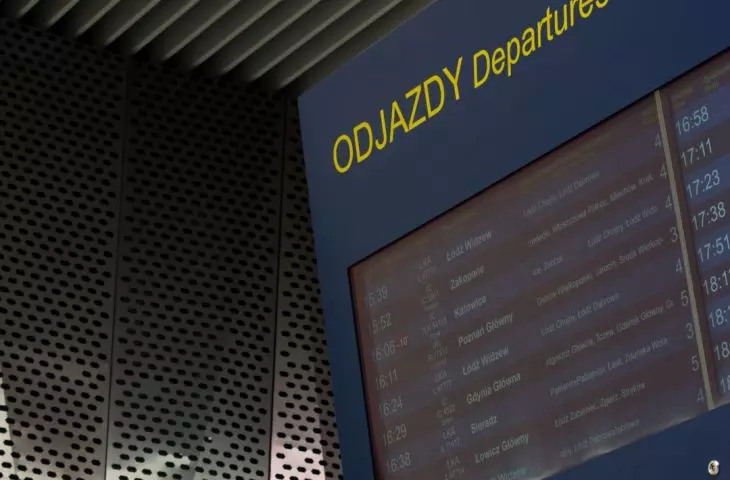
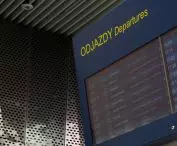
New Łódź Kaliska Station - Łódź Kaliska - departures
Photo: Maria Cipinska
accessible barrier
But is Łódź Kaliska really fully accessible?
After visiting Lodz Kaliska, Magdalena Milert wrote at the end of July 2025:
In light of EU regulations, which oblige member states to gradually remove barriers to railroad infrastructure, the way the new part of the Łódź Kaliska station has been implemented can hardly be considered to meet these requirements. After almost thirty years of construction, new platforms and the eastern viaduct have been put into use, but the solutions used on site resemble the standards of decades ago rather than a response to the real needs of modern passengers. The platforms are intuitively accessed by stairs without ramps or guides, and the envisaged elevators are out of order - and that's at the start, with no date given for their reinstatement.
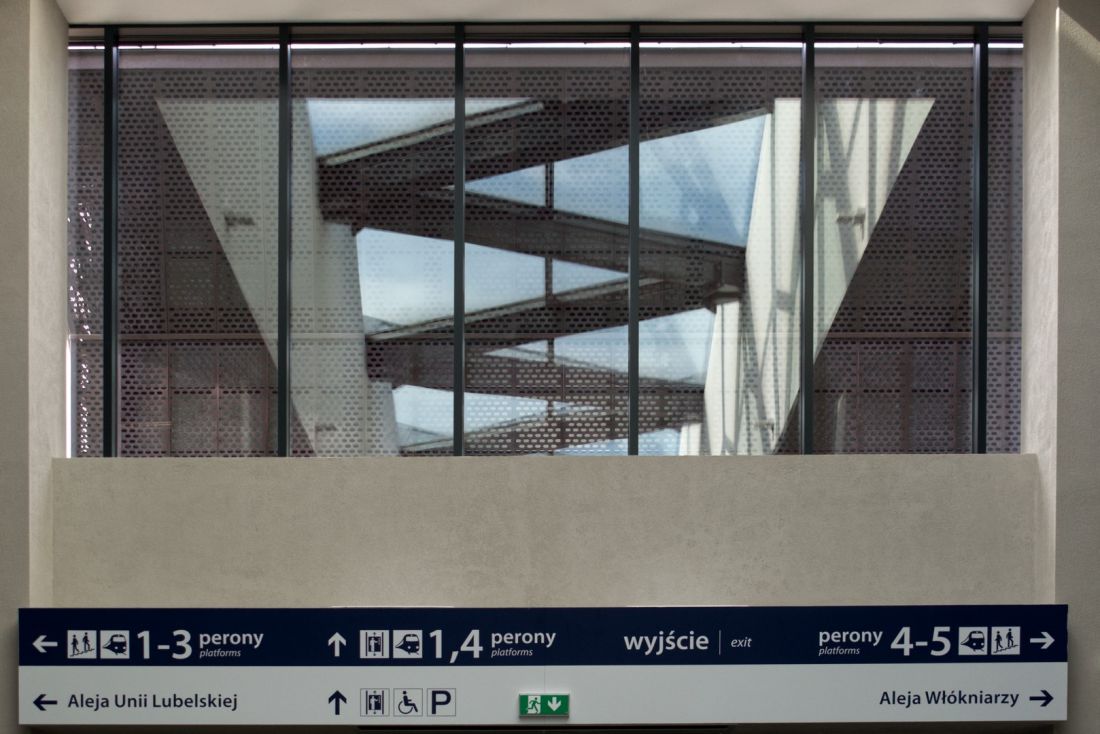
New Łódź Kaliska Station - View toward the tunnel
photo: Maria Cipinska
Łódź Kaliska - hit or miss?
Much more criticism, however, comes not against the organization of traffic within the new station, but in terms of form. Views on the new building are varied (in the coming days we will publish a column by Jakub Krzysztofik, president of the Łódź branch of SARP), but it seems that negative opinions prevail. Lodz Kaliska has earned several unfavorable epithets - Internet "critics" call it a "Wavy Boat" ora"tin box." The subject of comments often becomes oxidized sheet metal, the main facade material used during the modernization. "Rusty sheet metal," however, as PKP S.A. explains, is expected to be covered with a greenish patina, typical of copper coverings, in the coming months and years.
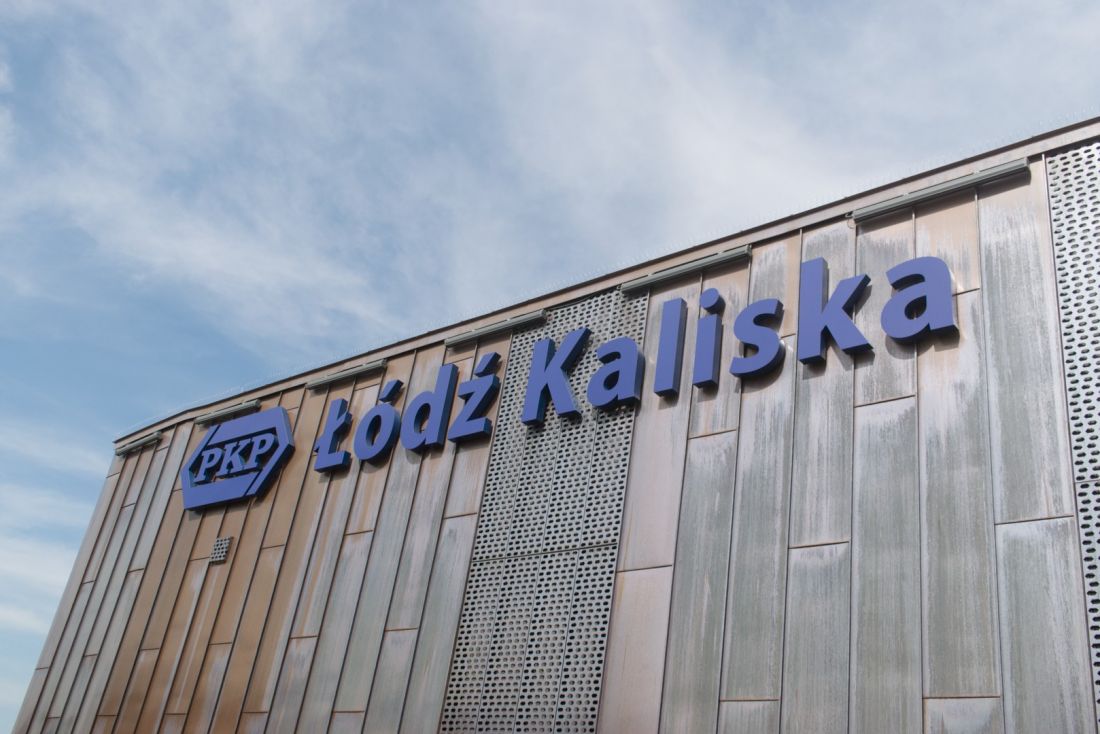
New Łódź Kaliska Station - View from platform 1 on the side wall
Photo: Maria Cipinska
somehow versus bland
It seems, however, that the metal covering of the facade is not the biggest problem of the new Łódź Kaliska station building. What can be considered problematic is not only the effect, but also the decision itself to make such a far-reaching metamorphosis of the station building:
The first thought that came to my mind at the sight of the "new" Łódź Kaliska station was "blandness." Although iconic buildings arouse ambivalent feelings in me, this particular railroad station is an object that should be an attractive "gateway to the city", its business card. Will it be the rebuilt Kaliska? I don't think so.
The post-modern station was not ideal. The citizens of Lodz, looking at it, recalled the old edifice from the early 20th century and quietly hoped that someone would someday rebuild a historicizing building with Art Nouveau details. Instead, they got a box clad in copper sheet metal. At the same time, another building disappeared from the face of the earth, an important part of the heritage of the transition era. In Lodz itself, the Lodz Kaliska train station was one of the few most interesting examples of postmodern architecture. And yet, it could have been renovated and adapted to modern requirements, leaving the most important elements constituting the character of the building. Unfortunately, much of the architectural community in Poland does not treat the architecture of the times of transition as a full-fledged heritage of a bygone era. So instead of "some" postmodernism, we got another "bland" example of neo-modernism and pretended modernity.
- Błażej Ciarkowski comments on the reconstruction of the Łódź Kaliska station.
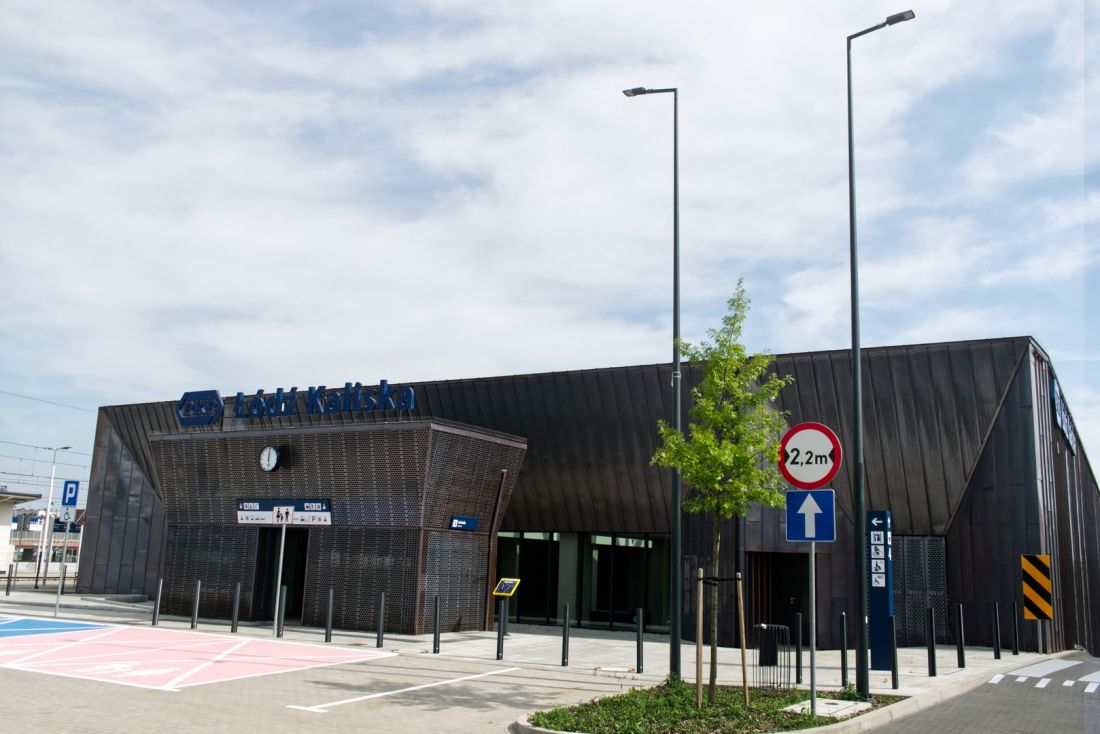
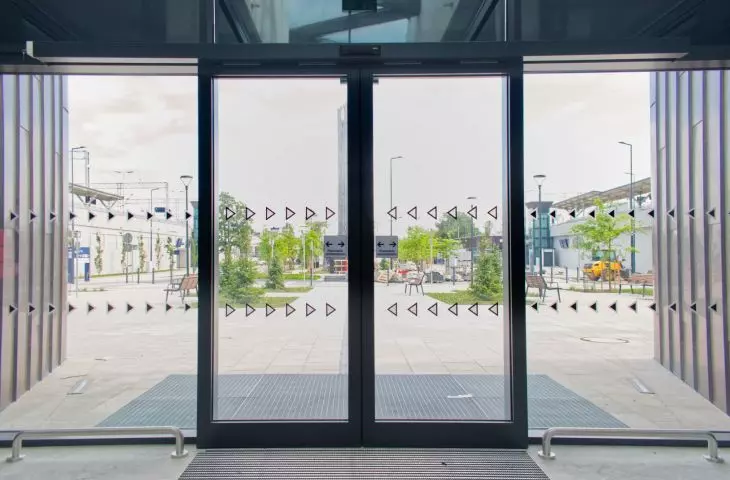
New Łódź Kaliska Station - Łódź Kaliska - entrance from the north side
photo: Maria Cipińska
post-modern stations in non-existence
As Anna Cymer stated in her book on postmodern architecture, Łódź Kaliska was one of two stations built in the 1990s worth remembering. Both are essentially gone now. While the argumentation in the case of the demolished Częstochowa Central Station (designed by Ryszard Frankowicz), though not shared by many, seems to have the hallmarks of rationality - after all, it's a matter of poor energy efficiency, overscaling or alleged inability to adapt to modern accessibility standards, in the case of Lodz Kaliska similar reasoning does not apply. After all, its "skeleton" remained the same, in view of which modernization could have been carried out with the least possible detriment to the postmodern form. The alternative path could have been to rebuild the Art Nouveau edifice, or to erect a station "from scratch", which would have introduced new spatial qualities at the site. However, these paths were not taken.
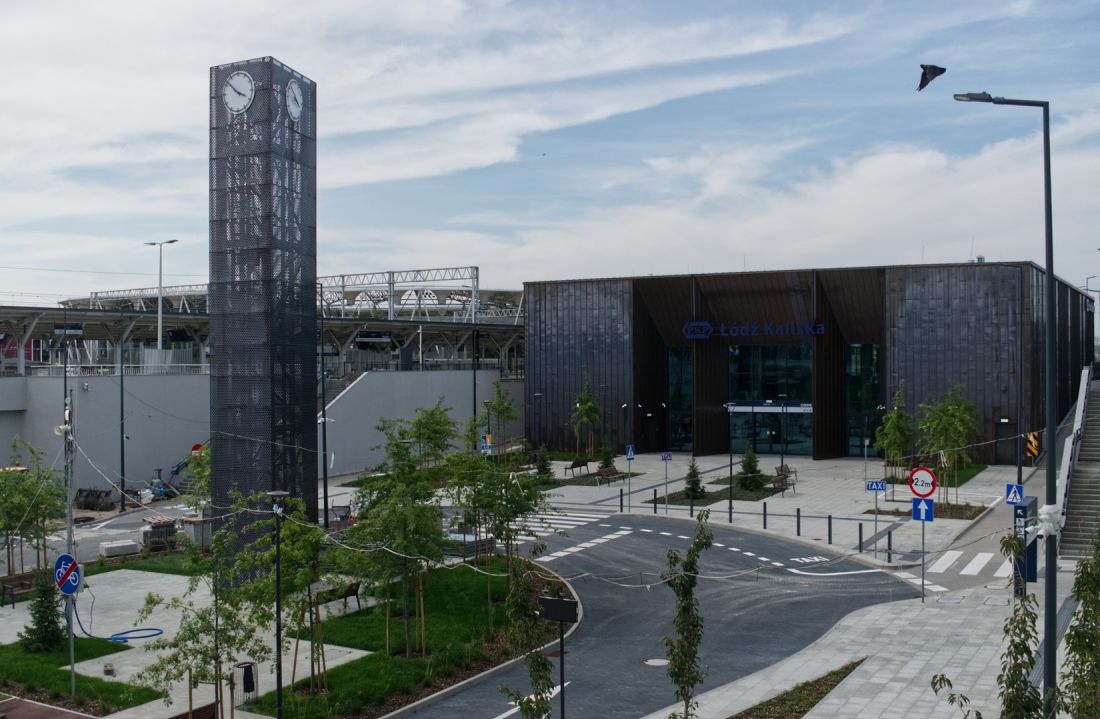
The new Łódź Kaliska railway station - View from platform 4.
Photo: Maria Cipinska
As for postmodernism itself - it is worth remembering that the value of architecture lies not only in its aesthetics, or even in its functionality, but also in the role it played at a given historical moment. In this light, buildings such as the Łódź Kaliska railway station are valuable not for their appearance or functional layout, but as testimonies of a bygone era. Perhaps it is time to start a serious discussion about the extent to which these testimonies should be preserved before they all disappear from our cities.