








Population forecasts for the Krakow metropolitan area in the context of strategic and spatial planning
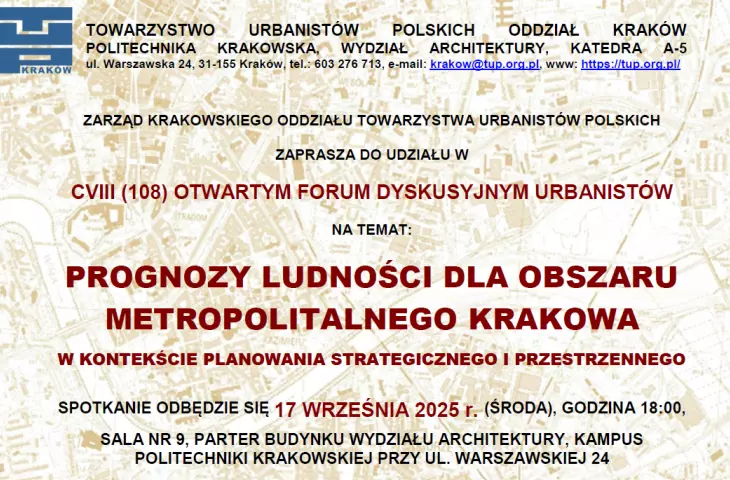
Another CVIII (108) Open Discussion Forum of urban planners of the Krakow branch of the Society of Polish Urban Planners is behind us. The topic of the meeting was "Population projections for the Krakow metropolitan area in the context of strategic and spatial planning." The forum was held in a stationary form at the Faculty of Architecture on the Campus of the Krakow University of Technology.
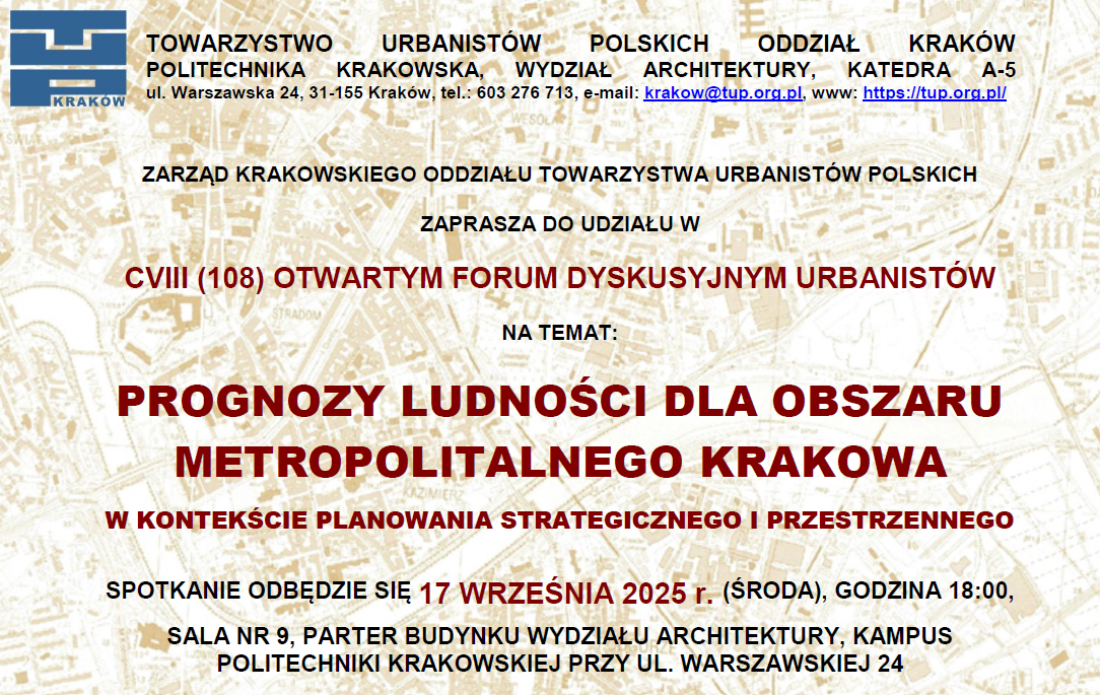
Excerpt from the placard inviting to the 108th Open Discussion Forum of Urban Planners on Population Projections for the Krakow Metropolitan Area
© organizer archive
The panel discussion opened with a lecture by Tomasz Antosiewicz (Member of TUP o. Krakow, Head of the Urban Planning Laboratory for the General Plan at the Department of Spatial Planning of the Krakow City Hall), who began by recalling the changes in the law introducing the need to take demographic issues into account in spatial and strategic planning, introduced in 2023.
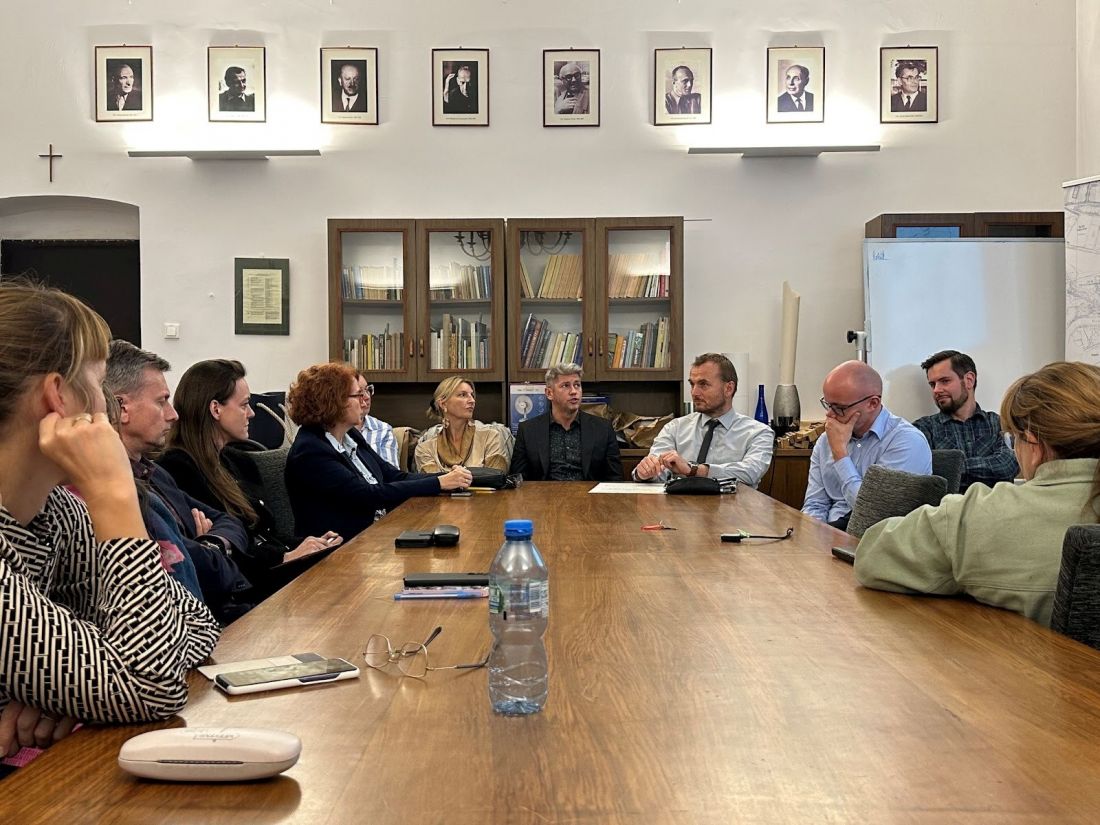
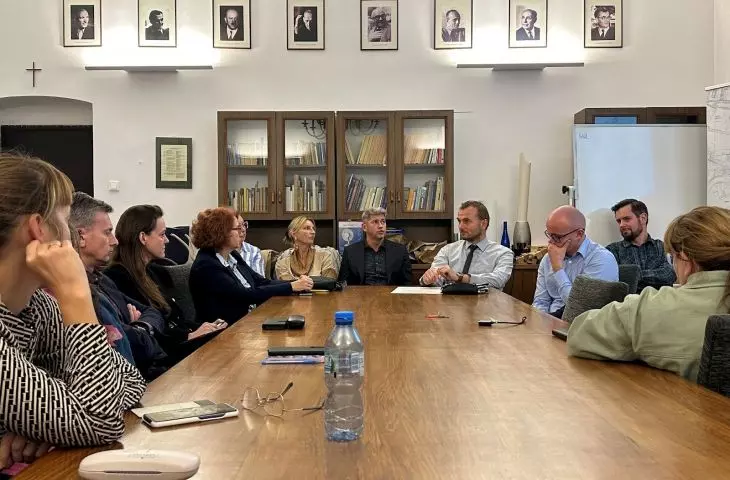
forum participants during the plenary discussion
© organizer archive
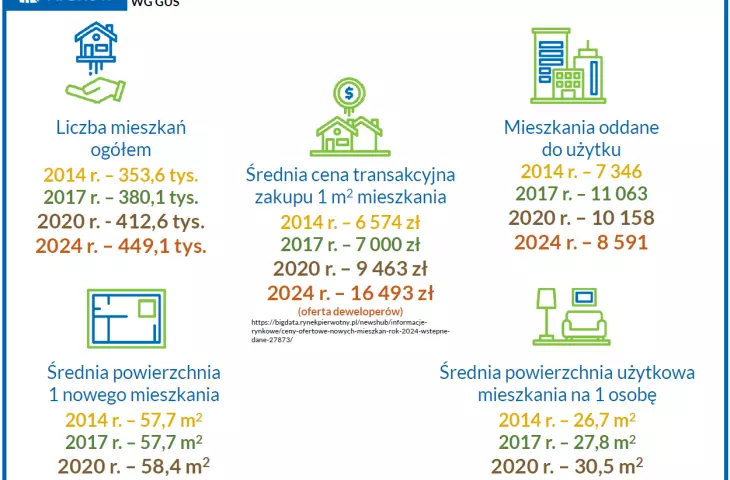
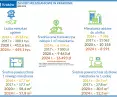
He presented very interesting statistics on the housing market in Krakow, which show that:
- Over the past 10 years, almost 100,000 apartments have been added to Krakow, and the current number is 449,100.
- With the current population (according to the Central Statistical Office, it is 806.2 thousand), on average, less than two people live in one apartment in Krakow (1.79 to be exact).
- The average area of one new apartment has increased by only 0.1 sq. m. over the past 10 years and is now 57.8 sq. m.
- The average floor area of an apartment per person has increased over the past ten years from 26.7 m² in 2014 to 32.2 m² in 2024 (however, looking atpoints 1 and 3, one can guess that this is not a perceptible increase in square footage for the resident, and that the value has increased due to an increase in the number of mostly small apartments overall).
- Over the past 10 years, about 7,000-10,000 apartments have been completed annually.
- The average transaction price for the purchase of 1 sq. m. of housing increased from PLN 6574 in 2014 to PLN 16,493 in 2024.
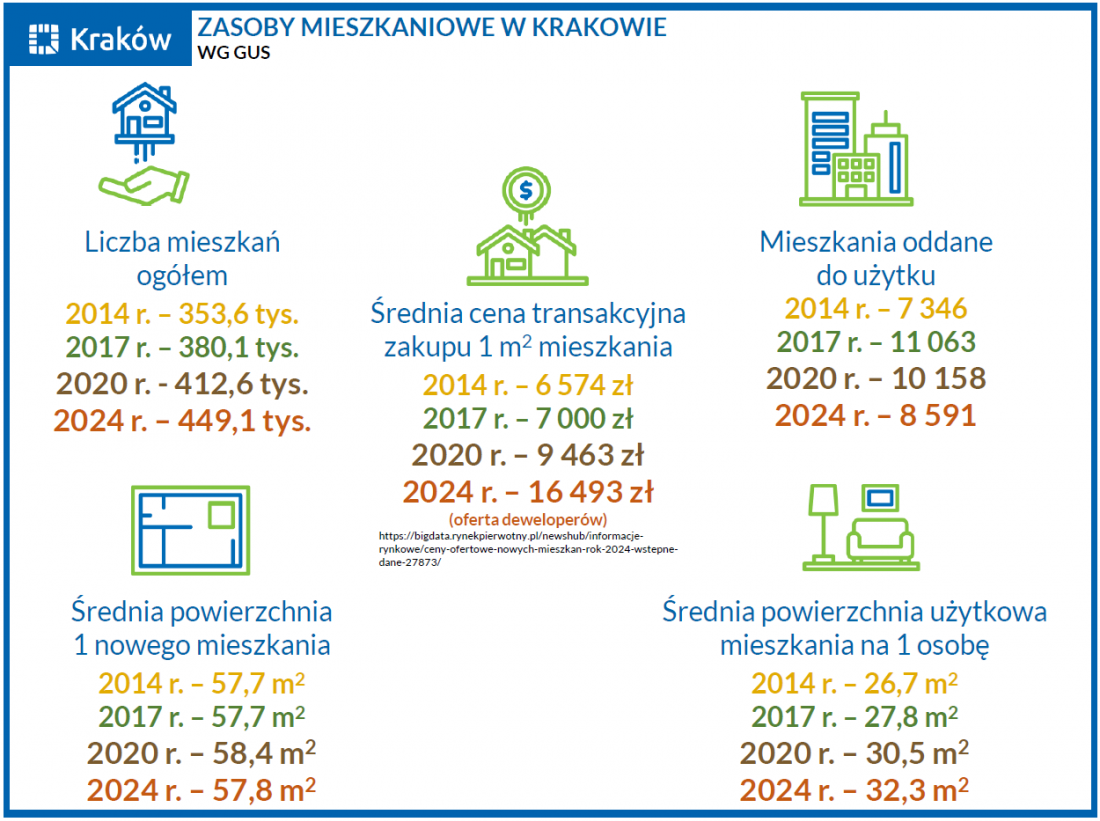
Statistics on the housing market in Krakow
© organizer archive
These data illustrate, on the one hand, the tremendous dynamics of the housing market in Krakow and the increase in the number of apartments in the last decade. In addition, they indicate that statistically every two-person Krakow family has more than one apartment provided in the city space, and if we assume that a family consists of three people (parents plus one child), there would be less than 300,000 apartments for such families.
Next, the distribution of population within Krakow is shown - the northern side of the Vistula River is home to 62 percent of all residents (499,800), while the southern side is home to only 38 percent (306,300). The most populated areas are the Prądnik area (198 thousand residents) Czyżyny and Nowa Huta (219 thousand), followed by Kurdwanów and Bieżanów (99 thousand). The center of the city (in the vicinity of the Old Town) is inhabited by only 35 thousand people, and the areas around Nowa Huta in the area of the metallurgical plant only 15 thousand residents.
After the above statistical and population data, results from three studies addressing demographic problems for Krakow were presented: the demographic forecast of Krakow according to prof. Jan Paradysz from 2020, the development potential of Krakow in spatial aspect - demographic forecast of Krakow according to Aleksander Noworól Konsulting from 2022 and the population forecast of the Central Statistical Office (2023) for 2023-2060. It should be noted that all these documents, are forecasts, so their results may differ and never come true, but they build our knowledge in terms of how many of us will live in Krakow. What is important, however, is that the third of the forecasts (from the Central Statistical Office) must be taken into account when drawing up Municipal General Plans throughout the country.
Prof. Jan Paradysz's forecast was based on permanent registrations in Krakow from 2015-2020, with a starting population of 740,000 people. The forecast indicated demographic changes in each of Kraków's eighteen districts, analyzed in detail the projected age pyramid in 2050 and the migration of Kraków's population within the Kraków Metropolis. Based on the aforementioned components , she projected the future population of Krakow in 2050 at around 740,000 people, i.e. maintaining the input/present population.
The development potential of Krakow, according to Prof. Aleksander Noworól, was based on data from the 2021 national census, which indicated that Krakow has a population of 800,700. The author pointed out the favorable rate of natural increase, the lowest dependency ratio in the country, and studied the number of refugees from Ukraine who settled in our country, and in particular in Krakow (the study was made right at the beginning of the Russian-Ukrainian war). On this basis, the author assumed that Krakow's population would grow over the next few years and in 2050 would reach 992,000, 192,000 more than at the beginning of the analysis.
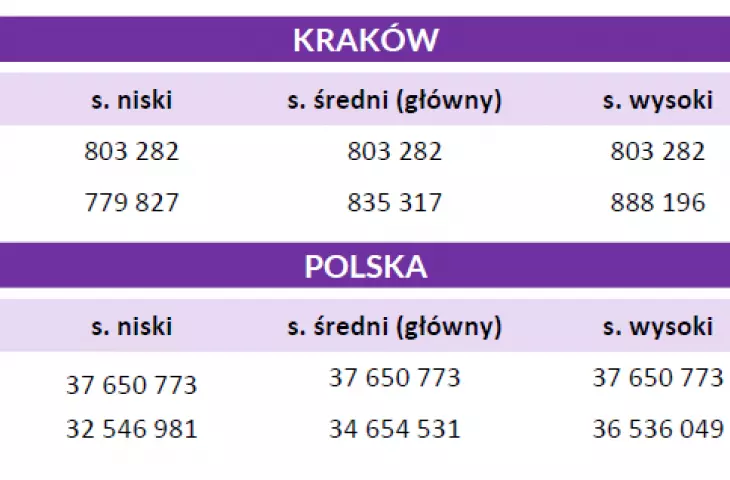
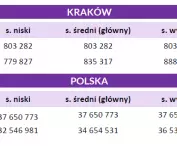
The CSO forecast begins predictions in 2023 and ends in 2043 (also based on 2021 census data). It includes three forecast variants (low, medium and high) depending on fertility rates, life expectancy and migration balance. In Krakow, according to the CSO, in the low scenario (lowest fertility rate, shortest life expectancy, lowest immigration - highest emigration), there will be 779,800 of us in 2043, which is 4,000 fewer than today. In the high scenario, on the other hand (highest fertility rate, longest life span, highest immigration - lowest emigration), there will be 888.2 thousand of us in 2043, so 85 thousand more than today.
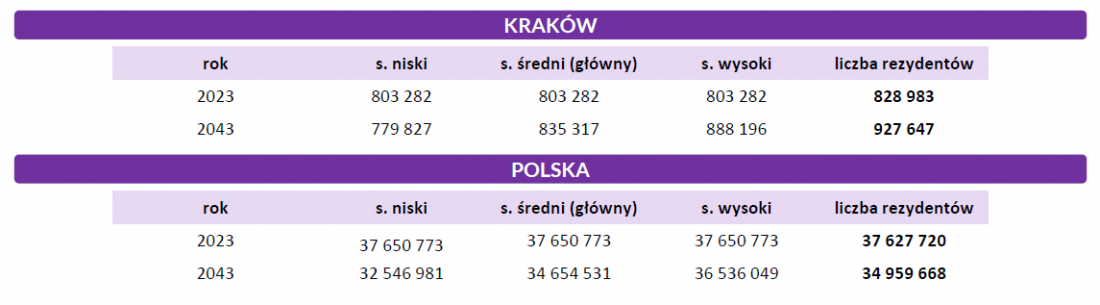
Table showing the population of Krakow and Poland in 2023 and 2043 in three forecast variants
© organizer archive
Summarizing the forecasting data, it should be said that all forecasts spoke of different target population numbers, The largest increase of 192 thousand was predicted by Prof. Aleksandra Noworól, with the optimistic scenario of the Central Statistical Office predicted an increase in population of 85 thousand, and Prof. Jan Paradysz assumed demographic stagnation of Krakow, but development of the metropolis. The CSO's low scenario predicted a decrease in the number of residents by 4 thousand, while the CSO's most balanced scenario, the medium variant, predicted that in 2043 there would be 835.3 thousand Cracovians, 32 thousand more than today.
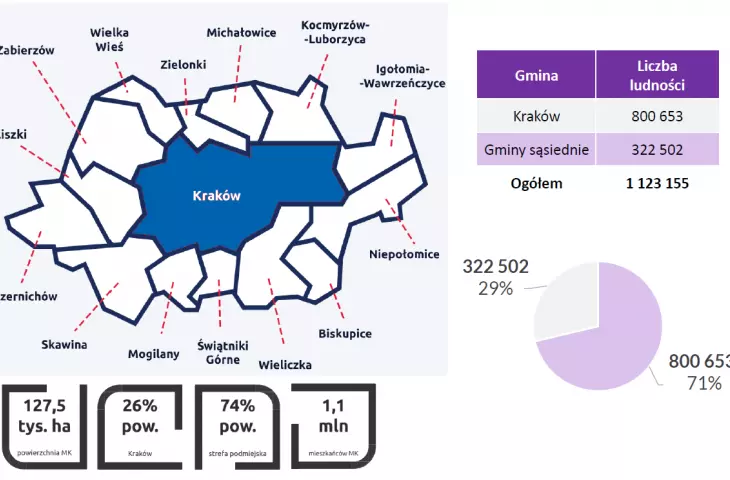
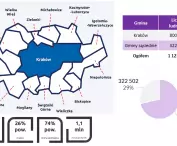
Another aspect discussed during the meeting was the demographic data for the Krakow Metropolis area, which is currently home to 1.1 million people, bringing together fifteen municipalities in its area.
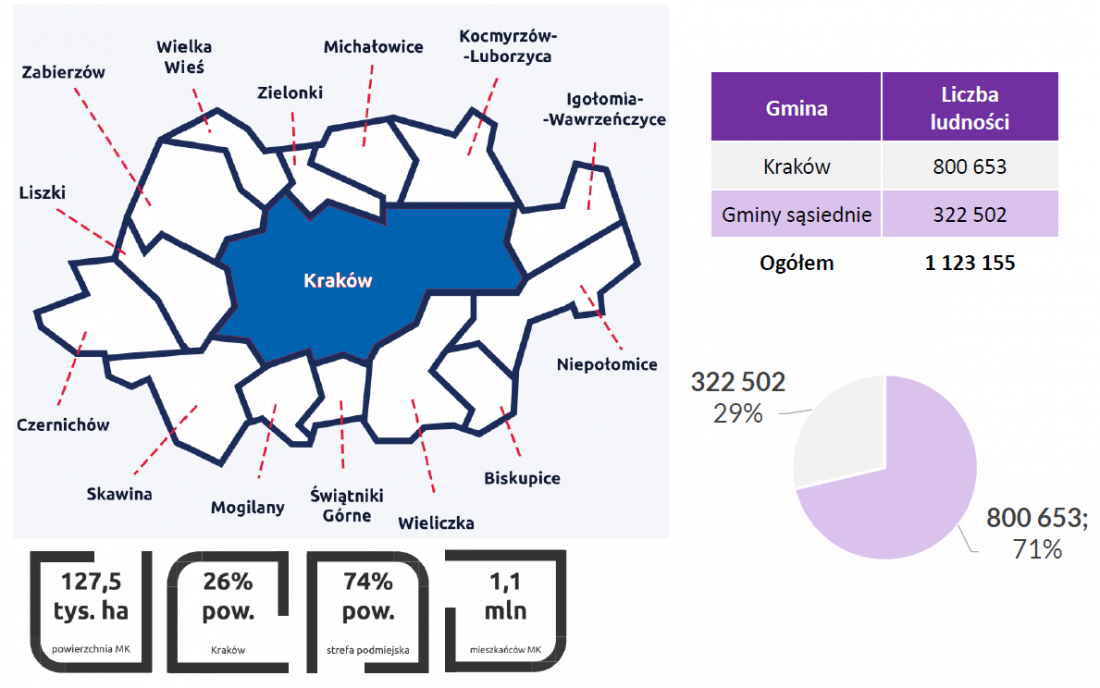
Diagram showing the municipalities concentrated in the Krakow Metropolis Association, along with a breakdown of the number of residents
© organizer archive
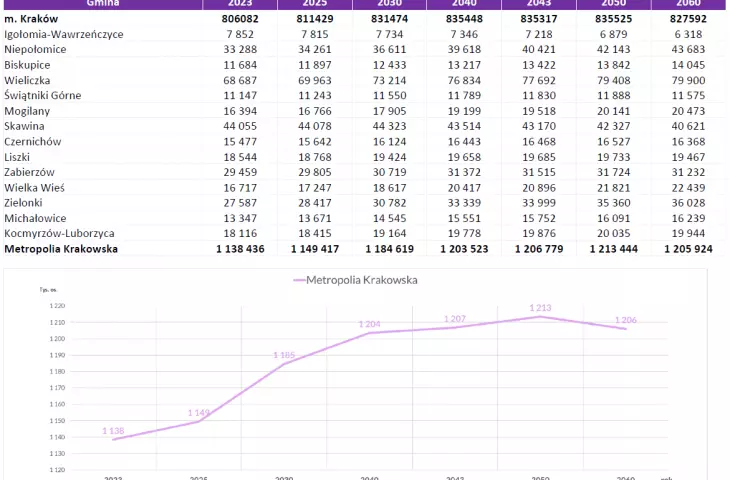
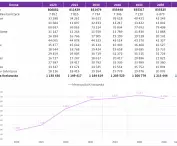
The distribution of population in Krakow Metropolis is as follows: Krakow has a population of about 800,000, and the neighboring municipalities have a population of about 320,000. The largest in the so-called "periphery" are the municipalities of Wieliczka (66,000), Skawina (44,000), Niepołomice (33,000) and Zabierzów (29,500). The remaining municipalities are inhabited by less than 20 thousand people per municipality, the smallest being the municipality of Igołomia-Warzeńczyce, which is inhabited by less than 8 thousand people. Analysis of the demographic forecast for the metropolis indicates that in 2050 it will be inhabited by 1.2 million people, which is 100 thousand more than today.
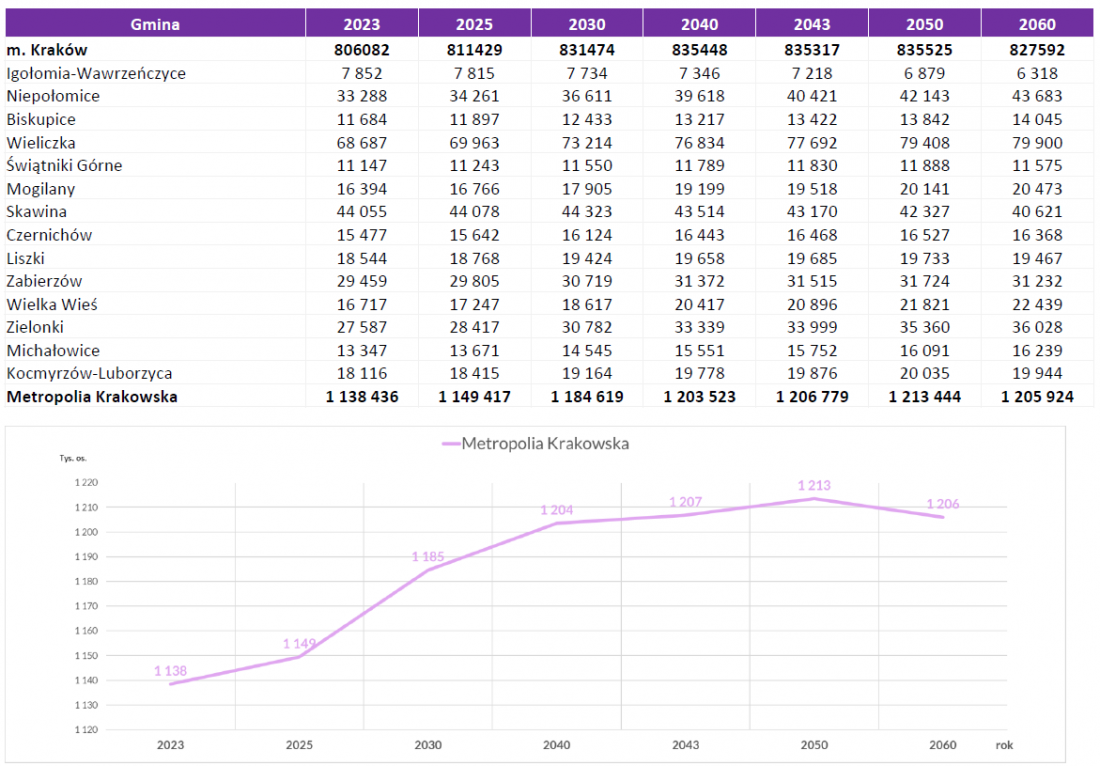
table showing the current number of people in the municipalities of the Krakow metropolitan area with population prediction and population projection for the metropolis until 2060
© organizer archive
Tomasz Antosiewicz summed up the entire speech with challenges for local governments, mentioning, among others: the need for a reliable assessment of the number and distribution of permanent residents and people living in the municipality, a rational indication of the actual demand for residential areas, taking into account the current and future needs of the local community and the population predictions made, or better use of real-time data (e.g. from cell phones) to improve the availability and quality of public services.
The following topics resounded in the discussion after the speech:
Anna Bochnia from the Faculty of Architecture at the Cracow University of Technology asked about the methods used by the Department of Spatial Planning at the Cracow City Hall to balance the population and calculate/determine the necessary infrastructure and development within the city of Cracow.
Anna Ziobro from the Faculty of Architecture at Krakow University of Technology (member of TUP o. Krakow) pointed out the inadequacies in the management of the entire Krakow metropolitan area and the transportation dysfunctions that exist between municipalities. Among other things, she called for a better distribution of public institutions throughout the metropolitan area, and for improved public transport connections especially in the municipalities of the Krakow periphery.
Wojciech Spyrka of the Myslenice Town and Municipality Office (member of TUP o. Krakow) presented the situation of population potentials versus needs in the Myslenice municipality, where there are six times more reserves of residential areas recorded in the current planning documents compared to the current state. This situation means that as many people could live in the Myslenice municipality as currently live in Krakow.
During the forum, important questions were answered: how will the population of the Cracow metropolitan area change by 2050? Which municipalities will develop demographically the fastest? How do population projections affect spatial planning, and what demographic challenges face Krakow's development strategy?
It is worth mentioning that the dynamically developing housing industry is a huge branch of the Polish economy employing a multitude of designers, contractors and builders, as well as the manufacture of construction materials, their storage, logistics, etc. This is an important aspect in the context of further development of the construction industry and balancing the proportion of the volume of housing built against the actual demand resulting from demographic forecasts.
Many questions are still unanswered, but there is definitely a deeper understanding of the demographic issues facing our cities and the planners currently making master plans throughout our country.