




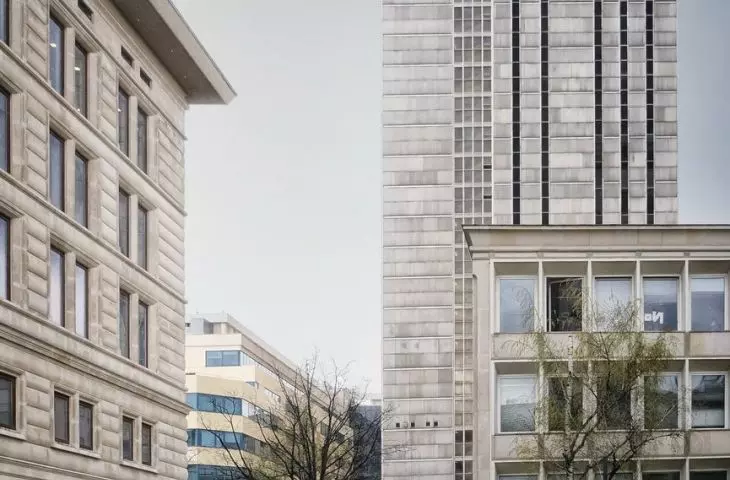

There are few historic architectural ensembles in Warsaw whose elements - although extremely different - complement each other so well as in the case of the modernist development by Marek Leykam on St. Barbara Street. As Warsaw's City Is Ours association reported, this balance could be disturbed by the plans the developer has for the razorblade. Will the Headquarters of the Bureau of Studies and Projects for Industrial Construction be the new skyscraper in the "ministry district"?
Back in May of this year, proceedings began in a case in which Barbary 1 Invest, the company that owns the office building on the corner of St. Barbara and Wspólna streets, filed:
an application for a wz decision - reconstruction, superstructure and change of use of an office building to a residential and hotel building with services and underground garage
The case was first reported by Warsaw's City Is Ours association:
View this post on Instagram
It is not yet known who will ultimately design the building. As reported by stołeczna wyborcza.pl, the investor announces that an architectural competition will be held for the superstructure with a height section rising to 80 meters. Whatever a dozens-meter-high superstructure of a modernist building might look like, it's hard to imagine a concept that not only won't overwhelm Mark Leykam's building, but will also emphasize its architectural qualities, as the company's representative would like.
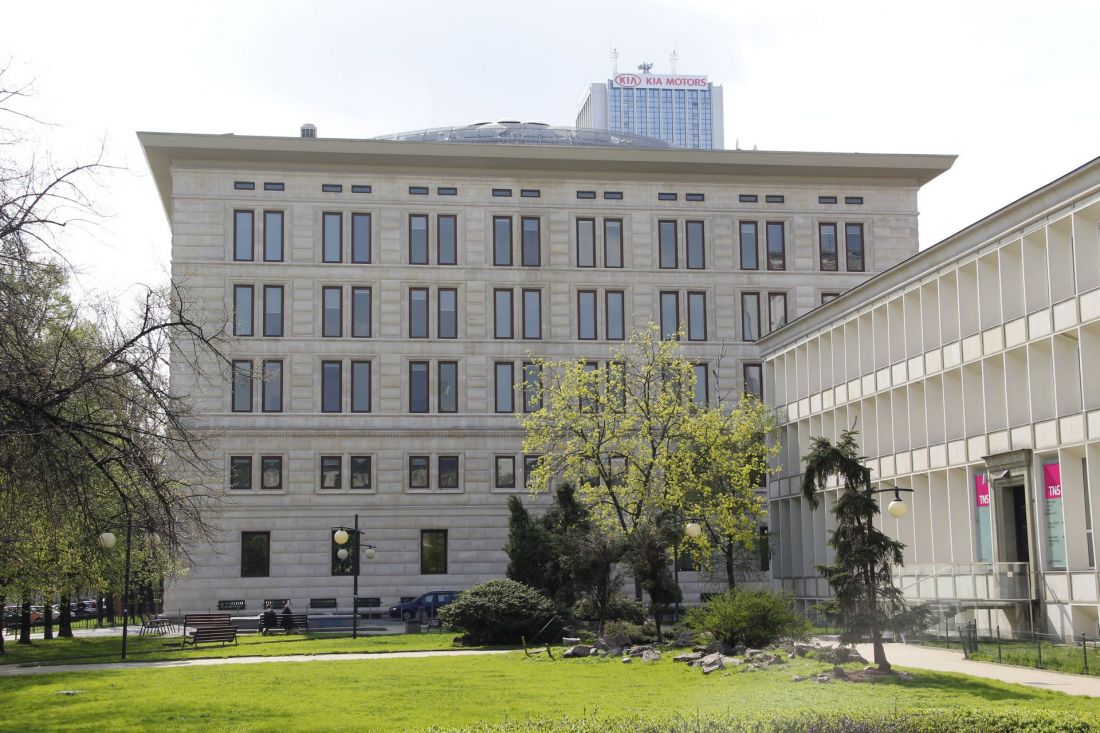
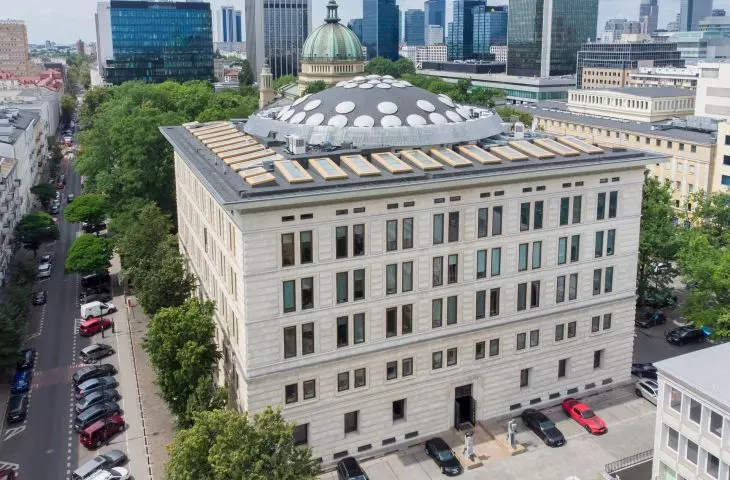
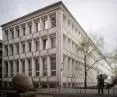
Office building of the Presidium of the Government and Headquarters of the Bureau of Studies and Projects for Industrial Construction
Photo: Wistula © CC BY-SA 3.0 | Wikimedia Commons
Who can stop overbuilding?
In the case of the plot on which the modernist office building stands, anything is possible - there is currently no Local Development Plan in effect at the site, and decisions are issued in the form of development conditions. It is this document that Barbary 1 Development, which owns the building designed by Mark Leykam, is currently trying to obtain. However, the plans may be thwarted by conservation offices, since the headquarters of the Bureau of Studies and Projects for Industrial Construction is included in the municipal register of historical monuments. Although the developer has already "visited" the Mazovian Provincial Office for Historic Preservation, much also depends on the Capital City Historic Preservation Officer. How does he view the matter?
Michal Krasucki, Capital Monument Conservator, using his unofficial profile on the instagram platform @where_is_conservator expressed his opinion regarding the complex on St. Barbara Street:
[...] you can be sure that I have no doubts about the value of this building and the entire complex.
Activists have already filed the relevant documents to initiate the procedure for entering the building in the register of historical monuments. Although it is usually initiated at the initiative of the relevant preservation office or at the request of the building's owner, the possibility of triggering the process is also available to community organizations that do not have ownership rights to the buildings in question. Even if the entry is ultimately unsuccessful, according to the law, all design work, as well as construction, will have to be halted while the application is being processed.
Why is the preservation of the Headquarters of the Bureau of Studies and Projects for Industrial Construction so important?
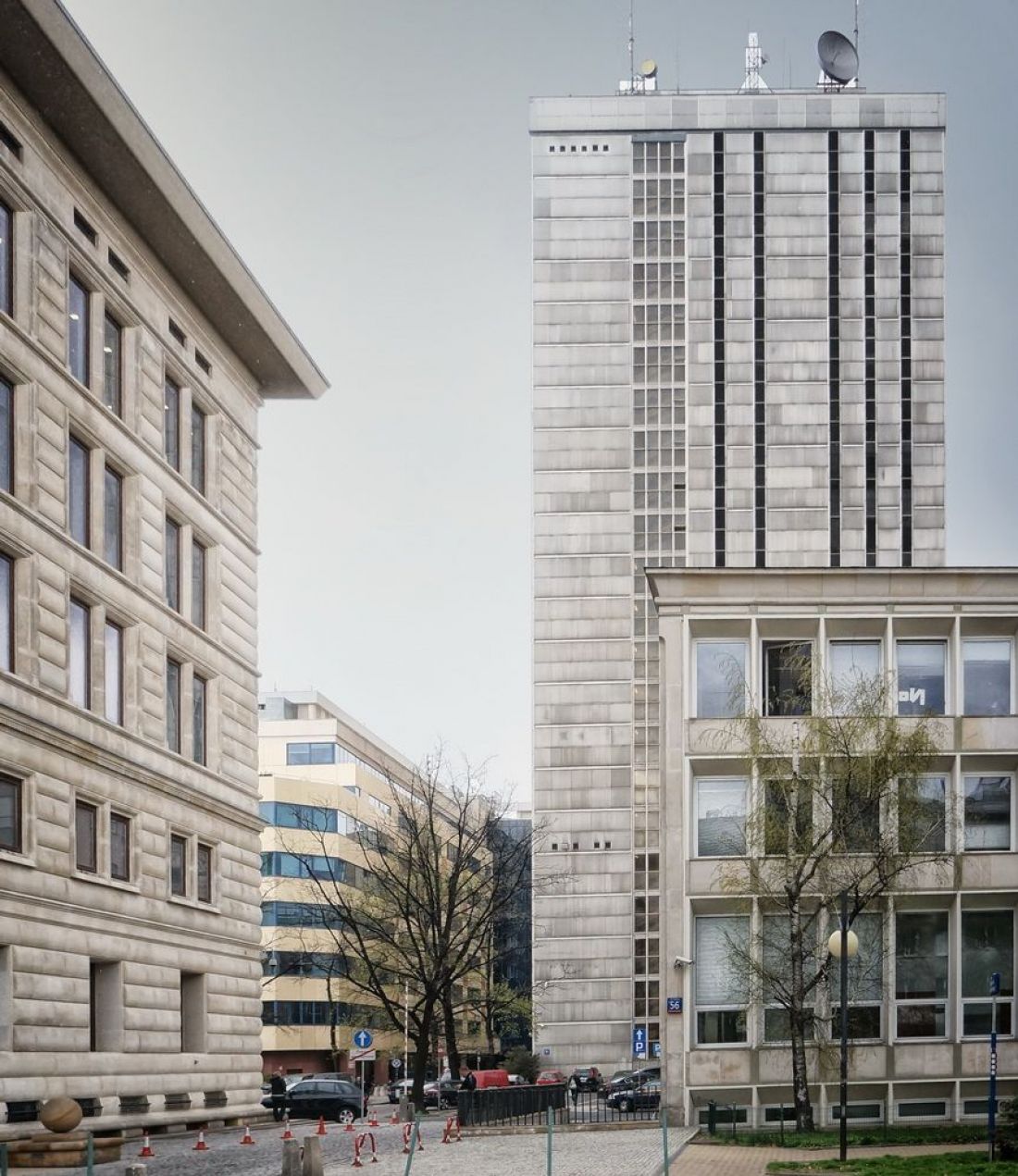
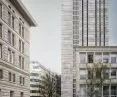
The Headquarters of the Bureau of Studies and Projects for Industrial Construction and the Bureau of the Bureau of the Presidency of the Government
Photo: Radek Kolakowski © CC BY-SA 2.0 | Wikimedia Commons
architect of razor blades
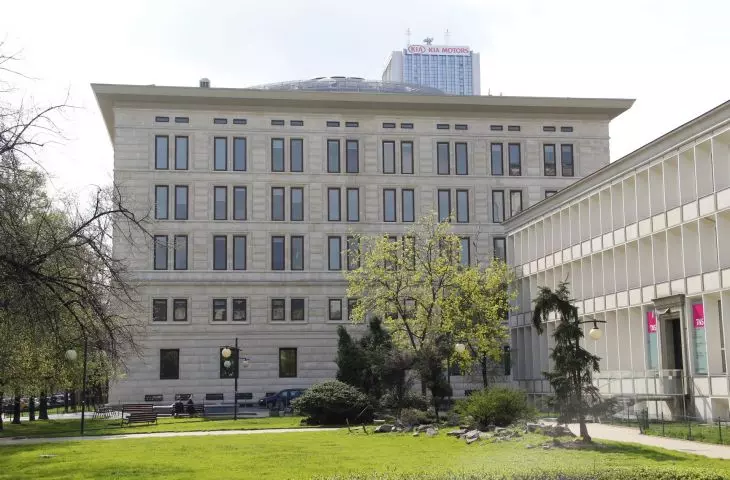
One can tell the story using at least two perspectives. The first is a close one, as it concerns the building itself. The building of the Headquarters of the Office of Studies and Projects for Industrial Construction was built in 1952 according to a design by Marek Leykam, an architect who filled Warsaw with public buildings with characteristic facades, to which they owe their catchy name - razor blades. The office building at 1 Świętej Barbary Street - an oblong, basement building with a cuboidal body and a high, representative first floor - can also be considered a razor blade. Large windows, covering almost the entire facade, are hidden behind prominent razor blades, which have become a hallmark of Marek Leykam's architecture.
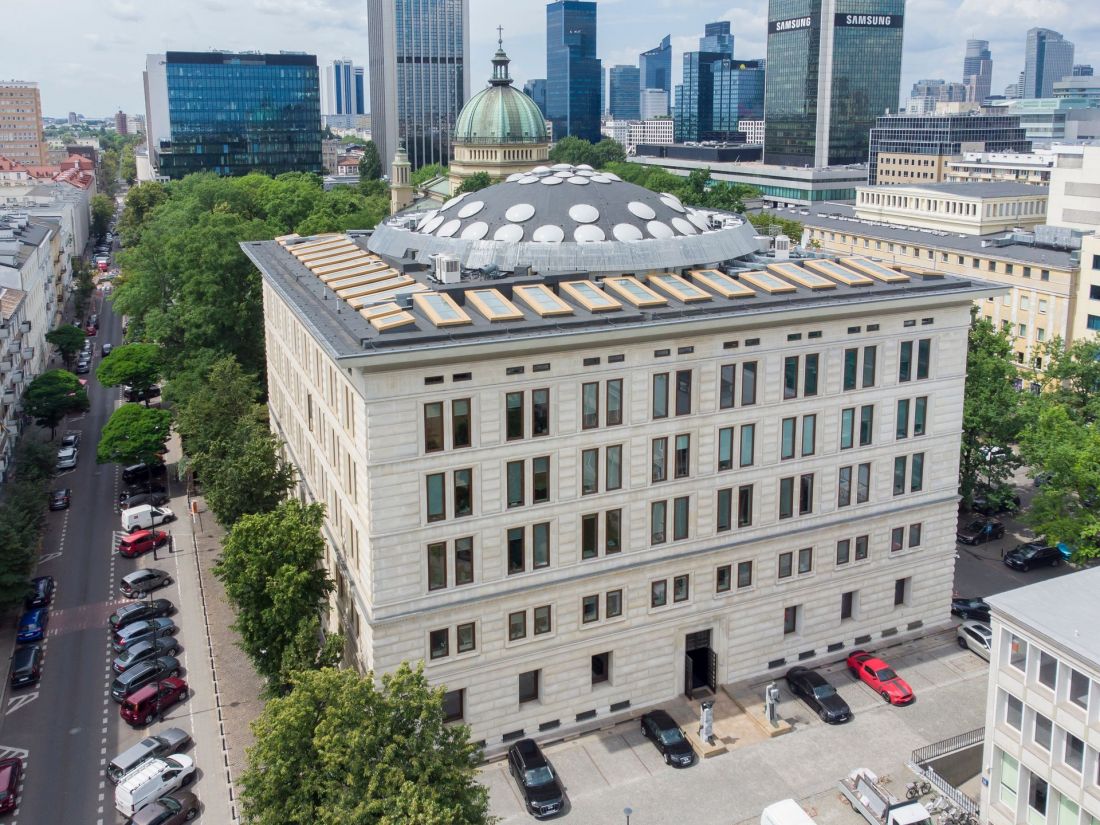
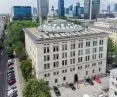
Office of the Presidium of the Government, today Ufficio Primo
Photo: Emptywords © CC BY-SA 4.0 | Wikimedia Commons
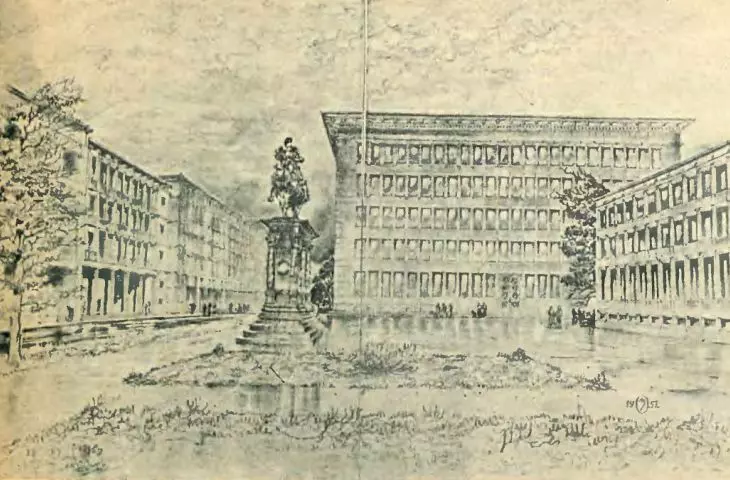
While the office of the Central Office of Industrial Studies and Projects is already an interesting example of early postwar modernism (it was built in 1952, a time when Polish architecture was supposed to be "socialist in content and national in form"), yet another quality can be perceived by taking the perspective of the entire quarter. Threatened with overbuilding, the razorblock is part of a three-element ensemble, which also includes the green square that precedes the building and its twice as tall neighbor - the former Government Presidium Office Building, known today as Ufficio Primo.
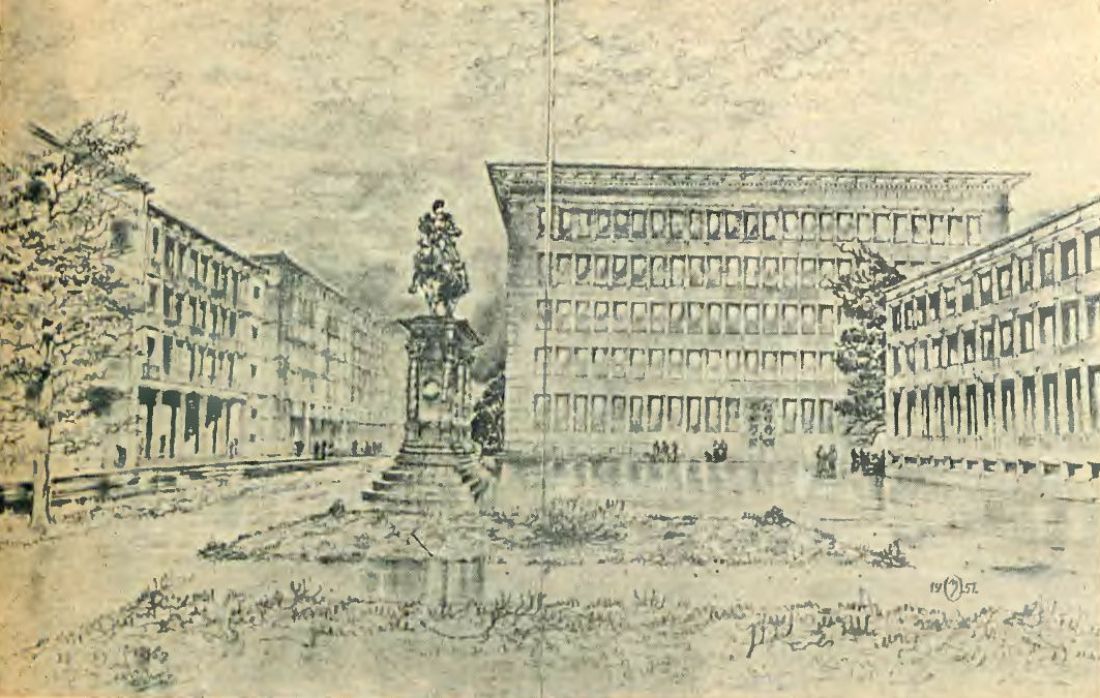
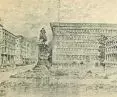
Visualization of the Office of the Presidium of the Government, the Headquarters of the Bureau of Studies and Projects for Industrial Construction and today's square of the Home Army Battalion "Zaremba- Piorun".
© public domain
Together they form an interesting conglomerate of complementary forms. The cuboidal, elongated block of the razor blade building is contrasted with the centralizing volume of the Office of the Presidium of the Government. The former building of the Central Office of Industrial Studies and Projects operates with a synthetic, minimalist aesthetic in the spirit of modernism, while the accompanying Ufficio Primo is a prominent example of socialist realist eclecticism. There is an interesting gradation of height there - from the zero level, expressed in the rectangular Square of the Home Army Battalion "Zaremba- Piorun" preceding the Central Office, through the body of the Central Office itself, to the Government Presidium Office, which is twice as high as it.
As Eryk Baczynski, chairman of the City Is Ours association, points out in an interview for wyborcza.pl, the construction of an almost 100-meter tall skyscraper will significantly disrupt this layout. This will have consequences not only for the composition of Marek Leykam's boudoir, but also for the character of the immediate neighborhood, which is an oasis of low-rise buildings in the very center of Warsaw.