








The green transition is no longer just an environmental agenda. Today, it is the largest investment market in Europe and one of the world's key economic megatrends. It encompasses energy, industry, construction, transportation, agriculture, critical infrastructure and digitization. The scale of investment is counted in the hundreds of billions of euros a year, and the speed and quality of deployments increasingly determine the competitiveness of countries, regions and companies. For the architecture and construction sector, this means a fundamental paradigm shift: design is becoming part of climate policy, energy security and long-term economic development strategy.
the new role of design
The biggest challenge of the green transition today is not the formulation of ambitious climate goals, but their effective translation into concrete, cost-effective and safe investment projects. This is particularly true for the building sector, which accounts for a significant portion of Europe's energy consumption and emissions. Every new building, every upgrade of public space or critical infrastructure becomes part of a larger system: local climate resilience, energy security and economic competitiveness.
In this context, architecture is no longer just the domain of aesthetics and functionality. Designers increasingly need to integrate climate objectives, security requirements, infrastructure resilience to extreme weather events andlife-cycle cost effectiveness into a single design.
materials of the future
One of the key areas of transformation in the construction industry is green raw materials and low-carbon materials. Concrete with a reduced carbon footprint, steel produced with green hydrogen, CLT structural timber, biobased materials or recycled-based solutions are becoming not just a trend, but increasingly a regulatory requirement and a condition for project financing from public funds and financial institutions.
From an investment perspective, this means a shift in emphasis: projects using low-carbon raw materials, prefabrication, modular technologies and solutions based on material reuse are becoming more attractive to banks, investment funds and public institutions. The green transformation is thus redefining not only the way we design, but also business models in the construction industry.
architecture as part of state resilience
A new and increasingly emphasized dimension of the green transformation is its connection to security and state resilience. Investments in the energy efficiency of public buildings, local sources of renewable energy, energy storage or solutions that increase the resilience of cities to floods, droughts and heat waves have a double meaning today. On the one hand, they meet climate goals, and on the other , they build the resilience of critical infrastructure to geopolitical shocks and energy crises.
In the current financial perspective of the European Union, Polish cities and municipalities will receive billions of zlotys to build climate resilience: flood defenses, drought prevention, protection of infrastructure against extreme weather events or modernization of public buildings. For architects and planners, this means thinking systemically: how to design buildings and spaces that simultaneously meet climate goals, enhance security and strengthen local emergency resilience?
There is also a growing call for local content - using local materials, technologies and competencies. From the point of view of architecture and construction, this is an impetus for the development of regional supply chains, innovative technologies for the production of building materials, and the strengthening of national design and execution facilities.
Polish Climate Congress as a platform for connecting market, policy and design
Moving from strategy to implementation requires real cooperation between public administration, business and the financial sector. This is the role of the Polish Climate Congress. The Congress becomes a space where green transformation ceases to be an abstract policy and begins to be a discussion of concrete investment projects: building retrofits, low-carbon materials, new design standards, financing of urban infrastructure or integration of architecture with energy systems.
An important element of the Congress is the report "Transformation 4.0" - a strategic map of activities, the aim of which is to synchronize dispersed initiatives of the state, business and financial institutions.
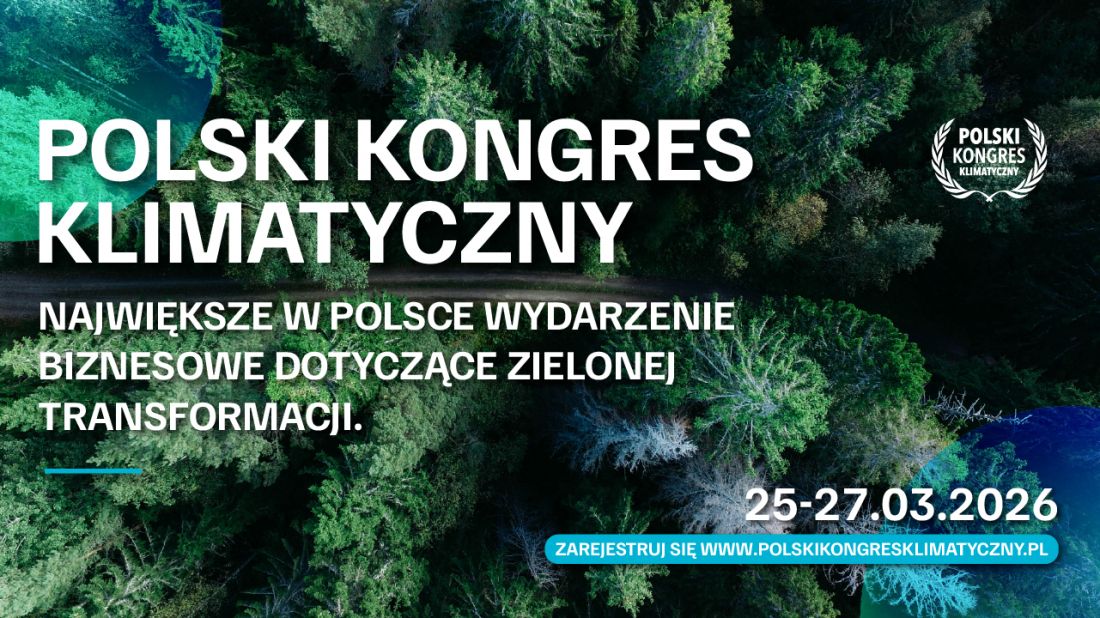
The Polish Climate Congress will be held from March 25 to 27, 2026 in Warsaw. The event is divided into four main thematic tracks: Green Finance, New Energy, Decarbonization of Industry and Sustainable Public Investment.
A detailed program is available at www.polskikongresklimatyczny.pl.
Green transformation has become the largest investment market in Europe today. It is no longer just an environmental agenda - it is a strategic economic process that will determine the competitiveness, security and resilience of countries and companies for decades to come. The key challenge is not to formulate climate targets, but to translate them into concrete, profitable and secure investment projects.
Today, it is being decided whether Poland's green transformation will be a regulatory cost or a source of sustainable competitive advantages. Therefore, any investment should simultaneously strengthen security, local crisis resilience and the competitiveness of the economy.
The Polish Climate Congress is where we move from strategy to implementation - bringing together public administration, business and the financial sector around real investment projects. This is where green transformation becomes practice, not just a declaration
-concludes Kamila Król, President of the European Sustainable Investment Foundation, organizer of the Polish Climate Congress.