




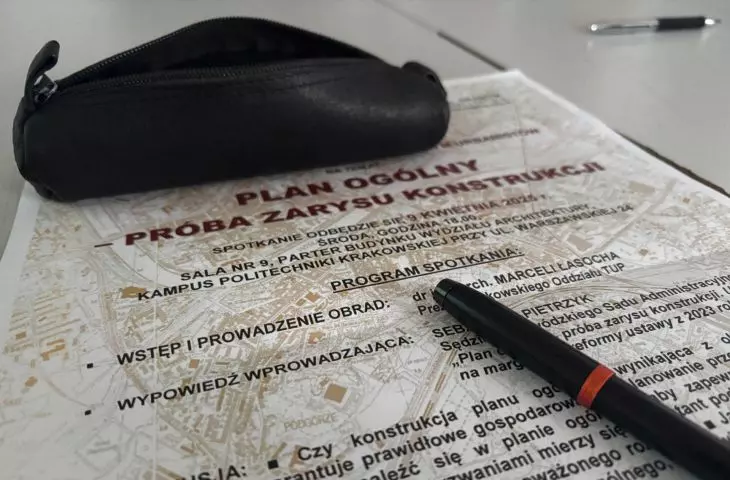
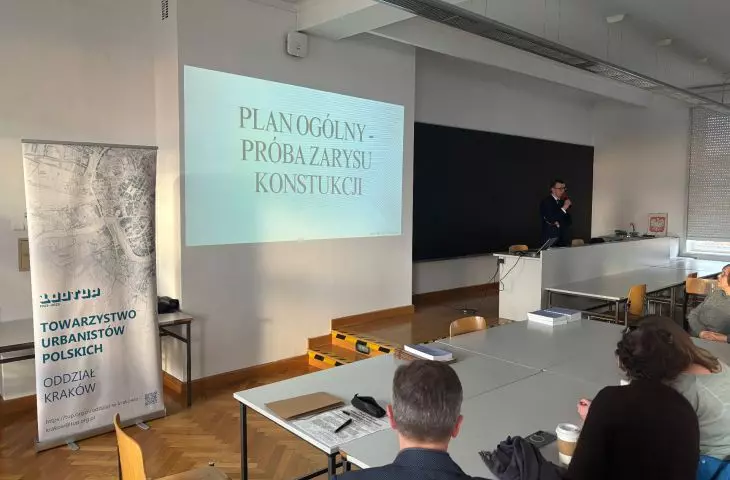
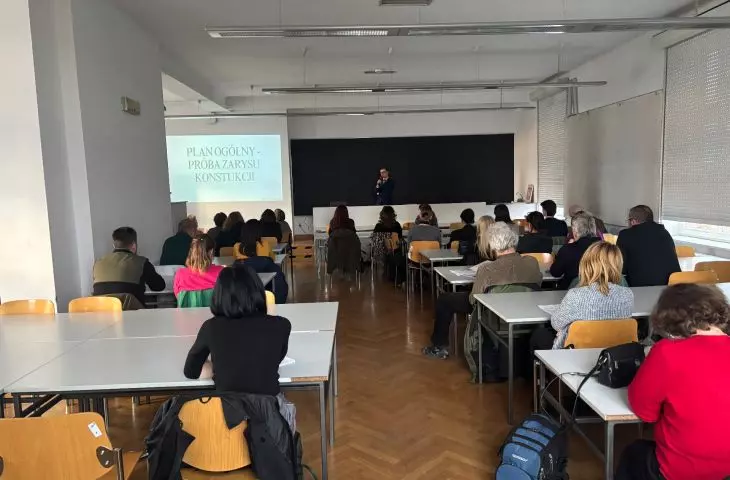
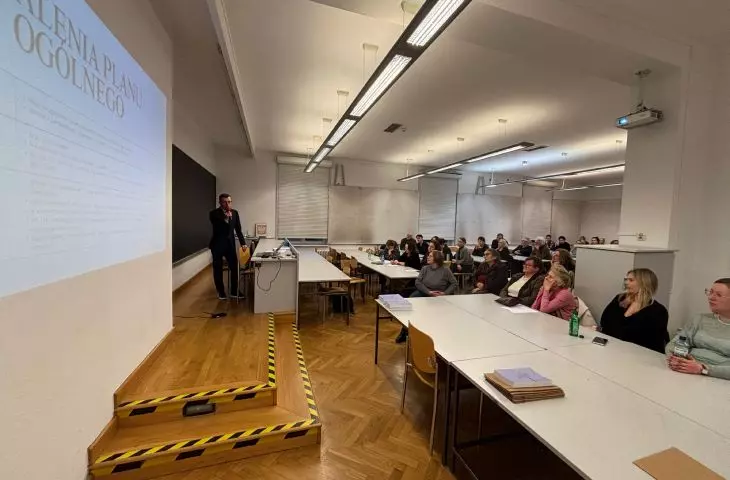





The 106th Open Discussion Forum of Urban Planners of the Krakow Branch of the Society of Polish Urban Planners was held on April 9, 2025, and was devoted to new regulations on urban planning.
The main point of the meeting was a lecture by Sebastian Pietrzyk, a judge of the Provincial Administrative Court, who started his professional work as a lawyer and then as a legal advisor at the Office (and later the Department) of Spatial Planning of the Krakow City Hall. He presented the key aspects, in his opinion, of the 2023 reform of the Law on Spatial Planning.
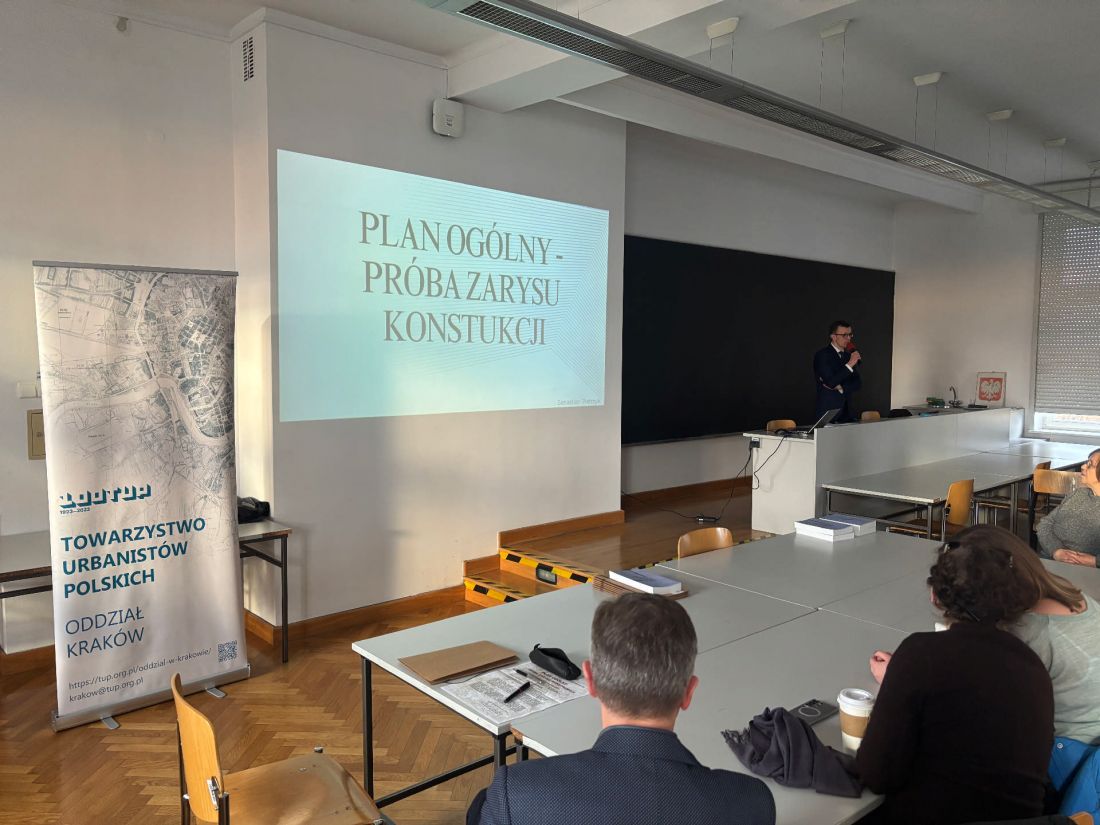
106th Open Discussion Forum of Urban Planners of the Krakow Branch of the Society of Polish Urban Planners
Photo: Marceli Łasocha
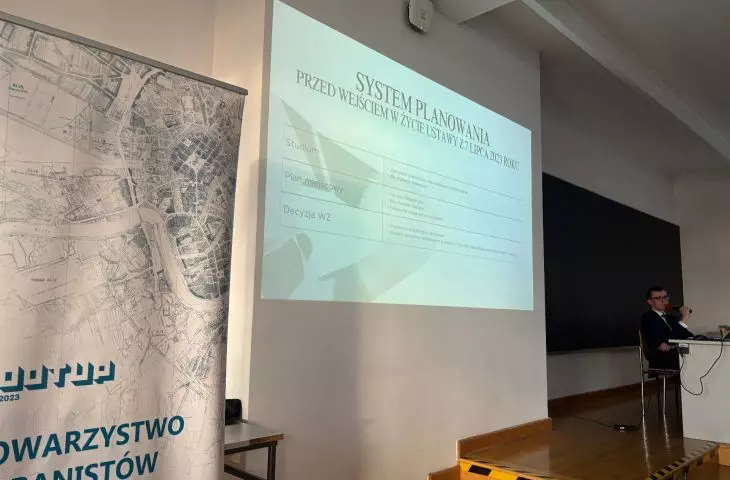
The speech began with a brief characterization of the existing planning system at the municipal level. The judge reminded the audience that the mandatory study - a mandatory planning document in every municipality - is non-binding for administrative decisions, but is binding for local plans. The local plan was not and is not mandatory, but it is binding and actually creates spatial order. An additional instrument of spatial order is the WZ decision establishing development conditions, which is issued separately from the study. The findings of these decisions are shaped on the basis of the actual development of the study area.
New regulations - more order or more problems?
The reform introduced the General Plan (abbreviated to POG - Municipal General Plan), which "enters" in place of the previous study of land use conditions and directions. The POG is an act of local law, while the study is not. The POG is intended to be synthetic and very much standardized, quite rigid, leaving little leeway for the mayor/mayor/mayor - the municipal resolution maker. The study, which is flexible compared to the POG, consists of two parts (conditions and directions) and has been torn apart by the amendment in such a way that part of its regulations must be taken into account in the POG, and part has been copied from Article 10 of the Planning Act to Article 10e of the Municipal Government Act, i.e. it is to constitute the content of the municipality's development strategy. The difference is that the strategy is not a document that is mandatory. Municipalities may prepare a strategy, but they do not have to(this will change from 2026, when the strategy will become mandatory).
According to Sebastian Pietrzyk, the change is significant, systemic and structural in nature. The legislator says that the general plan is an act of local law, it binds WZ decisions, but it will not be binding for other decisions, for example, PNB, decisions on conservation issues, which can be issued in abstraction from the general plan. The law says that the general plan binds only GM decisions, but an analysis of the provisions of other laws shows that this is not quite true. This issue, due to its complexity, has only been hinted at, perhaps for the organization of a separate meeting on this topic in the future.
In theory, the amendment to the Planning Law is supposed to organize the planning process, but in practice it raises many questions. In particular, questions arise regarding:
- The relationship between the general plan and the local plan - the two documents must be compatible, but their regulatory scopes differ, which can lead to interpretive ambiguities.
- Limitations on the planning authority of municipalities - the new regulations impose a rigid framework for action, limiting the freedom of local governments to designate new investment areas.
- Financial consequences - property owners may demand compensation for development restrictions resulting from the new regulations.
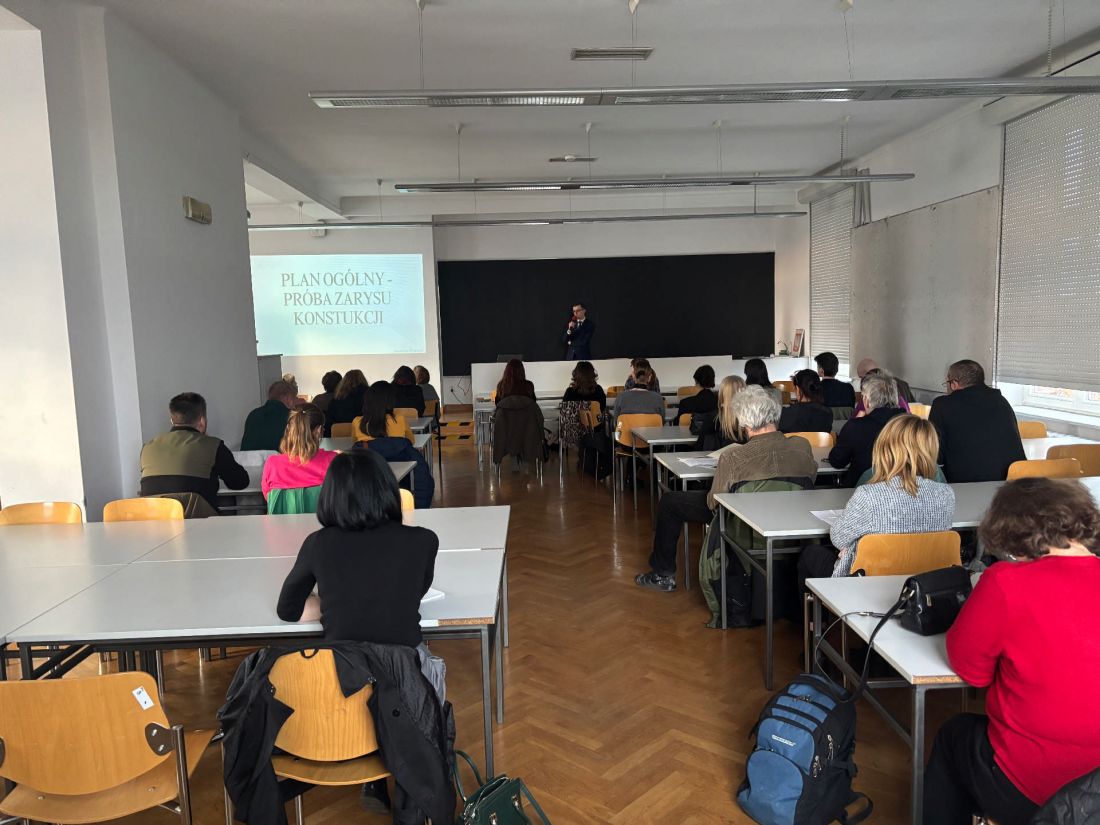
106th Open Discussion Forum of Urban Planners of the Cracow Branch of the Society of Polish Urban Planners
Photo: Marceli Łasocha
Will the General Plan ensure spatial order?
One of the key questions that emerged in the discussion after the lecture was whether the General Plan will indeed improve the quality of spatial planning. Forum participants highlighted several important issues: Paweł Krupa (an employee of the Chief Architect of the City of Cracow, a member of TUP) pointed out the vague provisions of the POG and the risk that the document will not be precise enough, which could lead to spatial chaos. Jacek Banduła (active planner, vice-president of the Association of Polish Urban Planners) stressed the issue of ambiguities regarding the designation of development supplementation areas (on which WZ decisions can be issued), which can hinder the investment process. Maria Noworól (property appraiser) raised the issue of the impact of POG findings on the real estate market - the new regulations may lower the value of land, which may result in claims by owners against municipalities.
urban planning problems arising from the reform
Summing up the very interesting lecture from a legal point of view and the resulting discussion, it can be said that the following urban planning problems resulting from the reform are evident:
- Fragmentation of urban space - new regulations may lead to excessive fragmentation of space, especially in large cities. The introduction of planning zones with different development intensities may result in a heterogeneous urban landscape, in which areas with almost zero investment parameters will appear next to high development. Such an approach can hinder the consistent shaping of space and lead to uncontrolled urban development.
- Restrictions on the design of new developments - architects and urban planners highlight the problem of restrictions on the design of new developments. The General Plan, as a highly generalized document, may not take into account local spatial conditions, which will affect the difficulty of implementing projects that are in line with the real needs of residents.
- Problematic historic preservation - one of the key issues raised at the forum was historic preservation in the context of the new planning system. Participants drew attention to the vague provisions regarding the inclusion of historic sites in the General Plan. The lack of clear guidelines can lead to conflicts between investors and historic preservationists, especially in cities with a rich history, such as Krakow.
- The example of Poznań as a model? One of the more interesting examples that came up in the discussion was Poznań, which recently published its General Plan. The city decided to designate a number of small planning zones with varying development and zoning ratios. Investment areas with zero development parameters were designated to protect transportation areas. Should other cities adopt a similar solution? This question remains open.
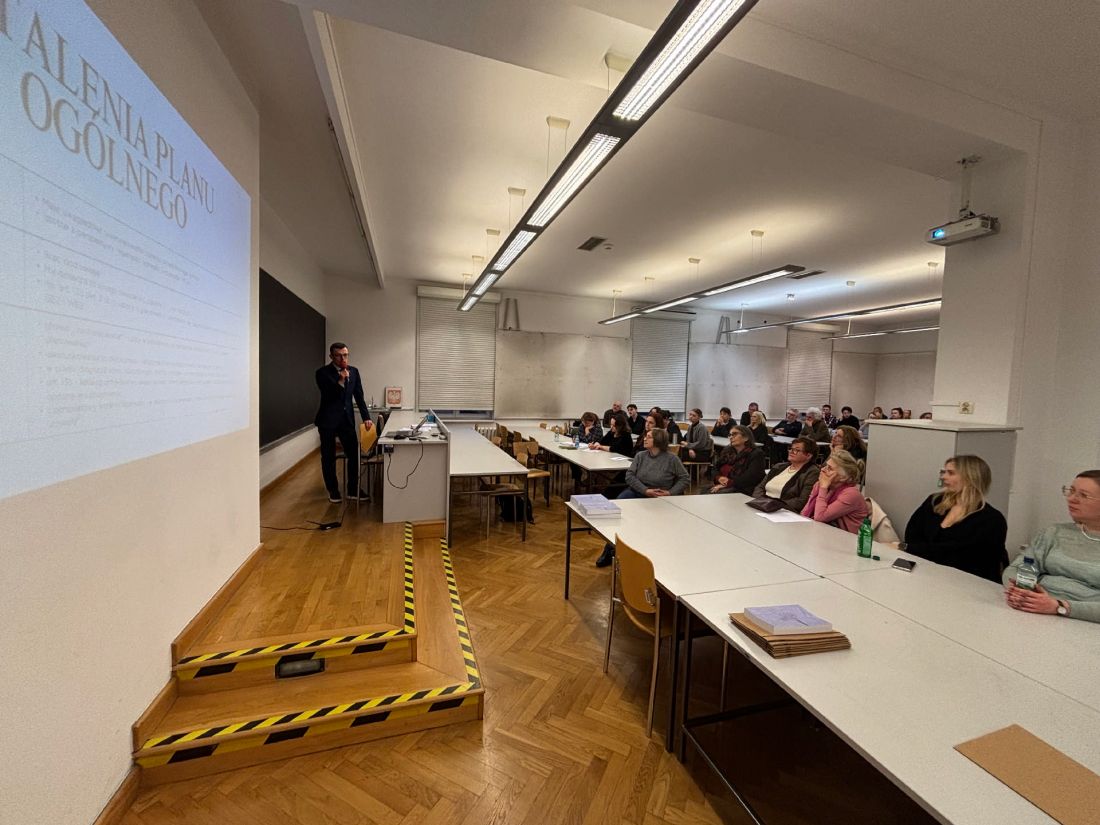
106th Open Discussion Forum of Urban Planners of the Krakow Branch of the Society of Polish Urban Planners
photo: Marceli Łasocha
what's next?
After two hours of intense debate, the participants agreed that further analysis and discussion of the new legal system is necessary. The current adopted legislation stipulates that all local governments must pass the PGA by June 2026, so we still have one year to prepare documents whose implementation into the space will show us all the problems associated with this instrument. Will the doubts about the General Plan be resolved by then? Or will the reform turn out to be another bureaucratic challenge for local governments? We will certainly be able to answer this question in the near future!
Marceli Łasocha
President of TUP o. Krakow, Employee of WA PK, Deputy Director of the Department of Spatial Planning of the City of Krakow.