




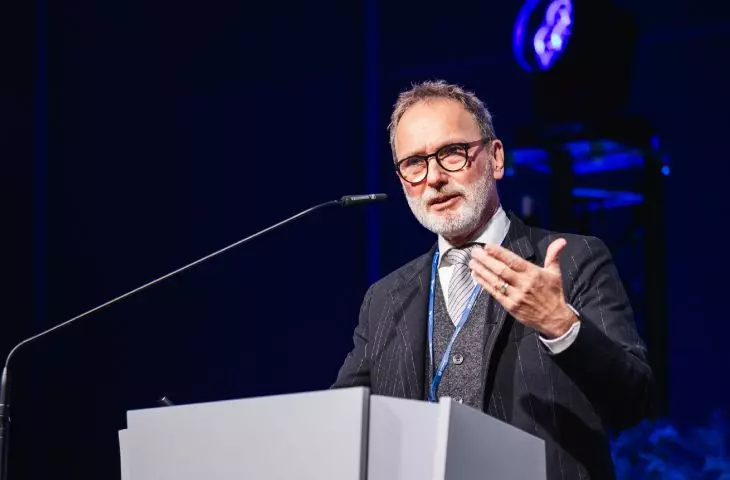
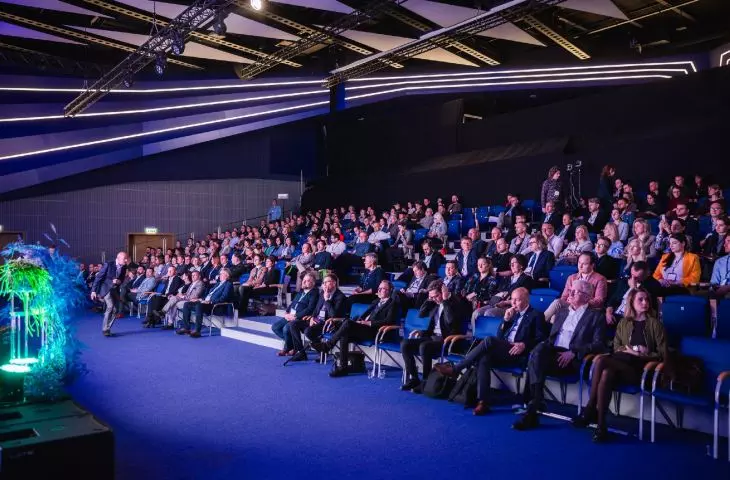


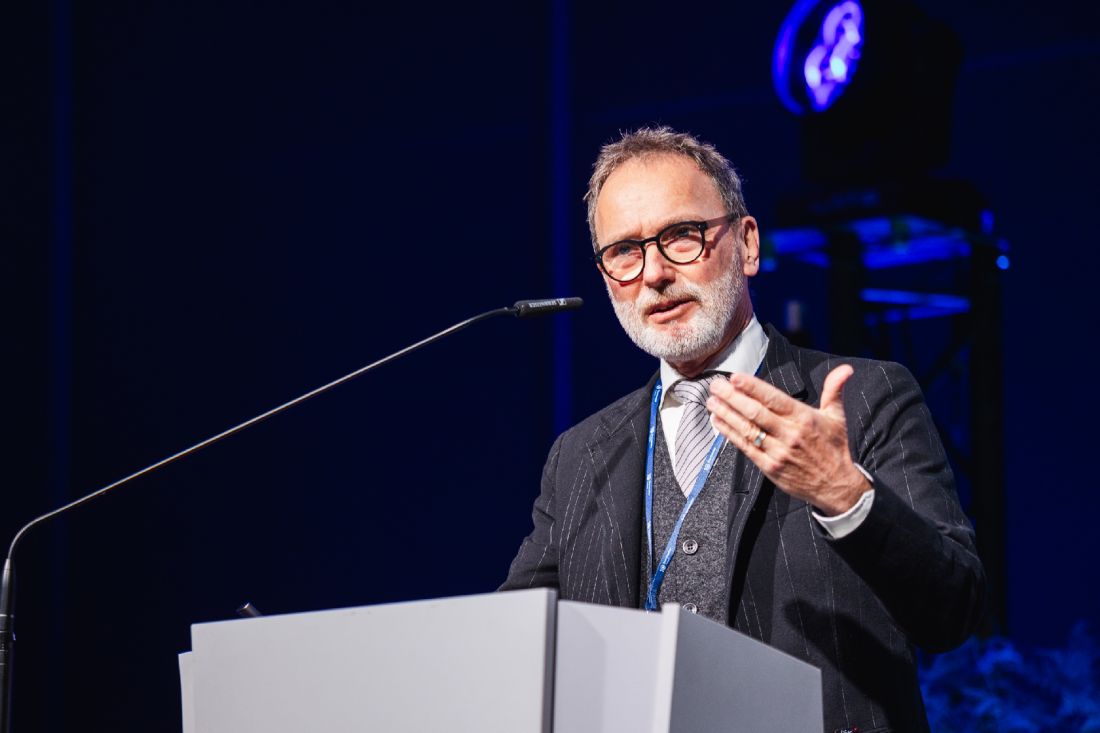
The 10th edition of the Stormwater Poland conference was held in Poznan, which Architecture&Business covered under its media patronage. Key note speaker for the event was Herbert Dreiseitl, an internationally recognized thought leader in the field of climate-resilient urbanism and blue-green infrastructure. He has been pioneering for more than four decades, shaping the concept ofSponge Cities and promoting the transformative role of water in addressing the environmental challenges of cities - combining ecological functions with technological innovation and artistic expression.
In his speech, Herbert Dreiseitl stressed that modern cities and regions are still not immune to extreme weather events. The message is clear: better solutions already exist, and continuing to wait for new regulations is not an option.
Stormwater Poland 2026
© organizers archive
Green-blue infrastructure must be implemented earlier, on a larger scale and in a more integrated manner. Public awareness, political support and circular investment financing models are crucial. Cities are made for people, so added values - such as aesthetics, biophilic benefits and psychological well-being - should be recognized and clearly communicated. To win the competition for urban space and give green-blue infrastructure the priority it deserves, we need to act faster and invest more boldly. Only in this way will it be possible to create truly resilient Sponge City cities and regions that balance climate, ecology, economy and human well-being.
During the conference, we had the opportunity to ask the expert about his career path:
Herbert Dreiseitl: My path began between 1982 and 1983. Contrary to appearances, at that time I did not work on dense cities, but started with a smaller urban scale like a village in Switzerland. I was commissioned to find a solution to the problem of excessive flooding in the area and pollution flowing into local rivers.
I used biofilters in the form of properly selected plants. To my surprise, I found that they could purify the water almost to drinking water quality. I also allowed the water to spill over into the landscape in the form of ponds and wetlands in the village, which largely solved the problem of local flooding.
About three years later, I started receiving invitations to the first conferences similar to the one we attend today. At the time, however, I was seen more as an artist and landscape architect - which of course I am - than as someone realistically influencing the development of blue-green infrastructure. Back then, engineers were definitely in the foreground and their voice was treated as more decisive.
Today, I only accept projects that I really want to be involved with. I try to play the role of a kind of "water advocate" - a person who identifies the problem and creates a concept for a space in which clean and healthy water becomes its centerpiece. I leave other aspects of projects, such as issues of detailed industry solutions, to specialized teams.
We are also implementing pilot projects, including in Hanover. I see a lot of sense in them. On the one hand, they are a knowledge laboratory for us - they allow us to see how similar solutions can work in the future on a larger scale and what needs to be improved in them. On the other hand, they help show the public what this approach to urban design is really all about: why nature, retention and multifunctional public spaces are so important and how they can co-create the quality of the urban environment.
One of the latest projects we are currently working on is in Mumbai. It deals primarily with urban issues - how to deal with the very high population density, which in this city is close to 20 million people - but also with water retention issues. In this context, natural natural systems such as mangroves play a particularly important role there.
Stormwater Poland 2026
© organizers archive
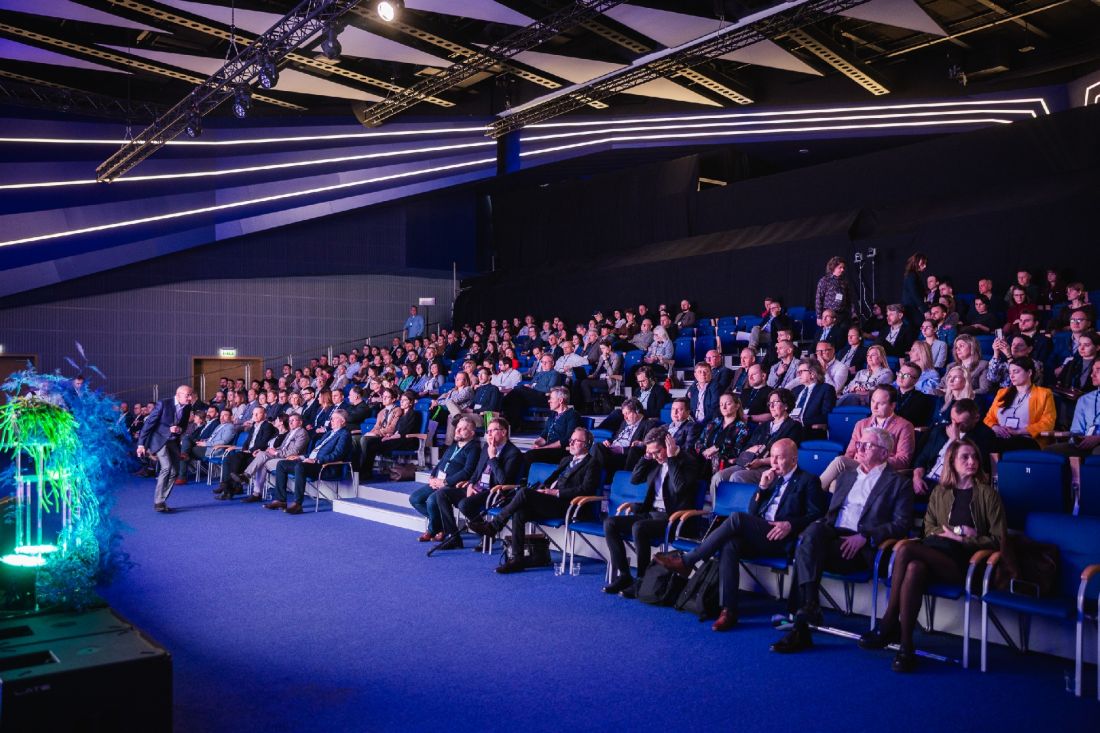
Herbert Dreiseitl emphasized holistic, long-term thinking about the city's water and the entire system, not just its individual components, in his presentation and in his practical use.