




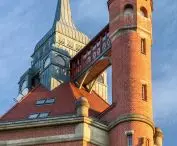

As in many Polish cities, the remnants of the old water supply infrastructure are the former water towers in Wroclaw. Unlike other Polish cities, however, in the capital of Lower Silesia they are not deteriorating structures that loom over historic centers. Not long ago, we wrote about the water tower in Wrocław's Krzyki district, which has been transformed from a crude reinforced concrete structure into a café, studio and apartment with a vantage point at the top. However, another, much grander building in this category has undergone its metamorphosis - the Borek Water Tower, which housed the interior of an unusual gastronomic space. The mode:lina studio is responsible for the project.
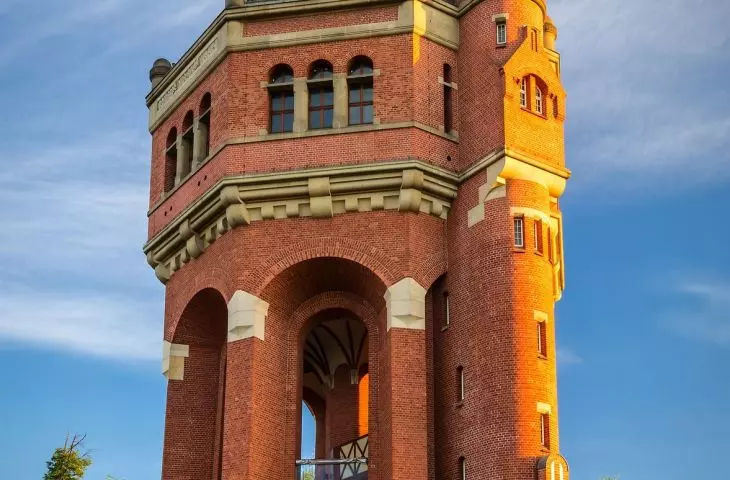
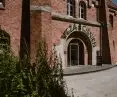
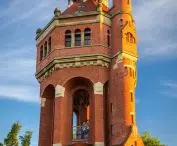
The Borek Water Tower is one of the most beautiful buildings of its kind in Europe. Its architecture is so amazing that to some it looks more like a vision generated by artificial intelligence than a real building. The design of the tower was created in the studio of Karl Klimm, a German architect, the author of many Wroclaw buildings - including the Zwierzyniecki and Osobowicki bridges, as well as the building of the School of Building Crafts, which now houses the Faculty of Architecture at the Wroclaw University of Technology.
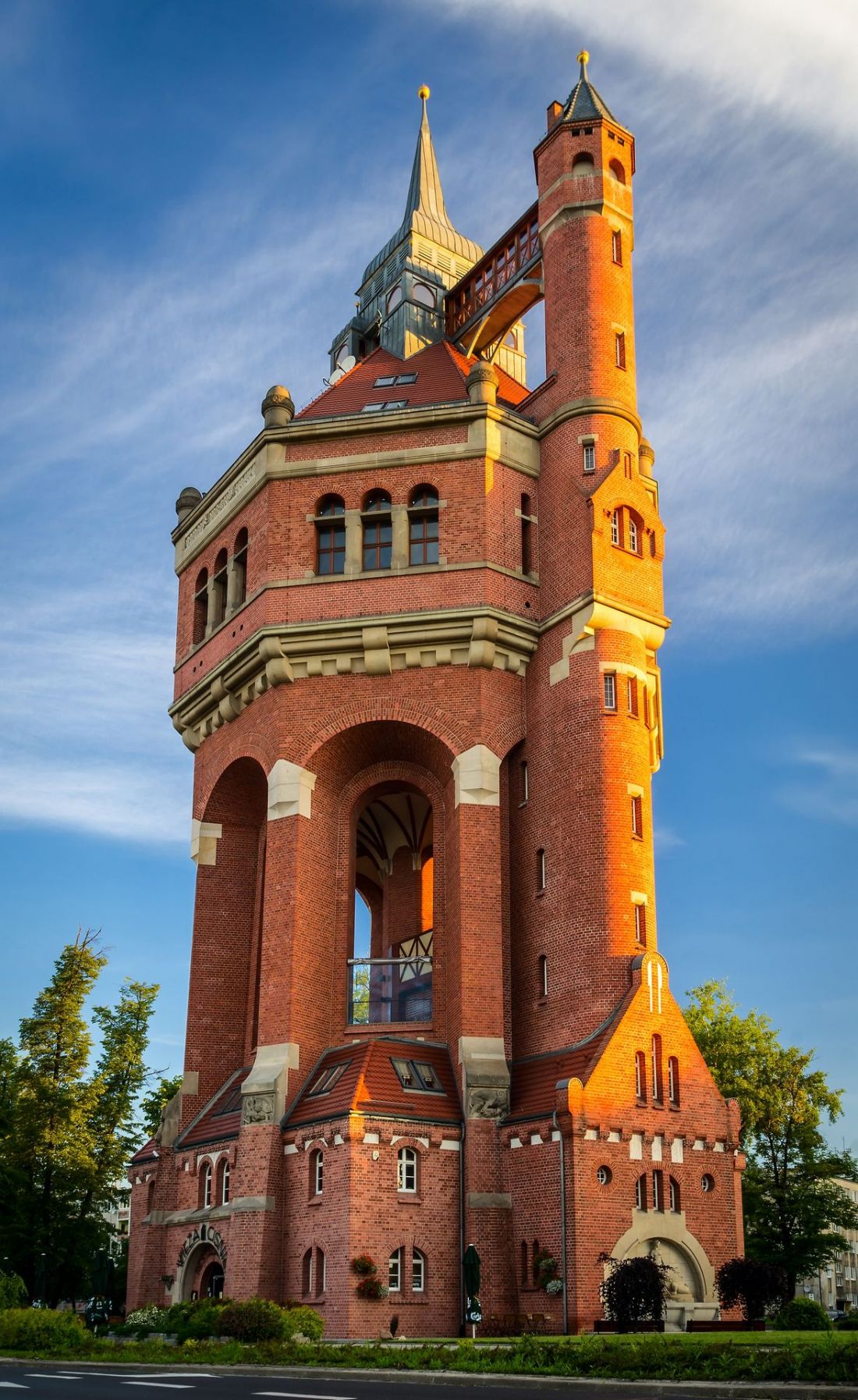
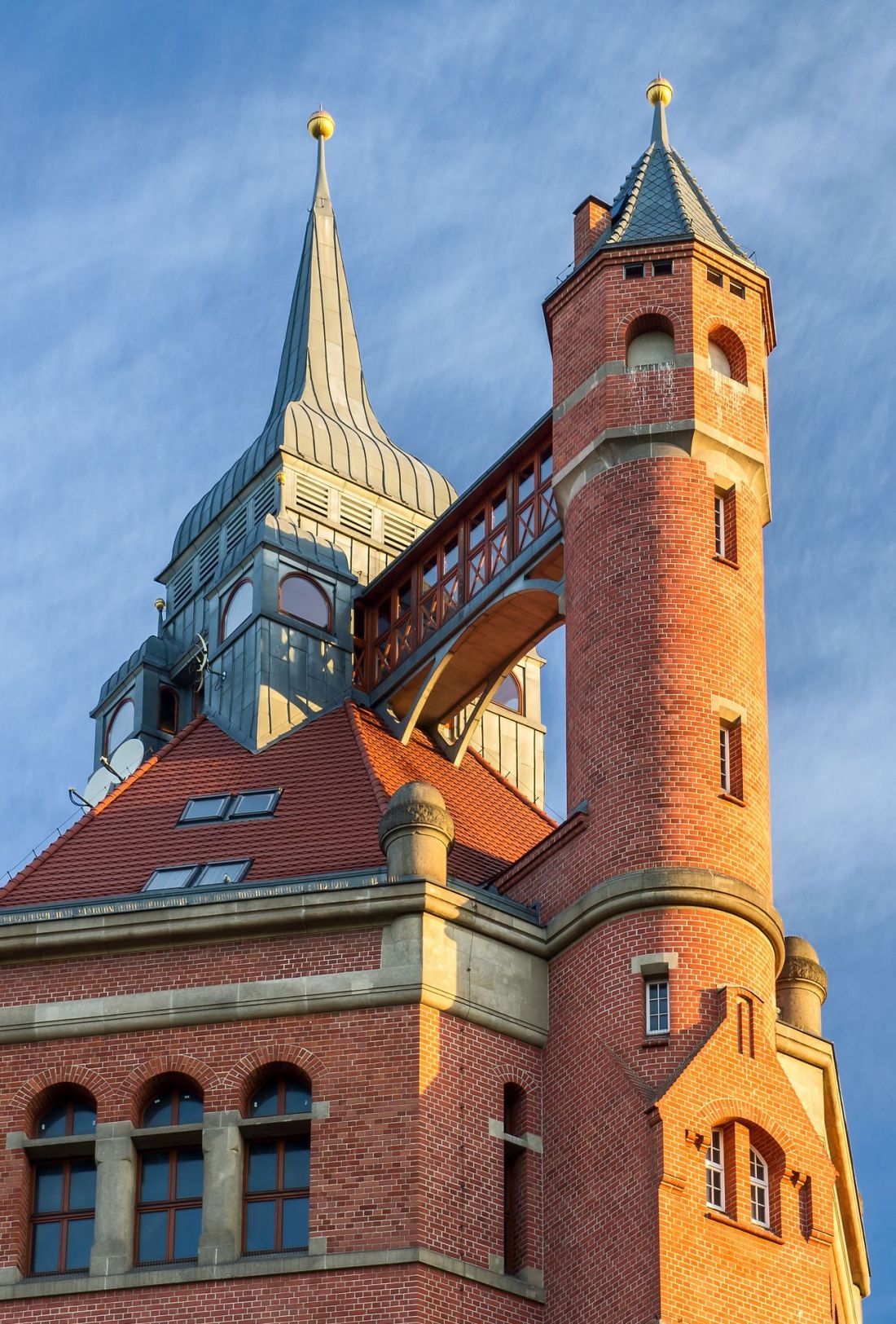
Borek water tower in Wroclaw
Photo: Jar Ciurus © CC BY-SA 3.0pl | Wikimedia Commons
tower like a fairy tale
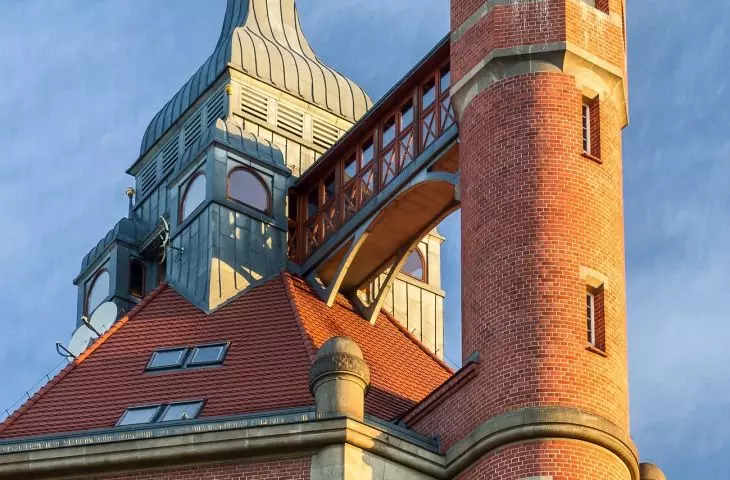
Klimm's design won the architectural competition, and already in 1903 it was handed over for construction. Two years later, in 1905, the 62-meter-high and 3-million-mark water tower on Cherry Street was ready. It emerged as a historicizing, eclectic building in which neo-Gothic vaults combine with Romanesque windows, classicizing cornices and Art Nouveau architectural sculpture. The fancy detailing, however, is only a costume for the building's unusual structure. At the foot of the tower is the administrative section, above which rise 8 massive pillars that hold up a massive octagonal tank. Slightly to the side, a smaller tower creeps up, leading to a viewing gallery, set at a height of 42 meters.
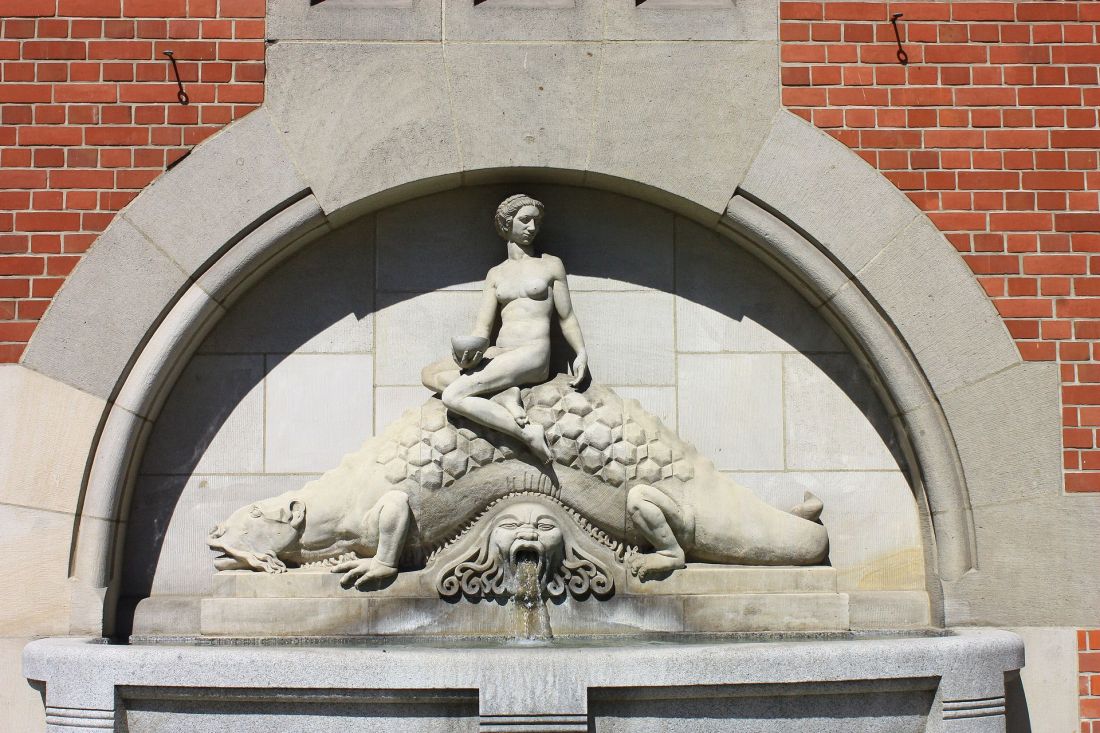
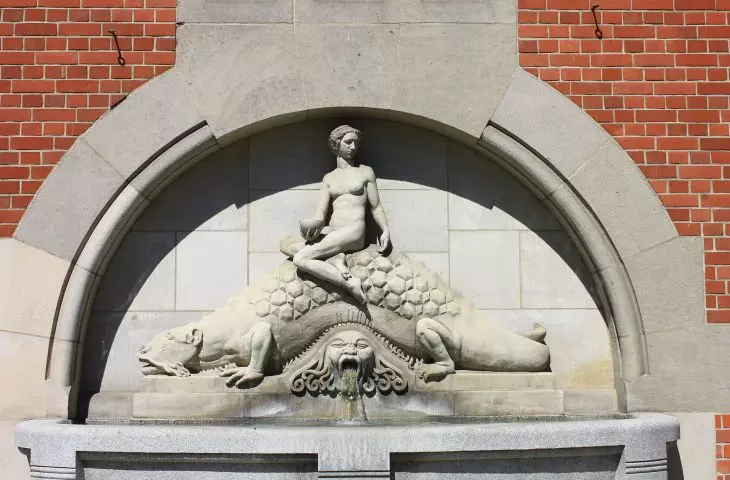
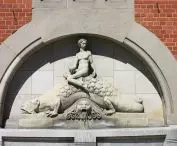
Sculpture on the fountain of the Borek water tower in Wroclaw.
Photo: Dawid Galus © CC BY-SA 3.0pl | Wikimedia Commons
The historic tank would probably not be an easy space to develop, as was possible with the E64 tower in Krzyki. Instead, the base of the Borek tower, which once housed administrative offices and apartments for employees of the Wroclaw Waterworks, was well suited for adaptation. Today, after a metamorphosis carried out according to the design of the mode:rope studio, it houses a new Wrocław gastropub. How did the interior of the premises take advantage of the historic potential of the place?
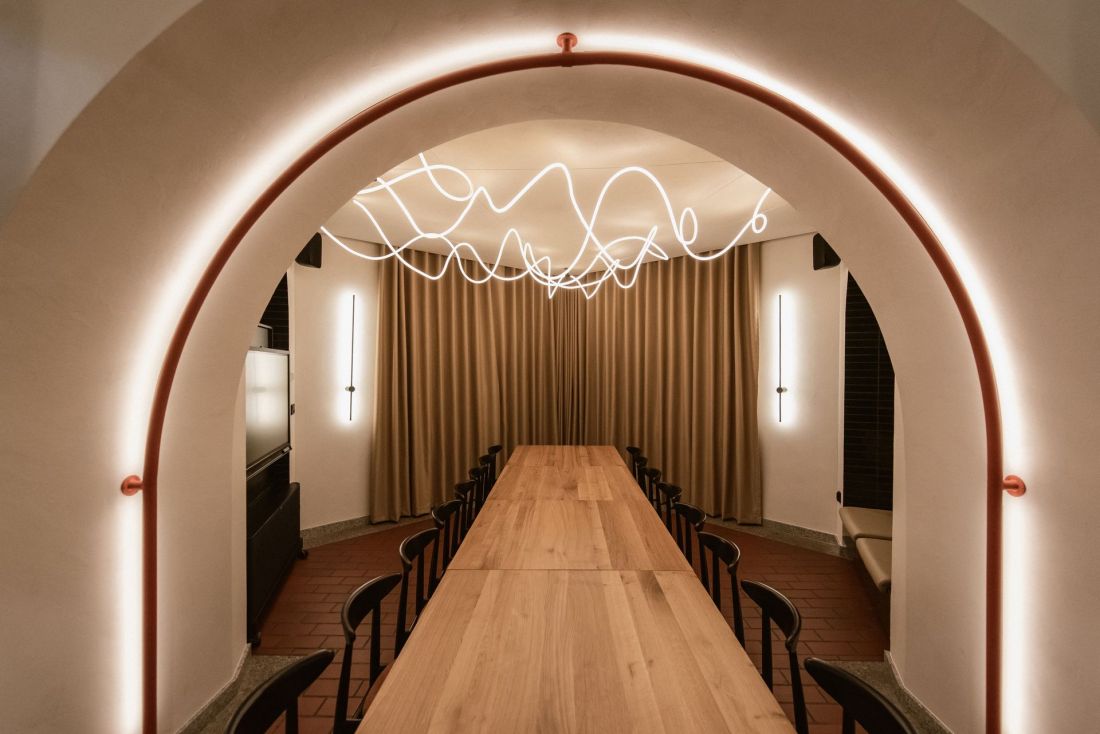
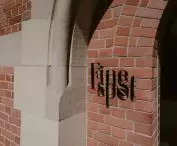
Fine Spot in the Borek water tower in Wroclaw - proj.: mode:lina
photo: Patryk Lewiński
Fine Spot in the Borek water tower
There wasn't much to develop - although the buildings at the foot of the tower are quite large, mode:lina was responsible for a small part of their space. The subject of the project became the arrangement of 160 square meters of interiors for Fine Spot, a culinary space that goes beyond the traditional restaurant concept.
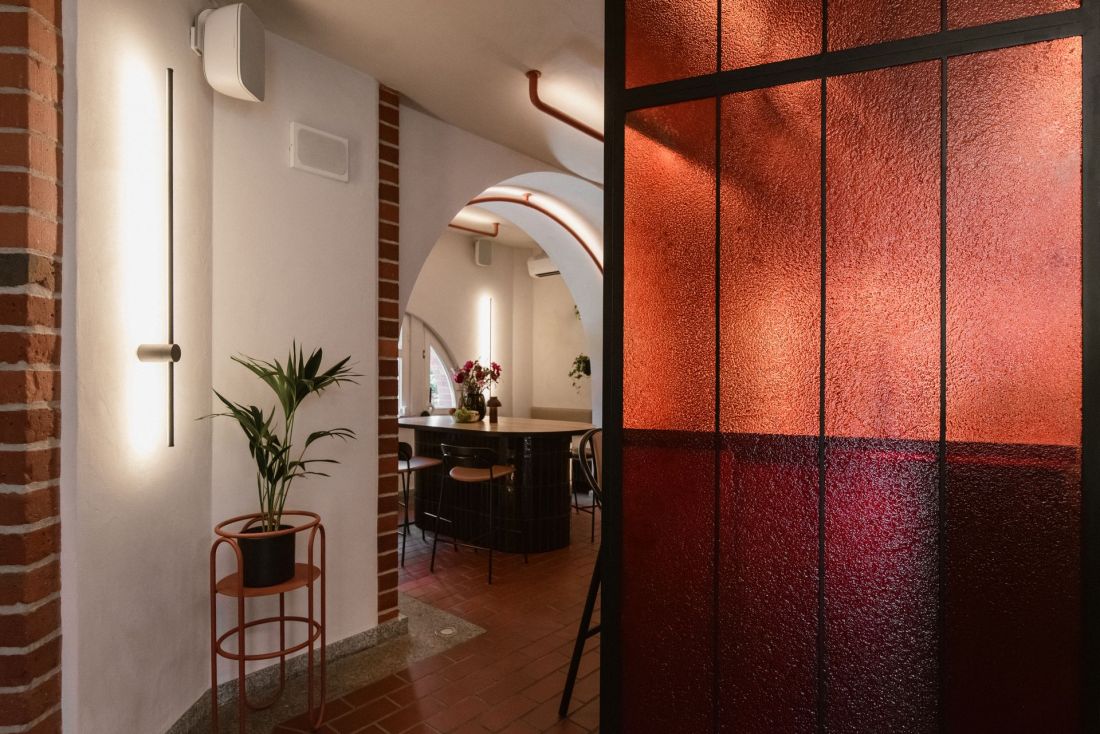
Fine Spot in the Borek water tower in Wroclaw - proj.: mode:lina
photo: Patryk Lewiński
The interior layout in the historic tower could not be transformed too much, so the architects had to deal with the already existing space, which consisted of several smaller rooms.
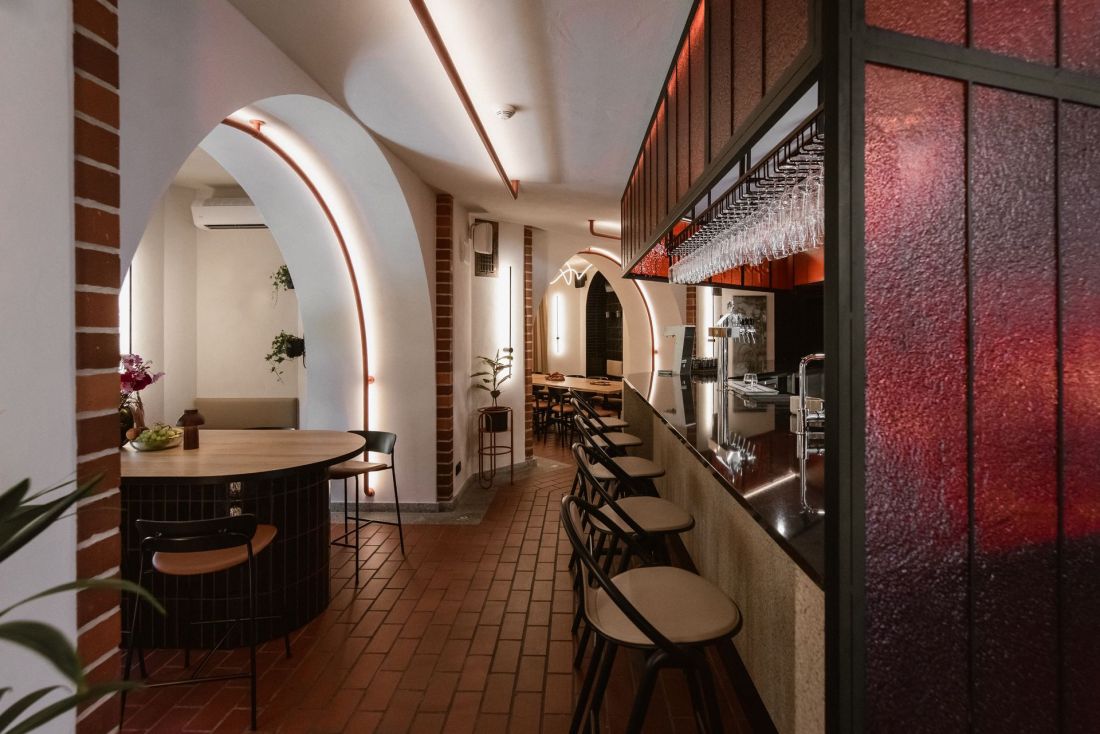
Fine Spot in the Borek water tower in Wroclaw - design: mode:lina
photo: Patryk Lewiński
octagonal taste center
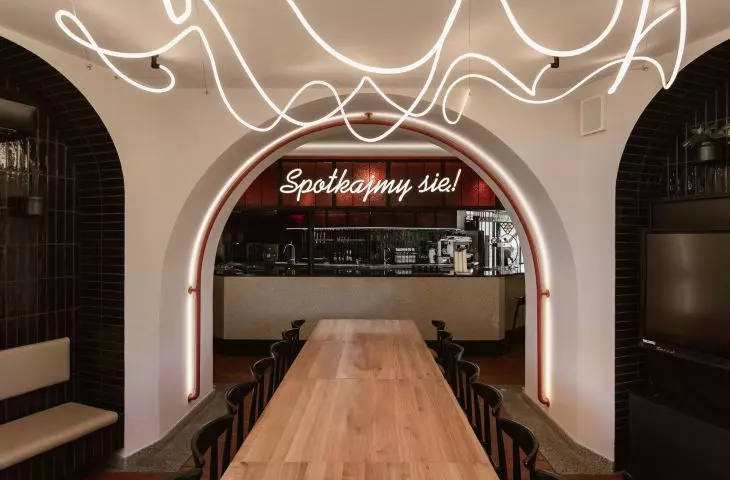
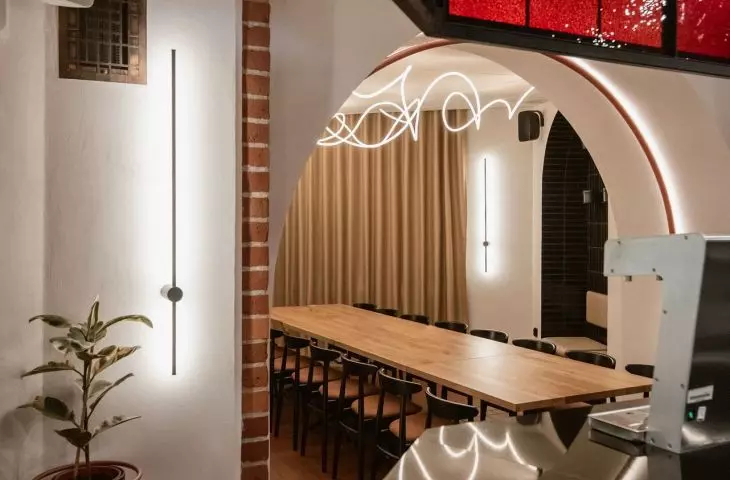
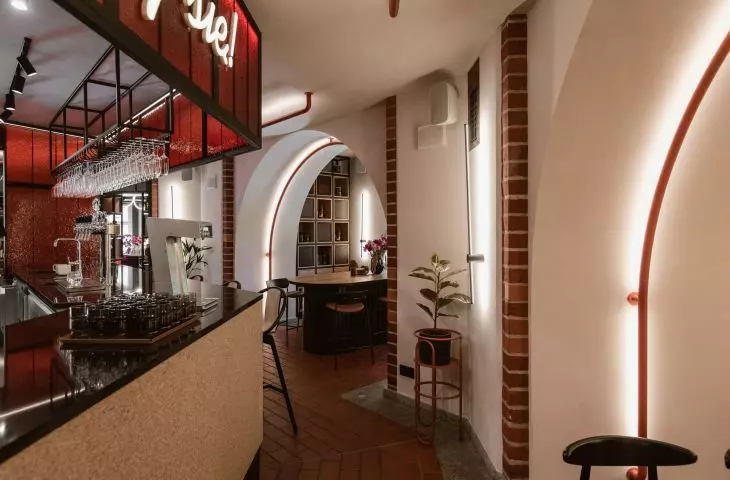
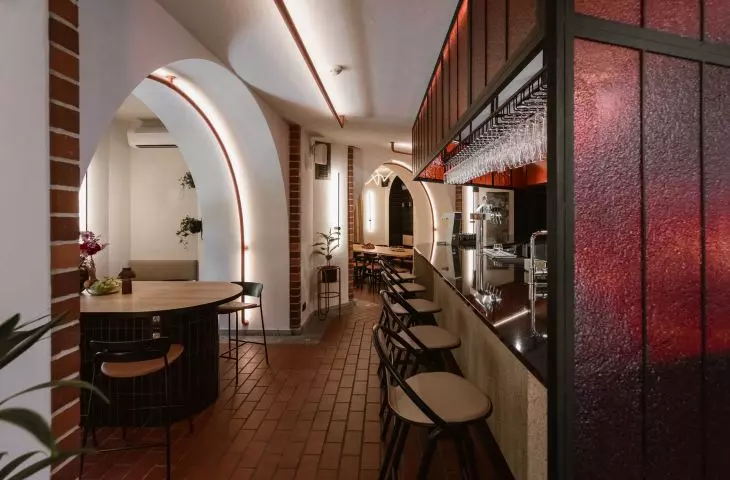
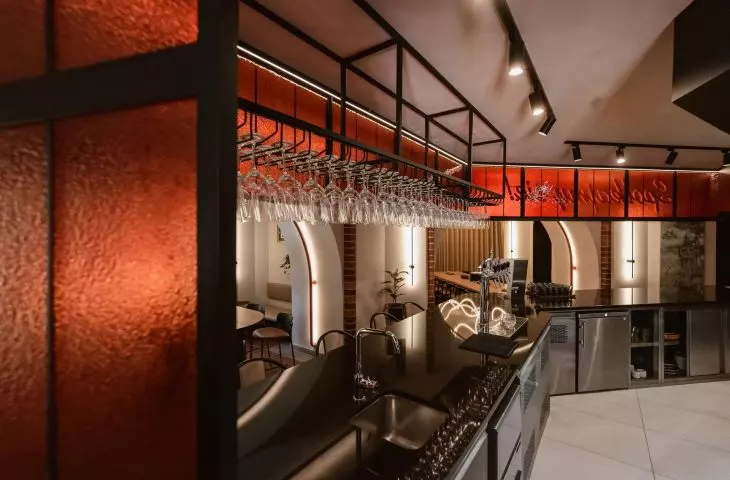
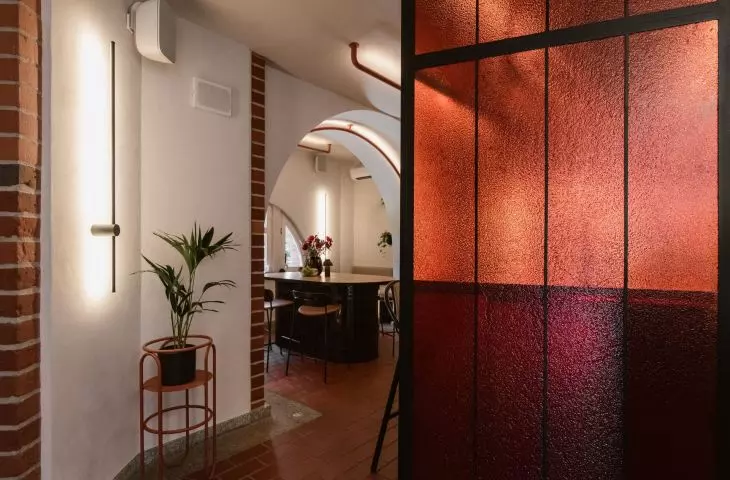
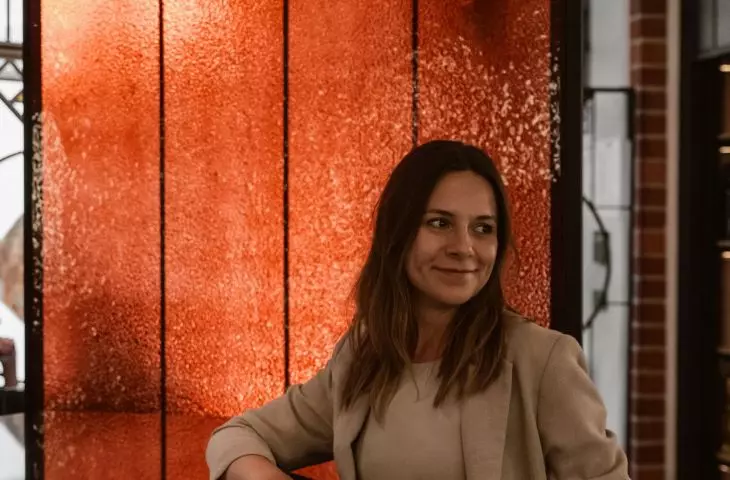
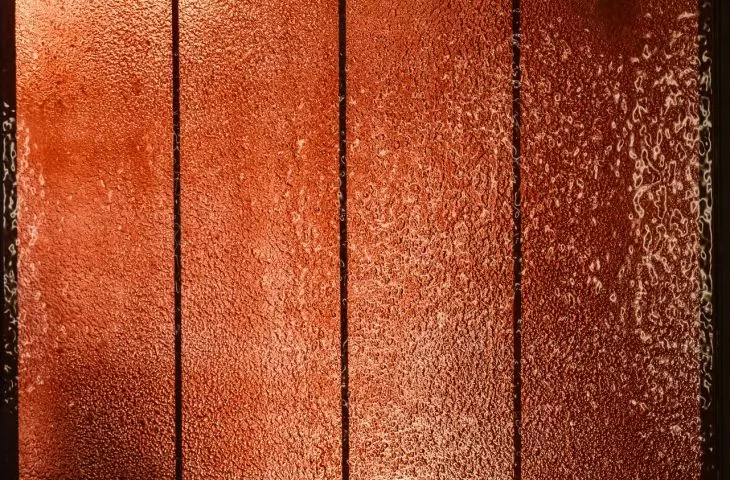
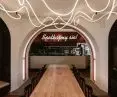
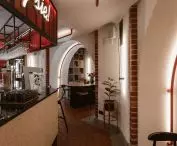
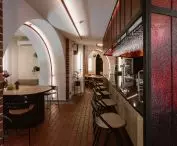
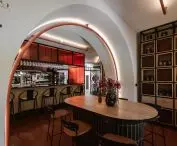
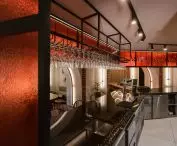
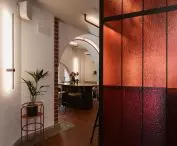
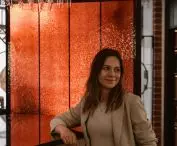
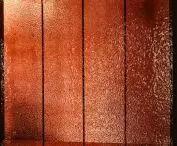
The central space has been occupied by a bar with elegant, glossy countertops and hanging above it curtains of structured red glass, the color of which corresponds to the brick substance of the historic tower. Its spatial form, in turn, is alluded to by the octagonal geometry of the bar, behind which is an open kitchen, lined with black tiles as elegant as the countertop, and above all this composition hangs a neon sign with an enthusiastic message: Let's meet!
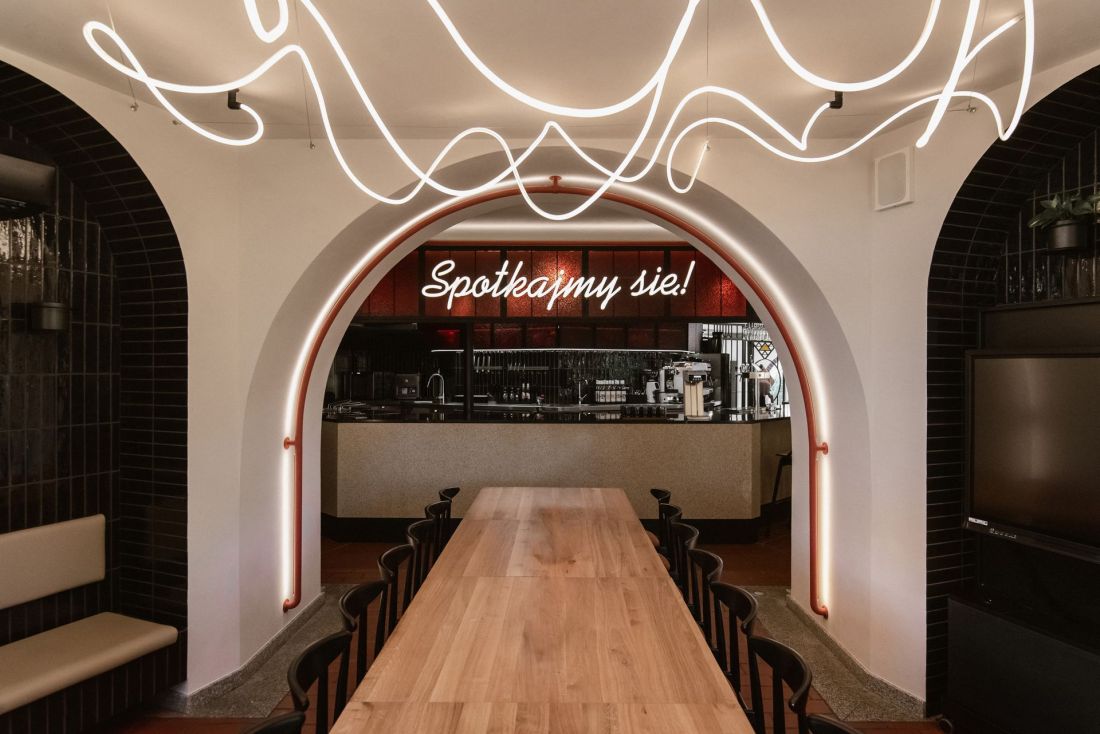
Fine Spot in the Borek water tower in Wroclaw - design: mode:lina
photo: Patryk Lewiński
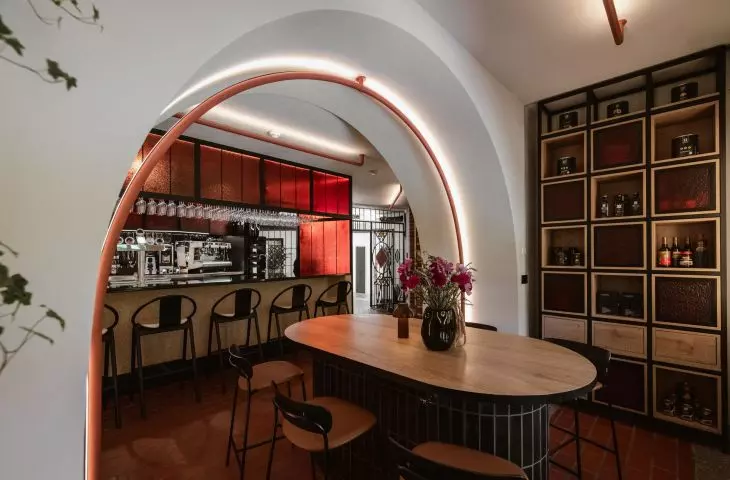
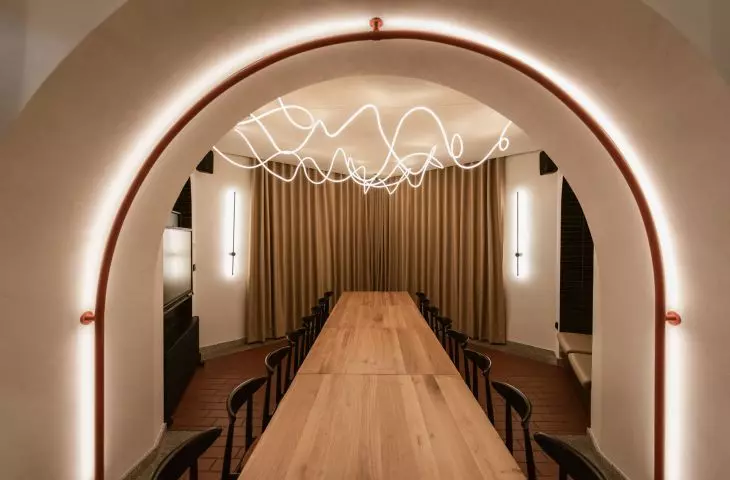
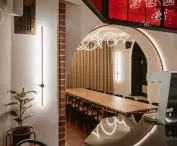
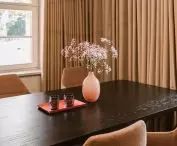
There is no misrepresentation or over-exaltation in this invitation - Fine Spot is indeed more of a meeting place than a regularly operating restaurant. The space is suitable for tastings, workshops or family and bznes gatherings, and can be rented with a culinary studio behind the bar. The dishes created there must have their own tasters, and space for them is allocated in the other, slightly smaller rooms of the Fine Spot in Wroclaw. Right next to the bar is a large table that can seat a dozen people together.
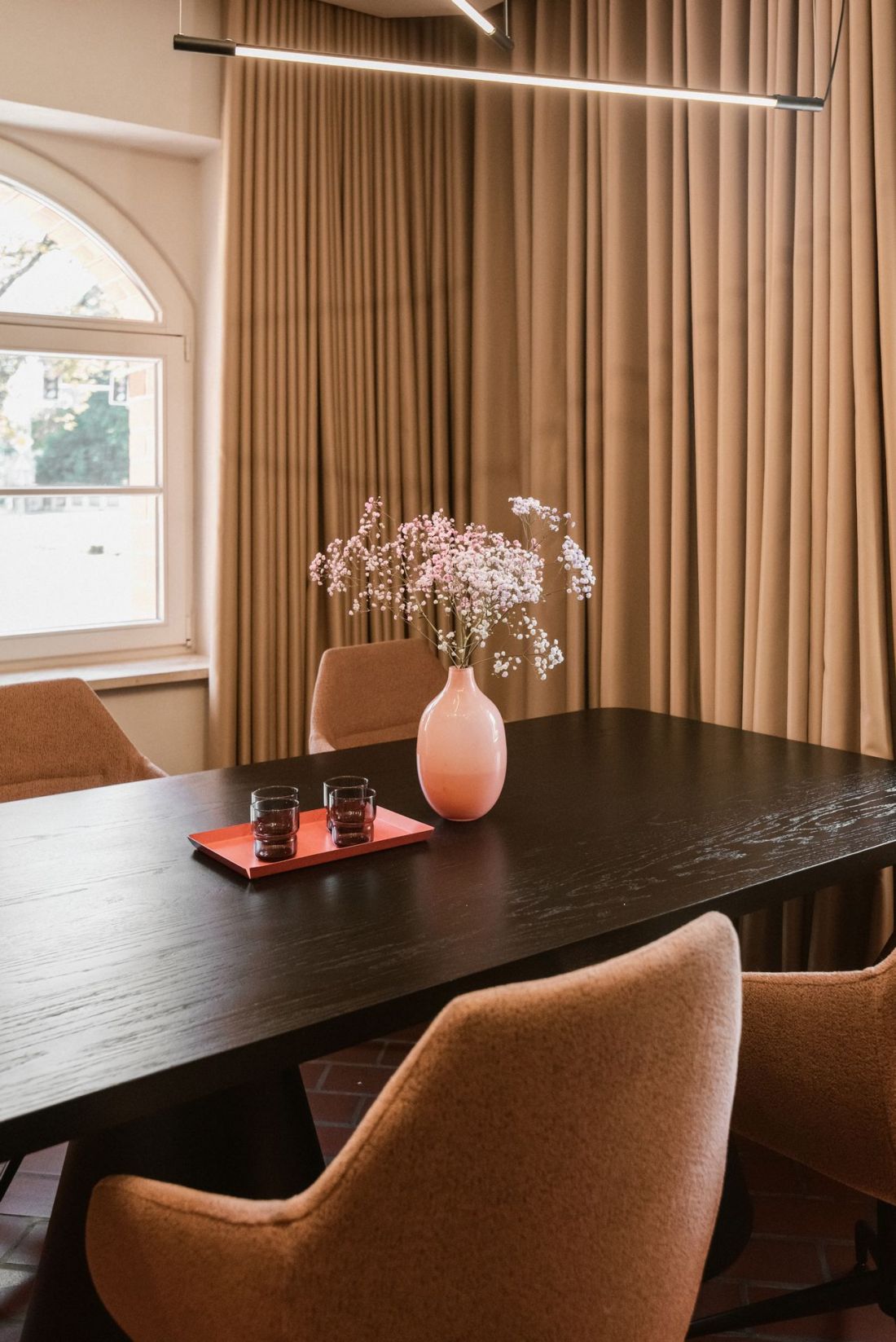

Fine Spot in the Borek water tower in Wroclaw - design: mode:lina
photo: Patryk Lewiński
something good for everyone
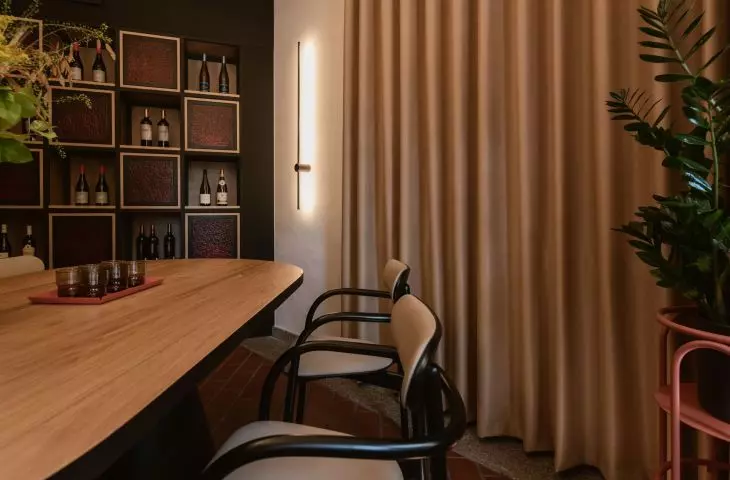
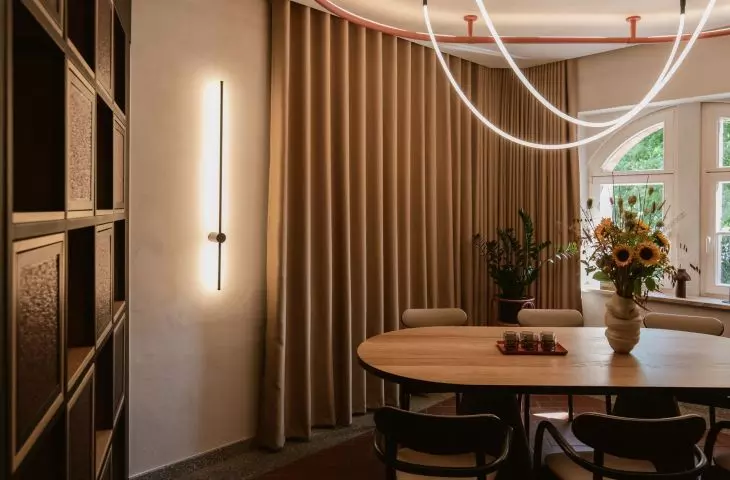
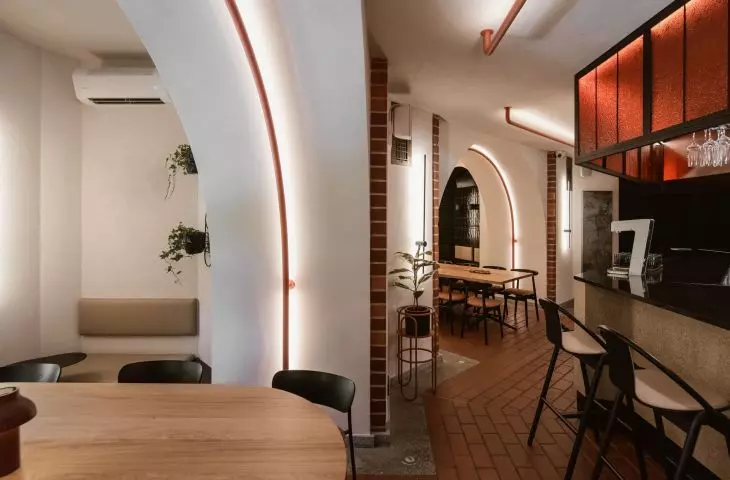
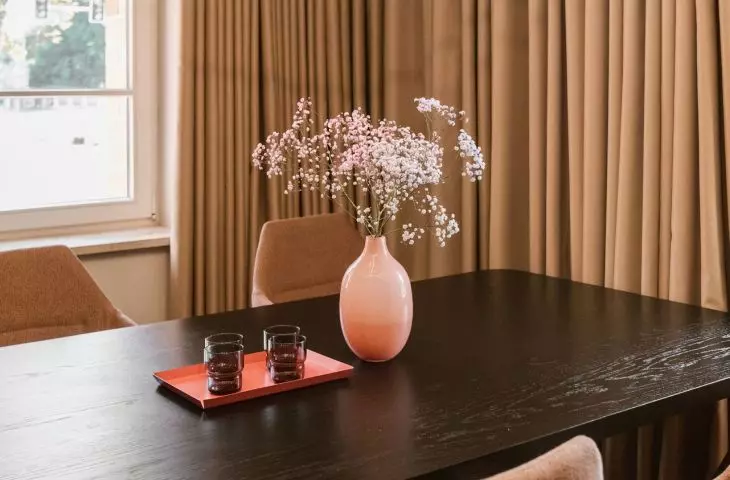
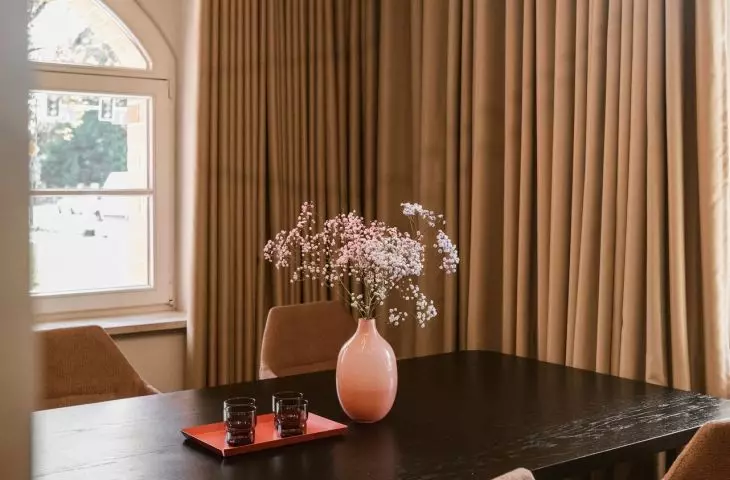
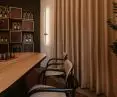
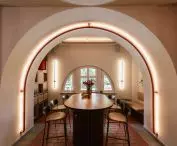
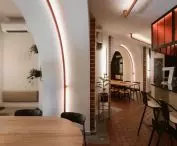
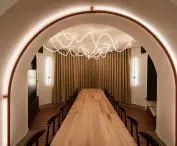
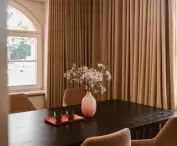
The remaining rooms in the Borek water tower offer a variety of tasting spaces that can accommodate groups of different sizes and host meetings of different nature - both more and less formal. Both the size of the room and the type of seating in it can determine the format in which the meeting will be held.
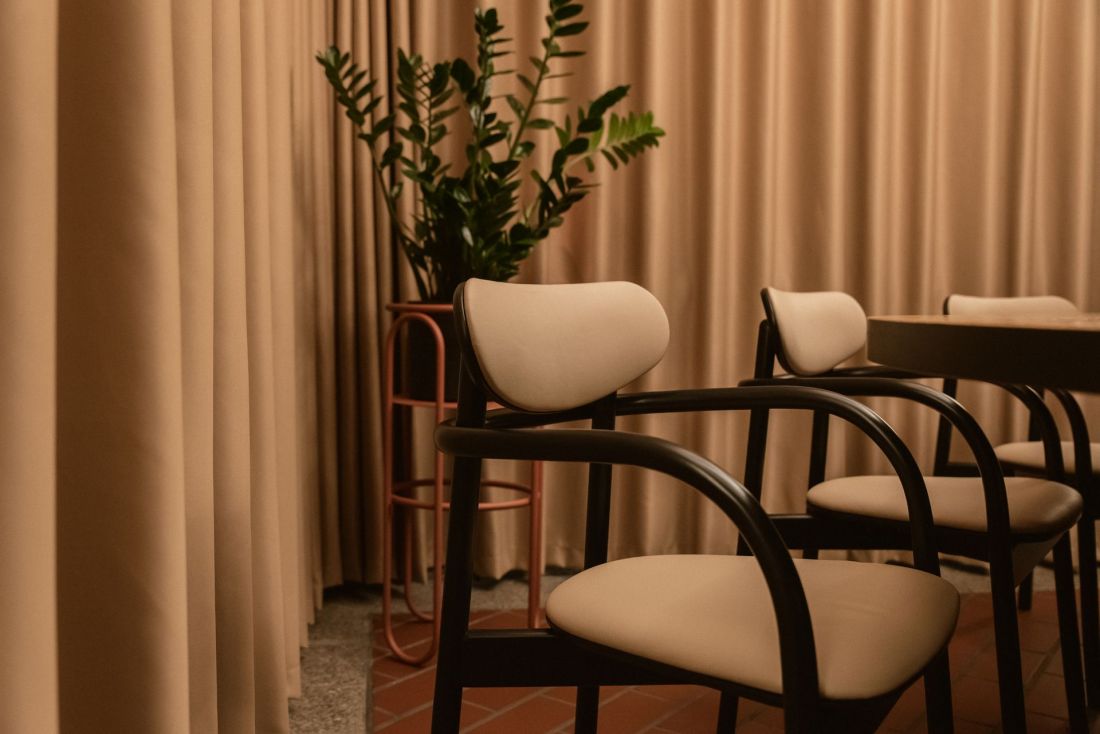
Fine Spot in the Borek water tower in Wroclaw - design: mode:lina
photo: Patryk Lewiński
industrial identity
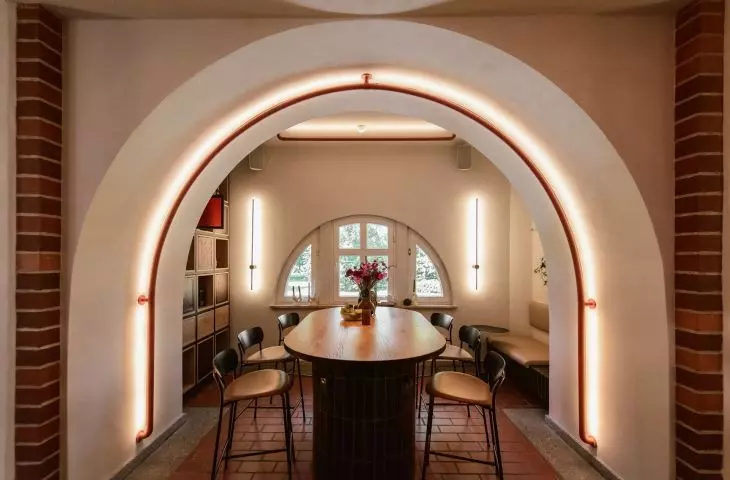
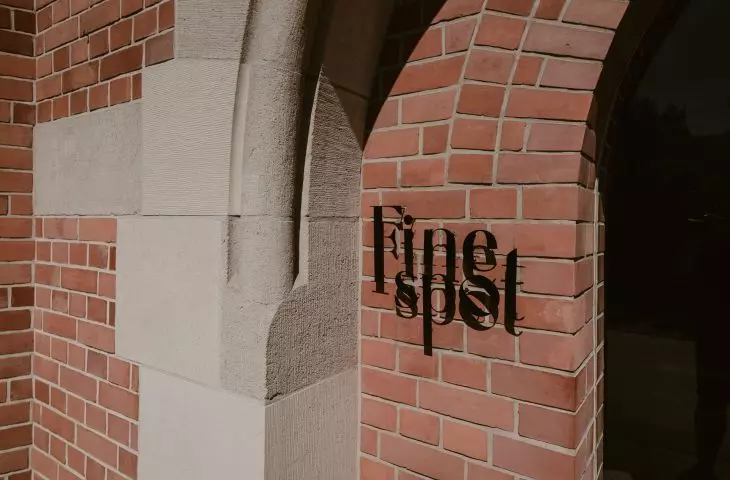
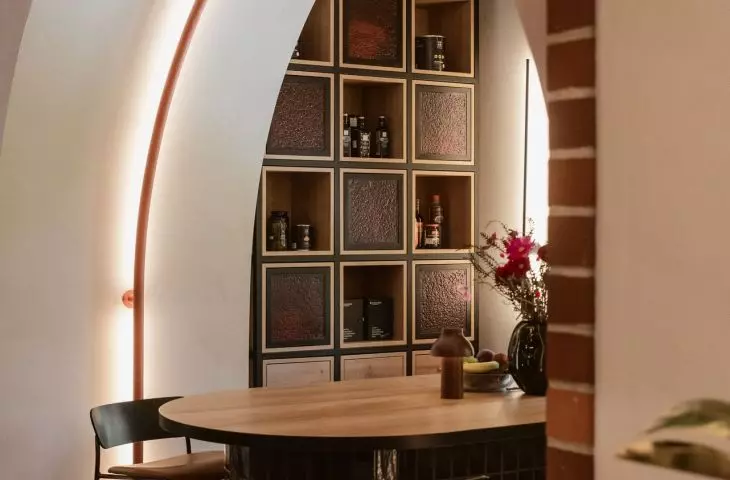
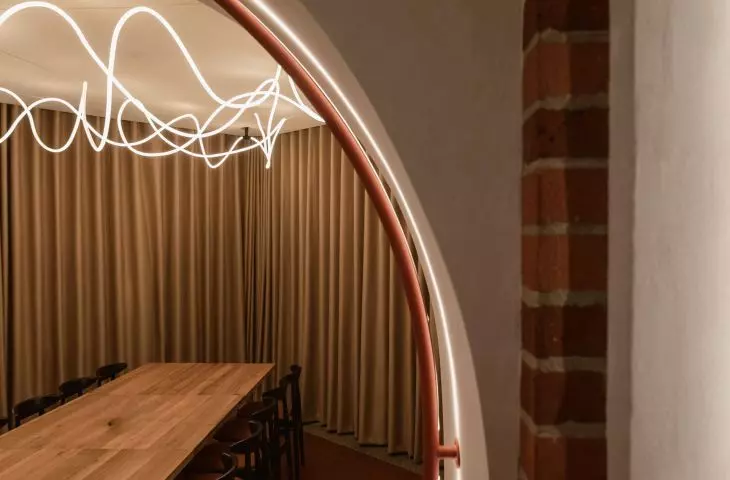
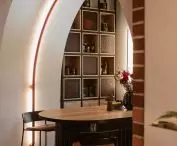
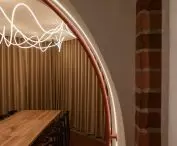
As with the layout of the rooms, the existing finishes are also part of the historic identity of the water tower on Wiśniowa Street in Wrocław. The vertical stripes of red bricks, strongly separating from the white plastered surfaces of the walls, are a reminder of the interior's more than 100-year pedigree. From the time of the tower's construction comes the clinker floor or the steel gate leading to the interior.
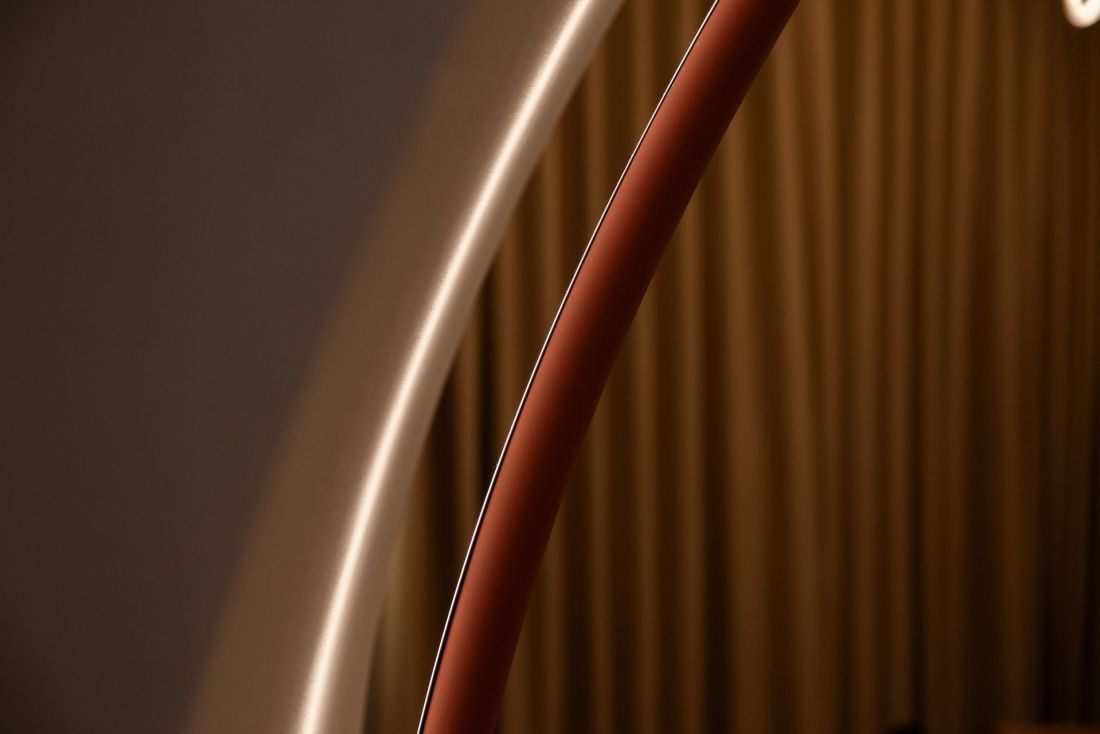
Fine Spot in the Borek water tower in Wroclaw - design: mode:lina
photo: Patryk Lewiński
Inside the Borek water tower in Wroclaw, however, new fixtures also appeared.
We wanted to preserve the character of the place, but at the same time give it a new identity that would harmonize with its history. The tower itself prompted us with solutions - its rough structure became the starting point for building the interior
- says Paweł Garus, architect from mode:lina™.

Fine Spot in the Borek water tower in Wroclaw - proj.: mode:lina
photo: Patryk Lewiński
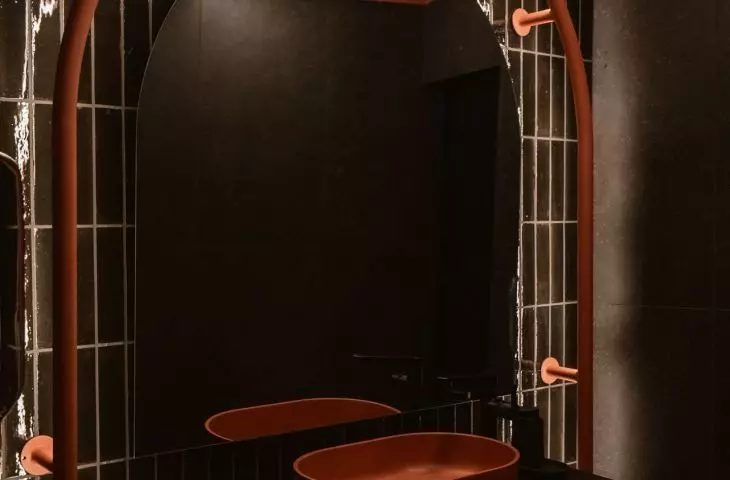
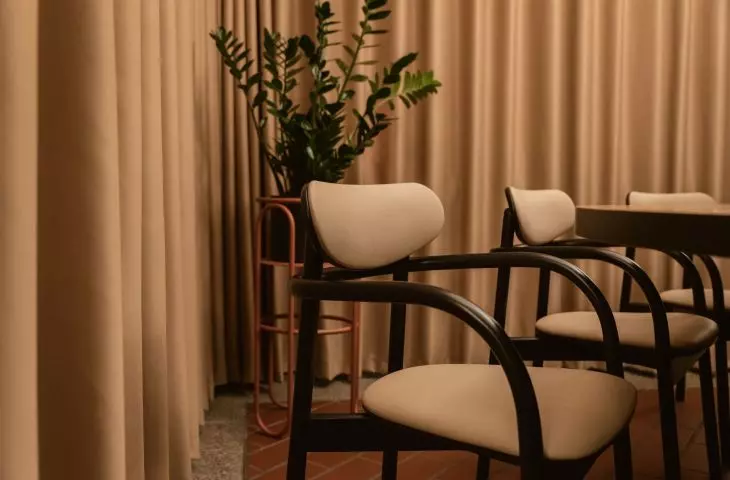
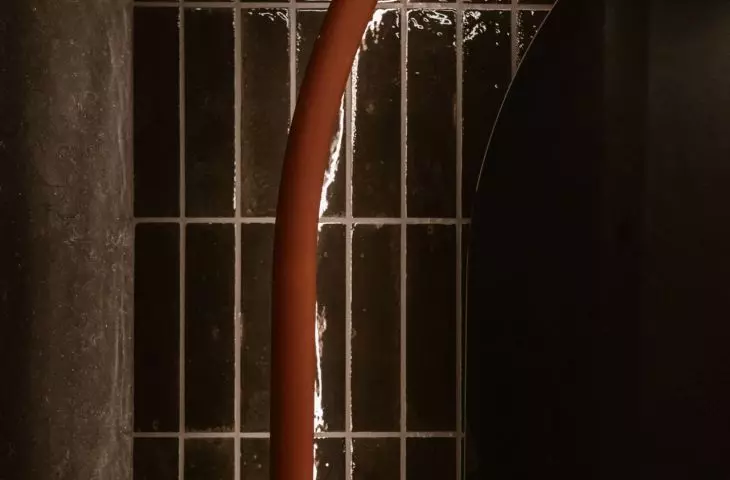
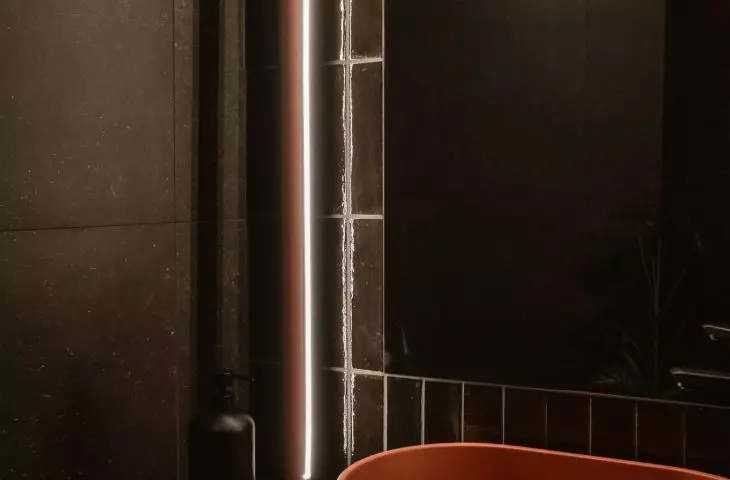
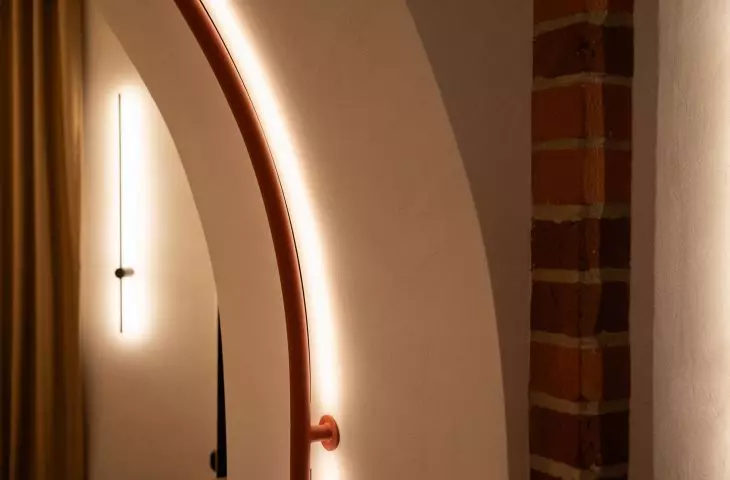
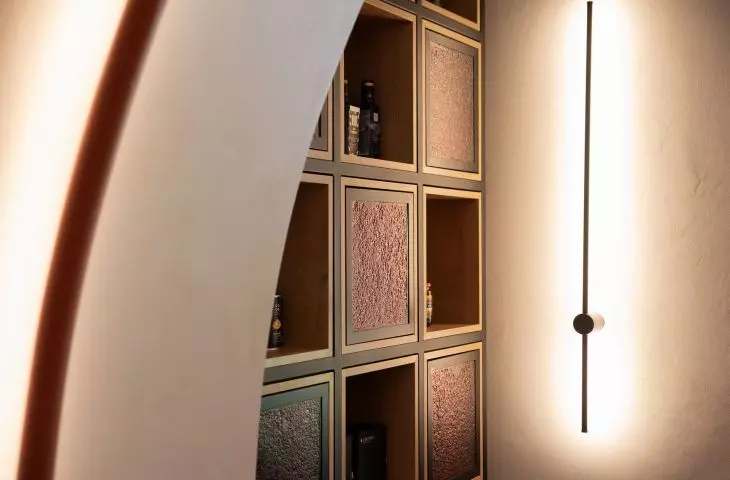
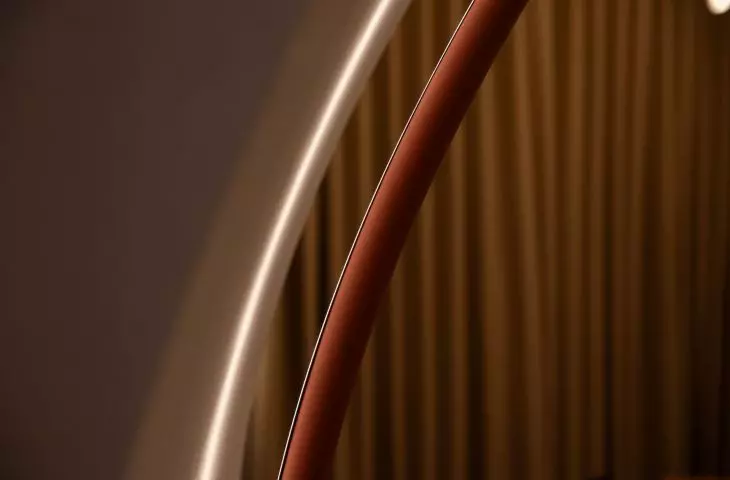
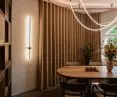
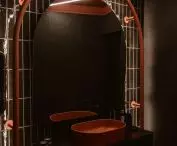
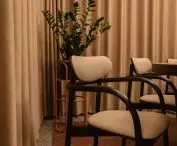
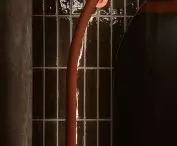
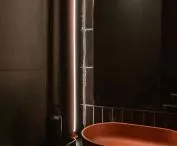
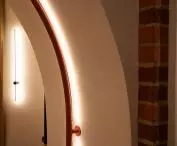
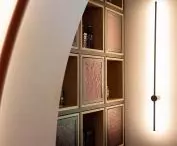
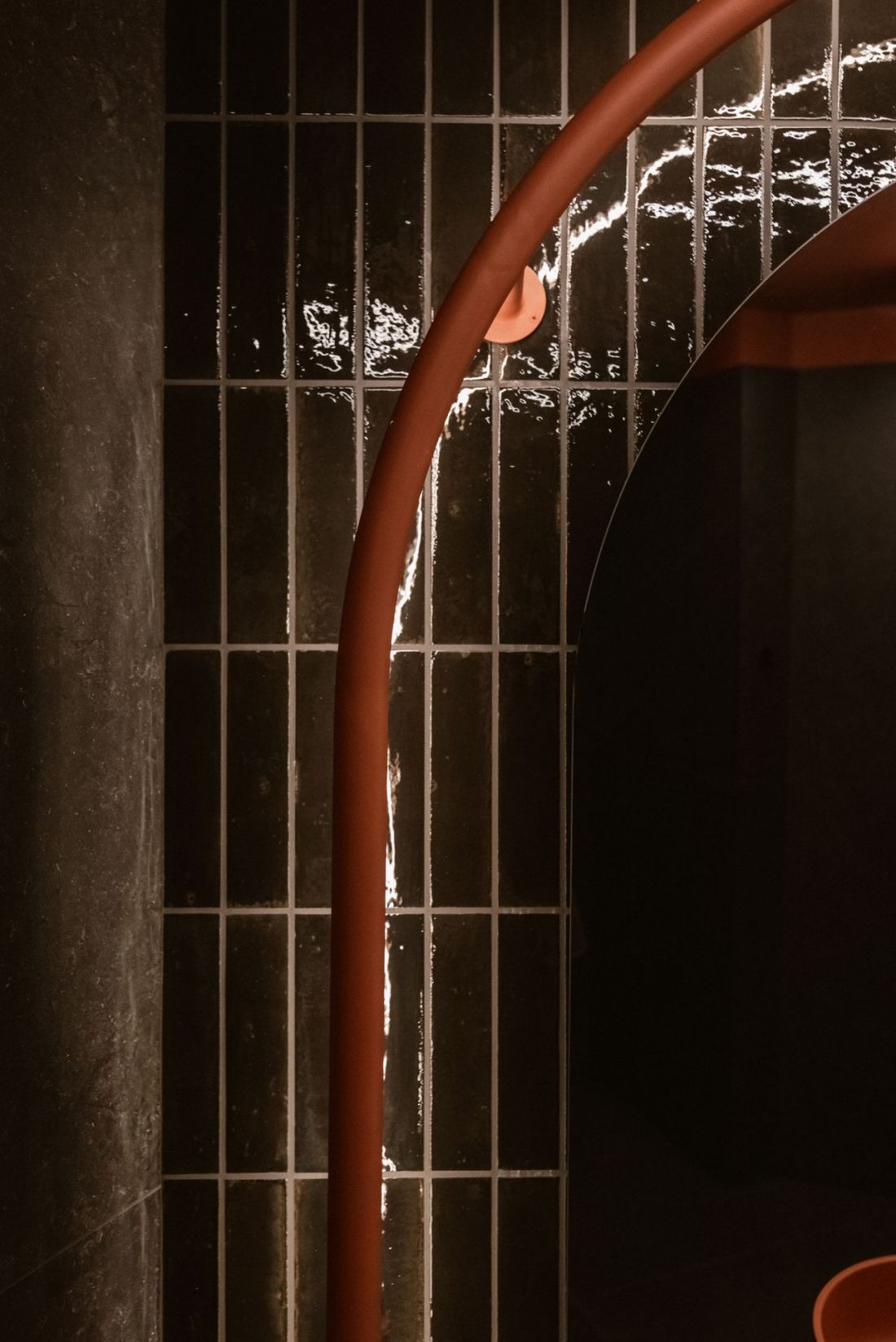
The identity of the tower is alluded to not only by industrial materials, but also by new, discreet details - such as metal light fixtures, resembling "water" pipes, surrounding the arches in the passageways or illuminating the bathrooms in Fine Spot. The furniture used does not make the interior "by force" modern. The architects opted for natural materials, rounded shapes and subdued colors, which discreetly fit in with the historic character of the interior. In addition to the culinary studio and meeting space, the Borek water tower also included a deli store and Wine Spot wine tasting space. Full service!