




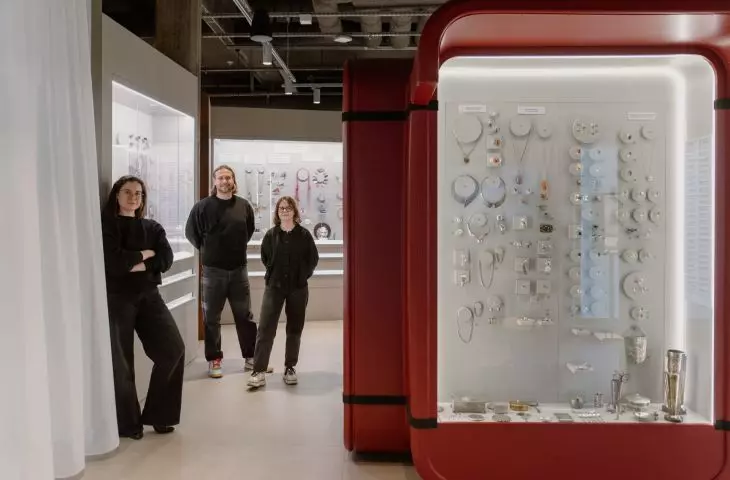
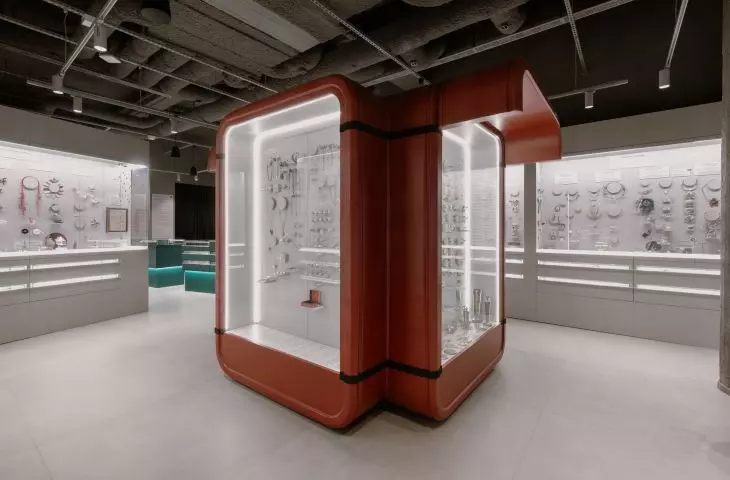
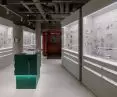
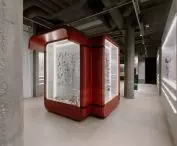
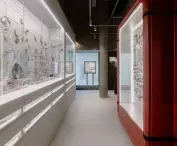
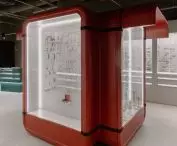
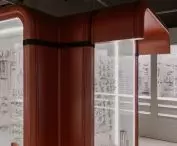
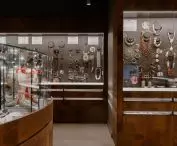
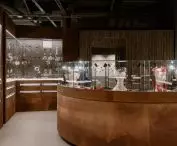
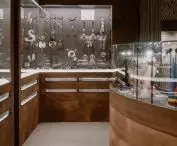
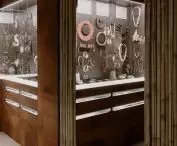
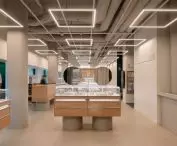
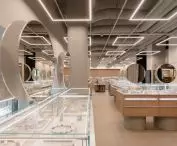

Just over 400 square meters, and inside is a goldsmith's workshop and 2,500 precious examples of jewelry from around the world. The MoJA Jewelry Museum operates on the first floor of Domar, opposite Poznan's Okrąglak. The compact space, which serves as a meeting place, workshop and, above all, an exhibition, was arranged by the mode:lina™ studio. Where did the modernist K67 kiosk come from?
It started with the Yes Gallery, which was located in the Poznań Bazaar since 1998. There, on the initiative of Maria Magdalena Kwiatkiewicz, the most interesting phenomena in contemporary Polish (and not only!) goldsmithing were presented. After many years of activity, the gallery moved to a new place, and at the same time took on a new name and put on fresh clothes, the design of which was prepared by the Poznan studio mode:lina.
MoJA Jewelry Museum in Poznan
design: mode:lina, photo: Patryk Lewiński
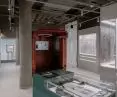
The project was divided into two main parts. The first is an open entrance area, connected to a jewelry store of Polish artists, a temporary exhibition area and a workshop space. The second is the museum part proper, leading through the chapters of the exhibition: from the jewelry of the world, through contemporary Polish goldsmith art, to the jewelry of the People's Republic of Poland presented in the restored K67 kiosk.
- read about Poznan jewelry museum.
MoJA Jewelry Museum in Poznan
design: mode:lina, photo: Patryk Lewiński
Jewelry as a living language of culture
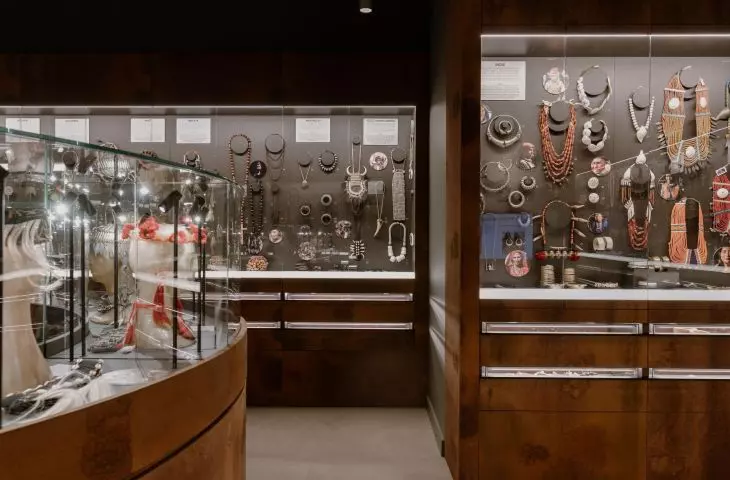
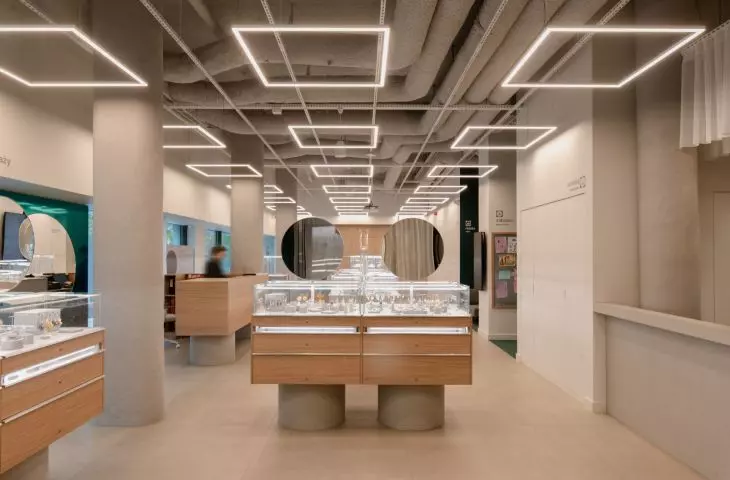
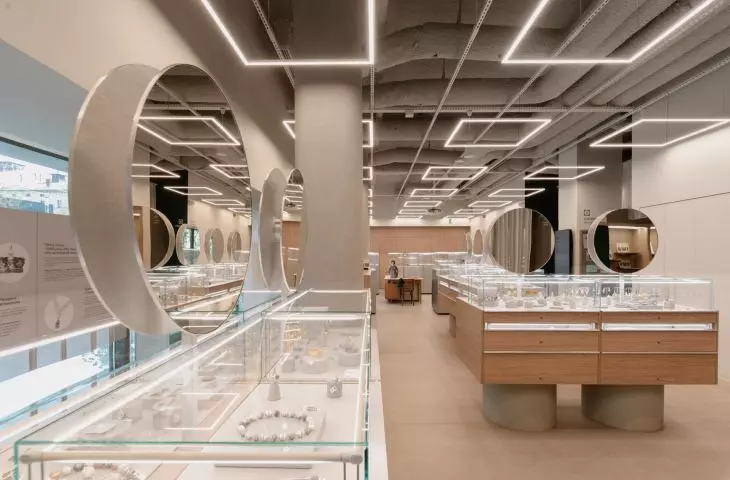
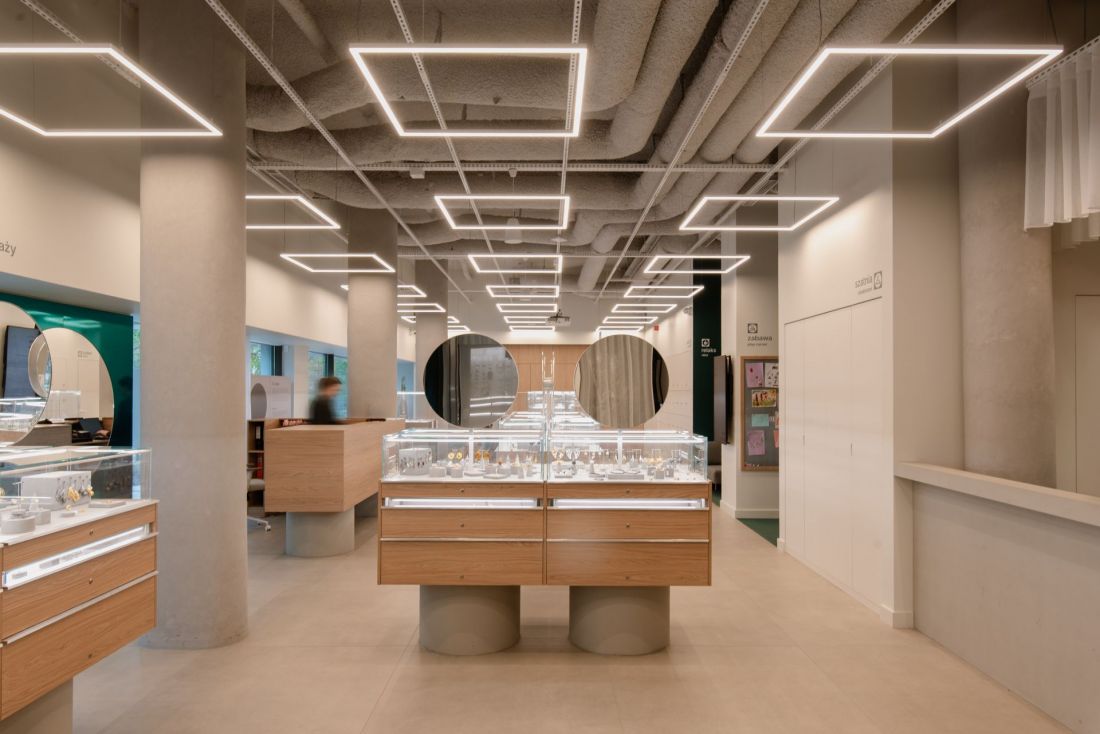
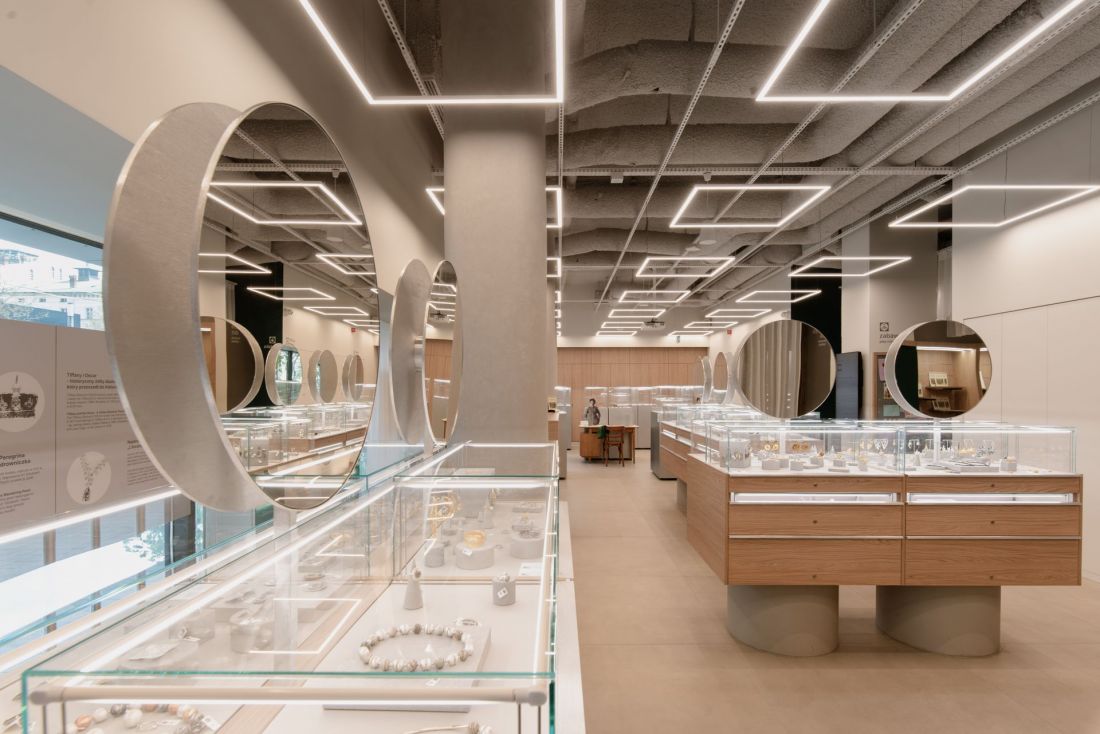
The entrance area, located behind a glass window, can be accessed directly from street level. Visitors are greeted by a bright, relatively warm interior - with plenty of wood, which was used as wall cladding and for the displays, set on massive concrete bases. Above the display cases, in which Polish jewelry is presented, round mirrors "float", and the entire room is illuminated by square-circuit led lamps. From behind them peeks a technical ceiling, which visually enriches the interior with its intricate texture.
MoJA Jewelry Museum in Poznań
design: mode:lina, photo: Patryk Lewiński
In this zone you can buy jewelry by Polish artists, see temporary exhibitions or take part in workshops. Mobile displays finished in steel allow you to change the layout of the space and adapt it to different events. This is important, because MoJA was not designed as a static museum "to be viewed from behind glass." It is meant to be a lively place to meet, talk, educate and work with the material.
- explains the studio.
MoJA Jewelry Museum in Poznań
proj.: mode:lina, photo: Patryk Lewinski
MoJA Museum of Jewelry in Poznan
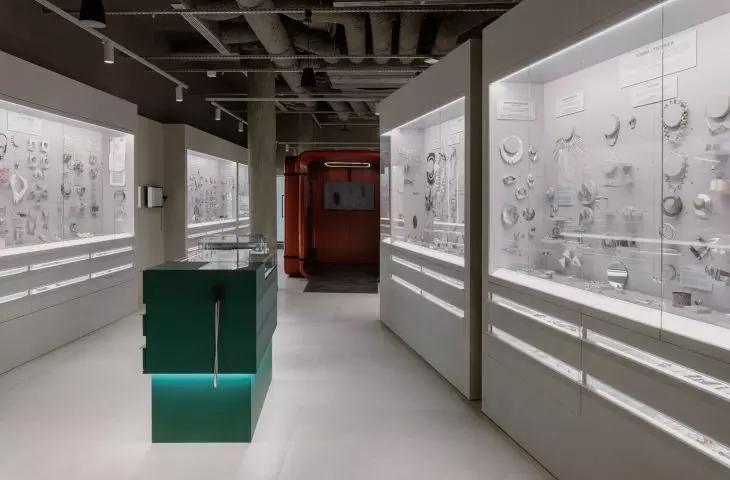
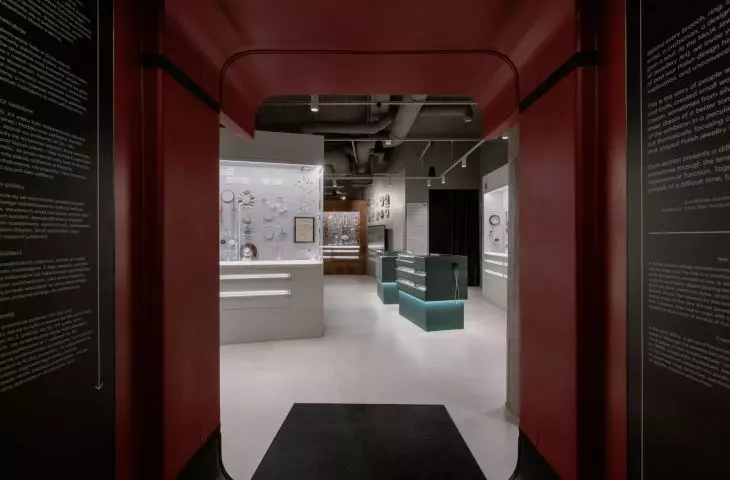
Once you cross the threshold of the museum space, the atmosphere changes dramatically. The dense grid of lighting disappears from under the ceiling, and warm wood is replaced by the raw concrete of the floors, walls and pillars, on which the textures of the shuttering are drawn. Despite the museum's small size, it has managed to design a sequence of spaces that organize the exhibition while creating thematic settings for the objects on display.
MoJA Museum of Jewelry in Poznań
proj.: mode:lina, photo: Patryk Lewiński
corten and bamboo interior in the interior
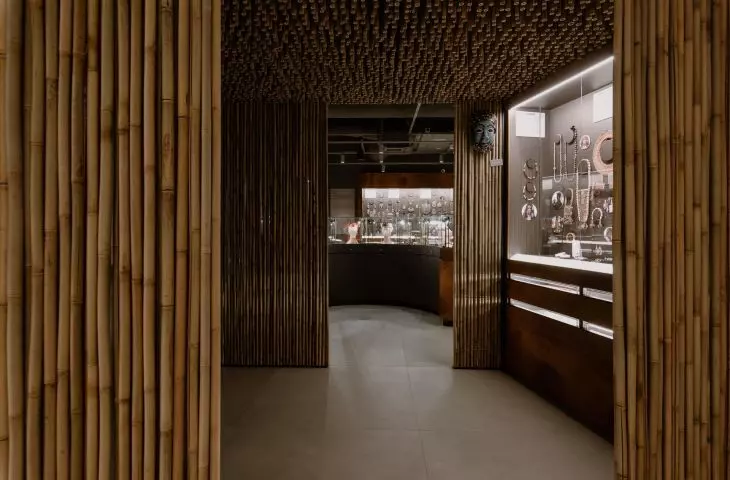
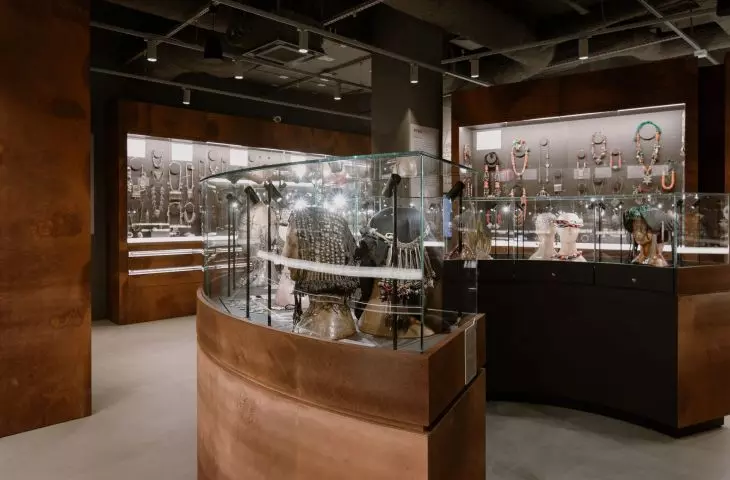
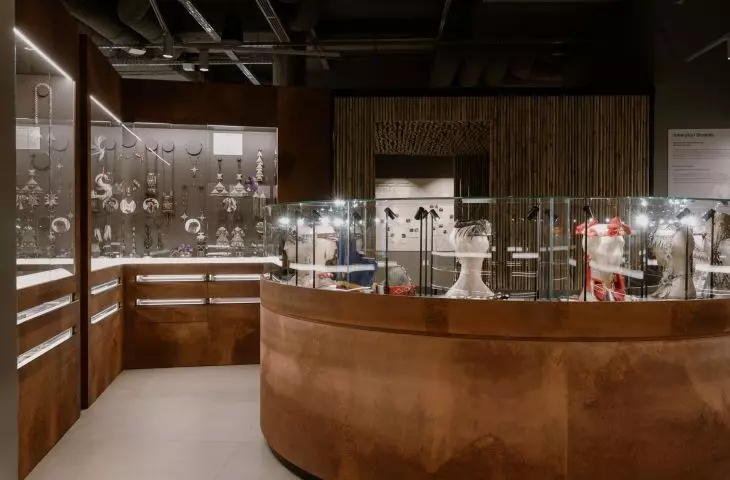
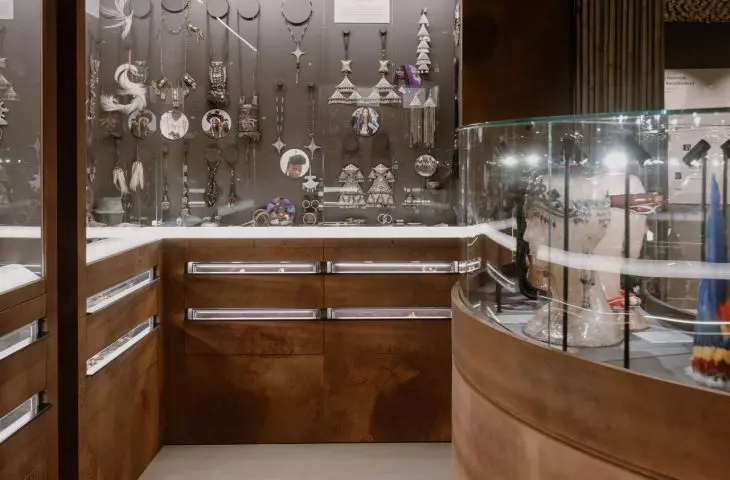
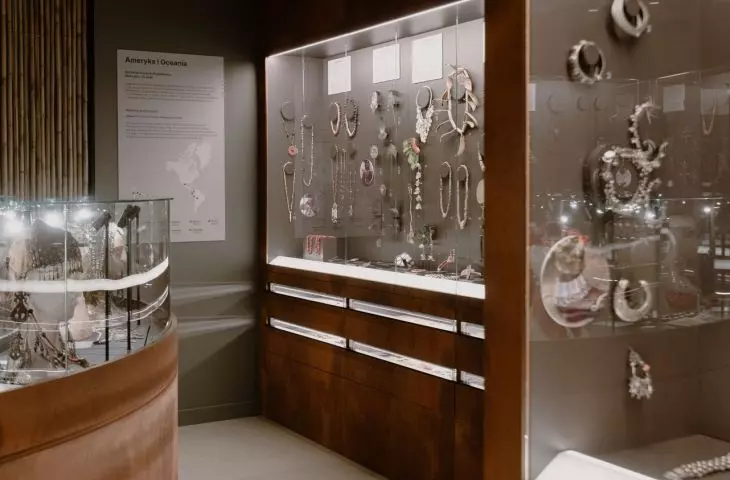
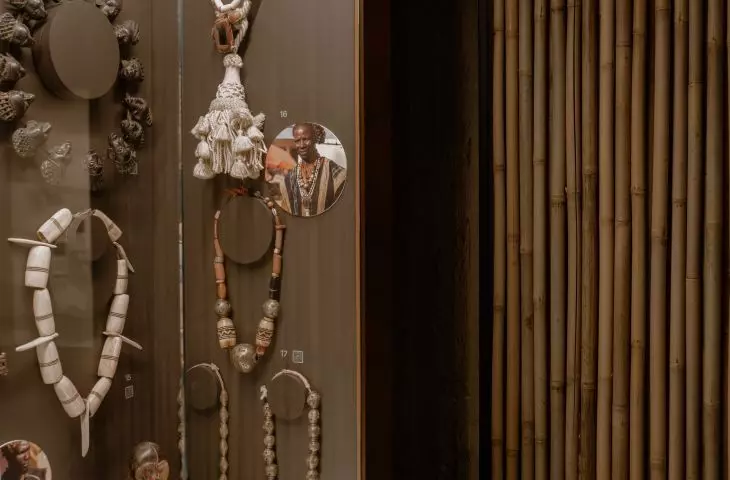
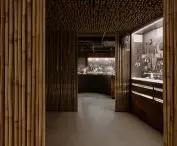
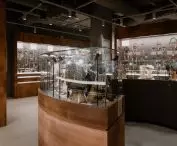
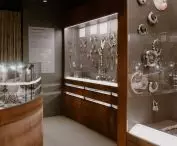
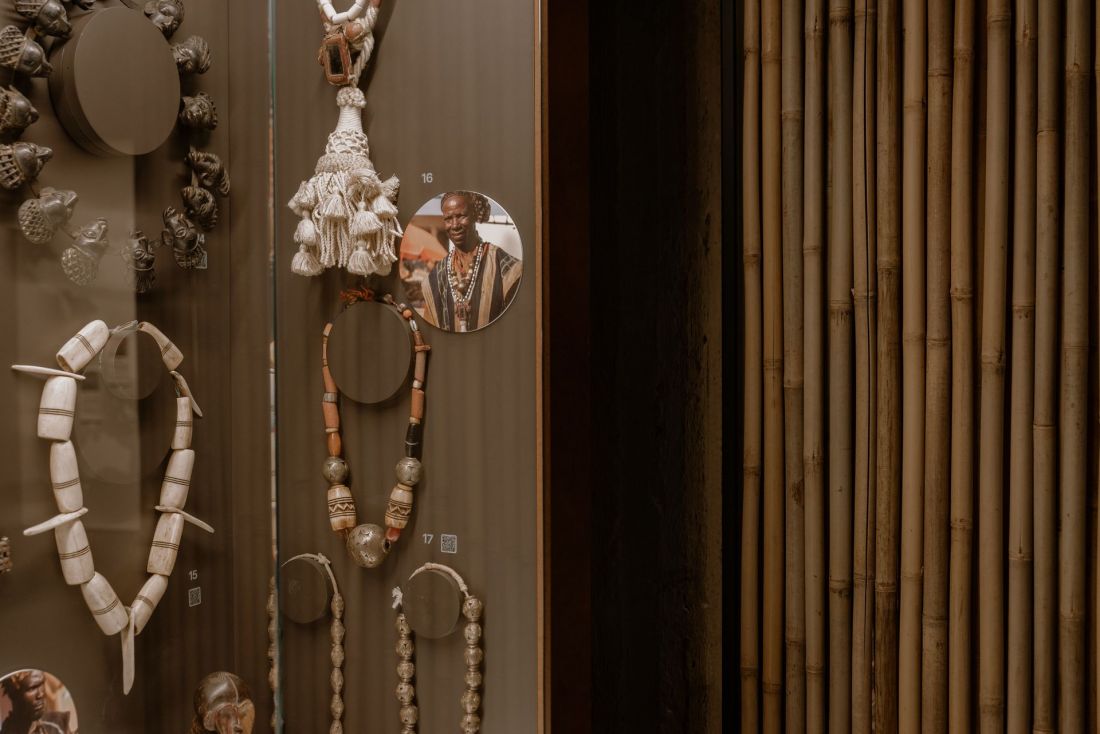
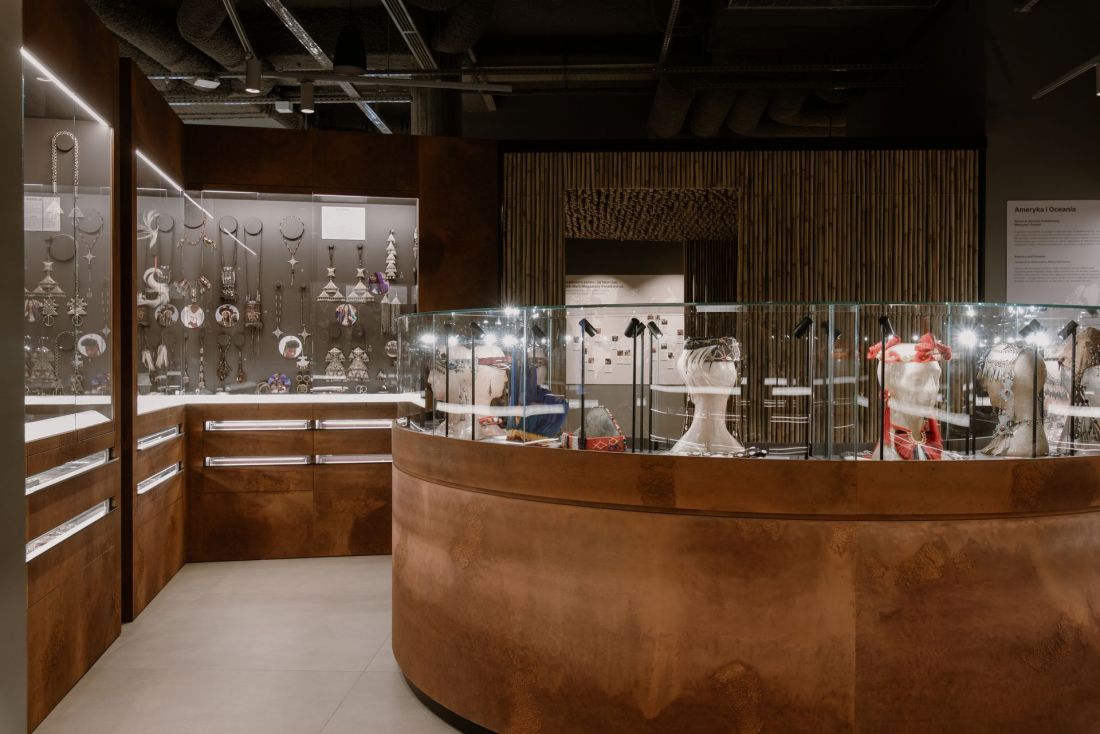
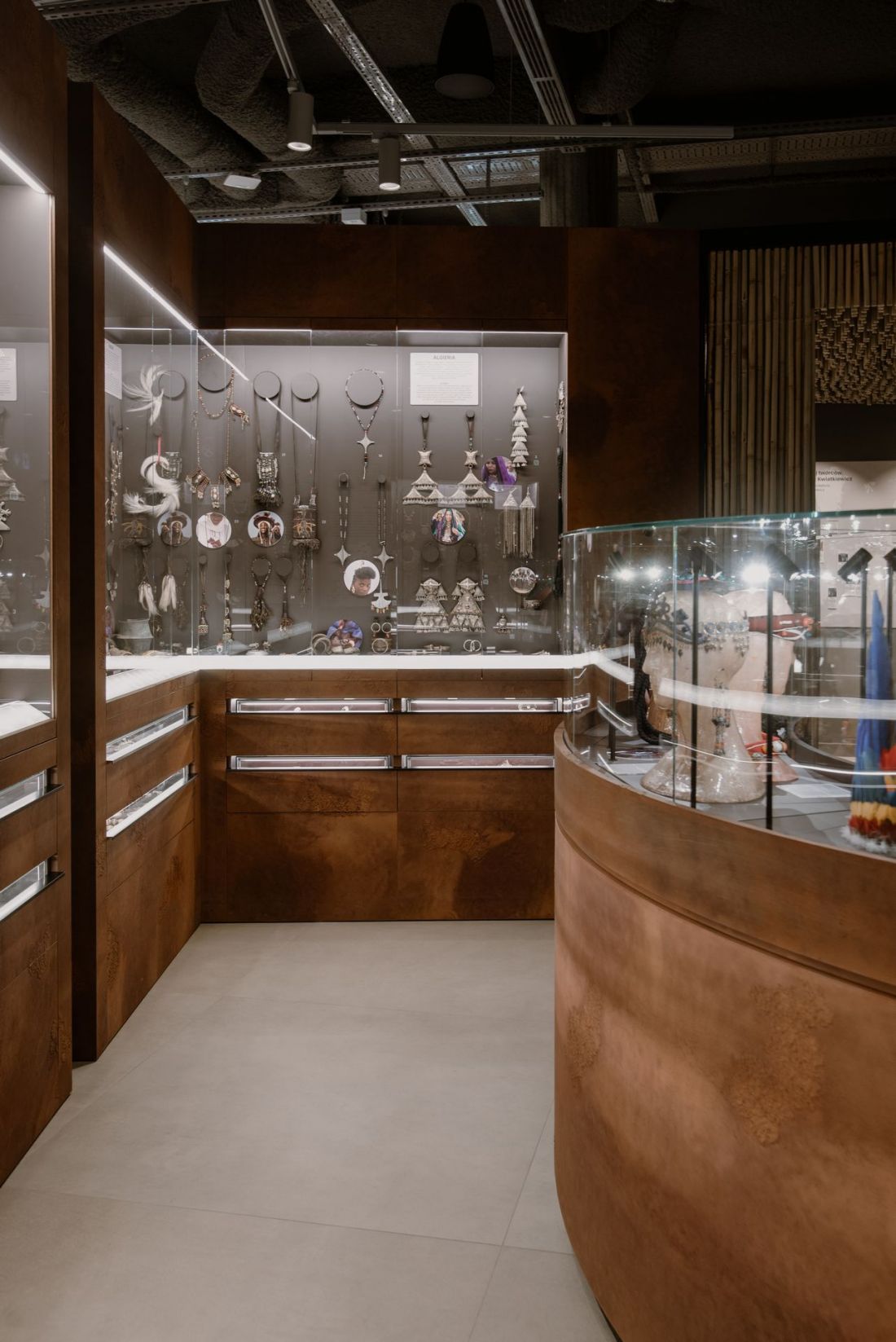
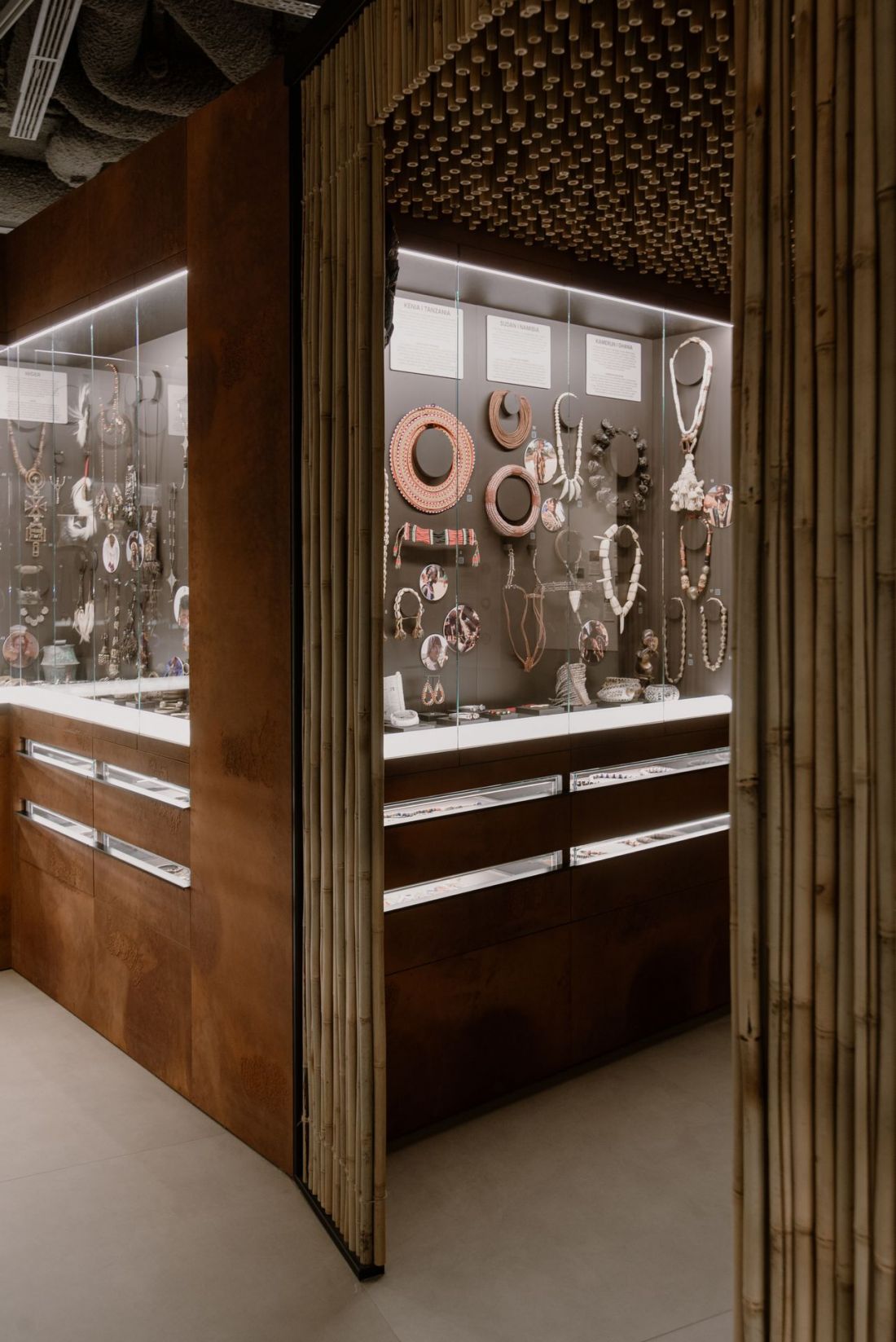
The first part of the permanent exhibition at the MoJA museum included "Jewelry of the World." Exhibits made by local artisans from Africa, Asia, as well as South America and Oceania are shown there. Despite the more intimate atmosphere in the museum section, the ethnographic section has been warmed up with materials that are not at first associated with the art of goldsmithing:
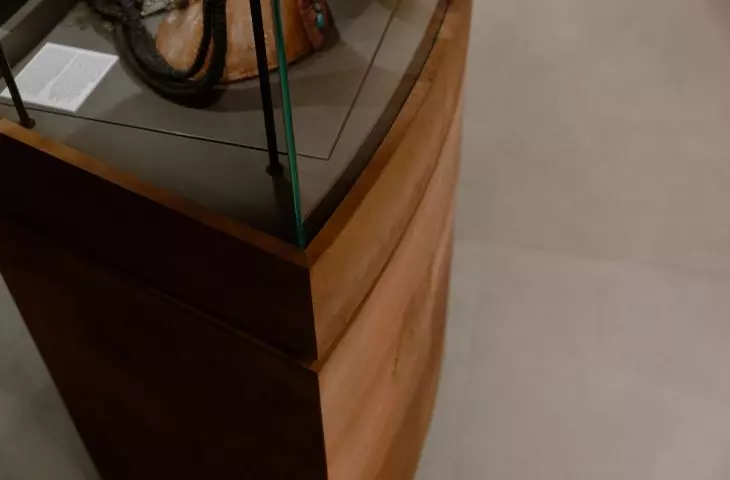
Display cases finished with a material evoking corten build up an impression of weight, durability and the mark of time. In the center of this section appears a semicircular display case with headgear. It acts as an island around which the visitor naturally slows down a step.
- reads about the MoJA museum.
MoJA Jewelry Museum in Poznan
proj.: mode:lina, photo: Patryk Lewiński
The corten island is also an example of how the architects at mode:lina make effective use of the museum's limited space, where jewelry hangs not only against the walls, but occupies the entire available area of the room.
MoJA Jewelry Museum in Poznan
proj.: mode:lina, photo: Patryk Lewinski
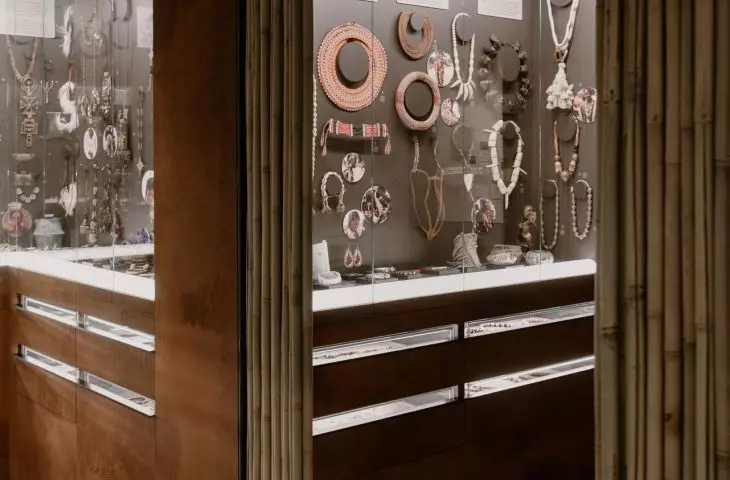
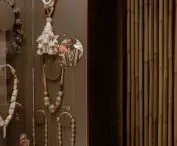
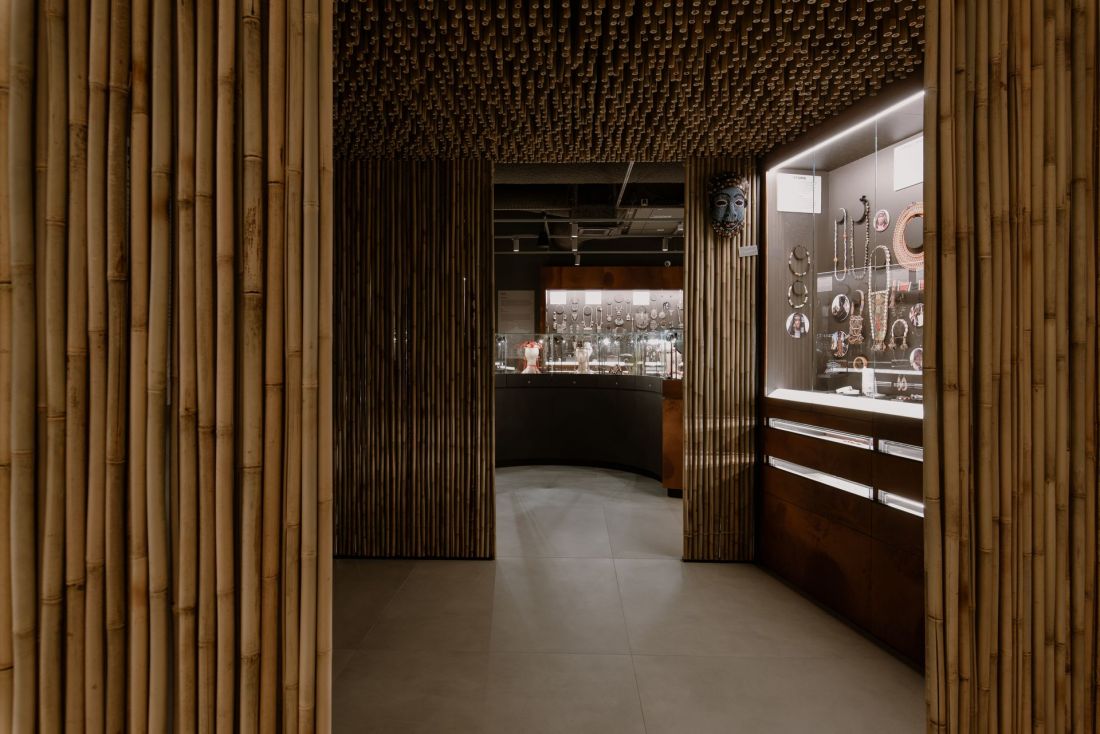
Although visitors to Poznan's jewelry museum are unlikely to find Russian toys, the matryoshka concept is reflected in the design of the MoJA space. Indeed, the section dedicated to "Jewelry of the World" included a cubicle made of bamboo, a kind of interior within an interior, creating a setting for exhibits from Ethiopia, Kenya or Tanzania.
MoJA Museum of Jewelry in Poznań
proj.: mode:lina, photo: Patryk Lewiński
minimum of space, maximum of history
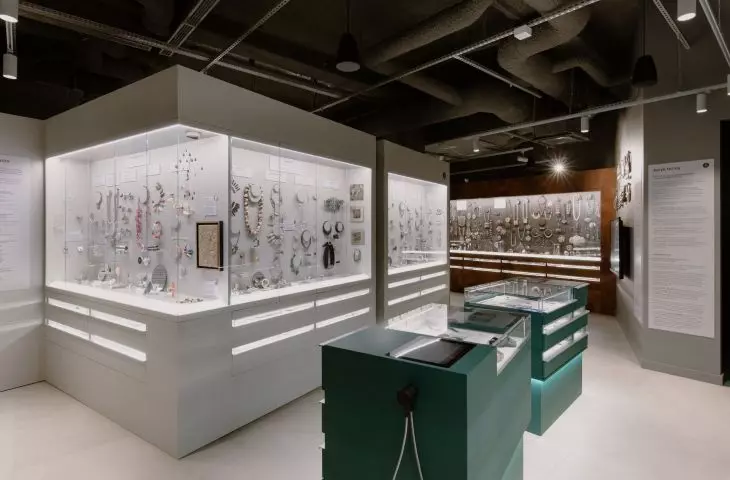
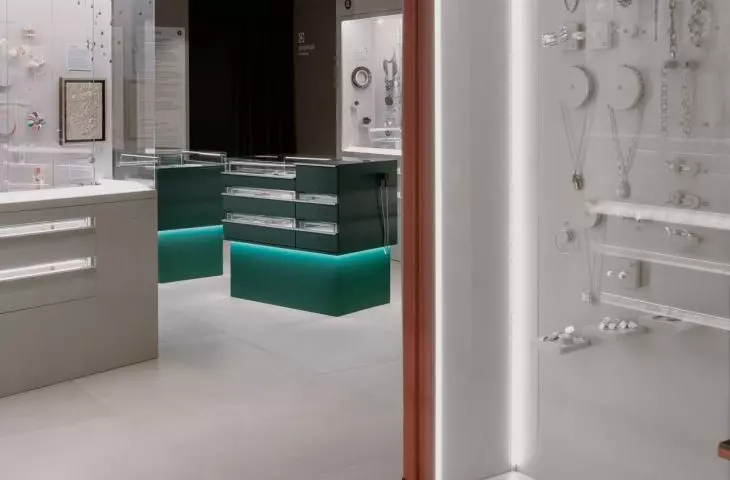
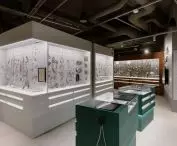
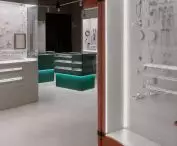
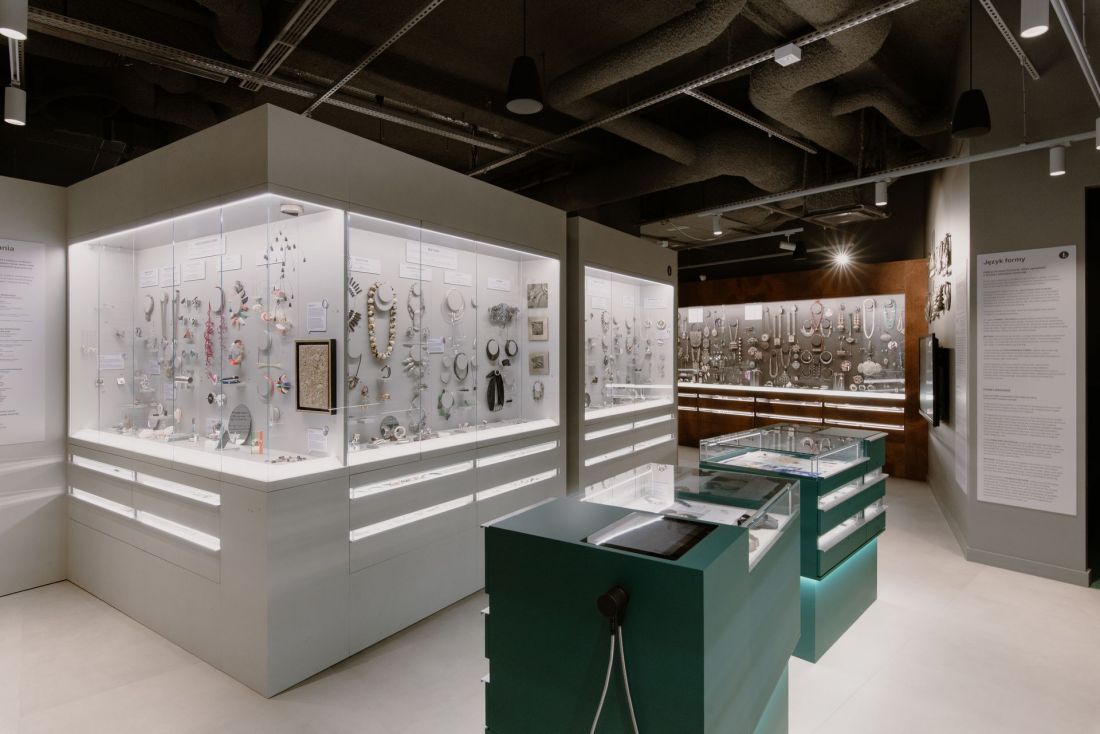
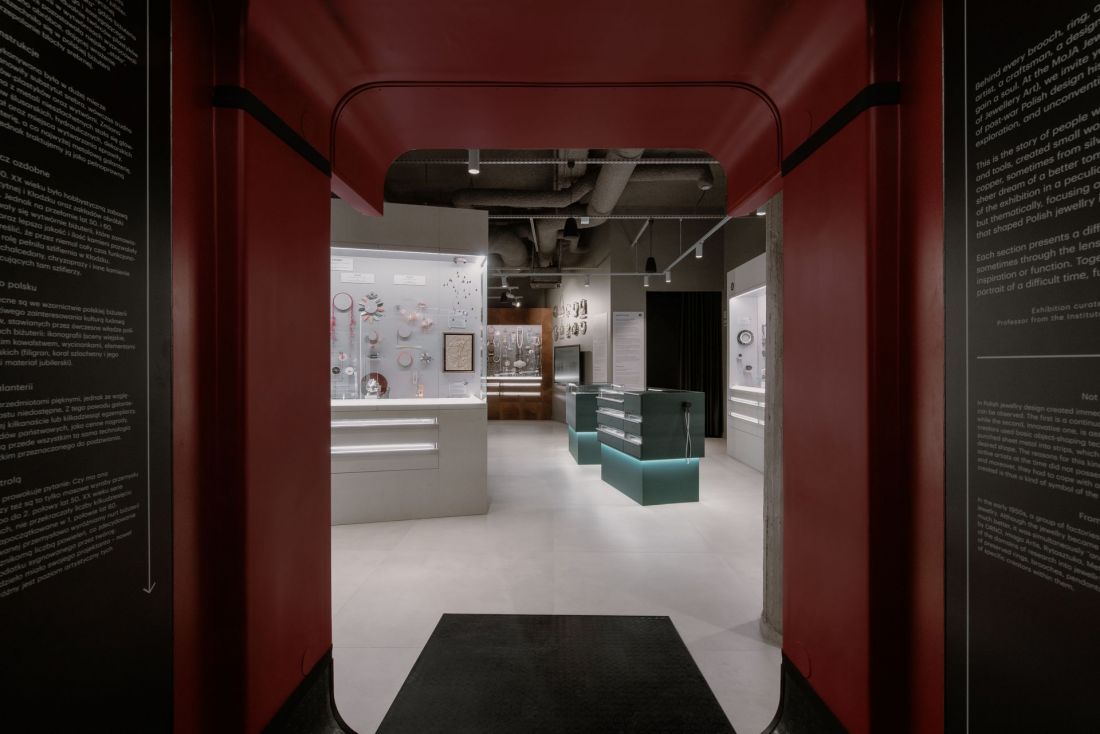
The second section of the MoJA museum in Poznań, where contemporary art jewelry plays first fiddle, is completely different. It corresponds to a much more austere, technical arrangement:
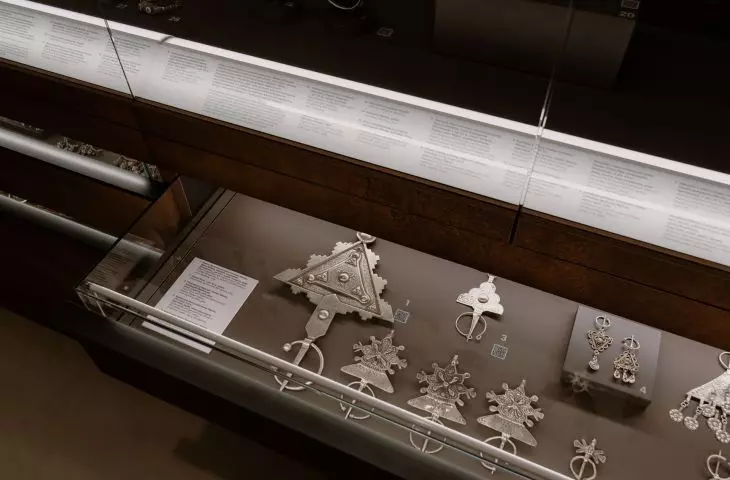
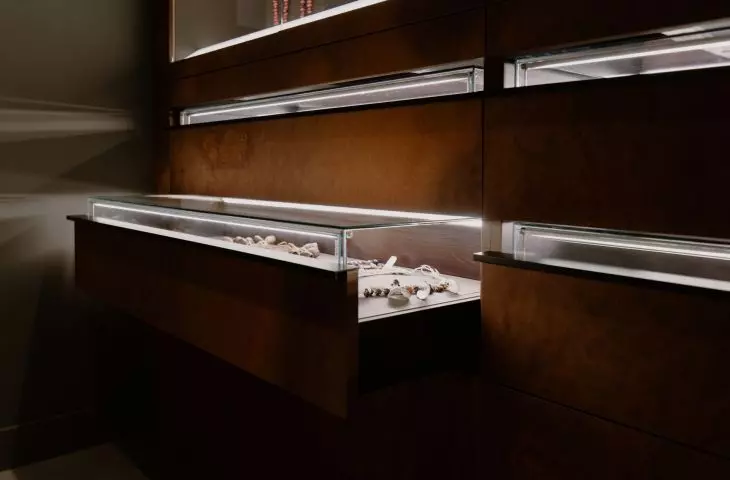
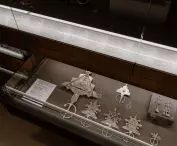
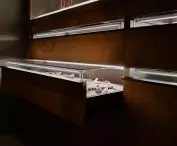
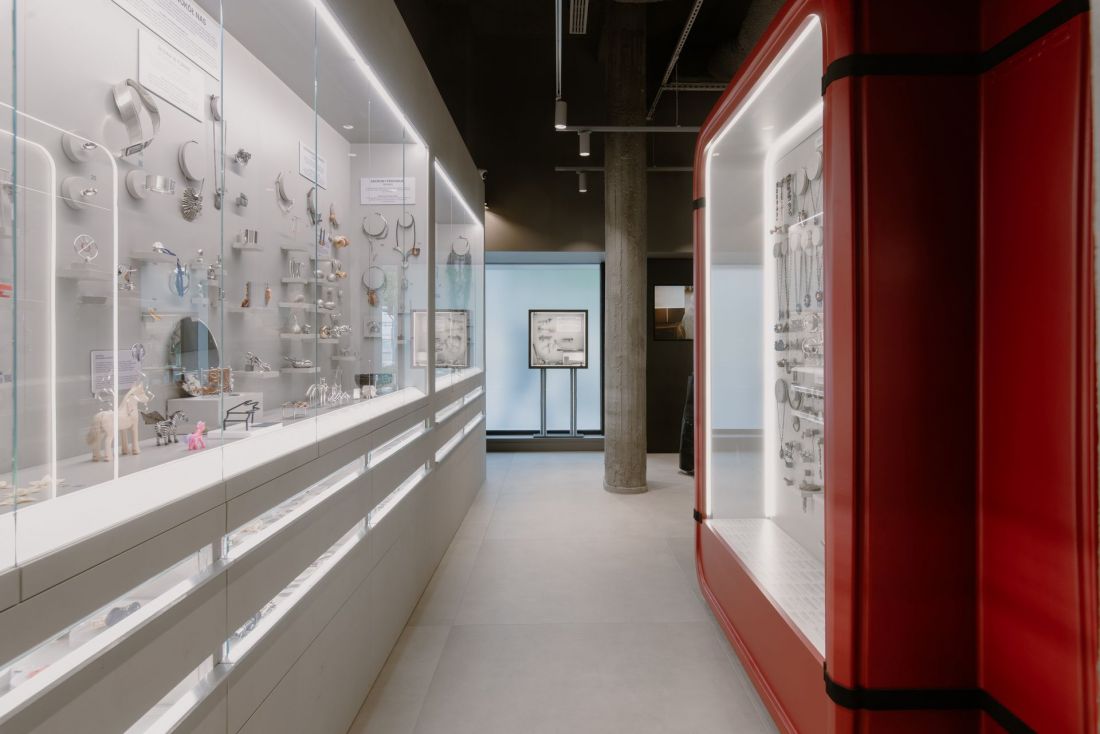
The showcases here are not just display furniture. They have been conceived as tools for museum work. Pull-out, illuminated drawers make it possible to show successive layers of the collection without overloading the main walls. Magnetic boards make it possible to rearrange the exhibition, add new threads and conduct the narrative in a flexible manner. In this way, the museum does not lock the collection into a once-and-for-all order, but gives it the opportunity to evolve.
- writes the studio.
MoJA Museum of Jewelry in Poznań
proj.: mode:lina, photo: Patryk Lewiński
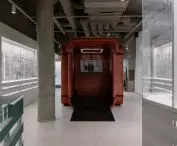
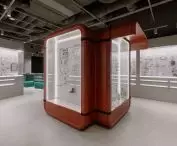
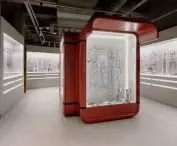
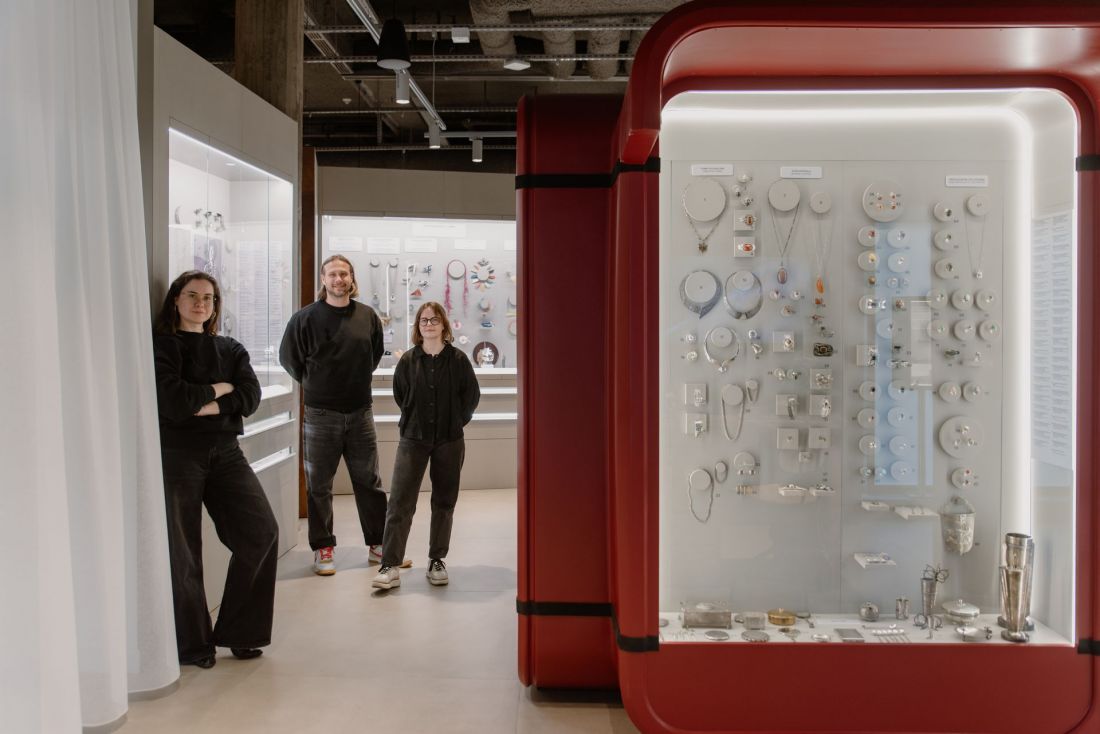
Modernist K67 kiosk with glitter in the display cases
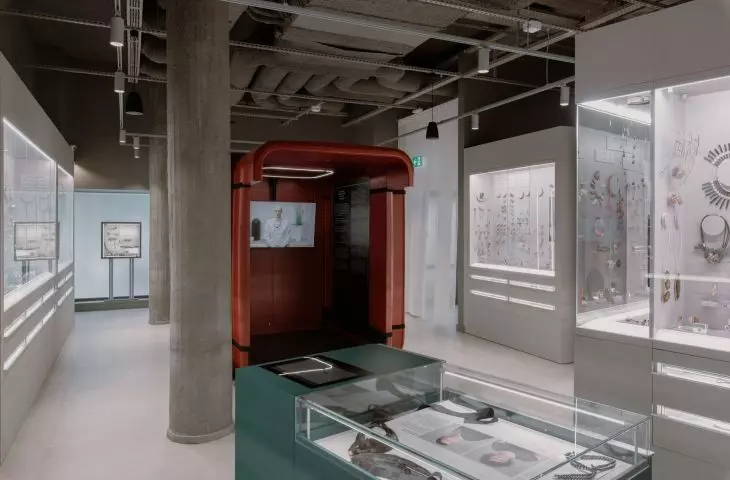
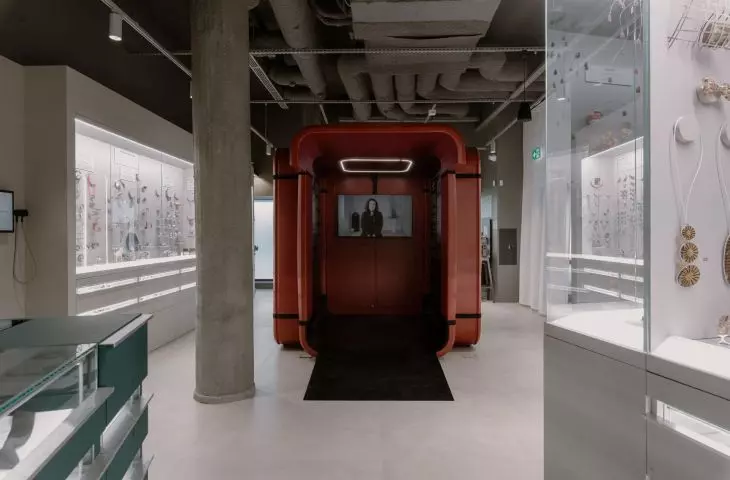
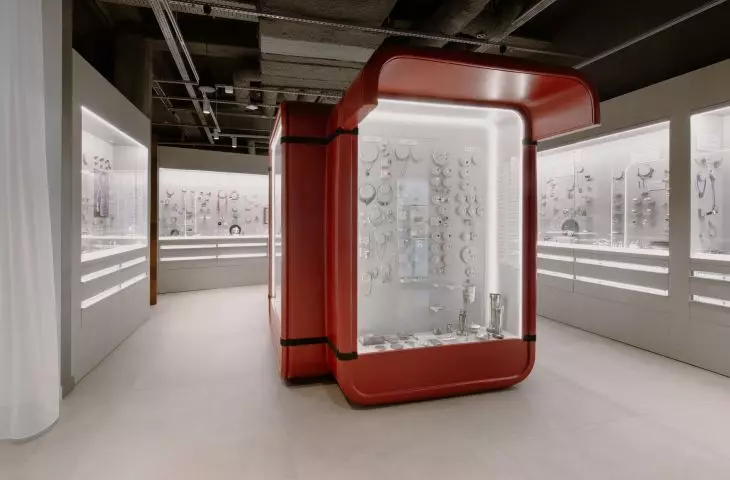
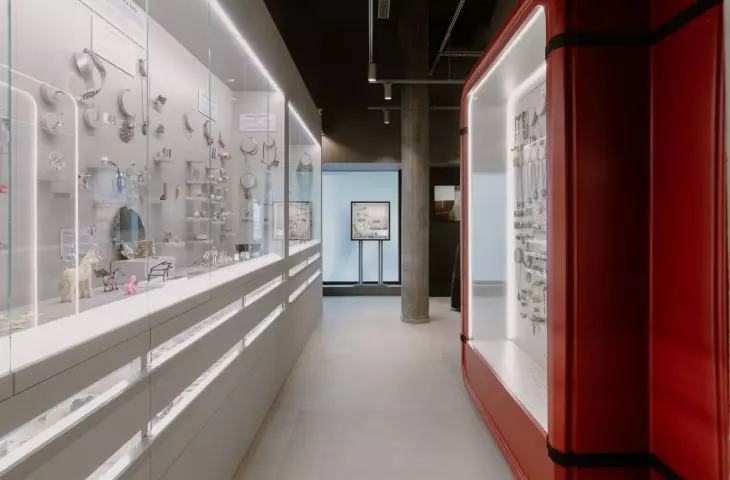
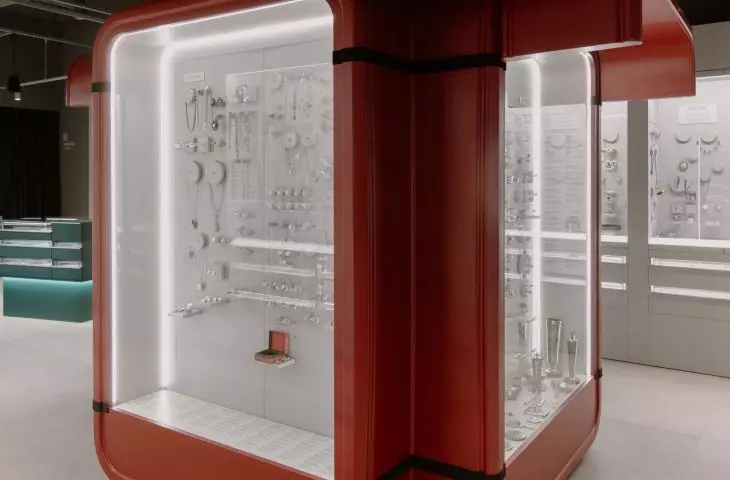
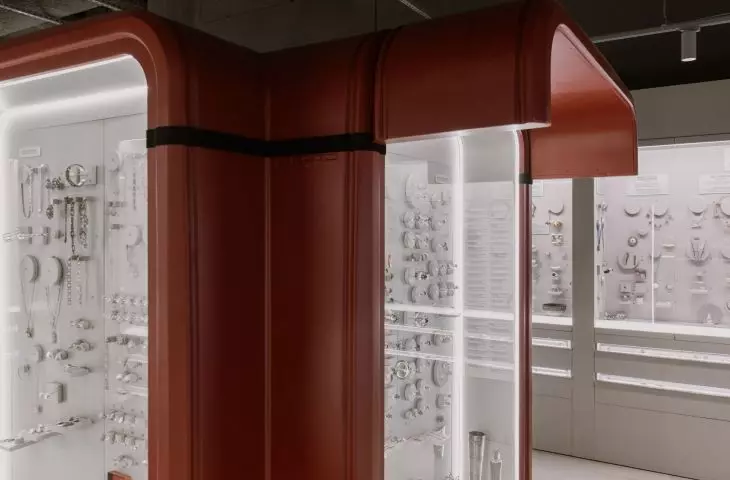
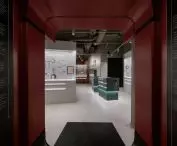
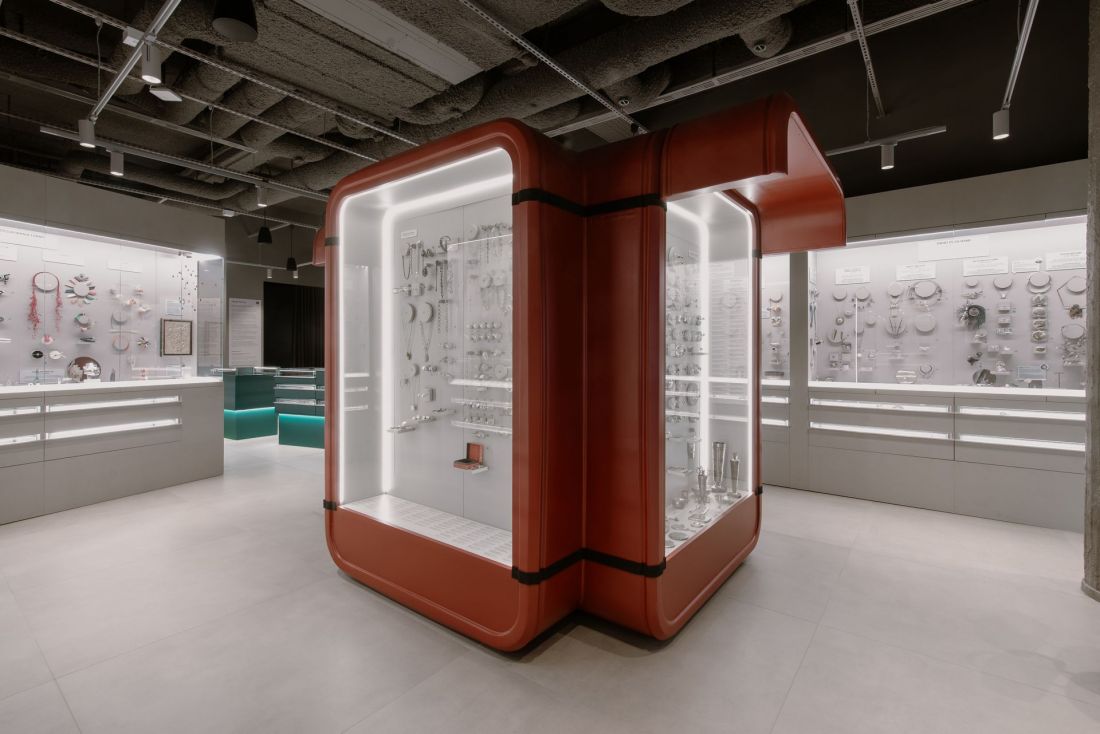
The centerpiece of this space is an iconic booth - the K67 kiosk. The modular yugokosk was designed in 1966 by Slovenian architect Saša Mächtig, and the fruits of his concept quickly appeared in all corners of the former Eastern Bloc. K67 kiosks can still be found on the streets of Polish cities - for example, near the PTTK Tourist House in Cracow or at the old-age exchange on Koło Street in Warsaw.
MoJA Jewelry Museum in Poznan
design: mode:lina, photo: Patryk Lewiński
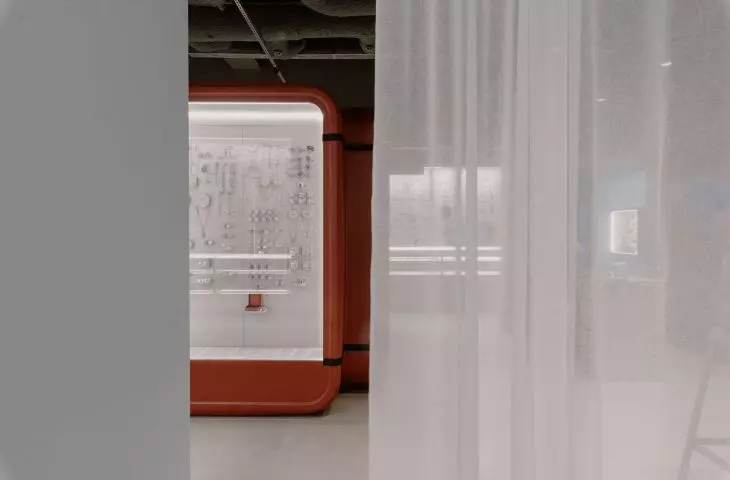
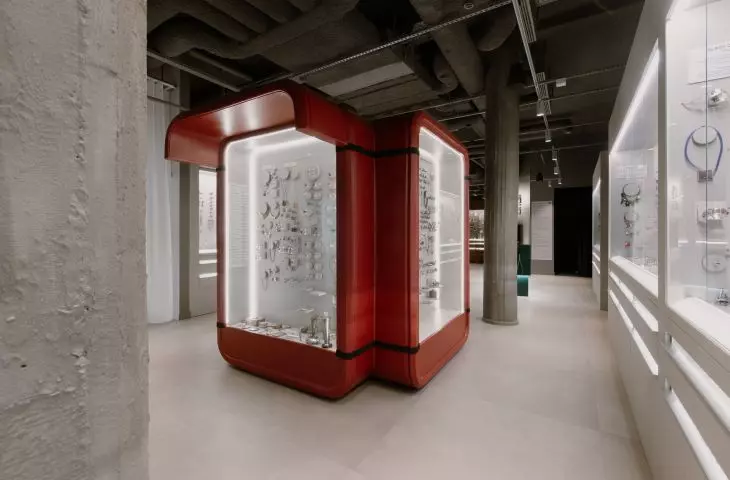
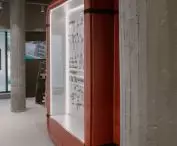
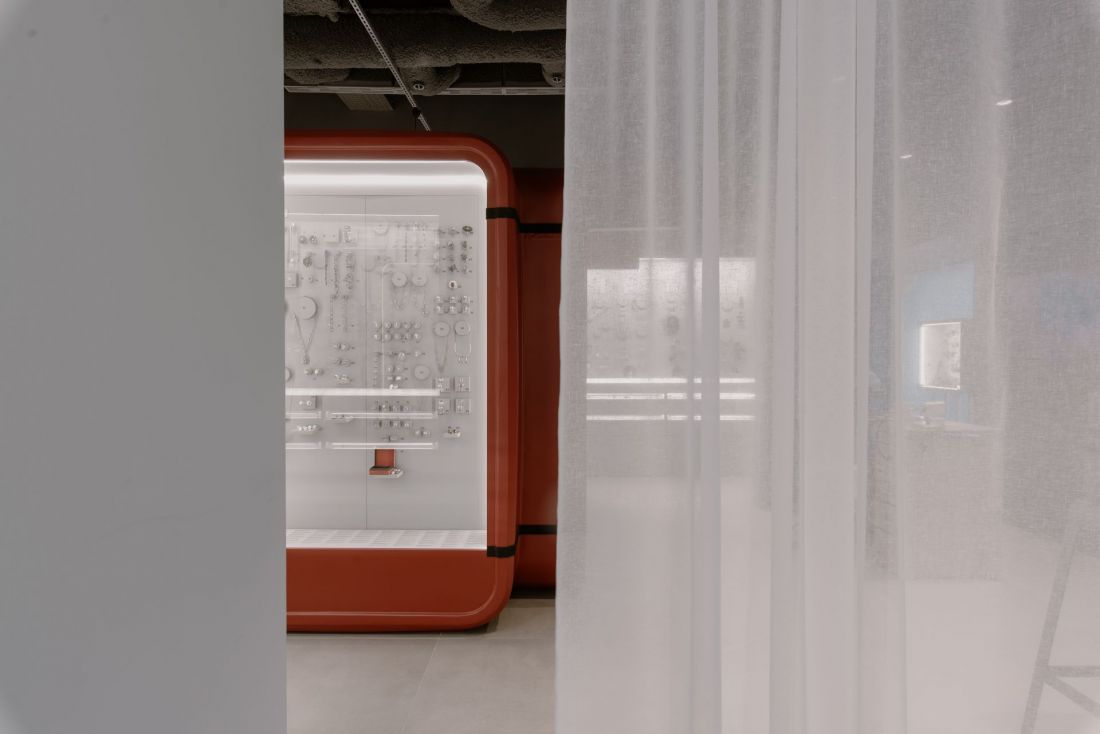
One of the futuristic kiosks has wandered underground, to Poznan's MoJA Jewelry Museum, where instead of hot dogs, "Popular" cigarettes or "Turbo" gum, its display cases feature the most interesting examples of Polish jewelry from the communist period:
The kiosk doesn't just catch the eye. He immediately sets the context. It evokes urban everyday life, commerce, systemicity, repetitiveness, but also the memory of an era when design functioned between constraint, craftsmanship and ingenuity. Thus, the jewelry from those years does not go into a neutral showcase, but into a space that reinforces its cultural background.
- read about the MoJA Jewelry Museum in Poznan.
MoJA Jewelry Museum in Poznan
proj.: mode:lina, photo: Patryk Lewiński
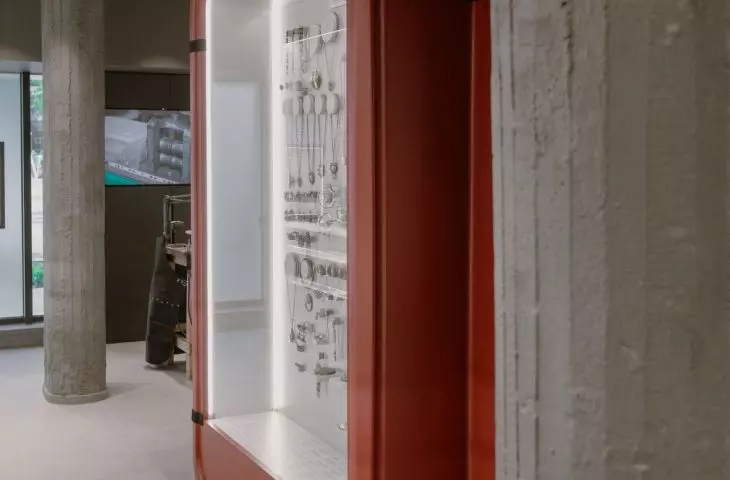
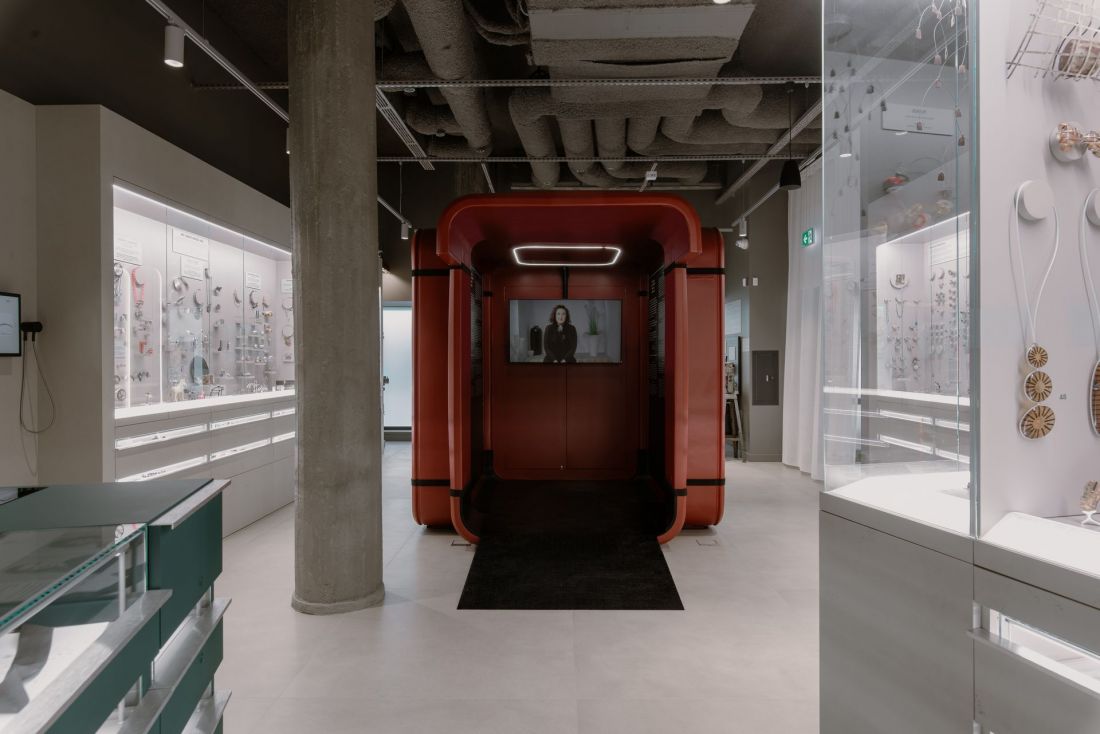
Jewelry showcases have appeared on the exterior walls, but you can also go inside the K67 kiosk, where a film is displayed and the history of Polish goldsmithing is presented. Importantly, the kiosk did not come to the museum straight off the street - it was painstakingly restored, and the red color covering its walls made it an important landmark in a rather sterile space, brightened by the cold light of the displays.
MoJA Jewelry Museum in Poznań
proj.: mode:lina, photo: Patryk Lewiński
goldsmith's workshop
Like any real museum, MoJA has not only an exhibition space and a collection, but also a place where proper care is taken over the valuable exhibits. At the back of the Museum of Jewelry in Poznań is a goldsmith's workshop, where workshops and meetings are held in addition to conservation treatments.
A real goldsmith's table, tools and the atmosphere of a place where jewelry ceases to be a mere exhibit and returns to the process: cutting, soldering, grinding, mending, trial and error appear here.
- writes mode:lina.
MoJA Museum of Jewelry in Poznań
proj.: mode:lina, photo: Patryk Lewiński
Each zone has its own character, but the whole remains consistent. The austere technical ceiling, concrete pillars, precise lines of light and consistently guided display cases create a contemporary museum background. Stronger gestures appear on it: a bamboo cubicle, corten tones, steel displays, a red K67 kiosk, wooden display cases and round mirrors.
- concludes the studio.