








A city designed in an attentive manner is one in which daily functioning does not require constant vigilance. Moving through public space, choosing a route, meeting place or way of being are not burdened by calculating risks or having to conform to other people's expectations. Architecture and urban planning simply work — predictably, safely, without having to explain their presence. We announce a series of meetings and articles that will seek ways to design the city more equitably.

The task is being carried out with the support of the European Union under the National Plan for Reconstruction and Increasing Resilience, Investment A2.5.1: Program to support the activities of cultural and creative industries entities to stimulate their development.
For many people in Poland, this experience of the city is a daily reality. For most white heterosexual men, the space remains largely transparent: there is no need to think about one's safety or how one's body, gesture or manner will be perceived. Research on feelings of safety in public space, however, makes it clear that this experience is not universal — OECD data shows that women are significantly more likely than men to report anxiety about moving around in the city after dark.
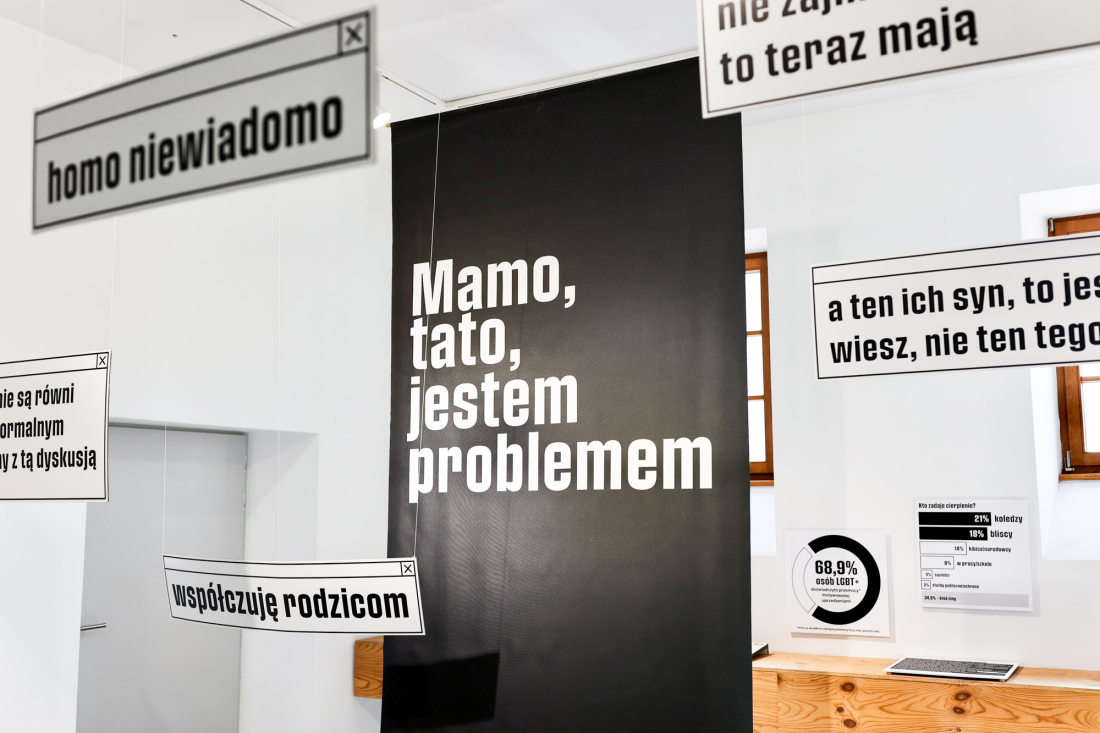
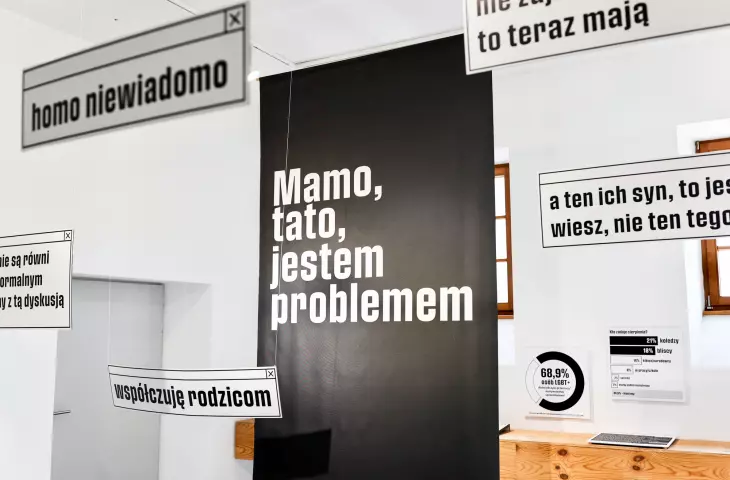
Mom, dad, I'm the problem — an exhibition by Maciej Gil
Paula Dulnik / IDK
For women and people belonging to sexual and gender minorities, the same city often works differently. A space that for some is neutral, for others can be ambiguous and sometimes outright dangerous. Research by the European Union Agency for Fundamental Rights shows that more than 60% of LGBT+ people in the European Union avoid showing their feelings in public spaces for fear of the reaction of those around them.
Similar mechanisms also apply to other minorities — religious, ethnic or national — whose presence in public spaces is sometimes questioned, policed or burdened with additional expectations and stereotypes. The city is not experienced in the same way. This tension between the apparent neutrality of the city and the real experience of its users became the starting point of the Mile widzianx project - Queering the City. Kacper Kepinski's scholarship project does not seek restrictions in city design or special solutions „for the chosen few.” Rather, it seeks practical, workable design strategies that allow for the inclusion of experiences hitherto overlooked — without limiting the rights and freedoms of the majority, but with the goal of enhancing the quality of common space for every person.
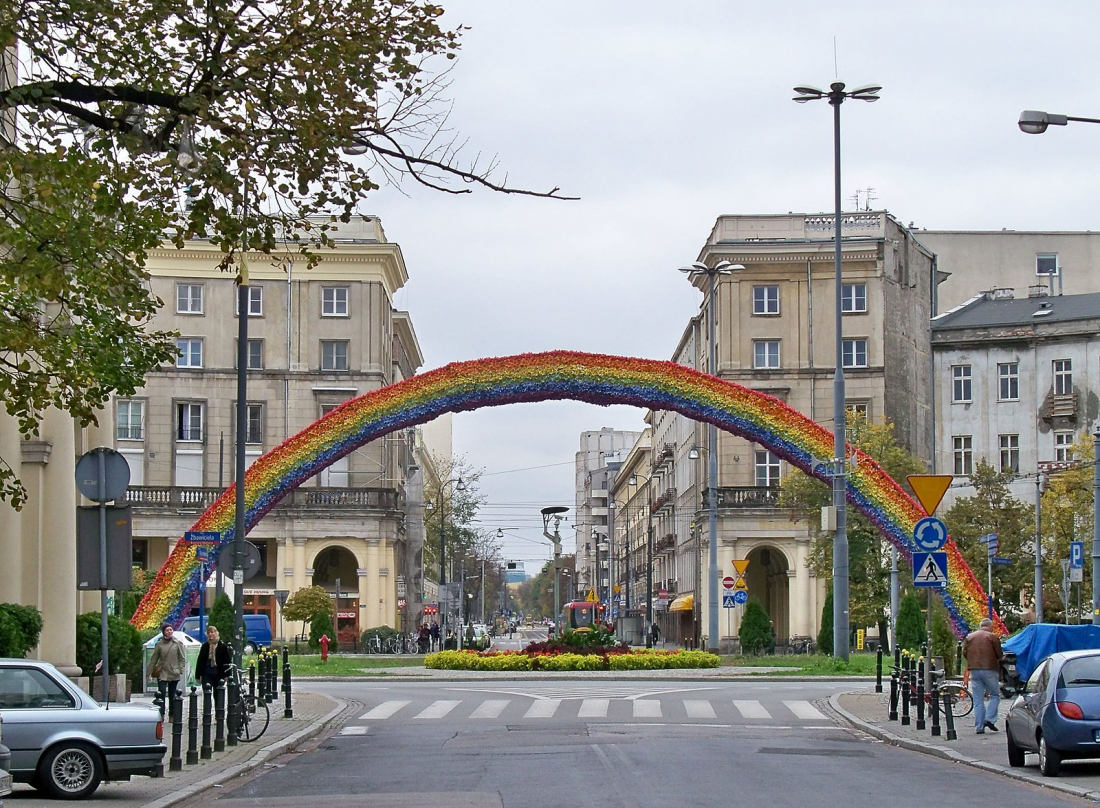
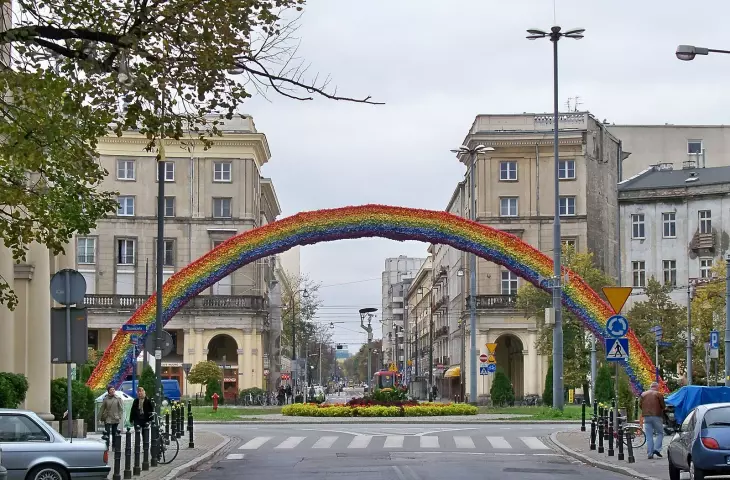
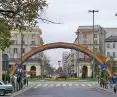
Rainbow on pl. Savior Square in Warsaw, 2012
Panek / Wikimedia Commons CC BY-SA 4.0
The project, which includes a series of meetings with expert speakers and articles to be published on architekturaibiznes.pl, does not attempt to describe all forms of exclusion at once, however. It consciously focuses on the experiences of women and LGBT+ people, treating them as a clear field of analysis that allows a precise look at how architecture, urban planning, law and social norms affect the sense of safety, dignity and agency in the daily use of space. Although experiences of exclusion, control and fear often affect villages and small towns just as much, and often even more severely, the project takes large cities as its field of analysis. This is due to time, methodological and organizational constraints, but also to the fact that metropolises today serve as informal safe spaces nationwide — places to which many people migrate in search of relative safety, anonymity and support networks [source].
However, the city can also hurt where it should protect. Specific incidents that had a real spatial dimension are enshrined in Polish collective memory. The multiple arson attacks on the Rainbow in Zbawiciela Square were not just the destruction of an art installation, but a clear message of exclusion. The banning of the Equality March in Poznań in 2005 or the liquidation of Le Madame in Warsaw showed that administrative decisions can take away the right to visibility and presence in public space.
Such experiences teach hiding. Hiding is not an individual choice or a matter of "sensitivity." It is the result of social norms, legal regulations and design that does not take into account the diversity of bodies and identities. Space teaches behavior — including that based on fear, self-censorship and withdrawal.
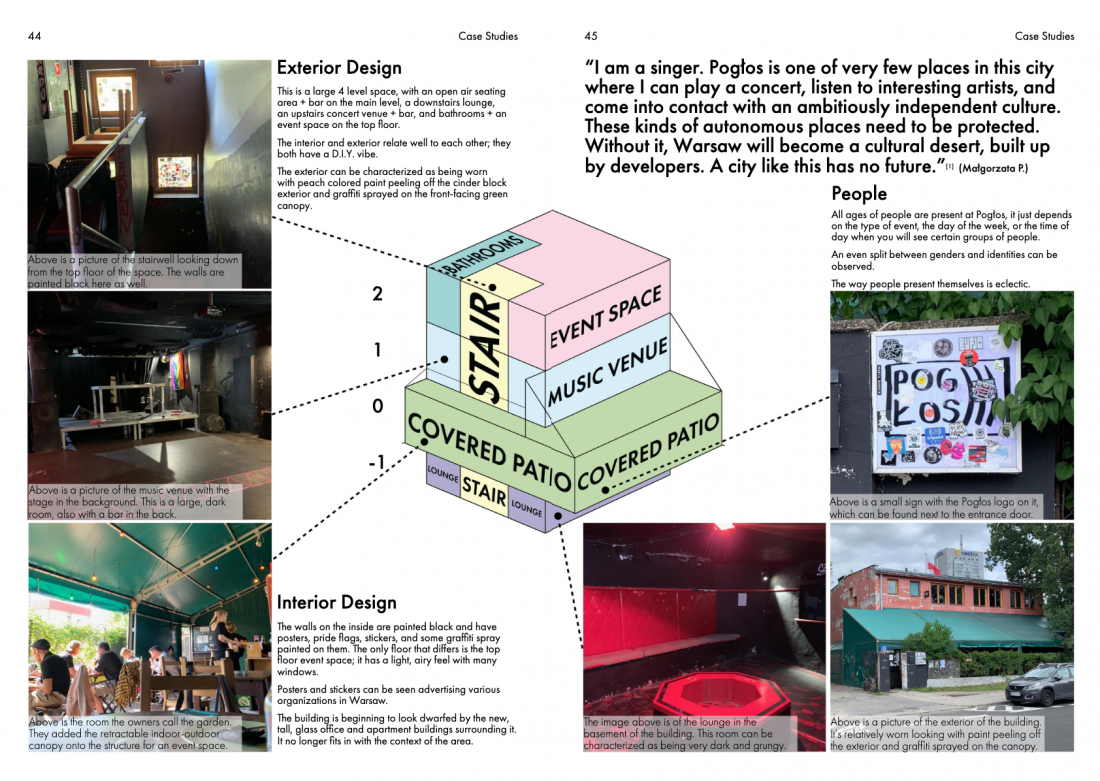
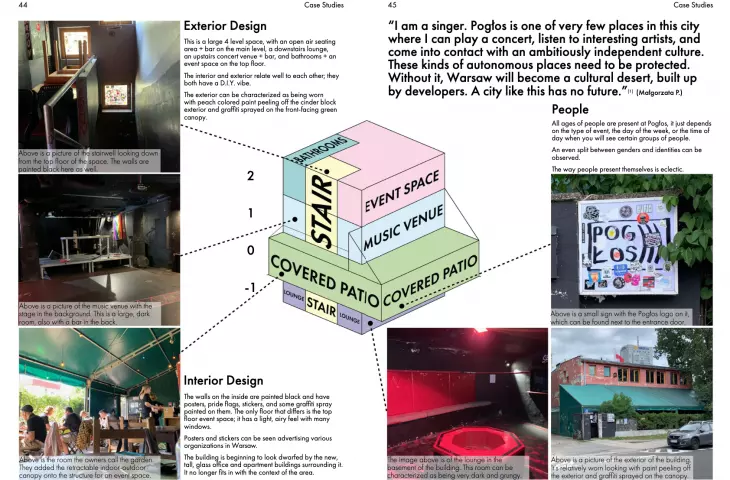
Case study — Reverberation in Warsaw
Lucjan Rostkowski-Covington
Queering the city is not a theory or a symbolic gesture. It is a tool of correction — a way of reading the city from the perspective of its blind spots. Lucjan Rostkowski-Covington's research on queer spaces in Poland shows that a sense of security is rarely derived solely from architectural form, but much more often from relationships, rules and the ability to control one's visibility.
In recent years, the Polish debate on architecture has already learned to talk about experience. Feminist urbanism has brought issues of care, security and everyday life into the conversation, as is clearly evident in studies such as Equal Jerusalem carried out by Architektoniczki. A queer perspective does not break with this body of work — it is a natural extension of it.
Inclusivity does not end with language and symbols. It needs an infrastructure of care. Data from aid organizations show that LGBT+ people are overrepresented among young people in crisis of homelessness. Intervention hostels and places of temporary shelter are becoming one of the key, and still underestimated, elements of urban infrastructure in this context.
The most acute tensions are revealed in the architecture of everyday life - toilets, locker rooms, schools or health infrastructure. It is in these spaces that the gender binary gains its permanent, physical representation, excluding those who do not fit into this division. As research on architecture and gender norms shows, this is where norms are most intensely enforced by space.
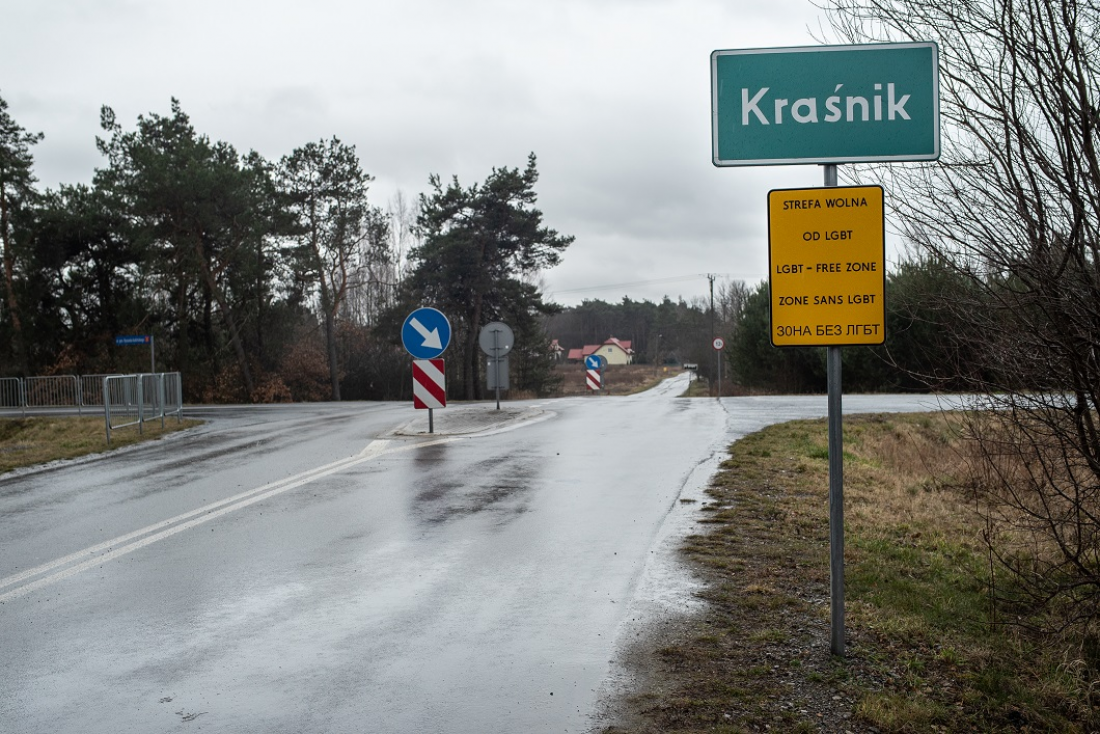
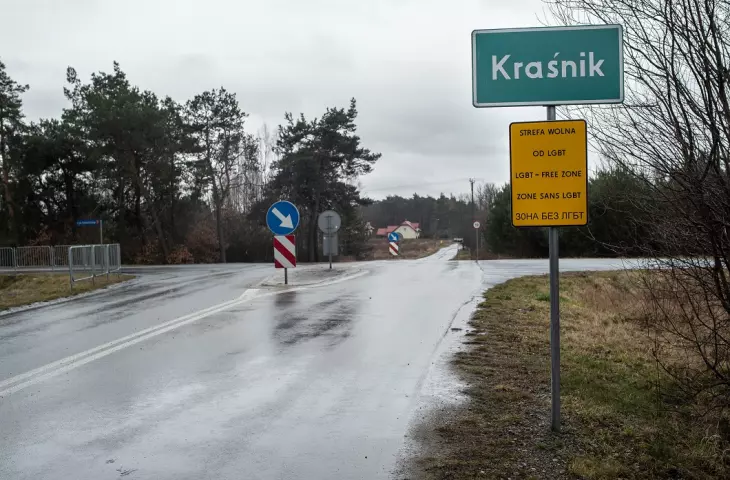
LGBT-free zones
Bart Staszewski / Wikimedia Commons CC BY 3.0
Overlaying these experiences is the law. Hate Atlas, which documents so-called „LGBT-free zones,” has shown that even symbolic resolutions have real spatial consequences — affecting feelings of safety, institutional decisions and daily choices. Like the removal of rainbow flags in Krakow before the presidential rally during the recent elections — these gestures show how fragile visibility can be.
Meetings: an invitation to talk together
The Mile widzianx — queering the city project is being implemented through a series of four open meetings in different cities in Poland. Each of them deals with a different dimension of the relationship between space, body, norms and visibility.
13.01.2026, Institute of Design in Kielce
Safe spaces and spaces of self-expression
Bottom-up and institutional forms of safety, places of refuge, communities and everyday strategies of functioning in the city space.
The meeting will be attended by Mateusz Sulwinski (Stonewall Group) and Dominika Janicka (Fair Building Studio, Institute of Design).
15.01.2026, Zodiac — Warsaw Architecture Pavilion
Architecture and the body: binary spaces
Toilets, schools, swimming pools, health and sports infrastructure — places where gender norms are enforced by architecture, regulations and procedures.
The meeting will be attended by Lidia Klein, Aleksandra Wasilkowska and otalia łysakowska
February 2026, Museum of Architecture in Wroclaw
Visibility and symbols in public space
Gestures, images and narratives: when visibility enhances causality and when it becomes a burden.
February 2026, Cooperative Ogniwo in Krakow
Countering exclusion: norms, laws, policies
Protest, resistance, administrative decisions and regulations as tools affecting real access to public space
Each meeting is an invitation to think together about how architecture and urban planning can become tools of concern rather than exclusion. Participation does not require specialized knowledge or explicit declarations.