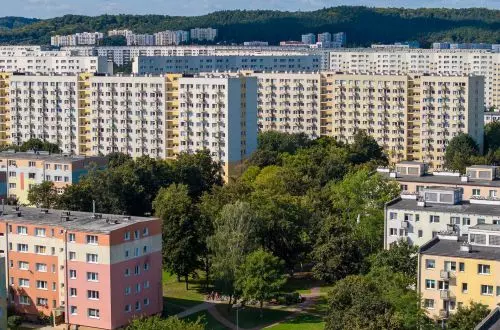









The European real estate market is entering a new phase of development. International capital is increasingly flowing not only into new investments but also into projects aimed at modernizing and revitalizing the existing urban fabric. This signals a broader shift: an increasing portion of the market’s future will be shaped by breathing new life into existing buildings and spaces. As a result, expectations regarding buildings are changing—both on the part of residents and tenants. Today, revitalized properties must not only preserve their character but also offer the comfort, safety, and functionality associated with modern developments.

Today, revitalization does not mean merely renovating a facade or changing a building’s function. Increasingly, it is a process of adapting existing structures to new models of living, working, and experiencing the city. Users expect the same level of comfort, safety, and flexibility they are accustomed to in new developments, while owners and managers seek ways to increase the value of buildings without costly and disruptive renovations. In this context, real estate technologies are becoming one of the tools that allow the historical character of buildings to be combined with modern standards of use.
This trend is part of the broader development of the PropTech market, but with very specific applications and unique challenges. In Europe, this sector is growing faster than globally, where the average annual growth rate is estimated at 12.6% through 2033. Driving this trend are the accelerating digitization of the industry, ESG regulations, and growing investments in smart building technologies and energy efficiency.
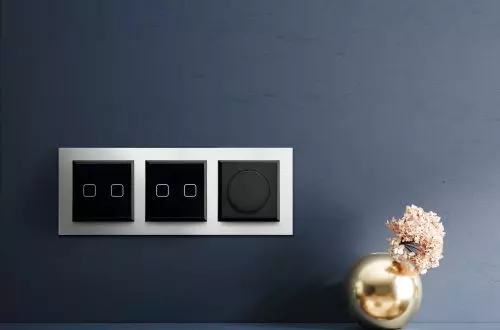
This phenomenon is evident in both the office and residential sectors. Solutions that until recently were found mainly in modern office buildings are increasingly appearing in residential developments, private rental sector (PRS) projects, and mixed-use developments. This includes, among other things, digital access management, automation systems that support the management of common areas, and the integration of various building functions within a single platform.
According to industry representatives, this is a natural consequence of demographic and urbanization trends. Today, users expect a similar level of convenience regardless of whether they are using an apartment, an office, a coworking space, or services available within a single development. This means that older buildings, tenement houses, post-industrial facilities, and modernized complexes must also be adapted to new ways of living and working.
In practice, we are seeing the boundaries between real estate segments gradually blur. Solutions that work well in office buildings are finding their way into residential developments, while features familiar from the residential or hotel sectors are appearing in commercial properties,” says Maciej Grabowski, founder of Blue Bolt, a Polish PropTech company.
An increasing share of capital is being directed toward projects that involve the transformation of existing urban areas, rather than solely the construction of new facilities. One of the most recent examples is the launch by Urban Partners of the Urban Partners Regeneration Fund, which is intended to finance the transformation of post-industrial sites into modern mixed-use districts. Already at the first closing, the fund secured capital providing an investment capacity of 650 mln euro.
This is yet another sign of a shift in investors’ approach to urban development. Given the limited availability of land, rising costs of new development projects, and environmental requirements, the modernization of existing buildings and entire neighborhoods is becoming increasingly important.
In practice, this means equipping existing facilities with digital solutions that enhance their utility without compromising the building’s architecture or character. This applies to both access control systems and tools that support the management of common areas, the organization of user traffic, and the operation of various functions within a single facility.
The way real estate is evaluated is also changing. Just a dozen or so years ago, a building’s appeal was determined primarily by its location, architecture, and quality of finish. Today, there is an increasing focus on how a building functions on a day-to-day basis and how well it meets the needs of its users. In the case of revitalization, technology should support the building, not force its reconstruction,” adds Maciej Grabowski.
This is particularly evident in projects based on revitalization or in mixed-use developments that combine residential, office, commercial, and recreational functions. Residents expect convenient access to common areas, tenants expect an efficient organization of workspaces, and building managers expect the ability to manage the building flexibly without costly infrastructure changes. All these elements must operate as discreetly as possible—so as to support the daily use of the facility without disrupting its architecture or historical character.
In the PRS segment, which experts believe will drive these changes in Poland, by the end of the first quarter of 2025, there were 24,400 units owned by 33 investors, and CBRE forecasts that this stock will grow to over 37,000 apartments by the end of 2027. Meanwhile, the global access control systems market was valued at $11.62 billion in 2025 and is projected to grow to $26.22 billion by 2034. This is confirmed by data from our market, where, for example, Blue Bolt systems are already in operation in nearly 800 buildings of various types—from office buildings to residential complexes—supporting over 15,000 devices and tens of millions of user interactions.
These figures demonstrate that innovation in real estate, including digital access management, is becoming a permanent feature of change in the sector. As the role of modernization and revitalization grows, the importance of such solutions will increase—especially in cases where modern standards must be achieved without compromising the existing building structure.
For more information, visit the BLUE BOLT company page on the A&B portal.