
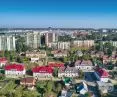

Starachowice is one of the largest cities in the Świętokrzyskie Voivodeship, with a population of 43,000. Despite its picturesque setting amid pine forests and other woodlands, as well as its industrial heritage, after the transition to a market economy it faced challenges typical of medium-sized cities—unemployment and depopulation. Starachowice made headlines after the 2014 mayoral election— Marek Materek, then 25 years old, took office as mayor, making him the youngest person in the country to hold that position at the time. Nearly twelve years have passed. How has Starachowice changed during that time?
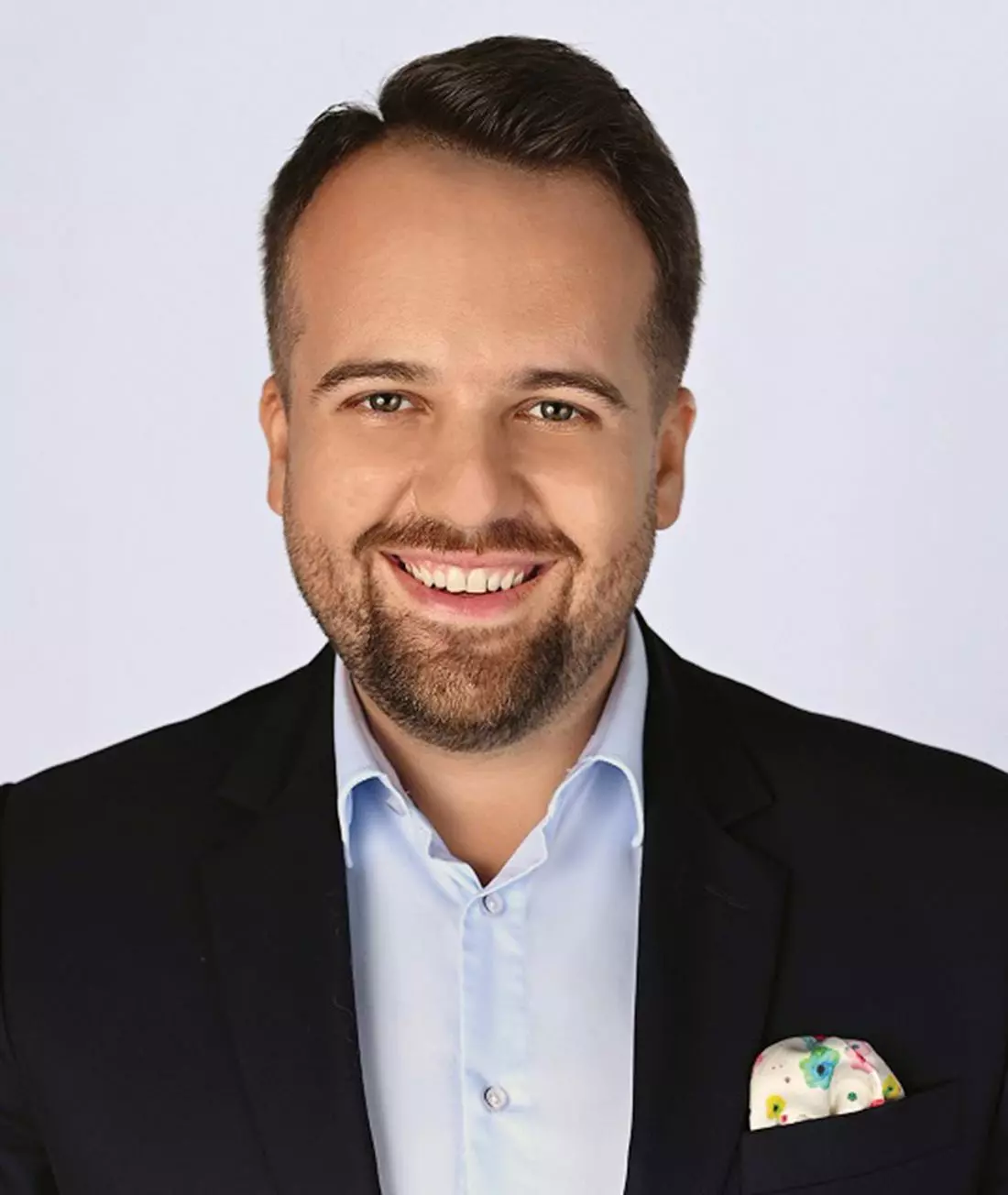
Marek MATEREK — He has served as Mayor of Starachowice since December 9, 2014. He was elected as the youngest mayor in Poland (at age 25). He won re-election in 2018, receiving over 84 percent of the vote. He holds a bachelor’s degree in international relations, with a specialization in public administration and local government, as well as a postgraduate degree in real estate management. He is a co-founder of the Starachowice Youth City Council. From 2009 to 2014, he worked for Róża Thun, a Member of the European Parliament, as the office director for the Świętokrzyskie region. At the same time, he worked at his family’s company, overseeing the implementation of building retrofitting projects. He initiated the introduction in Starachowice of, among other things, the Participatory Budget, the Local Initiatives Program, the Starachowice Backyards Program, the Large Family Card, the Senior Citizen Card, and the establishment of the Senior Citizens’ Council.
Ola Kloc: What was your vision for the city when you began your first term in December 2014?
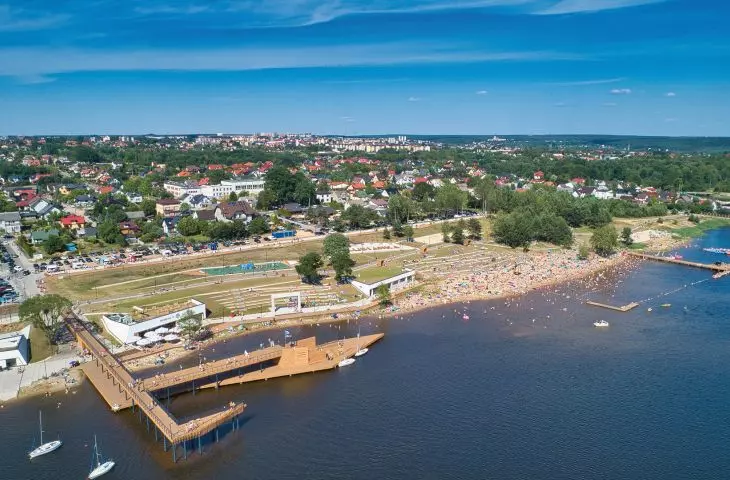
Marek Materek: At that time, I wanted to take advantage of every opportunity available to the city in terms of securing external funding—whether from the European Union, the government, or other available sources. I knew that if we didn’t secure them, Starachowice would fall far behind other medium-sized cities that had previously been more successful in applying for external funding and, as a result, were able to work on public spaces. I was committed to taking care of the public spaces that all residents can enjoy and the buildings that belong to the city. Above all, I focused on those places whose potential had not been fully realized—the city’s landmarks: the Lubianka reservoirs, Pasternik, and Piachy; the redevelopment of the areas surrounding the former Starachowice East and West railway yards; the park in the city center; the area in front of the community center; and other spaces that most residents used.
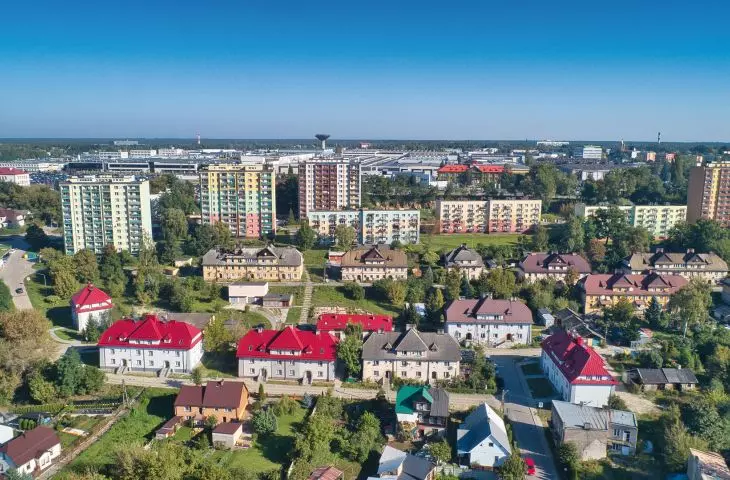
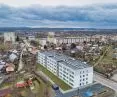
After eleven years, I can say that everything I cared about in these specific areas has been successfully accomplished. However, I am not entirely satisfied with Kolonia Robotnicza, a beautifully designed housing estate comprising buildings from the former Starachowice factories, which was built over a century ago.
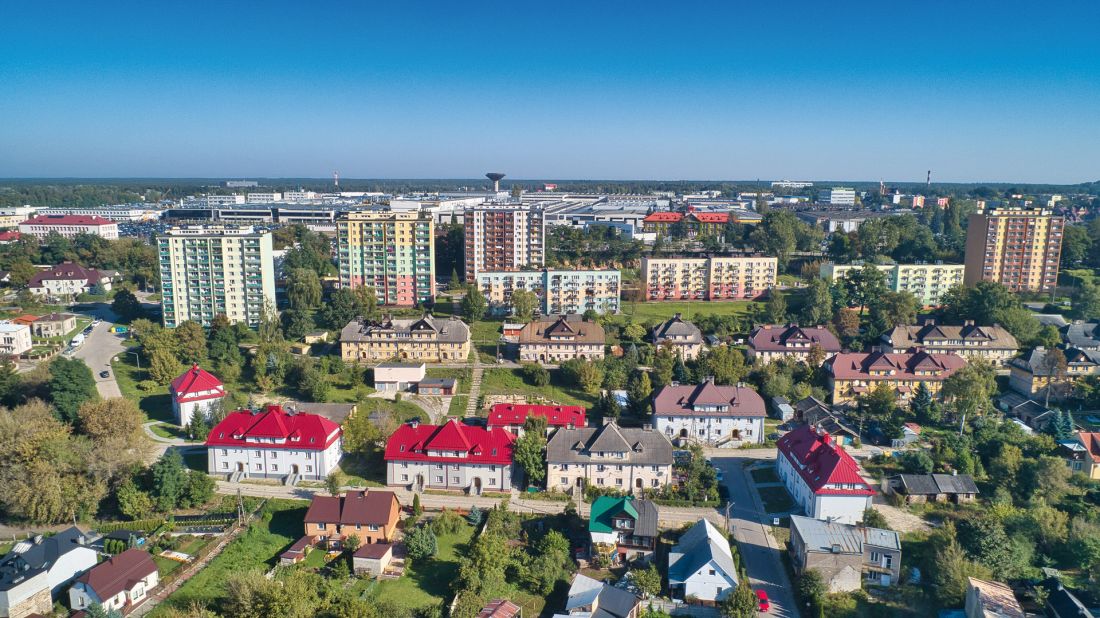
View of Kolonia Robotnicza in Starachowice; some of the buildings in the housing complex of the former Starachowice factories have been modernized, while the rest are still awaiting renovation
© Starachowice City Hall
Ola Kloc: Why? This was part of the “Model Urban Revitalization” program, right? What did that process look like?
Marek Materek: My dissatisfaction stems from the fact that not all of the buildings have been modernized yet. Thanks to the “Model Urban Revitalization” program, the city of Starachowice secured funding for the initial technical documentation, which enabled us to later renovate and rebuild the tenement buildings. Several of them were later modernized thanks to funds obtained from Bank Gospodarstwa Krajowego. European funds made it possible to build the Center for Social Activity, which houses a community center, with four supported housing units above it.
During discussions with residents about what their priorities were—what they would like us to do first—it turned out that the most important things were mundane matters, such as lighting in the stairwells. Previously, the lights used regular incandescent bulbs; five minutes after they were installed, someone would steal them, so people couldn’t get to their apartments because the stairwells were dark. Now the lighting is motion-sensor-activated, so we’re saving money, we’ve eliminated theft, and we’ve improved residents’ sense of safety. Next came the playground—there was already a large playground about 150 meters away, in the Wzgórze neighborhood, but the children from Kolonia Robotnicza said they felt like outsiders there and were singled out. That’s why our next step was to build a playground; larger infrastructure projects came later. This year we’re renovating two more apartment buildings, and we’re awaiting the results of the bidding process for the next two. During this time, I’ve also been buying back apartments from private owners that the city had sold years ago in these buildings. It was important to me to regain 100 percent ownership so that we could secure funding for a comprehensive renovation of all the buildings in this neighborhood.
Ola Kloc: Housing policy seems to be one of the main strategies for combating the city’s depopulation, which is the greatest challenge facing medium-sized towns today.
Marek Materek: I’m under no illusion that all our projects will completely halt the city’s depopulation. Our main problem is demographics; we can’t solve it with the wave of a magic wand. However, through housing policy, I’m trying to ensure that as many people living in Starachowice as possible have the best possible living conditions. And for those who commute to work in Starachowice, I aim to create opportunities that allow them to live here for a reasonably affordable price—there may be no shortage of apartments on the market, but rental prices are so high that often, after paying the rent and security deposit, there isn’t enough money left to meet a family’s basic needs.
Ola Kloc: What has already been accomplished in this regard?
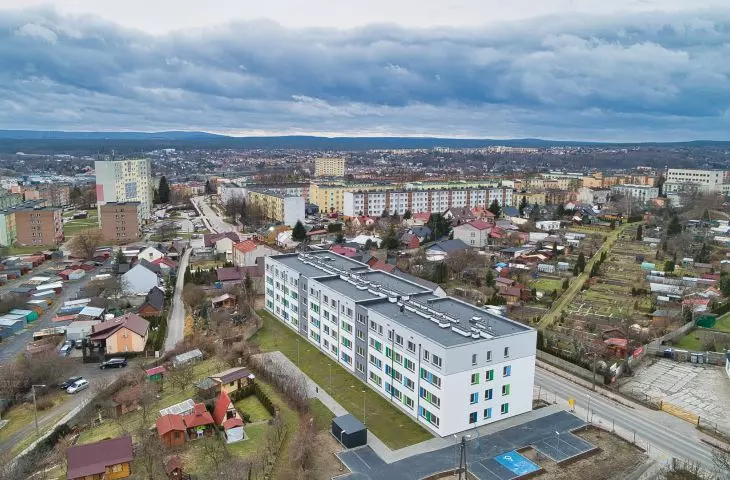
Marek Materek: We’ve completed three apartment buildings on Piłsudskiego Street and one on Aleja Jana Pawła II. These are rental buildings, which means higher income thresholds apply, and the apartments are intended for people who can—but are not required to—live in our city. Three more apartment buildings—on Polna Street—will house public housing units. Another example is the building on Kościelna Street, where we built 103 public housing units. It was built to eliminate most of the municipal housing units that lacked access to running water, sewer service, and district heating—people were living in shacks.
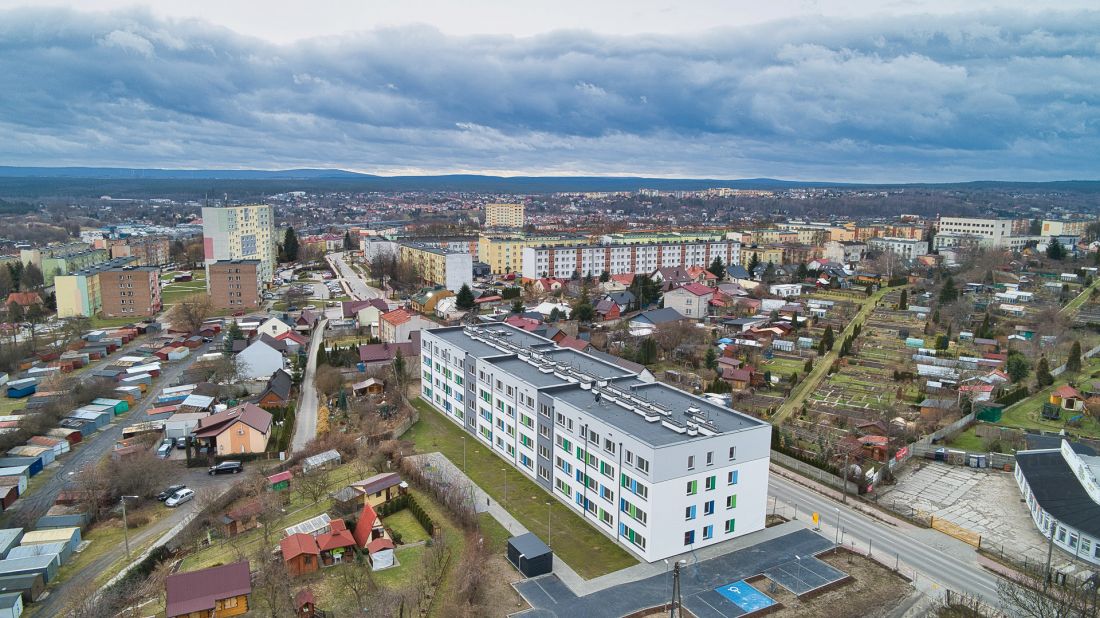
The building on Kościelna Street houses 103 municipal apartments
© Starachowice City Hall
Ola Kloc: What’s the situation with the old hospital? Will this modernist building be demolished?
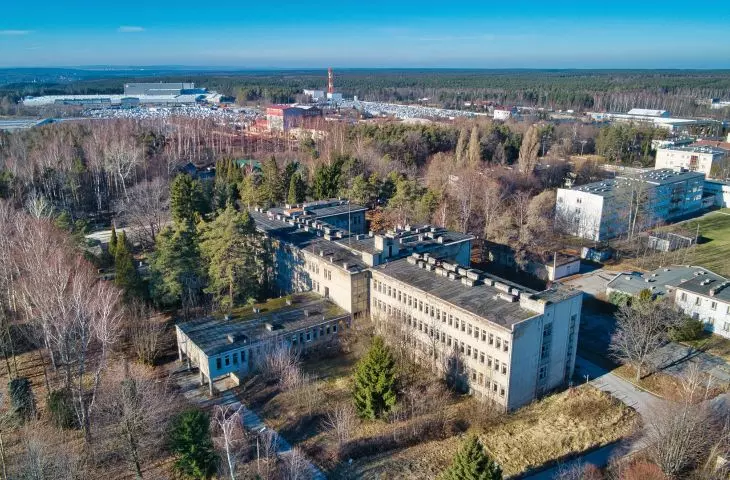
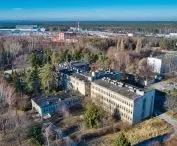
Marek Materek: It’s true that at one point I was determined to preserve and modernize this building, but it turned out that the vast majority of residents prefer new buildings. So the decision was made to demolish the hospital; in its place, a housing development with eight multi-family buildings and approximately 300 apartments will be built. We are now in the process of finalizing the technical documentation; once we receive all the documents from Czora Czora, we will be able to begin the project with support from Bank Gospodarstwa Krajowego.
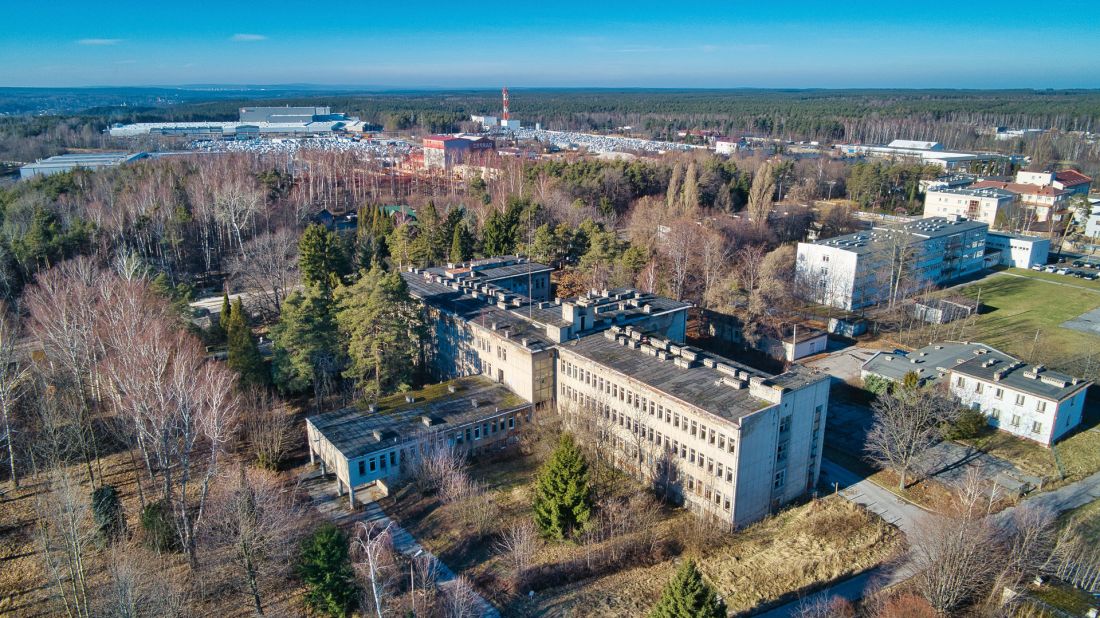
A housing development with eight multi-family buildings will be built on the site of the modernist hospital
© Starachowice City Hall
Ola Kloc: Did you consider organizing an urban planning and architectural competition for this housing development?
Marek Materek: Unfortunately, there was no competition in this case, which I deeply regret. However, I hope that when we build the next housing development—which will be constructed on over three hectares of land that we purchased at a judicial auction—we will organize an architectural competition.
Ola Kloc: You managed to do this for the City Park and Lubianka Port project—why did you decide to follow that procedure back then?
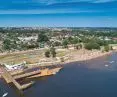
Marek Materek: I think those are our best projects! I’m very proud of them, and I believe we owe their success largely to the fact that we held architectural competitions there; we didn’t choose the cheapest option, but rather the best concept for the site’s development. We decided to hold competitions back then because these were standout projects and we had the time to carry out this process. Sometimes, even when there’s a desire to organize a competition, there simply isn’t enough time.
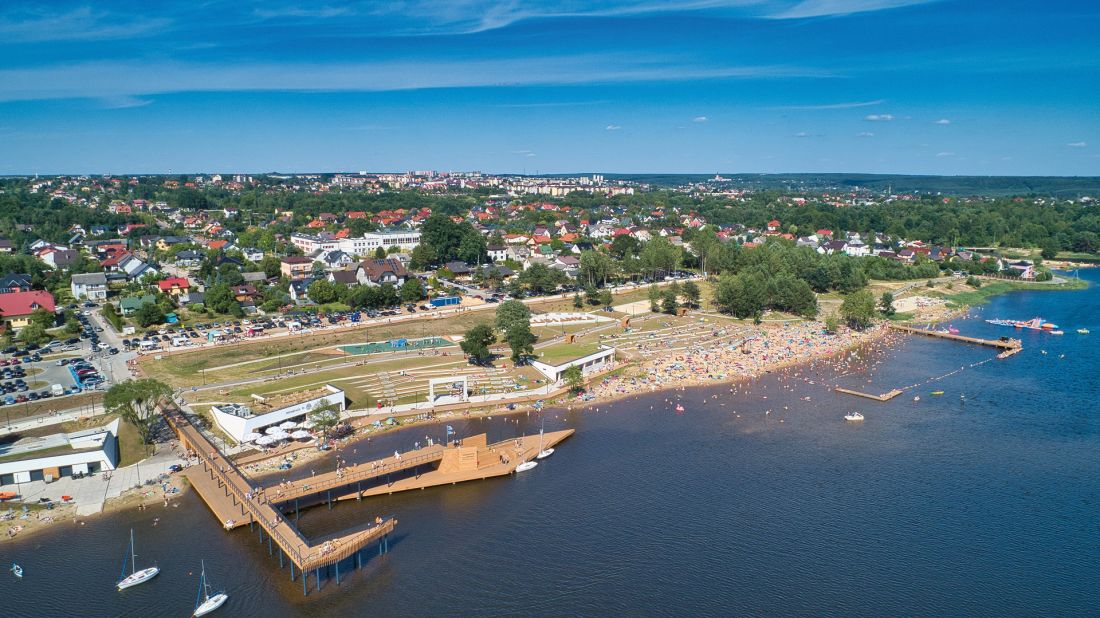
Lubianka Port in Starachowice, designed by PA. FORMAT Architekci; the development plan for this area was selected through an urban planning and architectural competition
© Starachowice City Hall
Ola Kloc: Quite soon after the start of your first term, in September 2015, you decided to hire a full-time architect (previously, the position was part-time). What was the reasoning behind this decision?
Marek Materek: I believe that every municipal office, even in a medium-sized city, should have a person who can advise on architectural matters and future issues important to the city —such as urban planning and the modernization of urban spaces. This decision has had a huge impact on how Starachowice has changed in recent years. The city architect also reviews various types of leases and sales, picks up on things that might escape my notice, and may recognize, for example, that a particular plot of land will be needed in the future for road construction or some other purpose.
Ola Kloc: You mentioned fundraising at the beginning. A few years ago, the municipality received over 19 million zlotys in funding from Norwegian funds to implement a new development plan for the city—what has been accomplished?
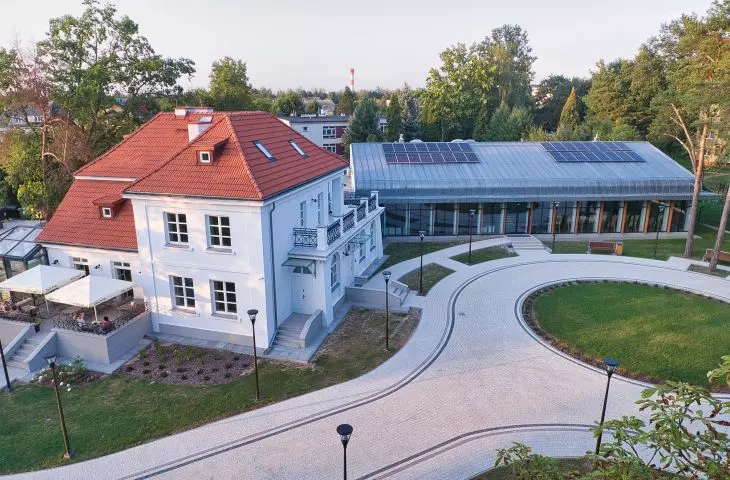
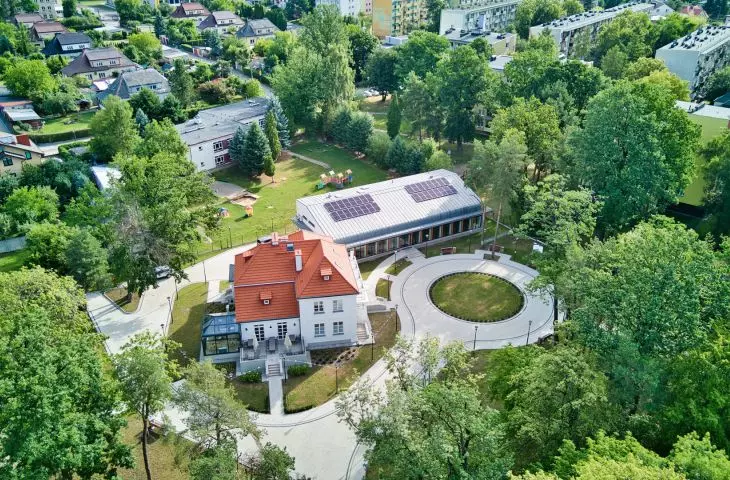
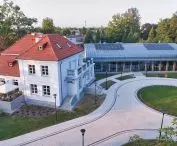
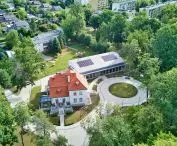
Marek Materek: The new section of the Pałacyk Creativity Center was built thanks to these funds, and the historic palace was modernized using European funds. It used to be the villa of the director of the Starachowice factories, a building that residents held dear; it housed a preschool and an art center. Later, for many years, the building fell into ruin and was occupied by people experiencing homelessness. Now the place is bustling with life; it houses a café, the headquarters of the Youth City Council, and a space where people can work remotely. Entrepreneurs, young people, and nonprofit organizations have a great place to carry out various projects and are making full use of it.
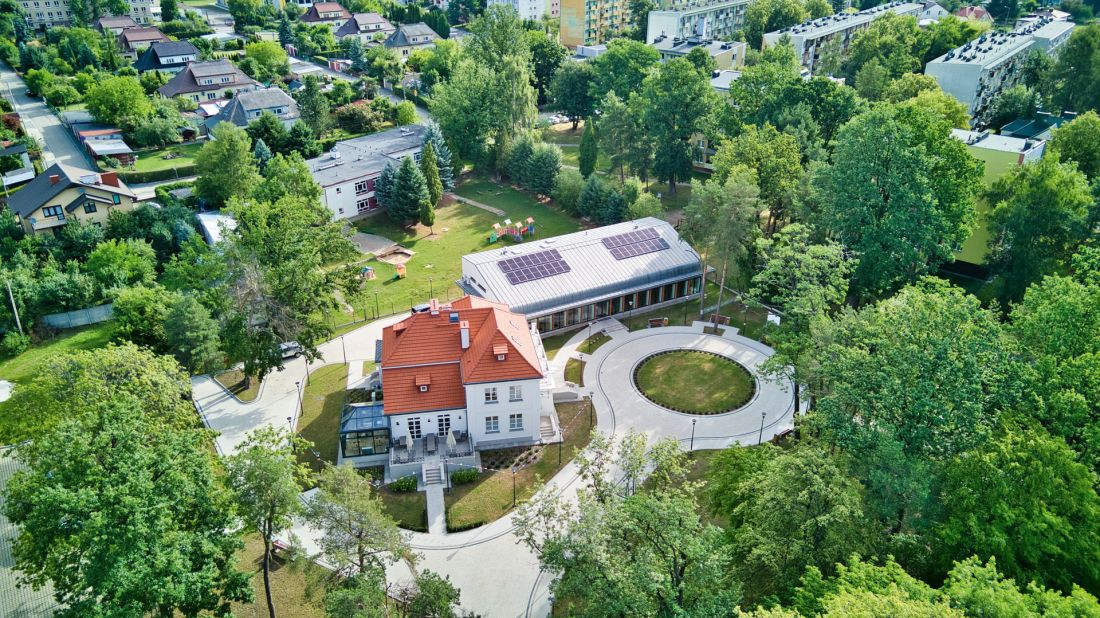
The Pałacyk Creativity Center, located in the former villa of the director of the Starachowice plants, now serves the residents
© Starachowice City Hall
The second portion of Norwegian funds was allocated to Ekoszkoła, or Elementary School No. 11. We extensively modernized it, creating a modern space that is friendly to both children and staff. I hope we will continue this project—using Swiss funds, we will develop the school’s surroundings and create a pocket park that will serve not only the children but also all residents of the neighborhood.
I’m also proud of the projects to develop the areas around the Lubianka and Pasternik reservoirs, because these spaces are extremely popular not only with Starachowice residents but also with people who come from outside the county.
Ola Kloc: So external funding is the key to success for medium-sized cities?
Marek Materek: If we didn’t apply for them, the trend of the city’s depopulation would be even more pronounced, and the city’s image for those who live here would be utterly disheartening. The funds we secure from outside sources provide a lifeline, but they also give us a sense that we’re moving forward.
Ola Kloc: And what are the benefits of free public transportation?
Marek Materek: First and foremost, it means I don’t get upset that the buses—which we pay a lot of money for—are running empty! Before, they were just carrying air, but today I’m happy to see them filled with people—seniors, young people, and commuters. It’s truly uplifting.
Ola Kloc: You’ve also established a partnership with Bergen, Norway—what best practices have you been able to learn from them?
Marek Materek: The Pałacyk Creativity Center and the Eco-School, which I mentioned earlier, were inspired by what we saw in Bergen. We’re also building a waste-to-energy plant (construction is currently on hold, but we plan to complete it through the municipal company, Zakłady Energetyki Cieplnej).
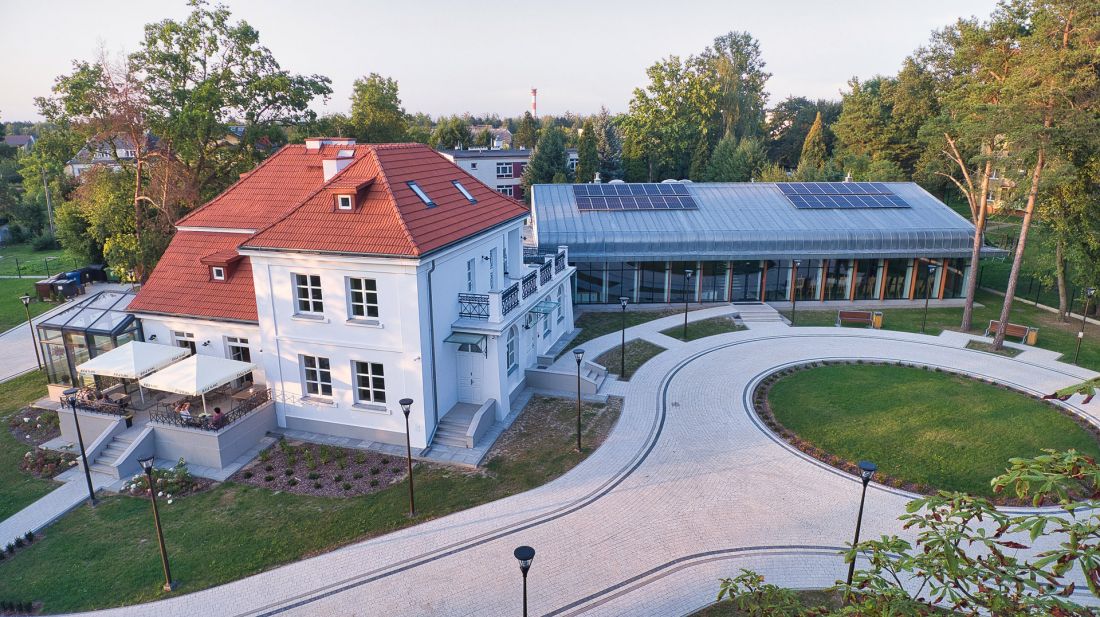
The Pałacyk Creativity Center, located in the former villa of the director of the Starachowice plants, now serves the residents
© Starachowice City Hall
I also observed solutions there designed for older adults, people with disabilities, and those who have difficulty moving around independently. I’d like to adapt a senior housing complex with assisted living apartments for our community, where these individuals can receive support — on the one hand, they’ll have apartments where they can live independently, but when they need support from caregivers—whether for rehabilitation or leisure activities—that support will be available right on-site. Today, we have many residents on the second, third, and fourth floors who may not live to see the installation of elevators by their housing communities. I would like them to be full-fledged members of the local community and able to participate in city life. Right now, many people do not have that opportunity.
Ola Kloc: What can other medium-sized Polish cities learn from Starachowice?
Marek Materek: Local government officials from various parts of the country come to visit us and observe our different solutions. Some come to see how we transformed the Municipal Social Assistance Center into the Social Services Center —we were among the first to do so. The Social Services Center has become our main tool for implementing social policy in the city. The goal of its numerous initiatives at the local level is to improve residents’ quality of life, combat social exclusion, provide easier access to services in a “one-stop shop,” or simply better tailor assistance to residents’ needs. The range of these services is truly broad, and initiatives such as the “Senior Taxi” and “Handyman” deserve special mention—these are forms of support that did not exist before.
Many people also come to see how our “Starachowiczanka” Social Cooperative operates . It was established as part of the city’s social policy—on the one hand, it maintains public and municipal spaces, and on the other, it focuses on the professional reintegration of people who were long-term unemployed or excluded from the workforce. Many of these people previously relied solely on benefits and social assistance. Today, they are able to support themselves in other ways. They have discovered the value of working with their own hands, even though in some cases, this reliance on social assistance had been passed down from generation to generation. Suddenly, everything changed. They realized that it is worthwhile to work, thereby improving their family’s standard of living.
Ola Kloc: And what about the revitalization programs?
Marek Materek: Our guests are also observing matters related to revitalization, both those included in the revitalization program and those related to the preparation of another program, which has been 100 percent completed. We developed our city’s municipal revitalization program through extensive public consultations. We invited representatives from virtually every age group to participate in these consultations. We listened closely to the expectations of the local community, which is why the implementation of the project garnered enormous public interest. Residents had the opportunity to see how their dreams, as outlined in the municipal program—thanks to the successive external funding secured—were becoming a reality.
Ola Kloc: Since 2023, the city has had a new logo (a hammer, an anvil, and a water tower) and a promotional slogan: “Starachowice Drives Development.” What is the plan for attracting investors to the city who will help drive this development?
Marek Materek: We have certain limitations due to the topography: In terms of area, Starachowice is a small town, surrounded on all sides by forest. There are therefore very few areas that could be developed—more like 1, 2, or 3 hectares, rather than 10, 15, or 20. This severely limits our ambitions. So we’re focusing more on ensuring that every available space in the city—even those in private hands—is developed and generates jobs. Companies that have already invested in Starachowice are purchasing additional land, expanding, and creating new jobs. According to data from last month, we are the only county in the Świętokrzyskie Province to have recorded an increase in the number of employed people, so I hope this policy is paying off.
Ola Kloc: What would you like Starachowice to look like in 2030?
Marek Materek: I’d like it to be a city that’s a great place to live, work, and learn for every resident.
Ola Kloc: That’s my wish for you, then. Thank you for the interview!
Interviewed by: Ola KLOC
more: A&B 6/2026 – Small and Medium-Sized Cities / Architects’ Rates,
download free e-issues of A&B